• Link to X
  • Link to Facebook
  • Link to Instagram
  • Link to TikTok
  • Link to Youtube
  • About
    • About Us
      • President
      • Board of Directors
      • Board of Advisors
      • Financials
      • Our Methodology
      • Success Tracker
      • Contact
  • Act Now
    • 30 Ways to Help
      • Email Congress
      • Call Congress
      • Volunteer
      • Courses & Certificates
      • Be a Donor
    • Internships
      • In-Office Internships
      • Remote Internships
    • Legislation
      • Politics 101
  • The Blog
  • The Podcast
  • Magazine
  • Donate
  • Click to open the search input field Click to open the search input field Search
  • Menu Menu

Tag Archive for: Education

Posts

Education, Global Poverty, Health, Poverty Reduction, Women and Female Empowerment

Top 5 Poverty Prevention Tactics

Poverty Prevention
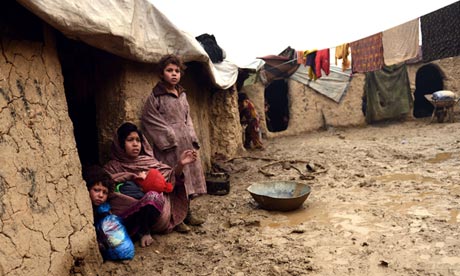
Global poverty can seem to many to be an insurmountable task. However, much progress has already been made to lift people out of poverty. According to The Global Citizen organization, global poverty has effected 1.3 billion individuals, a number which is actually 52% lower than statistics in the 1980s.

Development practitioners recognize that global poverty can be minimized by addressing other areas including reproductive health, HIV prevention, education, women’s empowerment, and gender equality. UNFPA states that poverty is a multidimensional issue that deprives people of education, resources, services, opportunities, and economic opportunities. UNFPA states that investments to address global poverty should “…[empower] individual women and men with education, equal opportunities and the means to determine the number, timing and spacing of their children – [which] could create the conditions to allow the poor to break out of the poverty trap.”

Reproductive health and HIV prevention can both act as poverty prevention tactics. Reproductive health education, family planning resources, and widely accessible contraception can decrease fertility rates by providing families with the knowledge and tools to space out pregnancies. Furthermore, improved healthcare can reduce population growth because families recognize that they do not need to have as many children to ensure that at least 2 of them survive to adulthood.


HIV prevention is also an important poverty prevention tool because  helpful for when men and women know the dangers of HIV, they are able to use protection and are able to prevent the spread of the disease not only from partner to partner, but also from partners to undesired pregnancies and children. By learning how to protect oneself from HIV, individuals are able to prevent untimely deaths as well as preventing the disease to spread within a community, states The ONE organization. By lowering fertility rates through an education in reproductive health and by preventing the spread of HIV through an education in HIV prevention, communities will thrive due to a lower healthier population level.

The third poverty prevention tactic is education. Education is a very important factor in preventing global poverty, for providing an education to young boys and girls will help prevent undesired child marriage as well as early teen pregnancies which can lead to maternal death. An education helps boys and girls obtain the proper knowledge to keep themselves safe, healthy, and helps to plant the seeds of inspiration. Once obtaining an education, these individuals can create sustaining businesses which produce and return economic gains into their communities. By providing an education, individuals are able to thrive and break through the barriers of global poverty by creating strong businesses which will help the economy thrive and will lead to a stable community environment.

The fourth and fifth poverty prevention tactics are women empowerment and gender equality. Women empowerment is a positive prevention tactic because women who are encouraged to attend school and receive an education are more likely to defeat child marriage, are able to marry latter in life, and are able to have less children which lowers population rates. Women who have an education are more likely to work after receiving an education, which boosts the economy and provides a sustainable household for a family. Gender equality offers similar benefits, for if women are able to obtain an education and receive equal pay in employment, both the man and women are able to create a sustainable home for their children. By providing a sustainable environment, the child is able to attend school and is able to receive employment opportunities, continuing this positive cycle.

Through these five poverty prevention tactics, developing countries are able to defeat global poverty and are able to create sustainable economies, healthy environments, and equal opportunities.

– Grace Beal

Sources: Global Citizen, UN FPA, ONE Campaign
Photo: Ambergris Today
August 5, 2013
https://borgenproject.org/wp-content/uploads/borgen-project-logo.svg 0 0 Borgen Project https://borgenproject.org/wp-content/uploads/borgen-project-logo.svg Borgen Project2013-08-05 09:17:212017-11-30 10:45:20Top 5 Poverty Prevention Tactics
Education, Global Poverty, Poverty Reduction

3 Key Responsibilities to Fight Poverty

poverty 3
Poverty. Can you define this seven letter word? Many individuals can define it, and most would say that poverty is the state of being extremely poor. Yet, how many of these individuals would know the facts behind global poverty and would know what it took to prevent or fight against such a global epidemic? Many individuals are so focused on their own personal lives that they do not notice what lies beyond their own every day life. Yet, global poverty effects everyone and reducing this epidemic could benefit everyone as well.

A dollar and twenty five cents. This is the amount of money in which 1.3 billion individuals live off of every day and possibly even less than this amount, states The World Bank. This is a staggering amount of people living off of less than a dollar a day! Yet as The Global Citizen organization has stated “ In the last 30 years, the proportion of the world’s population that live below this line has halved-from 52% in 1980, to 25% today. That’s a decline from 1.9 billion people down to 1.3 billion people”. There is a notable difference seen today with this decline in global poverty, yet if individuals do not keep putting their efforts towards this cause, the percentage could once again rise to staggering levels.

So how can an individual make a difference, one may question. There are three key responsibilities to help fight against global poverty. The first is through charitable donations. A single individual can make a large difference on numerous lives through charitable donations, states Columbia University. By donating funds towards global poverty, The Millennium Promise explains, an individual can help numerous others obtain food, clean water and power, a healthy living environment, technology and the seeds for innovation, education, gender equality, the proper health care for women and their children, and finally can help plant the seeds for businesses and entrepreneurship to create future stability. These may seem easy to obtain, but without help from numerous donors, it would not be nearly impossible to accomplish these goals.

The second key responsibility to help prevent global poverty is to follow through on the government’s promise to help aid millions who are suffering from global poverty. By following through on their existing commitments to help aid these struggling individuals, it proves that there are individuals who care about fighting to eliminate global poverty, states The Borgen Project. There are many ways in which to contact your government leaders such as writing to your political leaders, organizing letter writing campaigns, writing to your local newspapers and magazines, by calling your political representatives stating your wish in that they support the fight against global poverty, and finally by joining existing networks such as The Borgen Project, The Millennium Campaign, or The Global Citizens Organization.

Finally the third key responsibility is education. By educating yourself on the subject of Global Poverty, you can also educate others. Educating the public may seen like a difficult task, yet it has proven to be a highly successful global poverty prevention tactic. By educating the public, you can help spread the word of prevention and can help lead the fight against global poverty. By educating others, you can help lead to numerous donations against the spread of global poverty, and can also help spread the word of prevention even further. When you educate an individual on this topic, another individual can continue to spread the word, and it leads to the creation of a chain reaction. By doing so, you can lead numerous individuals to make donations, contact their leaders, and to continue the chain of educating others on this crucial subject.

Overall, by making donations to global poverty prevention organizations, contacting your political leaders, and by educating others, you are helping to end poverty. By taking on these three key responsibilities, an individual has started their own personal fight against global poverty and has joined in the movement with numerous others to end this global epidemic.

– Grace Beal

Sources: World Bank, Global Citizen, Columbia University, The Borgen Project
Photo: The Guardian

August 5, 2013
https://borgenproject.org/wp-content/uploads/borgen-project-logo.svg 0 0 Borgen Project https://borgenproject.org/wp-content/uploads/borgen-project-logo.svg Borgen Project2013-08-05 09:05:402017-03-20 13:04:003 Key Responsibilities to Fight Poverty
Activism, Education, Global Poverty

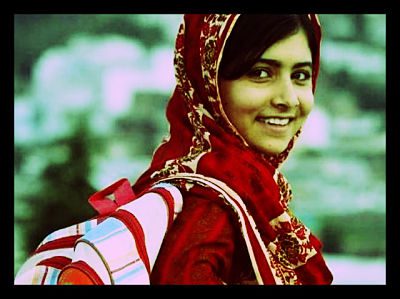
Malala Wages War on Illiteracy, Poverty and Terror

malala_opt-2
“They thought that the bullet would silence us. But they failed. And out of that silence came thousands of voices…Let us pick up our books and our pens. They are our most powerful weapons. One child, one teacher, one book, and one pen, can change the world. Education is the only solution.” These were the words spoken by Malala Yousafzai in her address to the UN Youth Assembly on July 12th, falling on her 16th birthday. In October, a Taliban gunman boarded Malala’s school bus in Pakistan’s northwestern Swat Valley and shot her in the head. The Taliban decided death was to be her consequence for campaigning on behalf of girls’ education. She survived, however, and in doing so has brought the issue of women’s education to the attention of the world.

After the shooting, Malala was flown from Pakistan to the U.K. for treatment and recovery, and now resides in Birmingham, England. Her appearance at the UN headquarters was her first public speech since October’s incident. She told the UN that the Taliban’s attack did not change her aims or stop her ambitions as they hoped, but has rather made her more determined. Malala called on politicians to take urgent action to ensure every child has the right to an education. “I want education for the sons and daughters of the Taliban and all the terrorists and extremists,” said Malala.

Aid agencies agree that girls’ access to education in Pakistan is a real concern. The country ranks among the lowest in terms of girls’ enrollment, government spending, and literacy. Malala explained she was fighting for the rights of women because “they are the ones who suffer the most”. Unesco and Save the Children released a report which found that 95% of the 28.5 million children who are not receiving a primary school education live in low and lower-middle income countries: 44% in sub-Saharan Africa, 19% in south and west Asia and 14% in the Arab states. Girls make up 55% of these children without education and are often the victims of rape and other sexual violence that comes with armed conflict.

Adnan Rasheed, a senior Pakistani Taliban leader, recently sent a letter to Malala in which he does not apologize, but says he wished the attack “had never happened”. Rasheed further suggests that all that the Taliban opposes is western education. Despite this claim, there are currently 1,000 closed schools in Pakistan and Afghanistan due to arson attacks and threats. The Taliban have long argued that only schools used as army bases are attacked, however schools have been shut down hundreds of miles from any Pakistani army presence.

According to Gordon Brown, a United Nations Special Envoy on Global Education, in just the last few weeks alone 14 young women were killed when the bus carrying them from college was firebombed, a school principal was shot dead and his colleagues maimed in broad daylight at a prize giving ceremony held in the playground of an all-girls school in Karachi, and a teacher was gunned down in front of her son while driving to teach at an all-female college.

Illiteracy, particularly among girls, will hold back Pakistan’s development efforts if current education trends continue. It is also known that young people denied an education fall prey to extremist propaganda. Following the attack, Malala set up the ‘Malala Fund’, and presented a petition which included more than three million signatures to the UN Secretary General Ban Ki-moon, demanding education for all. The Malala Fund launches in the fall of 2013, and will focus on helping girls go to school and raise their voices for the right to education. Donations to the Malala Fund can be made at https://www.stayclassy.org/checkout/donation?eid=25976.

Malala has shown millions of young girls that it is possible to stand up to the Taliban. Young people are insisting that education is a universal right. Malala has sparked a revolution and a modern civil rights struggle is now underway.

– Ali Warlich
Sources: BBC, CNN, The Malala Fund, BBC

August 2, 2013
https://borgenproject.org/wp-content/uploads/borgen-project-logo.svg 0 0 Borgen Project https://borgenproject.org/wp-content/uploads/borgen-project-logo.svg Borgen Project2013-08-02 05:43:102024-05-25 00:11:55Malala Wages War on Illiteracy, Poverty and Terror
Development, Education, USAID

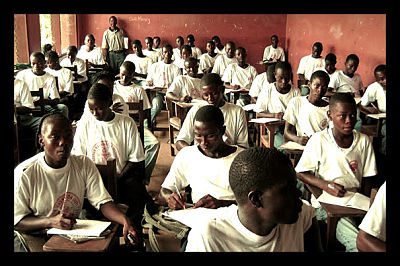
USAID Summer Start in Liberia to Educate 480 Students

liberia_opt
In Liberia, adults have received an average of only 2.5 years of schooling in their lifetime. According to the CIA World Factbook, approximately 85% of Liberian citizens are unemployed, and 80% live below the poverty line. In 2012, GDP per capita was only $700, making Liberia ranked 224 of 229 nations for GDP. But since the country held peaceful elections in 2005 the economic situation has been slowly improving with the help of private overseas investors in the mining and agriculture industries. More than ever, Liberia needs successful students who can run these industries to help pull the nation out of its extreme poverty. That’s why the USAID Excellence in Higher Education for Liberian Development Project (EHELD) was created in 2011.

The project aims specifically at helping faculty at Cuttington University and the University of Liberia to develop high quality agriculture and engineering programs for its students, attracting students to the programs, and working with local business leaders to create employer linkages for the students.

Currently the EHELD team is holding its yearly USAID Summer Start program for high school students that runs from July 15 – 26. The programs, which will focus on experiential learning, are being held at 6 different high schools, accommodating 80 students each. The programs, which will be taught by a team from the University of Michigan, Peace Corps Volunteers, and faculty of Cuttington University and the University of Liberia, will teach important life skills such as computer science and math, while also providing career counseling in agriculture and engineering.

In addition, the EHELD summer programs are partnering with the Cuttington University Upward Bound program to run at the same time under the same leadership. The Upward Bound program will specifically focus on educating 10th -12th graders, while the summer start program will focus on incoming engineering and agriculture students at Cuttington University and the University of Liberia and returning summer start students.

Superintendent of Bomi County (where the high schools are located) Samuel Browne spoke during the camps opening ceremonies, urging the students to appreciate the opportunity and take full advantage of it and telling them the “sky is the limit” when it comes to education.

USAID-EHELD is also currently providing scholarships for over 100 talented engineering and agriculture students at the two universities.

– Emma McKay

Sources: Nation Master, All Africa, Nation Master
Photo: Harvard News

July 30, 2013
https://borgenproject.org/wp-content/uploads/borgen-project-logo.svg 0 0 Borgen Project https://borgenproject.org/wp-content/uploads/borgen-project-logo.svg Borgen Project2013-07-30 06:23:352017-03-20 13:03:37USAID Summer Start in Liberia to Educate 480 Students
Education

5 Quotes About Changing the World Through Education

ed_opt
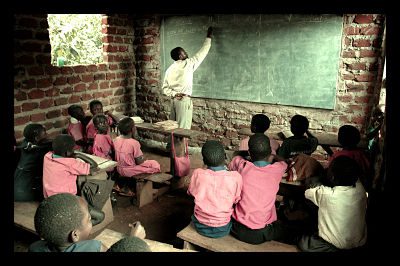
Education is another one of the things we tend to take for granted in this country. In fact we even frequently complain about having to spend so many hours a day and so many years of our lives in a classroom. But so many other people in the world never have the opportunity to enter the classroom let alone. These next 5 quotes are from some of the biggest proponents for providing everyone in the world a chance to get a good, and safe, education.

“I can promise you that women working together – linked, informed and educated – can bring peace and prosperity to this forsaken planet.” – Isabelle Allende

“Education…beyond all other devices of human origin, is a great equalizer of conditions of men – the balance wheel of the social machinery…It does better than to disarm the poor of their hostility toward the rich; it prevents being poor.” – Horace Mann

“Education is the most powerful weapon which you can use to change the world.” – Nelson Mandela

“From better health to increased wealth, education is the catalyst of a better future for millions of children, youth and adults. No country has ever climbed the socioeconomic development ladder without steady investments in education.” – Irina Bokova, Director-General of UNESCO

“‘I wish for a better life. I wish for food for my children. I wish that sexual abuse and exploitation in schools would stop.’ This is the dream of the African girl.” – Leymah Gbowee

– Chelsea Evans

Sources: Good Reads, UN
Sources: Global Higher Education


Read Humanitarian Quotes.

July 27, 2013
https://borgenproject.org/wp-content/uploads/borgen-project-logo.svg 0 0 Borgen Project https://borgenproject.org/wp-content/uploads/borgen-project-logo.svg Borgen Project2013-07-27 08:00:372024-05-25 00:12:065 Quotes About Changing the World Through Education
Activism, United Nations

Top 5 Malala Quotes

Malala_Yousafzai
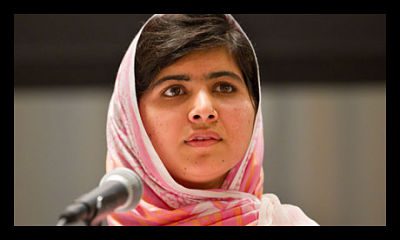
Malala Yousafzai, a Pakistani teenager shot by the Taliban after advocating for girls’ right to education, addressed the United Nations on her 16th birthday, speaking about the power of education to overcome extremism. The U.N. declared July 12 “Malala Day” to honor Yousafzai, who went back to school in March after recovering from the October attack.

According to a report released by UNESCO and Save the Children, 95 percent of the 28.5 million children who are not receiving a primary education live in low and lower-middle income countries, and girls make up 55 percent of those who are not in school. The report also stated that there were more than 3,600 documented attacks on education similar to that faced by Yousafzai. Listed below are five of her most inspiring “Malala quotes”, which highlight the influence and importance of education.

  1. “We realized the importance of pens and books when we saw the guns. The extremists are afraid of books and pens. The power of education frightens them.”
  2. “There was a time when women social activists asked men to stand up for women’s rights, but this time we will do it by ourselves.”
  3. “I raise up my voice – not so that I can shout, but so that those without a voice can be heard.””
  4. “We cannot succeed when half of us are held back.”
  5. “One child, one teacher, one book and one pen can change the world. Education is the only solution. Education first.”

– Katie Bandera

Sources: Huffington Post
Photo: The Guardian


Read Humanitarian Quotes.

July 27, 2013
https://borgenproject.org/wp-content/uploads/borgen-project-logo.svg 0 0 Borgen Project https://borgenproject.org/wp-content/uploads/borgen-project-logo.svg Borgen Project2013-07-27 03:00:552017-10-04 12:37:20Top 5 Malala Quotes
Education, Refugees and Displaced Persons

No Education for Adults Seeking Asylum

No Education for Adults Seeking Asylum
In the last few years, Australia has become very popular with young adults seeking asylum from their dangerous and crime-ridden homelands. The total number of requests for asylum has risen from 668 in 2008-2009 to 7379 in 2011-2012, with about 65% of the people screened last year aged 30 or younger.

The result of this increase has been that the country’s border patrol has increased and possibly gotten out of hand. The Department of Immigration and Citizenship’s current policy holds that those arriving at the country by ship who are on bridging visas lose their right to attend school at the end of the school term during which they turn 18. So, the second someone becomes an adult, they lose the right to a proper education.

Those who are seeking asylum in Australia are generally suffering persecution in their country of origin due to race, religion, gender, economic standing, or political affiliation. Many of them may be refugees and are unable to seek an education as a result. They travel to Australia with hopes that they may be able to improve their lives and flourish outside the harsh environment they had been living in.

A 17-year-old Hazara boy fled to Australia after he was persecuted in Afghanistan and Pakistan by extremists groups due to his race and therefore unable to go to school. Leaving his family and life behind, he came to seek education and work in a better place. But he has been left in a lurch thanks to the Australian government. He told The Global Mail, “When I was in my country I worked so hard, I like to work … part of the time work … to study as well. I like that. Now I am not allowed to work and study.”

Upon his arrival in the country, he was not allowed to enroll in school because he would soon be turning 18. He is also not allowed to work, but is provided a small government stipend to meet basic needs. The Red Cross pays for him to study English several hours a week, but otherwise, he just waits for his asylum claim to be processed.

The government argues that children of mandatory school age, 5-17, are put through school regardless of their asylum status but that it would be unreasonable to expect adults to stay in school because of the extra costs that are incurred as a result. However, the education of young adults is arguably just as important as that of children. Going to school provides the asylum seekers with a focus for their lives, makes them feel like part of a community, and provides them with a chance at bettering themselves before either settling down in Australia or getting repatriated back to their own country.

There are schools that are known for going against the government’s demands and allow adult students to stay and continue their education, but without citizenship, those seeking asylum are still unable to get government assistance for higher education or get jobs while they wait.

And things could be even bleaker than initially imagined. The Prime Minister announced on the 19th that all those arriving by boat would be removed to Papua New Guinea and would not be allowed to permanently settle in Australia. Those who are found to be refugees may stay in Papua New Guinea but otherwise must leave. There is no word on what this would mean for those currently waiting for ruling on their asylum requests in Australia, but it is clear that soon education will not be the only thing at stake for those fleeing their country and seeking help in Australia.

– Chelsea Evans

Sources: The Global Mail, Asylum Trends, New York Times
Photo: Harris

July 23, 2013
https://borgenproject.org/wp-content/uploads/borgen-project-logo.svg 0 0 Borgen Project https://borgenproject.org/wp-content/uploads/borgen-project-logo.svg Borgen Project2013-07-23 09:27:582020-07-19 21:38:05No Education for Adults Seeking Asylum
Human Rights, Women and Female Empowerment

5 Ways to Empower Women

5 Ways to Empower Women
Though women produce roughly half of the world’s food supply and are often held responsible for their family’s well being, they are treated as second-class citizens in many places around the world. According to the United Nations, women’s empowerment is important not only from a human rights standpoint but also because it is “a pathway to achieving the Millennium Development Goals and sustainable development.” Listed below are five ways to empower women that will simultaneously bolster the fight against global poverty.

1. Give a Microloan

Organizations such as Kiva allow people to lend small amounts of money to individuals who cannot access traditional banking systems. When given microloans, women can start their own small businesses and better support themselves and their families. Microloans also help women to gain financial independence, which often allows them to escape domestic violence.

2. Help Girls Empower Each Other

Girl Up, a United Nations organization, allows American girls to connect with their peers in developing nations. Girl Up ensures that girls across the world can inspire each other and learn to stand up for the rights and opportunities to which they are entitled.

3. End Gender-Based Violence

Roughly 70% of females experience physical or sexual violence during their lifetime, and many more are subjected to other forms of abuse. Social mobilization is imperative in the battle against gender-based violence because it ensures that educational, psychological, and legal resources are offered to the many women who face violence. Organizations such as Say NO: UNiTE To End Violence Against Women provides funding for advocacy programs, volunteer opportunities at shelters, and protective government legislation in order to eliminate gender-based violence.

4. Grant Equal Educational Opportunities

Two-thirds of children denied an education across the world are girls. Left uneducated, girls are much more likely to live in poverty because of their low-earning potential and high fertility rate. Girls who attain higher levels of education have fewer children, earn higher salaries, and encourage education within their own households, gradually reducing poverty over time. The UN’s Global Fund for Women works to bridge the educational gap by investing in organizations that provide women with valuable skills and knowledge.

5. Help Women Recover from Conflicts

Women are one of the most vulnerable populations in times of conflict, subject to higher rates of violence, rape, and poverty. Advocating for food assistance following violent conflict helps to ensure that women receive food assistance after they have been crippled by the difficult side effects of war. This assistance helps them to restart their lives, giving them the tools and training they need to rebuild their communities.

– Katie Bandera

Sources: WFP, Oprah, Huffington Post
Photo: Flickr

July 23, 2013
https://borgenproject.org/wp-content/uploads/borgen-project-logo.svg 0 0 Borgen Project https://borgenproject.org/wp-content/uploads/borgen-project-logo.svg Borgen Project2013-07-23 09:26:282024-05-25 00:03:385 Ways to Empower Women
Education, Women and Female Empowerment

Girl Rising Spotlights Education

girl_rising_education
“I feel as though I have power.” These are the powerful words of one of nine girls whose stories are documented in the critically acclaimed film “Girl Rising.” Released this year and featured on CNN recently, the documentary follows the struggles of nine girls in nine countries all striving to achieve the same goal: an education. The obstacles they faced were daunting. From forced marriage to war, from bondage to orphanhood, these girls were able to climb out of the depths of despair with a perseverance that has already inspired millions.

The film’s Academy Award nominated director, Richard Robbins, describes his film project’s founding goals as, “Change minds. Change lives. Change policy.” His vision has since led to the 10X10 organization, a campaign that strives to educate girls around the world. Centered around the film, 10X10 has spread its roots through partnerships with companies like Intel that run programs to educate the world’s women, and through networks like CNN that promote women’s education via featured programs and documentaries.

Among the inspiring stories told in the film are those of Sokha and Azmera. Sokha, an orphan from Cambodia, struggled for most of her life to find enough food to eat. And Azmera, one of two children in her Ethiopian family, was nearly married off at the young age of 13. But for each girl a guiding light,  a “series of miracles” in Sokha’s case, and an incredibly supportive brother in Azmera’s case, helped them get to school. Sokha and Azmera’s narratives are shared by those of their counterparts in the film originating from Egypt, India, Nepal, Peru, Afghanistan, Haiti, and Sierra Leone.

These girls have found fans in some of the biggest names in Hollywood. Meryl Streep, Anne Hathaway, Selena Gomez, Kerry Washington, Salma Hayak, Cate Blanchett, Frieda Pinto, Liam Neeson, Priyanka Chopra, Chloe Moretz, and Alicia Keys have all joined the campaign and are featured in the film.  In Meryl Streep’s own words, “If to see it is to know it, this film delivers hope; reasonable, measurable, tangible hope that the world can be healed and helped to a better future.”

– Lina Saud

Sources: 10 By 10 Act, Girl Rising, CNN
Photo: WWeek

July 22, 2013
https://borgenproject.org/wp-content/uploads/borgen-project-logo.svg 0 0 Borgen Project https://borgenproject.org/wp-content/uploads/borgen-project-logo.svg Borgen Project2013-07-22 11:54:432017-03-20 13:03:37Girl Rising Spotlights Education
Activism, Nonprofit Organizations and NGOs

10 Facts About Operation USA

Operation USA
Operation USA is an international relief agency that focuses on working with grass-roots groups to help alleviate the effects of natural and man-made disasters worldwide. The Los Angeles-based group was a co-recipient of the 1997 Nobel Peace Prize for its work on the “International Campaign to Ban Landmines.”

These are ten important facts about it:

  1. Since it was founded in 1979, the Operation has delivered over $350 million for relief and development projects.
  2. Operation USA was the first Western aid agency to become active in Phnom Penh after Pol Pot’s Khmer Rouge regime lost power.
  3. Through its innovative use of 747 cargo jets, it revolutionized aid delivery to Ethiopia during the 1984 famine.
  4. Operation USA was the first American non-governmental organization licensed to work in Cambodia and Vietnam after the Vietnam War ended.
  5. In June 2013, Operation USA, through its partnership with Honeywell Hometown Solutions, opened the Honeywell Ibasho House in Ofunato, Japan. Ibasho roughly translates as “a place where one feels at home.” The house will serve as a gathering place for the local community devastated by the 2011 earthquake and tsunami.
  6. Operation USA is completely privately funded.
  7. In 2008, the Operation began working with L’Athletique d’Haiti, a Haitian NGO focused on after-school sports programs for children living in the slums of Part-au-Prince. After the 2010 earthquake, the program’s soccer fields were turned into make-shift camps, housing around 500 families. It continues to work with the evolving needs of the people of Port-au-Prince through food aid and expanded organized sport opportunities for children.
  8. During its 33 years, it has worked in 99 different countries.
  9. Through multiple partner organizations, Operations USA is supporting education, livelihood, and health programs in Sri Lanka as the country’s population tries to rebuild from its recent civil war.
  10. 10. Operation USA has a stated focus on education, believing it to be the most cost-effective aid. Accordingly, the group has education projects in China, New Orleans, Nicaragua, and Haiti.

Bonus Fact: Julie Andrews is a founding Board Member, and Rosario Dawson also currently serves on the Board of Directors.

– Lauren Brown

Sources: ICBL, Operation USA
Photo: Food For The Poor

July 16, 2013
https://borgenproject.org/wp-content/uploads/borgen-project-logo.svg 0 0 Borgen Project https://borgenproject.org/wp-content/uploads/borgen-project-logo.svg Borgen Project2013-07-16 05:29:472024-12-13 17:49:2810 Facts About Operation USA
Page 62 of 67«‹6061626364›»

Get Smarter

  • Global Poverty 101
  • Global Poverty… The Good News
  • Global Poverty & U.S. Jobs
  • Global Poverty and National Security
  • Innovative Solutions to Poverty
  • Global Poverty & Aid FAQ’s
Search Search

Take Action

  • Call Congress
  • Email Congress
  • Donate
  • 30 Ways to Help
  • Volunteer Ops
  • Internships
  • Courses & Certificates
  • The Podcast
Borgen Project

“The Borgen Project is an incredible nonprofit organization that is addressing poverty and hunger and working towards ending them.”

-The Huffington Post

Inside The Borgen Project

  • Contact
  • About
  • Financials
  • President
  • Board of Directors
  • Board of Advisors

International Links

  • UK Email Parliament
  • UK Donate
  • Canada Email Parliament

Get Smarter

  • Global Poverty 101
  • Global Poverty… The Good News
  • Global Poverty & U.S. Jobs
  • Global Poverty and National Security
  • Innovative Solutions to Poverty
  • Global Poverty & Aid FAQ’s

Ways to Help

  • Call Congress
  • Email Congress
  • Donate
  • 30 Ways to Help
  • Volunteer Ops
  • Internships
  • Courses & Certificates
  • The Podcast
Scroll to top Scroll to top Scroll to top