• Link to X
  • Link to Facebook
  • Link to Instagram
  • Link to TikTok
  • Link to Youtube
  • About
    • About Us
      • President
      • Board of Directors
      • Board of Advisors
      • Financials
      • Our Methodology
      • Success Tracker
      • Contact
  • Act Now
    • 30 Ways to Help
      • Email Congress
      • Call Congress
      • Volunteer
      • Courses & Certificates
      • Be a Donor
    • Internships
      • In-Office Internships
      • Remote Internships
    • Legislation
      • Politics 101
  • The Blog
  • The Podcast
  • Magazine
  • Donate
  • Click to open the search input field Click to open the search input field Search
  • Menu Menu

Tag Archive for: Education

Posts

Global Poverty

Miseducation: A Short Film for the Why Poverty? Initiative

Miseducation: A Short Film for the Why Poverty? Initiative Miseducation is a short film produced in 2012 that follows 11 years old Kelina as she walks through Cape Town, South Africa on her way to school. The film offers a glimpse into the frightening reality that Kelina, and children just like her, face every day in her graffiti-covered home town, where gangs are omnipresent and the threat of violence is always near. The 4-minute documentary by Nadine Cloete opens with Kelina saying that she is scared to walk alone. She knows the dangers all too well; rape, kidnapping, gang violence, gun violence.  She is acutely aware of the risks because witnessing such atrocities in one of the poorest parts of South Africa is practically unavoidable. In an article for the New York Times, Cloete cites poverty as a major contributing factor to the violence and gang activity that plague South Africa. Her fear is that children from disadvantaged areas will perpetuate the violence they are exposed to the outside of school because they are not able to recognize that these conditions are not a normal part of childhood. Miseducation is one of 30 short films commissioned by the Why Poverty? initiative in November 2012.  These short films, along with 8 thought-proving documentaries, were created to inspire conversation and action toward relieving global poverty. All of the documentaries are free to view online and in spring 2013, the films will be available on DVD. Why Poverty? is not a fundraising organization, nor are they campaigning for a specific course of action. Their mission is simply to inspire conversation and to make people really think about poverty on both broad and intimate levels; how does poverty affect an entire nation? How does poverty affect one child? Their hope is that intelligent thought and discussion about the issues can not only raise awareness but also uncover the answer to a question that has been asked for far too long; why poverty? See Why Poverty? videos here.

 – Dana Johnson

Source: Why Poverty, New York Times, The Borgen Project
July 3, 2013
https://borgenproject.org/wp-content/uploads/borgen-project-logo.svg 0 0 Borgen Project https://borgenproject.org/wp-content/uploads/borgen-project-logo.svg Borgen Project2013-07-03 04:00:202020-07-14 22:45:48Miseducation: A Short Film for the Why Poverty? Initiative
Children, Education

The Nowhere Children: Global Child Labor

The Nowhere Children: Global Child Labor
Below the boom of Asian economies are millions of child workers. These children are working in dangerous, unsanitary and often times degrading conditions. They are the “Nowhere” children. Neither enrolled in school nor officially employed, these children live in the in-between space as children in a very adult world. The International Labor Organization (ILO) estimates that there may be around 48 million of these Nowhere children.

South Asia has the largest population of children in any region. Consequently, it is also home to some of the largest numbers of children involved in underage labor and exploitation. The ILO has also estimated that there are 21.6 million children, out of a population of 300 million between the ages of 5 and 14, who are working in South Asia.

Children who do not attend any form of schooling are more likely to wind up in child labor for more than 12 hours a day, seven days a week, with very little pay. Children in these conditions are also in harm’s way as they can be easily exploited and become the victims of violence.

What causes child labor is complex and multifaceted causes. Poverty and income inequality along with the lack of education and social protection are among the key causes. Many children are also trafficked into bonded labor. Additionally, culture in South Asia often dictates that children are often perceived as adults much earlier in their lives. Thus, Children are expected to work as hard as adults when they are as young as ten years old.

For this year’s International Day Against Child Labor, the humanitarian agency World Vision has called upon governments, businesses and civil society to take action to end child labor in the Asia Pacific.

Abid Gulzar, World Vision’s Advocacy and Justice for Children Associate Director in Asia and Pacific have stated that “Child labor doesn’t just take away childhood from children, it also triggers a vicious cycle of poverty and exploitation.” Thus he calls for increased access for these “Nowhere” children to education, proper nutrition and health services.  World Vision is the Co-Chair of the South Asia Coordinating Group on Action against Violence towards children (SACG).  World Vision has worked and continues to coordinate with the United Nation agencies and international Non-profit organizations for children’s rights in South Asia.

– Grace Zhao
Source: Thomas Reuters Foundation, International Labor Organization
Photo: Sunset Blogging

July 2, 2013
https://borgenproject.org/wp-content/uploads/borgen-project-logo.svg 0 0 Borgen Project https://borgenproject.org/wp-content/uploads/borgen-project-logo.svg Borgen Project2013-07-02 04:00:312024-05-24 23:58:10The Nowhere Children: Global Child Labor
Global Poverty

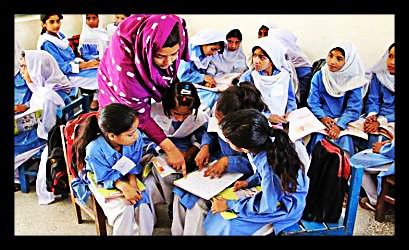
Teachers Education Program in Pakistan

Teachers Education Program in Pakistan

Armed with nuclear technology and on the border of Afghanistan, Pakistan has become an important country in the War on Terror. While the primary method for addressing terrorism has been militaristic and reactive, the United States Agency for International Development (USAID) has created a program to strengthen Pakistan’s educational system and thus help prevent the spread of terrorism – the Teachers Education Program.

Although it possesses nuclear technology and the world’s 6th largest military, Pakistan is still a developing country with roughly 60% of the population living close to or under the poverty line. Communities that struggle to meet basic needs are more susceptible to terrorist influences. The first step to converting someone into a terrorist is to meet the basic needs of a community that otherwise doesn’t have the resources to meet those needs.

The Teachers Education Program has recently awarded 200 scholarships of 20,000 Pakistani Rupees to students pursuing an associate’s or bachelor’s degree in education. This type of education reinforces the transition the Pakistani educational system is undergoing.

In Pakistan, the educational system is modernizing by moving from a base in rote memorization (which is founded on repetition) to a system based on critical thinking. With an updated and fortified educational system, Pakistani students will be better prepared to contribute to the economic development of their communities and thus limit the persuasive ability of terrorist cells.

Investing in the economic development of impoverished communities through education is an excellent way to prevent the spread of terrorism and strengthen the global economy.

– Pete Grapentien

Source The Express Tribune, University of Massachusetts
Photo: Facebook

June 30, 2013
https://borgenproject.org/wp-content/uploads/borgen-project-logo.svg 0 0 Borgen Project https://borgenproject.org/wp-content/uploads/borgen-project-logo.svg Borgen Project2013-06-30 11:08:172020-07-08 19:17:35Teachers Education Program in Pakistan
Children, Development, Education, Global Poverty

Birth Rates and Poverty in Niger

Birth Rates and Poverty in Niger
Niger is the seventh poorest country in the world. It is an example of the multitudinous effects of extreme poverty. With high political instability, high levels of gender inequality, high birth rates, high levels of malnutrition and ethnic conflict, attempts to lift Niger out of poverty have often failed because of the magnitude and multitude of problems to be faced.

The population of Niger works largely in fishing and farming. As a result, they are unusually susceptible to natural disasters and climate conditions. A 2005 drought that led to a massive food shortage had devastating effects on the people and the economy, with the IMF forgiving 100% of the nation’s debt, roughly $86 million USD. In 2010, famine wiped out many people and the country reported the outbreak of multiple diseases, with deaths due to diarrhea, starvation, gastroenteritis, malnutrition and respiratory diseases.

Education levels in Niger are among the lowest in the world, with many children unenrolled and children often forced to work instead of study. Nomadic children often do not have access to schools.

The high birth-rates in Niger are a problem, as they contribute to an expanding population whose families cannot support them. This is partly as a result of the belief that the greater the number of children one family has, the greater the chance that a family will be lifted out of poverty when one finds success.

– Farahnaz Mohammed
Source: Richest.org, DW.DE
Photo: Niger Delta Rising

June 27, 2013
https://borgenproject.org/wp-content/uploads/borgen-project-logo.svg 0 0 Borgen Project https://borgenproject.org/wp-content/uploads/borgen-project-logo.svg Borgen Project2013-06-27 06:47:152020-07-06 18:39:15Birth Rates and Poverty in Niger
Development, Global Poverty

Poverty Reduction in the Comoros

Poverty Reduction in the Comoros
The Comoros consists of four islands located in the Indian Ocean near Madagascar and Mozambique. Affectionately calling their country Masiwa, or “the islands”, the population totals to 1,080,000 citizens. The country, among several other small island states, is considered underdeveloped. Although the country gained independence in 1975, political and institutional crises created sustained instability.

In 2012, the Union of the Comoros, under the leadership of the newest president, Dr. Ikililou Dhoinine, drafted an official Poverty Reduction Strategy, highlighting six distinct goals to reducing their nation’s poverty.

1. Stabilize the economy by building a foundation for strong equity.

Although the external debt of the Comoros is said to remain unsustainable, the country’s external trade has increased from 47.8% in 2010 to 52% in 2011, increasing imports from 8.9% in 2010 to 9.1% in 2011.

2. Strengthen profitable sectors, including institution building and participation of private economic operators.

The Comorian government has set a priority to repair highly damaged roads including 17 km on Ngazidja, 17 km on Ndzouani, and 6.5 km on Mwali, among other main highway repairs.

3. Strengthen governance and social cohesion.

Studies on citizenship, prejudice, discrimination, the roles of women and youth in society, the establishment of 16 peace committees, introducing biometrics into the electoral process, and the institutionalization of a national commission to fight corruption.

4. Improve the health of citizens.

According to the recently drafted strategy, 300 households are currently benefiting from implemented sanitation programs, far surpassing the target set in 2011. A sanitary water network has reached 23 km, active in Djando on Mohéli, Domoni, and Sima on Anjouan.

Fighting against avoidable illnesses has also made significant progress. Through obtaining instruments and equipment, support for training programs, and the installation and management of vaccine distribution. Comorians were able to see high percentages of vaccination effectiveness per antigen.

5. Promote education and vocational training.

The main objective in education was to improve access to educational institutions per capita. Enrollment in professional and vocational roles reported an increase from 3% in 2010 to 8% in 2011. Although this rate is lower than the projected improvement of 15%, there has been a significant increase in admissions at the University of the Comoros.

6. Promote environmental sustainability and civil society.

Priority zones for biodiversity conservation resulted in the completion of five inventories of flora and fauna, exceeding the 2011 forecast. 1,531 citizens were educated in several areas of agricultural management, complying with government-instated goals for sustainable use of renewable resources.

Although one out of two people in the Comoros is considered poor, the Comorian government is taking active steps to reduce their poverty and improve the lives of their citizens.

– Kali Faulwetter

Sources: IMF, Every Culture, Maps of World

June 24, 2013
https://borgenproject.org/wp-content/uploads/borgen-project-logo.svg 0 0 Borgen Project https://borgenproject.org/wp-content/uploads/borgen-project-logo.svg Borgen Project2013-06-24 07:37:572024-06-04 02:43:53Poverty Reduction in the Comoros
Advocacy, Children, Global Poverty

Protecting Our Future: Save the Children

Save the Children
The dedicated workers of Save the Children have been affecting positive, lasting change in children’s lives for the past 81 years with no signs of slowing down. They partner with local governments and organizations in vulnerable communities to offer children support and protection from neglect, exploitation, violence, poverty, malnutrition, inferior medical care and education, and much more.

With offices spread across 120 countries, the organization has helped millions of children in Africa, Asia, America, the Middle East, Europe, Latin America, and the Caribbean. In 2012 alone, they helped more than 125 million children overcome obstacles including poverty, illiteracy, obesity, and abuse.

Save the Children focuses on the following key areas:

  • Child protection – Save the Children fosters child protection programs such as child trafficking awareness campaigns, and advocates for policy and services improvement to protect children affected by disasters, conflict, or development setting.
  • Newborn and child survival – Each year, close to 7 million children die before their 5th birthday. Save the Children works to prevent senseless deaths by training health workers to deliver inexpensive medical interventions.
  • Education – the organization coaches educators in effective teaching techniques, offer opportunities to continue education beyond the classroom, and ensures learning continues in times of crisis.
  • Emergency response – In times of natural disaster or civil conflict, the organization provides food, medical care, education, and support throughout the recovery process.
  • Health and nutrition – Save the Children works to make quality maternal and reproductive healthcare, newborn and child healthcare, nutrition education, adolescent sexual and reproductive healthcare, and emergency healthcare available to impoverished communities.
  • HIV/AIDS – the organization offers prevention education programs to stop the spread of AIDS beyond the 3.4 million children currently living with the disease. They also offer protection programs to children orphaned by the disease.
  • Hunger and livelihoods – its hunger and livelihood programs focus on increasing food supply, educating farmers to produce higher yields, teaching parents the benefits of a varied diet, and teaching children how to manage money and find work.

The organization is recognized by regulatory services as a leader among nonprofit organizations; The American Institute of Philanthropy (AIP) awarded it an A+ rating. The BBB Wise Giving Alliance has determined that Save the Children meets all of the standards for charity accountability. Charity Navigator awarded Save the Children their 11th consecutive overall 4 out of 4 stars rating in 2012. The Forbes 200 Largest U.S. Charities List rated the organization’s fundraising efficiency at 92%, and their charitable commitment at 91%. Great Nonprofits named them the recipient of a 2012 Top-Rated Award. And America’s Greatest Brands featured Save the Children as one of the strongest and most trusted humanitarian relief and development philanthropies.

The amazing work being done by Save the Children can be multiplied even further by charitable contributions to their Global Action Fund. To make a donation, please visit the Global Action Fund webpage.

– Dana Johnson

Source: Save the Children, Global Action Fund

June 22, 2013
https://borgenproject.org/wp-content/uploads/borgen-project-logo.svg 0 0 Borgen Project https://borgenproject.org/wp-content/uploads/borgen-project-logo.svg Borgen Project2013-06-22 05:30:452024-06-05 01:53:31Protecting Our Future: Save the Children
Children, Education

Adopt an ECD

Adopt an ECD
Early childhood development (ECD) is an aspect of life that kids in Africa can’t afford to take for granted. Only 43% of children under five in South Africa have access to these crucial programs either at home or in a specialized center. Exposing children to ECD programs is an important factor in their ability to grow into intelligent adults, and also plays a crucial role in lifting them out of poverty.

To change the vicious cycle of poverty, the National Development Agency is launching the Adopt an ECD campaign to allow more kids the chance to participate in early childhood development programs. The most prevalent reason children do not have access to these programs is because their families simply cannot afford them. And without early childhood development programs, most kids will grow up without the education and skills necessary to raise themselves out of poverty, thus continuing the cycle.

The Adopt an ECD campaign allows individuals and organizations to donate money, supplies, or work hours to help create more accessible programs for kids. The donations will go toward building new schools and daycare centers, buying school supplies, or renovating buildings to be more child-friendly. When individuals and businesses help contribute to the campaign, they are not only helping educate children, they’re also helping end global poverty.

– Katie Brockman

Source: Mail & Guardian
Photo: World Vision

June 22, 2013
https://borgenproject.org/wp-content/uploads/borgen-project-logo.svg 0 0 Borgen Project https://borgenproject.org/wp-content/uploads/borgen-project-logo.svg Borgen Project2013-06-22 05:00:582024-05-24 23:56:05Adopt an ECD
Advocacy, Children, Women and Female Empowerment

Four Steps to Ending Child Marriage

end-child-marriage

Ending the practice of child marriage is an important step in eradicating global poverty and improving global health. Countries that have a high rate of documented child marriages also rank high in infant and maternal mortality as well as perpetual poverty. Here are some key steps to ending the practice:

  1. Transform cultural norms; In many places, child marriages are considered acceptable no matter the age or age difference between prospective spouses.
  2. Establish community-based programs; Often, the groups that are the most effective in combating such issues are already rooted in the affected communities. Such grassroots efforts, when combined with enforced national laws and policies that prohibit child marriage can greatly decrease them.
  3. Increase education; Girls who have access to education are less likely to marry early than those with minimal or no schooling. Even girls who are married, however, should be to encourage their education. This will help to make them more qualified for any economic opportunities that may come their way.
  4. Provide economic opportunity; Many girls enter into marriage at a young age because of the dowry given to their family by their prospective groom. Young women are also sometimes forced into marriage by their families when they can no longer afford to take care of them, or when it appears that the groom’s family will be able to better provide for her. Thus, practices such as micro-lending, savings clubs, and job placement programs can provide other options.

– Samantha Mauney

Source: ICRW
Photo: Sulekha

June 17, 2013
https://borgenproject.org/wp-content/uploads/borgen-project-logo.svg 0 0 Borgen Project https://borgenproject.org/wp-content/uploads/borgen-project-logo.svg Borgen Project2013-06-17 08:40:092021-06-21 17:26:11Four Steps to Ending Child Marriage
Developing Countries

Deciphering the Human Development Index

Katine-family-past-blog_human_development_index_family_health_education_income_africa_family_opt
s The Human Development Index (HDI) is a composite measure of health, education, and income which was introduced by the United Nations Development Programme in 1990 as an alternative to purely economic assessments of national progress, such as Gross Domestic Product growth. In the field of international development, the HDI soon became the most widely accepted and cited measure of its kind.

Many developing countries in the 1980s faced strict structural adjustment conditions imposed by financial institutions like the World Bank and the International Monetary Fund.  To avoid a financial crisis and get the loans they needed, these countries had to undergo massive economic restructuring that involved currency devaluation, government spending cuts, business deregulation, and reducing taxes for the wealthy. Not surprisingly, the social impact was harsh for the average citizen and the human condition worsened. Do you remember the images of people burning money to keep warm? It was in light of this situation that the United Nations advocated for a human development approach, as opposed to a business development approach.

1990 was the beginning of a campaign by the UNDP for a people-focused strategy towards development, and hence the birth of the Human Development Index. The HDI emphasized that people and their capabilities should be the ultimate criteria for assessing the development of a country, not economic growth alone. The HDI was designed to reflect average achievements in three basic aspects of human development – leading a long and healthy life, being knowledgeable and enjoying a decent standard of living.

The main components used to calculate a country’s HDI are Life Expectancy at Birth, Gross National Income per Capita, Mean Years of Schooling and Expected Years of Schooling. From these, a number between 0 and 1 is produced – with 1 being the best possible HDI and 0 being the worst possible HDI. As of 2012, Norway ranked number 1 out of 187 countries with an HDI of 0.955.  Niger and the Democratic Republic of the Congo tied for last place with an HDI of 0.304.

The HDI can be revealing in other ways as well. For example, how is it that two countries with the same level of GNI per capita can end up with such different human development outcomes? The Bahamas’ GNI per capita is higher than New Zealand’s (by 17%) but because life expectancy at birth is about 5 years shorter, mean years of schooling is 4 years shorter and expected years of schooling differ greatly between the two countries; New Zealand has a much higher HDI value than the Bahamas.

Although the Human Development Index is a more holistic measure of human development in a country when compared to GDP per capita, the HDI is still not all-inclusive. The HDI, for example, does not reflect political participation or gender inequalities. The Inequality-adjusted HDI, Gender Inequality Index and Multidimensional Poverty Index offer other insights into a country’s development status.

According to the 2012 HDI, the top ten countries with the best human development are:

1.    Norway

2.    Australia

3.    USA

4.    Netherlands

5.    Germany

6.    New Zealand

7.    Ireland (tied for 7/8 spot)

8.    Sweden (tied for 7/8 spot)

9.    Switzerland

10.   Japan

Out of the 187 countries counted in the 2012 HDI, the bottom ten countries with the least human development are:

177.  Sierra Leone

178.  Burundi

179.  Guinea

180.  Central African Republic

181.  Eritrea

182.  Mali

183.  Burkina Faso

184.  Chad

185.  Mozambique

186.  Democratic Republic of the Congo (tied for last place)

186.  Niger (tied for last place)

– Maria Caluag

Source: UNDP
Photo: Guardian

June 9, 2013
https://borgenproject.org/wp-content/uploads/borgen-project-logo.svg 0 0 Borgen Project https://borgenproject.org/wp-content/uploads/borgen-project-logo.svg Borgen Project2013-06-09 05:00:472024-05-24 23:54:04Deciphering the Human Development Index
Global Poverty

2 Reasons Urbanization Helps Curb Poverty

2 Reasons Urbanization Helps Curb Poverty

In light of the U.N.’s Millenium Development Goals ending in two years and its own goal to end global poverty by 2030, the World Bank has published its annual report on the issue: the Global Monitoring Report 2013. In it, urbanization is strongly linked to alleviation of poverty. Jos Verbeek, the leading economist on the report, cites the following reasons.

  1.  “[Cities],” he says, “are centers of economic activity, growth and job creation; consequently, poverty is significantly lower in urban centers than in rural areas.”
  2. Due to their superior infrastructure, he says urban areas are also better at service delivery. For example, access to sanitation [such as toilets] is about 80 percent in urban areas and about 50 percent in rural ones. In Africa, about 40 percent of the population in urban areas have access to a toilet, while only half that amount have access in rural areas. Verbeek also states that due to their size, it is easier for urban areas to extend services such as health care, education, and clean water.

Verbeek does warn, however, that unchecked development can lead to slums. He implies that the institutions within a developing region are just as important as the cities themselves. For instance, urban planning is vital to increase the efficiency of buying and selling land. He says, “If there is uncertainty [over land ownership], then public providers will not come in and extend water pipes into the slums – because no one knows for sure if the slums will still be there a year from now. Government might [decide to] empty them out, which in certain countries has happened in the past.”

– Samantha Mauney

Source: Voice of America
Photo: Goway

June 4, 2013
https://borgenproject.org/wp-content/uploads/borgen-project-logo.svg 0 0 Borgen Project https://borgenproject.org/wp-content/uploads/borgen-project-logo.svg Borgen Project2013-06-04 07:30:072024-06-07 04:52:032 Reasons Urbanization Helps Curb Poverty
Page 64 of 67«‹6263646566›»

Get Smarter

  • Global Poverty 101
  • Global Poverty… The Good News
  • Global Poverty & U.S. Jobs
  • Global Poverty and National Security
  • Innovative Solutions to Poverty
  • Global Poverty & Aid FAQ’s
Search Search

Take Action

  • Call Congress
  • Email Congress
  • Donate
  • 30 Ways to Help
  • Volunteer Ops
  • Internships
  • Courses & Certificates
  • The Podcast
Borgen Project

“The Borgen Project is an incredible nonprofit organization that is addressing poverty and hunger and working towards ending them.”

-The Huffington Post

Inside The Borgen Project

  • Contact
  • About
  • Financials
  • President
  • Board of Directors
  • Board of Advisors

International Links

  • UK Email Parliament
  • UK Donate
  • Canada Email Parliament

Get Smarter

  • Global Poverty 101
  • Global Poverty… The Good News
  • Global Poverty & U.S. Jobs
  • Global Poverty and National Security
  • Innovative Solutions to Poverty
  • Global Poverty & Aid FAQ’s

Ways to Help

  • Call Congress
  • Email Congress
  • Donate
  • 30 Ways to Help
  • Volunteer Ops
  • Internships
  • Courses & Certificates
  • The Podcast
Scroll to top Scroll to top Scroll to top