• Link to X
  • Link to Facebook
  • Link to Instagram
  • Link to TikTok
  • Link to Youtube
  • About
    • About Us
      • President
      • Board of Directors
      • Board of Advisors
      • Financials
      • Our Methodology
      • Success Tracker
      • Contact
  • Act Now
    • 30 Ways to Help
      • Email Congress
      • Call Congress
      • Volunteer
      • Courses & Certificates
      • Be a Donor
    • Internships
      • In-Office Internships
      • Remote Internships
    • Legislation
      • Politics 101
  • The Blog
  • The Podcast
  • Magazine
  • Donate
  • Click to open the search input field Click to open the search input field Search
  • Menu Menu

Tag Archive for: Corruption

Posts

Global Poverty

Assessing the Impact of the Magnitsky Act on the Russian Economy

impact of the Magnitsky Act on the Russian economy
Much has been written about the Magnitsky Act, especially considering that it is a longstanding source of resentment among prominent Russians. However, remarkably little research has been done about the impact of the Magnitsky Act on the Russian economy.

What the Magnitsky Act Does

In 2014, the United States passed the Magnitsky Act, which was an effort to punish Russia for alleged human rights violations surrounding the death of a whistleblower who tried to alert the public to the alleged corruption that had been taking place in Russia for the previous several years. The intent was to sanction the individuals responsible for the death of Sergei Magnitsky, without impacting the majority of Russian citizens who had nothing to do with it.

The Magnitsky Act is notable because it attempts to punish solely the Russians responsible for Magnitsky’s death, rather than Russia as a whole. Rather than blanket import/export bans, the Magnitsky Act freezes the assets of the Russians implicated in the death of Sergei Magnitsky, the victim for whom the legislation is named. Additionally, it bans these individuals from obtaining visas to enter the United States.

The Magnitsky Act has been followed by the Global Magnitsky Act, which applies these punishments to any citizen of any country who is suspected of aiding the activity of the Russians in question. Additionally, other countries, including Canada and the United Kingdom, have passed their own versions of this legislation.

Impact of the Magnitsky Act on the Russian Economy

Although the intent of the Magnitsky Act was to have minimal impact on the Russian economy or the lives of average Russian citizens, it is fair to assume that there has been some effect. Russia retaliated in 2014 by banning all food imports from Europe and the United States for a period of one year. This is in addition to banning all adoptions of Russian children by American citizens, which has become a major point of contention in recent years.

After the passage of the original legislation, its authors stressed that the impact of the Magnitsky Act on the Russian economy was meant to be positive. The reasoning was that the Magnitsky Act would discourage the corruption and theft that supposedly limit Russia’s economic growth prospects. However, there is little evidence to prove that this has been uniformly the case.

Moving Forward with the Magnitsky Act

As an upper-middle income country, Russia’s standard of living and other metrics of assessing the average Russian’s state of economic affairs continue to lag behind the advanced industrial economies of the world. However, it is not possible to decisively say how much of this is due to the corruption that the Magnitsky Act and its supporters allege. More research should be done into the impact of the Magnitsky Act on the Russian economy, as it is difficult to say whether the authors of this legislation were right to craft it the way they did.

Because of this lack of decisive data, it is difficult to evaluate the impact of the Magnitsky Act on the Russian economy. There is no question that the Act plays an important normative role in signaling that the United States will exact consequences on violators of human rights, but whether it has the positive economic effects that its authors claimed it would is still not possible to assess. It seems likely that targeted sanctions like these could be a valuable tool to respond to potential human rights violations going forward, but they must be used with caution until a clear understanding of their broader impact is reached.

– Michaela Downey

Photo: Flickr

May 27, 2018
https://borgenproject.org/wp-content/uploads/borgen-project-logo.svg 0 0 Borgen Project https://borgenproject.org/wp-content/uploads/borgen-project-logo.svg Borgen Project2018-05-27 09:29:112019-10-28 15:21:36Assessing the Impact of the Magnitsky Act on the Russian Economy
Education, Government

How Improving Governance Helps Growth in Developing Countries

How Improving Governance Helps Growth in Developing Countries
It’s all too true that in most developing or vulnerable countries, local or national governments are tyrannical and corrupt. These governments have a propensity to abuse power, favor the rich and ignore the oppressed. However, by improving governance in the developing world, there is hope that unethical practices will be removed and replaced with unprejudiced laws that will fairly benefit everyone.

Problems Surrounding Corrupt Government

Numerous problems surrounding nefarious practices in underdeveloped countries stem from a lack of morality, discriminatory systems and misuse of power. The World Bank reports that in vulnerable countries, a disparate sharing of authority is a common problem that causes countries to stay in a state of impoverishment rather than move toward more progressive procedures that would allow for quicker growth and sustainability.

Unfortunately, it’s easier for the already-powerful leaders to resist change rather than consider the development of new policies for improving governance to benefit the whole society, regardless of economic class.

Additionally, there are many other factors that contribute to shady practices in the governments of developing countries. One of these practices is patrimonialism, which is defined in the Encyclopedia Britannica as a “political organization in which authority is based primarily on the personal power exercised by a ruler, either directly or indirectly.” This means that too much power can easily be granted to one person or group of persons (oligarchy), rather than having different governmental branches to limit what can and cannot be done.

What Steps Can be Taken Towards Improving Governance?

In a patrimonialistic society, the land or state is “owned” by a leader, granting that person the freedom to do as he, she, or they please. This power structure contributes to the cycle of poverty — wealthy land is distributed to the other wealthy people, allowing those choice few to access the best schools, homes and healthcare; on the other hand, the slums are given to the lower class, eliminating chances to thrive in a fair economy. Ultimately, this system halts economic growth for all the citizens.

The OECD Observer gives two good examples of a patrimonialistic society; the first being Morocco, where admittance to bureaucracy protects access to economic benefits, and the next being in the Philippines, where political sovereignty can be bought and sold.

Citizen-Based Elections

A great way to combat corruption, poverty and improve economic growth is by initializing citizen-based elections. According to USAID, more than half of the world’s populace live under only partly free governments, which limits their civil liberties, causing the inability to freely engage in politics. In democratic elections, the people are granted a voice in choosing who they wish to run their government.

USAID easily lays out the course for democratic elections. The steps include freedom of speech, association and assembly; elections as an essential tool to bolster political openings and cooperation; assembling advocates and describing different political platforms to the public and encouraging political debate.

Education

Another step toward improving governance is creating equal educational opportunities for all people. A large problem in the political sphere of third-world countries is the lack of education that causes many citizens who live in poverty to not fully understand politics; in turn they lack the skills to actively participate in events such as elections or assemblies.

Not only will education improve political understandings, but it will create jobs and give students the skills needed to be seen as valuable by future employers, improving economic growth and sustainability. With higher education comes higher knowledge and realization, skills that permit citizens to see and understand what areas in their countries need change.

Public Policy and Building Democracy

One of the best ways to promote better government is through improving public policy and actively working on building a democracy. In the developing world, the people and citizens are often ignored, and their opinions are thought to be arbitrary and unimportant to those high on the political spectrum.

However, in a democratic society, the people get to vote in elections for issues such as industrial projects and new laws. To help aid in understanding public policy and democracy, The World Bank created the Governance Global Practice, which aims to initiate trust between the government and the people.

Despite all of the concerns facing governments in third-world countries, these nation-states are not hopeless. Many countries work towards improving governance and government practices. In fact, organizations such as The World Bank, USAID and the United Nations provide hope for those searching for a better quality of life, and thereby foster countries to work towards a brighter future.  

– Rebecca Lee
Photo: Flickr

May 23, 2018
https://borgenproject.org/wp-content/uploads/borgen-project-logo.svg 0 0 Borgen Project https://borgenproject.org/wp-content/uploads/borgen-project-logo.svg Borgen Project2018-05-23 01:30:332019-11-18 12:10:56How Improving Governance Helps Growth in Developing Countries
Education, Global Poverty

Identifying the Multiple Causes of Poverty in Africa

Africa

The causes of poverty in Africa cannot be narrowed down to one single source. As a developing country, Africa has a lengthy history of external, internal and man-made forces at work to bring about the circumstances this continent suffers from today.

In sub-Saharan Africa, almost 220 million people, half the population, live in poverty. Worsened by the HIV/AIDS epidemic, cultural conflict and ethnic cleansing, Africa faces many challenges that directly correlate with its impoverished status.

Poor Governance

Poor governance, one of the major causes of poverty in Africa, involves various malpractices by the state and its workers. This malpractice has led many African leaders to push away the needs of the people. Having created the “personal rule paradigm,” where they treat their offices as a form of property and personal gain, these leaders openly appoint underqualified personnel in key positions at state-owned institutions and government departments. This type of governance affects the poorest people and leaves them vulnerable, as they are denied basic necessities such as healthcare, food and shelter.

Corruption

Corruption has been and still is a major issue in the development of and fight against poverty in Africa, specifically sub-Saharan Africa (SSA). SSA is considered to be among the most corrupt places in the world. According to a survey conducted by World Anti-Corruption, corruption in Africa is “due to the fact that many people in Africa believe that family relations are more important than country identity. Therefore, those in power use bias and bribery for the gain of their relatives at the expense of their country.”

Corruption costs SSA roughly $150 billion a year in lost revenue. While some countries in Africa, such as Ghana, Tanzania and Rwanda, have made some progress in the fight against corruption, there are still many lagging very far behind. A lack of effort to solve this issue only worsens the causes of poverty in Africa today.

Poor Education

Lack of education is also a serious issue that contributes to the causes of poverty in Africa. This absence is especially felt in sub-Saharan Africa, which has the highest rates of educational exclusion. Over one-fifth of children between the ages of about six and 11 are out of school, followed by one-third of youth between the ages of about 12 and 14. Almost 60 percent of youth between the ages of about 15 and 17 are not in school.

Education for girls has become a major focus of support groups like UNICEF, UNESCO and the UIS. With poor access to school, lack of sanitary facilities and social norms like female genital mutilation and child marriage, the right to women’s education is even less of a priority in impoverished communities.

However, education, especially girls’ education, has been proven to be one of the most cost-effective strategies for promoting economic growth. According to UNICEF, “studies have shown that educated mothers tend to have healthier, better-nourished babies and that their own children are more likely to attend school; thus helping break the vicious cycle of poverty.”

Healthcare

Poor healthcare is a major cause of poverty in Africa because the poor cannot afford to purchase what is needed for good health, including sufficient quantities of quality food and healthcare itself. With a lack of education on preventing infectious diseases like malaria and HIV/AIDS, as well as the costs of consultations, tests and medicine, people living in poverty are at a severe disadvantage that only perpetuates the poverty cycle.

With a strong fight against many forces still ahead of this nation, Africa must weed out the corruption and poor government, and promote strong education and efficient healthcare for all, in order to take a big leap forward in its development as a continent.

– Kailey Brennan

Photo: Flickr

January 28, 2018
https://borgenproject.org/wp-content/uploads/borgen-project-logo.svg 0 0 Borgen Project https://borgenproject.org/wp-content/uploads/borgen-project-logo.svg Borgen Project2018-01-28 01:58:422024-05-29 22:39:00Identifying the Multiple Causes of Poverty in Africa
Advocacy, Global Poverty, Hunger

The Top 10 Most Important Current Global Issues

current global issues

Among all the good in the world, and all the progress being made in global issues, there is still much more to be done. Given the overwhelming disasters that nations, including the U.S., have been or still are going through, it is important to be aware of the most pressing global issues.

Top 10 Current Global Issues

  1. Climate Change
    The global temperatures are rising, and are estimated to increase from 2.6 degrees Celsius to 4.8 degrees Celsius by 2100. This would cause more severe weather, crises with food and resources and the spread of diseases. The reduction of greenhouse emissions and the spreading of education on the importance of going green can help make a big difference. Lobbying governments and discussing policies to reduce carbon emissions and encouraging reforestation is an effective way of making progress with climate change.
  2. Pollution
    Pollution is one of the most difficult global issues to combat, as the umbrella term refers to ocean litter, pesticides and fertilizers, air, light and noise pollution. Clean water is essential for humans and animals, but more than one billion people don’t have access to clean water due to pollution from toxic substances, sewage or industrial waste. It is of the utmost importance that people all over the world begin working to minimize the various types of pollution, in order to better the health of the planet and all those living on it.
  3. Violence
    Violence can be found in the social, cultural and economic aspects of the world. Whether it is conflict that has broken out in a city, hatred targeted at a certain group of people or sexual harassment occurring on the street, violence is a preventable problem that has been an issue for longer than necessary. With continued work on behalf of the governments of all nations, as well as the individual citizens, the issue can be addressed and reduced.
  4. Security and Well Being
    The U.N. is a perfect example of preventing the lack of security and well being that is a serious global issue. Through its efforts with regional organizations and representatives that are skilled in security, the U.N. is working toward increasing the well being of people throughout the world.
  5. Lack of Education
    More than 72 million children throughout the globe that are of the age to be in primary education are not enrolled in school. This can be attributed to inequality and marginalization as well as poverty. Fortunately, there are many organizations that work directly with the issue of education in providing the proper tools and resources to aid schools.
  6. Unemployment
    Without the necessary education and skills for employment, many people, particularly 15- to 24-year olds, struggle to find jobs and create a proper living for themselves and their families. This leads to a lack of necessary resources, such as enough food, clothing, transportation and proper living conditions. Fortunately, there are organizations throughout the world teaching people in need the skills for jobs and interviewing, helping to lift people from the vicious cycle of poverty.
  7. Government Corruption
    Corruption is a major cause of poverty considering how it affects the poor the most, eroding political and economic development, democracy and more. Corruption can be detrimental to the safety and well being of citizens living within the corrupted vicinity, and can cause an increase in violence and physical threats without as much regulation in the government.
  8. Malnourishment & Hunger
    Currently there are 795 million people who do not have enough to eat. Long-term success to ending world hunger starts with ending poverty. With fighting poverty through proper training for employment, education and the teaching of cooking and gardening skills, people who are suffering will be more likely to get jobs, earn enough money to buy food and even learn how to make their own food to save money.
  9. Substance Abuse
    The United Nations reports that, by the beginning of the 21st century, an estimated 185 million people over the age of 15 were consuming drugs globally. The drugs most commonly used are marijuana, cocaine, alcohol, amphetamine stimulants, opiates and volatile solvents. Different classes of people, both poor and rich, partake in substance abuse, and it is a persistent issue throughout the world. Petitions and projects are in progress to end the global issue of substance abuse.
  10. Terrorism
    Terrorism is an issue throughout the world that causes fear and insecurity, violence and death. Across the globe, terrorists attack innocent people, often without warning. This makes civilians feel defenseless in their everyday lives. Making national security a higher priority is key in combating terrorism, as well as promoting justice in wrongdoings to illustrate the enforcement of the law and the serious punishments for terror crimes.

With so many current global issues that require immediate attention, it is easy to get discouraged. However, the amount of progress that organizations have made in combating these problems is admirable, and the world will continue to improve in the years to come. By staying active in current events, and standing up for the health and safety of all humans, everyone is able to make a difference in changing the fate of our world.

– Chloe Turner

Photo: Flickr


January 18, 2018
https://borgenproject.org/wp-content/uploads/borgen-project-logo.svg 0 0 Borgen Project https://borgenproject.org/wp-content/uploads/borgen-project-logo.svg Borgen Project2018-01-18 07:30:302024-05-29 22:30:05The Top 10 Most Important Current Global Issues
Global Poverty

SDGs in Developing Countries

SDGs 2030: Will The Governments Of Developing Countries Deliver?Sustainable Development Goals or SDGs in developing countries have been viewed as ambitious. However, more efforts have been invested in the continuous realization of these development goals by international communities, nonprofit organizations, civil societies and, of course, domestic governments.
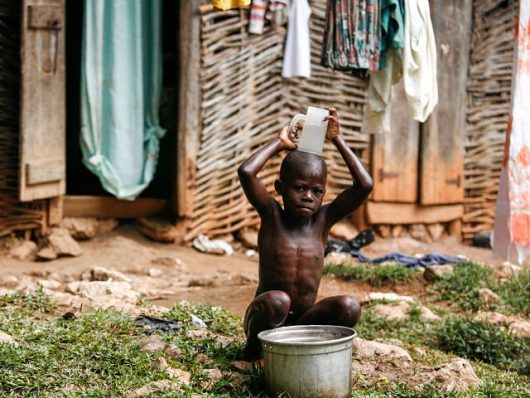
SDGs and Developing Countries

According to reports, to achieve one of the SDG targets, the “sustainable management of water and sanitation for all” will cost $27 billion per year by 2030 and the infrastructure will cost up to $290 billion. Is this too ambiguous for the national governments in the developing world? Or a pitiable reason to hide from actualizing these goals nationally.

Developing countries have been a major focus of the SDGs. With the idea that ‘no one will be left behind’, the U.N. and its partners have contributed immensely in solving a long list of issues faced by the developing world. Funds have been deposited and used for different projects. Expertise in creating sustainable solutions and commitments are being made to secure a better future. 

SDG Index

The SDG performance by countries is determined by the SDG Index and Dashboard on a scale of 0 to 100, where 0 represents the lowest level of performance and 100 is the highest level of performance. Countries like Sweden (84.5), Denmark (83.9), Norway (82.3) and Finland (81) rank high in achieving their SDGs.

Countries such as the Central African Republic (26.1), Liberia (30.5) and Niger (31.4) are not doing as well as the aforementioned countries. Evidently, these countries are some of the poorest in the world. A poor economy can be one of the causes for weak results.

Politics and SDGs in Developing Countries

One of the reasons slowing down the SDGs in developing countries is that development projects are usually abandoned by their governments. This normally happens in rival socio-political settings.

In Africa, most projects funded and managed by previous administrations are eventually stopped or replaced by the ruling administrations due to different political views, political parties or general lack of interest.

Some farmers in Nigeria have criticized the replacement of the Growth Enhancement Support (GES) scheme by the former president Goodluck Jonathan’s administration with the current president Muhammadu Buhari’s Agricultural Implements and Mechanisation Services (AIMS).

“There is always a policy somersault. This government will bring this one and when another person comes, they will bring another one whether it is good or not.”, said Daniel Okafor, Vice President of Root and Tubers of the All Farmers Association of Nigeria (AFAN).

The farmers are upset with their government as it continues to create new programs without improving the old ones. More often, the development policies and programs are often aligned with the vision of developmental goals but may lack seriousness due to the ulterior motives.

In developing countries, parties struggle to own power and when they eventually do gain power, eliminating the projects of the previous administration becomes the primary goal.

The lack of bipartisanship in the polity environment brews enough hatred; shutting down any programs related to the opposition party no matter how promising they are.

Kofi Annan, former Secretary-General of the U.N. noted that bipartisanship can promote peace, unity and growth. Political parties should stand for a common goal regardless of their political views and hustle for power. Ideas can be shared and implemented with the help of the other parties.

Bipartisanship will ease congressional processes in changing, debating and making laws that can benefit the realization of SDGs.

Corruption and SDGs in Developing Countries

Corruption can also cause a lot of setbacks. Africa loses $50 billion every year due to corruption. The Sustainable Development Goal 16, Peace, Justice and Strong Institutions, covers commitments to fight corruption and encourage transparency.

Corruption impedes national development, hinders economic growth, slows or shutdown developmental programs on education, labor, healthcare, water and sanitation and leads to more poverty.

Recently, the U.K. suspended funding to Zambia after a report that $4.3 million intended for the poor population had gone missing. 17 million people in Zambia, or half of its population, live below $1.90 a day. It is important to find out how much of the monetary aid is really getting lost to corruption and the best method to curb it.

Criminalization of corruption can serve as a major tool in curbing corruption. Ruling parties must not protect corrupt public servants, especially in Africa where previous corrupt officers collude with the ruling parties in order to be shielded from scrutiny and court cases.

Governments must encourage transparency and promote access to national financial data and budget spending.

SDGs and Subnational Conflicts

Another factor that may impede the success of SDGs in developing countries is tribal or subnational conflicts which are still rampant in Africa and Asia.

While Asia experiences economic growth in the midst of subnational conflicts, Africa’s economy has always been affected by violent conflicts due to terrorist groups, tribal wars and minorities unrest.

Poverty will decrease when inequalities between different groups reduce as also when there are inclusive growth and participation of minorities in resource control. Combating unemployment will also lessen the high rate of conflicts in developing countries.

Conclusion

Domestic policies in the areas of trade, human development, agriculture, economy and climate change can reduce poverty and hunger, improve health systems, create resilient methods toward climate shocks and breed peace in societies.

It is for the central, state and local governments to take up these responsibilities to achieve the SDGs in developing countries. Civil Societies and private sectors should also see this as an opportunity to make the world a better place.

It is possible for developing countries to achieve at least 80 percent of their SDGs: it all depends on good governance and passion for humanity.

Photo: Flickr


January 6, 2018
https://borgenproject.org/wp-content/uploads/borgen-project-logo.svg 0 0 Borgen Project https://borgenproject.org/wp-content/uploads/borgen-project-logo.svg Borgen Project2018-01-06 19:45:282019-11-12 22:02:35SDGs in Developing Countries
Aid, Extreme Poverty, Global Poverty, Government

5 Things the US Needs to Know About Extreme Poverty

Extreme PovertyNot all poverty is created equal. Poverty in a developed country is not the same as poverty in a developing nation. Here are 5 things the U.S. needs to know about extreme poverty.
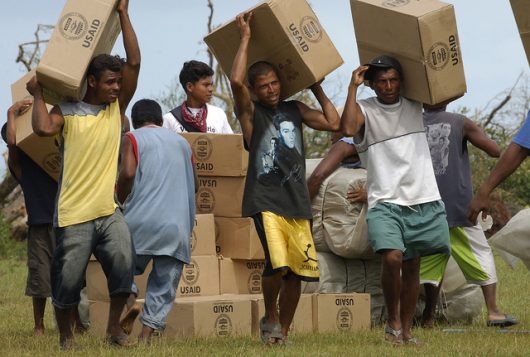
  1. People who live in extreme poverty are deprived of basic human needs such as access to food, clean water and shelter. To be classified as a person living in extreme poverty, one must be living on or below $1.90 a day.
  2. Extreme poverty in a developing nation is different from poverty in a developed nation. The U.S. is a developed nation. In the U.S., government benefits keep millions of Americans out of poverty. These programs mostly tend to target women, children and the elderly, the nation’s (and the world’s) most vulnerable populations. Due to programs such as Social Security, unemployment benefits and food stamps, these people are shielded from the harsh realities of extreme poverty.
  3. Unfortunately, government benefits tend not to exist in developing countries to aid their poor. In addition, due to fear of corruption, the world’s poorest do not receive as much foreign aid as their better-off peers. Low-income countries remain in poverty due to being too poor to be trusted with funds. An effect of this is that the most defenseless population in the world, children, suffers the consequences. The World Health Organization estimates that about 16,000 children under the age of five die each day from preventable causes associated with extreme poverty. The causes of death are lack of access to clean water, lack of access to healthcare, malaria, newborn infections, poor nutrition and diarrhea. Death from these ails is unfathomable in developed countries.
  4. An estimated 766,010,000 people live in extreme poverty today. This is double the size of the U.S.’s population
  5. The number of people in extreme poverty is declining. In 1990, there were 1.1 billion people living in extreme poverty. Today the number is 766 million. This is an amazing feat that can be attributed to a combination of factors such as trade between developed nations and developing nations, foreign aid that reinvigorated economies, increased education, improved infrastructures and investment in basic health.

As with most things in life, poverty cannot be viewed through a single lens. It is a complex social issue, but gains over the past few decades have shown that it is a solvable issue. With continued foreign aid and trade, the world can get that much closer to realizing the goal of eradicating extreme poverty by 2030.

– Jeanine Thomas

Photo: Flickr

October 20, 2017
https://borgenproject.org/wp-content/uploads/borgen-project-logo.svg 0 0 Kim Thelwell https://borgenproject.org/wp-content/uploads/borgen-project-logo.svg Kim Thelwell2017-10-20 07:30:412024-05-29 22:27:405 Things the US Needs to Know About Extreme Poverty
Economy, Global Poverty

Why is Papua New Guinea Poor?

Why is Papua New Guinea Poor?
Papua New Guinea, the name given to a group of islands situated in the southwest Pacific ocean, has experienced tremendous economic growth since its days of being an Australian colony, and has gone on to hold elections involving the indigenous population. Despite this, however, many people on the island still experience extremes of poverty. 80 percent of Papua New Guinea’s people live in rural communities with little to no modern conveniences, and 39.9 percent of the population lives below the poverty line. So, why is Papua New Guinea poor, despite economic growth? Here’s a brief look at some of the reasons behind this.


Why is Papua New Guinea Poor? 3 Simple Reasons


Income inequality
In 1996, the Gini index rated Papua New Guinea’s income inequality as 55.43 on its scale from 0-1, with 0 being perfectly equal (for comparison, the U.S. was rated around 45 on the scale in 2007). The evidence would seem to suggest that this inequality is due to the failure of economic growth to keep up with population growth, but could also have been caused by structural adjustment policies that came about along with rapid economic growth. Whatever the reason, it is clear that income equality has led to much greater poverty within Papua New Guinea. The good news is that this inequality has gone down significantly since the 1990s: In 2009, Papua New Guinea scored a 43.88 on the Gini scale.

Lack of long-term planning
Many citizens are critical of the fact that the government of Papua New Guinea has had little to no plan in place to modernize the country, which would include steps like building permanent houses, supplying water and sanitation and building infrastructure. The government, instead, acts reactively, creating short-term solutions only when it is absolutely necessary. For example, in 2002, Papua New Guinea faced an incredibly violent and chaotic election, but it was not until 2004 that police were deployed to fight this rampant violence. This lack of planning makes it difficult for real progress to be made in terms of poverty.

Corruption
Why is Papua New Guinea poor? Perhaps the biggest contributor to Papua New Guinea’s continuing poverty problem is the fact that so many government officials, in charge of funds that could help, have historically chosen to pocket the money instead. Michael Somare, prime minister of Papua New Guinea from 1975 to 2011, faced charges of political misconduct and misappropriation of funds spanning over 20 years, while in 2014, Paul Tiensten, former senior minister and later MP, was sentenced to nine years imprisonment for misappropriating over $1 million. Somare’s replacement as prime minister, Peter O’Neill, has also been accused of political misconduct involving a loan of $1.3 billion.

So, why is Papua New Guinea poor? In short, because of income inequality, aggravated by years of poor planning and corruption by the government. To correct this problem, new measures will need to be taken to outline and enforce government oversight and the proper use of government funds. Thankfully, awareness has risen about these issues over the past few years. During the last election, many people in Papua New Guinea protested and called for Peter O’Neill to resign after more corruption allegations were brought to light. And while O’Neill still won re-election, the fact that these protests exist shows that the citizens of Papua New Guinea are beginning to demand more from their politicians, hopefully a first step in strengthening the government and using it to enact real change.

– Audrey Palzkill

Photo: Flickr

October 17, 2017
https://borgenproject.org/wp-content/uploads/borgen-project-logo.svg 0 0 Kim Thelwell https://borgenproject.org/wp-content/uploads/borgen-project-logo.svg Kim Thelwell2017-10-17 01:30:202024-05-26 23:38:02Why is Papua New Guinea Poor?
Foreign Aid, Global Poverty, Government

Corruption: Kryptonite to Foreign Aid

Foreign Aid

Foreign aid is a topic that stirs controversy, with each side maintaining significant weight in their argument.

“You know the excuses: We can’t afford foreign aid anymore, or we’re wasting money pouring it into these poor countries, or we can’t buy friends—other countries just take the money and dislike us for giving it. Well, all these excuses are just that, excuses—and they’re dead wrong,” Ronald Reagan said in 1987.

The United States’ stance on foreign aid changes with each administration. The phrase, “you are damned if you do, you are damned if you don’t” comes to mind.

Foreign aid has been categorized as “soft power” since the late 1980s. “Soft power” is the ability of a country to persuade others to do what it wants without force or coercion. Joseph Nye coined the phrase, arguing that security relies on winning people as much as winning wars.

Since the 1980s, soft power has become central in U.S. foreign policy practices. Is foreign aid a tool in the soft power toolbox?

Nye believes aid is purchasing power, not soft power. Despite the nuances of whether aid is categorized as purchasing power or soft power, foreign aid is important for the United States to achieve interests abroad.

According to Phil Vernon, “currency of soft power is values, institutions, culture and policy, then soft power is exercised by the choices you make and the actions you take, not by what you say.” If this is true, aid should be accompanied by anti-corruption monitoring organizations, tools of economic sustainability and keys of independence. The goal is not to have a country depending on the United States, but to provide the tools for a state to become independent.

If the United States does not ensure and monitor the aid given, corruption will prevent the money from reaching the population in need. Monitoring programs are even more vital than aid itself. Corruption is the kryptonite to foreign aid.

According to the National Bureau of Economic Research, the more corrupt the government is, the more aid the state receives. There is no evidence that an increase in foreign aid reduces corruption.

Currently, corruption is not being punished. This lack of acknowledgment is only encouraging governments to abuse international funds. If corruption is reflected in next year’s funding, people will suffer. If the population suffers on the government’s behalf, this is motivation for the population to vote in order to correct the situation. Thus, reducing corruption will be imminent.

Despite the controversies and arguments surrounding international aid, it is important to remember that giving aid to corrupt governments is not giving aid to the people. Corrupt governments must be punished in some way in order to reduce international corruption. Corruption is the kryptonite to U.S. foreign policy success. U.S. interests must be maintained, and aid is a tool in the toolbox for doing just that.

– Danielle Preskitt

Photo: Flickr

October 2, 2017
https://borgenproject.org/wp-content/uploads/borgen-project-logo.svg 0 0 Kim Thelwell https://borgenproject.org/wp-content/uploads/borgen-project-logo.svg Kim Thelwell2017-10-02 07:30:162024-05-28 00:00:25Corruption: Kryptonite to Foreign Aid
Global Poverty, Human Rights

Justice System Violates Human Rights in Guinea-Bissau

Human Rights in Guinea-Bissau
While the nation does possess legitimate political rights, including free and fair elections, lack of human rights in Guinea-Bissau continues to make victims out of its citizens. As of 2016, these included abuses such as corruption of government officials as well as violence and discrimination of women and children.

The list continues on, according to the U.S. Department of State. Other abuses included unfair and abusive treatment of detainees, lack of due process and human trafficking. No effective action was taken against the perpetrators of human rights in these situations.

In particular, prisoner detention stands out as one of the most grotesque human rights abuses. The conditions of detention facilities are life-threatening, according to the state departments.

“Cells lack running water, adequate heating, ventilation, lighting and sanitation. Detainees’ diets were poor and medical care was virtually non-existent,” stated the human rights report in 2016. The means by which detainees arrive in these deplorable conditions often violates another human right, lack of due process, as authorities often “arbitrarily” arrest and detain people.

Police are, for the most part, ineffective and corrupt, which might result be a result of their lack of regular payment by the state. Lack of funding results in insufficient of training as well as scarce resources for police to carry out their duties properly. Unfortunately, almost all levels of law enforcement are susceptible to coercion, threats and bribes, including the attorney general’s office.

Consequently, unlawful arrests continue to be made, violating human rights in Guinea-Bissau. These include arrests without warrants and the holding of detainees for longer than the permitted period of time. Additionally, military detainees were often not informed of charges against them.

To add to the human rights abuses conducted throughout the justice system, the independent courts, including judges, were “poorly trained, inadequately and irregularly paid and subject to corruption.”

It appears that those accused of suspected of crime in the state have very little security, as human rights in Guinea-Bissau are not enforced. Furthermore, there continues to be no administrative means of addressing human rights violations.

Little progress had been made in improving these conditions, and the justice system remains extremely weak to this day. One of the only few actions of accountability undertaken by the state was in July 2015 in the Oio region, where three officers were sentenced to imprisonment for human rights abuses.

Investigations continue to be made by human rights organizations, such as Amnesty International. The citizens of Guinea-Bissau are desperately in need of intervention from the international community.

– Melanie Snyder

Photo: Flickr

September 29, 2017
https://borgenproject.org/wp-content/uploads/borgen-project-logo.svg 0 0 Borgen Project https://borgenproject.org/wp-content/uploads/borgen-project-logo.svg Borgen Project2017-09-29 01:30:312024-05-29 22:26:55Justice System Violates Human Rights in Guinea-Bissau
Global Poverty, Human Rights

Human Rights in Papua New Guinea: Corruption and Brutality

Human Rights in Papua New Guinea
Papua New Guinea (PNG) is a small country in Oceania, just north of Australia. While PNG has enjoyed the benefits of economic improvement due to extractive industries, more than 40 percent of its population of six million live in poverty. Across government corruption, abuse of female rights, inhumane conditions for asylum seekers, police brutality, lack of minority rights and prosecution for sexual orientation and gender identity, the state of human rights in Papua New Guinea is severely lacking.

Police abuse is rampant in PNG, and, between 2007 and 2014, a total of 1,600 complaints regarding police brutality were logged by the Internal Affairs Directorate. The government has yet to release how many of these cases resulted in judicial proceedings. Since 2014, the Anti-Corruption Directorate has held a warrant for the arrest of Prime Minister O’Neill, but in April 2016 the Supreme Court dismissed the suit. As a direct result, in June 2016, police forces shot at University of Papua New Guinea students for peacefully protesting government corruption. Over thirty people were injured.

The United Nations has not overlooked such violations of human rights in Papua New Guinea. In May 2016, the United Nations Human Rights Council released a 687-page World Report. The report was critical of PNG’s government and its authoritarian actions.

Police aggression and abuse have also reportedly been highly gendered, with PNG remaining one of the worst in the world for its rates of family and sexual violence. A study conducted by The Lancet in 2013 reported that 41 percent of people on Bougainville Island admitted to raping a non-partner. This statistic neither includes other parts of PNG nor accounts for marital rape. The normalization of these actions has prevented aggressive prosecution of perpetrators or prosecution of these men by police and judiciaries. In fact, the Human Rights Watch notes that police demand “fuel money” from victims before considering their cases any further.

The government has failed to rally legislative or judicial action against gender-based corruption and coercion, and much of it is deeply ingrained in the different cultures of PNG. Historically, violent groups of people have attacked individuals and families for alleged acts of witchcraft. The normalization of severely violating human rights in Papua New Guinea requires serious action but proves difficult because of cultural complexities.

Undoubtedly, there is no simple solution in breaking cultural and national norms. The nuanced approach towards fighting against governmental corruption and gender-based violence, among many other human rights issues, requires federal and community-level strategies.

– Sydney Nam

Photo: Flickr

September 18, 2017
https://borgenproject.org/wp-content/uploads/borgen-project-logo.svg 0 0 Borgen Project https://borgenproject.org/wp-content/uploads/borgen-project-logo.svg Borgen Project2017-09-18 07:30:552020-07-01 19:01:46Human Rights in Papua New Guinea: Corruption and Brutality
Page 3 of 6‹12345›»

Get Smarter

  • Global Poverty 101
  • Global Poverty… The Good News
  • Global Poverty & U.S. Jobs
  • Global Poverty and National Security
  • Innovative Solutions to Poverty
  • Global Poverty & Aid FAQ’s
Search Search

Take Action

  • Call Congress
  • Email Congress
  • Donate
  • 30 Ways to Help
  • Volunteer Ops
  • Internships
  • Courses & Certificates
  • The Podcast
Borgen Project

“The Borgen Project is an incredible nonprofit organization that is addressing poverty and hunger and working towards ending them.”

-The Huffington Post

Inside The Borgen Project

  • Contact
  • About
  • Financials
  • President
  • Board of Directors
  • Board of Advisors

International Links

  • UK Email Parliament
  • UK Donate
  • Canada Email Parliament

Get Smarter

  • Global Poverty 101
  • Global Poverty… The Good News
  • Global Poverty & U.S. Jobs
  • Global Poverty and National Security
  • Innovative Solutions to Poverty
  • Global Poverty & Aid FAQ’s

Ways to Help

  • Call Congress
  • Email Congress
  • Donate
  • 30 Ways to Help
  • Volunteer Ops
  • Internships
  • Courses & Certificates
  • The Podcast
Scroll to top Scroll to top Scroll to top