• Link to X
  • Link to Facebook
  • Link to Instagram
  • Link to TikTok
  • Link to Youtube
  • About
    • About Us
      • President
      • Board of Directors
      • Board of Advisors
      • Financials
      • Our Methodology
      • Success Tracker
      • Contact
  • Act Now
    • 30 Ways to Help
      • Email Congress
      • Call Congress
      • Volunteer
      • Courses & Certificates
      • Be a Donor
    • Internships
      • In-Office Internships
      • Remote Internships
    • Legislation
      • Politics 101
  • The Blog
  • The Podcast
  • Magazine
  • Donate
  • Click to open the search input field Click to open the search input field Search
  • Menu Menu

Tag Archive for: Corruption

Posts

Government, Humanitarian Aid

Transparency International Reveals Global Corruption Levels

History has shown that government and institutional corruption can greatly hinder progress in developing countries. A new study by Transparency International reports that countries with faster-growing economies are more prone to government corruption.

The research shows that governments in countries such as China, Turkey and Angola are becoming more corrupt with increased fraud and bribery while others are reducing corruption levels.

Corruption is a major issue that causes distress in the lives of the poor and impedes international efforts to bring countries out of poverty. Numerous international organizations stress that corruption causes major setbacks in development work. Transparency International also states that corrupt officials prevent progress and impair public trust in the government.

Chairperson of Transparency International, José Ugaz, emphasizes the severity of corruption, stating, “Grand corruption in big economies not only blocks basic human rights for the poorest but also creates governance problems and instability. Fast-growing economies whose governments refuse to be transparent and tolerate corruption create a culture of impunity in which corruption thrives.”

International aid has a large correlation with corruption in impoverished nations. While the causation for that corruption is debatable, the majority of researchers agree that foreign aid helps to increase national stability and to bring people out of desperate situations. The Transparency International Policy organization works to assure that foreign aid is not deterred by government corruption.

The organization’s recent report was developed from 13 data sources and the estimated perceptions of many businesspeople and experts. The index scores 175 countries from zero to 100, with zero comprising a “highly corrupt” public sector and 100 representing a “very clean” establishment.

Afghanistan, the Ivory Coast and Egypt made the most improvement in eliminating government corruption, though the countries still remain towards the bottom of the index. Almost all underdeveloped nations have scores below 50 (with zero being extremely corrupt and 100 very clean). Denmark has the lowest estimated level of corruption, while Somalia and North Korea are ranked as having the most corrupt governments, with a score of eight.

As the report shows that every country is affected, Transparency International warns that corruption is threatening economic growth across the globe. Higher levels of corruption are marked by widespread bribery and fraud, an absence of punishment for corruption and public institutions that fail to attend to citizens’ needs.

While some researchers disapprove of foreign aid, stating that in certain nations it has fostered corruption, Transparency International officials encourage the use of aid as a means to diminish corruption.

Peter Eigen, the founder of Transparency Interational, states that, “Additional aid resources are needed, but their delivery has to be structured in a way that takes account of the risk of corruption. At the same time, while developing countries need increased resources, both sides must work together to put an end to corruption.”

– Nina Verfaillie

Sources: The Guardian, World Bank, Transparency International 1, Transparency International 2
Photo: N.Y. Mag

January 1, 2015
https://borgenproject.org/wp-content/uploads/borgen-project-logo.svg 0 0 Borgen Project https://borgenproject.org/wp-content/uploads/borgen-project-logo.svg Borgen Project2015-01-01 04:00:352024-06-05 01:58:21Transparency International Reveals Global Corruption Levels
Global Poverty, Women

Bolsa Familia in Brazil

Brazil has created an anti-poverty program, Bolsa Familia “Family Grant,” which gives cash money to mostly women. Since its implementation in 2003, around 11 million families, a quarter of Brazil’s population, have joined the Bolsa Familia program. This program is the largest of its kind and is based on a conditional cash transfer.

If a family earns less than 120 reais ($68) per family member each month, the mothers are given debit cards and up to 95 reais ($35 to $70) each month by the federal government. As part of the program, their children are required to attend school and receive vaccinations. If a family does not meet these conditions, their payments are suspended after several warnings.

Similarly, microfinance programs in Brazil give women loans to empower them and alleviate poverty. Although evidence from several studies supports the idea that microfinance empowers women, these microfinance programs have not succeeded due to their reinforcement of “informality of labor and the creation and persistence of gendered discourse that places greater burden on women.” The microfinance loans, despite the programs’ positive intentions, may place women under greater stress. Instead of pursuing activities that may benefit themselves and their families, these women can become trapped by the programs, and become less independent as a result.

The microfinance programs give loans and credit to primarily women because they believe that females are more reliable than men, and that they will use the money on food, education and family; women will not squander the money on alcohol, drugs and gambling.

However, are women truly more reliable than men? Although researchers argue that women repay loans faster and save more money than men do, this may be due to popular perceptions of the female gender. Women are believed to be more honest, sensitive, caring and nurturing due to their gender and traditional female roles of childrearing and domestic chores.

There are two main concerns about the program. First, corruption and fraud could prevent beneficiaries from receiving 100% of the money. Local officials could also report inaccurate information on eligibility to receive kickbacks. Second, these programs are meant to be a “temporary boost” to aid the poorest families in Brazil. Critics worry that it could turn into a permanent program upon which many families will remain dependent.

While the microfinance programs have failed, Bolsa Familia has seen early success. The program has reduced income inequality across the country, encouraged the growth of small businesses and increased the rate of economic growth. The cash money allows women to be more financially independent from their husbands and to have a larger decision making role in the household. After 10 years of the Bolsa Familia program, researchers have found that the program is empowering women and changing traditional gender roles in Brazil.

– Sarah Yan

Sources: Deseret News National, Economist, Prospect Journal
Photo: Keck Journal

May 12, 2014
https://borgenproject.org/wp-content/uploads/borgen-project-logo.svg 0 0 Borgen Project https://borgenproject.org/wp-content/uploads/borgen-project-logo.svg Borgen Project2014-05-12 04:00:382024-05-26 23:35:26Bolsa Familia in Brazil
Global Poverty

Legacy of Decadent Dictators

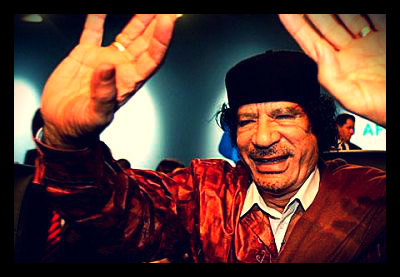
Dictators_and_muammar_gaddafi
The uprisings in Ukraine have once again exposed the penchant of the powerful to amass great sums of wealth at the expense of those for whom they are sworn to care. Following former Ukranian President Viktor Yanukovich’s ousting Saturday morning, Ukranian protesters discovered his secret cache of vintage cars, exotic animals and personal golf course in his Mezhyriya compound in Kiev.

Now open to the public as a “Museum of Corruption,” Yanukovich’s exorbitant horde qualifies him for inclusion to the growing legacy of dictators and political leaders that cash in on the wealth of the public.

Here’s a list of some of the more eccentric, public-fund wielding leaders that the world has had to tolerate.

Uday Hussein

Hussein would have had to drive at least 35 of his cars every single day in order to make use of all 13,000 cars in his collection in one year.

Amid high levels of poverty at the turn of the 21st century, the eldest son of Saddam Hussein had a personal harem, gym and zoo complete with lions, cheetahs and a bear. He also possessed $1.65 million in fine wines, liquors and heroin.

Known for his cruelty, Hussein reportedly trapped Iraqi athletes inside of an iron maiden when they displeased him and would leave unconscious friends to the whims of his inebriated pet monkey named Lousia.

Uday Hussein died in 2003 during an artillery battle between United States Armed Forces when they attacked his compound in Baghdad, Iraq.

Ferdinand and Imelda Marcos

When the insurgents of the “People Power” Revolution stormed Philippine President Ferdinand Marcos’ palace in 1986, they encountered artwork by Cezanne and Monet, cartons of jewelry and gold coins, and most infamously, his wife Imelda’s room full of designer shoes. Alongside his wife, the 20-year dictator of the Philippines stole an estimated $10 billion from the public treasury, an especially exorbitant amount considering that much of the island nation’s population lived in abject poverty, many without shoes.

Following the ouster the Marcos’ fled to Honolulu in exile, where Ferdinand died in 1989. Imelda returned to the Philippines in 1991 and has continued a life in politics, eventually becoming the representative for the Ilocos Norte province in 2010.

Muammar Gaddafi and Family

At the time of his death in 2011, news organizations reported that the Libyan despot had an estimated $200 billion in wealth, making him one of the wealthiest individuals in the history of the world. Although these funds were never owned by Gadhafi himself and were not explicitly proven by financial sites like Forbes, he still siphoned heavily from public funds to feed his need for luxury, as well as his children’s.

Artists like 50 Cent, Beyonce, Mariah Carey and Nelly Furtado all played concerts for events sponsored or hosted by members of the Kadafi Family, customarily receiving millions of dollars for their performances.

Misappropriation of public funds is nothing new, but these dictators took their privilege beyond levels of ordinary reproach. For the vast sums of money they spent on arguably superfluous luxury items, demands for transparency will not quite cut it. Instead, worldwide accountability for political leaders may be necessary, whether or not the leaders accept it.

– Emily Bajet

Sources: Forbes, LA Times, NBC, BBC, Al Jazeera, Sydney Morning Herald, Car and Driver, History.com, TIME, Biography.com
Photo: The Guardian

February 26, 2014
https://borgenproject.org/wp-content/uploads/borgen-project-logo.svg 0 0 Borgen Project https://borgenproject.org/wp-content/uploads/borgen-project-logo.svg Borgen Project2014-02-26 10:02:272024-06-05 01:57:12Legacy of Decadent Dictators
Aid Effectiveness & Reform, Foreign Aid, Foreign Policy, Global Poverty, Government, Politics and Political Attention

Corruption Stifles Aid in Malawi

Corruption_Stifles_Aid_Malawi
In the wake of the recent corruption scandal known as “Cashgate,” the British Department for International Development (DfID) has frozen aid to Malawi. Experts on foreign aid are concerned the freeze might prove catastrophic for both the health and education sectors in the small country.

In November 2013, it was discovered that governmental officials in Malawi had taken aid dollars for themselves to the tune of $250 million. After the failed assassination, Budget Director Paul Mphwiyo—who was thought to be a whistle blower—and the region’s police force found money stashed in the homes of several members of the government.

Nations responsible for supplying Malawi with foreign aid promptly suspended all funds that had gone to support the Malawian government directly. Additionally, The Guardian reports “the DfID went a step further” by freezing funds that affect healthcare and education.

Malawi receives nearly half of its budget from foreign sources, meaning that its people will soon be without essential services, experts warn. To make matters worse, the United Kingdom is the largest donor to Malawi.

The breakdown, however, illustrates a difficult challenge for all donor nations, not just the U.K. For example, amid rampant and violent corruption it is difficult to rationalize making contributions to a developing nation. Likewise, pulling the plug on necessary programs creates internal instability and hardship for the people who rely on those donations.

Most Malawians survive through subsistence farming, and nearly three-quarters live on $1.25 per day or less.

Malawi is now making attempts to be more transparent with donor money, and is trying, yet again, to inspire donor confidence. However, this latest breach of trust was, for the DflD, a point of no return.

The head of the Malawi branch of the DflD, Sarah Sanyahumbi, was quoted as saying, “This is not business as usual. As far as we are concerned, the line has been crossed, so once the line has been crossed you cannot go back to what you had before.”

For many of Malawi’s most vulnerable, this is unfortunate news. The future for the young and ill in Malawi remains unclear as of yet. However, it seems unlikely it will be good without a new agreement between nations.

– Chase Colton

Sources: The Guardian, International Business Times, The Borgen Project
Photo: Mideast Posts

January 24, 2014
https://borgenproject.org/wp-content/uploads/borgen-project-logo.svg 0 0 Borgen Project https://borgenproject.org/wp-content/uploads/borgen-project-logo.svg Borgen Project2014-01-24 15:44:072024-05-26 23:06:07Corruption Stifles Aid in Malawi
Activism, Advocacy, Aid Effectiveness & Reform, Global Poverty, Philanthropy

The Case Against Gift Aid

The Case Against Gift Aid
Initiated less than forty years ago, the UK Gift Aid incentive aggrandizes donations received through select charities by providing tax deductions to the donor.

By means of Gift Aid, charities are able to reclaim the basic tax rate (20%) of the donation at no cost to the donor. For example, if an individual donates £10 using Gift Aid, the charity itself receives £12.50. With non-monetary contributions, the original tax is added back in to the overall value of the item. Thus, if a table valued at £100 is supplied, the charity is able to retain the item at £125.

However, before one is eligible to provide a Gift Aid donation, a form documenting basic personal information such as name, home address and information about the designated charity is required. Furthermore, this form is rather versatile in that it can be applied to future donations as well. On the surface, Gift Aid appears ingenious and innovative, and in many ways, it is. Yet, like many other programs wrought by good intentions, this incentive should be wary of also being susceptible to corruption.

For one, Gift Aid is plagued by complexity and ambiguity in its guidelines and operations.

Revenue and Customs declare that the donated items are in fact the possessions of the donor and the charity in question acts as a mere representative. Therefore, it is the donor — not the organization — who has the authority to not only give all or a portion of the sale’s proceeds but also to retain all or a portion of the profits. Meaning, an individual may decide to utilize Gift Aid out of greed and a personal, profit agenda rather than benevolence and an honest desire to give back to others.

The mandatory Gift Aid forms are composed in such a manner that donors are not held accountable for whether proceeds are bequeathed to the charity or not. Thus, an individual could legally sell his or her belongings using the Gift Aid incentive and keep all of the proceeds — leaving the charity, which handles the actual selling of the item, bereft of any profit.

According to the Institute of Fundraising, “the goods are the property of the owner until they are sold, and after they are sold, [the owner] has the right to keep some or all of the proceeds.” Although individuals who are initially willing to sell their personal belongings under Gift Aid may not initially expect to monetarily gain from the transaction.  Because this gaping loophole still exists, the incentive may be vulnerable, or opens an opportunity with the advantage, to misuse.

– Phoebe Pradhan

Sources: HM Revenue and Customs, The Guardian
Photo: Vintage 3D

January 12, 2014
https://borgenproject.org/wp-content/uploads/borgen-project-logo.svg 0 0 Borgen Project https://borgenproject.org/wp-content/uploads/borgen-project-logo.svg Borgen Project2014-01-12 13:34:242020-08-29 00:12:14The Case Against Gift Aid
Politics and Political Attention

Honduras Political Troubles

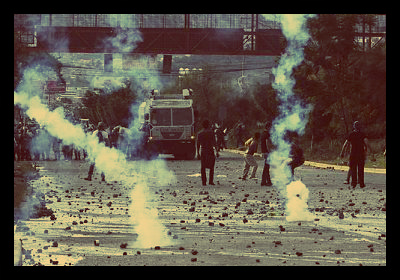
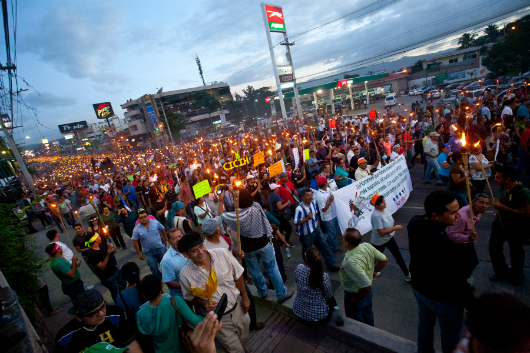
honduras_protest
A contentious election in Honduras gave ruling party candidate Juan Orlando Hernandez 34 percent of the vote in the “eight-party race”, allowing him to claim an early victory with 80 percent of the total vote counted. Former President Manuel Zelaya’s wife, Xiomara Castro, has contested the election results. Fraud has been argued as a possible reason for Juan Hernandez’s victory.

Honduras has a long history fraught with violent overthrows and fraud filled elections, with Xiomara Castro’s husband being ousted in a coup in 2009. The coup was in response to Manuel Zelaya attempted referendum on the nations constitution, with brought the ire of many political groups in the nation.

Honduras, according to the New York Times, is one of Latin America’s “poorest and most unequal countries” with a fraught social structure that may not “withstand a new bout of political uncertainty” following the election. This looks like it may be the case.

These two major candidates are both claiming victory in the nation of 7.9 million, arguing they represent the populist mentality in the nation. Xiomara Castro respresents those liberals disillusioned in the post-coup. Hernandez represents the right wing, arguing for a strong military police to help quell the violence and consolidate the government’s power over the lawless nation. Castro posted on her twitter following the election results that she “will defend the will of the people as it was expressed at the polls.”

Perhaps the nation is behind Xiomara Castro. Manuel Zelaya ousted in 2009 led many “teachers, feminists, and young people” to violently protest. The media in Honduras promoted the “changing of the guard”, a huge contrast to what many in the streets felt.

Manuel Zelaya left-leaning beliefs were in deep contrast to the “business and political groups” whose right winged views were deeply ingrained into the nation.


Learn about poverty in Honduras


In response to the coup, new political parties formed. The Freedom and Re-foundation was born out of this aggression. Current presidential candidate Xiomara Castro has become the political party’s leader. The organization functions through it’s combination of leftist leaning groups, from intellectuals, gay right activist, and “former liberals who defected” from “centre-right” Liberal Party following the coup.

The real victim of the political instability are not the political parties, but rather the nation itself. In the wake of Manuel Zelaya’s coup, the annual GDP growth for has “been only 3.5 percent” compared to the average GDP growth of “5.7 percent.” Economic inequality has been growing since 2010, with Honduras now having the “most in-equal distribution of income in Latin America” with “100 percent of all income gains” going to the “top 10 percent of Hondurans.”

Average Honduran citizens have been struggling, and the political situation following the election may worsen it. Protests have already begun in retaliation to Hernandez’s claimed victory.

– Joseph Abay

Sources: USA Today, CNN, Al Jazeera, CBS News, BBC, New York Times, Al Jazeera

January 10, 2014
https://borgenproject.org/wp-content/uploads/borgen-project-logo.svg 0 0 Borgen Project https://borgenproject.org/wp-content/uploads/borgen-project-logo.svg Borgen Project2014-01-10 04:00:062020-08-29 00:22:44Honduras Political Troubles
Global Poverty

Most Corrupt Countries

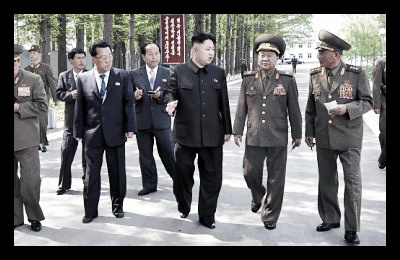
Top_Nations_in_Corruption_2013_Kim_Jong_Un_North_Korea
Transparency International’s annual ranking of corruption around the world reveals that every country suffers from forms of corruption. The ranking is measured from 0–100 (with lower numbers denoting more corruption) and is based on the perceptions of business people and experts in each country on the African Development Bank’s governance ratings, the World Bank and World Economic Forum assessments and a Bribe Payers Survey. 70 percent of countries earned a score of 50 or below.

Dominating the lowest scores on the list are nations in Sub-Saharan Africa, Eastern Europe, and Central Asia, with 90 percent to 95 percent of countries earning a score of less than 50. Lowest on the list were Somalia, North Korea, and Afghanistan in a three–way tie, with a score of eight.

Director of Research at Transparency International, Finn Heinrich, explains, “Corruption is very much linked to countries that fall apart…These are not countries where the government is functioning effectively, and people have to take all means necessary in order to get by, to get services, to get food, to survive.”

Syria’s decline in rank was the most dramatic this year, dropping 24 spots to 168th place—the 10th worst. The country has experienced a bloody civil war since 2011, with the United Nations estimating over 100,000 people have died.

Conflict zones Afghanistan, Iraq, and Libya were also all at the bottom of the list.

European countries had the best scores. Only 23 percent had a score less than 50. The highest ranking were Denmark, New Zealand, Finland, and Sweden.

However, European countries that were struck hard during the financial crisis—primarily Spain, Iceland, and Slovenia—saw their ranks fall this year.

China and the United States’ rankings remained stable at 19 and 80, respectively. Myanmar, which rid itself of military rule in 2011, made the biggest advance, moving up fifteen places to 157th.

No country received a perfect score of 100. Transparency International reports that even Denmark struggles with campaign finance issues, lack of whistleblower protections, and challenges in citizens’ access to information. Countries such as the U.S. and the United Kingdom struggle with concerns over lobbying, political funds, financial fraud, and insider trading, which have affected their rankings negatively.

None of the poorest nations in the world (based on GDP)—Democratic Republic of the Congo, Zimbabwe, Burundi, Somalia, Liberia, Eritrea, Central African Republic, Niger, Malawi, and Madagascar—received a score over 38.

The link between corruption and extreme poverty is inextricable.

According to the World Bank, good governance is essential to lifting the 1.2 billion people of the world who live on $1.25 or less per day out of extreme poverty and to make sure that wealth benefits all people.

Sri Mulyani Indrawati, the Managing Director of the World Bank, clearly asserts, “A state that does not deliver ‘clean services’ will choke its engine of growth—a strong middle class—and creates a major obstacle for achieving shared prosperity.”

Huguette Labelle, the Chair of Transparency International, reiterates that efforts to improve the major crises facing the modern world such as climate change, failing economies, and extreme poverty will not succeed unless international bodies clamp down on corruption in all levels of society and make every country more transparent—from Denmark to Somalia.

– Kaylie Cordingley

Sources: The World Bank, CIA, LA Times, NPR, Bloomberg Businessweek, Al Jazeera, Wall Street Journal, Transparency International, CNN
Photo: CNN

December 13, 2013
https://borgenproject.org/wp-content/uploads/borgen-project-logo.svg 0 0 Borgen Project https://borgenproject.org/wp-content/uploads/borgen-project-logo.svg Borgen Project2013-12-13 19:01:372024-05-25 00:52:30Most Corrupt Countries
Global Poverty

Nigeria Poverty Rising Despite Economic Growth

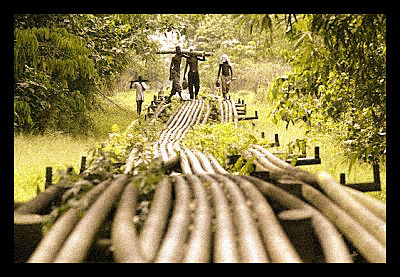
nigeria_oil_corruption
In the last several years, Nigeria has seen an increase in its economic state. However, Nigeria is a country that follows the profile of African countries: a land rich in natural resources, yet much of its population remains in poverty. Despite the economic growth due to its oil revenue, Nigeria has been hindered by other problems for many years. An unstable government, a lack of cultivated land and the lack of progress made in rural areas all attribute to Nigeria’s high poverty rates.

Nigeria’s government has come under heavy criticism. The country relies primarily on its oil revenue to strengthen the economy, thereby eliminating the need for taxpayers to maintain the government officials’ salaries. The salaries of these high ranking officials often exceed $100,000, while the average family survives on $1.25 per meal. The large discrepancy between the working people and the government officials is no secret; the government corruption occurring in Nigeria is one of the worst on the planet.

The agricultural sector of the country employs roughly two-thirds of the working population. Nigeria is a world leader in production of cassava, yam and cowpea. Nigeria is also a major player in the fish industry. But the country still struggles with starvation levels, and Nigeria relies on large imports of grains, livestock products and other food products.

However, Nigeria has a huge agricultural base that offers great potential for growth and improvement. The agricultural sector has shown progressive improvements over the years, growing by 7 percent from 2003 to 2007. However, the large percentage of potentially cultivated land remains untapped.

Of an estimated 71 million hectares of potentially cultivated land, only about half is under production. There is a lack of productive irrigation methods prevailing over the land. Of the potential workable land, only about 7 percent is being properly irrigated. With an enhanced emphasis on irrigation and other land cultivation techniques, the substantial natural resources of Nigeria could be put to better use.

Urban areas in Nigeria have shown an increase in well-being over the past years. However, much of the rural areas in the country are mired in extreme poverty, living on scraps and from meal to meal. The people who work the fields in the rural areas are practically living off the food they produce, then they sell anything they can to mass production.

Nigeria is a nation that has extraordinary natural resources. However, the nation is held back by its various national issues. With a significant amount of corruption running throughout the government, the head of the country is in dismay. Without a solid government, the backbone of the country is crippled. Having great natural resources is only a positive factor when they are employed to their full potential. By not cultivating the majority of the usable land, Nigeria is limiting itself. Lastly, the lack of development in rural areas hurts the economy as a whole, not only the people residing in those rural areas. Better conditions could help the food production, which in turn would help cultivate the land more effectively. Nigeria has enormous potential, yet the proper leadership and productivity is lacking.

– Zachary Wright

Sources: Punchng, Rural Poverty Portal, BBC News, Daily Mail UK

Pictures: Daily Mail UK

October 24, 2013
https://borgenproject.org/wp-content/uploads/borgen-project-logo.svg 0 0 Borgen Project https://borgenproject.org/wp-content/uploads/borgen-project-logo.svg Borgen Project2013-10-24 17:54:292016-06-15 09:15:49Nigeria Poverty Rising Despite Economic Growth
Education, Global Poverty, Health, Water

5 Global Poverty Solutions

Global poverty solutions
You’ve heard about the problems, but what are global poverty solutions? In fact, there are many:

1. Clean Water and Sanitation

A lot of people in the developed world take clean water and sanitation for granted. We do not realize at times how lucky we are that we don’t have to travel miles to get access to clean water, or drink seemingly safe water only to later find out it was contaminated. Improving water quality and overall sanitation are steps already being taken by non-profit and non-governmental organizations like UNICEF, etc. In fact, UNICEF’s Clean Water Campaign is attempting to do just this: help bring clean and safe tap water to people in developing and third world nations. The potential for a high impact is definitely present: just 5 U.S. dollars can provide clean tap water for one child for 200 days. Cleaner water and safer sanitation lead to healthy and fit children who are able to learn and go to school.

2. Healthcare and the Elimination and Prevention of Diseases

Similar to clean water and sanitation, proper healthcare can also help children and adults be vigorous enough to better take care of their families and work, or pursue education. Many potentially deadly diseases can be averted very simply: for example, one can greatly increase one’s chances of avoiding malaria simply by sleeping inside a mosquito net. Many charities are actively trying to save lives simply by sending nets to poverty stricken families in Africa. Vaccinations and inoculations prevent children from getting easily treatable diseases. Some very treatable diseases go unnoticed and/or untreated in families living in extreme poverty because they are often ignored, not recognized as illnesses, or treatments can’t be afforded. By eliminating and preventing easily treatable diseases, we give a chance to millions of children who otherwise might die of easily treatable maladies.

3. Education

Again, access to basic education is also perhaps something those in developed nations take for granted. Young children living in extreme poverty often have no choice but to seek employment when they reach a certain age in order to help the family financially. They often forgo an education for many reasons: for some, it’s a lack of nearby schools, for others, it’s simple economic necessity, and then there are some who cannot attend school because a lack of proper sanitation and clean water has left them with health problems; these children are unable to learn and perform well in school. Education is a positive feedback cycle in which children who receive an education are able to bring more money home for their families, thereby allowing other children to go to school rather than work. Education empowers people not only economically, but also spiritually and intellectually, potentially leading to a cyclical liberation of the poor.

4. Encouraging Local Innovation

Encouraging local innovation is a great solution to poverty because it stimulates the economy of poverty struck areas as well as supporting self-sufficiency. Some great inventions are currently coming out of Africa; some of them are simple solutions to problems only those living in extreme poverty face. Regardless, this is an eventual result of education, and if encouraged and fostered, it will result in a brighter future for those actively fighting poverty. Organizations like the African Innovation Foundation take it upon themselves to release the potential of individuals in poor African nations who would otherwise go unnoticed.

5. Eliminate Corruption

Eliminating corruption is an extremely significant move in the fight against global poverty. If it’s the higher up officials who hoard money, and prevent aid from going where it is most needed, it will hold back individual countries from eliminating diseases, educating the young, and making clean water accessible to the general population. Additionally, corruption can often result in lax law enforcement, which allows poor nations to become breeding grounds for extremist, sometimes terrorist groups. Eliminating corruption, therefore, would be taking a very big step towards eliminating poverty in general.

– Aalekhya Malladi

Sources: Clean Water Campaign, Netting Nations, Nets for Life Africa, Nothing But Nets, African Innovation Foundation
Photo: The Guardian

August 19, 2013
https://borgenproject.org/wp-content/uploads/borgen-project-logo.svg 0 0 Borgen Project https://borgenproject.org/wp-content/uploads/borgen-project-logo.svg Borgen Project2013-08-19 05:30:022024-06-05 01:53:365 Global Poverty Solutions
Global Poverty

British Panel Plans to End Global Poverty by 2030

British Panel Plans to End Global Poverty by 2030

Last Wednesday, British prime minister David Cameron announced a few recommendations for ending global poverty by 2030. Improving life for the more than one billion people that live on less than $1.25 a day would include provision of drinking water, electricity, health care, and schools.

Cameron reported that ending global poverty “can and should be one of the great achievements of our time. It is doable”. As a co-chair of the high-level panel that will recommend the best ways to combat global poverty, the British prime minister hopes to improve the U. N. Millennium Development Goals that expire in 2015. These goals included ensuring accessibility to elementary school education, stopping HIV/AIDS, increasing access to clean water and sanitation, as well as reduction of maternal and child mortality through healthcare.

These goals, however, Cameron says, didn’t place enough emphasis on the effects of conflict and violence. Building strong institutions and enforcing the law were overlooked in the Millennium Development Goals, and the panel hopes to remedy this by promoting “good governance and private enterprise, investment, and entrepreneurship.” The main focus of ending global poverty is economic growth in the private sector.

Cameron also highlights corruption and how tackling it as well as holding governments accountable is “the golden thread of development.” These reforms in conjunction with those such as food and water provisions, healthcare, and education accessibility could allow a swift eradication of global poverty by the year 2030.

– Sarah Rybak

Photo: Guardian

May 23, 2013
https://borgenproject.org/wp-content/uploads/borgen-project-logo.svg 0 0 Borgen Project https://borgenproject.org/wp-content/uploads/borgen-project-logo.svg Borgen Project2013-05-23 03:00:122020-06-21 22:20:02British Panel Plans to End Global Poverty by 2030
Page 5 of 6«‹3456›

Get Smarter

  • Global Poverty 101
  • Global Poverty… The Good News
  • Global Poverty & U.S. Jobs
  • Global Poverty and National Security
  • Innovative Solutions to Poverty
  • Global Poverty & Aid FAQ’s
Search Search

Take Action

  • Call Congress
  • Email Congress
  • Donate
  • 30 Ways to Help
  • Volunteer Ops
  • Internships
  • Courses & Certificates
  • The Podcast
Borgen Project

“The Borgen Project is an incredible nonprofit organization that is addressing poverty and hunger and working towards ending them.”

-The Huffington Post

Inside The Borgen Project

  • Contact
  • About
  • Financials
  • President
  • Board of Directors
  • Board of Advisors

International Links

  • UK Email Parliament
  • UK Donate
  • Canada Email Parliament

Get Smarter

  • Global Poverty 101
  • Global Poverty… The Good News
  • Global Poverty & U.S. Jobs
  • Global Poverty and National Security
  • Innovative Solutions to Poverty
  • Global Poverty & Aid FAQ’s

Ways to Help

  • Call Congress
  • Email Congress
  • Donate
  • 30 Ways to Help
  • Volunteer Ops
  • Internships
  • Courses & Certificates
  • The Podcast
Scroll to top Scroll to top Scroll to top