• Link to X
  • Link to Facebook
  • Link to Instagram
  • Link to TikTok
  • Link to Youtube
  • About
    • About Us
      • President
      • Board of Directors
      • Board of Advisors
      • Financials
      • Our Methodology
      • Success Tracker
      • Contact
  • Act Now
    • 30 Ways to Help
      • Email Congress
      • Call Congress
      • Volunteer
      • Courses & Certificates
      • Be a Donor
    • Internships
      • In-Office Internships
      • Remote Internships
    • Legislation
      • Politics 101
  • The Blog
  • The Podcast
  • Magazine
  • Donate
  • Click to open the search input field Click to open the search input field Search
  • Menu Menu

Tag Archive for: Corruption

Posts

Education, Global Poverty, Health, Water

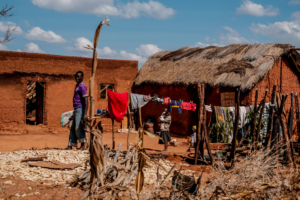
5 Global Poverty Solutions

Global poverty solutions
You’ve heard about the problems, but what are global poverty solutions? In fact, there are many:

1. Clean Water and Sanitation

A lot of people in the developed world take clean water and sanitation for granted. We do not realize at times how lucky we are that we don’t have to travel miles to get access to clean water, or drink seemingly safe water only to later find out it was contaminated. Improving water quality and overall sanitation are steps already being taken by non-profit and non-governmental organizations like UNICEF, etc. In fact, UNICEF’s Clean Water Campaign is attempting to do just this: help bring clean and safe tap water to people in developing and third world nations. The potential for a high impact is definitely present: just 5 U.S. dollars can provide clean tap water for one child for 200 days. Cleaner water and safer sanitation lead to healthy and fit children who are able to learn and go to school.

2. Healthcare and the Elimination and Prevention of Diseases

Similar to clean water and sanitation, proper healthcare can also help children and adults be vigorous enough to better take care of their families and work, or pursue education. Many potentially deadly diseases can be averted very simply: for example, one can greatly increase one’s chances of avoiding malaria simply by sleeping inside a mosquito net. Many charities are actively trying to save lives simply by sending nets to poverty stricken families in Africa. Vaccinations and inoculations prevent children from getting easily treatable diseases. Some very treatable diseases go unnoticed and/or untreated in families living in extreme poverty because they are often ignored, not recognized as illnesses, or treatments can’t be afforded. By eliminating and preventing easily treatable diseases, we give a chance to millions of children who otherwise might die of easily treatable maladies.

3. Education

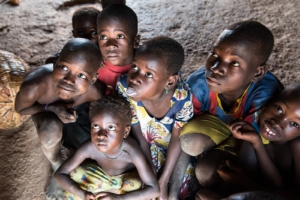
Again, access to basic education is also perhaps something those in developed nations take for granted. Young children living in extreme poverty often have no choice but to seek employment when they reach a certain age in order to help the family financially. They often forgo an education for many reasons: for some, it’s a lack of nearby schools, for others, it’s simple economic necessity, and then there are some who cannot attend school because a lack of proper sanitation and clean water has left them with health problems; these children are unable to learn and perform well in school. Education is a positive feedback cycle in which children who receive an education are able to bring more money home for their families, thereby allowing other children to go to school rather than work. Education empowers people not only economically, but also spiritually and intellectually, potentially leading to a cyclical liberation of the poor.

4. Encouraging Local Innovation

Encouraging local innovation is a great solution to poverty because it stimulates the economy of poverty struck areas as well as supporting self-sufficiency. Some great inventions are currently coming out of Africa; some of them are simple solutions to problems only those living in extreme poverty face. Regardless, this is an eventual result of education, and if encouraged and fostered, it will result in a brighter future for those actively fighting poverty. Organizations like the African Innovation Foundation take it upon themselves to release the potential of individuals in poor African nations who would otherwise go unnoticed.

5. Eliminate Corruption

Eliminating corruption is an extremely significant move in the fight against global poverty. If it’s the higher up officials who hoard money, and prevent aid from going where it is most needed, it will hold back individual countries from eliminating diseases, educating the young, and making clean water accessible to the general population. Additionally, corruption can often result in lax law enforcement, which allows poor nations to become breeding grounds for extremist, sometimes terrorist groups. Eliminating corruption, therefore, would be taking a very big step towards eliminating poverty in general.

– Aalekhya Malladi

Sources: Clean Water Campaign, Netting Nations, Nets for Life Africa, Nothing But Nets, African Innovation Foundation
Photo: The Guardian
August 19, 2013
https://borgenproject.org/wp-content/uploads/borgen-project-logo.svg 0 0 Borgen Project https://borgenproject.org/wp-content/uploads/borgen-project-logo.svg Borgen Project2013-08-19 05:30:022024-06-05 01:53:365 Global Poverty Solutions
Global Poverty

British Panel Plans to End Global Poverty by 2030

British Panel Plans to End Global Poverty by 2030

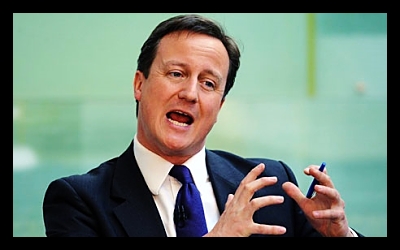
Last Wednesday, British prime minister David Cameron announced a few recommendations for ending global poverty by 2030. Improving life for the more than one billion people that live on less than $1.25 a day would include provision of drinking water, electricity, health care, and schools.

Cameron reported that ending global poverty “can and should be one of the great achievements of our time. It is doable”. As a co-chair of the high-level panel that will recommend the best ways to combat global poverty, the British prime minister hopes to improve the U. N. Millennium Development Goals that expire in 2015. These goals included ensuring accessibility to elementary school education, stopping HIV/AIDS, increasing access to clean water and sanitation, as well as reduction of maternal and child mortality through healthcare.

These goals, however, Cameron says, didn’t place enough emphasis on the effects of conflict and violence. Building strong institutions and enforcing the law were overlooked in the Millennium Development Goals, and the panel hopes to remedy this by promoting “good governance and private enterprise, investment, and entrepreneurship.” The main focus of ending global poverty is economic growth in the private sector.

Cameron also highlights corruption and how tackling it as well as holding governments accountable is “the golden thread of development.” These reforms in conjunction with those such as food and water provisions, healthcare, and education accessibility could allow a swift eradication of global poverty by the year 2030.

– Sarah Rybak

Photo: Guardian

May 23, 2013
https://borgenproject.org/wp-content/uploads/borgen-project-logo.svg 0 0 Borgen Project https://borgenproject.org/wp-content/uploads/borgen-project-logo.svg Borgen Project2013-05-23 03:00:122020-06-21 22:20:02British Panel Plans to End Global Poverty by 2030
Global Poverty

United States Continues Aid to Ghana

United States Continues Aid to GhanaThe United States Ambassador to Ghana, Scott DeLisi, has stated that the United States will not be cutting the foreign aid given to Ghana. Some donor countries have backed out of Ghana after accusations of the misuse of aid money by the local government but DeLisi claims that U.S. aid dollars have not been misused and that the office will continue to stand against corruption in the local government’s use of aid money.

DeLisi said that since U.S. aid to Ghana is not part of a direct budget support system, the money does not go to the local government to spend on anything; the money is easy to track and has not been misused. DeLisi also spoke about raising wages for regional health workers in order to retain well-trained workers.

The United States gives an annual $430 million to Ghana, a country with great potential for growth, especially in the energy sector. Some of the main programs that receive U.S. funding in Ghana focus on treating TB, HIV/AIDS, and malaria. This is a great example of how the United States’ aid money is being carefully monitored as the country’s aid organizations continue to stand against corruption, assuring taxpayers that American aid goes to helping the poor and building national infrastructure. Learn more about our donor history with Ghana. 

– Kevin Sullivan

Source: allAfrica
Photo: Flickr

April 16, 2013
https://borgenproject.org/wp-content/uploads/borgen-project-logo.svg 0 0 Borgen Project https://borgenproject.org/wp-content/uploads/borgen-project-logo.svg Borgen Project2013-04-16 11:56:112020-06-12 01:22:03United States Continues Aid to Ghana
Global Poverty

Ngozi Okonjo-Iweala’s TED Talk on Doing Business in Africa

Ngozi Okonjo-Iweala’s TED Talk on Doing Business in Africa
Ngozi Okonjo-Iweala, a director of the World Bank, was Nigeria’s Finance Minister and then briefly Foreign Affairs Minister from 2003 to 2006, the first woman to hold either position. During her tenure as Finance Minister, she worked to combat corruption, make Nigeria’s finances more transparent, and institute reforms to make the nation’s economy more hospitable to foreign investment.

In her TED Talk, she told many stories about changing Africa and how African people say no to corruption and everyone outside Africa should give more credibility and invest more in Africa.She stressed that we should do more business in Africa instead of just aiding Africa. And also, Africa should pay more attention to expand privatization and the government should increase more financial management and democracy.

– Caiqing Jin

Source: TED Talk

April 16, 2013
https://borgenproject.org/wp-content/uploads/borgen-project-logo.svg 0 0 Borgen Project https://borgenproject.org/wp-content/uploads/borgen-project-logo.svg Borgen Project2013-04-16 09:00:452024-05-24 23:48:12Ngozi Okonjo-Iweala’s TED Talk on Doing Business in Africa
Page 6 of 6«‹456

Get Smarter

  • Global Poverty 101
  • Global Poverty… The Good News
  • Global Poverty & U.S. Jobs
  • Global Poverty and National Security
  • Innovative Solutions to Poverty
  • Global Poverty & Aid FAQ’s
Search Search

Take Action

  • Call Congress
  • Email Congress
  • Donate
  • 30 Ways to Help
  • Volunteer Ops
  • Internships
  • Courses & Certificates
  • The Podcast
Borgen Project

“The Borgen Project is an incredible nonprofit organization that is addressing poverty and hunger and working towards ending them.”

-The Huffington Post

Inside The Borgen Project

  • Contact
  • About
  • Financials
  • President
  • Board of Directors
  • Board of Advisors

International Links

  • UK Email Parliament
  • UK Donate
  • Canada Email Parliament

Get Smarter

  • Global Poverty 101
  • Global Poverty… The Good News
  • Global Poverty & U.S. Jobs
  • Global Poverty and National Security
  • Innovative Solutions to Poverty
  • Global Poverty & Aid FAQ’s

Ways to Help

  • Call Congress
  • Email Congress
  • Donate
  • 30 Ways to Help
  • Volunteer Ops
  • Internships
  • Courses & Certificates
  • The Podcast
Scroll to top Scroll to top Scroll to top