• Link to X
  • Link to Facebook
  • Link to Instagram
  • Link to TikTok
  • Link to Youtube
  • About
    • About Us
      • President
      • Board of Directors
      • Board of Advisors
      • Financials
      • Our Methodology
      • Success Tracker
      • Contact
  • Act Now
    • 30 Ways to Help
      • Email Congress
      • Call Congress
      • Volunteer
      • Courses & Certificates
      • Be a Donor
    • Internships
      • In-Office Internships
      • Remote Internships
    • Legislation
      • Politics 101
  • The Blog
  • The Podcast
  • Magazine
  • Donate
  • Click to open the search input field Click to open the search input field Search
  • Menu Menu

Tag Archive for: Corruption

Posts

Global Poverty, Refugees, United Nations

The Connection Between Social Media and Poverty Reduction

Social Media and Poverty ReductionThe U.N. first asked “how can the international community best harness the power of media…to educate and transform?” in a 2017 conference. Although this requires a complicated answer, social media and poverty reduction can be connected by harnessing the power of information to foster development in a technologically advancing world.
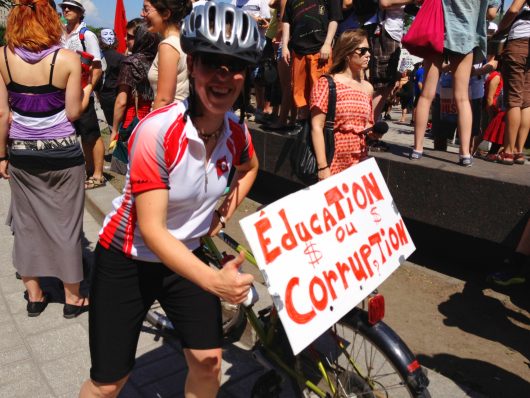
The link is clear: the U.N. recognizes that there are many “opportunities for the media to play a strategic role for eradicating poverty.” This rests on the media’s ability to inform the public about poverty, in many cases by disseminating information through the voices of who have truly experienced it. This provides “an inclusive platform and an open forum to share the views and concerns of people living in vulnerable situations.”


Media and Poverty Reduction: Syrian Civil War


But what does this look like firsthand? When a video of a young Syrian boy named Omran Daqneesh covered in rubble surfaced in 2016, millions of people disseminated the video through their social media channels hours after its publication. The New York Times called the video “an image of civil war,” as for many it humanized the violent events taking place far from home.

Sharing these shocking images can spur quick action. A different image, that of Alan Kurdi, a Syrian boy who drowned while leaving Syria for Greece, gained similar attention. Sharing it via social media had real outcomes: MercyCorps garnered $2.3 million for Syrian refugees in one month, compared to the $4.5 million raised in four years before.

The information-sharing that took place with these images spurred discussions about poverty and war on social media. In many cases, the power in information-sharing means that “the media can play a major role in developing public understanding of economic, social, and environmental issues: the three pillars of sustainable development,” according to the U.N.


Governments Utilize Connection Between Media and Poverty Reduction


Many organizations and governments are harnessing the power in social media and poverty reduction. Rwandan health minister Agnes Binagwaho provides an example with #Ministermondays. Every other Monday, Binagwaho opens a discussion via Twitter for people to voice their concerns about health in the country. Listening to real voices, she is able to craft policies using the experiences she absorbs through social media.

Others are doing similar work. An online social media platform called Digital Green provides farmers in sub-Saharan Africa and South Asia a network to discuss best practices for farming. Similarly, the World Bank Finances app ensures that sustainable development initiatives put funding into the correct hands, preventing fraud via social media.

Unlike other media sources, social media gives a voice to those who have lived in poverty by creating public platforms to spread experience. In this way, the media “affords individuals and communities the possibility to become active in the development process” by using social media platforms as safe spaces for discussion, according to the University of Namibia. Over time, this is generating “long-term suitability and sustainability” for poverty reduction.

Social media and poverty reduction works for other forms of development. Success for the United Nations 2030 Sustainable Development Goals largely rests on the power of the media, according to the U.N., based on its ability to instigate change with credible information sharing. And media hides other tools for poverty eradication; the University of Namibia explains that it also “creates a platform for non-violent discussion and issue resolution” to prevent conflict.

Social media and poverty reduction can be linked through holding guilty parties accountable for their actions. An established social media source known as I Paid a Bribe is doing just this; it creates a space to safely expose corruption in developing countries by text or email. Stories are shared without fear of retaliation, exposing illegal actions and fighting corruption.


Media and Poverty Reduction: Shortcomings


Even so, media does not always work in favor of poverty reduction; many argue that poverty is often given little coverage time via traditional media sources. For example, a study of three prominent U.S. nightly news sources found that in 14 months, an average of only 2.7 seconds in every 22-minute program mentioned poverty. And not all people are able to access social media channels; ending the digital divide that leaves four billion people without internet can harness the power of social media to share stories for reducing poverty.

In some cases, “the knowledge and experiences of people living in poverty are often undervalued” in the media, and “solutions to their own problems are ignored.” This can improperly portray real world experiences. Giving little recognition to those who have lived in poverty, according to the U.N., ultimately plays a role in distorting public perception and negatively influencing policies about poverty reduction.

Despite barriers, the U.N. explains that “the time has come for all policy actors to recognize and support the vital contribution of the media” in reducing poverty. Developing the tools that social media provides to reduce poverty, when done effectively, is gaining traction for development today.

And although Omran Daqneesh’s video alone can not end a civil war, his impact is igniting progress for sustainable development. In a world like today, change stems from diverse voices, making way for progress that was impossible only decades ago.

– Cleo Krejci

Photo: Flickr

September 9, 2017
https://borgenproject.org/wp-content/uploads/borgen-project-logo.svg 0 0 Kim Thelwell https://borgenproject.org/wp-content/uploads/borgen-project-logo.svg Kim Thelwell2017-09-09 01:30:492020-07-08 08:17:55The Connection Between Social Media and Poverty Reduction
Developing Countries, Development, Global Poverty

3 Strategies for Reducing Corruption in Developing Countries

Reducing CorruptionIn 2013, World Bank President Jim Yong Kim declared corruption as “public enemy number one” in developing countries. And this isn’t hyperbole, as corruption slows or stalls development. Public money allocated for healthcare or education ends up in the pockets of already wealthy officials. Corruption is also an excuse to justify not spending more on international aid. Here are three strategies for reducing corruption developing countries can employ:
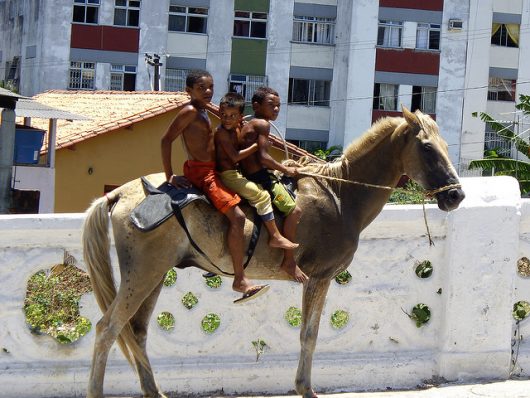
  1. Make Bureaucracies More Efficient
    Corruption thrives when government officials can take advantage of inefficient bureaucracies. Poorly managed public sectors with complex regulations make sidestepping rules easy for these officials. Reducing corruption means, above all, streamlining bureaucracy. This can be done in multiple ways.Some studies suggest that simply condensing agencies reduces corruption. Smaller agencies with smaller amounts of personnel reduces the opportunity for them to collect bribes. Another strategy is to make tax codes easy to understand and computerize simple procedures. In Senegal, these two measures alone reduced fraud within the public sector by 85 percent.
  2. Make Elections More Transparent
    Corrupt government officials can usually find ways to stay in office. And citizens can vote for re-election without realizing how corrupt their representatives are. Making elections more transparent can have an impact on this trend.In Delhi, India, a randomly selected pool of citizens was given ‘report cards’ of officials running for office. These ‘report cards’ had information on the qualifications and past performance of candidates. In the areas where citizens had the report cards, the quality of governance increased. Delhi is a perfect case study in the power of transparent elections. When citizens understand who they’re voting for, they can make better decisions. That leads to better government, with less corruption.
  3. Increase Civic Education
    Voters don’t just need to understand who people they’re electing to office. They also need to have a broad understanding of what that official is doing while in office. Civic education is vital to this goal. Giving citizens of developing countries the tools to understand their political rights is key to reducing corruption.Researchers confirmed this in Uganda. In their study, citizens were provided with information about the hijacking of public funds by local officials. Due to this information campaign, public officials stopped redirecting public funds to their private bank accounts. Consequently, there was an increase in money that reached schools. This led to more children attending school. Giving citizens access to information they deserve gives them a voice. And when it comes to reducing corruption, their voices are the most important.

Corruption is prevalent in a majority of developing countries, but it doesn’t have to stay that way. Reducing corruption is an achievable goal. To jumpstart the process, developing countries must examine and streamline their government agencies. Citizens in these countries must have the information they need to make informed decisions. And after they make the decision, they must hold their elected officials accountable.

This is work that’s easier said than done. But organizations like the World Bank have already begun work on these problems, and U.S. citizens can call their representatives and ask for the U.S. to take a bigger role in tackling these issues. Corruption is one of the last barriers preventing developing countries to become developed. But with these strategies, soon it could be a thing of the past.

– Adesuwa Agbonile
Photo: Flickr

September 5, 2017
https://borgenproject.org/wp-content/uploads/borgen-project-logo.svg 0 0 Borgen Project https://borgenproject.org/wp-content/uploads/borgen-project-logo.svg Borgen Project2017-09-05 01:30:492024-05-28 00:15:423 Strategies for Reducing Corruption in Developing Countries
Global Poverty

The Top Three Answers to the Question: Why is Brazil Poor?

Why is Brazil Poor
Brazil is the world’s fifth largest country by both population (roughly 210 million) and geographical area (3,287,597 square miles). It is also the world’s eighth largest economy and previously hosted the 2016 Olympics. Despite these feats, Brazil struggles to recover from the worst recession in its country’s history. While Brazil is not poor, the level of people in poverty there is well above the norm for a middle-income country. Here are three answers to the question, “Why is Brazil poor?”

1. Inequality of Land Distribution

According to USAID, inequality of land distribution is a major factor contributing to poverty levels in Brazil. Brazil’s poor have inadequate access to desirable land, and NPR reported in 2015 that one percent of the population controls 50 percent of all the land in Brazil.

This means that 2 million people (out of a total population of 210 million) control half of the country’s entire square footage. The other 99 percent have little access to land ownership, making it difficult to improve their economic status. Brazil is one of the most unequal places in the world when it comes to land distribution.

2. Education

Claudia Gostin, the education secretary for the city of Rio de Janeiro, told the Global Post that Brazil has educational apartheid taking place in its country. Apartheid is a system that separates people on the basis of color, ethnicity or class. Brazilian schools are separated by class and one could also argue race.

According to the Global Post, class divisions in Brazil are ingrained around the age of five. Depending on their economic class, Brazilian children are either sent to rundown public schools that prepare them for mediocrity or they are sent to high quality private institutions that prepare them for upper echelon roles in society. Lower class Brazilians are taught by second rate teachers in under resourced buildings with shorter school days than their peers. These factors lead to several drop outs and graduates who are unprepared to compete for high tech jobs in the white-collar work force.

In addition, Brazilians who identify as black or brown and compose more than 50 percent of the population have income levels that are half of whites. This keeps Brazil’s black and brown population in poverty and at the end of Brazil’s social totem pole.

3. Corruption

According to the World Factbook, Brazil’s economy has been affected by several corruption scandals involving private companies and government officials. Penalties against the companies involved — some of the largest in Brazil — limited their business opportunities, producing a ripple effect on associated businesses and contractors.

In addition, investment in these companies also declined due to scandals. This is in turn has had a negative effect on the country’s poor population because companies involved in the scandals cut jobs. For example, Corporate Compliance Insights states that oil company Pertrobras was the country’s largest company and investor making up 10 percent of Brazil’s economy, but after a corruption scandal within the company, Brazil lost 27 billion (at least 1 percent) in GDP in 2015. The company also reduced its workforce by 34 percent, and fewer jobs equals less opportunities for Brazil’s poor to improve their circumstances.

So, why is Brazil poor? A history of inequality that runs deep in the country propels the cycle of poverty for Brazil’s poor. Race, class, education, land and government are all sources of power that dictate where wealth remains in Brazil.

Hope remains for Brazil’s poor despite its past. Poverty has been nearly wiped out for the elderly due to well-funded pensions. What is more, state funded programs such as Bolsa Familia have lifted tens of millions out of poverty and now, more than half of Brazil’s population is considered middle class.

Expanding opportunities for education, access to land and less corruption in government will pave the way for a more equitable Brazilian society.

– Jeanine Thomas

Photo: Flickr

September 1, 2017
https://borgenproject.org/wp-content/uploads/borgen-project-logo.svg 0 0 Kim Thelwell https://borgenproject.org/wp-content/uploads/borgen-project-logo.svg Kim Thelwell2017-09-01 07:30:442024-05-26 23:14:46The Top Three Answers to the Question: Why is Brazil Poor?
Global Poverty

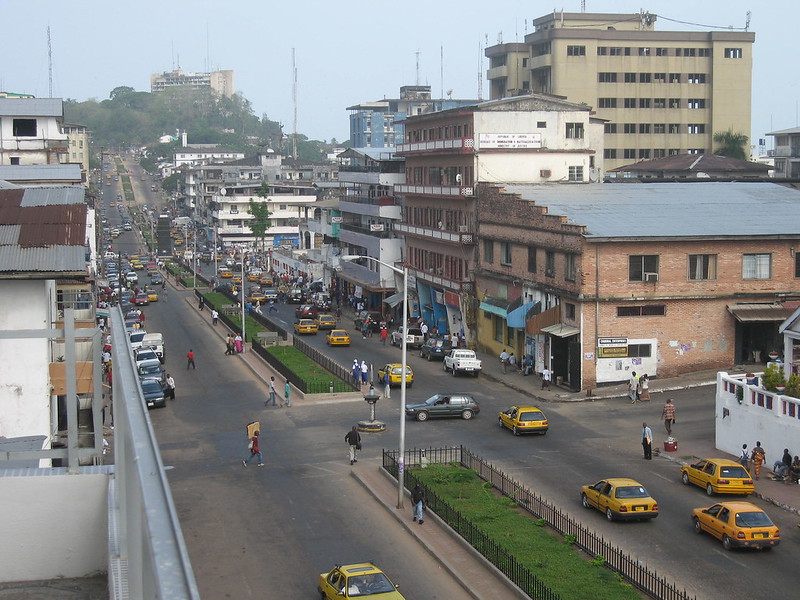
Corruption: A Consequence of the High Poverty Rate in Liberia

Liberia is a country in West Africa and is one of the poorest countries in the world. Although Liberia is the oldest republic in Africa and has a long running relationship with the U.S., the alarming poverty rate in Liberia cripples growth and exacerbates other issues.
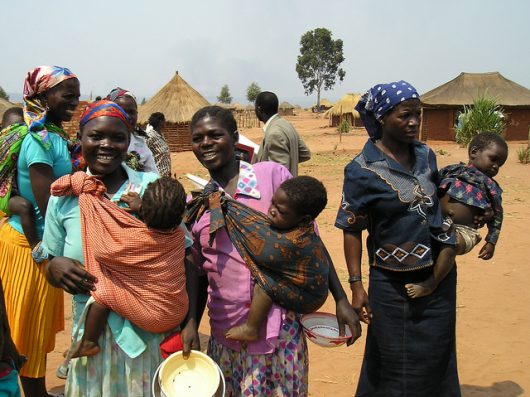
The World Bank’s most recent information on the poverty rate in Liberia, collected in 2007, indicates that around 63 percent of the country lives on less than $1.90 per day (the daily income rate considered the threshold for extreme poverty). Also, as of 2009 the World Bank reported that a colossal 89.6 percent of the population lives on less than $3.10 a day.

These statistics show that a significant majority of Liberia suffers from the absolute worst poverty possible, and nearly everyone in the country struggles from slightly less severe yet punishing conditions of scarcity and desperation.

Unsurprisingly, the alarming poverty rate in Liberia stymies the country’s overall development. The country lacks the infrastructure to reliably provide water and electricity, and sorely lacks the resources or opportunities for widespread education or employment. Overall, these deficiencies stifle the creation of new institutions as well as human and economic development, contributing to other problems such as corruption and instability.

Like many other poverty-stricken countries in Africa, Liberia also contends with frequent political instability and violence. Following a military coup d’etat in 1980, the government of Liberia has been plagued by corruption, irresponsibility and political persecution. Two civil wars in Liberia claimed the lives of 250,000 people between 1989 and 2003.

The country’s political instability may seem surprising considering that Liberia was founded by freed American and Caribbean slaves and has a democratic system of government modeled after the U.S. Unfortunately, the relationship between poverty and corruption creates a seemingly endless cycle that prevents the Liberian government from functioning effectively when the deprived people need it most.

Fortunately, Liberia’s current president, Ellen Johnson Sirleaf, seems determined to rid the government of corruption and truly help the country. With a long history of opposing unethical behavior and experience working for the World Bank and U.N. President Sirleaf is particularly well qualified to pull Liberia out of hopelessness.

President Sirleaf possesses the strong negotiation skills and political and financial knowledge to tackle the alarming poverty rate in Liberia as well as the corruption it feeds. If President Sirleaf succeeds in revamping Liberia’s economy and rooting out government-level corruption, Liberia may one day live up to the principles of liberty and opportunity that its founders originally sought.

– Isidro Rafael Santa Maria
Photo: Flickr

August 14, 2017
https://borgenproject.org/wp-content/uploads/borgen-project-logo.svg 0 0 Borgen Project https://borgenproject.org/wp-content/uploads/borgen-project-logo.svg Borgen Project2017-08-14 07:30:592024-06-05 04:52:27Corruption: A Consequence of the High Poverty Rate in Liberia
Global Poverty, War and Violence

Poverty in Angola: Oil, Corruption and Land Grabs


Poverty in Angola runs high; roughly 40 percent of the population currently lives below the poverty line. The combination of a long, drawn-out civil war, systematic political corruption and economic crisis have prevented the country from establishing itself as a stable and prosperous state since Angola received its independence from Portugal in 1975.

While Angola does not have many lucrative exports, oil does make an important contribution to the country’s economy. Between 2006 and 2016, it accounted for as much as 97 percent of exports on average each year and, while there has been some reinvestment into national infrastructure, the president, José Eduardo dos Santos, has received criticism for not redistributing the profits fairly and using the financial boost from oil exports to reduce poverty in Angola as much as he could have.

Beyond its meddling in the oil industry, other forms of government corruption and nepotism are also rife in Angola. One particularly prominent example is the appointment of the president’s daughter, Isabel dos Santos, to the position of chief executive of the state-run oil firm in 2016. Forbes ranks her the richest woman in Africa, and she has an estimated net worth of more than $3 billion. Meanwhile, there is extreme poverty in much of Angola and subsistence farming is the main source of income for the majority of her countrymen and women.

This over-reliance on oil causes another problem: Angola is especially vulnerable to the fluctuations in the global oil market. Just last year, a global drop in oil prices resulted in an economic catastrophe for Angola. This triggered a rise in prices on everything from food and fuel to healthcare, putting an even greater strain on the country’s poorest inhabitants. The situation was exacerbated when the government imposed tough austerity measures, a move the U.N. Committee on Economic, Social and Cultural Rights deemed regressive and concerning.

Meanwhile, in a bid to diversify the economy with additional sources of revenue, huge land grabs have taken place at the hands of government officials and private businesses. In many cases, citizens have been forcibly evicted without adequate housing alternatives and proper compensation. Instead, they have been resettled in makeshift housing with little access to amenities such as healthcare, education, water and electricity.

Even before this move, access to healthcare and education has been severely limited, helping to reinforce a cycle of poverty. So while progress – although slow – has been made in both areas since peace was established in 2002, there is still much progress to be made. More investment is needed in the country’s public services to alleviate levels of poverty in Angola.

– Rosie McCall

Photo: Flickr

June 2, 2017
https://borgenproject.org/wp-content/uploads/borgen-project-logo.svg 0 0 Borgen Project https://borgenproject.org/wp-content/uploads/borgen-project-logo.svg Borgen Project2017-06-02 11:29:552024-12-13 17:57:54Poverty in Angola: Oil, Corruption and Land Grabs
Global Poverty

The Link Between Corruption and Poverty in Mexico

The Link Between Corruption and Poverty in Mexico
Mexico has one of the most stagnant economies in the world. This predicament is largely due to the prominence of corruption in the country. According to calculations by Mexican think tank IMCO (El Instituto Mexicano para la Competitividad), corruption could be costing the country roughly five percent of its gross domestic product. This is almost eight times the amount spent by Mexico’s poverty reduction agency. Corruption funnels money away from programs that are needed to boost the economy, leaving a large number of people in poverty in Mexico.

Mexico was found to be the most corrupt member nation of the Organization for Economic Cooperation and Development (OECD) by Transparency International. Corruption is a major obstacle to services that promote economic development – including health, education and security services. Corruption also creates extreme inequality and prevents successful economic growth. Owners of fair businesses say that they typically lose out to competitors who use bribes or influence to gain unfair business opportunities.

Mexico would be facing a slowing economy even without corruption, but the influence of corruption makes the country considerably less competitive in the global economy. Corruption works alongside other issues including poor infrastructure, inadequate institutions, lack of education and stagnant innovation. Most workers in Mexico work in the black market under exploitative conditions without social security. They are unable to find other job prospects, leaving them in situations of underemployment that leads to poverty.

Mexico is a rich country, but it lacks a reliable system of wealth redistribution. There is almost no social assistance and extremely few economic opportunities, causing wealth to concentrate in the hands of very few people. Just 15 millionaires dominate Mexico’s economic landscape, owning almost 13 percent of the Mexican economy’s total value. On the other hand, there are over 55 million people living in poverty in Mexico.

The Mexican government has introduced social assistance programs for those in poverty to limit the impact of economic crises. However, the government has failed to invest in programs to boost economic competitiveness, educational opportunities and technological advancement. Therefore, these were simply short-term solutions that did not fix the root problem of poverty in Mexico by providing economic opportunities.

The Mexican government needs to promote a balance of social and economic programs to reduce poverty. The path to successful infrastructure and institutions has a long way to go. However, an emphasis on education and health will allow all individuals to participate in the economy. Until these programs are implemented, corruption will continue to prevent the redistribution of wealth that is essential to mitigating widespread poverty in Mexico.

– Lindsay Harris

Photo: Flickr

April 26, 2017
https://borgenproject.org/wp-content/uploads/borgen-project-logo.svg 0 0 Borgen Project https://borgenproject.org/wp-content/uploads/borgen-project-logo.svg Borgen Project2017-04-26 01:30:322020-05-07 17:09:10The Link Between Corruption and Poverty in Mexico
Global Poverty, Hunger

Food Crisis in Venezuela: Starvation, Corruption and Exodus

Food Crisis in Venezuela
As the food crisis in Venezuela continues to worsen, the country is suffering from issues ranging from starvation to corruption and mass migration to surrounding countries.

Venezuelans lack access to common goods ranging from food to medicine. The country has triple-digit inflation and the currency collapsed nearly 80 percent last year, leading to millions of citizens suffering from food insecurity. Food riots caused violence and even death in several Venezuelan cities last year, and Venezuelan President Nicolás Maduro has responded by attempting to control the increasingly black market distribution of food and goods within the country. The government hopes that by placing limits on how much individuals can buy at a time, it will be able to put an end to the black market operation of buying and reselling food for higher prices.

As children and families suffer from starvation in the country, many parents are attempting to give their children to families who will be able to provide food for them. Reuters reports that at a social services center in Carirubana more than a dozen parents seek help providing care for their children each day. This is a dramatic uptick from last year when the center averaged one parent per day.

A survey released by a children’s rights group reported that two-thirds of 1,099 households with children were not eating enough in the region of Caracas, Venezuela. The average wages in the country are the equivalent of $50 per month. This has created a desperate situation where parents fear that their children will be forced into prostitution or the drug trade in order to survive.

As the food crisis in Venezuela grows increasingly desperate, food trafficking has become one of the largest businesses in the country. The military controls the distribution of food, and documents and interviews reveal that corruption runs rampant at every level from generals to soldiers.

Tens of thousands of Venezuelans cross the borders into Brazil and Columbia each month, some to buy food and return home and others to find a permanent home in a country where food is more readily available. Along border towns, Venezuelans account for 60 percent of all hospital visits, and as more Venezuelan sex workers arrive, the rates of sexually transmitted diseases have skyrocketed in these regions.

As the food crisis in Venezuela continues, it is important that the international community condemns human rights violations and corruption in the country. It is important that global powers like the United States focus on helping partner countries in South America put pressure on the Venezuelan government to promote democracy and end corruption and food insecurity.

– Eva Kennedy

Photo: Flickr

January 22, 2017
https://borgenproject.org/wp-content/uploads/borgen-project-logo.svg 0 0 Borgen Project https://borgenproject.org/wp-content/uploads/borgen-project-logo.svg Borgen Project2017-01-22 01:30:492024-12-13 17:56:30Food Crisis in Venezuela: Starvation, Corruption and Exodus
Global Poverty

Poverty in Curacao: Facts and Figures

Poverty in CuracaoCuracao, comprised of one main island and one smaller, uninhabited island in the Caribbean, is best known for its pristine coral reefs, brightly painted houses, arid climate and ocean colored liquor named after the islands. However, the beauty of the country often disguises distressing poverty in Curacao.

The Netherlands Antilles were dissolved in 2010, but within a few years, the country soon turned to chaos due to political turmoil and corruption. A string of unsuccessful leaders, violence and increased taxes plagued the country.

According to the most recent census, more than 25 percent of households in the country lived below the poverty line as of 2011. In some areas, more than 50 percent of families were living below the poverty line. One larger area, Fortuna, had 52.4 percent of around 1,000 households living in poverty in 2011.

In 2014, the unemployment rate was 12.6 percent but dropped to 11.7 percent the following year. The economy in Curacao is mainly dependent on the petroleum industry. The country relies heavily on imports and a recent decline in phosphate mining and the oil industry in Curacao contributes to the lack of job openings available.

However, there is hope for the job market as the capital of Willemstad also serves as a major Caribbean banking hub. More importantly, a growing tourism industry provides hope for the future job market. More than 400,000 tourists visited the country in 2012 alone.

As Curacao becomes a more popular cruise ship stop, the numbers have increased even more since then, with almost 470,000 visitors last year. Curacao is expectantly the most popular among Dutch tourists.

After gaining autonomy in 2010, Curacao struggled to achieve a stable government and economy. Recently the country seems to have taken a positive turn by reducing unemployment and increasing tourism. At this rate, the next census could potentially show a decrease of poverty in Curacao.

– Carrie Robinson

Photo: Flickr

October 1, 2016
https://borgenproject.org/wp-content/uploads/borgen-project-logo.svg 0 0 Borgen Project https://borgenproject.org/wp-content/uploads/borgen-project-logo.svg Borgen Project2016-10-01 01:30:262020-05-16 07:45:14Poverty in Curacao: Facts and Figures
Global Poverty

Protests in Honduras May be First Step in Improving Rule of Law

Protests_in_Honduras
For the fifth consecutive Friday, thousands of protesters in the Honduran Capital have marched, torches in hand, calling for their President and other leaders to resign on charges of corruption. In fact, their demands go beyond what many see as simply political theater in having high ranking officials resign. The protesters are seeking systemic change by having an international observing and prosecuting body investigate and fight corruption and impunity in the struggling Central American Nation.

This international commission, which exists only as an idea, is coming to be called CICIH, the International Commission Against Impunity in Honduras. The inspiration for such a sagacious demand by protesters seems to be the success of the CICIG, the International Commission Against Impunity in Guatemala, in enforcing the rule of law and subverting corruption in Honduras’s neighboring state.

The CICIG’s recently renewed mandate to operate in Guatemala was welcomed by the State Department and presented as an effective model for curbing violence, unlocking growth and reducing poverty in the Northern Triangle countries of Guatemala, El Salvador and Honduras, in an earlier Borgen Blog post.

The grievances behind the recent protests in Honduras serve as a great example of how corruption undermines growth. An estimated $120 million was “fraudulently misspent” by the Honduran Social Security Institute, a large proportion of which went to fund President Juan Orlando Hernandéz’s 2013 campaign. Mismanagement of public funds, not to mention poor investment climates and the struggles of doing business, are some ways in which corruption impedes poverty reduction. In 2005, corruption was estimated to cost the world $1 trillion.

Leading the world in murders per capita, and Latin America in income inequality, life is difficult in Honduras.

At least 32.6 percent of Hondurans live in extreme poverty, reports the World Bank, and the the number of people below the national poverty line continues to climb. Rocked by a drug war, hyperactive and omnipresent gang activity and intense violence from law enforcement, the symptoms of corrupt and unstable institutions consistently make headlines in what The Economist warned was fast becoming a “failed state.”

The issues facing Honduras are not entirely endogenous and are incredibly complex. For starters, their geographic location is favored by narco-traffickers aiming to get products to markets in the U.S. They are still reeling from a 2009 coup. Impunity among state security forces is rampant, something that has been blamed for their out of control killings and targeted assassinations.

Among the many things that Honduras needs, are dependable and capable institutions, which are difficult to cultivate in the environment in which Honduras finds itself. Thankfully, the unique model provided by the work of CICIG in Guatemala lends itself perfectly to their situation, and the people of Honduras are ready for it.

– John Wachter

Sources: Al Jazeera, Carnegie Endowment for International Peace , CNN Español, The Economist, The Guardian, Huffington Post, La Prensa, Tico Times 1, Tico Times 2, World Bank 1, World Bank 2
Photo: Flickr

July 6, 2015
https://borgenproject.org/wp-content/uploads/borgen-project-logo.svg 0 0 Borgen Project https://borgenproject.org/wp-content/uploads/borgen-project-logo.svg Borgen Project2015-07-06 09:58:302020-07-11 11:52:15Protests in Honduras May be First Step in Improving Rule of Law
Global Poverty

FIFA, Qatar and the Kafala System

FIFA-Qatar-Kafala-System
The recent scandal surrounding corruption at FIFA has made headlines around the world. But could it affect the controversial 2022 World Cup in Qatar?

That remained in question Friday as FIFA re-elected Sepp Blatter as its president. The election comes on the heels of a massive corruption investigation involving the top brass of soccer’s governing body. The U.S. Department of Justice indicted 14 of the organization’s executives on dozens of separate charges this week. They are accused of “brazen corruption” in their dealings with sports marketing companies which generate billions for the organization.

FIFA is also accused of dishonesty in its selection process for the 2018 and 2022 World Cups, awarded to Russia and Qatar, respectively. The Office of the Attorney General of Switzerland announced Wednesday that it would investigate “criminal mismanagement and money laundering” suspected to have taken place during the bidding process.

Though both selections raised eyebrows among soccer fans, the 2022 World Cup in Qatar has proven to be the most controversial. The Gulf state has been widely accused of human rights abuses in its preparation for the event.

Migrant laborers seeking work in Qatar submit to a labor scheme, known as the kafala system, through which host companies “sponsor” foreign laborers. Upon arrival, many workers find their documentation confiscated and their rights severely limited. They sometimes work twelve hour days, seven days a week.

According to the International Labor Organization, the scheme is tantamount to slavery. An investigation by The Guardian found Nepalese workers in Qatar were dying at a rate of one every two days in 2014. Documents produced by that report list worker deaths caused by crushing and electrocution.

Without documentation papers, workers are prevented from ever leaving. Employers also withhold pay to suppress dissent.

Migrant workers play an enormous role in the economy of Qatar. Almost 90 percent of the country’s population is foreign-born and 99 percent of the private sector is foreign. Though human rights organizations and governments have complained, little has been done to address these issues.

Much of the work being conducted in this manner is in preparation for the 2022 World Cup, with contractors using the cheap labor to build facilities for the event.

If the current FIFA crisis continues, it will almost certainly jeopardize Qatar’s hosting opportunity. Sponsors have already begun to re-evaluate their relations with the organization and it is likely many will drop out.

As for the 2018 World Cup in Moscow, Blatter received a stamp of approval from another controversial president: Vladimir Putin. On Thursday, Putin said the investigation was an attempt to thwart Blatter’s re-election. The Russian leader, who was a champion of the 2014 Sochi Olympics, called the investigation “a grave violation of principles of international organization.”

– Kevin McLaughlin

Sources: Department of Justice, The Guardian, Human Rights Watch, Swiss Attorney General
Photo: Zee News


June 16, 2015
https://borgenproject.org/wp-content/uploads/borgen-project-logo.svg 0 0 Borgen Project https://borgenproject.org/wp-content/uploads/borgen-project-logo.svg Borgen Project2015-06-16 02:32:592020-07-15 23:22:07FIFA, Qatar and the Kafala System
Page 4 of 6«‹23456›»

Get Smarter

  • Global Poverty 101
  • Global Poverty… The Good News
  • Global Poverty & U.S. Jobs
  • Global Poverty and National Security
  • Innovative Solutions to Poverty
  • Global Poverty & Aid FAQ’s
Search Search

Take Action

  • Call Congress
  • Email Congress
  • Donate
  • 30 Ways to Help
  • Volunteer Ops
  • Internships
  • Courses & Certificates
  • The Podcast
Borgen Project

“The Borgen Project is an incredible nonprofit organization that is addressing poverty and hunger and working towards ending them.”

-The Huffington Post

Inside The Borgen Project

  • Contact
  • About
  • Financials
  • President
  • Board of Directors
  • Board of Advisors

International Links

  • UK Email Parliament
  • UK Donate
  • Canada Email Parliament

Get Smarter

  • Global Poverty 101
  • Global Poverty… The Good News
  • Global Poverty & U.S. Jobs
  • Global Poverty and National Security
  • Innovative Solutions to Poverty
  • Global Poverty & Aid FAQ’s

Ways to Help

  • Call Congress
  • Email Congress
  • Donate
  • 30 Ways to Help
  • Volunteer Ops
  • Internships
  • Courses & Certificates
  • The Podcast
Scroll to top Scroll to top Scroll to top