• Link to X
  • Link to Facebook
  • Link to Instagram
  • Link to TikTok
  • Link to Youtube
  • About
    • About Us
      • President
      • Board of Directors
      • Board of Advisors
      • Financials
      • Our Methodology
      • Success Tracker
      • Contact
  • Act Now
    • 30 Ways to Help
      • Email Congress
      • Call Congress
      • Volunteer
      • Courses & Certificates
      • Be a Donor
    • Internships
      • In-Office Internships
      • Remote Internships
    • Legislation
      • Politics 101
  • The Blog
  • The Podcast
  • Magazine
  • Donate
  • Click to open the search input field Click to open the search input field Search
  • Menu Menu

Archive for category: Women’s Empowerment

Global Poverty, Women and Female Empowerment, Women's Empowerment

Women’s Empowerment in the Marshall Islands Needs Improvement

The Marshall Islands are located in the northwest of the Pacific Ocean, with a land area of just 181 square kilometers and a population of just over 74,000. While some organizations have promoted women’s empowerment in the Marshall Islands since its independence in 1986, the progress of legal rights for girls and women has not been significant.

For the past 30 years, the Marshall Islands has had few female senators. In the country’s 2015 elections, three women won seats, taking up 9 percent of the total 33 members in parliament. In January 2016, Hilda Heine won the presidential election to become the first female president of the Marshall Islands.

Though the nation did ratify the U.N.’s Convention on the Elimination of All Forms of Discrimination Against Women in 2006, the Marshall Islands has no current legislation on any issues related to domestic violence, human trafficking, sexual harassment or sex tourism. Furthermore, there is no minimum sentence for sexual violence.

Due to the insufficiency of the law, violence against women in this nation is not unusual. A report by Women United Together Marshall Islands has shown that 51 percent of women experience domestic violence, while more than half of the population generally agrees that it is normal to commit violence against women in marital relationships, according to U.N. Women.

On the other hand, as a crucial metric on women’s empowerment in the Marshall Islands, gender parity and equality in education has some good news. Literacy rates among male and female youth are above 98 percent at present. A 2015 national review on education in the Marshall Islands reported that girls perform better than boys on all tests except for science in grade three.

However, the gender pay gap and inequality in employment still call for more attention to women’s empowerment in the Marshall Islands. Statistics have shown that the male and female unemployment rates are, respectively, 28 percent and 37 percent. Annual wages of women are $3000 less than those of men in the same occupations. Potential discrimination in job markets frequently restrict women from earning credits or managing businesses, which affects their economic independence.

Another concern is related to women’s health and environmental issues. Due to a shortage of fruits and vegetables, more than half of women in the Marshall Islands have obesity or risk factors for related diseases. Teenage marriage, adolescent pregnancy and mortality for children under five in this nation still remain high compared to the global average, despite significant decreases in the past few decades.

Founded in 1987, a nonprofit organization named Women Union Together Marshall Islands serves as the leading voice for eradicating violence against women in the nation. Several other U.N. organizations have also dedicated efforts to promoting gender equality in the Marshall Islands.

Significant progress on women’s empowerment in Marshall Island has been achieved. Political leaders play a strong role in promoting gender equality and ending violence against women. However, further efforts to improve the status of women are still challenging and necessary.

– Xin Gao

Photo: Flickr

January 13, 2018
https://borgenproject.org/wp-content/uploads/borgen-project-logo.svg 0 0 Borgen Project https://borgenproject.org/wp-content/uploads/borgen-project-logo.svg Borgen Project2018-01-13 01:30:442024-05-29 22:30:08Women’s Empowerment in the Marshall Islands Needs Improvement
Global Poverty, Women and Female Empowerment, Women's Empowerment

Becoming a Reality: Women’s Empowerment in St. Lucia

women's empowerment in st. lucia
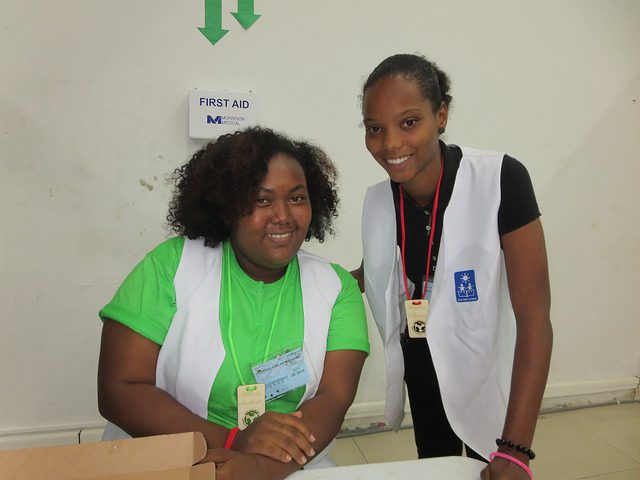
Women’s empowerment is a quickly-growing movement around the world, especially in developing countries. St. Lucia, an Eastern Caribbean island, is one of many developing nations taking huge steps toward equality among all its residents.

Women in Equality Empowerment Program

In 2014, women’s empowerment in St. Lucia received a large financial boost when the Saint Lucia National Commission for UNESCO presented a $26,000 check to fund the Women in Equality Empowerment Program (WEEP). The program, run by the National Skills Development Center (NSDC), aimed to make professional training and job placement more accessible to women in St. Lucia. The program ran from 2015 to 2016 and successfully trained and placed 27 students into new jobs.

National Skills Development Center

The NSDC has continued to make strides in women’s empowerment in St. Lucia. Currently, the NSDC runs the Construction for Women Project, the goal of which is to train women for work in the construction field and to desensitize the St. Lucian society to the idea of women working in non-traditional fields.

Sacred Sports Foundation

Empowering young women is the focus of the Sacred Sports Foundation (SSF), a foundation that focuses on helping girls and women lead healthy lifestyles and socialize with each other. In 2012, the SSF asked that the Florida Association for Volunteer Action in the Caribbean and the Americas (FAVACA) assist them in training SSF employees for a new program focused on teaching girls aged 13 to 17 about health and life skills. The program promoted social inclusion, health education, HIV/AIDS awareness and prevention and mentoring in leadership.

Raise Your Voice St. Lucia

Possibly the most important organization pushing for women’s empowerment in St. Lucia is Raise Your Voice St. Lucia (RYVSLU). The organization’s goal is to teach women and children about their legal rights and provide support to those suffering through domestic violence, rape and other human rights violations.

In November and December 2017, RYVSLU ran the 16 Days of Activism Against Gender-Based Violence program in which panels, community meetings, and public marches were arranged to educate and empower women. The program was funded by the Canada Fund for Local Initiatives (CFLI) and pushed for an end to violence against women.

These efforts are changing the current dialogue of women’s empowerment in St. Lucia, and hopefully serve as positive omens for the island nation’s future.

– Anna Sheps

Photo: Flickr

January 12, 2018
https://borgenproject.org/wp-content/uploads/borgen-project-logo.svg 0 0 Borgen Project https://borgenproject.org/wp-content/uploads/borgen-project-logo.svg Borgen Project2018-01-12 09:04:412024-06-05 23:55:35Becoming a Reality: Women’s Empowerment in St. Lucia
Global Poverty, Women and Female Empowerment, Women's Empowerment

The Levels of Progress of Women’s Empowerment in Vanuatu

women's empowerment in vanuatu
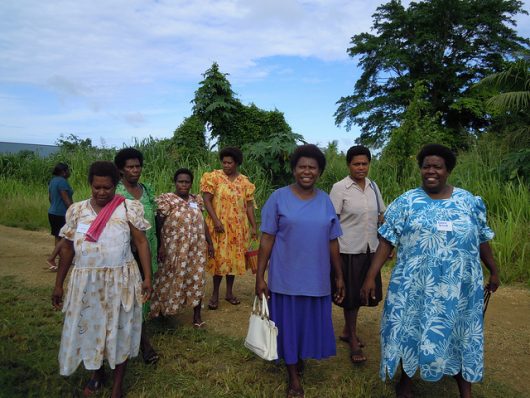
In the beautiful country of Vanuatu, a South Pacific Ocean nation made up of roughly 80 islands, there is a strong fight for women’s empowerment.

Gender Equality Measures

Vanuatu falls under the umbrella of the UN Women’s Fiji Multi-Country Office (MCO) based in Suva, that covers 14 Pacific Island Countries and Territories (PICT). PICTs work with governments and civil society organizations, and the MCO works to progress gender equality and women’s empowerment in the Pacific through the four key programs:

  1. Women’s Economic Empowerment
  2. Ending Violence Against Women
  3. Advancing Gender Justice in the Pacific
  4. Increasing Community Resilience through Empowerment of Women to Address Climate Change and Natural Hazards Program

Violence Against Women

No sexual harassment legislation is in place in Vanuatu, and failure to comply with the Convention on the Elimination of all forms of Discrimination Against Women, CEDAW, exists. There is also an unequal minimum age for marriage – 18 years for males and 16 years for females with parental consent.

Violence against women must be addressed in order to bring women’s empowerment in Vanuatu. According to UN Women, 3 in 5 women that have been in a relationship have experienced physical or sexual violence. Women are often treated as property, and they deal with a culture of sexual abuse fostered through adolescence by male family members. Most women are accustomed to these roles and accept that it is normal for men to beat them if they are not obedient.

Economically Empowering Females

In regard to women’s economic empowerment, over half of women who make an income and live with a man earn about the same or more than their husband or partner; however, less than one in five has savings in the bank, and few women own any major assets on their own. In fact, more than 1 in 5 women had their earnings taken away by their husband or partner, who also has the ability to disrupt, or forbid, their female’s work.

The impacts of climate change also directly impact women’s empowerment in Vanuatu. Rising sea levels and changes in air and water temperature affect women’s traditional economic, agricultural and fishing duties. Natural disasters also increase women’s vulnerability to violence and deprivation. Humanitarian intervention is crucial for the improvement of this aspect of women’s empowerment in Vanuatu.

Thankfully, the MCO’s four programs seek to address these issues, and bring significant change to the levels and regions of women’s empowerment in Vanuatu.

– Julia Lee

Photo: Flickr

January 12, 2018
https://borgenproject.org/wp-content/uploads/borgen-project-logo.svg 0 0 Borgen Project https://borgenproject.org/wp-content/uploads/borgen-project-logo.svg Borgen Project2018-01-12 07:09:352019-12-18 14:09:44The Levels of Progress of Women’s Empowerment in Vanuatu
Global Poverty, Women and Female Empowerment, Women's Empowerment

Groups Working Towards Women’s Empowerment in Suriname

women's empowerment in surinameSuriname, a small country in South America, has had issues in the recent past with women’s rights. While there has been growth, it has taken many years and it is difficult to continue the changes in the country. Certain actions have been taken by other countries and women’s groups to promote women’s empowerment in Suriname.

Suriname has enacted laws to dismantle inequality. Mostly created during the 21st century, an example is the Penal Code, which, once amended in 2009, penalized rape within marriage. The Law on Combatting Domestic Violence was passed in 2009. It punishes all forms of violence, and has, along with increased awareness, cut instances of domestic violence from 1,769 in 2009 to 1,213 in 2010.

This increased awareness continued in 2015 when Iceland convened with Suriname in January to discuss violence against women. In 2013, the two countries were ranked almost exactly opposite in women’s rights, with Iceland first and Suriname 110th in the world. The conference was the first time the United Nations brought together male leaders of nations to specifically discuss gender equality.

Another program for women’s empowerment in Suriname was an exchange between the South Dakota National Guard and the Suriname Defense Force. In March 2017, there was a three-day conference about Women in Leadership. Four women from Suriname went to South Dakota to learn about support services and the opportunities in which women can serve. By the end of the conference, the women were able to work with foreign partners and share their experiences to gain an understanding of each other’s cultures.

Elsewhere, there is the Ilse Henar Foundation for Women’s Rights in Paramaribo, Suriname. As women tend to have a disadvantageous position in Suriname society, the foundation seeks to eliminate these inequalities. For example, in 2006 they started a project called “Elimination of Sexual Harassment at the Workplace in Suriname.” The NGO helped draft legislation specifically regarding this topic, and it organized vulnerable women’s groups for domestic workers and migrant women workers.

Several agencies and countries are taking a stand for women’s empowerment in Suriname. By addressing gender inequality, it will enable women to improve their social standing while benefiting society as a whole.

– Nick McGuire

Photo: Flickr

January 12, 2018
https://borgenproject.org/wp-content/uploads/borgen-project-logo.svg 0 0 Borgen Project https://borgenproject.org/wp-content/uploads/borgen-project-logo.svg Borgen Project2018-01-12 01:30:052019-11-11 22:53:44Groups Working Towards Women’s Empowerment in Suriname
Global Poverty, Women and Female Empowerment, Women's Empowerment

Women’s Empowerment in the Solomon Islands Needs Improvement

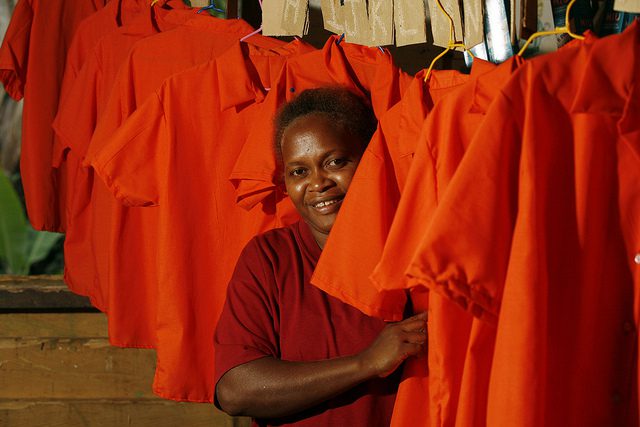
The third-largest nation in the Pacific, the Solomon Islands, is located northeast of Australia and west of Vanuatu. It has a population of about 600,000 with a land area of almost 28,000 square kilometers. Women’s empowerment in the Solomon Islands currently endures great difficulties, though is in progress. Despite the ratified conventions passed to eliminate any form of discrimination against women in 2012, there is no legislation on domestic violence, such as marital rape, in the Solomon Islands.
In 2007, only 67 percent of adult females and 84 percent of adult males were literate in the Solomon Islands. While this sharp contrast has gradually shrunk in the past ten years, women performed poorer than men in gross enrollment at almost all levels of education. In tertiary education, female students took up only 38 percent of total enrollment in 2012, and were concentrated in tourism, hospitality and education.

Another concern for women’s empowerment in the Solomon Islands is related to improving their health conditions. Malaria infections are high in pregnant women and children. There is a shortage of fresh water, fruits and vegetables in women’s diets, and this contributes to a high maternal mortality rate. Huge numbers of sexually transmitted infections come from early marriage, sexual violence and culturally sanctioned male infidelity, all of which contribute to gender inequality in the nation.

Lower levels of education and vulnerability to health issues leads to the poorer status of women in the economy. A large gap in employment rates sees 72.2 percent of men and 60.4 percent of women employed in the Solomon Islands. Land ownership and other traditional property rights still exclude women, despite the fact that 76.2 percent of women are involved in subsistence work, compared to 58.1 percent of men.

Female political leaders in this nation are almost nonexistent. Freda Tuki Soriocomua is the only woman holding one of the 50 seats in parliament, and also serves as minister for women. As claimed by the Inter-Parliamentary Union in June 2017, the Solomon Islands has the sixth-worst representation of women in parliament in the world.

Furthermore, due to the lack of domestic violence legislation, violence towards women in the Solomon Islands is a serious issue. As reported by the Family Health and Safety Study in 2009, among women aged 15 to 49 who had ever had a partner, 64 percent had experienced physical or sexual violence. About one-third of women reported being sexually abused before age 15, while around 10 percent of women reported physical violence during their pregnancy. Actual numbers could be even higher due to incomplete statistics.

Besides the 2012 ratified conventions and other regional commitments, U.N. Women in the Solomon Islands has been running a variety of programs to promote gender equality. These programs include Advancing Gender Justice in the Pacific, Ending Violence Against Women, Increasing Community Resilience through Empowerment of Women to Address Climate Change and Natural Hazards, and Women’s Economic Empowerment.

Women’s empowerment in the Solomon Islands demands increased concern. While previous cultural barriers and the nature of work created restrictions to women’s empowerment in the Solomon Islands, global efforts and collaborative policy development will gradually relieve the inequality-related issues of this nation.

– Xin Gao                   

Photo: Flickr

January 11, 2018
https://borgenproject.org/wp-content/uploads/borgen-project-logo.svg 0 0 Borgen Project https://borgenproject.org/wp-content/uploads/borgen-project-logo.svg Borgen Project2018-01-11 01:30:032024-05-29 22:30:07Women’s Empowerment in the Solomon Islands Needs Improvement
Global Poverty, Women and Female Empowerment, Women's Empowerment

Women’s Empowerment in Comoros

women's empowerment in comoros

Women’s issues in Comoros are closely associated with tradition, customs and religion. Challenges for gender equality include women being under-represented at the political level, a need for women in leadership, violence against women and women’s healthcare. By focusing on women’s empowerment in Comoros, these challenges could be properly addressed.

Women in Comoros, as well as Nigeria, Swaziland, the Republic of the Congo and Benin still have less than 8 percent female representation in their legislatures.

U.N. Women Working Towards Women’s Empowerment in Comoros

The United Nations Entity for Gender Equality and the Empowerment of Women (U.N. Women) works towards building capacities for women to participate in leadership. This transformative leadership training allows women to engage from a perspective of basic human rights and understand broader governance issues and democracy in general.

In Comoros, U.N Women has peacebuilding projects underway in partnership with the U.N. country team. Its contribution is to build the skills of women to understand the issues of gender relations in peace and in peacebuilding. It also strives to help women understand conflicts and how conflicts occur in order to help women build allies within the traditional leadership.

Addressing Domestic Violence and Women’s Healthcare

Violence against women, including domestic violence, is widespread in many places of Comoros. The physical, sexual and psychological violence against women threaten women’s empowerment in Comoros.

There has, however, been an advancement in women’s empowerment in Comoros through the improvement of healthcare services and decreasing maternal mortality.

United Nations Population Fund (UNFPA) programs are key to the improvement of healthcare services. These programs provide emergency obstetric care and family planning, aim to maintain the low prevalence of HIV/AIDS and manage sexually transmitted infections. They also increase the availability and use of timely and reliable demographic data and integrate population variables into gender policies and development programs.

Reproductive health is a priority in the national health strategy of Comoros. According to U.N. Women, maternal mortality rates fell from 381 to 170 deaths per 100,000 live births between 2007 and 2012. Programs have extended services to women during pregnancy, delivery and after birth.

Comoros pledges to strengthens its multi-sectoral strategy on HIV, enhance women’s access to microcredit, and continue to implement actions to bring more women into key decision-making posts across national institutions.

With efforts to provide women with more opportunities to succeed, women’s empowerment in Comoros will effectively address the challenges women face in society.

– Julia Lee

Photo: Flickr

January 10, 2018
https://borgenproject.org/wp-content/uploads/borgen-project-logo.svg 0 0 Borgen Project https://borgenproject.org/wp-content/uploads/borgen-project-logo.svg Borgen Project2018-01-10 01:30:142019-12-17 13:18:07Women’s Empowerment in Comoros
Global Poverty, Women and Female Empowerment, Women's Empowerment

Forging an Equal Future: Women’s Empowerment in Timor-Leste

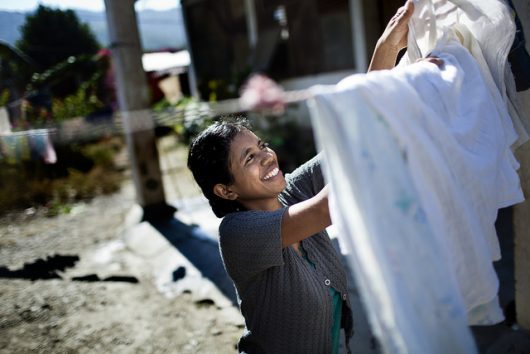
women’s empowerment in Timor-LesteWomen’s empowerment in Timor-Leste has been a serious agenda since the nation gained independence from Indonesian occupation in 2002. The occupation left 70 percent of the nation’s infrastructure in shambles and most of its inhabitants displaced.

The small island suffers from one of the highest poverty rates in Asia as well as high levels of malnutrition. Women in Timor-Leste face challenges including poverty, gender-based violence and a lack of opportunities to be seen as community leaders.

The country’s government, as well as outside groups, is working to make sure that these issues are addressed. It is imperative that women’s empowerment in Timor-Leste is a top priority as the country seeks to provide a better future for all its inhabitants.

When Timor-Leste became an independent nation, a Gender and Constitution Working Group was formed with support from U.N. Women. This group was tasked with making sure that gender equality and women’s empowerment would be an integral part of Timor-Leste’s new constitution.

Because of the Gender and Constitution Working Group’s efforts, gender equality is included in Timor-Leste’s constitution, as well as a provision declaring that all citizens must be given equal opportunity in the social and political sphere. Due in no small part to these policies, Timor-Leste now has the largest percentage of women in political positions in the Asia Pacific Region.

A report by Mercy Corps found that increasing women’s empowerment in Timor-Leste helped to reduce childhood malnutrition and improve children’s health. Mercy Corps reported that when women have control over household finances, they are more likely to use funds to benefit themselves and their children. Similarly, when women have increased decision-making power they are more likely to make an expedient decision to get a sick child the care they need.

Australian Volunteers for International Development (AVID) is another organization that supports women’s empowerment in Timor-Leste. According to AVID senior program officer Alita Verdial, the nation’s “patriarchal society means that women do not have sufficient respect and resources to allow them to make their own decisions.” The organization is combatting these problems by providing volunteers to support local workers in areas such as human rights, education and economic empowerment.

Timor-Leste is a young country which faces many challenges. Women in the country do not yet have equal opportunity in the social, economic or political spheres. But key policies have been implemented to make sure women have equal protection under the law, and international programs are working to support the country’s women.

If Timor-Leste’s government and humanitarian organizations can continue to make women’s empowerment in Timor-Leste a priority, there is hope that the country will have a freer and more equitable future.

– Aaron Childree

Photo: Flickr

January 6, 2018
https://borgenproject.org/wp-content/uploads/borgen-project-logo.svg 0 0 Borgen Project https://borgenproject.org/wp-content/uploads/borgen-project-logo.svg Borgen Project2018-01-06 07:30:102019-12-06 13:21:46Forging an Equal Future: Women’s Empowerment in Timor-Leste
Global Poverty, Women and Female Empowerment, Women's Empowerment

Women’s Empowerment in Vietnam

Women's Empowerment in VietnamVietnam is a Southeast Asian country. During the past few years, gender inequality has been an issue that has increased noticeably. Women’s empowerment in Vietnam does not seem to be a prominent topic at first glance. This is because, within the Asian’s country society, it is traditionally portrayed the fact that women are supposed to become mothers.

Nowadays, Vietnamese society does not empower women as much as it once did. During the Vietnam War from 1955 to 1975, women left their households, and along with men, became soldiers to fight in battle.

From this, women became greatly respected in Vietnam. But the portrayal of women as mothers has overcome the once-powerful vision of these female soldiers. Now, Vietnamese women do not take part in the constabulary, government and state positions.

Most women become stay-at-home mothers whose only duty is to take care of their house, children, and husband. It is for this reason that practically all Vietnamese women become pregnant. They believe, as well as the other people in that same society, that it is the one and only duty and service that a woman has to and can successfully accomplish.

In addition to becoming mothers and housewives, most women perform jobs within the agricultural sector, one of the biggest parts of the Vietnamese economy.

It is clear that gender equality and women’s empowerment in Vietnam are concepts that have yet to be fully developed. Women of all ages are physically and mentally abused every day. Whether it is within their households, workplace or elsewhere, Vietnamese women do not seem to be in a safe position nowadays.

Along with such abuse, Vietnam’s human trafficking nets grow day by day at an extremely concerning growing rate. Women are abducted and sold from Vietnam to other Asian countries. The victims are usually sold in order to become sex workers or wives.

The United Nations Development Programme (UNDP) has been working toward women’s empowerment in Vietnam for now decades. By creating women’s clubs, the UNDP has created safe spaces for Vietnamese women to share their stories and get to know other women in similar positions.

The UNDP is also working on a four-year project that will work with women and girls in order to advance gender equality in the public sector and to boost female representation in leadership positions.

The United Nations has created awareness in regard to violence towards women in the Asian country. Through initiatives such as “Delivering as One,” that promotes empowering women within their households, society, and others, gender equality is soon to become a reality in Vietnam.

– Paula Gibson

Photo: Flickr

January 3, 2018
https://borgenproject.org/wp-content/uploads/borgen-project-logo.svg 0 0 Borgen Project https://borgenproject.org/wp-content/uploads/borgen-project-logo.svg Borgen Project2018-01-03 01:30:102024-05-29 22:30:00Women’s Empowerment in Vietnam
Global Poverty, Women and Female Empowerment, Women's Empowerment

The Struggle for Women’s Empowerment in Gabon

women's empowerment in GabonHome to about 1.7 million people, the small West African country of Gabon is wealthy from oil exports and boasts impressive environmental diversity. An authoritarian government and family dynasty led by President Ali Bongo keeps wealth in its hands and contributes to high levels of inequality. Under the Bongo dictatorship, many legal and cultural obstacles remain that challenge and limit women’s empowerment in Gabon.

According to the U.S. State Department’s Human Rights Report for Gabon released in 2017, Gabon provides limited legal rights for women, and when laws do exist, they are poorly enforced. Marital rape remains legal, and women are often too ashamed or afraid to report a rape to the local police. Women’s empowerment in Gabon is promoted by several NGOs that work with the government to respond to incidents of domestic violence and harassment. Some positives include a very low rate of female genital mutilation (FGM), which is prohibited in Gabon.

While FGM has not taken root in the country, other traditions like polygamy are still practiced and act as a barrier to women’s empowerment in Gabon. Current laws limit the number of wives a man can have to four, and despite full legal rights on paper, many women still suffer discrimination based on customary laws relating to marriage, divorce and inheritance.

According to Amnesty International, the promise of gender equality in Gabon’s constitution is not borne out by the country’s laws and legal practices. The legal code continues to discriminate against women in child custody and crucial elements like the minimum age of marriage for women and girls, significant barriers to women’s empowerment in Gabon. Female domestic workers also suffer high levels of sexual harassment and have fewer avenues to legal help than other women suffering abuse in Gabon.

The World Bank is investing in a project to foster women’s business development and women’s empowerment in Gabon. The Investment Promotion and Competitiveness Project seeks to boost female employment, as the current female unemployment rate is at 27 percent — 11 percent higher than the male rate. The project will create a one-stop shop to register businesses with a central web-based database, empowering female entrepreneurs to receive training, access financial services and open small and medium-sized businesses. Projects like these are a key part of alleviating poverty for women in Gabon and helping them achieve empowerment.

– Giacomo Tognini

Photo: Flickr

January 2, 2018
https://borgenproject.org/wp-content/uploads/borgen-project-logo.svg 0 0 Borgen Project https://borgenproject.org/wp-content/uploads/borgen-project-logo.svg Borgen Project2018-01-02 01:30:442024-05-28 00:15:08The Struggle for Women’s Empowerment in Gabon
Women and Female Empowerment, Women's Empowerment

Improving Women’s Empowerment in Mozambique

As with many areas populated mainly by rural people, women’s empowerment in Mozambique takes a long time to spread through scattered communities. As of July 2017, Mozambique’s population stands at around 26,573,706, a number that accounts for the millions of inhabitants who have died from the HIV/AIDS epidemic, which severely affected much of this region.

The seaside nation is one of Africa’s less-populated countries, and, as the CIA states, the majority of its population is under the age of 15. With such an underprivileged and underaged society, there is much room for improvement, especially in the area of women’s rights.

U.N. Women

U.N. Women is an organization working to produce international legislation and support for women where women may not have a voice otherwise. According to its most recent report on Mozambique, “Mozambique is in a period of great transformation. Rapid economic growth coexists with high inequalities, very low human development indicators and a tense political situation.”

The amount of poverty and lack of economic growth in the region coupled with the major loss in adult population due to the HIV/AIDS epidemic leaves the women of Mozambique in a tough position — they are in charge of the economic stability in their community due to the lack of male population, but they are required to still adhere to strict social standards of the past.

Land and Labor

One of the most significant inhibitors of women’s empowerment in Mozambique is the tradition of male land-ownership. According to U.N. Women, women account for 87 percent of the labor force, but only 25 percent of these workers own land of their own. Many traditions in the Mozambique society focus on patriarchal norms, with the man being the breadwinner, landowner and leader in household activities.

However, with the severe decline in male population, these traditions are becoming harder to uphold. According to the International Labor Organization, over 59 percent of women work in informal or manual labor, which makes up 95 percent of the labor distribution in Mozambique.

The small margin of formal labor is known to be quite discriminatory toward women, and so the International Labor Organization produced a list of recommendations that labor unions and the Mozambican government to work on implementing for the betterment of women’s empowerment in the country.

Women’s empowerment in Mozambique is just beginning to take form; according to the U.N.’s Economic Commission for Africa, there are now 98 women in Parliament as of 2012. This number has increased from women holding only seven political seats in 2008, but it still only amounts to 39 percent of the entire parliamentary population.

Legal Action Needed

In the legal system, Mozambicans fight major issues such as human trafficking and abuse through legislation such as The Family Code, which was adopted in 2004. According to the International Federation for Human Rights, the Family Code establishes “total gender equality in family law, marriage, divorce, raising children and sharing assets within a marriage.” The law also establishes a woman’s right to property ownership which, as mentioned before, has been a contentious subject in the rural areas.

With this law, among many others which protect against egregious human rights violations such as human trafficking and rape, women in Mozambique are beginning to be viewed as equal to men in their homes, communities and society overall.

While there is plenty of work to be done in advocacy and fighting for women’s empowerment in Mozambique, there have been many strides taken to readjust the outlook of Mozambican society and to open doors for rural and cosmopolitan women in the country.

– Molly Atchison

Photo: Flickr

January 1, 2018
https://borgenproject.org/wp-content/uploads/borgen-project-logo.svg 0 0 Borgen Project https://borgenproject.org/wp-content/uploads/borgen-project-logo.svg Borgen Project2018-01-01 07:30:522024-05-27 23:53:05Improving Women’s Empowerment in Mozambique
Page 48 of 54«‹4647484950›»

Get Smarter

  • Global Poverty 101
  • Global Poverty… The Good News
  • Global Poverty & U.S. Jobs
  • Global Poverty and National Security
  • Innovative Solutions to Poverty
  • Global Poverty & Aid FAQ’s
Search Search

Take Action

  • Call Congress
  • Email Congress
  • Donate
  • 30 Ways to Help
  • Volunteer Ops
  • Internships
  • Courses & Certificates
  • The Podcast
Borgen Project

“The Borgen Project is an incredible nonprofit organization that is addressing poverty and hunger and working towards ending them.”

-The Huffington Post

Inside The Borgen Project

  • Contact
  • About
  • Financials
  • President
  • Board of Directors
  • Board of Advisors

International Links

  • UK Email Parliament
  • UK Donate
  • Canada Email Parliament

Get Smarter

  • Global Poverty 101
  • Global Poverty… The Good News
  • Global Poverty & U.S. Jobs
  • Global Poverty and National Security
  • Innovative Solutions to Poverty
  • Global Poverty & Aid FAQ’s

Ways to Help

  • Call Congress
  • Email Congress
  • Donate
  • 30 Ways to Help
  • Volunteer Ops
  • Internships
  • Courses & Certificates
  • The Podcast
Scroll to top Scroll to top Scroll to top