• Link to X
  • Link to Facebook
  • Link to Instagram
  • Link to TikTok
  • Link to Youtube
  • About
    • About Us
      • President
      • Board of Directors
      • Board of Advisors
      • Financials
      • Our Methodology
      • Success Tracker
      • Contact
  • Act Now
    • 30 Ways to Help
      • Email Congress
      • Call Congress
      • Volunteer
      • Courses & Certificates
      • Be a Donor
    • Internships
      • In-Office Internships
      • Remote Internships
    • Legislation
      • Politics 101
  • The Blog
  • The Podcast
  • Magazine
  • Donate
  • Click to open the search input field Click to open the search input field Search
  • Menu Menu

Archive for category: Women and Female Empowerment

information and Stories about woman and female empowerment.

Global Poverty, Women and Female Empowerment

New Constitution: Hope for Women’s Empowerment in Kenya

Women's Empowerment in KenyaKenya is an East African country situated between two war-torn countries, Somalia and Uganda. The country is a low income, food-deficient country where 52 percent of people live below the poverty line, 40 percent are unemployed and 1.3 million live with HIV/AIDS. Despite the threat of natural disasters and violence, women’s empowerment in Kenya is also a major issue.

Kenya has many patriarchal systems in place, including one known as “beading”. Beading is a practice where girls as young as age six are engaged to a male relative and are allowed to have sexual relations. They do not allow pregnancy because they believe having a baby will lower the girl’s chances of getting married. The only concern is for the girl’s future marriageability, not the fact that the girl has most likely has suffered physical harm and mental trauma. The Children Act (2006) and the Sexual Offenses Bill (2001) were put in place to protect women from rape and incest, but beading is socially accepted within certain tribes, who believe it to be a part of their culture.

In addition to the practice of beading, there are ceremonies for female genital mutilation (FGM). Nearly 140 million girls around the world are living with the consequences of FGM. While Kenya has banned the practice, there are still some communities that participate in the ceremony. Kenya has created a prosecution unit to stop the mutilation from happening, but some parents take their daughters to more remote regions to have them undergo FGM. It is so integral to some communities that if a young girl does not undergo the practice, she will face stigma and alienation.

There are certain social, political and economic contexts that show the different layers of beliefs in Kenya that contribute to practices like beading and FGM. Kenya fits the description of a patriarchal society, where women are marginalized and dominated by men. The profound gender disparities caused by the patriarchal norms and laws have brought about steady attacks on women’s rights to land and property. Women make up about 80 percent of the workforce, but Kenyan women only hold about 1 percent of land titles in their names. Addressing women’s rights requires strategic interventions at all levels of programming and policymaking. The United Nations Population Fund suggests that the focus be on certain areas that are critical and compromised, like giving women control over their lives and bodies, as well as economic, educational and political empowerment, to encourage women’s empowerment in Kenya.

With these traditional ideas of what a woman’s role should be in Kenya, women are held back from contributing to important development goals. However, the new constitution, passed in 2010, provides methods to address gender equality. Marking a new beginning for women’s empowerment in Kenya, there is a movement to stop excluding women and promote their involvement in every aspect of growth and development in the country.

With the help of USAID, there are plans to create safe societies where women and girls can live free from violence, provide care and treatment services for victims, strengthen women’s access to resources and opportunities to expand economic growth, increase the participation of women in policies at all levels, ensure women have a role in peacebuilding and conflict prevention and narrow the gender gaps in education and learning. Women’s empowerment in Kenya has come a long way and is making progress.

– Chavez Spicer

Photo: Flickr

November 29, 2017
https://borgenproject.org/wp-content/uploads/borgen-project-logo.svg 0 0 Borgen Project https://borgenproject.org/wp-content/uploads/borgen-project-logo.svg Borgen Project2017-11-29 07:30:132019-11-20 06:55:05New Constitution: Hope for Women’s Empowerment in Kenya
Global Poverty, Women and Female Empowerment, Women's Empowerment

Addressing the Issue of Women’s Empowerment in Turkey

TurkeyThe country of Turkey is located in between the European and Asian continents. Technically, the nation belongs to both continents, with 95 percent of Turkey’s landmass geographically located in Asia and the other five percent in Europe. This has led the Republic of Turkey to have evolved cultural influences from both the European lifestyle and the Asian way of life.

Even so, Turkey is a nation still heavily based upon tradition. Based on traditional values, women within the Turkish society rarely work outside the home or with men they are not related to. High-status job positions in almost all fields, except domestic, are taken by men, whilst the women are expected to stay at home mothers and wives.

Over the past several decades, though, women’s empowerment in Turkey has faced a turning point. Turkish women can now work as bankers, teachers, lawyers, engineers and more. A small but encouraging number of women even work as politicians. In spite of this being the case, women in Turkey still are not seen as equals to men. According to U.N. Women, women in Turkey make approximately 44 percent of the earnings that men make.

In the majority of households, the man has more power than the woman. The woman is expected to limit herself by choosing to take on a motherly role for the children, and being a dedicated and loving wife to her husband, even when faced with violence. As recorded by the National Domestic Violence survey, up to 38 percent of married Turkish women had suffered abuse from their husbands in 2014.

As mentioned before, the perception of women in Turkey is slowly starting to change. Throughout the 2000s, the Turkish government has adopted multiple pieces of legislation aimed at protecting women from domestic violence and eradicating gender-based discrimination. However, even though laws have been passed, the implementation and enforcement of such laws has not been as successful.

Gender equality is not yet a reality in the country, but women’s empowerment in Turkey has grown in the past few years. In fact, there is a United Nations campaign focused solely on improving the lives of women in the Western Balkans and Turkey. Initiatives, such as the three-year program Implementing Norms, Changing Minds, fight to end violence and discrimination against women, giving particular attention to women belonging to the most disadvantaged groups.

Furthermore, through the More and Better Jobs for Women project, the International Labour Organization (ILO) fights to create awareness about women’s employment opportunities. Developing women’s employment and creating decent work opportunities are some of the goals undertaken by the organization. By better serving the women of Turkey, the ILO hopes to increase the number of women employed in the labor force, only 26.7 percent of the female population as of 2014.

Turkey is on its way to becoming a country that values gender equality and forwards women’s empowerment. NGOs bring new awareness every day to the nation, and women’s empowerment in Turkey is slowly but surely becoming a reality.

– Paula Gibson

Photo: Flickr

November 28, 2017
https://borgenproject.org/wp-content/uploads/borgen-project-logo.svg 0 0 Borgen Project https://borgenproject.org/wp-content/uploads/borgen-project-logo.svg Borgen Project2017-11-28 07:30:032024-05-29 22:29:27Addressing the Issue of Women’s Empowerment in Turkey
Gender Equality, Women and Female Empowerment, Women's Empowerment

Women’s Empowerment in Niger

Women's Empowerment in NigerWomen living in Niger face great adversity due to a lack of education, a prevalence in child marriages, and challenges stemming from conflict. Fortunately, many women are taking steps to ensure a better future for their daughters.
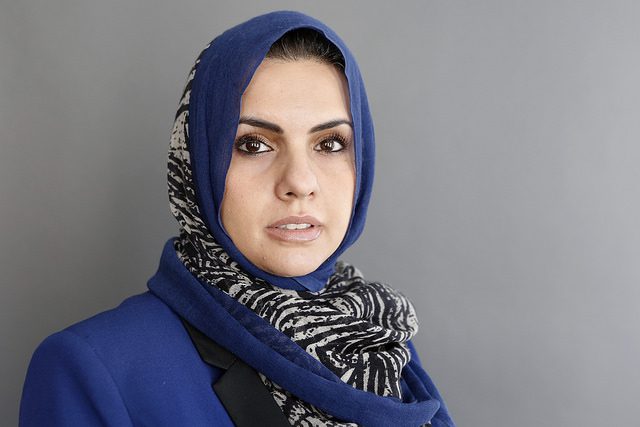
Women and girls in Niger are some of the least educated in the world. Less than a quarter are literate and less than a tenth ever attend secondary school. This is a big deal considering that attending secondary school for a year can mean as much as a 25 percent increase in a woman’s earnings later in life.

Niger has the highest rate of child marriages in the world. Three in four girls under the age of 18 are married. The legal age for marriage in Niger is 15, but various women’s organizations and groups are hoping for the passage of a proposed law that would change the legal age to 18 years.

Aminata Gba Kamara, aged 19, said “Girls in our country need so many things. They need psychological support, they need counseling. Their esteem is very low.” Many women think husbands are needed for protection, and life outside the home is not given much thought, said Kamara.

Protection is a real concern for many, as conflict is a daily fact of life. In the past three years, over 100,000 women and girls have been forced to leave their homes in order to flee from violence perpetrated by the Boko Haram. There are shelters and places of refuge, but women forced into seeking these often fall victim to a cycle of poverty. Most women fleeing from Boko Haram have been traumatized by physical and sexual violence. There is a normalization of discrimination and violence against women and girls on a daily basis.

Even with all these challenges, there are feasible solutions and women’s empowerment in Niger is a large part of it. Change is being implemented from the ground up, and youth are driving it forward. Campaigns have been formed to raise awareness about the issue and boost the self-esteem of women and girls. Tackling the problem of child marriage is important for Niger, as it will increase the number of citizens attending school rather than staying at home.

There are rays of hope for women’s financial empowerment in Niger as well. For instance, a recent push by CARE to help Nigerien women become financially independent via combined insurance policies and female financial groups has been fruitful. The savings groups, called Village Savings and Loan Associations have been a major factor behind women’s financial empowerment, and serves as a base for improving inclusion, health, nutrition, and agricultural productivity.

– Sam Bramlett

Photo: Flickr

November 23, 2017
https://borgenproject.org/wp-content/uploads/borgen-project-logo.svg 0 0 Borgen Project https://borgenproject.org/wp-content/uploads/borgen-project-logo.svg Borgen Project2017-11-23 01:30:072019-11-20 07:20:45Women’s Empowerment in Niger
Global Poverty, Women and Female Empowerment, Women's Empowerment

Women’s Empowerment in Libya

Women's empowerment in LibyaLibya, one of the largest countries in Africa, is located west of Egypt. Since 2014, Libya has been struggling with its second civil war which has affected the Libyan social structure. Though women have lost social status and power they once had, there are several organizations that are dedicated to restoring women’s empowerment in Libya through its political and economic social structures.

2011 was an inspiring time for Libyans. With the conclusion of Gaddafi’s rule, it was an opportune time to make changes to the political environment. The National Transitional Council, which was the first government authority after the Libyan Civil War, was comprised of 96 percent men and four percent women. There was also no representation of women in city councils at this time.

In 2014, the number of females elected to parliament was 16 percent, which it remains at to this day. Each city council was also mandated to elect at least one woman as one of their six members. However, the Zintan and Jadou councils have explicitly denied women representation.

The United Nations (U.N.) is taking action to increase women’s empowerment in Libya as well. The U.N. has made calls to force Libya to adopt a quota of 30 percent female representation within its current government, the Government of National Accord (GNA). As of March 2017, only six percent of the GNA were women. Hopefully, Libya will take these calls seriously and increase women’s representation in the government.

Along with increasing their political influence, Libyan women are focusing on becoming a more vocal force in the economic system of Libya. In October 2013, the Libya Women Economic Empowerment (LWEE) project was started to work towards providing women roles in the economy.  Over the past four years, 200 women attended business development training and 300 women entrepreneurs were given specific training on business skills.

Not only did they teach women how to start their business, but they held a competition among women entrepreneurs. The 20 winners received grants that enabled them to start a brand new business or to expand an existing business. The LWEE also held events where female business owners and managers were able to network with each other and establish connections that would lead to future business partnerships and support.

It has been difficult for women to make a name for themselves in the business world. Since the implementation of the LWEE project, women entrepreneurs have been able to take full credit for the work they have done. This is such an important step since, in many cultures and societies, men are given credit for the accomplishments that women make. Women’s empowerment in Libya is on the rise and it will continue to do so for the foreseeable future.

– Scott Kesselring

Photo: Flickr

November 21, 2017
https://borgenproject.org/wp-content/uploads/borgen-project-logo.svg 0 0 Borgen Project https://borgenproject.org/wp-content/uploads/borgen-project-logo.svg Borgen Project2017-11-21 01:30:212024-05-29 22:29:22Women’s Empowerment in Libya
Global Poverty, Women and Female Empowerment, Women's Empowerment

Improvements to Women’s Empowerment in Yemen

Women's empowerment in YemenYemen, a country in the Middle East, has been the center point of many headlines recently due to the ongoing civil war in the country. The war broke out in 2014 and Yemen has remained in conflict ever since.

The country has a population of 27.5 million people, most of whom have been affected by the war, particularly Yemeni women. Many women in Yemen have expressed concerns about the war affecting their security, as well as the safety of their children. Despite these concerns, however, many women view the war as a contributor to women’s empowerment in Yemen because it has provided them with opportunities to assist in peace-building.

Since the outbreak of the war, women in Yemen have contributed in a plethora of ways, including providing aid to those who are wounded, aiding in the protection of children and providing psychosocial support to others. Some women have contributed in other ways, such as smuggling arms. Whichever end of the spectrum these women fall on, many of them regard their actions as an attempt to promote peace within the country.

Aside from providing aid and support to others during the war, Yemeni women are empowered through maintaining their own businesses and developing better leadership skills, which are two of the goals of Partners for Democratic Change. Though the country’s embassy emphasizes the importance of equality among the genders, there are still cultural attitudes and patriarchal structures that cause barriers for women in Yemen. Partners for Democratic Change has worked to tackle these barriers by changing people’s attitudes and by educating women. The organization has advanced women’s empowerment in Yemen by training 75 women in business and leadership so far.

Aside from Partners in Change, there are many other groups that have been established with the purpose of advancing women’s rights, such as the Supreme Council for Women and the National Commission for Women. Furthermore, the National Dialogue Conference (NDC), which took place from March of 2013 to January of 2014, occurred so as to begin a discussion about women in elected positions in Yemen.

The percent of women that made up the membership at this conference was 27 percent. During the NDC, those in attendance agreed upon the idea that, from then on, the number of women in elected council should be no less than 30 percent.

Though there is still progress to be made in regards to women’s empowerment in Yemen, the country has taken steps in the right direction through the various organizations and councils that it has established for advancing women in society. In addition, though the ongoing conflict in Yemen has been a source of turmoil for the country’s women, it has also caused them to feel empowered by providing them with opportunities to help others and contribute to rebuilding efforts.

– Haley Rogers

Photo: Flickr

November 19, 2017
https://borgenproject.org/wp-content/uploads/borgen-project-logo.svg 0 0 Borgen Project https://borgenproject.org/wp-content/uploads/borgen-project-logo.svg Borgen Project2017-11-19 01:30:082024-05-24 23:48:55Improvements to Women’s Empowerment in Yemen
Gender Equality, Global Poverty, Women and Female Empowerment

Political Participation And Women’s Empowerment in Argentina

Women’s Empowerment in ArgentinaWhile many challenges around the world exist concerning enhancing women’s empowerment and forging a path toward equality, the Argentinian government has been a proactive example. In 1991, Argentina became a pioneer country for women’s political participation. The country established a quota to ensure that 30 percent of all candidates standing for elections are women. Those who fought for the law initially commended the quantitative leap and hoped that it would promote qualitative changes in the future.

Across national and local governments, women face several obstacles to participating in political life. However, women’s leadership in government has been shown to benefit society at large.

The Organization for Economic Cooperation and Development has noted that supporting the participation of women in politics is essential for advancing issues of importance to women on national agendas, which in turn benefits both women and men. Ensuring that financial assets are in the hands of women not only promotes women’s economic participation, but also speeds up development, helps overcome poverty, reduces inequalities and improves children’s health and nutrition as well as school attendance. Additionally, keeping girls in school further empowers women’s status in society and politics. Properly addressing these issues has the potential to provide tangible benefits for everyone. With women participating in politics, these topics receive much-needed attention.

The United Nations recognized that quotas, such as the one in place in Argentina, could be a fast track to enhancing women’s representation. These legal quotas are binding for all political parties, and legal sanctions or penalties for non-compliance can be enforced. Unlike voluntary party quotas, sanctions upheld by the law are the most effective to reject political party lists that do not comply with the quota regulations. However, it is important to note that quotas come with limitations. The regulations must work with the already in place electoral system, or they will have little or no effect. Furthermore, these systems only provide women with a chance to stand for election, as they do not guarantee the election of women candidates.

While as of 2016, women held 35.8 percent of the elected seats in the national Lower House, Argentina ranked in sixth place among Latin American nations in terms of female participation in politics and 28th in the world. However, this ranking far surpasses the United Kingdom and the United States, ranked at 48th and 97th respectively.

Though female representation in the Argentinian government complies with the 1991 quota law meant to increase women’s empowerment in Argentina, many feel that the country has not made enough progress. A movement launched in part by Amnesty International Argentina, #MujeresALaPolítica (Women to Politics), has been pushing for a law to be approved by National Congress which would dictate that any ballot list for elected office must contain equal percentages of male and female candidates.

Using parity as a tool to ensure the fulfillment of women’s political rights enforces equality, autonomy and collaboration in decision-making processes. Increasing the number of women participating in politics can not only help further the women’s empowerment in Argentina, but it can send a powerful message to the rest of the world.

– Richa Bijlani

Photo: Flickr

November 18, 2017
https://borgenproject.org/wp-content/uploads/borgen-project-logo.svg 0 0 Borgen Project https://borgenproject.org/wp-content/uploads/borgen-project-logo.svg Borgen Project2017-11-18 01:30:042024-05-29 22:29:21Political Participation And Women’s Empowerment in Argentina
Gender Equality, Global Poverty, Women and Female Empowerment

Raising Awareness: Women’s Empowerment in South Sudan

Women’s Empowerment in South SudanOver the past several decades, South Sudan has experienced severe political division, violence and unbearable poverty. Millions of people have been forced to flee their homes to neighboring countries for asylum. The violence has been targeted at men, women, children, the disabled and the elderly. However, women and young girls are considered a particularly vulnerable population for violence, specifically physical and sexual violence. This sometimes includes forced marriages. In spite of the vulnerability and risk, women’s empowerment in South Sudan is growing. Here are some things to know about the empowerment of women in South Sudan.

Current Situation

According to the United Nations Development Programme (UNDP), approximately 475,000 women and girls are at risk for physical and sexual violence. Most recent estimates indicate that more than half of young women between the ages of 15-24 have experienced some form of gender-based violence. The violence women are experiencing in South Sudan is of serious concern and importance because it deeply impacts women’s physical, mental, sexual and reproductive health, and may also place them at an increased risk for contracting diseases, such as the incurable HIV.

Forced marriages are a frequent practice in South Sudan. Almost 50 percent of South Sudanese girls between the ages of 15 and 19 are married, and some are as young as 12. Forced marriages have severe psychological implications for girls and women, but experts also argue that it contributes to the high levels of poverty, gender gaps in education and the country having one of the highest maternal mortality rates in the world.

The perpetual gender-based violence and forced marriage create serious physical and mental health concerns, limits their potential for progress and improvement and strips them of their basic human rights.

What is being done?

The United Nations Development Programme currently works to empower women in South Sudan through education and awareness. Awareness is one of the fundamental aspects of their work in South Sudan, as fear and stigma frequently prevent women from seeking the help they need. The program also provides additional support to women who have already experienced severe violence through counseling services and medical assistance.

The UNDP is also working with the government to encourage women’s empowerment in South Sudan. The government is working to address gender-based violence through mental health support programs and through national planning. South Sudan is in the process of developing a new permanent constitution and building new institutions that reflect the country’s movement towards gender equality and the empowerment of women.

What can be done?

Currently, South Sudan lacks severe governmental infrastructure, and overall the country has some of the worst human development indicators across the globe.  Many programs related to women’s empowerment in South Sudan are underfunded as gender-based violence is not considered to be a priority for government spending, due to the country’s high rate of poverty.

However, poverty and gender-based violence go hand-in-hand. If fewer women are subjected to violence and forced marriages, more women would then have the ability to work and find jobs; in turn, lifting individuals, and possibly families, out of poverty. Women’s empowerment in South Sudan needs additional awareness, coupled with increased funding in order to provide women with the best future possible.

– Sarah Jane Fraser

Photo: Flickr

November 16, 2017
https://borgenproject.org/wp-content/uploads/borgen-project-logo.svg 0 0 Borgen Project https://borgenproject.org/wp-content/uploads/borgen-project-logo.svg Borgen Project2017-11-16 01:30:412024-05-28 00:03:32Raising Awareness: Women’s Empowerment in South Sudan
Education, Global Poverty, Women and Female Empowerment

The Need for Women’s Empowerment in Cambodia

Women's Empowerment in CambodiaSlightly smaller than the state of Oklahoma, the Southeast Asian country of Cambodia has a population of about 16 million, with over half being women. The country is rich in natural resources and has very low levels of unemployment. Despite the high levels of employment, there remains an economic gender gap and a need for women’s empowerment in Cambodia.

This gender gap is not only related to the unequal pay of women compared to men, but women in Cambodia often lack job opportunities and career versatility compared to their male counterparts. Women’s empowerment in Cambodia is paramount because it can have profound impacts on the number of individuals living in deep poverty.

Economic Inequality and Lack of Education

Women in Cambodia who fall under wage employment, make approximately 80.8 percent of men’s earnings. According to the World Bank, there is evidence that this wage gap is growing, from 20 percent in 2009 to 30 percent in 2011. Additionally, approximately 53 percent of women between the ages of 15 to 64, work in agriculture production. This is considered to be a vulnerable type of employment.

According to the International Labour Organization, vulnerable employment is the sum of own-account workers and unpaid contributing family workers. Vulnerable workers often have poor and inadequate working conditions and frequently live in deep poverty.

Women also often have less career versatility and opportunities compared to men due in part to a lack of education and low literacy rates.  In 2012, the literacy rate among women in Cambodia was 73.2 percent, an increase of nearly 13 percent in 2004. However, the literacy rates for men remain much higher at about 87 percent. Girls often tend to drop out of school in greater numbers compared to boys, in turn limiting their job potential later in life.

What can be done?

There are a number of obstacles to women’s empowerment in Cambodia, all of which are primarily related to education. In 2013, the Ministry of Women’s Affairs (MOWA) became more active in Cambodia, working to reduce poverty, improve health and raise educational levels for women. The goal of their work is to provide women with the necessary skills and resources and economically empower women in Cambodia.

The desperately needed economic women’s empowerment in Cambodia can be achieved through education. Once women are educated and empowered, more individuals and families can be lifted out of poverty and the livelihood of millions can improve.

– Sarah Jane Fraser

Photo: Flickr

November 16, 2017
https://borgenproject.org/wp-content/uploads/borgen-project-logo.svg 0 0 Borgen Project https://borgenproject.org/wp-content/uploads/borgen-project-logo.svg Borgen Project2017-11-16 01:30:042024-05-27 09:34:57The Need for Women’s Empowerment in Cambodia
Global Poverty, Women and Female Empowerment, Women's Rights

Fighting for Women’s Empowerment in Mexico

women's empowerment in MexicoThe United States’ southern neighbor Mexico is the second-largest economy in Latin America, as well as the second most populated Latin American country. Over half of that population (52.2 percent) are women. Overall, the country has made major strides towards women’s empowerment in Mexico, but it faces several serious ongoing challenges.

Economic inequality is one of the biggest threats to women’s empowerment in Mexico. Women in Mexico produce 50 percent of the country’s food, but only 10 percent have control of property or land.

Mexico is known for its traditional, even patriarchal culture. Harassment of women and “machismo” are rife. More disconcerting is the violence women experience in Mexico. 63 percent of women in Mexico over age 15 have experienced some sort of violence. This violence can range from domestic abuse to street violence and abuse by criminal groups. 840 women were murdered between 2010 and 2013, and 1,258 women disappeared between 2011 and 2012 alone.

To make matters worse, Mexican law enforcement, be it federal, state or local, often does not follow through with investigating crimes, especially disappearances and murders. Many times, the authorities will not even take the most basic steps towards investigating incidents. It is not uncommon for people to be told by the police that they should investigate a crime. In fact, Mexican security forces often are the ones perpetrating the “enforced disappearances” and extrajudicial killings.

Despite the roadblocks to women’s empowerment in Mexico, change is on the horizon, especially on the legislative level. The National Development Plan and the National Gender Equality Policy are bringing gender equality into the government spotlight as well as setting aside funds and detailing specific goals to advance gender equality.

Activists have also stepped up to the plate to advance women’s empowerment in Mexico. One group, whose name translates to “May Our Daughters Return Home,” formed in response to the disappearance of 43 students in Ayotzinapa, seeks to call out inaction on the part of Mexican society and government. More critically, groups like it are bringing the issue of violence against women to light and letting victims know they are not alone and have a voice.

Women’s empowerment in Mexico is still an uphill battle, but with more and more women making their voices heard, it is starting to look like a battle that will be won.

 – Andrew Revord

Photo: Flickr

November 15, 2017
https://borgenproject.org/wp-content/uploads/borgen-project-logo.svg 0 0 Borgen Project https://borgenproject.org/wp-content/uploads/borgen-project-logo.svg Borgen Project2017-11-15 07:30:482024-06-04 01:17:49Fighting for Women’s Empowerment in Mexico
Economy, Global Poverty, Women and Female Empowerment

Quest for Women’s Empowerment in Sri Lanka Continues

Women’s Empowerment in Sri LankaOn November 2, the World Economic Forum released the 2017 Global Gender Gap Report. The report did not reflect well on the state of women’s empowerment in Sri Lanka.

The Global Gender Gap Report grades 144 countries on their progress toward attaining gender equality in four areas: Economic Participation and Opportunity, Educational Attainment, Health and Survival and Political Empowerment. Sri Lanka has been declining from its position in the top 20 since 2010. The country slipped from closing 74.6 percent of the gender gap in 2010 to 66.9 percent this year.

The country’s gap in Economic Participation and Opportunity increased because it failed to improve conditions of wage inequality for similar work. Additionally, Sri Lanka now ranks 86th among 144 countries in the gender gap in Educational Attainment.

In Political Empowerment, Sri Lanka ranked 65th. The country compensated for low scores on the Women in Parliament and Women in Ministerial Positions indicators with high marks on the Years with a Female Head of State indicator. Sri Lanka has had a female head of state for 21 out of the last 50 years.

Despite these discouraging statistics, efforts to advance the state of women’s empowerment in Sri Lanka persist. Aitken Spence PLC, Jetwing Hotels Ltd., MAS Holdings (Pvt.) Ltd. and the Sri Lanka Institute of Nanotechnology (Pvt.) Ltd. have signed on as partners of Women’s Empowerment Principles.

Developed through a partnership between U.N. Women and the United Nations Global Compact, the two organizations designed the principles to help companies review existing policies and practices and establish new strategies to promote women’s empowerment.

The principles include:

  • Establishing high-level corporate leadership for gender equality
  • Treating all women and men equitably at work by respecting and supporting human rights and non-discrimination
  • Securing the health, safety and well-being of all female and male workers
  • Promoting education, training and professional development for women
  • Implementing enterprise development and employing supply chain and marketing practices that empower women
  • Nurturing equality through community initiatives and advocacy

Participating companies must measure and publicly report their progress toward achieving gender parity.

In addition to economic measures, non-government organizations are implementing social programs to enhance women’s empowerment in Sri Lanka. Emerge Centre for Reintegration is the newest program sponsored by the Emerge Lanka Foundation, which supports survivors of sexual abuse aged 10-18. For 12 years, the foundation has helped countless exploited young women by providing training in life, financial and professional skills. Now, through the Centre for Reintegration, it offers assistance to young women who are over 18 as they face the challenging transition stage from living in shelters to thriving on their own.

Enabling women to participate fully in communities builds stronger economies, helps attain internationally agreed-upon objectives for development and sustainability and improves the quality of life for women, men, families and communities. The work being done in Sri Lanka can help counter its decreasing rankings and ensure empowerment for all women.

– Heather Hopkins

Photo: Flickr

November 15, 2017
https://borgenproject.org/wp-content/uploads/borgen-project-logo.svg 0 0 Borgen Project https://borgenproject.org/wp-content/uploads/borgen-project-logo.svg Borgen Project2017-11-15 07:30:322024-05-29 22:29:19Quest for Women’s Empowerment in Sri Lanka Continues
Page 47 of 82«‹4546474849›»

Get Smarter

  • Global Poverty 101
  • Global Poverty… The Good News
  • Global Poverty & U.S. Jobs
  • Global Poverty and National Security
  • Innovative Solutions to Poverty
  • Global Poverty & Aid FAQ’s
Search Search

Take Action

  • Call Congress
  • Email Congress
  • Donate
  • 30 Ways to Help
  • Volunteer Ops
  • Internships
  • Courses & Certificates
  • The Podcast
Borgen Project

“The Borgen Project is an incredible nonprofit organization that is addressing poverty and hunger and working towards ending them.”

-The Huffington Post

Inside The Borgen Project

  • Contact
  • About
  • Financials
  • President
  • Board of Directors
  • Board of Advisors

International Links

  • UK Email Parliament
  • UK Donate
  • Canada Email Parliament

Get Smarter

  • Global Poverty 101
  • Global Poverty… The Good News
  • Global Poverty & U.S. Jobs
  • Global Poverty and National Security
  • Innovative Solutions to Poverty
  • Global Poverty & Aid FAQ’s

Ways to Help

  • Call Congress
  • Email Congress
  • Donate
  • 30 Ways to Help
  • Volunteer Ops
  • Internships
  • Courses & Certificates
  • The Podcast
Scroll to top Scroll to top Scroll to top