Political Participation And Women’s Empowerment in Argentina
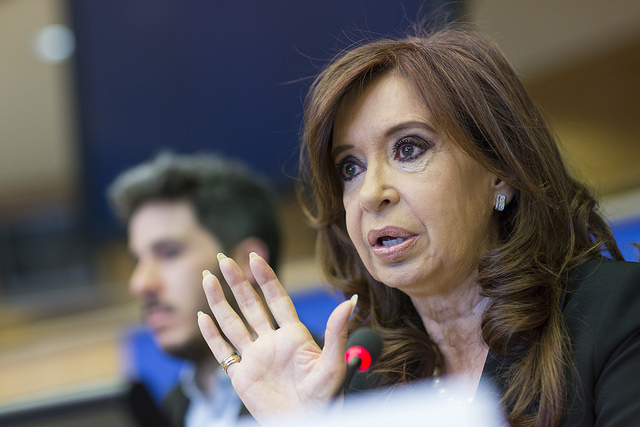 While many challenges around the world exist concerning enhancing women’s empowerment and forging a path toward equality, the Argentinian government has been a proactive example. In 1991, Argentina became a pioneer country for women’s political participation. The country established a quota to ensure that 30 percent of all candidates standing for elections are women. Those who fought for the law initially commended the quantitative leap and hoped that it would promote qualitative changes in the future.
Across national and local governments, women face several obstacles to participating in political life. However, women’s leadership in government has been shown to benefit society at large.
The Organization for Economic Cooperation and Development has noted that supporting the participation of women in politics is essential for advancing issues of importance to women on national agendas, which in turn benefits both women and men. Ensuring that financial assets are in the hands of women not only promotes women’s economic participation, but also speeds up development, helps overcome poverty, reduces inequalities and improves children’s health and nutrition as well as school attendance. Additionally, keeping girls in school further empowers women’s status in society and politics. Properly addressing these issues has the potential to provide tangible benefits for everyone. With women participating in politics, these topics receive much-needed attention.
The United Nations recognized that quotas, such as the one in place in Argentina, could be a fast track to enhancing women’s representation. These legal quotas are binding for all political parties, and legal sanctions or penalties for non-compliance can be enforced. Unlike voluntary party quotas, sanctions upheld by the law are the most effective to reject political party lists that do not comply with the quota regulations. However, it is important to note that quotas come with limitations. The regulations must work with the already in place electoral system, or they will have little or no effect. Furthermore, these systems only provide women with a chance to stand for election, as they do not guarantee the election of women candidates.
While as of 2016, women held 35.8 percent of the elected seats in the national Lower House, Argentina ranked in sixth place among Latin American nations in terms of female participation in politics and 28th in the world. However, this ranking far surpasses the United Kingdom and the United States, ranked at 48th and 97th respectively.
Though female representation in the Argentinian government complies with the 1991 quota law meant to increase women’s empowerment in Argentina, many feel that the country has not made enough progress. A movement launched in part by Amnesty International Argentina, #MujeresALaPolítica (Women to Politics), has been pushing for a law to be approved by National Congress which would dictate that any ballot list for elected office must contain equal percentages of male and female candidates.
Using parity as a tool to ensure the fulfillment of women’s political rights enforces equality, autonomy and collaboration in decision-making processes. Increasing the number of women participating in politics can not only help further the women’s empowerment in Argentina, but it can send a powerful message to the rest of the world.
– Richa Bijlani
Photo: Flickr
