• Link to X
  • Link to Facebook
  • Link to Instagram
  • Link to TikTok
  • Link to Youtube
  • About
    • About Us
      • President
      • Board of Directors
      • Board of Advisors
      • Financials
      • Our Methodology
      • Success Tracker
      • Contact
  • Act Now
    • 30 Ways to Help
      • Email Congress
      • Call Congress
      • Volunteer
      • Courses & Certificates
      • Be a Donor
    • Internships
      • In-Office Internships
      • Remote Internships
    • Legislation
      • Politics 101
  • The Blog
  • The Podcast
  • Magazine
  • Donate
  • Click to open the search input field Click to open the search input field Search
  • Menu Menu

Archive for category: Women & Children

Advocacy, Developing Countries, Development, Global Poverty, Human Rights, Inequality, Nonprofit Organizations and NGOs, Violence Against Women, Women, Women & Children

Conditions for Garment Workers in Bangladesh

garment_workers_bangladesh
When people buy from brands like Nike and shop at stores like H&M and Gap, they do not pay much attention to how the products arrived at the stores. In many cases, these clothing products are produced in sweatshops in developing countries like Bangladesh, Cambodia, and Indonesia. Almost half of the population in Bangladesh lives off of less than a dollar a day.

Garment workers in Bangladesh toil day after day under extremely harsh conditions for low wages, sometimes handling dangerous chemicals with their bare hands and inhaling toxic fumes due to poor ventilation in many factories.

In April of 2013, an eight story building in Bangladesh called Rana Plaza collapsed leaving over 100 dead and over 2,000 injured.

The poor conditions of the factory itself and the lack of safety precautions taken to ensure its workers’ well-being were neglected and therefore led to the collapse. In addition to this incident, there has been a history of factory mishaps over the past couple of years in Bangladesh. In November of 2012, the Tazreen garment factory in Bangladesh caught fire and killed 112 of its workers.

At this time, the factory was producing goods for Walmart.

Besides the incidents themselves, it is also important to focus on the working conditions and the violations of human rights that happen daily in factories like these. According to the Institute for Global Labor and Human Rights, workers in the Tazreen factory work 72-81 hours per week. Their salary depends on their sewing skill; senior sewing operators earn at minimum 23 cents per hour and junior sewing operators earn 21 to 22 cents an hour.

As a majority of the workers are women, abuse is common and some are even denied maternity leave — blatant violations of human rights that have been occurring for years. Even after one tragedy, further precautions are not taken to ensure the safety of the workers.

An article from the Daily Mail accounts a Canadian journalist who worked undercover in Bangladesh and witnessed the atrocities of one of the smaller garment factories. She reported that when she first arrived at the sweatshop, a nine-year-old girl named Meem was in charge of training her.

The article also noted that there were “no fire extinguishers, only one exit – the front door – and little more than a hole in the ground, down a rat-infested hall, for the toilet.” These accounts present the harsh reality for many garment workers in Bangladesh.

Violations of human rights are happening elsewhere too—most recently in Cambodia. Workers there have started protesting in the city Phnom Penh for higher wages.

Sometimes people take things for granted because they are easily accessible. Organizations like the Clean Clothes Campaign have been established to spread awareness of this issue and to help those who have been detained for protesting for higher wages and better conditions. By not purchasing products from companies who outsource their work unfairly to other countries, a better future can be created for garment workers whose human rights have been violated.

– Kenneth W. Kliesner

Sources: BBC News, The New York Times 1, The New York Times 2, The Epoch Times
Photo: Demotix
February 26, 2014
https://borgenproject.org/wp-content/uploads/borgen-project-logo.svg 0 0 Borgen Project https://borgenproject.org/wp-content/uploads/borgen-project-logo.svg Borgen Project2014-02-26 22:19:382024-06-04 01:17:34Conditions for Garment Workers in Bangladesh
Human Rights, War and Violence, Women, Women & Children, Women and Female Empowerment

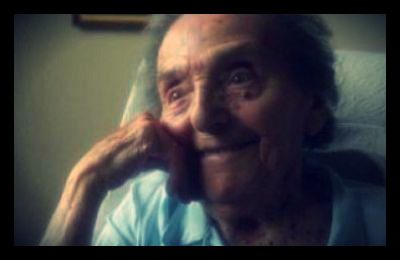
Holocaust and the Power of Memory

herz-sommer
At 110 years of age, Alice Herz-Sommer lived longer than most and had experienced something that a diminishing number of people living the world today may claim: surviving the Holocaust.

As the oldest known survivor of the Holocaust, for the past 70 years Herz-Sommer has served as a living reminder of the perils of hubris and inaction — specifically, for the nations who failed to act when reports of Adolf Hilter’s ethnic cleansing plans first came to light.

Alongside her husband and son, Herz-Sommer was imprisoned in 1943 at Theresiendstadt, a concentration camp in Terezin, Czech Republic. Two years later, she and her son were among those released from the camp after the Soviet army liberated the camp.

Of the estimated 140,000 sent there, fewer than 20,000 remained alive by the war’s end.

These numbers don’t inform the reader of Herz-Sommer’s accomplished piano skills nor do they tell us about Herz-Sommer staged concerts at the concentration camp, an activity that enlivened both herself and her fellow inmates.

We have all learned about World War II. We have studied how Adolf Hitler warred against the allied forces and nearly conquered Europe. We have listened to lectures about his efforts to cleanse his empire of Jews, homosexuals, the Roma and Sinti, the disabled, blacks, Jehovah’s Witnesses and other targeted groups.

Herz-Sommer’s reminded us of the human experience behind a man-made tragedy. History may be compressed into facts and statistics, but she, herself, could not.

Since WWII, more genocides have occurred, some more publicly than others. The Bosnian and Rwandan genocides occurred within the past 3o years while the more recent burning of Kiev, the ethnic cleansing of Muslims in the Central African Republic, and the millions of Syrian refugees fleeing the civil war, all illustrate conflicts plaguing the world today.

The death of one of the few remaining Holocaust survivors should serve as a stark warning that even the most horrific crimes against humanity will eventually fade away into the annals of history.

While the irreparable erosion of memory and experience is inevitable, preserving an international consciousness of these crimes is an inalienable human obligation. By doing so, such an effort will both memorialize the victims and survivors of the past and help to safeguard potential victims in the future.

 – Emily Bajet 

Sources: New York Times, oas.org, Al Jazeera
Photo: Daily Mail

February 26, 2014
https://borgenproject.org/wp-content/uploads/borgen-project-logo.svg 0 0 Borgen Project https://borgenproject.org/wp-content/uploads/borgen-project-logo.svg Borgen Project2014-02-26 22:19:172024-12-13 17:50:07Holocaust and the Power of Memory
Global Poverty, Women & Children

A Dangerous Place for Pregnant Women

Poverty in Iraq
Dozens of pregnant Iraqi women are being admitted to the hospital with life threatening conditions every month. According to UNICEF, maternal mortality rates in the war torn country have increased by 65% since 1989, a number that is much higher than neighboring countries. Until political conditions improve and citizens gain better access to healthcare and basic necessities in Iraq, doctors in the region fear the problem will get worse.

Dr. Mayada Youssif, a gynecologist in Baghdad, attributes “insecurity and poverty that Iraqis live with due to conflict” to the increasing mortality rate.  “Insecurity has forced women to stay at home during their whole period of pregnancy,” Youssif says, “and they look for a doctor only when they are feeling really ill or feel, near delivery time, that conditions have become too dangerous.”

UNICEF recommends three basic needs that should be available for pregnant women and their babies: good nutrition, access to antenatal care  and access to emergency care if a problem were to arise. All of these services are impeded in Iraq because of issues such as curfews and fear of violence, meaning that sometimes help isn’t sought out until it is too late.

That is exactly the situation Salah Hussein found himself in when his wife died during childbirth. The doctors attributed her death to a combination of malnutrition and the effects of constant stress from living in a war torn country. Now Hussein faces having to raise his child alone. Malnutrition is still a problem, as he cannot afford formula for his child.

Even if women can get to a doctor, many hospitals are ill equipped to deal with common pregnancy issues, such as anemia. The UN is currently looking into fortifying flour with iron and folic acid to help combat anemia, but presently the issue remains.

There is a rising call to increase investment in the health department to combat rising mortality rates. The main issue is the lack of specialized care that is available to all pregnant women. Some live in areas where they cannot get to a doctor, or worse, there is not a doctor in the area at all.

– Colleen Eckvahl

Sources: Global Research, IRIN News
Photo: Global Research

February 19, 2014
https://borgenproject.org/wp-content/uploads/borgen-project-logo.svg 0 0 Borgen Project https://borgenproject.org/wp-content/uploads/borgen-project-logo.svg Borgen Project2014-02-19 17:12:062024-05-26 23:10:05A Dangerous Place for Pregnant Women
Global Poverty, Women, Women & Children

Cyclical Causes of Poverty

Women_Poverty_Nepal
According to a new study, nearly forty two million women are living in poverty or on the brink of poverty. In over 40 percent of American households, women with children are the primary breadwinners.

One of the sole causes of poverty for women is the extreme gap between men and women’s wages in America. The national average wage has women earning 77 cents for every dollar men earn when you compare the yearly earnings of full time male and female workers. The National Partnership for Women and Families performed a study on California’s population, which shows that women can afford at least “62 fewer weeks of food for their families, seven fewer months of rent, and more than 1,900 fewer gallons of gas per year compared to men.”

For women of color, the distribution gap is even larger. African American women earn 67 cents to every man’s dollar and Latina women earn a mere 44 cents to every dollar men earn. In order to pull women away from the brink of poverty and into the middle class, this imbalance needs to be fixed.

When looking at poverty from a global perspective, 1,345 million people live on $1.25 a day. One of the main causes of poverty universally is the major lack of resources available to those that need them the most. Lack of resources can be defined as the inability to receive a proper education, decent healthcare and employment that is suitable for sustaining and affording necessities.

Poverty often times works as a vicious cycle. Without receiving a GED, or understanding the importance of receiving one, many adults are not able to attain a well-paid job.  Without holding a well-paid job, many adults are then unable to afford proper healthcare, and without healthcare mortality rates rise.  With higher mortality rates, for example in China, there is a greater likelihood for overpopulation and therefore higher rates of people living in poverty.

The cycle then begins again for children living in poverty. Young students living in poverty are five times more likely to not complete high school than children living in the top 20 percent of all family incomes.

The economy is also a large cause for poverty. As the economy becomes healthier, there are more options for jobs and better income rates, but when the economy declines job availability also declines. According to the 2014 Index of Economic Freedom, the U.S. is no longer among the top 10 most economically free countries, but falls at number 12.

It is possible to become part of the top 10 again; within the past 20 years the global economy has increased by 20 percent.  Millions of people have managed to lift out of poverty and joined the middle class despite recessions and economic disasters.

– Rebecca Felcon

Sources: Mercury News, Slate, Social Inclusion, American Psychological Association, The Wall Street Journal
Photo: The Guardian

February 16, 2014
https://borgenproject.org/wp-content/uploads/borgen-project-logo.svg 0 0 Borgen Project https://borgenproject.org/wp-content/uploads/borgen-project-logo.svg Borgen Project2014-02-16 05:00:562024-05-26 23:12:07Cyclical Causes of Poverty
Education, Global Poverty, Women & Children

Advancing Girls’ Education in Africa

Education-in-Africa
As the world’s leading countries and corporations search for new frontiers, all eyes are focused on Africa.  The continent offers many opportunities for economic activity and prosperity.  African nations are seeking to take advantage of their position but face tough obstacles due to an undereducated population.

In Sub-Saharan Africa, 176 million adults are unable to read and write.  47 million youths ages 15-24 are illiterate and 32 million primary aged children are not in school.  In nations like Malawi, one of the world’s poorest nations, where 45 percent of the population is under 14 years old, it is imperative to produce future generations of educated citizens capable of lifting the nation out of poverty.

Malawi is a land locked nation and is home to approximately 17 million people.  The country does not have many natural resources such as oil like its neighboring countries.  The economy is based on agriculture, mainly, the export of tobacco and is supported through financial aid by the World Bank and International Monetary Fund.

In order to turn the tide and help the people of Malawi, Xanthe Ackerman founded Advancing Girls’ Education in Africa, or AGE Africa.

AGE Africa seeks to transform the lives of millions of young girls by providing them with opportunities to become educated leaders.  Beginning with Malawi, the organization’s vision is to ensure all girls in Africa have equal access to secondary education and that they be able to leverage their education into economic opportunities.

Advancing Girls’ Education in Africa seeks to create informed citizens capable of making their own life choices.

The Advancing Girls’ Education in Africa organization has a multidimensional approach to achieving their stated goals.  The first begins with comprehensive scholarships that allow girls to not only attend schools but also complete their education.  Scholarships go towards providing for tuition and school related expenses.

The second approach deals with extracurricular programs that promote life skills, leadership development, self-advocacy and career guidance.  The final piece of the program, post-secondary transitions, ensures that the girls have the necessary information, resources, and support to apply for educational and economic opportunities beyond high school.

AGE Africa’s impact on the girls of Malawi is extraordinary.

By age 20, just 17 percent of Advancing Girls’ Education in Africa participants are mothers compared to 65 percent of 20-year old women in Malawi.  About 88 percent of AGE Africa students finish all four years of secondary school, compared to just 8 percent nationwide.

Among these students, 74 percent are now pursuing higher education, have wage-based employment or engage in economic activity that provides income above the poverty threshold.

The tremendous success of Advancing Girls’ Education in Africa within the country of Malawi is beacon of hope for the nation and a promising sign of the future for other girls throughout the continent.

– Sunny Bhatt

Sources: AGE Africa, AGE Africa, AGE Africa, FAO
Photo: Development Diaries

February 14, 2014
https://borgenproject.org/wp-content/uploads/borgen-project-logo.svg 0 0 Borgen Project https://borgenproject.org/wp-content/uploads/borgen-project-logo.svg Borgen Project2014-02-14 04:00:252024-05-26 23:09:10Advancing Girls’ Education in Africa
Children, Family Planning and Contraception, Global Poverty, Health, Human Rights, Violence Against Women, Women & Children

China Eases One-Child Policy

China_One_Child_Policy_Baby
In late December 2013, China’s Standing Committee of the National People’s Congress formally introduced measures to ease its notorious one-child policy.

The major tweak of the one-child policy now allows parents to conceive a second child if just one of the parents is an only child.

Previously, parents were allowed a second child only if each parent was an only child. Rural couples on the other hand, were allowed a second child only if the first born was female.

The new measures will be implemented in a phased process at the local level. Furthermore, provincial leaders now have the authority to introduce the changes in accordance with local demographic needs.

While modest, the change will hopefully reduce the number of human rights abuses perpetrated against Chinese women since the policy’s inception in 1979. In the New York Times, OP-ED contributor Ma Jian details some of the horrific experiences Chinese women endure when authorities become aware of a second conception.

She describes the staggering amount of personal invasion local officials engage in to enforce the one-child policy. Family planning officers vigorously chart data regarding menstrual cycles and pelvic exams of every female of child bearing age within every village.

Many of these women are subjected to forced abortions and sterilizations if they are found within violation of the policy.

Probably one of the most egregious injustices of the policy is its disproportionate enforcement. The policy frequently targets poor citizens while bypassing wealthy individuals.

In fact, all violators can avoid the consequences of having a second child if they pay a fine that falls within the range of three times to 10 times the annual household income. It goes without saying that poor citizens, unable to pay the steep fine, either flee their home to avoid the authorities or become victims of forced abortions.

Many see the easing of the policy as a response to the looming demographic crisis that China now faces after 30 years of steadily implementing the one-child policy.  Some say the change is too little, too late.

Nicholas Eberstadt reports in the Wall Street Journal, that even with the policy change, the Chinese government only expects one million extra births per year, resulting in only a six percent increase in the fertility rate.

He also discusses the lasting effect the one-child policy will have long after its easing. For instance, individuals born under the previous policy will be entering the workforce in 2030 and deciding to get married in 2035.

Demographers predict that at the end of the decade there will be over 24 million men incapable of finding a woman to marry. One can expect this number to increase by 2035.

The inability for many to reproduce will leave China with an aging population that will increasingly reduce the number of individuals who are able to work as well as government resources. By 2050, over one quarter of the Chinese population will be over the age of 65.

– Zachary Lindberg

Sources: BBC, The Wall Street Journal, The New Yorker
Photo:  Dailystormers


February 9, 2014
https://borgenproject.org/wp-content/uploads/borgen-project-logo.svg 0 0 Borgen Project https://borgenproject.org/wp-content/uploads/borgen-project-logo.svg Borgen Project2014-02-09 04:00:392016-12-15 08:15:57China Eases One-Child Policy
Children, Global Poverty, War and Violence, Women & Children

Protecting the Rights of Syrian Children

syrian_children
On January 22, the Geneva II Middle East Peace Conference opened in Montreux, Switzerland. One of the major focuses of the conference is an attempt to curb the civil war in Syria.

Since the beginning of Syria’s civil war in spring 2011, over 100,000 people have been killed. The Oxford Research Group posted an independent study estimating that 11,420 of civilian casualties, over 10 percent have been children.

While the majority of casualties have resulted from explosive weapons or Syrian army assaults on civilian neighborhoods, there have also been targeted attacks on children, with 112 recorded cases of torture leading to death.The situation for Syrian children is dire. In many cases, the children are forced to flee Syria as refugees. As refugees, the situation is not much better, with limited access to food and water.

World Vision has released its January report on the crisis in Syria focusing on bringing the conditions of the regions children to light. The report, “Stand With Me – Children’s Rights, Wronged” emphasizes the conditions in which Syrian children live and outlines what is needed to support them.

The report discusses the violations against Syrian children’s basic human rights. Affected children in Syria endure child labor at as young as 4 years old, with 10 percent of refugees replacing education with work.

This inability to access education is emphasized as one of the greatest misfortunes of the war. World Vision’s report explains how important it is to keep Syrian children in school not just to educate them, but also to keep them safe from dangerous situations on the streets and in the workplace.

Additionally, many Syrian children are being exploited to smuggle goods, perform sexual acts and to work and fight on the front lines of the civil war.

In addition to highlighting the conditions that Syrian children face, World Vision calls for three demands regarding the safety of these children to be met:

1. “All parties to the conflict to cease hostilities and come together to negotiate a peaceful resolution to the conflict, with support from the international community.

2. All parties to do everything within their power to respect and ensure the protection of children and their rights by immediately ceasing all violence, exploitation, and abuse against children.

3. Donors to meet the $1 billion call to fund education and child protection programming for children affected by the crisis…”

In light of the Geneva II Middle East Peace Conference, World Vision’s January report calls for action on the part of the global community in order to curtail further violence against the children of Syria.

– Cameron Barney

Sources: World Vision, NBC News, NPR, NPR, BBC
Photo: The Big Story

February 5, 2014
https://borgenproject.org/wp-content/uploads/borgen-project-logo.svg 0 0 Borgen Project https://borgenproject.org/wp-content/uploads/borgen-project-logo.svg Borgen Project2014-02-05 04:14:192024-05-26 23:08:32Protecting the Rights of Syrian Children
Children, Developing Countries, Development, Education, Family Planning and Contraception, Global Health, Global Poverty, Health, Women & Children

Big Impact of Baby Footprints

baby elephant
In one of the largest countries in Africa, a new program is working to change the outcome of premature births with a simple footprint.  Tanzania is home to an estimated 46,218,000 people who earn an average of $570 per year.  With about one third of its people living below the national poverty line, Tanzania is regarded as a ‘developing country.’  The term ‘developing country’ is described by Princeton as “a nation with a low level of material well-being.”  A common reality in developing countries is the limited or complete lack of access to medical assistance, whether a hospital, pharmaceuticals or a birth attendant.

The latter is an issue that can have devastating consequences.  In low-income countries, about 40% of births are unattended by a trained, medical professional.  Whether or not they are equipped with modern tools and resources, a trained professional is better able to determine the dangers and necessary steps to take before, during, and after birth, especially regarding premature babies.  Of the approximately 10% of infants worldwide born prematurely each year, about one million die, with over 80% of those deaths occurring in South Asia and Sub-Saharan Africa.

At present, Dr. Joanna Schellenberg and a team at Ifakara Health Institute (IHI) in Tanzania are researching a strategy with the potential to have a global impact.  The research began by attempting to solve how to reduce premature infant deaths without requiring entire health systems to be constructed (and funded) first. This is especially important since one of the greatest obstacles facing health care in rural areas is the absence of equipment.  However, the World Health Organization (WHO) estimates that 75% of preterm infant deaths could be prevented without the use of intensive care and modern resources.  Premature infant weights are under 5lb 5oz, yet since scales cannot be assumed to be available, the IHI team came up with another measurement: the size of a baby’s footprint.

Volunteer health workers visit villages with a laminated card picturing two footprints.  The health workers measure infants’ feet against the pictures and determine how to proceed based on their size.  If the infant’s footprint is the same size or larger than the bigger footprint, then the child is not premature.  If the footprint is between the two sizes, it may be premature but not necessarily in danger.

Health workers then proceed with suggestions on how to promote infant health such as holding the child skin-to-skin for warmth, or how to breastfeed effectively.  Finally, if the footprint is smaller than both samples, about 67mm or less, the mother is directed to the nearest health center where the infant can receive potentially life-saving care.

The strategy just described is called “Mtunze Mtoto Mchanga” which translates to “Protect the newborn baby,” a concept that local women have been quick to support.  With the persistent visits and encouragement by the project’s health workers, support has grown into a greater compliance by the public. Though the project will continue for another six months before clear results are available, the team is already poised to implement it throughout Tanzania.

The laminated-card system is not only relatively simple to duplicate, it also demonstrates potential self-sufficiency amongst rural women.  Moreover, once the procedure and subsequent actions are ingrained, the individuals could monitor their babies themselves without the need for health workers help with premature birth testing.

The versatility of the project only heightens anticipation for the results of the study.  If successful, the IHI project could mean saving up to three-quarters of a million infants each year with just a footprint.

– Katey Baker-Smith

Sources: World Health Organization, Princeton University, United Nations Data, The World Bank, BBC
Photo: Giphy.com

January 16, 2014
https://borgenproject.org/wp-content/uploads/borgen-project-logo.svg 0 0 Borgen Project https://borgenproject.org/wp-content/uploads/borgen-project-logo.svg Borgen Project2014-01-16 04:00:062024-05-25 00:51:41Big Impact of Baby Footprints
Activism, Advocacy, Children, Developing Countries, Gender Equality, Global Poverty, Slums, Women & Children, Women and Female Empowerment

Katherine Boo’s Behind the Beautiful Forevers

christmas
Pulitzer Prize winner Katherine Boo spent years in Annawadi, a slum outside the bustling metropolis of Mumbai, India. With most people living without electricity or stable income in makeshift shelters, the slum stands in stark contrast to the bustling airport and luxury hotels a few miles away.  Over the course of her stay, Boo followed the lives of the people that call Annawadi home. She describes the stories she heard and the events she saw in her book, Behind the Beautiful Forevers.

Boo introduces us to many residents such as Asha, who uses the corrupt political climate to gain influence and prestige. Her daughter, Maniu, studies education and rejects many of the gender norms of her society.

Young children in the village compete for short-term jobs at the Mumbai hotels. These children are easily exploited and often work for next-to-nothing in stressful conditions before collecting garbage to sell as scraps and recyclables.

Corrupt police and vague laws govern the people of Annawadi. Mysterious deaths are not investigated, false accusations fly around without evidence and gangs run the streets. Religious tension is obvious as Muslim families are singled out in the predominately-Hindu village.

Though Boo paints a dark picture of poverty in India, there is still hope. International organizations are moving in to help the people in India, especially since the slums of the region are in dire need of schools, permanent housing and job opportunities. The children of the region believe that one day they will have permanent jobs in Mumbai, own a house and send their own children to school.  The young girls in the village also believe that the time has come to stand up for their rights and make a living for themselves.  Furthermore, children are becoming motivated to stay in school while families plan to move on to permanent housing projects.

– Stephanie Lamm

Sources: Behind the Beautiful Forevers, New York Times
Photo: Vintage 3D

January 15, 2014
https://borgenproject.org/wp-content/uploads/borgen-project-logo.svg 0 0 Borgen Project https://borgenproject.org/wp-content/uploads/borgen-project-logo.svg Borgen Project2014-01-15 17:19:032024-06-04 03:01:13Katherine Boo’s Behind the Beautiful Forevers
Activism, Advocacy, Disease, Global Health, Global Poverty, Government, Health, Women & Children

Rwanda Redefines HIV Care

HIV_Care_in_Rwanda
In a country where just 20 years ago, genocide claimed nearly one million lives, the Rwandan government has revamped HIV treatment for the poor by reforming the standards of successful care.

In Sub-Saharan Africa, there are now over 7.5 million people receiving antiretroviral therapy, 150 times as many as a decade ago. Medications have become easier to manage and overall, more effective, forcing some patients to take no more than one pill each day. Also, HIV testing has become much more widely available and the virus is being detected at an earlier stage before the circumstances are too dire.

In Rwanda, many HIV patients are taking their medications as directed, medication which suppresses the virus in their bodies to the point where it is essentially non-detectable. Success here is achieved when the HIV positive individual can earn a living, support their family and care for their community no differently than uninfected individuals. Furthermore, patients who would have previously been hospitalized with severe complications of HIV are now receiving regular preventive care.

The steps forward being taken in this small country are undeniable. Compared with 54 percent of medical patients worldwide, 91 percent of Rwandan patients who require HIV medications have access to life-saving treatment. Even more encouraging, 98 percent of women undergo HIV testing during their prenatal visits. In a country with only one doctor for every 17,000 people, nurses and community health workers have been trained to provide HIV services that were before, only available from physicians. Aggressive media campaigns by the government and other international organizations remind and encourage the public to “Know Your Status” while targeted outreach programs concurrently focus on the high-risk groups.

Rwanda is one of the first sub-Saharan countries to nearly eradicate the transmission of HIV from mothers to their newborns. Due to this, the number of new HIV cases has been cut in half during the last decade, and perhaps soon, it will fulfill the dream of accomplishing an “AIDS free generation.”

– Sonia Aviv

Sources: The Atlantic, The World Bank, BWH Global Health
Photo: AIDS Health

January 15, 2014
https://borgenproject.org/wp-content/uploads/borgen-project-logo.svg 0 0 Borgen Project https://borgenproject.org/wp-content/uploads/borgen-project-logo.svg Borgen Project2014-01-15 08:49:292024-05-26 23:03:03Rwanda Redefines HIV Care
Page 14 of 16«‹1213141516›»

Get Smarter

  • Global Poverty 101
  • Global Poverty… The Good News
  • Global Poverty & U.S. Jobs
  • Global Poverty and National Security
  • Innovative Solutions to Poverty
  • Global Poverty & Aid FAQ’s
Search Search

Take Action

  • Call Congress
  • Email Congress
  • Donate
  • 30 Ways to Help
  • Volunteer Ops
  • Internships
  • Courses & Certificates
  • The Podcast
Borgen Project

“The Borgen Project is an incredible nonprofit organization that is addressing poverty and hunger and working towards ending them.”

-The Huffington Post

Inside The Borgen Project

  • Contact
  • About
  • Financials
  • President
  • Board of Directors
  • Board of Advisors

International Links

  • UK Email Parliament
  • UK Donate
  • Canada Email Parliament

Get Smarter

  • Global Poverty 101
  • Global Poverty… The Good News
  • Global Poverty & U.S. Jobs
  • Global Poverty and National Security
  • Innovative Solutions to Poverty
  • Global Poverty & Aid FAQ’s

Ways to Help

  • Call Congress
  • Email Congress
  • Donate
  • 30 Ways to Help
  • Volunteer Ops
  • Internships
  • Courses & Certificates
  • The Podcast
Scroll to top Scroll to top Scroll to top