• Link to X
  • Link to Facebook
  • Link to Instagram
  • Link to TikTok
  • Link to Youtube
  • About
    • About Us
      • President
      • Board of Directors
      • Board of Advisors
      • Financials
      • Our Methodology
      • Success Tracker
      • Contact
  • Act Now
    • 30 Ways to Help
      • Email Congress
      • Call Congress
      • Volunteer
      • Courses & Certificates
      • Be a Donor
    • Internships
      • In-Office Internships
      • Remote Internships
    • Legislation
      • Politics 101
  • The Blog
  • The Podcast
  • Magazine
  • Donate
  • Click to open the search input field Click to open the search input field Search
  • Menu Menu

Archive for category: Women & Children

Global Poverty, Violence Against Women, Women & Children

Nigeria Still Marred by Instability

On April 14 approximately 276 girls were abducted from a boarding school in Chibok, Nigeria, by the militant group Boko Haram. The international attention and social media activism that have followed since have all been indicators of universal outrage. But most importantly they have underscored the instability which has crippled Nigeria in recent years.

With a $6 billion national annual budget for security forces, Nigeria’s recent mass kidnapping might seem surprising, but it is indicative of a broader spectrum of disarray. Nigeria is the most populous state in Africa and its leading economy, laying claim to the 26th largest economy in the world. However, its citizens are often bound by dire living constraints.

In Nigeria’s Borno state, home to capital city Maiduguri, the birthplace of Boko Haram, the per capita income is $1,631 compared to $4,000 in political capital Abuja. It is evident that poverty has planted the seeds for violent extremism. Since 2009 Boko Haram, in their quest to create an Islamic state in Nigeria, has been implicated in the deaths of over 12,000 Nigerian citizens. In 2013 they were officially declared a terrorist group by the United States government.

Despite Nigeria’s trouble with internal uprisings, it has become clear that its government has been troubled by its own internal issues. Recent Nigerian media reports have revealed that 10 generals and five other senior officers have been court martialed and found guilty of supplying info and ammunition to Boko Haram. This level of extremist sympathizing, while detestable, is not altogether shocking given Nigeria’s current state of affairs.

Corruption on the level of high-ranking government officials has long been linked to poverty throughout Africa. Nigeria has been operating at annual levels of around seven percent economic growth over the past few years but its correlation between national economic growth and increasing living standards has become tenuous at best.

Nigerian president Goodluck Jonathan has framed his country’s growing poverty problems as a problem of wealth distribution. Considering the highly concentrated nature of wealth and political capital amongst the country’s oil barons, this assessment is worth considering. With oil reserves of upwards of 37 billion barrels, only second to Libya in all of Africa, Nigeria is surely not pressed for revenue generating natural resources. However, its influx of oil revenue has not made it a wealthy state.

By 2030 Nigeria’s population size is expected to increase from its 2010 level by upwards of 60 percent, making it the world’s eventual fifth largest population. There are currently over 160 million people living in Nigeria, 42.8 percent of whom are age 14 or younger. However, of the school age children who actually begin formal education, only two-thirds complete primary school. Like the rest of the world, lack of education coupled with the presence of poverty makes for a corrosive pair. It will surely take increasing levels of stability and government accountability to fend the two off.

On June 9, 20 more girls were kidnapped by Boko Haram in the northeastern town of Garkin Fulani, Nigeria. The abductions took place only a few miles from where the 200-plus girls were kidnapped in Chibok in mid-April. This most recent example of Nigeria’s internal security woes comes after President Goodluck vowed to protect this vulnerable and embattled area of Nigeria. Instead, another instance of atrocity has once again marred a Nigerian community still reeling from the effects of the past five years.

 — Taylor Dow

Sources: CNN, BBC, Global Public Square, Tribune, Business Day
Photo: The Indian Express

June 20, 2014
https://borgenproject.org/wp-content/uploads/borgen-project-logo.svg 0 0 Borgen Project https://borgenproject.org/wp-content/uploads/borgen-project-logo.svg Borgen Project2014-06-20 09:35:542024-06-04 01:17:37Nigeria Still Marred by Instability
Global Poverty, Women, Women & Children, Women and Female Empowerment

Prostitution Increases for World Cup

Prostitution has increased during the World Cup as Brazilian women are turning to prostitution for the lucrative duration of the competition, which takes place June 12 – July 13 throughout 12 cities in the host country. Five to 6 of Brazil’s top cities are the targets of these workers, many of whom took up prostitution just before the tournament started.

The women are reported to be taking English classes to converse with clients from English-speaking countries. Interviews with some of the prostitutes revealed that many of them, especially the younger women, have high hopes of being swept off to another country and a more comfortable lifestyle as the result of a transaction.

Maria, an 18-year-old student, stated to a journalist, “I’m here to find a gringo to take me away and give me a quiet life. I do not want luxury but just to live with a little more dignity and to help my family.”

England fans seem to be the biggest target for the girls who can be seen in brothels, near the beaches and amongst street vendors near the football stadiums, some even wearing English football team shirts.

While some of the women have dreams of being whisked away by a wealthy foreigner, all the women have their own reasons for taking up the profession, whether temporarily or permanently. Some women have seen an opportunity to earn extra money; some have a more severe need for the income.

One woman, according to social worker Cleide Almeida in Vila Mimosa, took on prostitution as a second job due to financial necessity after her husband passed away. It is legal for women in Brazil to sell sex if they are over the age of 18, but women as old as 77 are reported to work in the industry. Many foreign clients are looking for something they can’t get legally, however, and underage workers are often available by delivery to various hotels.

There are 120,000 sex workers in the state of Rio, and Almeida expects trade to double to 10,000 serviced men per day during the World Cup. Women are charging the equivalent of about $27 for a half hour of their time and $44 for an hour.

The World Cup is one of the world’s most celebrated occasions, and for good reason. Through competition, the football tournament unites nations for a month of good sport and excited nationalism. Whether increased prostitution can provide access to money for these women or not, the trend reflects bigger issues concerning demand for sex work and lack of other opportunities.

 — Edward Heinrich

Sources: IBN Live, Mirror Online, Liverpool Echo
Photo: Flickr

June 20, 2014
https://borgenproject.org/wp-content/uploads/borgen-project-logo.svg 0 0 Borgen Project https://borgenproject.org/wp-content/uploads/borgen-project-logo.svg Borgen Project2014-06-20 07:36:402024-05-26 23:48:32Prostitution Increases for World Cup
Activism, Children, Global Poverty, Health, Women, Women & Children

Education and Menstruation in Uganda

Menstruation is a major reason for young girls in Uganda to miss school. Reasons for their absence stems from the stigma associated with “that time of the month,” a lack of sanitary napkins and the limited facilities available to students. Attending school while on their period forces girls to put their health at risk and chance being the subject of humiliation.

In an interview with a Guardian reporter, 16-year-old Lydia from Kampala, Uganda expressed why going to school during her period is difficult. She explained that some of the toilets did not have doors, so that if someone walked in, they would see her. Her school also has only four toilets for 2,000 students.  The toilets’ inability to flush or have water complicates the issue further, making menstruation in Uganda a problem in multiple ways.

In a recent study by SNV, officials report that girls miss between 8 to 24 days of school per year while menstruating.

Some girls attempt to prevent their clothing from being ruined by trying to absorb the blood with old cloth or old t-shirts, but these methods are not particularly successful. In another interview, Auma Milly commented that disposable pads are very expensive and are often not available in the more rural regions. Consequently, she felt embarrassed when she went to school and would soil her clothes so often that she chose not to attend.

In an attempt to address the problem regarding women’s sanitary needs, organizations including Save the Children, WaterAid, the Institute of Reproductive Health and local NGO Caritas Lira have begun to raise awareness and assist the cause.  Representatives from WaterAid commented on the importance of deconstructing the taboo regarding women’s health. The founder of 50 Cents. Period. described the battle as giving girls the basic right to hygiene. SNV and Caritas Lira have gone to schools in order to teach girls how to make reusable, affordable pads. Additionally, female Ugandan government officials have begun advocating for reduced taxes on sanitary napkins and improved facilities so that menstruation does not interfere with education.

– Jordyn Horowitz


Sources: The Guardian, The Guardian 2, UWASNET, 50 Cents Period, UWASNET, , SNV
Photo: A Global Village


June 5, 2014
https://borgenproject.org/wp-content/uploads/borgen-project-logo.svg 0 0 Borgen Project https://borgenproject.org/wp-content/uploads/borgen-project-logo.svg Borgen Project2014-06-05 20:14:442024-05-26 23:40:51Education and Menstruation in Uganda
Children, Developing Countries, Global Poverty, Nonprofit Organizations and NGOs, Women & Children, Women and Female Empowerment

IKEA Improves Lives with Global Philanthropy

The IKEA Foundation’s 2013 annual report celebrates a year of exciting achievements and a growing commitment to global development.

Established in 2009, the IKEA Foundation is the philanthropic entity associated with IKEA, the popular Swedish home furnishings company. In the past year, the foundation has gained 12 new partners and donated 101 million euros to those partner organizations, contributing to the continued implementation of innovative children’s programs. With the support of a new Brazilian partner organization, the IKEA Foundation has also been able to reach children in South America for the first time. In addition, a number of partners have also started to develop emergency shelters for displaced refugees.

Compared to the total monetary donation in 2012 (82 million euros), the IKEA Foundation’s 2013 contribution saw a 21 percent overall increase in giving. IKEA’s Soft Toys for Education campaign raised 10.1 million euros and helped 11 million children. Moreover, the foundation’s projects throughout 2013 impacted children in 35 different countries.

The IKEA Foundation focuses on four areas of development: fighting child labor and promoting children’s rights, improving the lives of refugee children and families, empowering women and girls as well as disaster relief. The foundation also funds education projects for children and works to change current social attitudes towards child labor in developing communities. In 2013, the IKEA Foundation helped UNICEF and Save the Children fight child labor in India and Pakistan. By reaching out to farmers, families and other community leaders, the foundation hopes to raise awareness of the dangers that children face in the workplace – specifically, in the cotton, carpet and metalware industries. Additionally, the foundation’s new partnership with Care for Children is helping place orphans into supportive and loving families in Asia.

In conjunction with the United Nations Refugee Agency (UNHCR), the IKEA Foundation is working to develop safer and more durable emergency shelters for refugees. Innovative additions (such as solar lighting) are expected to increase the lifespan of current refugee camps. Last year, UNHCR began experimenting with the reworked shelters in Ethiopia, taking into account the feedback provided by refugee families living in the newly developed camps.

The IKEA Foundation continues to support KickStart, a partner organization that trains women in southern Africa to grow and sell crops, launch their own businesses and establish a reliable income. The foundation also expanded the number of scholarship opportunities for women and girls to get an education. Currently, the IKEA Foundation’s partnership with the Lila Poonawalla Foundation helps 1,900 poor Indian women pursue higher education in fields like engineering, agriculture and healthcare.

By giving cash grants to its partners, the IKEA Foundation strives to help families immediately after disasters and other conflicts. During the past year, partner organizations used IKEA’s grants to provide medical care to Syrian refugees. After Typhoon Haiyan hit the Philippines, many partners brought emergency supplies to devastated communities. The IKEA Foundation itself has donated IKEA toys and products to around 1.2 million affected children around the world.

The IKEA Foundation has clearly expanded its goals and reached several new milestones in 2013, but CEO Per Heggenes believes that the foundation has more to offer. “The journey continues,” he wrote, “and we still have lots to accomplish.”

– Kristy Liao

Sources: IKEA Foundation
Photo: INiTs

April 29, 2014
https://borgenproject.org/wp-content/uploads/borgen-project-logo.svg 0 0 Borgen Project https://borgenproject.org/wp-content/uploads/borgen-project-logo.svg Borgen Project2014-04-29 04:00:462024-06-04 01:08:04IKEA Improves Lives with Global Philanthropy
Children, Education, Global Poverty, Women & Children, Women and Female Empowerment

Women’s Education in Violence Prone Countries

In recent days, U.S. Senator Ed Royce (CA-R) announced that on April 3 the Foreign Affairs Committee will hold a hearing on Women’s education in violence prone countries and how it can promote the creation of economic opportunities and counter radicalism. The hearing will count with the presence of three experts on women’s education. In the words of Royce, the aim of the hearing is to assess “how a failure to appreciate its importance can result in missed opportunities for development and counter-radicalism.”

In the last three decades education opportunities have been greatly expanded, yet women are still at a disadvantage. The difference in countries like Pakistan can be as much as 30 points. While 70 percent of men over 15 years of age are considered literate, for women this only reaches 40 percent. In Afghanistan, this difference is even more astonishing where only 13 percent of women can read and write.

According to Royce, the hearing will reinforce the correlation between women and girl’s education and the promotion of economic growth, childhood development and an increase in life expectancy overall. There is strong evidence that connects women’s education and an increase in a country’s GDP. As women enter the labor force they increase the earning potential of their family. Moreover, as women tend to spend their income on children more than men, this helps increase a child’s survival more than twenty times than families supported only by men.

Pakistan is of special interest, which is why, after the hearing, the committee will move on to considering the Malala Yousafzai Scholarship Act (H.R. 3583). In honor of the 2014 Nobel Peace Prize nominee, Malala Yousafzai, this bill would require that 50 percent of the scholarships awarded under it be given to Pakistani women.

This comes at the same time when private donors have pledged to donate 1 billion to Pakistan for the support of educational programs over the next three years. According the former prime minister and now UN special envoy for education Gordon Brown, the goal is to provide education to 55 million Pakistanis over the age of ten who are considered illiterate. Pakistan’s government also wants to dedicate more resources to education in order to eventually achieve universal education. This is good news for women and girls in Pakistan, since one of the major goals of the pledge is to get a step closer to the eradication of child marriage, child labor, and gender discrimination.

– Sahar Abi Hassan

Sources: House Committee on Foreign Affairs, Brown, House Committee on Foreign Affairs

Photo: Glamour

April 18, 2014
https://borgenproject.org/wp-content/uploads/borgen-project-logo.svg 0 0 Borgen Project https://borgenproject.org/wp-content/uploads/borgen-project-logo.svg Borgen Project2014-04-18 04:00:302024-05-26 23:26:24Women’s Education in Violence Prone Countries
Children, Global Poverty, Human Rights, Human Trafficking, Violence Against Women, Women & Children

The Internet’s Role in Sex Trafficking

Internet_sex_trafficking
Sex trafficking exists in the United States. Sex traffickers target women and children with histories of addiction, abuse and even issues with debt and use manipulation to keep these victims trapped in the sex trafficking industry. The leaders in sex trafficking use violence and threats against the victims loved ones as means to force these victims to work against their own will. Accordingly, 83% of sex traffic victims are United States citizens. This issue is larger than most people realize and exists in the form of strip clubs, fake massage businesses, hostess clubs and even online escort services.

The internet is the number one center for sex trafficking in the United States. For example, pimps use websites like Backpage.com and even Craigslist.org disguised as massage services to escort victims for services. Thus, these women are forced into sex trafficking at a young age mostly by older men. Most of the services that are offered on Craigslist are in the form of recruiting. Women post pictures of themselves and answer customer’s calls referencing the ads placed on Craigslist. These women are not willingly posting these pictures, but are in constant fear of their own lives. In addition, these pimps use not only force but the false promise of a better life and threats to harm the victims’ loved ones. Victims are coerced into trafficking by pimps posing as model scouts, or nannies and house maids being recruited and then captured by these sex traffickers.

Because trafficking is unique when based in the internet it has become extremely profitable and it is easier to reach a larger audience. Anyone can post ads on these sites and these ads can be seen by thousands of people in addition to being unnoticed by the police. The average age range these victims enter the sex trafficking industry is 11-15 and due to the vague description of age with words like “young,” these operations slip by unnoticed by authorities.

In addition, many women in places like Nigeria, Thailand, and other places suffering from global poverty are involuntarily forced into sex trafficking. The geological approach to sex trafficking shows high numbers of victims in areas stricken with poverty, as well as remote areas where women are more likely taken from to an area of global capitalization and tourism. These high traffic areas are promoted through the use of the internet and smartphones. Because of the accessibility to these websites, where a brothel can be located in under a minute generates high revenue for the owner.

Accordingly, President Barack Obama released a statement saying “We’re turning the tables on the traffickers. Just as they are now using technology and the Internet to exploit their victims, we’re going to harness technology to stop them.”

To illustrate the alarming statistics of this issue the US Department of Health and Human Services show that 90% of runaways end up in the commercial sex trade industry and in Tennessee 94 children are trafficked every month. Human Trafficking has become a larger issue than most realize and will be addressed accordingly to the advancement of technology.

– Rachel Cannon

Photo: CNN
Sources:
End Slavery Tennessee, Polar is Project

April 16, 2014
https://borgenproject.org/wp-content/uploads/borgen-project-logo.svg 0 0 Borgen Project https://borgenproject.org/wp-content/uploads/borgen-project-logo.svg Borgen Project2014-04-16 01:07:502020-07-25 00:43:36The Internet’s Role in Sex Trafficking
Education, Global Poverty, Women & Children, Women and Female Empowerment

Female Education & Ending Global Poverty

The book “Half the Sky” introduces an idea that education is the key to ending global poverty worldwide. The title of the book comes from the founding father of the Republic of China, Mao Zedong, meaning “women hold up half the sky”; unfortunately, millions of these women are living in poverty.

Women make up half of the world’s population, yet more than half of these women are more likely to have an unequal place in society. These women are more likely to be poverty-stricken in these communities than men and are excluded from the public domain which leads to domestic violence.

Because of the inequality placed on women living in poverty in developing nations women tend to not have access which is a key aspect of society. Humans need to have access to healthcare, job opportunities, and basic human rights like clean water and food. In order to fight global poverty, an emphasis of education and access is key to bring an end to poverty and the pain these communities suffer from on a daily basis.

Accordingly, Ph.D. student Katie Conrad at the University of Tennessee believes that women need access to resources in these developing countries where there is also a lack of education for these women. Conrad is a teaching associate for child and family studies at the university, and has based her research in Lesbian Gay Bisexual and Transgender as well as family studies.

Furthermore, Conrad’s area of interest is creating courses for first-year students on campus designed to educate not just women, but men, about sex, dating violence, alcohol and rape culture awareness. She feels as though teaching women in society cannot be done without reaching women globally and stated “education is the major form of empowerment and is a good place to start.”

In particular to teaching women’s studies courses in these devolving countries, Conrad remarks that “being educated on their culture and maintain cultural sensitivity to understand what issues they face” would be a good place to start to bringing education to women in those areas. Conrad believes that women in developing countries need not just access to basic resources but access to support when in an abusive situation. In particular, community support systems are needed to help cope with domestic violence in their society.

In addition, both Conrad and the authors of “Half the Sky” understand that bringing access to resources like female education can help improve all corners of the world and drastically reduce poverty. Therefore the book introduces three steps to bring access to these areas. The first step would be a $10 billion effort over five years to educate girls around the world and reduce the gender gap in education.

The second step would be for the United States to sponsor a global drive to iodize salt in poor countries to prevent tens of millions of children from losing approximately 10 IQ points each as a result of iodine deficiency while their brains are still being formed in the uterus; finally, the third step would be a 12-year, $1.6 billion project to eradicate obstetric fistula while laying the groundwork for a major international assault on maternal mortality.

The need to stress issues like female education are indeed crucial to develop of not only developing nations but our own nation at home.

– Rachel Cannon

Sources: Vialogue, University of Tennessee
Photo: Staci Jae Johnson

April 11, 2014
https://borgenproject.org/wp-content/uploads/borgen-project-logo.svg 0 0 Borgen Project https://borgenproject.org/wp-content/uploads/borgen-project-logo.svg Borgen Project2014-04-11 04:00:452024-05-26 23:25:39Female Education & Ending Global Poverty
Global Poverty, Women, Women & Children, Women and Female Empowerment

Iraqi Women’s Rights under Fire with Jaafari Law

women_rights_Iraqi_Jaafari_law
Women’s rights in Iraq are in danger of being further limited. A new law up for vote in the government would allow girls as young as nine to be married. The law, called the Jaafari Personal Status Law, would also require women to submit to sex with their husbands at any time. Activists throughout the world voiced their objection to the proposed law calling it a major setback for the country.

Many are concerned that this is a beginning sign of a rollback of women’s rights in Iraq. Currently, the minimum age for marriage without parental consent is 18. Girls as young as 15 are currently allowed to get married as long as they have parental consent. This law is put forth by people who base the ideology behind the legislation on the principles of a Shiite school of religious law. Basing the law on one religious affiliation may cause tension between other sects in the country.

The law does not specify a minimum age for girls to get married. Instead it is passively mentioned in the section of the law dealing with divorce. The law outlines rules for divorce for girls as young as nine years old. The law also says that nine years old is the age that girls reach puberty. Many critics of the view claim that the specified age in the divorce section mean that they intend to allow girls that are that young get married.

Sunni female lawmaker Likaa Wardi criticized the law for violating the rights of women and children, “The Jaafari law will pave the way to the establishments of courts for Shiites only, and this will force others sects to form their own courts. This move will widen the rift among the Iraqi people.” Opposition to the law has been mounting over the past couple of weeks in hopes that enough pressure can be put on the government to scrap the law.

– Colleen Eckvahl

Photo: Deccan Chronicle
Sources:
The Huffington Post, The Guardian

April 1, 2014
https://borgenproject.org/wp-content/uploads/borgen-project-logo.svg 0 0 Borgen Project https://borgenproject.org/wp-content/uploads/borgen-project-logo.svg Borgen Project2014-04-01 04:00:562017-03-20 14:06:46Iraqi Women’s Rights under Fire with Jaafari Law
Children, Gender Equality, Women & Children

Human Rights Groups Fear Iraq Child Marriage Bill

After news broke of a child marriage bill in Iraq that would make it legal to marry girls as young as 9 years old as well as require women to be fully submissive to their husbands, human rights advocates were outraged.

The law is called the Jaafari Personal Status Law, based on ideas of a particular school of Shiite religious law. It was introduced last year, but was just approved by the current prime minister’s, Nouri al-Maliki, Council of Ministers. This action is a prerequisite for the law to be voted on in Iraq’s state assembly.

Many believe that this controversial law is an attempt by the government to create laws more representative of the Shiite majority of the population. The Shiite majority had been repressed prior to the 2003 U.S.-led invasion that effectively removed Saddam Hussein’s Sunni regime. Since that invasion, many Shiite leaders both political and religious have made efforts to demonstrate the strength of their new regime.

The draft law does not actually state a minimum age for marriage, but instead includes a section on divorce with rules for girls who have reached the age of 9 according to the lunar Islamic calendar. The law would also give a girl’s father the sole ability to accept or refuse a marriage proposal, effectively taking any influence away from a girl’s mother.

It is important to notice that the Islamic lunar calendar is about 10 days shorter than the Gregorian calendar. Therefore the age of 9 by the Islamic lunar calendar is the same as 8 years and 8 months old by the Gregorian calendar. Including these divorce rules implies that it would be allowed for girls as young as 9 to have first been married.

The legal age of marriage in Iraq is 18 years old without parental approval, but younger girls can be married with parental consent or consent of a guardian. Reports show that underage marriage is on the rise, with statistics from 2011 showing that 25% of marriages in Iraq included at least one person under the age of 18.

The draft law would also legalize a husband to have sex with his wife regardless of her consent and would require women to get the permission of their husband before leaving the house. Furthermore, the law would make it more difficult for women to obtain custody of children after divorce and would make it easier for men to have more than one wife.

Rights advocates and many Iraqi citizens alike see the law as a major regression of women’s rights. Many also believe that the law would further aggravate tensions between Shiites and Sunnis in the country.

Joe Storl, Human Rights Watch’s Middle East and North Africa deputy director, has said, “Passage of the Jaafari law would be a disastrous and discriminatory step backward for Iraq’s women and girls. This personal status law would only entrench Iraq’s divisions while the government claims to support equal rights for all.” There have also been outcries that the law legalizes the rape of women.

While the reactions to this law demonstrate a fear that Iraq is moving backwards, it appears that the Shiite government is not concerned. Prime Minister al-Maliki’s spokesman Ali al-Moussawi said, “Some media outlets show Iraq as it has gone backwards but this isn’t true. In the west, people are talking about gay marriage. This is something we would never discuss and it is against our religion, our nature, yet we don’t say that they are backwards.”

While protests continue, we can only wait to see what will happen and if this controversial law will actually be passed.

– Julie Guacci

Sources: TIME, The Huffington Post, The Guardian
Photo: Rasoul Ali

March 27, 2014
https://borgenproject.org/wp-content/uploads/borgen-project-logo.svg 0 0 Borgen Project https://borgenproject.org/wp-content/uploads/borgen-project-logo.svg Borgen Project2014-03-27 04:00:312024-05-26 23:21:45Human Rights Groups Fear Iraq Child Marriage Bill
Developing Countries, Disease, Food & Hunger, Global Health, Health, Human Rights, Hunger, Inequality, Violence Against Women, War and Violence, Women, Women & Children

4 Issues Contributing to Malnutrition in the DRC

malnutrition

Kinshasa, DR Congo

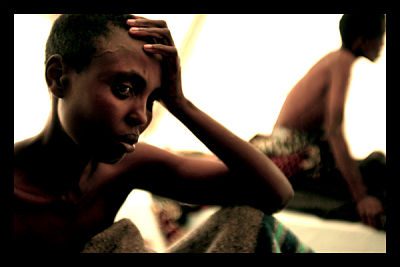
The second largest country in Africa and is located in the middle of the continent. Since the 1990’s the country has been in a state of political unrest and civil war which is the cause of many of the other problems in the region, such as disease, food insecurity, human rights violations, and violence against women.

Here are four issues that contribute to nearly 6.3 million people remaining food insecure and over half of the children under the age of 5 classified as malnourished in the DR Congo:

  1. Political instability between the government and several militia and rebel groups. Peace talks have been ongoing since 2009 with little progress. Since 1998, 5.4 million people have been killed. Less than 10% were killed during the fighting, instead the majority have died from diseases and malnutrition.
  2. 2.7 million people are internally displaced within the DRC as a result of the civil war. 1.6 million are in the North and South Kivu region, where much of the heavy militia activity takes place. There are an additional 116,000 refugees from neighboring countries currently living in the DRC. The large number of displaced people and perpetual fighting in the country has led to a high rate of abuse and sexual assault of women and children. It is estimated that 400,000 women between 15 and 49 were raped between 2006 and 2007. This is the equivalent of 48 women being assaulted every hour.
  3. 3.71% of the population lives below the poverty line, meaning they live on less than two dollars per day.
  4. Rampant infectious diseases are common across the country such as Malaria, Dengue Fever, Typhoid Fever, and HIV/AIDS. The ministry of health said that Malaria was their number one disease concern and in 2011 alone there were 4,561,981 reported cases.

– Colleen Eckvahl 

Sources: The International Campaign to Stop Rape and Gender Violence in Conflict , WFP, WHO
Photo: This is Africa

February 26, 2014
https://borgenproject.org/wp-content/uploads/borgen-project-logo.svg 0 0 Borgen Project https://borgenproject.org/wp-content/uploads/borgen-project-logo.svg Borgen Project2014-02-26 22:20:252024-05-26 23:15:194 Issues Contributing to Malnutrition in the DRC
Page 13 of 16«‹1112131415›»

Get Smarter

  • Global Poverty 101
  • Global Poverty… The Good News
  • Global Poverty & U.S. Jobs
  • Global Poverty and National Security
  • Innovative Solutions to Poverty
  • Global Poverty & Aid FAQ’s
Search Search

Take Action

  • Call Congress
  • Email Congress
  • Donate
  • 30 Ways to Help
  • Volunteer Ops
  • Internships
  • Courses & Certificates
  • The Podcast
Borgen Project

“The Borgen Project is an incredible nonprofit organization that is addressing poverty and hunger and working towards ending them.”

-The Huffington Post

Inside The Borgen Project

  • Contact
  • About
  • Financials
  • President
  • Board of Directors
  • Board of Advisors

International Links

  • UK Email Parliament
  • UK Donate
  • Canada Email Parliament

Get Smarter

  • Global Poverty 101
  • Global Poverty… The Good News
  • Global Poverty & U.S. Jobs
  • Global Poverty and National Security
  • Innovative Solutions to Poverty
  • Global Poverty & Aid FAQ’s

Ways to Help

  • Call Congress
  • Email Congress
  • Donate
  • 30 Ways to Help
  • Volunteer Ops
  • Internships
  • Courses & Certificates
  • The Podcast
Scroll to top Scroll to top Scroll to top