• Link to X
  • Link to Facebook
  • Link to Instagram
  • Link to TikTok
  • Link to Youtube
  • About
    • About Us
      • President
      • Board of Directors
      • Board of Advisors
      • Financials
      • Our Methodology
      • Success Tracker
      • Contact
  • Act Now
    • 30 Ways to Help
      • Email Congress
      • Call Congress
      • Volunteer
      • Courses & Certificates
      • Be a Donor
    • Internships
      • In-Office Internships
      • Remote Internships
    • Legislation
      • Politics 101
  • The Blog
  • The Podcast
  • Magazine
  • Donate
  • Click to open the search input field Click to open the search input field Search
  • Menu Menu

Archive for category: Humanitarian Aid

Global Poverty, Humanitarian Aid

The Success of Humanitarian Aid to Panama

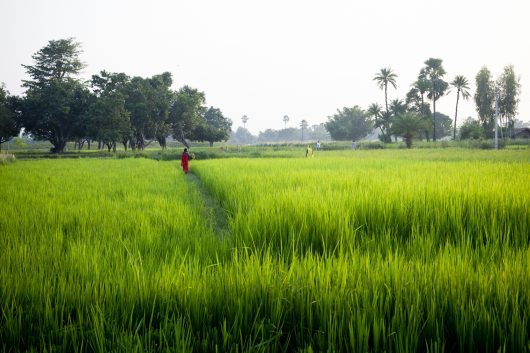
Humanitarian aid to PanamaThe U.S. began providing aid to Panama in 1961. In its early stages, the main purpose of humanitarian aid to Panama was to eradicate poverty in the country’s rural communities. Between the mid-1960s and the early 1980s, the focus shifted to improving Panama’s infrastructure and public facilities. In the 1990s, USAID was used to help jumpstart Panama’s economy following a political transition.
The Success Stories

In 2012, the USAID mission in Panama was officially closed. This means that after 51 years of providing humanitarian aid to Panama, the country had reached a point where it could deal with its own developmental and economic challenges.

At the time the mission was closed, the poverty rate had fallen from a high of 23 percent to seven percent, and the official unemployment rate was just 4.3 percent.

The health of Panama’s citizens also improved greatly during the period in which USAID was active in Panama. The life expectancy went up to 76 years and the fertility rate went down to 2.4 children per woman.

Access to education is now nearly universal in Panama. The country’s education system includes 11 years of free and compulsory education provided by the government. The curriculum includes science, math, language, social studies and other subjects needed to train a thriving workforce.

Humanitarian aid to Panama also helped the country during its transition back to democracy in 1990. The aid was used to bolster an economic recovery after a 20-year military dictatorship. It also helped stabilize Panama’s new democratic government.

From Aid Recipient to Aid Provider

When Puerto Rico was devastated by Hurricanes Irma and Maria in September and early October 2017, Panama was quick to ship aid in the form of milk, oil and rice to the island.

Panama had been receiving U.S. foreign assistance for over 50 years and they have seen tremendous benefits from USAID. But the biggest success story of all is that Panama has become a country that is now able to provide aid to other countries in times of crisis.

When former aid recipients are able to give back to American citizens in their time of need, it is a reminder that foreign assistance is not a handout, but an investment in the future. USAID in Panama assisted Panama in their economic, political and humanitarian development. It also helped create a powerful ally for the U.S.

– Aaron Childree

Photo: Flickr

November 18, 2017
https://borgenproject.org/wp-content/uploads/borgen-project-logo.svg 0 0 Borgen Project https://borgenproject.org/wp-content/uploads/borgen-project-logo.svg Borgen Project2017-11-18 01:30:002024-05-29 22:29:20The Success of Humanitarian Aid to Panama
Development, Global Poverty, Humanitarian Aid, Technology

UNITAR Provides Instruction to Least Developed Countries

UNITAR Provides InstructionThe United Nations Institute for Training and Research (UNITAR) is the main training sector of the United Nations. UNITAR provides instruction and aptitude development activities to assist mainly developing countries with a concentration on “Least Developed Countries (LDCs),” “Small Island Developing States (SIDS)” and additional assemblies and precariously vulnerable nations, including those in disputed circumstances. The Institute incorporates topics in the broad areas of setting the stage concerning the 2030 Agenda, reinforcing multilateralism, furthering environmental sustainability and green development, improving resilience and humanitarian assistance, promoting sustainable peace and promoting economic development and social inclusion.

Capacity for the 2030 Agenda
UNITAR provides instruction and delivers a range of projects, e-training courses, in-person seminars, webinars and education sessions/conferences. This instruction is done with the intent of assisting national jurisdictions and stakeholders to develop the capability for mainstreaming, executing and analyzing the 2030 Agenda for Sustainable Development. This Agenda challenges all countries and stakeholders to cooperate in the implementation of global objectives at all levels.

Strengthen Multilateralism
UNITAR seeks to empower representatives to participate in intergovernmental deliberations as well as management.
Globalization is increasing, and the consequences of multilateral conversation and collaboration are growing. The demand from the Member States for training and capacity development in the field of multilateral diplomacy will continue to rise. UNITAR supports the Member States by conveying knowledge related to the practices, policies and methods of multilateral working conditions and United Nations intergovernmental machinery.

UNITAR provides instruction based on a unique focus on contemporary diplomacy-related topics including colloquies related to climate change, trade and intellectual property issues.

Promote Economic Development and Social Inclusion
To attain sustainable growth and development and to accomplish global objectives including the U.N.’s Millennium Development Goals, advancing nations including Least Developed Countries (LDCs) must understand current and future challenges affecting the environment. Many countries are inadequately outfitted to design, execute and monitor adequate expansion plans. UNITAR helps LDCs to increase their capacities for trade, finance, investment and intellectual property, assisting achievement related to their development priorities, altering procedures to create workable plans.

Advance Environmental Sustainability and Green Development
As countries persevere in building solutions to conquer impending environmental hurdles and to advance low carbon growth, UNITAR shares solutions gathered from its experience, analyzing learning requirements, designing tailored learning approaches and using the latest in instructional design techniques.

To advance the objective of furthering environmental sustainability, UNITAR provides instruction while partnering with U.N. associates, as well as additional associations and nations to develop well-organized learning tactics, as a means of delivering climate resilient development production. UNITAR focuses on increasing skills in analysis of vulnerabilities and risks and strategies to create resilience to climate change.

Research and Technology Applications
This area of work includes most of the organization’s research efforts in the areas of technology applications and innovation. UNITAR is home to an advanced center of excellence for satellite imagery and data analysis, UNITAR’s Operational Satellite Applications Program (UNOSAT). The center is active in research, applications and specialized training. Twenty-first-century technology will confront climate change, facilitate resilience and involve citizens in the work of the U.N. In this area, UNITAR provides instruction utilizing tools to promote information and knowledge about adult learning principles and instructional design approaches for all the Member States.

By focusing on these areas, UNITAR hopes to empower the world with knowledge, especially in creating sustainable solutions for the future.

– Heather Hopkins

Photo: Flickr

October 2, 2017
https://borgenproject.org/wp-content/uploads/borgen-project-logo.svg 0 0 Kim Thelwell https://borgenproject.org/wp-content/uploads/borgen-project-logo.svg Kim Thelwell2017-10-02 01:30:202024-05-29 22:27:01UNITAR Provides Instruction to Least Developed Countries
Foreign Aid, Humanitarian Aid, Refugees

Countries Pledge $2.1 Billion in Foreign Aid to Iraq

Foreign Aid to Iraq
On July 20, representatives from 24 countries pledged more than $2.1 billion in foreign aid to Iraq at a Washington, D.C. conference co-hosted by the U.S., Canada, Japan, Kuwait, Germany and the Netherlands. The U.S. had hoped to raise around $2 billion in foreign aid to Iraq. State Department Spokesperson John Kirby said that the results of the meeting exceeded expectations, with $2.1 billion in confirmed pledges and more pending approval.

Coverage of the pledging conference indicates that countries recognize the need to help Iraq achieve long-term stability in addition to carrying out military operations against the Islamic State. Public Finance International reported that the donor meeting aimed specifically to deal with the fallout of an expected assault on the northern Iraqi city of Mosul, which is likely to be the largest yet.

According to Radio Free Europe/Radio Liberty, the U.N. estimates the humanitarian assistance needed after the attack at $284 million and reconstruction costs at $1.8 billion. In total, the country needs $4.5 billion.

Canada was among the first to come forward with a pledge. Foreign Affairs Minister Stéphane Dion announced $158 million CAD, or $121 million, in foreign aid to Iraq at the meeting, with $150 million CAD going towards humanitarian needs and $8 million CAD reserved for de-mining and helping refugees.

The conflict has seen 3.3 million Iraqis displaced. In addition to addressing the country’s current crisis, Canada is also donating $200 million CAD to the World Bank, which will be available to the Iraq government as a loan to assist with economic reforms.

The United Kingdom’s Department for International Development pledged $66 million. The European Commission (EC), the European Union’s executive body, gave $215.5 million, and Kuwait also contributed $176 million. Neven Mimica, the European commissioner for International Cooperation and Development, told Public Finance International that the EU hopes to provide humanitarian assistance as well as improve public spending on infrastructure in the country.

Foreign Minister Frank-Walter Steinmeier of Germany, which pledged $1.3 million at the conference and is the largest donor of foreign aid to Iraq, emphasized the importance of continued assistance. “We cannot lose the momentum of our efforts to stabilize Iraq now,” he said.

The $2.1 billion raised at the July 20 conference went above and beyond the $861 million the U.N. had appealed for Iraq. It is encouraging to see that countries in the coalition against the Islamic State, including the U.S., start to focus their efforts on humanitarian aid and long-term development.

– Philip Katz

Photo: Flickr

November 12, 2016
https://borgenproject.org/wp-content/uploads/borgen-project-logo.svg 0 0 Borgen Project https://borgenproject.org/wp-content/uploads/borgen-project-logo.svg Borgen Project2016-11-12 01:30:352020-05-20 08:54:20Countries Pledge $2.1 Billion in Foreign Aid to Iraq
Humanitarian Aid

How Drone Use Has Evolved Into a Humanitarian Tool

Drone Use
While domestic drone use was nothing but a hobby a few years ago, it has now developed into a life-saving technology. Drones have become bigger and stronger as the technology has developed, capable of delivery services now, as seen with Amazon’s Prime Air. Most recently, drones have started delivering medical supplies.

Zipline International, a robotics company based in Silicon Valley, partnered with Rwanda’s government and commenced flying medicine to people. Drone use is especially useful in naturally isolated areas without accessible infrastructure as finding emergency health care can be impossible. However, the Zipline drones can reach those places with no problem.

Weighing 22 pounds, the drones can carry three pounds of medicine and fly 75 miles on a single charge. The company claims they can deliver the medicine in under 30 minutes, eliminating the need for refrigeration or insulation and readily helping those in emergency situations.

In underdeveloped nations like Rwanda, drone use may become one of the most important humanitarian tools, delivering essential medicine to isolated locations where malaria, AIDS and other diseases are still rampant. In the U.S., Zipline also plans to operate in remote communities in Nevada, Maryland and Washington. They are set to begin test runs with support from the White House.

Field Innovation Team, a disaster preparedness nonprofit, recently completed a successful test run in New Jersey, delivering medical supplies to a rural health clinic. The organization views drone use as vital to responding to natural disaster situations.

In past situations, like Hurricane Sandy and Typhoon Haiyan, drones delivered supplies to stranded communities and survivors. Drones may be essential in emergency aid situations. According to the African Development Bank this can be especially helpful in rural Africa, where only 34% of communities have road access.

Another area for drones to enter is food delivery. In impoverished nations, many go hungry, even without natural disasters. With the continued development of drones and proper regulation, the hundreds of millions of malnourished people may find another way to receive necessary aid on a more consistent basis.

Drones could deliver more than food — tools and seeds to aid in agricultural needs could be delivered, and even the internet could be provided. Facebook has plans to launch high-altitude drones that connect people in smaller cities or the outskirts of urban areas to the internet.

In places where hospitals and doctors are scarce, transportation infrastructure is nonexistent and where poverty is rampant, drone use can become the solution to both temporary and long-term problems. They can help in natural disasters, in pandemics and perennially underserved communities.

– Henry Gao

Photo: Flickr

October 26, 2016
https://borgenproject.org/wp-content/uploads/borgen-project-logo.svg 0 0 Borgen Project https://borgenproject.org/wp-content/uploads/borgen-project-logo.svg Borgen Project2016-10-26 01:30:212020-05-29 11:36:24How Drone Use Has Evolved Into a Humanitarian Tool
Global Poverty, Humanitarian Aid

Humanitarian Aid is Effective in Combatting ISIS

Combatting ISISISIS recruits much of its membership in the states where it operates. With the increased debate on why this is an occurrence, providing aid to refugees is effective in combatting ISIS because it decreases the chances of them joining the faction.

In an interview with the Daily Beast’s Michael Weiss, Abu Khaled, an Islamic State defector, calls his organization “a welfare state” because it pays for housing and childcare for fighters and residents alike.

Khaled is alarmingly correct. A 2015 Quantum study found that 12% of surveyed ISIS and surrounding extremist group members joined their entities because of money. The report explains that the same militants who fight for their fortunes are from Syria and Iraq.

As monetary compensation is used as a tool to convert impoverished locals into extremists, humanitarian aid is effective in combating ISIS and other extremist groups. However, the U.N.’s budget for Syrian refugees is 65% short of what is required to provide adequate assistance.

Failing to give substantial support to those who need it most explains why many turn to ISIS. Out of all the people who stayed in Syria, 10 million of them have an insufficient food supply. Joining ISIS is a choice of survival when it is the only way to accommodate hunger.

When developed countries give aid to these countries’ refugees, it reduces the need to choose jihad over starvation. The financial factor of pursuing terrorism diminishes when food is on the plates of 10 million starving Syrians.

Appealing to the poor is not a new tactic of radicalism. The ETA, a Basque nationalist group, grew its membership among lower socioeconomic backgrounds.

While poverty is not the only source of extremism, policymakers widely accept it as a valid component. Even U.S. Secretary of State John Kerry acknowledges it as “a root cause of terrorism.” Humanitarian efforts by the U.N. are stagnant, but the United States is leading the world in giving to Syrian refugees, providing $419 million in additional aid.

Despite more funding being present, America alone cannot endure success in alleviating Syria’s poverty and combatting ISIS. Foreign policy expert Helen Milner of Princeton University writes that there is “support for the hypothesis that multilateral aid is preferred to bilateral.” Most respondents also classified multilateral aid as the most effective solution.

America has more in its budget than most countries, yet there is still a disparity between the how much the U.S. donates and how much it actually could donate to the Syrian crisis.

Middle Eastern refugees are incentivized to follow the cash flow of prosperity. Western nations can fill the void before ISIS and other extremist groups beat them to it.

– Noah Levy

Photo: Flickr

September 14, 2016
https://borgenproject.org/wp-content/uploads/borgen-project-logo.svg 0 0 Borgen Project https://borgenproject.org/wp-content/uploads/borgen-project-logo.svg Borgen Project2016-09-14 01:30:092024-05-27 23:53:08Humanitarian Aid is Effective in Combatting ISIS
Humanitarian Aid

Four Humanitarian Singers Looking to Make the World a Better Place

Humanitarian singers
A remarkable number of singers spend time fighting poverty between recording sessions and tours. In particular, four humanitarian singers made an especially large impact through both creating and supporting various foundations.

Shakira

Shakira gained worldwide fame for her pop music with a Latin flair. However, she also leads a philanthropic career outside of music.

The artist primarily focuses on universal education and early childhood development. She founded the Pies Descalzos (Bare Feet) Foundation that looks to “bring education to every child in the world.”

Shakira also supports the ONE Campaign, which mobilizes individuals to do their part to end extreme poverty.

Another campaign she promotes and supports is Habitat for Humanity. This organization strives to give everyone in the world adequate housing.

Bono

Bono is not only the lead singer of the world-renowned band U2, but he is also well known for his humanitarian efforts. He has helped fight poverty by supporting and creating multiple campaigns and projects.

These include the ONE Campaign and (RED), which advocates for an AIDS-free globe. Bono also supports EDUN, which encourages trade between impoverished countries in order to boost their economies.

In addition, he often participates in fundraising concerts to help raise money for these foundations and to promote important causes.

Elton John

Don’t let the sun go down on Elton John: he’s ready to change the world. The well-known singer and songwriter is also a supporter of the quest to eliminate AIDS around the world.

He created the Elton John AIDS Foundation in order to help reduce the AIDS epidemic. Consequently, his foundation has raised over $125 million, which has gone to support 55 different countries. This support promotes education prevention and provides services to those in need.

He also supports other foundations, such as AIDS LIFE, World AIDS Day and War Child.

Alicia Keys

“No One” can deny Alicia Keys’ contributions toward fighting the HIV/AIDS epidemic. This singer also uses her powerhouse singing voice to speak for the unheard individuals.

She co-founded Keep a Child Alive, which focuses on the millions of children that die from AIDS in places where medical treatment is sub-par or unavailable. This foundation offers a range of services, including diagnostic testing and health care training.

In addition, Keys has traveled to Uganda, Kenya and South Africa to speak to those who have lost their parents to the deadly disease. She also raised money for the charity by offering a private concert as a prize in an auction.

In an interview with Everyday Health, Keys eloquently says, “Helping keep a child or mother or father or brother or sister alive means turning the worst epidemic of our lifetime into the greatest victory of our generation.”

Other Notable Humanitarian Singers

In addition, a coalition of humanitarian singers have all joined Water Now’s quest to provide people in need with clean water. These artists include Lady Gaga, Pitbull, Pharrell Williams, Adam Levine, Jason Derulo, Meghan Trainor, Jennifer Hudson, 5 Seconds of Summer and Justin Bieber.

With the help of Watermill Express, every time a gallon of water is purchased at one of the 1,300 kiosks dispensed around the United States, a gallon of clean water is donated on behalf of the buyer to a person in need in a developing country.

Humanitarian singers and celebrities continue to help raise money and awareness for global issues. All of the foundations they support and create are easy to find and donate to thanks to their philanthropic publicity.

– Casey Marx

Photo: Shakira

August 4, 2016
https://borgenproject.org/wp-content/uploads/borgen-project-logo.svg 0 0 Borgen Project https://borgenproject.org/wp-content/uploads/borgen-project-logo.svg Borgen Project2016-08-04 01:30:172024-12-13 17:54:38Four Humanitarian Singers Looking to Make the World a Better Place
Global Poverty, Human Rights, Humanitarian Aid

World Humanitarian Summit Commits to Shared Responsibility

Humanity

The world’s first-ever World Humanitarian Summit took place May 23–24, 2016 in Istanbul. U.N. Secretary-General Ban Ki-moon called for the summit in 2012 after recognizing the need to reaffirm global responsibility of our shared humanity.

Since the original announcement, the need for the summit has become increasingly urgent. 125 million people around the world are currently in need of humanitarian assistance, according to Ban Ki-moon’s report for the World Humanitarian Summit last year.

The World Humanitarian Summit included over 9,000 people–a mix of world leaders, non-governmental organizations, people affected by crises and partners in the private sector and civil society.

Packed with roundtable discussions and events, the aim of The World Humanitarian Summit is to change the way the world responds to global issues by committing to a unified goal to end suffering.

The Agenda for Humanity outlines the five core responsibilities that the summit centered on:

  1. “Global leadership to prevent and end conflict.” The first core responsibility proposes responding quickly to crises and investing in risk analysis, political unity, and peace building to prevent conflicts from occurring. Manmade conflict accounts for 80 percent of humanitarian aid that is sent, according to the WHS Executive Summary Report. Investing in conflict prevention would save billions of dollars and lives.
  2. “Uphold the norms that safeguard humanity.” The second core responsibility addresses the need to recommit to rules of war and speak out against violations. When bombs or explosives are used in populated areas, 90 percent of people that are killed or injured are civilians, according to the WHS Executive Summary Report. This responsibility presents the launch of a global campaign to stop violations of the human rights law while investing in ways to increase adherence and accountability.
  3. “Leave no one behind.” The third core responsibility is dedicated to reaching everyone affected by crises, risk and vulnerability. According to the WHS Report, 60 million people are forcibly displaced, and there is a severe lack of funding in humanitarian aid. This responsibility commits to empowering marginalized groups, addressing displacement and supporting migrants.
  4. “Changing people’s lives – from delivering aid to ending need.” The fourth core responsibility is centered on shifting the priority from delivering aid to ending the need for aid. Reinforcing the idea that support should be drawn from within, this commitment advises employing local solutions and empowering local systems that already work instead of replacing them with international aid.
  5. “Invest in humanity.” The fifth core responsibility commits to political, institutional and financial investments in stability and local systems. It proposes to decrease the funding gap and improve the efficiency of aid. The World Humanitarian Summit comes at a critical time in history – a time when the U.N. estimates that the number of people displaced has not been as high since World War II.

In his WHS Report, Ki-Moon deliberately references The Declaration of St. James’s Palace in London in 1941, the first act toward the formation of the United Nations. At St. James’s Palace in London, governments came together to pledge a unified commitment to work toward peace. Ban acknowledges that 75 years later, it is time to renew that commitment to humanity.

– Erica Rawles

Photo: Flickr

July 29, 2016
https://borgenproject.org/wp-content/uploads/borgen-project-logo.svg 0 0 Borgen Project https://borgenproject.org/wp-content/uploads/borgen-project-logo.svg Borgen Project2016-07-29 01:30:442024-12-13 17:54:42World Humanitarian Summit Commits to Shared Responsibility
Economy, Global Poverty, Humanitarian Aid

Brexit Implications: How Will Africa Fare?

Brexit_Implications
People across all nations are asking about the impact of Brexit on the world, but only a few are asking the very important question of, “What will be Brexit’s impact on Africa?” As powerful countries such as the U.S. and Germany wait anxiously for the final vote count, anticipating possible financial fallout, the third world has much larger concerns, especially Africa.

Brexit Implications on Africa: Humanitarian, Political and Economic

Whether or not there will be a recession in Britain following the country’s exit from the EU is unclear, but what is certain is that if an economic crisis does occur, Africa will be hit hard.

Great Britain has long been a strong trading ally for Africa, and according to The Chicago Tribune, the European Union has preferential trade agreements with every African country except for Libya and South Sudan.

Due to the Brexit, British officials will now have to rewrite many of their trade agreements with African nations, which will take extensive time and manpower. However, this could prove to be fruitful for Africa, as strict regulations such as the Common Agricultural Policy — set in place by the EU will no longer apply to trade legislation.

According to the European Commission, the Common Agricultural Policy is an EU initiative aimed at invigorating “agricultural productivity, so that consumers have a stable supply of healthy food”. Part of this policy grants subsidies to European farmers to promote sustainable agriculture and the growth of healthy food.

BBC reports that African farmers feel as though the subsidies attached to the Common Agricultural Policy “undermine the concept of a level playing field”. The U.K. agrees with their African allies and adamantly fought for policy reformation before their exit. Brexit’s impact on Africa will not only be economic, for it will also influence the political and humanitarian realm.

The U.K. and Aid to Africa

Prior to the U.K.’s decision to leave the European Union, it had incredible authority over the EU’s political and humanitarian initiatives in Africa.

The European Development Fund, according to the Chicago Tribune, is “the European Union’s main vehicle for providing development aid to Africa”. Britain was a leading voice in dictating the mission of the fund, as the third biggest contributor at 14 percent.

Even more impressive was the U.K.’s power over the African Peace Facility and its backing of the African Union Mission in Somalia. Britain made sure that the EU paid for 90 percent of the program, a 22,000-strong multinational force that protects the Somali Federal Government from the extremist militant group al-Shabab.

Before the Brexit, Britain was already beginning to lose their battle over policy in Somalia as the rest of the EU voted to pull some funding, hinting at a divided opinion about African aid.

The future of European policy in Africa is ambiguous, as one of the continent’s most passionate advocates is no longer a member of the EU. While this may seem like troubling news for Africa, the Brexit could turn out to be a blessing for the entire region.

The U.K. will no longer be held back by the EU’s restrictive guidelines as it applies to foreign policy and unless recession strikes Britain’s economy, it is likely that they will stay true to their promise of providing 0.7 percent of their gross national income to African aid.

– Liam Travers

Photo: Public Domain Images

July 10, 2016
https://borgenproject.org/wp-content/uploads/borgen-project-logo.svg 0 0 Borgen Project https://borgenproject.org/wp-content/uploads/borgen-project-logo.svg Borgen Project2016-07-10 01:30:492020-06-11 11:45:23Brexit Implications: How Will Africa Fare?
Global Poverty, Humanitarian Aid, Hunger

How to Solve World Hunger in 10 Steps

How to Solve World Hunger

In 2010, former World Food Programme (WFP) Executive Director Josette Sheeran boldly stated, “We can end hunger. Many hungry nations have defeated hunger. It doesn’t require some new scientific breakthrough. It’s not rocket science.” Sheeran’s proposal on how to solve world hunger in 10 steps is still relevant today:

  1. Humanitarian action: Natural disaster impacts the world annually. According to World Vision, in 2015, the worst natural disasters recorded were (i) An earthquake — Nepal, (ii) A flood — Chennai, India, (iii) A heat wave — southern India, (iv) Typhoon and monsoon rains — Myanmar, Bangladesh and India (v) Floods — Malawi and Mozambique and (vi) A drought — Ethiopia. In 2016, the American Red Cross and other organizations are still providing direct relief for the survivors. Sheeran advocates for volunteerism in communities affected by natural disasters to help with relief and reduce world hunger.
  2. School meals: This is an affordable approach to promoting development and reducing malnutrition. Individuals can donate online to organizations that provide school meals or they can provide direct relief.
  3. Safety nets: A “safety net” is comparable to a backup plan for when natural disasters strike. For example, the Red Cross is considered a safety net based upon their annual direct relief efforts. Safety nets should be linked to schools and farmers in case of an emergency such as a famine or flood.
  4. Connect small farmers to markets: According to the U.N. Food and Agriculture Organization (FAO), small farmers produce 80 percent of the world’s food supply. However, the majority barely make enough income to survive. By connecting small farmers to markets, they can increase their income potential and learn best practices such as drip irrigation and soil tillage.
  5. Nourish children during their first 1,000 days: The first 1,000 days of a child’s life are the most important for development and growth. Nourishing children is an investment that can help to increase trade and expand job creation.
  6. Empower women: Women in South America and Asia are more likely to go hungry than men. When hunger affects women, hunger affects children. Women make up the majority of agricultural manual workers, therefore empowering women creates greater food security for the entire household.
  7. Technology revolution: Iraq refugees began to use text messages on mobile phones in 2010 as a means to get food by WFP food vouchers saving money and travel time. Now, refugees do not have to journey to a distribution center and return with over a month’s worth of food.
  8. Build resiliency: Hunger is highly correlated with disaster. According to the WFP, “It is essential to help build the resiliency of vulnerable communities so that when emergencies strike, they are strong enough to cope.” The organization provides disaster relief for over 80 million people in over 60 different countries.
  9. Make a difference as an individual: Social media is booming in today’s world. Anyone can help bring awareness to global hunger by accessing these tools. For example, people can tweet, Instagram or Facebook post about their favorite global poverty awareness organizations to get their friends to donate. Awareness is a powerful first step to solving world hunger.
  10. Show leadership: WFP honored President of Brazil Luiz Inácio Lula da Silva as a “Global Champion for the Fight Against Hunger” award. “President Lula has shown leadership in the fight against hunger by pushing the needs of the poor and the undernourished to the very top of the international agenda,” stated Sheeran.The above steps provide an excellent guideline on how to solve world hunger. The WFP continues to encourage individuals and organizations globally to take a stand now in order to end the hunger crisis for future generations.
  • – Rachel Hutchinson


May 22, 2016
https://borgenproject.org/wp-content/uploads/borgen-project-logo.svg 0 0 Borgen Project https://borgenproject.org/wp-content/uploads/borgen-project-logo.svg Borgen Project2016-05-22 01:30:262024-12-13 17:54:30How to Solve World Hunger in 10 Steps
Global Poverty, Humanitarian Aid

Using a Solidarity Levy to Fund Disaster Relief

Solidarity Levy
The United Nations is urging countries to adopt a solidarity levy in order to help victims of war and natural disasters.

The recommendation comes with the news that $40 billion per year is now needed to help vulnerable populations. Climate change and prolonged regional armed conflicts have resulted in a $15 billion shortage in relief funding, the organization says.

“The stakes are sky high,” said U.N. Secretary-General, Ban Ki-moon. “More than 125 million people need humanitarian assistance worldwide. The financial burden is five times greater than a decade ago. Humanitarian action is now the U.N.’s costliest activity.”

In response, a U.N. panel on humanitarian financing has released recommendations on solutions to tackle the widening funding gap. In its report “Too Important to Fail,” the panel highlights, among others, two strategies: adopting a solidarity levy to broaden the humanitarian resource base and reducing the need for humanitarian intervention altogether.

A “solidarity levy,” the panel suggests, is a promising solution to the revenue shortage because it corrects an over-reliance on humanitarian donations. The levy is a tax voluntarily adopted by countries and applied to airline tickets, sporting tickets and other transactions.

The idea has been successful in the past. One such levy on airline tickets raised over $1.7 billion for UNITAID’s fight against HIV and malaria between 2006 and 2011.

The panel wants more countries to adopt this model to generate more predictable and reliable streams of income for humanitarian work. “The simple act of catching a plane turns passengers into contributors to the cause of saving lives—it is responsible travel on an enormous scale,” the report said.

However, one of the most meaningful ways to reduce the cost of humanitarian aid is to build resilience to conflict and disaster, the panel noted. Over 93 percent of people who live in extreme poverty also live in fragile countries.

The U.N. panel recommends using scarce development dollars in the most vulnerable countries first in order to build adequate infrastructure and emergency services. It also supports the existing recommendation to allocate more funds to the U.N. Peacebuilding Fund, which is used to foster political dialogue and strengthen national institutions. Taking these steps, the U.N. suggests, will mitigate the costliest emergency interventions.

In the meantime, more funding is needed to address current issues. With the World Humanitarian Summit set to take place in Istanbul in May of this year, the panel is hopeful that its report will encourage conversations about adopting a solidarity levy and the future of humanitarian financing.

– Ron Minard

Sources: IB Times, UN 1, UN 2, World Humanitarian Summit

February 12, 2016
https://borgenproject.org/wp-content/uploads/borgen-project-logo.svg 0 0 Borgen Project https://borgenproject.org/wp-content/uploads/borgen-project-logo.svg Borgen Project2016-02-12 01:30:012024-06-11 02:48:17Using a Solidarity Levy to Fund Disaster Relief
Page 31 of 34«‹2930313233›»

Get Smarter

  • Global Poverty 101
  • Global Poverty… The Good News
  • Global Poverty & U.S. Jobs
  • Global Poverty and National Security
  • Innovative Solutions to Poverty
  • Global Poverty & Aid FAQ’s
Search Search

Take Action

  • Call Congress
  • Email Congress
  • Donate
  • 30 Ways to Help
  • Volunteer Ops
  • Internships
  • Courses & Certificates
  • The Podcast
Borgen Project

“The Borgen Project is an incredible nonprofit organization that is addressing poverty and hunger and working towards ending them.”

-The Huffington Post

Inside The Borgen Project

  • Contact
  • About
  • Financials
  • President
  • Board of Directors
  • Board of Advisors

International Links

  • UK Email Parliament
  • UK Donate
  • Canada Email Parliament

Get Smarter

  • Global Poverty 101
  • Global Poverty… The Good News
  • Global Poverty & U.S. Jobs
  • Global Poverty and National Security
  • Innovative Solutions to Poverty
  • Global Poverty & Aid FAQ’s

Ways to Help

  • Call Congress
  • Email Congress
  • Donate
  • 30 Ways to Help
  • Volunteer Ops
  • Internships
  • Courses & Certificates
  • The Podcast
Scroll to top Scroll to top Scroll to top