• Link to X
  • Link to Facebook
  • Link to Instagram
  • Link to TikTok
  • Link to Youtube
  • About
    • About Us
      • President
      • Board of Directors
      • Board of Advisors
      • Financials
      • Our Methodology
      • Success Tracker
      • Contact
  • Act Now
    • 30 Ways to Help
      • Email Congress
      • Call Congress
      • Volunteer
      • Courses & Certificates
      • Be a Donor
    • Internships
      • In-Office Internships
      • Remote Internships
    • Legislation
      • Politics 101
  • The Blog
  • The Podcast
  • Magazine
  • Donate
  • Click to open the search input field Click to open the search input field Search
  • Menu Menu

Archive for category: Humanitarian Aid

Aid, Global Poverty, Humanitarian Aid

The Success of Humanitarian Aid to Nepal

The Success of Humanitarian Aid to NepalWedged between China and India, the small country of Nepal consists of nearly 30 million individuals. In 2015, the country was devastated by an earthquake that took the lives of nearly 9,000 people, and left close to 4 million in need of urgent humanitarian assistance. The earthquake also destroyed the nation’s infrastructure and homes, setting back economic development significantly. Despite the devastation that occurred, many organizations provided humanitarian aid to Nepal and many of their efforts have proven to be successful. While many organizations showed their support, the work of two key organizations has been transformative to the lives of the Nepalese.
CARE

CARE has been present in Nepal since 1978. Its work has been focused on food security, HIV/AIDS prevention, improving health, education and water sources. It also works to empower young girls and women. When the earthquake struck in 2015, CARE was one of the first organizations that was able to provide humanitarian aid to Nepal. It provided immediate assistance to 10,000 Nepalese with shelter and materials to thousands of others to repair their homes. CARE also distributed water purification tablets, built emergency latrines and provided the Nepalese with hygiene essentials.

Following natural disasters, it is common to see incidents of gender-based violence increase. As part of its humanitarian aid to Nepal, CARE created friendly spaces where women can seek protection, have access to information, education, support and various services. Its work with women has helped to empower many Nepalese women.

To date, CARE has provided humanitarian aid to over 130,000 Nepalese and it is estimated that by the early months of 2018 it will assist another 100,000 people.

Save the Children

Save the Children has worked in Nepal since 1976. The primary goal of its work is to partner with local communities and organizations to design sponsorship programs for kids. These sponsorship programs work to ensure that children have access to education and have the necessary tools to be successful in their education. Some of these tools include access to food, water and sanitation products.

While its work is geared towards assisting children, through providing access to education, Save the Children was also prepared to provide humanitarian assistance to Nepal following the earthquake. In 2016, the organization gave over 1 million children vital nourishment, helped nearly 25,000 families feed their children and supported more than 210,000 children in crisis.

While thousands of children and families have received services and support from Save the Children, its humanitarian aid to Nepal still continues. Many schools have been rebuilt following the earthquake, yet there seems to be a disparity in the number of children who are currently attending. Its current efforts are geared towards getting children back into school and giving them the necessary tools to live a healthy life.

Humanitarian aid to Nepal has been extremely successful. Thousands of Nepalese have been provided with the necessary items, tools and support to rebuild their lives following the earthquake. However, there are many regions of the country that have received little to no support and are still in need. Organizations should continue to provide humanitarian aid to Nepal and other organizations should join the efforts to reduce poverty in the country.

 – Sarah Jane Fraser

Photo: Flickr

December 4, 2017
https://borgenproject.org/wp-content/uploads/borgen-project-logo.svg 0 0 Borgen Project https://borgenproject.org/wp-content/uploads/borgen-project-logo.svg Borgen Project2017-12-04 01:30:482024-05-29 22:29:34The Success of Humanitarian Aid to Nepal
Global Poverty, Humanitarian Aid

The Success of Australia’s Humanitarian Aid to Fiji

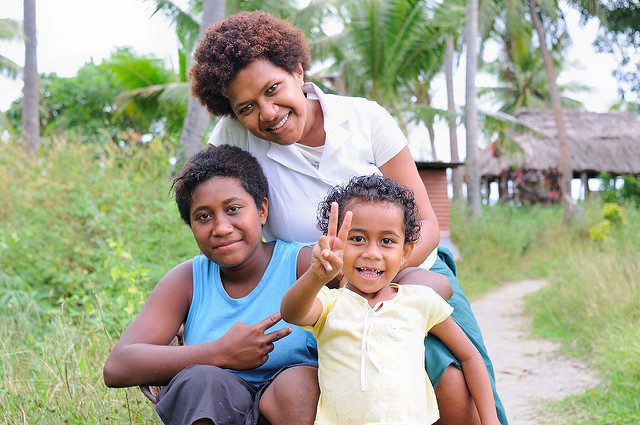
Humanitarian Aid to FijiIn February of 2016, category five Tropical Cyclone Winston killed 44 people and negatively affected the lives of the 540,000 residents of Fiji. Recorded as the most powerful storm to ever hit the Southern Hemisphere, Fiji was in desperate need of emergency assistance. The Australian government was one of the first to step in to help, as they are economic partners with Fiji, and donated $15 million worth of emergency humanitarian assistance. Australia was able to provide humanitarian aid to Fiji that changed the lives of thousands of people for the better.

The Australian government enacted an aid program to provide assistance to Fiji. Australia’s Department of Foreign Affair and Trade’s aid program focuses heavily on creating a prosperous Fiji through development assistance for the rural poor. The focus is on aspects of education and economic opportunity. The program includes three objectives to be addressed and resolved. The three components are increased private sector development, improved human development and Tropical Cyclone Winston recovery. A total of $65.6 million in the 2017-18 years will be contributed to the resolution of Fiji’s most important issues.

The third objective in Australia’s aid program is of utmost importance as recovery processes are still being made post-cyclone. Altogether, Australia has contributed $35 million in assistance services. Five million dollars was used for lifesaving supplies and support, $10 million was used to send children back to school and provide health services to residents and $20 million was leftover for Fiji’s long-term recovery.

The $20 million is to be used primarily for reconstruction of hospitals and schools, replacing damaged medical equipment and restoring water and sanitation systems back to their original state. The rebuilding of communities is allowing individuals to return to work, whether that be to their farms or to the markets.

Australian non-profit CARE was among the many emergency responders after Cyclone Winston. Their humanitarian aid to Fiji was able to bring relief to more than 25,000 residents across 231 communities.

CARE distributed emergency shelter kits to 2,500 families, hygiene kits to 4,196 families, constructed 17 community water supply systems and 253 toilets, distributed seed kits to 4,290 families and conducted agricultural training for 231 communities.

The Australian Red Cross has also been a large contributor to the recovery efforts. The Red Cross has successfully provided supplies to more than 50,600 families to assist in the repair of their houses and with medical issues. After the cyclone, the Australian Red Cross managed to raise a total of $4.2 million, in just three months, to use towards humanitarian aid.

Every contributor to Fiji after Cyclone Winston helped the country to work towards rehabilitation at a more successful pace. With the year-plus humanitarian efforts, Fijians were able to begin recovery. Australia’s contribution of humanitarian aid to Fiji gave the country the opportunity to find itself again.

– Brianna Summ

Photo: Flickr

December 3, 2017
https://borgenproject.org/wp-content/uploads/borgen-project-logo.svg 0 0 Borgen Project https://borgenproject.org/wp-content/uploads/borgen-project-logo.svg Borgen Project2017-12-03 01:30:392019-11-18 01:25:58The Success of Australia’s Humanitarian Aid to Fiji
Global Poverty, Humanitarian Aid

The Success of Humanitarian Aid to Uganda

Humanitarian Aid to UgandaUganda is hosting over 1 million refugees. Thanks to its progressive solutions and open policies, the country, located in East Africa, has welcomed people from Burundi, the Democratic Republic of the Congo and South Sudan. In 2017, the refugee population dramatically changed: close to 900,000 South Sudanese fled to Uganda seeking peace. This year, Uganda became host to the largest refugee camp in the world. Bidi Bidi is home to 270,000 refugees and is expected to get even more arrivals in December 2017. For that reason, humanitarian aid to Uganda has become essential to assuring that refugees’ needs are met. This includes shelter, healthcare and education.

Women and Children

Around 86 percent of the 900,000 South Sudanese refugees in Uganda are women and children. The U.N. Refugee Agency (UNHCR) has provided different projects helping these groups. In 2016, 264,300 South Sudanese women received core-relief items, shelter kits and sanitary kits.

In addition, the international organization imparted help with Sexual and Gender Based Violence (SGBV) issues. The UNHCR aided 767 South Sudanese SGBV survivors to access psychosocial counseling.

Increasing Access to Education

Classes are difficult to hold in refugee camps, as most of the time there are not enough facilities and teachers. In Bidi Bidi, there are 5,000 students and only 38 teachers. Despite that, 130,600 school-age refugee children were enrolled in primary education. By the end of 2017, it is expected that 176,171 children will be registered.

Other educational efforts are being in Uganda’s Coburwas Primary School. One program ensures that refugee students receive food. Outside of the classroom, students learn how to farm, an activity that brings money to the school.

Health and Humanitarian Aid to Uganda

Humanitarian aid to Uganda has had large success in addressing health issues. It is expected that 100 percent of the people of concern, specifically refugees, will have access to national primary healthcare services in 2017. In addition, health organizations such as the Real Medicine Foundation (RMF), are developing projects in refugee camps. The RMF currently operates 30 health centers in Bidi Bidi.

Economic Improvements

Finally, the UNHCR implemented a project to improve refugees’ economic situation. The organization trained 9,300 refugee business owners in entrepreneurship and all of them received access to credit and financial services.

Humanitarian aid to Uganda is increasing as the refugee population grows. Uganda has one of the most progressive refugee policies in the world, but in order to ensure improved living standards for refugees, there is a need for continued contributions of humanitarian aid.

– Dario Ledesma

Photo: Flickr

December 2, 2017
https://borgenproject.org/wp-content/uploads/borgen-project-logo.svg 0 0 Borgen Project https://borgenproject.org/wp-content/uploads/borgen-project-logo.svg Borgen Project2017-12-02 01:30:472024-06-11 02:48:35The Success of Humanitarian Aid to Uganda
Global Poverty, Humanitarian Aid

The Success of Humanitarian Aid to Burundi

Humanitarian Aid to Burundi
The 10.4 million people living in Burundi suffered through civil war conflict that began in 1994 and lasted for 12 years. Ongoing violence has since kept Burundi one of the poorest and hungriest countries in the world. In 2015, the political and social unrest reached a tipping point when a contested presidential election plunged the country into its worst crisis yet. Humanitarian aid to Burundi was threatened after donors suspended funding to the government following human rights violations and negligent use of funds. Fortunately, organizations have been focused on finding other ways to aid Burundi citizens and refugees.

After suspending governmental aid in 2016, the European Union has been redirecting humanitarian aid to Burundi by concentrating its efforts on local populations and civil society. Over 90 percent of Burundi’s population depends on agriculture, based mainly on subsistence farming, one of the main contributors to its GDP. The European Development Fund has allocated $500 million in aid. The funding will be used to support sustainable rural development, benefiting nutrition, health and energy, and helping Burundi citizens support themselves.

The U.N. Children’s Fund (UNICEF) has partnered with singer Beyoncé to launch BEYGOOD4BURUNDI, a partnership dedicated to providing safe water in Burundi. Over the next few years, the program will improve water sanitation facilities in schools, provide hygiene education and construct new wells equipped with hand pumps. Access to clean water will prevent transmission of water-borne diseases, one of the leading causes of death of children in Burundi. The risk of attack on young girls will also be lowered, as they will no longer have to travel for miles to find water.

The United Nations Office for the Coordination of Humanitarian Affairs has released an extensive regional response plan to organize global humanitarian aid to Burundi. After receiving aid from countries all over the world, the humanitarian response plan is already about 88 percent funded and is focusing its efforts on providing education, food, safety and economic growth in Burundi.

While providing humanitarian aid to Burundi without the full cooperation of their government is a challenge, organizations have found ways to directly help villages sustain themselves, help more children receive education, improve health and hygiene to help prevent disease, and give access to safe water.

– Jenae Atwell

Photo: Flickr

December 1, 2017
https://borgenproject.org/wp-content/uploads/borgen-project-logo.svg 0 0 Borgen Project https://borgenproject.org/wp-content/uploads/borgen-project-logo.svg Borgen Project2017-12-01 01:30:482019-12-17 12:20:17The Success of Humanitarian Aid to Burundi
Humanitarian Aid

The Positive Impact of Humanitarian Aid to Burkina Faso


Burkina Faso is a country situated in Western Africa, and its capital is Ouagadougou. Burkina Faso – a former French Colony — is surrounded by the countries of Mali, Niger, Benin, Côte d’Ivoire, Ghana and Togo, making it a land-locked country. Being a part of Sub Saharan region, the climate is predominantly hot and semi-dry with an average annual rainfall of 25 cm to 115 cm. The country is rich in mineral resources like gold, manganese, zinc, phosphate, silver and diamond with gold being the major export commodity.

In spite of the country’s natural resources, about 45 percent of the population lives below the poverty line. Due to drought, deforestation and improper agriculture, food insecurity is a major problem in this area. Lack of high-quality drinking water also contributes to diseases like malaria, dengue, and yellow fever prevalent in the population.

HIV/AIDS poses a huge threat to the population of Burkina Faso. As a result of food insecurity and disease outbreak, education doesn’t find a place among the population.

Humanitarian Aid to Burkina Faso 

The good news is various Foreign Aid Organizations like Millennium Challenge Corporation (MCC), UNICEF and United States Agency for International Development (USAID) are working relentlessly to address the problems faced by the country by offering humanitarian aid to Burkina Faso.

Millennium Challenge Corporation

In its five-year compact from 2008 to 2013, the MCC along with the government of Burkina Faso invested in four different projects related to agriculture, land tenure, roads and girls’ education. The target of these projects was to reduce poverty, increase economic growth and educate the female population.

The above projects helped in irrigating more agricultural land as well as training farmers in growing more crops and raising better livestock. Legal protection has been provided to the farmers in securing their farmland. Roads were constructed in the rural region which helped in both reducing travel time and vehicle maintenance cost — developments that thus boosted the overall economic growth throughout the region.

BRIGHT II Project

The BRIGHT II Project of MCC (related to girl’s education) directed its efforts towards building schools, providing proper facilities for female education and increasing access to school education. The result is that the completion rate of primary school students increased from 21 percent in 2008 to more than 57 percent in 2012. In this regard, humanitarian aid to Burkina Faso is working its way up towards success.

USAID provided human rights assistance to the government of Burkina Faso by helping to maintain a stable democratic governance. Under its support, the country held its first free and open democratic elections in November 2015, followed then by the municipal election in May 2016.

USAID Resilience Program

The Resilience Program of USAID focuses on increasing agricultural productivity and long term food security. It also targets improving the health conditions of the women and children whose mortality rate is higher and thus are more vulnerable to various diseases.

In collaboration with the World Food Program, the organization also provided food assistance to 30,000 Malian population who continued to take refuge in Burkina Faso as of December 2016.

UNICEF

Unsafe water is a leading cause of death in Burkina Faso. UNICEF works with the government in manually drilling water points in various remote areas so that mass populations can get access to safe water and hygienic sanitation. In the process, they are also providing employment to the common people by training them in locally produced and easily available tools.

Due to the contribution of humanitarian aid to Burkina Faso, the country has progressed in political rights, rule of law and information freedom. Despite its poverty, illiteracy and disease outbreak, Burkina Faso is slowly moving forward as a stable democratic country.

– Mahua Mitra

Photo: Flickr

December 1, 2017
https://borgenproject.org/wp-content/uploads/borgen-project-logo.svg 0 0 Borgen Project https://borgenproject.org/wp-content/uploads/borgen-project-logo.svg Borgen Project2017-12-01 01:30:362024-05-29 22:29:31The Positive Impact of Humanitarian Aid to Burkina Faso
Global Poverty, Humanitarian Aid

Humanitarian Aid to North Korea After Typhoon Lionrock

In August of 2016, Typhoon Lionrock struck the northeast region of the Democratic People’s Republic of Korea (North Korea). The massive flooding washed away over 30,000 homes, took the lives of hundreds of people and destroyed thousands more lives. The aftermath of the typhoon also left food sources more depleted than they already were. Humanitarian aid to North Korea came in truck-loads, providing shelter relief, food, non-food items and health care supplies to residents.

According to the 2016 Global Hunger Index, 41 percent of North Korea’s residents are undernourished. Along with that, 70 percent of the population relies on food aid. The communist country, unfortunately, has a recurring issue with hunger. In the 1990s, North Korea faced its most deadly famine that resulted in hundreds of thousands of deaths.

Since the decade-long famine, the United Nations has reported that humanitarian aid to North Korea has been able to relieve some of the hunger problems, yet natural disasters continue to jeopardize the progress. The flooding North Korea faced from Typhoon Lionrock was declared “the worst disaster” the country had seen since World War II. Without humanitarian aid, the affected parts of the country would be left in ruins.

The United Nations World Food Program was one of the first organizations to enter the country on an emergency food assistance operation. They delivered food to more than 140,000 survivors. The Red Cross also joined in the efforts by providing water purification supplies along with tools and tents to build shelters.

Altogether, the U.N. and NGOs contributed $43.78 million in funding in 2016. Almost $35 million was spent on nutrition and food while the remainder was spent on sanitation services and various other aid-functions.

In September of 2016, as a response to the recent catastrophe, the U.N. and the North Korean government came to an agreement called the United Nations Strategic Framework (UNSF). This framework’s strategy, which was officially put into place in January 2017, is to reduce the need for humanitarian aid by solidifying investments into communities to better prepare them in responding to disasters such as Typhoon Lionrock. This is a five-year plan prioritizing food and nutrition security, social development services, resilience and sustainability and data and development management.

The framework’s overall strategy theme is “sustainable and resilient human development.” It will develop a new kind of approach to recovery and rehabilitation of North Korea. Within the four priorities, UNSF seeks to pursue environmental sustainability, increase the resilience of North Korean people and localize new Sustainable Development Goals in accordance with what is currently happening in North Korea.

For example, there will be plans put in place to know how to respond if another typhoon strikes. As North Korean residents will be more prepared for future disasters, they will rely less on humanitarian aid.

According to the framework, humanitarian aid to North Korea will reduce by 2021. In the meantime, as the country now faces a serious drought jeopardizing its renewing crops, humanitarian aid to North Korea will continually be a hopeful source.

– Brianna Summ

Photo: Flickr

November 29, 2017
https://borgenproject.org/wp-content/uploads/borgen-project-logo.svg 0 0 Borgen Project https://borgenproject.org/wp-content/uploads/borgen-project-logo.svg Borgen Project2017-11-29 08:31:052024-06-11 02:48:35Humanitarian Aid to North Korea After Typhoon Lionrock
Global Poverty, Humanitarian Aid

The Success of Australia’s Humanitarian Aid to Indonesia

As neighboring countries, Australia and Indonesia have forged a close working relationship, especially in recent years. In fact, Australia has become a vital source of humanitarian aid to Indonesia. The main goal of Australia’s aid to Indonesia is to provide “policy and technical advice that will improve the quality of Indonesia’s investments in infrastructure, economic governance, human development and social policy, including areas in law and justice.

In 1989, the Australia-Indonesia Institute (AII) was established. Australia works with Indonesia to help improve its economy and sustainability as well as increase the stability and security of the Southeast Asian region. As part of Australia’s Aid Investment Plan, which was initiated in 2015, Australia has been able to provide 673.4 million dollars in official development assistance (ODA) to Indonesia in the past two years. It is estimated that a total of 356.9 million dollars ODA will be provided to Indonesia in the coming 2017 to 2018 years.

In 2017 alone, Australia has aided the improvement of Indonesia’s economy by targeting household electricity issues, expanding financial services for residents not covered by major banks, and improving Indonesia’s governmental budgeting and spending. They have also assisted in increasing incomes for 44,000 small farming households and providing better migrant worker services. Human development is a large factor in the Aid Investment Plan. Through education in several fields, Indonesian residents can learn how to solve any problem they may face, whether it be economic or disease-related.

Overall, the plan hones in on economic growth. With education given to both the government and residents, it is projected that Indonesia’s poverty numbers will substantially decrease. Currently, 25 million Indonesians live below the poverty line, 13.8 percent of which are people living in rural areas where farming is their major source of income. One way poverty is being addressed is through the education of farmers in operating more sustainable farms.

Caritas Australia, a non-profit organization, works in Indonesia with aims to end poverty, promote justice, and uphold dignity. So far, Caritas has been able to assist Indonesian residents with disaster preparedness, environmental protection, sustainable development, and health and community empowerment. Their work in Indonesia has been incredibly helpful to the country’s success in recovering from natural disasters, overpopulation and its lagging economy.

Caritas has six working programs to bring humanitarian aid to Indonesia, each one with a specific goal at hand. One program Caritas has been implementing is teaching farming communities how to grow crops that are more sustainable. Food security is a major issue in Indonesia, especially as natural disasters such as tsunamis, earthquakes, volcanoes, or extreme wet or dry seasons continuously threaten plant growth.

Established in 2010 and in partnership with Yayasan Mitra Tani Mandiri (YMTM), the farming program focuses its attention on rural communities where natural disasters have the most destructive effect. The program includes educating farmers on the importance of soil fertility in terms of reducing erosion after the harvesting of crops. This way, farmers are able to reuse the same land that was previously harvested instead of moving on to new patches of land.

Caritas farming humanitarian aid to Indonesia has allowed residents to learn how to farm effectively in order to receive a more reliable and stable food supply and income. In addition, Caritas has provided health training, and connections among Indonesian communities to share what they have learned and have guided communities to the development of strategic plans for their future farming.

A farmer from West Timor spoke with Caritas after participating in their farming program, in which he said, “before the program, I was very anxious. But now I do not worry. There is always cassava, banana, and taro in the garden. We will not be hungry.”

The work of both the Australia-Indonesia Institute and Caritas Australia humanitarian aid to Indonesia has proven to be very beneficial for its communities. There is a more solid foundation for farmers to maintain their crops as well as solutions for how to improve the country’s economy. Each program put in place is a step closer to Indonesia’s liberation from poverty.

– Brianna Summ

Photo: Flickr


November 23, 2017
https://borgenproject.org/wp-content/uploads/borgen-project-logo.svg 0 0 Borgen Project https://borgenproject.org/wp-content/uploads/borgen-project-logo.svg Borgen Project2017-11-23 01:30:442024-05-29 22:29:26The Success of Australia’s Humanitarian Aid to Indonesia
Global Poverty, Humanitarian Aid

The Success of Humanitarian Aid to Belize

humanitarian aid to BelizeLocated on the eastern coast of Central America, surrounded by the Caribbean Sea and the rainforest, Belize is a diverse and small nation of 366,000 people. The success of humanitarian aid to Belize has been evident.

Belize is subject to chronic instability, due to its vulnerability from climate shocks and a longstanding public debt burden. Policymakers have done much in undertaking adjustments to bring Belize back to a sustainable development trajectory. However, some are still at risk of getting left behind, like the country’s children, who are most vulnerable and affected by these challenges.

Despite these difficulties, Belize has made considerable advances in meeting the Millennium Development Goals (MDGs) for 2015, performing satisfactorily in health-related investments and progressing on a positive track for child and maternal mortality rates, HIV/AIDS and the environment.

Much of the humanitarian aid to Belize comes from UNICEF, who has been committed to Belize dating back to 1954. UNICEF established an office in the country after Belize gained its independence in 1981. It provided aid in the form of environment health, vector control, school feeding and the provision of school textbooks and supplies. Currently, UNICEF is focused primarily on young child survival, education and development, disparity reduction through policy investment, participatory governance and the protection of children against violence.

Another form of successful humanitarian aid to Belize by UNICEF is their response to the Zika Virus outbreak in the region, providing fieldwork support and training at the national and local levels, with the Sustainable and Child Friendly Municipalities Initiative. So far, UNICEF has allocated over BZ$116,000 to Zika relief efforts.

UNICEF also provided humanitarian aid to Belize during the aftermath of Hurricane Earl, which struck Belize on August 4, 2016. They provided aid totaling over BZ$153,000 to help the most vulnerable families. This was done in partnership with the Ministry of Human Development, Social Transformation and Poverty Alleviation, the Ministry of Labor, Local Government and Rural Development, city mayors, NEMO, Immigration and several non-governmental organizations (NGOs). The aid provided included the distribution of hygiene kits, the provision of support to shelters and the cleansing of debris and dissemination of emergency messages.

Similarly, Brazil donated provisions to Belize after it was hit by Hurricane Arthur in 2008, which was the worst tropical storm to affect the country in the past four decades. It provided 1,370 boxes of food, containing rice, beans, sugar, powdered milk, soy oil and ham in each box. Brazil also donated provisions valuing approximately $50,000 to assist the victims of Hurricane Dean in 2007.

With the success of humanitarian aid to Belize that has already been provided, the future of the country is looking brighter than ever. Still, there is a need for more aid that will improve the quality of life drastically in Belize.

– Drew Fox

Photo: Flickr

November 23, 2017
https://borgenproject.org/wp-content/uploads/borgen-project-logo.svg 0 0 Borgen Project https://borgenproject.org/wp-content/uploads/borgen-project-logo.svg Borgen Project2017-11-23 01:30:372024-06-07 05:07:50The Success of Humanitarian Aid to Belize
Global Poverty, Humanitarian Aid

The Success of Humanitarian Aid to Kosovo

humanitarian aid to Kosovo

In February 1998, the armed conflict between the Kosovo Liberation Army (KLA) and the Federal Republic of Yugoslavia (FRY) came to a head when Slobodan Milošević, the President of the FRY in the late 90s, responded to KLA guerilla operations with an increased intensity.

Following the FRY’s elimination of Kosovo’s semi-autonomous status, after they gained independence from the Soviet Federal Republic of Yugoslavia, the KLA instigated a guerilla movement against the Serbs in the hopes that doing so would call international attention to their plight. Unfortunately, despite a clear degradation of political relations between Serbia and Kosovo, the international community failed to intervene with the speed and authority necessitated by the impending disaster.

Eventually, it became obvious that the time for diplomatic action had passed unheeded. The result was catastrophic. On the heels of an already displaced 400 thousand Kosovar Albanians and an estimated killing of 1,000 civilians by FRY forces, NATO opted to instigate a campaign in Kosovo that was at once, illegal and legitimate. Illegal in the sense of it never being approved by the U.N. and legitimate in that it was the only option available for the prevention of further human rights abuses in Kosovo.

The result of the infamous NATO Air Campaign in Kosovo, lasting between March 24 and June 10, 1999, and effectively ousting Serbian forces from the region, was the abrupt displacement of nearly 1.5 million individuals within Kosovo and into neighboring Albania and Macedonia.

The issue then became how so many innocent civilians were going to survive. The solution is the question of this article: What was the success of humanitarian aid to Kosovo? The answer concerning aid during the immediate crisis is that despite the unprecedented amount of relief aid thrown at the conflict, its implementation was haphazardly managed and ultimately far less effective than it should have been.

Humanitarian aid to Kosovo during and following the NATO Campaign was marred by a lack of collaboration between aid organizations – of which there were over 250 operating in Kosovo and Albania alone. As well as a seeming lack of professionalism among even the most seasoned aid agencies (UNHCR). One report evaluating the failures of their response, sights appointment of inexperienced staff to positions of leadership as one of the many problems that plagued the humanitarian response.

Today, more than 18 years after the beginning of the crisis, Kosovo has yet to rid its borders of the aid organizations that came during the war. The greatest problem facing Kosovars is unemployment which had reached 35 percent in 2016.

One of the ways the issue of unemployment is being addressed is through social enterprises. In Kosovo, these take the form of small businesses established by locals to provide basic necessities to the community. These types of programs are what many aid workers are turning to as they search for alternatives to the continued presence of large aid organizations in Kosovo.

The success of humanitarian aid to Kosovo can, more or less, be regarded as a failure given the continued need for aid nearly 20 years after the end of the war.

– Katarina Schrag

Photo: Flickr


November 22, 2017
https://borgenproject.org/wp-content/uploads/borgen-project-logo.svg 0 0 Borgen Project https://borgenproject.org/wp-content/uploads/borgen-project-logo.svg Borgen Project2017-11-22 07:30:292024-05-29 22:29:22The Success of Humanitarian Aid to Kosovo
Global Poverty, Humanitarian Aid

The Success of Humanitarian Aid to Tanzania

The Success of Humanitarian Aid to TanzaniaTanzania has seen a rapid increase in its growth rate over the years, becoming a hub for foreign assistance from a myriad of countries, non-governmental and intergovernmental organizations, such as the United Nations. Despite increases of humanitarian aid to Tanzania, poverty continues to persist in predominately rural zones of the country.

A 2008 country report indicated that 36 percent of the population was living beneath the poverty line. To account for this, Tanzania became an integral component of President Obama’s strategy towards sub-Saharan Africa. Under the Country Development Cooperation Strategy (CDCS), programs were launched to spark economic empowerment for women and children. Furthermore, the object aimed to “achieve inclusive, broad-based, and economic growth – to advance Tanzania’s advancement toward middle-income status by 2025.”

The aim of humanitarian aid to Tanzania is to provide economic empowerment for those residing in rural and urban areas, as well as providing direct humanitarian assistance for those in need.

Funding 

Some forms of assistance have come from philanthropists such as Bill and Melinda Gates, who announced that their foundation will invest $300 million in Tanzania toward public health and poverty reduction programs. Bill Gates spoke on the improvements in the way foreign aid was being spent in the developing world, noting that aid spending was occurring in a “smarter way.”

The Bill and Melinda Gates Foundation has provided an extensive amount of money toward development aid projects in recent years, according to Reuters. Gates added that eradicating both malaria and HIV in Tanzania were essential in inspiring any direct change.

Foreign Assistance

The United Nations started an initiative in 2016 to respond to a severe cholera outbreak which impacted 19 regions of the country. Their aim was to allocate $11 million to respond to the urgent needs of refugees fleeing from Burundi at the time.

Since then, other medical issues have surfaced because of inadequate resources as well as a decline in funding from international donors. Specifically, there is an increase in sexual and reproductive health concerns, as well as malaria, which is attributed to refugees who reside in overcrowded and unsanitary conditions.

The success of humanitarian aid to Tanzania, however, stems from the U.N.’s Central Emergency Response Fund (CERF). This operation is sought to target severely underfunded emergencies in 94 countries and territories and has now allocated almost $4.2 billion in aid.

Room for Improvement

Despite Tanzania’s remarkable increase in GDP growth at seven percent per annum from 2003-2012, the reflection of this growth was not accurately represented. According to the CDCS report, Tanzania’s population living below the $1.25 per day global poverty line was at 68 percent in 2007.

Additionally, farmers residing in rural areas were much more impoverished than those residing in urban areas. In order for Tanzania to implement effective change in its development strategy, the CDCS advised the government of Tanzania to increase regional economic integration.

Final Thoughts

More pragmatic approaches include rectifying the education sector, providing employment opportunities in rural areas as well as promoting exports by reducing trade barriers. Humanitarian aid to Tanzania can be successful with the integration of Tanzanian women and youth, who are largely marginalized and underutilized segments of the population. Further, the continuous wave of refugees and asylum seekers who have been fleeing persecution or natural disaster from neighboring countries have impacted efforts of eradicating extreme poverty.

Tanzania is one of the ten largest U.S. aid recipients in Africa. Despite potential cuts to foreign assistance, USAID still maintains efforts to provide aid and opportunities for citizens who are desperate to lift themselves out of poverty.

– Alexandre Dumouza

Photo: Flickr

November 18, 2017
https://borgenproject.org/wp-content/uploads/borgen-project-logo.svg 0 0 Borgen Project https://borgenproject.org/wp-content/uploads/borgen-project-logo.svg Borgen Project2017-11-18 01:30:502019-11-21 01:04:16The Success of Humanitarian Aid to Tanzania
Page 30 of 34«‹2829303132›»

Get Smarter

  • Global Poverty 101
  • Global Poverty… The Good News
  • Global Poverty & U.S. Jobs
  • Global Poverty and National Security
  • Innovative Solutions to Poverty
  • Global Poverty & Aid FAQ’s
Search Search

Take Action

  • Call Congress
  • Email Congress
  • Donate
  • 30 Ways to Help
  • Volunteer Ops
  • Internships
  • Courses & Certificates
  • The Podcast
Borgen Project

“The Borgen Project is an incredible nonprofit organization that is addressing poverty and hunger and working towards ending them.”

-The Huffington Post

Inside The Borgen Project

  • Contact
  • About
  • Financials
  • President
  • Board of Directors
  • Board of Advisors

International Links

  • UK Email Parliament
  • UK Donate
  • Canada Email Parliament

Get Smarter

  • Global Poverty 101
  • Global Poverty… The Good News
  • Global Poverty & U.S. Jobs
  • Global Poverty and National Security
  • Innovative Solutions to Poverty
  • Global Poverty & Aid FAQ’s

Ways to Help

  • Call Congress
  • Email Congress
  • Donate
  • 30 Ways to Help
  • Volunteer Ops
  • Internships
  • Courses & Certificates
  • The Podcast
Scroll to top Scroll to top Scroll to top