• Link to X
  • Link to Facebook
  • Link to Instagram
  • Link to TikTok
  • Link to Youtube
  • About
    • About Us
      • President
      • Board of Directors
      • Board of Advisors
      • Financials
      • Our Methodology
      • Success Tracker
      • Contact
  • Act Now
    • 30 Ways to Help
      • Email Congress
      • Call Congress
      • Volunteer
      • Courses & Certificates
      • Be a Donor
    • Internships
      • In-Office Internships
      • Remote Internships
    • Legislation
      • Politics 101
  • The Blog
  • The Podcast
  • Magazine
  • Donate
  • Click to open the search input field Click to open the search input field Search
  • Menu Menu

Archive for category: Humanitarian Aid

Aid, Aid Effectiveness & Reform, Global Poverty, Humanitarian Aid

Humanitarian Response Faces Increasing Pressure to Reform

Humanitarian_Response
The humanitarian system is facing increasing demand to reform its approach to crisis response. The demands are for the system to become more flexible and transparent in order to better meet needs, utilize resources more efficiently as well as improve local capacity. But, why now?

Our world is changing rapidly and there is an increasing demand to solve new problems in an ever-changing world of ongoing conflict. As a result, UN’s Secretary-General has initiated the World Humanitarian Summit to be held in Istanbul on May 23-24, 2016, where he seeks to challenge the ways humanitarian organizations work together to deliver aid and save lives.

In 2014, $23 billion was spent on crisis response. Yet, the international emergency aid system is still failing vulnerable regions such as Syria and Ukraine.

IRIN, an independent, nonprofit news organization, suggested various ways UN humanitarianism could change to Ertharin Cousin, head of the World Food Programme (WFP), and Kyung-wha Kang, Assistant Secretary-General of the UN’s humanitarian coordination body, OCHA.

Among the many ideas for reform is localizing the humanitarian response system. This not only involves having the local communities making crisis response decisions, but also changing the humanitarian funding methods. Currently, larger organizations such as OCHA and WFP receive the vast majority of the funding, while local organizations receive little funding.

Another important reform proposal, is making the top jobs available to everyone, not just permanent members of the Security Council. This is something the UN has been heavily criticized for.

Having only people on the inside of the organization and not bringing an outside perspective is definitely not conducive to change. It’s also not conducive to avoiding politicisation, one of the many causes of humanitarian problems.

Despite all of these ideas, the question still remains – is reform the answer to a more efficacious humanitarian response system or should we get rid of the system all together?

– Paula Acevedo

Sources: IRIN News, World Humanitarian Summit
Photo: Flickr
September 10, 2015
https://borgenproject.org/wp-content/uploads/borgen-project-logo.svg 0 0 Borgen Project https://borgenproject.org/wp-content/uploads/borgen-project-logo.svg Borgen Project2015-09-10 04:30:442024-05-27 09:27:44Humanitarian Response Faces Increasing Pressure to Reform
Aid, Global Poverty, Humanitarian Aid, United Nations

UN Funds Humanitarian Efforts in Central African Republic

Humanitarian_Efforts
On August 11, the United Nations Common Humanitarian Fund allocated $13.2 million to humanitarian efforts in the Central African Republic (CAR) in order to provide much needed life-saving aid to those affected by the ongoing conflict in the African country.

The funds will go toward supporting local humanitarian aid agencies that provide clean drinking water, access to education and healthcare, food, protection, and shelter to vulnerable and displaced people. Though the amount of funds will provide some people with necessary help, it is not nearly what is needed to be able to provide aid for the entire population in need.

“Thanks to donors who have contributed in 2015, this CHF allocation allows humanitarian partners to continue helping thousands of displaced people and host families,” said Aurélien Agbénonci, the UN’s Humanitarian Coordinator in the African country. “However, it is only three percent of the $415 million we still need by the end of the year if we are to save more lives and reach all people in acute need in 2015.”

The Civil War in the Central African Republic between the Muslim Séléka alliance and the anti-Balaka militias with CAR government forces, which are predominantly Christian, began at the end of 2012 and has claimed many civilian lives and displaced many more. Additionally, the Lord’s Resistance Army continues operations within the southeastern region of the country.

According to the United Nations Office of the Coordination of Humanitarian Affairs (OCHA), as of June 2015, there are about 463,400 refugees from the Central African Republic, and 368,900 internally displaced people. In total, OCHA concludes that there are presently 2.7 million people in the Central African Republic who are in critical need of humanitarian aid.

Unfortunately, the CAR is reportedly “one of the most difficult and dangerous environments in the world for aid workers.” On July 22, the UN condemned a surge of violence against aid workers along with the July 18 attack on a World Food Program food convoy which left a driver dead.

It is crucial that international humanitarian aid organizations continue to demonstrate their commitment to aiding those in need. The UN’s latest allocation of funds, though not sufficient to provide for every single victim, sent the right message. Aid organizations must never falter in the effort to protect and preserve the lives of innocent civilians, even in the face of danger.

– Jaime Longoria

Sources: UN Office for the Coordination of Humanitarian Affairs, UN News Centre 1, UN News Centre 2
Photo: UN News Centre

September 5, 2015
https://borgenproject.org/wp-content/uploads/borgen-project-logo.svg 0 0 Borgen Project https://borgenproject.org/wp-content/uploads/borgen-project-logo.svg Borgen Project2015-09-05 07:15:062024-06-11 02:48:14UN Funds Humanitarian Efforts in Central African Republic
Aid, Global Poverty, Humanitarian Aid

World Humanitarian Day Celebrated August 19

World Humanitarian Day
On Aug. 19, 2003, the Baghdad headquarters of the United Nations were bombed and 22 aid workers were killed.

Aug. 19 has now been designated World Humanitarian Day, a day to pay tribute to those who have lost their lives doing humanitarian work. While it is certainly a day to pay respects to those who are gone, it is also an occasion to honor their legacy by raising awareness about humanitarian efforts around the world.

Various organizations are using World Humanitarian Day as an opportunity to gain momentum for their cause and to honor different kinds of humanitarians.

As Martin Luther King Jr. once said, “Life’s most persistent and urgent question is, ‘what are you doing for others?’” Humanitarian workers are the type of people who dedicate their lives to being able to provide detailed, confident answers to that question.

By visiting the official website for World Humanitarian Day, anyone can agree to “donate” their Facebook or Twitter feed to a cause for the day. A story will be told about a specific health worker and his or her experience in the field. This raises awareness about aid workers all across the world who dedicate their time and resources in a multitude of ways to help those who need it.

Vincent Omuga, Deputy Head of Office for the U.N. Office for the Coordination of Humanitarian Affairs, says WHD is an occasion to showcase humanitarians and “their dignity, strength and humanity to inspire us all.”

The hashtag #sharehumanity is being used to share stories about aid workers all over the international community.

We are in an age where social media is a powerful way to transmit information. It can be all-consuming, but that feature can be used to the advantage of worthwhile causes. It is the perfect way to raise awareness about worthwhile causes and the people who are fighting for them throughout the world.

It’s easy for individuals to get involved, but entire groups are getting in on it as well. All sorts of organizations are taking part in the #sharehumanity social media campaign.

The United Nations Population Fund (UNFPA) has voiced their support and involvement of the movement.

The International Red Cross and Red Crescent Movement are honoring humanitarian workers by telling stories about the aid they offer across the globe and by calling on people throughout the world to help make sure these workers are kept safe.

USAID released a statement about the five major crises that their Disaster Assistance Response Teams (DARTs) responded to this year and voiced their involvement with and support of the #sharehumanity campaign.

The World Health Organization is encouraging the use of the hashtag #thankshealthhero to pay tribute to the health workers who sacrifice their own comfort, position in society, health and sometimes even their lives trying to help others. They encourage people everywhere to use the hashtag and send messages of thanks to these heroes between now and the World Humanitarian Summit next May.

World Humanitarian Day is the perfect opportunity to jumpstart knowledge about the people who deserve immense recognition. The effects of World Humanitarian Day will, hopefully, emanate far beyond Aug. 19. It is a part of an ongoing effort to raise awareness and to honor all those who serve. In short, World Humanitarian Day will #sharehumanity.

– Emily Dieckman

Sources: International Committee of the Red Cross, ReliefWeb, UNFPA, USAID, WHO
Photo: Youth Kiawaaz

August 24, 2015
https://borgenproject.org/wp-content/uploads/borgen-project-logo.svg 0 0 Borgen Project https://borgenproject.org/wp-content/uploads/borgen-project-logo.svg Borgen Project2015-08-24 17:46:032024-05-27 09:27:36World Humanitarian Day Celebrated August 19
Food Aid, Global Poverty, Humanitarian Aid, USAID

World Food Program Increases Food Assistance to Syrians

food_assistance
As fighting persists in Syria, life for the population remains a struggle and food security a challenge. Millions of people have been affected amid the escalating violence and the situation is rapidly deteriorating. The U.S. has announced a contribution of $65 million dollars to the World Food Program, which is operating within the Syrian borders.

The armed conflict in Syria, also called the Syrian Civil War, has been ongoing for years since unrest began in 2011. In the wake of the Arab Spring, a revolutionary wave of demonstrations and protests occurred across the Arab world. What began as protests against the government gradually morphed into a rebellion after a violent military force used by President Bashar al-Assad’s government.

As of January 2015, the death toll in Syria had risen above 220,000 and approximately 6 million people have been displaced, cut off from basic human needs such as water, food and electricity.

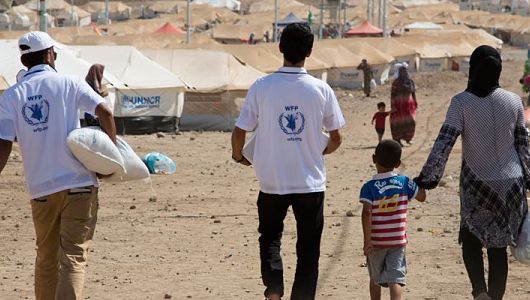
The United States Agency for International Development (USAID) is giving $65 million dollars to the United Nations World Food Program (WFP) to achieve their goal of providing food assistance to 4 million starving people inside the country and 1.6 million more in the neighboring countries of Jordan, Lebanon, Turkey and Egypt.

In Syria, the WFP has been running dangerously low on funding but the money infusion from USAID will keep the WFP afloat and operating through November preventing what could have been a complete shutdown.

The U.S. being the biggest donor to the Syrian crisis has contributed more than $4 billion dollars overall, allowing millions of needy families within Syria and those affected outside access to food and clean water.

According to USAID, the U.S. has now given more than $1.2 billion to the WFP for its Syrian operations – including more than $530 million for operations inside Syria and more than $693 million for operations benefiting Syrian refugees.

Although USAID has donated billions to the WPF, the international community has for the most part dropped the ball, forcing the WFP to devalue their food vouchers by half to refugees and lowered the amount of food in monthly household parcels inside Syria. USAID and the WFP continues to reach out to other governments hoping to rally more support and pressure them to take more actions.

In a press release by USAID on Friday, July 31, 2015, Dina Esposito, Director of USAID’s Office of Food for Peace said, “we have heard tragic stories of hungry refugees returning to war-torn Syria and taking children out of school to beg.” He continued, “We hope this new funding will help mitigate such difficult choices and help Syrians as the winter months approach.”

In war torn Syria, families are fleeing what were once their homes, desperately seeking safety. Starving and suffering from illness, people are getting life-saving food, water and medical care, thanks to the WFP and the disaster averting financial rescue from USAID.

– Jason Zimmerman

Sources: USAID, Reuters
Photo: Huffington Post

August 22, 2015
https://borgenproject.org/wp-content/uploads/borgen-project-logo.svg 0 0 Borgen Project https://borgenproject.org/wp-content/uploads/borgen-project-logo.svg Borgen Project2015-08-22 01:30:072020-07-02 10:27:41World Food Program Increases Food Assistance to Syrians
Development, Global Poverty, Humanitarian Aid

The Nepal Recovery Act

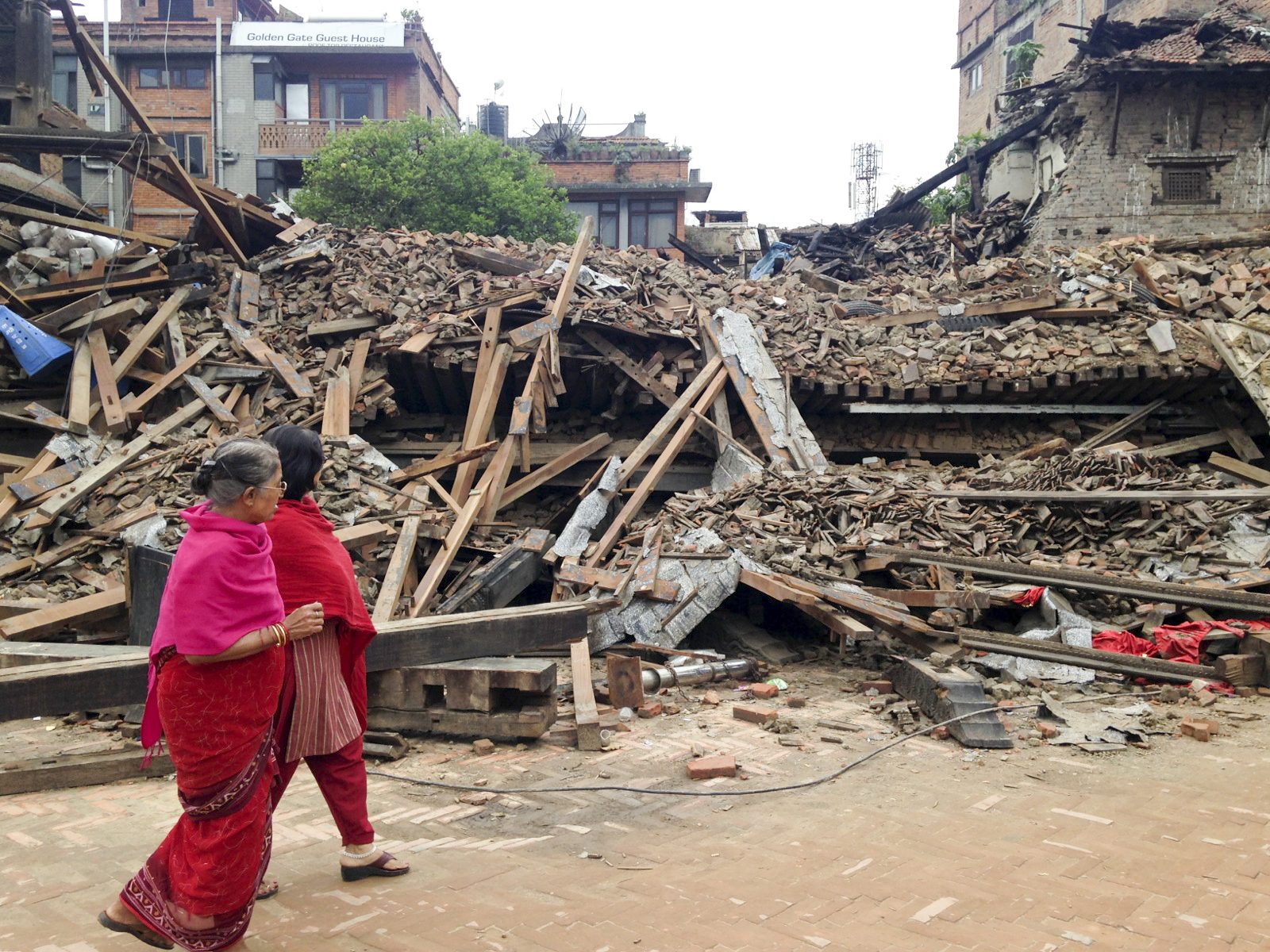
Nepal RecoveryOn July 29, Senator Cardin (D-MD), a Ranking Member of the Senate Foreign Relations Committee, and Senator Kirk (R-IL) introduced the Nepal Recovery Act in the Senate. This act would provide humanitarian assistance to the Nepalese people, given that there were two earthquakes that killed 8,700 people in April and May.
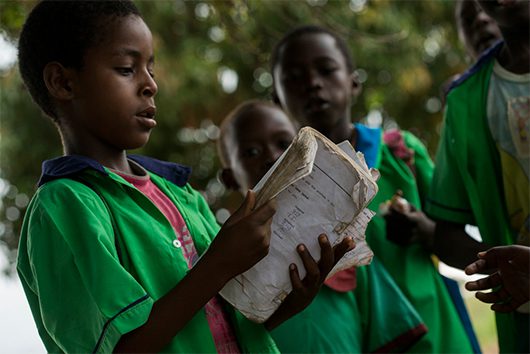
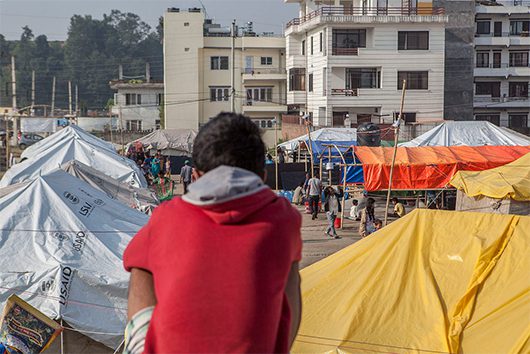
The Nepal Recovery Act approves funding for over three years to help Nepal rebuild infrastructure, like schools and hospitals. Over 47,000 classrooms and 1,000 health facilities were destroyed around Kathmandu after the earthquake. This act would help Nepal rebuild and gain back infrastructure, schools, and health clinics that were destroyed.

Additionally, the legislation aims to help the Nepalese economy. Nepal has a GDP of about 19 billion and a population of 27.8 million, making Nepal one of the poorer countries in the world. Additionally, the earthquake has caused one million people to fall below the poverty line. The Nepal Recovery Act takes measures to stimulate the economy, so the Nepalese people can move on from this tragedy.

The legislation includes debt relief and promotes donor transparency in the reconstruction effort. The bill allows the Administration to tap the private sector to support Nepal.

The bill would also designate resources to prevent the trafficking of children following the earthquake. Nepal already has a human trafficking problem, but the earthquake has exacerbated the problem. The bill aims to protect children and stop traffickers from taking advantage of the crisis situation.

Currently, this bill has been referred to the Senate Foreign Relations Committee. It is clear that Nepal needs substantial humanitarian aid following the earthquakes earlier this year. This bill considers improving infrastructure, improving the economy, and preventing trafficking in Nepal. Since this bill would provide aid for over three years, Nepal could have sufficient time to rebuild. After the Nepalese people recover from this earthquake, the country can more easily and rapidly combat poverty.

– Ella Cady

Sources: Senate 1, Senate 2, Huffington Post, India Times
Photo: Flickr

August 15, 2015
https://borgenproject.org/wp-content/uploads/borgen-project-logo.svg 0 0 Borgen Project https://borgenproject.org/wp-content/uploads/borgen-project-logo.svg Borgen Project2015-08-15 01:30:442020-07-02 13:13:58The Nepal Recovery Act
Children, Education, Global Poverty, Humanitarian Aid

Educating Children in War and Disaster Zones

Education
School. An aspect of our lives that is usually a source of unwanted stress; more often a place we begrudgingly go, crankily absorbed in our own tired eyes and mandatory Monday mornings.

But what we have come to expect as a place of permanence doesn’t exist for others around the world. Instead of bemoaning the undoubtedly hard work receiving an education entails, we should be cherishing it for what it is: an opportunity many do not receive.

This year, more than 37 million children and adolescents live in circumstances surrounding emergency and conflict which have forced them out of their schools. Children are finding themselves in the middle of warzones or natural disasters, which disrupts any hopes of receiving a sound education. According to the organization which advocates for primary school children, Dubai Cares, attacks on education are the highest they have been in the past 40 years and the greatest since the height of the second world war.

The ongoing education crisis was a topic of discussion at the Oslo Summit on Education for Development which convened in July of this year, where it was agreed upon that efforts in investment and attention towards children in these circumstances are inefficient. In fact, in 2014, only one percent of overall humanitarian aid and two percent of humanitarian appeals went towards educating children.

In a Huffington Post article written by Dubai Cares, Chief Executive Officer Tariq Al Gurg said “With the average length of displacement for refugees now approaching 20 years — and over 70 percent of those children out of school — we know that these emergencies are no longer brief blips in the life of a child. Thus, we need a new platform and funding model that enables an immediate and sustained response.”

Currently, Dubai Cares’ program reaches 14 million children across 39 developing countries and recognizes a tremendous public support system, with over eight million individuals endorsing the #UpForSchool campaign, a petition supporting the belief that every child should have access to an education. Dubai Cares will continue to endorse efforts which help the humanitarian aid at the upcoming United Nations General Assembly Week in September 2015.

However, there is good news for some of the most under-funded areas in the world currently experiencing emergencies and disasters. The United Nations has allocated $70 million in funds for aid to places like Sudan, Chad, Ethiopia, Eritrea, Somalia, Myanmar and Bangladesh.

– Nikki Schaffer

Sources: Dubai Cares, A World at School, Huffington Post, Brookings
Photo: Flickr

August 15, 2015
https://borgenproject.org/wp-content/uploads/borgen-project-logo.svg 0 0 Borgen Project https://borgenproject.org/wp-content/uploads/borgen-project-logo.svg Borgen Project2015-08-15 01:30:272024-12-13 18:04:44Educating Children in War and Disaster Zones
Aid, Humanitarian Aid, USAID

USAID’s Camp Hope Provides Relief in Nepal

Camp_Hope
Camp Hope is giving survivors of the Nepal earthquake a beacon of light and symbol of recovery. A single square kilometer compound in Jorpati, Kathmandu, Camp Hope is composed of innumerable tents that house 330 families who once lived in five villages north of Kathmandu. Eighty-eight percent of these families had no houses to return to after the earthquake—they were utterly destroyed. This tight community is representative of the broader 500,000 Nepalese who were displaced after the earthquake last April, which shook hilly terrain that once served as housing foundations into rubble.

However, Camp Hope is permeated with a sense of, well, hope. Children laugh in the open spaces between their temporary houses, people relax in the line for the water pump, the elderly bask in the sun amid clucking chickens. Set up by the owner of the boutique hotel chain, Dwarika, the camp is full of people of all ages strengthening a community that will one day serve as a launchpad for rebuilding and recovery. Sangeeta Shrestha, founder of the camp, describes how she came to acquire the land for the camp when a local youth club donated their soccer field.

“I am lucky to have my hotel team of engineers and technicians whom I could call on to help set up the camp,” she said. The resources offered by the hotel have certainly come a long way in making the camp what it is. A kitchen tent run by the Dwarika offers residents three meals a day that often include chicken and eggs. Beyond basic medical services, housing and meals, the camp also offers its residents emotional solace. There are prayer tents, job training facilities and field trips for the 83 children enrolled in the local school.

Beyond being an awe-inspiring emblem of growth after disaster, Camp Hope also serves as a prime example of the benefits that come when public and private partnerships cooperate to further a cause. USAID stepped in to provide heavy plastic shelters that would sustain heavy rains during monsoon season. Additionally, the organization provided shelter to 310,000 families across affected regions.

There’s clearly more to be done, both within Camp Hope and beyond its walls. At the recent International Conference on Nepal’s Reconstruction, USAID pledged emergency relief and early recovery assistance totaling $130 million, with promises of more funding in the coming years. The U.S. government has also committed to helping rebuild Nepal through a number of programs, including:

  • Training Nepalis to build earthquake-sustainable houses;
  • Establishing approximately 1,000 Temporary Learning Centers for displaced children;
  • Distributing cash to the most at-risk families to help them immediately begin to reestablish their lives and strengthen the country’s agricultural system, which supports 75% of its population;
  • Protecting those who are vulnerable to human trafficking and other breaching of human rights; and
  • Planning and organizing groups that can efficiently tackle future natural disasters.

Despite the immense amount of work that lies ahead, the work of USAID in partnership with local groups such as Dwarika demonstrate how shared work between the private and public sectors can bring international resources to help build sustainable growth in at-risk communities. These efforts, like Camp Hope, are a source of inspiration for all.

– Jenny Wheeler

Sources: USAID, Dwarikas
Photo: Flickr

August 11, 2015
https://borgenproject.org/wp-content/uploads/borgen-project-logo.svg 0 0 Borgen Project https://borgenproject.org/wp-content/uploads/borgen-project-logo.svg Borgen Project2015-08-11 08:41:542020-03-20 13:26:49USAID’s Camp Hope Provides Relief in Nepal
Global Poverty, Humanitarian Aid

Flooding in Pakistan Highlights Need for Stronger Relief

flooding_in_pakistan
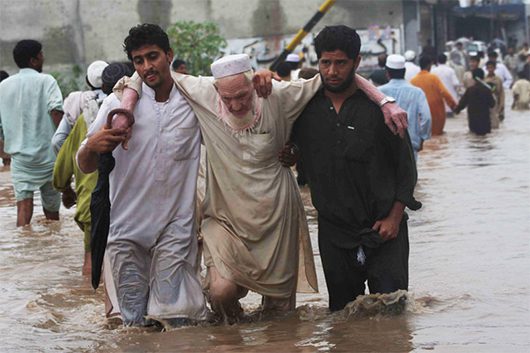
Flooding in Pakistan for the fourth consecutive year has put the spotlight on fledgling programs meant to improve infrastructure and humanitarian aid policies. A combination of monsoon rains and melted glacier water convened, causing rivers to overflow into towns, bringing massive destruction in Punjab, Sindh, Khyber Pakhtunkhwa provinces as well as Baluchistan and Giljit Baltistan. In the Chitral district, water washed away more than 28 villages, leaving the area completely inaccessible by car and depleted of food, drinking water and communication technology.

More than 500,000 people have been affected and experts report the accelerated spread of disease in affected areas. This is the fourth consecutive year that the country has seen such conditions; in 2010, 20% of the country was underwater and 20 million people were displaced. Though this year’s floodwaters do not pose such grave dangers, Pakistani activists and politicians have been calling for political reform and funding to help lessen the impact of seemingly inevitable annual flooding.

In 2013, the Pakistani government adapted the National Disaster Risk Reduction (DRR) policy, which increased funding for disaster management to $1.6 million. The DRR policy plans to strengthen institutions that will work solely to tackle challenges posed by natural disasters and better prepare the country for such occurrences. The policy plans on passing new laws, including those related to fire safety, industrial hazards, construction, land use and building codes. It plans on expanding its Emergency Rescue Service, reviving civilian humanitarian organizations, and partnering with NGOs and local organizations to support disaster-prone areas of the country. The policy will also help pass on information to communities on more resilient innovations in home construction techniques, water and sanitation systems and alternative sources of electricity.

However, critics say the government isn’t working fast enough. The country’s water management system, for example, will continue to be overwhelmed by extreme amounts of water until the system is completely overhauled. A more proactive stance, critics say, that prevents the effects of flooding before they occur, is crucial. Rolling out programs such as the National Disaster Risk Reduction policy will help build stronger, better-informed communities that will cooperate with local organizations to improve technology and design. Doing so will create more sustainable regions that can both use their resources more efficiently and withstand the threat of natural disasters, a seemingly inevitable fact of life these days.

– Jenna Wheeler

Sources: Irin News, Prevention Web
Photo: Flickr

August 10, 2015
https://borgenproject.org/wp-content/uploads/borgen-project-logo.svg 0 0 Borgen Project https://borgenproject.org/wp-content/uploads/borgen-project-logo.svg Borgen Project2015-08-10 10:01:132020-03-20 13:31:29Flooding in Pakistan Highlights Need for Stronger Relief
Global Poverty, Humanitarian Aid, United Nations

Counting the Uncountable – Displaced Individuals

Displaced Individuals
One of the biggest issues humanitarian agencies face today involves counting the number of displaced individuals in stateless populations globally. Stateless people, or those who are not recognized as nationals of any country, are often denied human rights and services, are forced to live out of the way of modern society and are undocumented and unseen by political officials. They often have limited access to employment opportunities, healthcare, education and protection. Clearly, these groups of people are in critical need of aid, but because many organizations have no idea of the sheer number of those in need, they have limited access to it.

There are many causes of statelessness. Lack of birth registration, changing national boundaries or discriminatory policies are some sources. For example, Myanmar refuses to recognize its more than 1.3 million Rohingya people, who face violent backlash, homelessness and disease. In Zimbabwe, people born to foreign parents became stateless as a result of the country’s 2001 Citizenship Act. The UN estimates there are 700,000 undocumented people in the Ivory Coast alone. Further, many stateless people are hesitant to identify themselves as such because it leads to further exclusion: they fear the stigma, and further danger, it will attract.

Last year, the UN launched a campaign aiming to end the invisibility of stateless people by 2024. It has developed a plan working to improve qualitative and quantitative measures in countries all around the world to improve the recognition of these people and increase their access to necessary aid. Presently, the UN has only counted 3.5 million such people from 77 countries, but it estimates that there are at least 10 million stateless people on Earth.

There are significant challenges facing these “counters,” however. For one, organizations such as the UN can not rely on national governments to help them number their stateless populations. Because many countries refuse to recognize these populations due to their own policies or border changes, getting proper numbers would require going door to door surveying individual households. The UN plans on focusing on countries that have recently experienced changes in boundary lines, such as South Sudan or former USSR countries. There are also many people who are not explicitly stateless — they claim nationality in a certain country — but who cannot return to that country due to conflict, and thus cannot seek refuge from other countries or aid organizations because stateless aid does not apply to them. There is much to be done beyond simply recognizing the problem that is undocumented populations.

However, efforts to put a number on undocumented people around the world will encourage aid organizations to provide these people with the help they so desperately need. Organizations will be able to design better policies and programs to help a broader number of stateless people. Though counting uncountable people comes with numerous challenges, it is an effort that will bring about numerous changes and rewards.

– Jenny Wheeler

Sources: IRIN News, UNHCR
Photo: Flickr

August 8, 2015
https://borgenproject.org/wp-content/uploads/borgen-project-logo.svg 0 0 Borgen Project https://borgenproject.org/wp-content/uploads/borgen-project-logo.svg Borgen Project2015-08-08 01:30:152024-12-13 18:04:42Counting the Uncountable – Displaced Individuals
Aid, Humanitarian Aid, Technology

Wireless and Emergency Communications Tech in Disaster Relief

Wireless and Emergency Communications Tech in Disaster Relief
When disaster strikes, as it did in April 2015 in Nepal, there is an immediate need for life-saving aid; the distribution of food, water and shelter becomes paramount to relief efforts. However, in the 21st century, technology is becoming an increasingly necessary facet of day-to-day functionality. As the world’s rural regions develop and technology becomes cheaper and more efficient, the more people rely on that technology to function. Today, even in the world’s most remote and impoverished regions, things like Internet access and mobile phone service are just as important to survival and well-being.

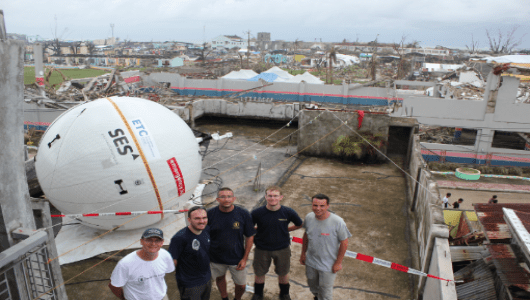
In addition to providing life-sustaining resources, aid workers are now being called upon to provide things like Wi-Fi access and cellular support. The leading provider of emergency communications is the United Nation’s Information and Communication Technologies Task Force (ICT). Within 48 hours of a disaster, ICT deploys its Emergency Telecommunications Cluster, or ETC.

The ETC is a series of connected balloons that act like cell phone towers and routers that can be set up to provide wireless Internet and cellular service in disaster zones. These services enable survivors to contact family or other outside assistance, find routes out of the disaster zone, or transfer vital funds. Those providing assistance benefit from these services as well, for they can receive vital information from the survivors themselves on the exact situation on the ground.

Today’s digital world makes it nearly impossible to do any work without staying connected. By repairing or installing communication networks, aid workers help themselves as much as they help survivors. With Wi-Fi and cell service, workers can more effectively communicate and coordinate their efforts, and thus deliver crucial assistance quicker.

Wi-Fi is not the only advanced technology being utilized in disaster relief. Drones have recently been implemented to aid humanitarian missions. Drones can access remote areas quickly and survey locations with cameras, which would otherwise be dangerously inaccessible. In fact, the ongoing relief efforts in Nepal have seen the largest deployment of drones in the history of disaster relief. The devices are currently being used to survey the damage, search for signs of survivors, and help relief organizers further coordinate their efforts. Drones, when used in a humanitarian capacity, have the potential to produce a significant impact. Perhaps in the not-so-distant future, autonomous drones will be able to drop food, medicine and water far more quickly than actual aid workers.

– Joe Kitaj

Sources: ICT, ATISW, Direct Relief
Photo: ICT

August 2, 2015
https://borgenproject.org/wp-content/uploads/borgen-project-logo.svg 0 0 Borgen Project https://borgenproject.org/wp-content/uploads/borgen-project-logo.svg Borgen Project2015-08-02 07:41:492020-07-06 07:01:44Wireless and Emergency Communications Tech in Disaster Relief
Page 33 of 35«‹3132333435›»

Get Smarter

  • Global Poverty 101
  • Global Poverty… The Good News
  • Global Poverty & U.S. Jobs
  • Global Poverty and National Security
  • Innovative Solutions to Poverty
  • Global Poverty & Aid FAQ’s
Search Search

Take Action

  • Call Congress
  • Email Congress
  • Donate
  • 30 Ways to Help
  • Volunteer Ops
  • Internships
  • Courses & Certificates
  • The Podcast
Borgen Project

“The Borgen Project is an incredible nonprofit organization that is addressing poverty and hunger and working towards ending them.”

-The Huffington Post

Inside The Borgen Project

  • Contact
  • About
  • Financials
  • President
  • Board of Directors
  • Board of Advisors

International Links

  • UK Email Parliament
  • UK Donate
  • Canada Email Parliament

Get Smarter

  • Global Poverty 101
  • Global Poverty… The Good News
  • Global Poverty & U.S. Jobs
  • Global Poverty and National Security
  • Innovative Solutions to Poverty
  • Global Poverty & Aid FAQ’s

Ways to Help

  • Call Congress
  • Email Congress
  • Donate
  • 30 Ways to Help
  • Volunteer Ops
  • Internships
  • Courses & Certificates
  • The Podcast
Scroll to top Scroll to top Scroll to top