• Link to X
  • Link to Facebook
  • Link to Instagram
  • Link to TikTok
  • Link to Youtube
  • About
    • About Us
      • President
      • Board of Directors
      • Board of Advisors
      • Financials
      • Our Methodology
      • Success Tracker
      • Contact
  • Act Now
    • 30 Ways to Help
      • Email Congress
      • Call Congress
      • Volunteer
      • Courses & Certificates
      • Be a Donor
    • Internships
      • In-Office Internships
      • Remote Internships
    • Legislation
      • Politics 101
  • The Blog
  • The Podcast
  • Magazine
  • Donate
  • Click to open the search input field Click to open the search input field Search
  • Menu Menu

Archive for category: Humanitarian Aid

Global Poverty, Humanitarian Aid

The Success of Humanitarian Aid to Georgia


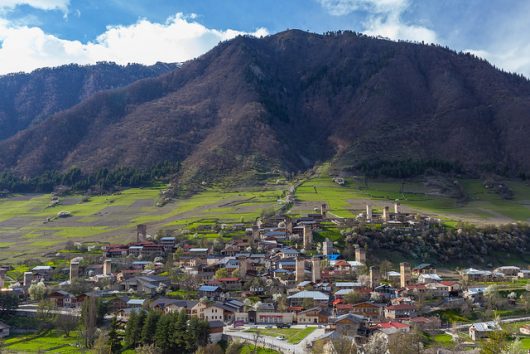
The country of Georgia is conveniently tucked between the Black Sea and the Caucasus mountain range separating Europe and Asia. For centuries, Georgia’s strategic location has made it a focal point for competition among the Kingdom of Persia, the Ottoman Empire and the Russian Empire and then again by their modern counterparts. In the 18th century Georgia fell under the control of the Russian Empire and then fell again to the Soviet Union. Modern-day Georgia gained its independence in 1991 after the fall of the Soviet Union.

After the fall of the Soviet Union, conflict broke out due to the instability in Georgia. In 1992, a civil war began and Russia sent peacekeepers to the Abkhazia region of Georgia; it has kept a presence there to this day. Following tensions in 2008, the five-day Russo-Georgian war was waged between Georgian rebels, Georgia and Russia. The end resulted in Russia occupying both territories, which are internationally recognized as Georgian territory.

After the end of the war, many western nations reached out to provide humanitarian aid to Georgia. At the time, U.S. President George W. Bush saw an opportunity to both provide humanitarian aid to Georgia and seek a new ally in the region. The U.S. assisted over 275,000 internally displaced persons and refugees from the war, most notably in the city of Gori, where 56,000 people had fled to from South Ossetia.

Over the next several months, international aid organizations and the United Nations also helped to aid internally displaced people, whether through medical aid or through family reunification programs. Due to the humanitarian aid provided by the international community, Georgia was able to mitigate the disastrous damage to its economy.

Perhaps one of the most important things saved in Georgia was its democracy. Almost unique among ex-soviet states, Georgia has been able to sustain a democracy with peaceful government transitions of power between government leaders and political parties.

This stable government has allowed Georgia to fight corruption and slowly grow its economy. Although it has yet to return to its pre-war level and unemployment remains high, the government has signed a trade agreement with the European Union and seeks to negotiate a trade deal with China. Georgia is seeking other international agreements to bolster its economy and its security. Georgia is seeking membership to both the European Union and NATO.

The success of humanitarian aid to Georgia may seem more dramatic than in other countries, but it is a prime example of how aid, over time, can improve the stability of a country.

– Nick DeMarco

Photo: Flickr

December 10, 2017
https://borgenproject.org/wp-content/uploads/borgen-project-logo.svg 0 0 Borgen Project https://borgenproject.org/wp-content/uploads/borgen-project-logo.svg Borgen Project2017-12-10 18:30:382024-05-29 22:29:45The Success of Humanitarian Aid to Georgia
Global Poverty, Humanitarian Aid

The Success of Humanitarian Aid to Haiti

The Success of Humanitarian Aid to Haiti
Since the 2010 earthquake, there has been an increased focus on humanitarian aid to Haiti. Many argue that not enough has been done when it comes to providing humanitarian aid to the country.

In an Op-Ed written for The Guardian, Unni Karunakara, the former International President of Médecins Sans Frontières, stated that there was an inadequate response to the cholera outbreak that struck Haiti following the earthquake. At the time he wrote the article, his colleagues had already treated over 75,000 cases of cholera.

In another article for the Huffington Post, Cynthia Kao wrote that Haiti is one of the poorest countries in the world and that a lack of partnership by international organizations has led to the unaccounted use of aid money.

Some organizations, such as USAID, have been striving to make a positive impact and address the persisting challenges of providing humanitarian aid to Haiti. In 2017, St. Boniface Hospital in Haiti was able to build an additional surgical ward through a grant provided by USAID’s Office of American Hospitals. The new surgical ward was put to immediate use, saving many lives in the process.

USAID also served as one of the primary relief organizations in the aftermath of the 2010 earthquake. The organization provided emergency food assistance, emergency shelter, search and rescue, rubble removal, classroom construction and assistance with the cholera outbreak, among other things. USAID has also made efforts in combating corruption within the public sector along with improving the transparency of financial management.

After the disastrous effects of Hurricane Matthew in October 2016, USAID deployed a Disaster Assistance Response Team to Haiti to lead the United States’ response efforts. USAID’s humanitarian aid to Haiti following Hurricane Matthew included shelter assistance, food assistance, healthcare and sanitation. It also provided a joint task force for the movement of emergency relief supplies and humanitarian personnel, with a total of 98 flights delivering aid to 13 hard-to-reach communities.

Key advancements have been made in health services, agriculture, municipal governance and legal protections for vulnerable populations. Within the agriculture sector, positive results include improved seeds, provision of fertilizer, innovative farming technologies and $12 million private sector funds that were allocated to creating more than 13,000 jobs.

Despite the problems in ensuring adequate humanitarian aid in Haiti over the past few years, organizations like USAID seem to be making strong efforts in helping the country. While challenges remain, the ongoing improvements and positive impacts will continue to make a difference in Haiti.

– Blake Chambers

Photo: Flickr

December 10, 2017
https://borgenproject.org/wp-content/uploads/borgen-project-logo.svg 0 0 Borgen Project https://borgenproject.org/wp-content/uploads/borgen-project-logo.svg Borgen Project2017-12-10 13:14:302024-05-29 22:29:47The Success of Humanitarian Aid to Haiti
Global Poverty, Humanitarian Aid

USAID Leads the Success of Humanitarian Aid to Ghana

Humanitarian Aid to GhanaThe need for proper nutrition and health professionals has driven the success of humanitarian aid to Ghana. Within ten years, Ghana witnessed a decrease in its poverty rate from 52 percent to 28 percent in 2016.

Nutrition

As of 2016, 1.2 million Ghanaians still experienced food insecurity and chronic undernutrition. Furthermore, there is a high prevalence of stunting, recording 37 percent of children in the Northern Province alone. There are also many reported cases of wasting, particularly in the Upper West area of Ghana.

To combat these issues, Ghana joined the national Scaling Up Nutrition (SUN) Movement in 2011 to improve nutrition among its population. With USAID’s support and donations, Ghanaians focused on improving the country’s nutritional funding and the way in which rations are measured and prioritized.

Furthermore, USAID’s Feed the Future targets the northern, impoverished regions of the country. It hopes to make the food value chains affordable, strengthen vulnerable communities and improve the nutritional state of women and children.

In 2014, USAID applied three Feed the Future chain projects to lead the success of humanitarian aid to Ghana:

  1. The Systems for Health project reduces the levels of stunting, wasting and anemia in women and children in five of Ghana’s more vulnerable sectors.
  2. The Resiliency in Northern Ghana (RING) project targets poverty and malnutrition in vulnerable households.
  3. The Strengthening Partnerships, Results and Innovations in Nutrition Globally (SPRING) project is concerned with alleviating stunting and anemia in children under five.

Data between 2008 and 2011 indicates progress among all Ghanaian children under the age of five. The total prevalence of stunting decreased from 28 percent to 23 percent, while wasting dropped a total of 3 percent. The occurrence of anemia among children dropped more significantly from 78 percent to 57 percent. With USAID’s new programs, these numbers are predicted to decline even more drastically.

Health Professionals

UNICEF fights to break the Ghanaian norm for mothers to give birth at home, without a health professional. According to a study done in 2012, only 57 percent of births were attended by a midwife or health clinic professional.

A Ghanaian birth attendant named Kasua Musah works alongside UNICEF and the Ghana Health Service to break tradition and advocate for in-clinic deliveries.

Together, they utilize the community radio, along with street theatre and home visits to promote safe birth. The combination of these methods reached out to around 360 communities, including four of the more destitute regions.

As a result, they altered tradition within the Central Region and increased the number of patients in the maternity ward sector of the region’s largest hospital. Even further, the radio empowered those who had negative experiences with the clinic staff, enforcing improvement and new training methods.

Further training was provided for midwives, ensuring the betterment of at-home births. Overall, Ghana improved the patient-to-nurse relationship.

Lowering the child and female mortality rates through improved birthing processes, but also through augmenting nutritional programs, is what propelled the success of humanitarian aid to Ghana.

– Brianna White

Photo: Flickr

December 10, 2017
https://borgenproject.org/wp-content/uploads/borgen-project-logo.svg 0 0 Borgen Project https://borgenproject.org/wp-content/uploads/borgen-project-logo.svg Borgen Project2017-12-10 01:30:232024-06-07 05:07:51USAID Leads the Success of Humanitarian Aid to Ghana
Aid, Global Poverty, Humanitarian Aid

The Success of Humanitarian Aid to Eritrea

The Success of Humanitarian Aid to EritreaHumanitarian aid to Eritrea has been a hot topic in international relations and human rights networks for nearly as long as the country’s existence. Following independence from Ethiopia in 1991, President Isaias Afwerki, the founder of Eritrea’s only political party, the People’s Front for Democracy and Justice, commenced a policy of radical self-sufficiency (i.e. little acceptance of foreign aid).

The idea behind his policy of non-acceptance is hinged on the accusation that foreign aid is inherently corrupt and intended to subjugate its recipients. Although this presumption may not be totally false, it is at the very least ironic given that the country’s government is one of the most oppressive and corrupt regimes in modern history.

In its current state, Eritrea is facing a serious threat to national security and well-being with the U.N. estimating that 5,000 Eritreans are fleeing the country each month. Considering these estimates, President Afwerki would do well to question whether or not his policy of non-acceptance is even sustainable.

The reason behind this mass migration has much to do with a fledgling agricultural sector, the product of an idealized self-reliance. Since nearly all humanitarian aid to Eritrea has been refused by the country’s leading officials, the state has experienced an overall rise in poverty and an intense degradation of trust between civil society and government.

The result has led to multiple citations by the U.N. for human rights abuses and fueled continuous civil strife and dissent within the country, causing many foreign watch-dogs to wonder how long it will be before Eritrea is once again embroiled in war. International accusations of negligence against the Eritrean government, however, has prompted some reassessment by Afwerki and led to his acceptance of an allotted 200 million euros from the European Development Fund over the course of four years (2016-2020).

The aid has been slotted to go toward the development of the energy sector with a focus on the improvement of agricultural infrastructure. Additionally, E.U. aid is conditioned upon the implementation of certain recommendations by the U.N. which aim to reduce the occurrence of government perpetrated human rights abuses.

Though the aid that is accepted by Afwerki is small, the impacts are already noticeable. One such example is an E.U. funded project that has distributed solar energy to rural regions of Eritrea. The success of humanitarian aid to Eritrea offers hope that the country might still have the ability to pull itself out of impoverishment.

– Katarina Schrag

Photo: Flickr

December 10, 2017
https://borgenproject.org/wp-content/uploads/borgen-project-logo.svg 0 0 Borgen Project https://borgenproject.org/wp-content/uploads/borgen-project-logo.svg Borgen Project2017-12-10 01:08:232019-11-15 05:52:32The Success of Humanitarian Aid to Eritrea
Aid, Global Poverty, Humanitarian Aid

Humanitarian Aid to Ukraine Will Help Millions of Citizens

Humanitarian Aid to Ukraine Addresses HungerDespite gaining independence after the collapse of the Soviet Union in 1991, Ukraine is currently enduring serious challenges. War and corruption have left nearly 1.5 million people without food or water, and an estimated four million people are in need of humanitarian assistance as of August 2017. This figure includes approximately three million people who were affected by the water supply system disruptions and an increase in internally displaced persons (IDPs) throughout the country.

The suffering is due to the separatist movement in Ukraine’s south and east regions after a reversal in government that has led to protests, violence and over 6,500 lives lost. Millions of citizens have been forced from their homes, creating a food crisis. However, efforts to increase humanitarian aid to Ukraine have been implemented over the past few years. The U.S. government has provided more than $27 million in assistance to meet the health, food, shelter, water, sanitation, hygiene and protection needs in the conflict-affected areas of the Ukraine during 2017 alone.

In response to Ukraine’s political transition and its effects, USAID’s Ukraine Confidence Building Initiative program was formed in 2014. The Confidence Building Initiative (UCBI) complements ongoing USAID efforts to create a prosperous and stable Ukraine. UCBI assistance will come in the form of small in-kind grants, such as goods, services and technical support, to a range of partners, including national and local civilian government entities, civil society organizations and community leaders.

By providing quick, short-term assistance to Ukrainian partners who are in support of a peaceful democratic transition, UCBI seeks to reduce social tensions and increase available information on the conflict and its impact. According to ReliefWeb, USAID has implemented 70 activities in Ukraine and provided approximately 100,000 IDPs with economic opportunities and other important resettlement services.

By rebuilding confidence and stability in vulnerable communities in the eastern European nation, the goal of humanitarian aid to Ukraine is to create an integrated, educated and unified nation.

– Kailey Brennan

Photo: Flickr

December 7, 2017
https://borgenproject.org/wp-content/uploads/borgen-project-logo.svg 0 0 Borgen Project https://borgenproject.org/wp-content/uploads/borgen-project-logo.svg Borgen Project2017-12-07 11:58:292024-05-29 22:29:38Humanitarian Aid to Ukraine Will Help Millions of Citizens
Global Poverty, Humanitarian Aid

The Success of Humanitarian Aid to Swaziland

Humanitarian Aid to SwazilandSwaziland currently suffers from food insecurity, inaccessibility to hygienic water and from an abundance of orphans. Many organizations are working with the government to bring the success of humanitarian aid to Swaziland.

Agriculture

There is a high dependence on agricultural farming, with 77 percent of Swazis relying on it, to bring food and income to their families. As a response to droughts, among other things, there has been a decline in agricultural performance, leading to a reduction in income and a spike in the price of food. The Annual Vulnerability Analysis Assessment of 2017 recorded around 159,000 Swazis experiencing food insecurity.

The World Food Programme (WFP) responded by initiating the Food by Prescription project, providing 11,000 malnourished people with a monthly balanced diet. The project also includes monthly household rations for families. WFP is also addressing long-term nutrition solutions by working with the Swaziland government to monitor food insecurity, integrate nutrition awareness and include underrepresented minorities into the analysis.

Since 2013, the Scaling Up Nutrition (SUN) Movement also contributes to the success of humanitarian aid to Swaziland. The movement implements a number of programs like the Integrated Management of Acute Malnutrition which aims to improve nutrition on a national level.

The Government of Swaziland has taken the issue into their own hands by creating the Swaziland National Nutrition Council (SNNC) and teaming up with the Food Security and Nutrition Forum, Child Health and Nutrition Forum, Micronutrient Alliance and the Water and Sanitation and Hygiene (WASH) Forum.

Water

While drought hinders agriculture, it also limits the availability of clean drinking water. UNICEF aided with Swaziland’s implementation of the WASH in Schools (WinS) program, which is a piece of the Child Friendly School framework that aims to achieve quality education throughout Swaziland.

Through hygiene training and through the improvement of hygienic resources, 95 percent of the 757 targeted schools gained access to sanitation facilities by 2010. Although there is more room for improvement, 64 percent of these schools progressed in the overall access to quality water.

Children

Swaziland has a significant number of orphans, due to a high rate of parental deaths and other families’ inability to take in more mouths to feed. A 2010 study recorded around 10-15 percent of Swazi head of households being children, rather than parents. Swaziland has created social service centers called Kagogo centers to aid children in need, in response to the limited number of orphanages.

WFP stepped in, providing 52,000 orphans with monthly meals through other daycare type centers within neighborhoods. The project also implements access to basic education, psychosocial support and health services. Additionally, Swaziland made all primary schools free for students in 2011, which led to orphans gaining access to education, school meals and quality water and sanitation.

Through WASH and nutritional means, one can witness the success of humanitarian aid to Swaziland.

–Brianna White

Photo: Flickr

December 6, 2017
https://borgenproject.org/wp-content/uploads/borgen-project-logo.svg 0 0 Borgen Project https://borgenproject.org/wp-content/uploads/borgen-project-logo.svg Borgen Project2017-12-06 07:30:342024-05-29 22:29:33The Success of Humanitarian Aid to Swaziland
Global Poverty, Humanitarian Aid

On the Success of Humanitarian Aid to Mexico

Humanitarian Aid to MexicoMexico is a country that has been ravaged by poverty for centuries. About 44 million of its total population live in poverty, while 14 million Mexicans live in extreme poverty on less than $1.90 a day.

Despite the rampant destitution, there have been several noteworthy efforts that highlight the success of humanitarian aid to Mexico. One example is CHOICE Humanitarian. This organization has worked in Mexico for over twenty years, partnering with countless rural villages in Mexico. They have left an indelible mark on nine Mexican states, teaching vital skills such as cheese making, blacksmithing and livestock micro enterprises, among others. Other useful programs have been implemented as well, such as savings programs for women, healthcare training and constructing classrooms.

One of the goals of CHOICE Humanitarian is to establish self-sustaining projects that allow villages to thrive on their own. This typically takes about three to five years, but Mexico has seen tremendous success in this particular humanitarian endeavor. It is a shining example of humanitarian aid to Mexico.

That being said, there is still much work to be done. Thousands of villages in Mexico are still in dire need of help and have not reached this level of sustainability and economic independence.

The earthquakes that devastated Mexico only a few months ago resulted in an influx of aid from the international community. No amount of aid could fully efface the tragedy of the event, but other nations such as Bolivia donated generously in the aftermath. The Bolivian government sent a cargo plane full of 11 tons of humanitarian aid. The aid consisted of sanitary equipment, non-perishable food and two thousand blankets. In addition, the Bolivian President Evo Morales tweeted his country’s solidarity with Mexico. Bolivia has continued to pledge more aid to Mexico, making the future of humanitarian aid to Mexico more promising.

In a country like Mexico, where poverty is rampant, the amount of aid it receives is vital for its future success. While the country has seen a string of tragedies as of late, mostly in the form of natural disasters, many countries have stepped up to help in its time of need. While humanitarian aid in Mexico is not without its merit, more work certainly needs to be done.

– Mohammad Hasan Javed

Photo: Flickr

December 6, 2017
https://borgenproject.org/wp-content/uploads/borgen-project-logo.svg 0 0 Borgen Project https://borgenproject.org/wp-content/uploads/borgen-project-logo.svg Borgen Project2017-12-06 07:30:262024-05-29 22:29:28On the Success of Humanitarian Aid to Mexico
Aid, Humanitarian Aid

Humanitarian Aid to Costa Rica Vital to Rural Areas

Humanitarian Aid to Costa RicaCosta Rica, a country located in Central America, has received aid from the United States due to recent natural disasters. This aid has been quite positive and has helped Costa Rica recover from hard times.

The most recent humanitarian aid to Costa Rica from the United States was a donation of $150,000 from the Office of Foreign Disaster Assistance to help with storm relief on October 12, 2017. Tropical Storm Nate caused destruction in its path through Costa Rica; 11 people were killed, thousands more were injured and 11,500 people had to use shelters. Costa Rica said that this money will be used to pay for helicopter flights to distribute food, transport and medical care to those in need. This is important since Costa Rica has many remote communities, which means air travel is required to provide the necessary personnel and materials.

This is the largest donation of humanitarian aid to Costa Rica since November 2016, when the United States Southern Command provided relief. The U.S. Southern Command is “responsible for providing contingency planning, operations and security cooperation in its assigned Area of Responsibility,” and one of these Areas of Responsibility is Costa Rica. This is the fifth time that the Southern Command has provided humanitarian aid to Costa Rica.

This project was named Operation Pura Vida, which translates to “simple life” and means a lot to the people of Costa Rica, since “pura vida” is a way of life for them. The Southern Command provided 16 doctors, nurses and dentists who work with 30 Costa Rican physicians to provide free medical care to the people of Telire. Telire is a remote community in the Talamanca mountain range, so helicopters are necessary to reach this area.

Costa Rica has faced some troubling times recently, but the United States has helped use its abundant resources to help those that need it most.

– Scott Kesselring

Photo: Flickr

December 5, 2017
https://borgenproject.org/wp-content/uploads/borgen-project-logo.svg 0 0 Borgen Project https://borgenproject.org/wp-content/uploads/borgen-project-logo.svg Borgen Project2017-12-05 19:39:282024-05-29 22:29:38Humanitarian Aid to Costa Rica Vital to Rural Areas
Global Poverty, Humanitarian Aid

Humanitarian Aid to Sierra Leone Helping Mothers and Children

Sierra LeoneSierra Leone has been trying to heal multiple wounds over the past few decades. The civil war from 1991-2002 left the nation with an especially deep cut. Many people fled their rural communities for growing urban areas; cities like Freetown quickly became overcrowded, leading to the appearance of slums almost overnight. According to the World Health Organization’s research, urban overpopulation, lack of sanitation and inadequate health services are key reasons as to why disease and death are so prominent in these locations. This holds especially true for mothers as well as for children under five. Humanitarian aid to Sierra Leone is vital in order to improve the lives of the country’s citizens.

Luckily, nongovernmental organizations like Concern Worldwide have implemented aid programs in Sierra Leone. From October 2011 to June 2017, Concern Worldwide implemented a USAID- and Irish Aid-funded Child Survival Project (CSP), also known as “Al Pikin fo Liv” (Life for Children). This program was designed to reduce maternal, infant and child deaths through the building of key foundations at 10 urban sites in the Freetown Western Urban Area District.

The main concern for completing the program was how to put into operation the national Community Health Worker Policy (CHWP). USAID and Concern Worldwide did this by working with individual health facilities to improve the quality of healthcare worker training, apply clinical protocols and providing on-the-job supervision and mentorship. Essentially, the CSP aimed to increase the number of healthcare workers per facility and improve the quality of care that is provided.

This might seem like it doesn’t have a solid correlation to solving maternal, infant, and child mortality. However, while it might be a simpler task to prevent death and offer treatment to an individual, it’s another matter to treat disease and prevent future deaths on a national level. The CSP and the implementation of the CHWP are strategies that are meant to carry on into the future.

It will take a number of years in order to determine the overall success of the humanitarian aid to Sierra Leone on maternal, infant and child health. But, in interviews completed after the program’s end date, many healthcare workers believed they were given the right training and resources in order to continue running efficient facilities and to improve care for patients. The community in general also felt more connected, because households were given increased knowledge about the importance of treatment and the health facilities were partnered with the Freetown City Council, Health Management Committees and Ward Development Committees at each project site.

This sense of unity and a more focused understanding of community-based health in urban settings is a powerful tool to have. It is important that humanitarian aid to Sierra Leone continues to be funded and implemented on the ground, in order to ensure an improved way of life and better futures for all citizens.

– Caysi Simpson

Photo: Flickr

December 5, 2017
https://borgenproject.org/wp-content/uploads/borgen-project-logo.svg 0 0 Borgen Project https://borgenproject.org/wp-content/uploads/borgen-project-logo.svg Borgen Project2017-12-05 17:20:472024-06-05 23:55:34Humanitarian Aid to Sierra Leone Helping Mothers and Children
Aid, Global Poverty, Humanitarian Aid

The Success of Humanitarian Aid to Nigeria

The Success of Humanitarian Aid to NigeriaIn September 2017, U.N. Aid Chief Mark Lowcock said, “that the Government and humanitarians had made important progress in delivering life-saving relief to millions of people in north-east Nigeria.” He made this statement after visiting the country for two days. He did insist on continued efforts from the international community to support humanitarian aid to Nigeria.

This statement shows that humanitarian aid to Nigeria has been making a meaningful impact on the country. The large African country is home to 186 million people and is a large oil producer, but many people do not benefit from the inherent wealth.

The area that the U.K. and other international groups are concerned with is the North East region. According to the Humanitarian Aid Relief Trust, “Nigeria is a country riven with inequality. 85 percent of the population survive on less than two dollars a day, and certain regions, especially the North East, are far behind the rest of the country in terms of development.” It is extremely important to have funds to support this region.

Because of the poverty and poor living conditions of a large majority of Nigeria’s population, international aid organizations have been sending funds to the country. The U.K. pledged $250 million to Nigeria in August and has been a long-term supporter of its former colony’s development. This pledge was made to help stabilize Nigeria as the country is dealing with the terrorist group, Boko Haram. The U.K. had already given over $100 million in 2017 when they made this new pledge. Britain is concerned about the potential famine that could affect around a million people. According to News24, “The new aid is meant to restore key infrastructure and services, improve health care and education and help farmers.”

In addition to the U.K., USAID has also been helping to address food insecurity in the Northeast. The organization gave 2.2 million people emergency food assistance in September. This has been done through cash transfers so that people can buy locally. The success of this type of humanitarian aid to Nigeria occurs at a much more local level.

USAID has also been funding efforts to help improve road access to the North East so that food and supplies can reach those in need. This effort has positively affected over four million Nigerians.

Because of efforts like these, the international community and the people of Nigeria, specifically those in the North East, are seeing improvements. Providing food and resources in order to maintain stability is a continued effort in Nigeria. These efforts will continue to provide support for Nigerians in need of aid and hopefully, humanitarian aid to Nigeria will continue to thrive.

– Emilia Beuger

Photo: Flickr

December 4, 2017
https://borgenproject.org/wp-content/uploads/borgen-project-logo.svg 0 0 Borgen Project https://borgenproject.org/wp-content/uploads/borgen-project-logo.svg Borgen Project2017-12-04 08:44:252024-05-29 22:29:38The Success of Humanitarian Aid to Nigeria
Page 29 of 34«‹2728293031›»

Get Smarter

  • Global Poverty 101
  • Global Poverty… The Good News
  • Global Poverty & U.S. Jobs
  • Global Poverty and National Security
  • Innovative Solutions to Poverty
  • Global Poverty & Aid FAQ’s
Search Search

Take Action

  • Call Congress
  • Email Congress
  • Donate
  • 30 Ways to Help
  • Volunteer Ops
  • Internships
  • Courses & Certificates
  • The Podcast
Borgen Project

“The Borgen Project is an incredible nonprofit organization that is addressing poverty and hunger and working towards ending them.”

-The Huffington Post

Inside The Borgen Project

  • Contact
  • About
  • Financials
  • President
  • Board of Directors
  • Board of Advisors

International Links

  • UK Email Parliament
  • UK Donate
  • Canada Email Parliament

Get Smarter

  • Global Poverty 101
  • Global Poverty… The Good News
  • Global Poverty & U.S. Jobs
  • Global Poverty and National Security
  • Innovative Solutions to Poverty
  • Global Poverty & Aid FAQ’s

Ways to Help

  • Call Congress
  • Email Congress
  • Donate
  • 30 Ways to Help
  • Volunteer Ops
  • Internships
  • Courses & Certificates
  • The Podcast
Scroll to top Scroll to top Scroll to top