• Link to X
  • Link to Facebook
  • Link to Instagram
  • Link to TikTok
  • Link to Youtube
  • About
    • About Us
      • President
      • Board of Directors
      • Board of Advisors
      • Financials
      • Our Methodology
      • Success Tracker
      • Contact
  • Act Now
    • 30 Ways to Help
      • Email Congress
      • Call Congress
      • Volunteer
      • Courses & Certificates
      • Be a Donor
    • Internships
      • In-Office Internships
      • Remote Internships
    • Legislation
      • Politics 101
  • The Blog
  • The Podcast
  • Magazine
  • Donate
  • Click to open the search input field Click to open the search input field Search
  • Menu Menu

Archive for category: Foreign Aid

Foreign aid coverage and information.

Foreign Aid, Global Poverty

Top Largest Donors of Foreign Aid

Many surveys show that Americans believe 20 percent of the government’s budget goes to foreign aid. In reality, this figure is less than one percent. The common misconception that the U.S. spends too much on foreign aid shows that many people do not know which are the largest donors of foreign aid. On average, the U.S. gives $30 billion to the world’s poor each year.

Foreign aid is defined as any resources that are given by one entity to another across national borders for the latter’s benefit. This may include money, food, water, medical supplies, materials for infrastructure, defense supplies, volunteers and other resources.

This is not to be mistaken with military aid, which is aid given by more stable countries to help people that live in countries with lower standards of wealth and less developed infrastructure. The average amount the U.S. spends per year on the military is $663 billion.

While the $32 billion the U.S. gave out in foreign aid in 2014 represents the largest dollar amount given by any country that year, this amount is low compared with U.S. gross national income (GNI). This number represents only 0.19 percent of the U.S. GNI.

Based on 2014 data, this list shows the largest donors of foreign aid based on GNI:

  1. Sweden: 1.41 percent GNI
  2. United Arab Emirates: 1.09 percent GNI
  3. Norway: 1.05 percent GNI
  4. Luxembourg: 0.93 percent GNI
  5. Denmark: 0.85 percent GNI
  6. Netherlands: 0.76 GNI
  7. United Kingdom: 0.71 percent GNI
  8. Finland: 0.56 percent GNI
  9. Turkey: 0.54 percent GNI
  10. Switzerland: 0.52 percent GNI
  11. Germany: 0.52 percent GNI

Analysis of the U.N. Millennium Project shows that enough resources to meet the Millennium Development Goals could be provided if developed nations give 0.7 percent of their GNI to foreign aid. Only seven countries on the list meet the 0.7 percent goal for donors of foreign aid.

This goal was first introduced by the U.N. in 1970 and has been reaffirmed in several international agreements since then, but many developed nations still fail to meet this goal each year, including the U.S. at only 0.19 percent GNI.

– Cassie Lipp

Photo: Flickr

February 7, 2017
https://borgenproject.org/wp-content/uploads/borgen-project-logo.svg 0 0 Kim Thelwell https://borgenproject.org/wp-content/uploads/borgen-project-logo.svg Kim Thelwell2017-02-07 01:30:542024-12-13 17:55:52Top Largest Donors of Foreign Aid
Foreign Aid, Global Poverty

French Aid to Ease Poverty in Martinique

French Aid to Ease Poverty In Martinique
Martinique is a small island in the Lesser Antilles of the Caribbean. This insular region of France has a population of 385,551. The official language is French, but the local Antillean Creole dialect is still widely spoken. Despite Martinique’s Human Development Index (HDI) of 0.946, which is the 24th highest HDI in the world according to the United Nations, the country has fallen victim to a series of economic and environmental misfortunes in recent years.

Partly to blame for the rise in poverty in Martinique is the global drop in fuel prices from 2008 to the present. Martinique’s petroleum drilling and refining infrastructures have been unable to keep up with the global market price. Martinique’s petroleum export value has suffered an unprecedented drop from 28% to minus 7% profitability between 2014 and 2015, putting a major burden on their economy.

Another problem facing Martinique and neighboring islands like Guadeloupe is the pollution of Chlordecone, an endocrine-disrupting pesticide that was used on banana farms in the Basse-Terre area of Guadeloupe which lies 105 miles north of Fort-de-France, Martinique’s capital city. “The chlordecone is trapped in the mud on the estuary and is released every time there’s a storm. It will go on for generations,” says Nicolas Diaz, a biologist working for Guadeloupe regional council.

France gave $33 million between 2008 and 2010 to access the scope of the pollution, and conduct research. Scientists of the report concluded that the pesticide has entered into many aspects of Martinique’s food and drinking supply, as well as the environment; introducing a lot of serious health problems onto the island, including a rise in prostate cancer. The poor are the ones that are affected most by chlordecone pollution. “About 80,000 people live in areas where the soil is contaminated and 13,000 absorb more chlordecone than the reference dose per day, simply by eating their own vegetables,” according to professor William Dab, head of the Science Committee for the Martinique and Guadeloupe Chlordecone Plan.

Fishermen have also taken a toll from the pollution as the local lobster and fish populations contain unsafe levels of the pesticide. In response, French overseas minister to Martinique, Victorin Lorel, a native of Guadeloupe, has been instrumental in advocating for a $2.66 million aid package to Martinique’s fishermen to ease the industry loss now and into the future. Lorel also has promised a new “ambitious plan” for fisheries in France’s lesser Antilles overseas departments.

The European Union, as a part of its goal to bring all EU members up to Europe 2020 targets for smart, sustainable, and inclusive growth has allocated €520,951,695 between 2014-2020 to Martinique. The aim is to rebuild infrastructure, increase renewable energy production, improve the skills of the impoverished population and generally raise the quality of life, by lowering poverty.

In addition to the incredible contributions from the EU and the French government, there has been a large effort in France to provide humanitarian aid to help with poverty in Martinique. There are numerous organizations that are involved in providing human services/sending volunteers to the satellite territory, as well as setting up food drives and clothing drives to try to lower risks of poverty in Martinique. It is encouraging to see different entities join together to provide this French outer department hope for their future.

– Joshua Ward

Photo: Flickr

January 23, 2017
https://borgenproject.org/wp-content/uploads/borgen-project-logo.svg 0 0 Borgen Project https://borgenproject.org/wp-content/uploads/borgen-project-logo.svg Borgen Project2017-01-23 01:30:172020-05-26 08:20:53French Aid to Ease Poverty in Martinique
Education, Foreign Aid

New European Union Aid Package Aims to Improve Education in Tunisia

Education in Tunisia
Commissioner Johannes Hahn of the European Union recently announced a 213.5-million-euro aid package for Tunisia aimed to support the newly established democracy and tackle some key socio-economic projects within the country.

Tunisia was the first country to have a regime change after the Arab Spring. Their democracy was established in 2011 and promptly after they drafted a constitution aimed at providing a more reliable and just form of government for years to come.

Their new constitution and government have been successful thus far but they have run into some economic woes. Ongoing instability in neighboring Libya and terrorist attacks in their own country have equated to a decline in their tourism industry which is vital to their economy.

The EU has been alongside the new Tunisian government since the establishment of the new democracy. From 2011 to 2016, the EU has provided 2 billion euros to assist with the government’s transition and plug any budgetary deficits that arose.

Much progress has been made but there is much more to do according to a recent EU Commission report. “Decisive action is needed to sustain the democratic transition as social discontent, especially among young people, continues to grow.”

The new aid package will support social infrastructure projects focused on education, healthcare, access to clean water and sanitation. Education in Tunisia stands to improve with this increased focus. The funds will be distributed to urban and rural schools that are most deprived of resources.

There will also be vocational job training that will be included in the school curriculum that is paired with local labor market needs. They will be trying a different method of schooling in which education in Tunisia becomes a vehicle for more effective job placement.

Since 2011, Tunisians have been participating in an EU program called Erasmas+ in which teachers and students have an opportunity to receive schooling and vocational training with participating organizations within the EU. The 2016 aid package will expand the eligible number of teachers and students in this program by 1500, adding further strength to education in Tunisia.

By providing stability for the government and increasing funding in education, the EU hopes to reduce the volatility in the Tunisian economy. Currently, 60 percent of Tunisian trade is with the EU and 70 percent of foreign investment is from EU countries. The EU commissioner believes that by adding stability to the Tunisian economy all parties involved will be positively affected.

According to the EU Commissioner, the long-term goal for Tunisia and the EU is to improve its national security. To date, Tunisia has sent more foreign fighters to ISIS than any other country in Europe or the Middle East. Also, with Libya on its southeast border, there are concerns that instability might spread to within their country. With this aid package, the EU hopes to make Tunisia less susceptible to national security risks that are common in the region.

– Brian Faust

Photo: Flickr

January 15, 2017
https://borgenproject.org/wp-content/uploads/borgen-project-logo.svg 0 0 Borgen Project https://borgenproject.org/wp-content/uploads/borgen-project-logo.svg Borgen Project2017-01-15 01:30:072024-12-13 17:56:29New European Union Aid Package Aims to Improve Education in Tunisia
Charity, Development, Foreign Aid

A History of Australia’s Foreign Aid Program

Australia's Foreign Aid Program
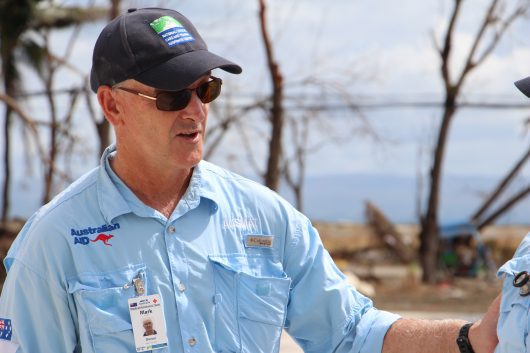
Australia’s foreign aid program has seen many changes since it first became a single government agency in the 1970s. Besides the name, changes have taken place within the program’s administration, its focus, the countries that receive aid and the type of aid provided.

Australia provided aid to other countries well before there was an official government program. In the 1950s, Australia granted aid to Papua New Guinea in the form of grants and to South and Southeast Asia by way of educational scholarships and assistance with employment.

In 1974, under Prime Minister Whitlam, Australia established the Australian Development Assistance Agency (ADAA) as a single government entity that would administer the country’s aid. Since that time, the name of the program has changed several times, first to the Australian Development Assistance Bureau (ADAB), then to the Australian International Development Assistance Bureau (AIDAB), then to the Australian Agency for International Development (AusAID) and finally to its current name, Australian Aid.

In 2010, Australia established AusAID as an executive agency within the Department of Foreign Affairs and Trade. In Australia, an executive agency is separate from its department for staffing, accountability and reporting purposes. However, the 2013 change to the country’s current program, Australian Aid, integrated the executive agency into the Department of Foreign Affairs and Trade so that it was no longer a stand-alone agency.

In a 2014 press release, the Australian Minister for Foreign Affairs, Julie Bishop, introduced Australian Aid: “The Australian Government’s new approach to overseas development assistance will focus on ways to drive economic growth in developing nations and create pathways out of poverty. Strict performance benchmarks will ensure aid spending is accountable to taxpayers and achieve results.”

The program incorporated a new development policy that focused on promoting prosperity, reducing poverty and enhancing stability. A new performance framework, Making Performance Count, enhanced the accountability and effectiveness of Australian aid by establishing performance benchmarks and impact assessments in targeted aid areas.

Australia’s foreign aid program will also have a new focus on the Indian Ocean and Asia-Pacific regions. In 2014, Minister Bishop gave a speech in which she further explained the reason for the change in focus. “In the past, [our aid program] has been spread far too thinly across the globe…We must direct our aid to where we can make the biggest difference and align it with our national interest.”

According to preliminary data from the Organization for Economic Cooperation and Development (OECD), Australia’s official development assistance (ODA) was $3.22 billion in 2015, which was 0.27 percent of their gross national income (GNI). The United Nations adopted a resolution in 1970 stating that ODA spending in developed countries should be at least 0.7 percent of GNI. Preliminary data from the OECD shows that only Sweden, Norway, Luxembourg, Denmark and the United Kingdom met that target in 2015.

– Kristin Westad

Photo: Flickr

January 9, 2017
https://borgenproject.org/wp-content/uploads/borgen-project-logo.svg 0 0 Borgen Project https://borgenproject.org/wp-content/uploads/borgen-project-logo.svg Borgen Project2017-01-09 01:30:112024-12-13 17:56:22A History of Australia’s Foreign Aid Program
Foreign Aid, Global Poverty, USAID

The Five Best Ways USAID Helped Nigeria in 2016

The Five Best Ways USAID Helped Nigeria in 2016
As 2016 ends, USAID has announced encouraging news in regards to their long-time relationship with the country of Nigeria. Going forward, USAID plans to add $92 million to their humanitarian assistance program for the country. This move is symbolic of the year the two partners have shared; one rich with progress in support of refugees displaced and suffering from the Boko Haram insurgency. Here are five more ways USAID helped Nigeria in 2016:

  1. In November 2016, USAID and Chi Farms, which invests in emerging Nigerian economies by making use of local resources, partnered to add roughly 4,000 tons of catfish to the country’s water bodies. Part of USAID’s Feed the Future initiative, the two will also train 6,000 farmers and entrepreneurs in order to establish a more stable backbone for Nigeria’s economy.
  2. One of the most effective ways USAID helped Nigeria in 2016 was through its humanitarian assistance to those affected by the Boko Haram insurgency near the Lake Chad Basin. As of August 2016, more than 2 million people were internally displaced due to the conflict. USAID provides stability for refugees by administering such simple things as electronic vouchers, which cover things like food and household supplies in local shops – not only does the family benefit, but so does the local business. By August 2016, USAID had given $98 million in humanitarian aid to this region of Nigeria.
  3. In June 2016, USAID donated 160 metric tons of seeds to 6,000 Nigerian households, which they now estimate effects the lives of 60,000 internal refugees. Food insecurity has proven an endemic problem since the beginning of the conflict with Boko Haram, and this ambitious initiative lends a great deal of stability to families throughout the country that are now in control of their food supply. The donation of seeds also includes food packets to help sustain families as they await the harvest.
  4. USAID deployed a Disaster Assistance Response Team (DART) in November 2016 to confront increasingly dire food insecurity in areas affected by the conflict. A study conducted by the organization in October estimated that 20 to 50 percent of children in the past six months suffered from acute malnourishment. The humanitarian crisis currently puts 9.2 million in need of help, and the arrival of DART means assistance can spread to more people, and more quickly.
  5. Assisting with food security wasn’t the only way USAID helped Nigeria in 2016 – they also trained personnel to staff 44 private hospitals for family planning counseling and implementation. As part of their USAID SHOPS project (Strengthening Health Outcomes for the Private Sector), the organization worked to increase quality and accessible family planning services throughout Nigeria. Completed in 2016, the project ran for five years and reached six states, and also trained 115 pharmacists to provide counseling to families. As a result, local healthcare facilities are reporting an increase in the use of effective contraception.

Since 2015, the U.S. has been the largest donor to Nigeria, giving $291 million in the 2016 fiscal year toward humanitarian aid. With the incredible news of their upcoming $92 million increase, USAID has extended help to tens of thousands more people and strengthened a partnership that will continue to improve the lives of millions of Nigerians.

– Emily Marshall

Photo: Flickr

December 29, 2016
https://borgenproject.org/wp-content/uploads/borgen-project-logo.svg 0 0 Borgen Project https://borgenproject.org/wp-content/uploads/borgen-project-logo.svg Borgen Project2016-12-29 01:30:292024-12-13 17:56:24The Five Best Ways USAID Helped Nigeria in 2016
Foreign Aid

Camp Hope: A Safe Haven For Thousands

Camp Hope
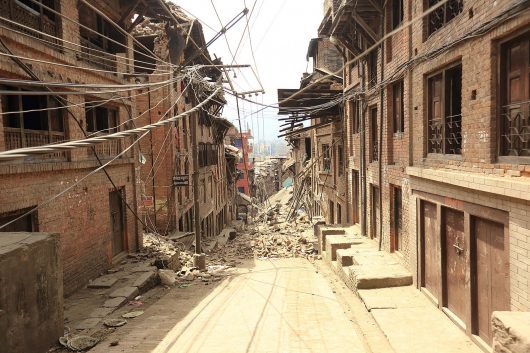
Nepal’s Camp Hope is a privately and publicly funded safe haven for displaced families from the Sindhupalchowk district north of Kathmandu, Nepal. Camp Hope spans one square kilometer and is made up of a series of large tents. The tents, which were provided by the U.S. Agency for International Development (USAID), have enough strength to withstand the annual monsoon season in Nepal. USAID assisted Nepal providing shelter and protection for 310,000 Nepalese people displaced by earthquakes.

Nepal’s Camp Hope was made possible thanks to the combined efforts of USAID and Sangeeta Shrestha. Shrestha is the camp founder and runs a world-class boutique heritage hotel called Dwarika. Shrestha had a great deal of trouble finding a location for Camp Hope because the local government would not relinquish any land to the cause. Thankfully, Shrestha says, “a local youth club came offering their football ground, so here we are.”

In order to make Nepal’s Camp Hope possible, Shrestha has enlisted numerous volunteers and specific members of her hotel staff. Certain volunteers are in charge of checking and registering every individual before they are permitted access to the camp. The engineers and technicians who work in hotel Dwarika are responsible for building the many tent structures that make up Nepal’s Camp Hope.

Shrestha and her hotel supply Camp Hope with food. Camp Hope is striving to meet the emotional and social needs of the thousands of displaced individuals. In order to accomplish this feat, Camp Hope provides spaces for prayer, tents for creating crafts and has built a local school with 83 students currently enrolled. All of these programs help Camp Hope residents slowly recover from the tragic earthquake that changed their lives.

A devastating earthquake ripped through the Sindhupalchowk district on April 25, 2015. Fortunately, 500,000 families managed to survive despite the fact that their villages had been reduced to rubble. Those 500,000 families equated to approximately 88 percent of the dwellings in that district.

The earthquake was the worst natural disaster in Nepal in the last 80 years. Unfortunately, Nepal would suffer a second earthquake only 17 days later, followed by a series of aftershocks. Both of the earthquakes combined resulted in 6,200 deaths in Nepal alone, over 14,000 injuries across the country, and massive landslides that engulfed over 130,000 homes. According to the U.N., 8 million people were said to have been affected.

This is why Nepal’s Camp Hope is viewed as such a pivotal sanctuary for everyone who is a part of it. The overall atmosphere and environment is filled with laughter, conversation, activities and interaction between the residents.

The residents give vitality to Camp Hope, which truly feels like a unified community within a village. Although Camp Hope is a wondrous place for displaced individuals, the main mission is to rebuild the villages that were destroyed by the earthquakes. The U.S. and Nepal’s governments are working together to help rebuild the communities that were affected.

It was decided at the International Conference on Nepal’s Reconstruction that U.S. funding for emergency relief and recovery efforts would be raised to $130 million.

Part of that funding will help establish 1,000 temporary educational centers for misplaced children. Not enough can be said about the valiant efforts put forth by the Nepalese government, the U.S. and Camp Hope. Millions of people have been positively affected and stronger communities will be built in the future.

– Terry J. Halloran

Photo: Flickr

November 28, 2016
https://borgenproject.org/wp-content/uploads/borgen-project-logo.svg 0 0 Borgen Project https://borgenproject.org/wp-content/uploads/borgen-project-logo.svg Borgen Project2016-11-28 01:30:452024-12-13 17:55:57Camp Hope: A Safe Haven For Thousands
Foreign Aid, Global Poverty

Foreign Aid for Tanzania

Foreign Aid for Tanzania
The United Republic of Tanzania, located in the southeastern great lake region of the African continent, has received foreign aid from the United States since around 1961. That year, John F. Kennedy passed the Foreign Assistance Act, which formed USAID, and began a new era of global cooperation.

The then recently independent nation of Tanganyika teamed up with USAID in an effort to increase the number of educated workers in public service. A few years later, in 1964, Tanganyika and the nation of Zanzibar united to form the country now known as Tanzania.

Over the decades that would pass, the United States maintained an important role providing foreign aid for Tanzania through USAID.

From efforts in 1973 to improve the lives of Tanzania’s poorest through agricultural innovation and funding to combating the rise of HIV/AIDs in the 1980s, USAID has been involved every step of the way.

Today, Tanzania is one of Africa’s fastest growing economies. Positive trends took off in 2013 when Tanzania experienced record GDP growth of 7.3 percent, an increase from the year before of 6.9 percent. Things are looking up with growth expected to continue at least seven percent a year for the foreseeable future thanks to a support from public investment in infrastructure, energy, and transportation.

While this progress is an undeniable success, there is still a lot of work to be done for the Tanzanian people. Poverty persists as a serious issue afflicting the populace, with 46 percent of people living on $1.90 per day. Agriculture, which employs 75 percent of the population, along with empowerment of women and youth are essential to continued growth.

Tanzania has remained a recipient of United States Foreign Assistance for a long time thanks to manageable rates of ethnic tension, political stability and sustained economic growth. As the largest contributor of foreign aid for Tanzania, the United States must maintain its funding and support of the African nation in order to assure the current goal of middle-income status by 2025.

– Aaron Walsh

Photo: Flickr

November 25, 2016
https://borgenproject.org/wp-content/uploads/borgen-project-logo.svg 0 0 Borgen Project https://borgenproject.org/wp-content/uploads/borgen-project-logo.svg Borgen Project2016-11-25 01:30:522024-12-13 17:56:12Foreign Aid for Tanzania
Foreign Aid, Global Poverty, USAID

Three Top U.S. Disaster Relief Efforts

Top 3 USA Disaster Relief Efforts
When disaster strikes anywhere in the world, the Office of U.S. Foreign Disaster Assistance exercises their essential role in providing relief to those in need. Each year the OFDA responds to around 65 disasters in over 50 countries gaining funding and partnership from USAID and other government agencies. This important role that the United States plays in other countries has saved countless lives and aided in disaster relief for a plethora of countries and cultures across the globe. Three of the top efforts made by the OFDA in 2015 include the flooding in Burma Myanmar, a powerful earthquake in Nepal, and the outbreak of the Ebola Virus in West Africa.

Flooding in Myanmar (Burma)

Large amounts of flooding in Myanmar have forced around 500,000 people to flee their homes in search of safety. USAID was able to successfully supply $50 million in humanitarian funding for those affected. The USAID Office of Food for Peace is providing $8.4 million in emergency food assistance to combat the added struggle of malnutrition many are now facing. The OFDA’s $7.3 million funds health care, protection, shelter, water sanitation and basic hygiene needs. This money helps those still struggling in Myanmar as well as those who have fled the country and are forced to build new lives from the ground up.

Earthquake in Nepal

When a 7.8-magnitude earthquake shook Nepal in an area just north of Kathmandu, USAID sprung into action in a big way. Around 6 million people were affected, not only in Nepal but also reaching into China, India and Bangladesh. With more than 9,000 killed and another 25,000 injured, the U.S. supplied $130 million to help the survivors. Within hours of the earthquake hitting, a Disaster Assistance Response Team deployed to organize the disaster relief effort. The USAID hospital preparedness project worked with 11 major hospitals, the largest of which was successful in treating 700 patients and executing 300 surgeries within the first 24 hours after the quake.

Ebola Outbreak in West Africa

As of Oct. 9, 2015, there were 28,429 confirmed cases of Ebola with another 11,297 in estimated deaths from the disease. In order to contain the spread of the disease and help those afflicted with it, the U.S. was able to provide $2,320,249,091 to West Africa. The progress has been outstanding with the WHO reporting no new cases of the disease from Sept. 28 to Oct. 4. This marks the first time since March 2014 that a week has passed with no reported cases of Ebola. The achievement of this success came from the massive amount of aid that funded food security, health services, technology, economic crisis mitigation, global health security agenda and other functions of disaster relief.

– Aaron Walsh

Photo: Flickr

November 24, 2016
https://borgenproject.org/wp-content/uploads/borgen-project-logo.svg 0 0 Borgen Project https://borgenproject.org/wp-content/uploads/borgen-project-logo.svg Borgen Project2016-11-24 01:30:212024-05-27 23:54:12Three Top U.S. Disaster Relief Efforts
Foreign Aid, Global Poverty

Why Foreign Aid in Ghana is a Smart Investment

Foreign Aid in Ghana
As the United States heads into its 2017 fiscal year, it plans to spend $4 billion less on foreign aid than it planned in 2016. Cuts like these may reflect growing fears that foreign aid is at best ineffective, or at worst detrimental. But when the money is funneled into smart investments — as is happening with aid in Ghana — it can benefit everyone, giver and receiver alike.

Foreign aid comes under frequent fire for its long-term effects on recipient countries. Opponents argue that it usually ends up lining the pockets of corrupt bureaucrats, and even when it gets to the people who need it, it depresses local economic development, increases dependency and perpetuates destitution. The standard argument is simple: if a wealthy country is distributing a good for free, local producers of that good cannot possibly compete. They succumb to falling prices and stop producing it. When there are no producers, consumers are forced to rely on foreign aid to obtain it, causing that aid to continue in a self-reinforcing, never-ending cycle.

But aid doesn’t have to be just a matter of giving handouts. Used smartly, foreign dollars can boost struggling economies and help build the infrastructure necessary for continued development. In Ghana, for example, USAID recently partnered with the Ghana Grains Council to carry out the sixth annual Pre-Harvest Agribusiness Forum, which aimed to “foster long-term business relationships, discussions, and the exchange of ideas in order to drive economic growth in Ghana’s agricultural sector.”

Many believe that USAID simply gives free food to the hungry, but the Agribusiness conference is one example of how the agency uses its money much more carefully than that implied. By providing a forum for participants in the agricultural industry to interact, network and share best practices, it is contributing to a more powerful, robust food market that will help decrease dependence on foreign funds. With programs like this, aid in Ghana will not always have to be a reality.

In addition, when poorer countries begin to flourish, the benefits are felt throughout the globe. Half of U.S. exports go to developing nations; more purchasing power in Ghana, therefore means more purchases from Americans. Beyond the trade benefits, economic stability can bring more political stability, so a strong economy in a volatile region can help to keep the area from descending into chaos. When all is said and done, aid in Ghana is good not just for Ghanaians, but for Americans as well.

– Madeleine Read

Photo: Flickr

November 18, 2016
https://borgenproject.org/wp-content/uploads/borgen-project-logo.svg 0 0 Borgen Project https://borgenproject.org/wp-content/uploads/borgen-project-logo.svg Borgen Project2016-11-18 01:30:532024-06-05 04:10:53Why Foreign Aid in Ghana is a Smart Investment
Foreign Aid, Foreign Policy, Foreign Relations, Global Poverty

Separation of the Philippines

Separation of the Philippines
Relations between the United States and the Philippines date back to a time when the U.S. had a special interest in Southeast Asia for military strategy. Despite a rocky start, the Philippines became one of the closest allies of the U.S. after fighting side by side in World War II against Japan.

To facilitate better relations in Southeast Asia, the Obama Administration developed the “Pivot to Asia.” Shifting American foreign policy from the Middle East, without fully withdrawing, getting more involved in an area with closer ties to China.

As a result, the U.S. provided $175 million for development assistance and $50 million in foreign military financing to the Philippines in 2015. The number for military funding is set to more than double in 2016, with around $120 million intended just for the Philippines.

Despite this long partnership and recently increased support, Filipino President Duterte hints at a separation of the Philippines from the U.S. for growing stronger bonds with China. Many in the U.S. Government are deeply troubled by this news as it could radically change the relationship between the two nations.

As recently as 2011, Clinton was in Manila to verbally affirm American support of the Philippines during a dispute with China over ownership of islands in the South China Sea. Senior Diplomat Daniel Russel is set to travel to Manila for clarification on this separation of the Philippines.

President Duterte is known for erratic behavior, leading many to question whether he can follow through on these claims. With such a large portion of the Filipino population still supporting continued relations with the U.S., a divide between the government’s affairs and the will of the Filipino people could be problematic.

The reality may be that this is the beginning of a Chinese plan to remove American military presence in the region by taking the Philippines out of a partnership with the U.S, in hopes that Vietnam and Malaysian would soon follow suit.

– Aaron Walsh

Photo: Flickr

November 15, 2016
https://borgenproject.org/wp-content/uploads/borgen-project-logo.svg 0 0 Borgen Project https://borgenproject.org/wp-content/uploads/borgen-project-logo.svg Borgen Project2016-11-15 01:30:042020-05-19 20:46:56Separation of the Philippines
Page 42 of 61«‹4041424344›»

Get Smarter

  • Global Poverty 101
  • Global Poverty… The Good News
  • Global Poverty & U.S. Jobs
  • Global Poverty and National Security
  • Innovative Solutions to Poverty
  • Global Poverty & Aid FAQ’s
Search Search

Take Action

  • Call Congress
  • Email Congress
  • Donate
  • 30 Ways to Help
  • Volunteer Ops
  • Internships
  • Courses & Certificates
  • The Podcast
Borgen Project

“The Borgen Project is an incredible nonprofit organization that is addressing poverty and hunger and working towards ending them.”

-The Huffington Post

Inside The Borgen Project

  • Contact
  • About
  • Financials
  • President
  • Board of Directors
  • Board of Advisors

International Links

  • UK Email Parliament
  • UK Donate
  • Canada Email Parliament

Get Smarter

  • Global Poverty 101
  • Global Poverty… The Good News
  • Global Poverty & U.S. Jobs
  • Global Poverty and National Security
  • Innovative Solutions to Poverty
  • Global Poverty & Aid FAQ’s

Ways to Help

  • Call Congress
  • Email Congress
  • Donate
  • 30 Ways to Help
  • Volunteer Ops
  • Internships
  • Courses & Certificates
  • The Podcast
Scroll to top Scroll to top Scroll to top