• Link to X
  • Link to Facebook
  • Link to Instagram
  • Link to TikTok
  • Link to Youtube
  • About
    • About Us
      • President
      • Board of Directors
      • Board of Advisors
      • Financials
      • Our Methodology
      • Success Tracker
      • Contact
  • Act Now
    • 30 Ways to Help
      • Email Congress
      • Call Congress
      • Volunteer
      • Courses & Certificates
      • Be a Donor
    • Internships
      • In-Office Internships
      • Remote Internships
    • Legislation
      • Politics 101
  • The Blog
  • The Podcast
  • Magazine
  • Donate
  • Click to open the search input field Click to open the search input field Search
  • Menu Menu

Archive for category: Foreign Aid

Foreign aid coverage and information.

Development, Foreign Aid, Sustainable Development Goals

New Deal Promotes Peace Necessary for Development

New Deal Promotes PeaceThe traditional conception of foreign aid simply involves transferring funds to a foreign government, but this model proved extremely limited in its effectiveness in weak states. As a consequence, the recognized government has limited ability to exercise authority and doesn’t possess a full monopoly on the use of force. A new deal promotes peace, though, and has the potential to improve these shortcomings.
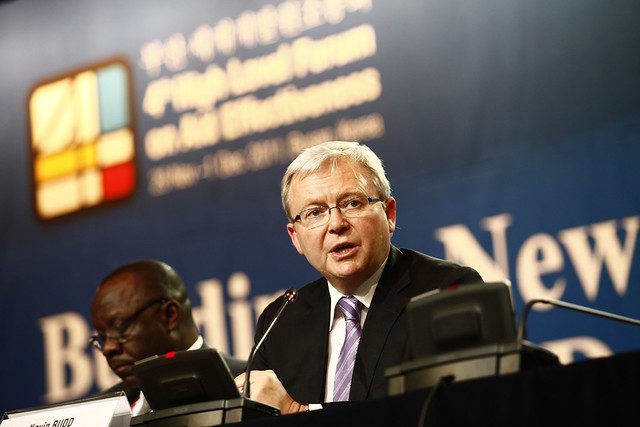
One way that governments have attempted to address these issues is through the New Deal for Engagement in Fragile States, signed by over 40 countries at the Fourth High-Level Forum on Aid Effectiveness in Busan, Korea in 2011. The New Deal promotes peace in the hopes that increased societal stability will lead to development.

In 2014, then-UN General Assembly President John Ashe said that “stability and peace are essential enablers of sustainable development, just as violence is one of its greatest obstacles.”

In accordance with the idea that peace and development are inextricably linked, the New Deal established Five Peacebuilding and Statebuilding Goals (PSGs) that both strong and fragile states committed to pursuing in states with weak institutions: legitimate and inclusive politics, justice, security, revenue and services and economic foundations.

The project was based upon the notion that civil society, development partners and government can work together for development. For the last five years, the New Deal worked on how to better integrate civil society into the peace-building process as a central actor, rather than one on the periphery. As a framework, the New Deal promotes peace and can be used by countries as a means to effectively implement sustainable development.

Unfortunately, while lofty in ideals, the implementation of the PSGs and the New Deal has had mixed levels of success. As each country faces different types and levels of fragility, integrating New Deal policies with existing frameworks can be difficult; and, assessing that fragility requires comprehensive engagement with the population.

Additionally, the technocratic tendencies of the New Deal could oftentimes hamper dialogue and meaningful participation of civil society.

While yet imperfect, commitment to the New Deal remains strong, as countries realize the necessity to address peace and development in conjunction with one another. Therefore, societies cannot experience growth and development without a responsive and resilient state.

For the 1.4 billion people who live in fragile states today, there is still much work that remains to be done. The building of stable institutions requires time, political capital, prolonged commitment and country leadership. In the context of the New Deal, peace and development must be pursued, in conjunction with one another, in order to establish stable institutions and resilient growth.

– Adam Gonzalez
Photo: Flickr

September 9, 2016
https://borgenproject.org/wp-content/uploads/borgen-project-logo.svg 0 0 Borgen Project https://borgenproject.org/wp-content/uploads/borgen-project-logo.svg Borgen Project2016-09-09 01:30:382024-06-11 02:48:20New Deal Promotes Peace Necessary for Development
Foreign Aid, Foreign Policy, Global Poverty

South Korean Foreign Aid: Former Recipient Now a Major Donor

South Korean foreign aid
South Korea, a country which used to rely heavily on foreign aid, is now giving its own. The increasing prominence of South Korean foreign aid is proof that the impact of U.S. foreign aid extends well beyond the period during which it gives.

On July 5, 2016, South Korea’s Ministry of Foreign Affairs greenlighted $21 million in projects aimed at helping refugees in Africa and improving health care across the continent. The money will come from a 1,000 won ($0.87) solidarity tax on airline tickets for outbound international flights.

The air ticket levy is not the only source of funding for South Korean foreign aid. According to the Australian Institute of International Affairs, the country has donated a total of $1.8 billion in official development assistance (ODA) as of 2016, equivalent to 0.14 percent of its gross national income.

South Korea kicked off its donations with a $25 million contribution in 1987, the same year it became a democracy. In 2010, only 23 years after it became a donor, the country became a member of the Development Assistance Committee (DAC) of the Organization for Economic Co-operation and Development (OECD). It remains the only country on the DAC that had been a recipient of development assistance.

It is hard to imagine that South Korea, which is now the world’s 11th largest economy and leads the globe in innovation, was at one time among the world’s poorest countries.

In 1960, the country’s per capita income stood at $70. Adjusted for purchasing power parity, South Korea’s GDP per capita in 1960 was still a dismal $1,420. In fact, according to a case study by the Embassy of the United States in Seoul, it was only ahead of one-third of the countries in sub-Saharan Africa.

South Korea started receiving U.S. foreign assistance in 1952, which was meant to assist the war-torn country on the path to recovery. It was entirely dependent on the United States for food supplies in the following ten years, and USAID missions continued through the 1970s.

The recent increase in South Korean foreign aid is proof of the lasting impact of U.S. development assistance. An initial injection of foreign aid in a country will multiply itself down the line as that country develops and becomes self-sufficient.

When John F. Kennedy became president in 1961, he specifically called for “aid to end aid” and to “help people help themselves” concerning South Korea. More than fifty years later, South Korea not only no longer requires assistance from the U.S. but is now making its mark as a donor of foreign aid.

– Philip Katz

Photo: Flickr

September 6, 2016
https://borgenproject.org/wp-content/uploads/borgen-project-logo.svg 0 0 Borgen Project https://borgenproject.org/wp-content/uploads/borgen-project-logo.svg Borgen Project2016-09-06 01:30:012020-06-09 09:56:08South Korean Foreign Aid: Former Recipient Now a Major Donor
Foreign Aid, Global Poverty, Human Rights

10 Facts About Eritrean Refugees: Effaced and Displaced

Eritrean RefugeesThere are approximately 321,000 Eritrean refugees living in Europe and thousands more reside in other areas around the world.
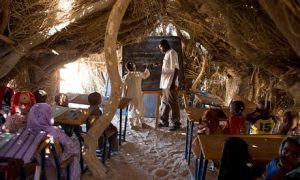
These refugees fled a country that operates on a system of invasive state control and extreme repression that consistently borders on human rights abuse. In a nation with few freedoms, it is not hard to understand why so many citizens have fled to other countries.

Here are 10 facts about Eritrean Refugees and the actions done to assist them:

  1. Eritrea is one of the world’s quickest-emptying nations with almost five thousand Eritreans leaving the country every month.
  2. There are approximately half a million Eritrean refugees residing in Ethiopia and Sudan, while Eritrea holds a population of only 6 million.
  3. The Eritrean refugees who have money are willing to pay up to $5,000 per person to flee the country according to The Guardian.
  4. Eritrean refugees are the third largest group that crosses the Mediterranean Sea by way of Libya to Italy.
  5. Many Eritreans settle in Ethiopia, a neighboring country that holds the largest number of refugees in Africa, according to Al Jazeera. Refugees in Ethiopia live in government-sanctioned camps that provide very little.
  6. There are over 40,000 Eritrean and Sudanese refugees living in Sweden and Norway, destinations many Eritrean refugees hope to reach, according to The Guardian.
  7. Some nations, including Israel, have deported Eritrean refugees to countries in Africa such as Rwanda, where their travel documents are confiscated and they are smuggled elsewhere.
  8. The conscription national service policy, where boys are required to serve in the national service at age 17 and can be required to stay for the majority of their lives, is a key reason citizens flee Eritrea according to The Guardian.
  9. Refugees are fleeing a country with no freedom of speech, religion, movement or political opposition. Citizens can be held in detention without charge or trial and many are tortured during their stay.
  10. The EU attempted to stop the flow of Eritrean refugees into Europe by giving development aid to Eritrea according to The Guardian; however, assisting those who have already escaped Eritrea and putting pressure on the Eritrean government to end abusive policies would be better use of the aid.

Reducing the number of Eritreans fleeing to the EU does not address the root of the cause. Refugees will continue to take unprecedented risks in their journey across the Mediterranean until political change occurs in Eritrea.

The above 10 facts about Eritrean Refugees are by no means exhaustive but provide insight to the current conditions of these displaced individuals.

The U.N. Commission of Inquiry on Human Rights calls Eritrea “an institution where slavery-like practices are routine,” exposing the corruption and abuses that cause so many refugees to be displaced. One can only hope that the Eritreans’ time as refugees will be limited and future change for their country is on the horizon.

– Amanda Panella
Photo: Flickr

September 4, 2016
https://borgenproject.org/wp-content/uploads/borgen-project-logo.svg 0 0 Borgen Project https://borgenproject.org/wp-content/uploads/borgen-project-logo.svg Borgen Project2016-09-04 01:30:472024-05-27 09:34:3110 Facts About Eritrean Refugees: Effaced and Displaced
Education, Foreign Aid, Global Poverty, Sustainable Development Goals

Why the World’s Aid to Education Dropped Again

Aid to EducationCelebrating Global Action Week for Education from April 24-30th, EFA Global Monitoring Report’s analysis showed a gradual increase in the world’s aid to education from 2002 to 2014. However, a closer look reveals a four percent drop between 2013 and 2014. Amid the atmosphere of optimism in the transition from the Millennium Development to the Sustainable Development Goals, this discovery provides a realistic reminder of what challenges lie ahead.
The fourth agenda of the Sustainable Development Goals aims to “ensure inclusive and equitable quality education and promote lifelong learning opportunities for all.” This includes ensuring “that all girls and boys complete free, equitable and quality primary and secondary education” by 2030.

According to the Education for All Global Monitoring Report, this would require an annual total cost averaging $340 billion between 2015 and 2030 for low and lower income countries, more than double the amount previously estimated. The cost will more than triple in low income countries. This is mainly due to population growth and lower GDP per capita in developing countries.

In this context, the decline in aid to education seems alarming. Four of the main donors, France, Japan, Netherlands and Canada decreased their support due to domestic austerity measures while facing economic depression. The Netherlands, for one, cut their aid by over a third in 2011. As Pauline Rose, director of the Education for All Global Monitoring Report, said, “it is essential that donors maintain their funding, and make sure it is reaching the countries—and children—most in need.”

Furthermore, analysis shows the steepest drop in aid to education in Sub-Saharan Africa, where half of the world’s out of school children reside.  Of the “57 million out-of-school children of primary age, almost half (49 percent) will probably never enter school. A further 23 percent have attended school but dropped out, and the remaining 28 percent are expected to enter school in the future.”

Precedence in the region suggests that this drop is not a one-time occurrence but part of a continuing stagnation. The educational progress of this region has been closely related to economic growth. In periods of steady growth of an annual one to two percent per capita, more resources were allocated to education although the school age population had actually increased. This implies that a long-term solution must include investment in local businesses and infrastructure, in addition to education itself.

– Haena Chu

July 4, 2016
https://borgenproject.org/wp-content/uploads/borgen-project-logo.svg 0 0 Borgen Project https://borgenproject.org/wp-content/uploads/borgen-project-logo.svg Borgen Project2016-07-04 01:30:392024-12-13 17:54:27Why the World’s Aid to Education Dropped Again
Foreign Aid, Foreign Policy

3 Quotes from Donald Trump About Foreign Aid

TrumpU.S. foreign policy is not just a hot topic issue that presidential candidates debate on TV. The president’s foreign policy can affect a broad spectrum of issues, including global poverty and instability.
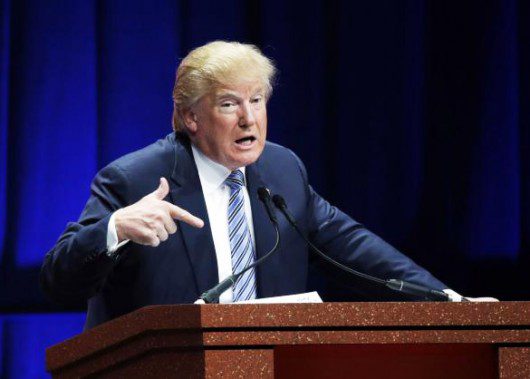
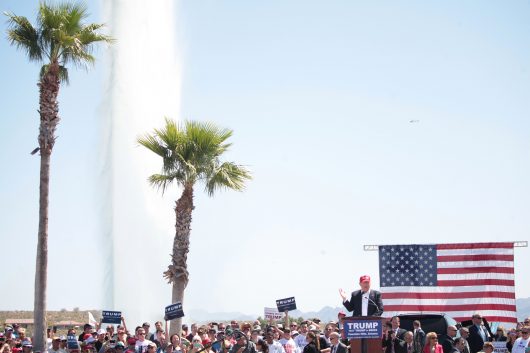
With the Democratic and Republican National Conventions coming up in July, now is a crucial time for voters concerned with U.S. foreign aid to review the candidates’ platforms.

Republican presidential candidate Donald Trump has voiced a spread of controversial beliefs about many issues during his presidential campaign. According to Impact 2016, a non-partisan initiative of the USGLC, Trump’s foreign policy platform is currently small.

He is a self-proclaimed master of the “art of the deal” who claims to hold the ability to negotiate from international business experience. Some of his major foreign policy points have been his concern with creating a stronger military and deterring Mexicans and Syrian refugees from immigrating to the U.S.

In regard to foreign aid, Impact 2016 reports that Trump has emphasized domestic development over global development during his candidacy and in past statements. Considering this fact, here are three thought-provoking quotes from Donald Trump about what he thinks of the U.S. giving foreign aid to developing nations.

  1. “With Afghanistan, I want to build our country. You know in Afghanistan, they build a road. At the end of this beautiful road, they build a school. They blow up the school; they blow up the road; we then start all over again. And in New Orleans and in Alabama we can’t build schools. I want to rebuild the United States.”In a 2011 television interview with Bill O’Reilly, Trump expressed more interest in investing in domestic infrastructure than giving global aid. Any willingness he had to invest in struggling nations was qualified with some kind of reciprocity from the recipients of the aid. Although the discussion of Afghanistan concerned U.S. occupation, the statement reflects Trump’s general belief that domestic development is a more fruitful investment for the U.S. than long-term investment.
  2. In his speech announcing his presidential campaign, Trump declared that the U.S. should “stop sending foreign aid to countries that hate us.”Trump asserted again in his June 2016 speech that he wanted to invest in domestic infrastructure, such as building roads and bridges in the U.S., rather than give aid to countries that “hate us.” He was not in favor of investing in these developing countries and did not see aid as a positive investment for the U.S. His statement implies an attempt to decrease the amount of money allotted in the budget for foreign aid if he is elected president.
  3. When a young man asked Trump if he would help to double the number of people receiving HIV/AID treatment through the U. S. President’s Emergency Plan for AIDS Relief (PEPFAR) by 2020, Trump responded, “Yes, I believe so strongly in that, and we’re going to lead the way.”Trump’s comment might surprise those who are familiar with his criticisms of U.S. global involvement. His response to an audience member at the No Labels Conference in October of 2015 shows that he is indeed open to supporting certain humanitarian projects. Briefly citing Alzheimer’s as another disease he would like to fight, Trump acknowledged the progress that PEPFAR has made and pledged to support its mission.

Trump’s vision seems to be overwhelming against increasing U.S. foreign aid. Even so, perhaps some of his comments, such as the one about PEPFAR, show that he is willing to promote certain government humanitarian organizations in select cases.

Hopefully, Trump’s comments about foreign aid listed here and elsewhere are informative and helpful to voters as they decide which candidate will best address global poverty and the stability of the world.

For more quotes from Donald Trump on foreign aid, please see this article from The Borgen Project.

– Addie Pazzynski

Photo: Flickr

July 4, 2016
https://borgenproject.org/wp-content/uploads/borgen-project-logo.svg 0 0 Borgen Project https://borgenproject.org/wp-content/uploads/borgen-project-logo.svg Borgen Project2016-07-04 01:30:072024-12-13 17:54:453 Quotes from Donald Trump About Foreign Aid
Economy, Education, Foreign Aid, Global Poverty

Five Ways the Marshall Islands Government is Staying Afloat

Marshall Islands

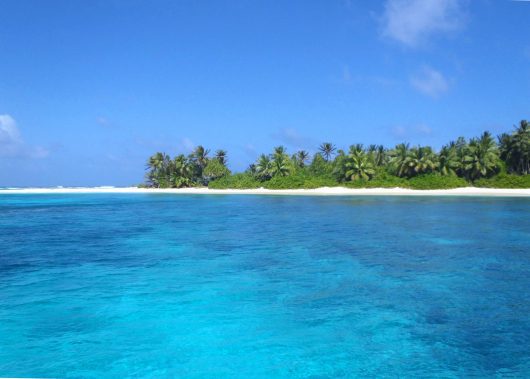
The Marshall Islands are two strings of atolls located in the North Pacific between Australia and the Hawaiian Islands. Their main exports are marine goods, coconut products, and handicrafts. Marshallese climate can be unpredictable, with climate change directly impacting the islands. In addition, securing sufficient sources for fresh water is a constant struggle. Because of these issues, many inhabitants of the islands live in poor circumstances, with bad health and little access to energy sources.

Since their year of independence in 1986, the Marshall Islands Government has been engaged in an uphill battle of physical, economic and environmental survival. Fortunately, there are a number of international lifeguards who are helping to keep the Marshallese government afloat.

The United States (U.S.)
One problem the Marshall Islands Government does not have to worry about is military security. Though it is a sovereign state, its military protection is provided by the U.S. But security is not the only service that the United States provides to the islands. The U.S. affords educational, medical and infrastructural aid, and donates funds in an effort to help the islands eventually attain economic self-sufficiency.

Roughly 50 percent of the revenue that the government obtains is gathered from foreign aid, and a large portion of this comes from U.S. coffers due to an agreement entitled the “Compact of Free Associations” which exists between the two nations.

Federal Emergency Management Agency (FEMA)
Though it is an entity within the structure of the United States government, FEMA merits particular mention. Operating under the supervision of the Department of Homeland Security, FEMA’s standard focus is the prevention, response and recovery from disasters that occur within U.S. borders. However, due to the Compact of Free Associations, the agency is also obliged to assist the Marshall Islands when disasters arise.

Just this year, the Marshall Islands have been experiencing one of the worst droughts in their nation’s history, collecting only a quarter of the rainfall that they typically obtain. On April 1st, Marshallese President Hilda Heine declared a state of emergency, and on April 28th FEMA announced that it has allotted federal disaster assistance to the Marshall Islands Government. Millions have been spent in past years on similar disasters.

Australia
The Marshall Island’s southern neighbor, Australia, is dedicated to supporting the islands in the economic and climatic issues. Between the Marshall Islands and two other North Pacific states, the Australian Government has pledged almost $10 million within the next fiscal year.

Australia’s goal is to increase access to water, sanitary facilities, and education. Additionally, Australia is helping to introduce a new public school system and spreading gender equality awareness throughout the islands. Many of these objectives have been reached through the sponsored delivery of water containers and the establishment of better education and scholarships to continue on to higher schooling.

The United Nations (U.N.)
The Marshall Islands and other low-lying countries are particularly susceptible an increase in global temperature.  It is projected that low-lying countries like the Marshal Islands will be submerged, or at least uninhabitable, if the global temperature rises just 2 degrees Celcius above pre-industrial levels.

In response to this dilemma, the U.N. has held multiple conferences over the last months in an effort to promote awareness and compliance to goals regarding carbon emissions. Just last month 175 countries were gathered in Paris to sign an agreement on the reduction of fossil fuel usage. The U.N. noted that this conference marked the largest number of countries to sign an international agreement at one time in the history of the world.

The Japan International Cooperation Agency (JICA)
A less recognized, but equally engaged organization is the Japan International Cooperation Agency. JICA focuses on what they call “inclusive development,” which emphasizes individual initiative in evaluating one’s own situation to improve it. JICA simply provides the resources necessary to carry out these improvements.

For the Marshall Islands, JICA is carrying out programs to improve waste control and worldwide education programs. JICA has been training volunteers to travel world-wide in an effort to address these issues, and in 2015 alone almost 3,500 volunteers traveled to the pacific to assist in humanitarian aid projects.

Despite the aid that these organizations are providing to the Marshall Islands, many inhabitants of the country live without the basic necessities of life. Further efforts are needed bring these individuals out of poverty. According to the World Bank, development must begin within the Marshall Islands Government. They commented, “The growth in the economy would be strengthened and sustained by the government’s commitment to reform.” The rest of us simply need to do our part.

– Preston Rust

Photo: Flickr

June 14, 2016
https://borgenproject.org/wp-content/uploads/borgen-project-logo.svg 0 0 Borgen Project https://borgenproject.org/wp-content/uploads/borgen-project-logo.svg Borgen Project2016-06-14 01:30:552024-06-11 02:48:19Five Ways the Marshall Islands Government is Staying Afloat
Charity, Foreign Aid, Global Poverty

The AMAR Foundation Model of Aid Distribution

AMAR_Foundation
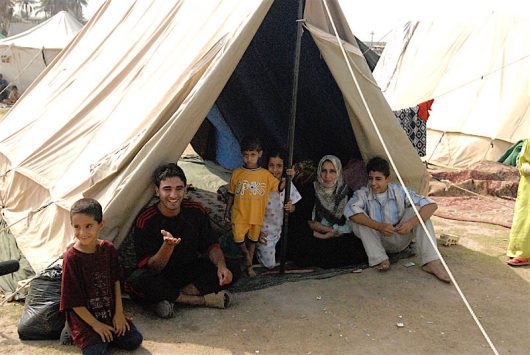
The AMAR Foundation works to improve the conditions of approximately 3.4 million internally displaced Iraqis by utilizing local expertise to build long-term solutions.

The organization, founded in 1991 by Baroness Emma Nicholson, is a London-based charity with the goal of improving education, health care and emergency aid to some of the world’s most disenfranchised and impoverished people.

Their model is simple: AMAR works closely with on-the-ground experts, as well as local leaders, to implement entirely local programs that are tailored to the needs of the community.

In lieu of sending in volunteers from other countries, AMAR cooperates with existing services to locally source the materials and expertise needed to improve living conditions. Outside intervention is kept to a minimum and communities are encouraged to build themselves from the inside out.

Communication is the key to the success of this aid model. In a 2015 Jordan Times article reporting on AMAR’s efforts to stem an outbreak of cholera in Iraq, it is proffered that raising awareness about public health and common diseases is one of the most crucial pieces of improving the health of a community.

Communication is key not only in improving public health but also in ensuring the success of locally-based aid efforts like those the AMAR Foundation organizes.

Local collaboration is by no means a new idea, but the AMAR Foundation’s astonishing success utilizing this model within Iraq provides great hope for the future of foreign aid worldwide.

Without the help of major international funding, AMAR has managed to establish a clinic in northern Iraq that serves more than 600 patients a day, as well as multiple mobile health clinics that can be operated by locals. Since 2005, their clinics have helped over 4 million Iraqis.

Although today only a few organizations embrace a model that favors entirely local implementation, the AMAR foundation continues to provide an example of the great success that can come from on-the-ground solutions.

– Sage Smiley

Photo: Defense Video Imagery Distribution System

June 13, 2016
https://borgenproject.org/wp-content/uploads/borgen-project-logo.svg 0 0 Borgen Project https://borgenproject.org/wp-content/uploads/borgen-project-logo.svg Borgen Project2016-06-13 01:30:522020-06-18 18:49:53The AMAR Foundation Model of Aid Distribution
Foreign Aid, Foreign Policy, Global Poverty, Politics

Where Donald Trump Stands on Global Poverty

Donald Trump PovertyDonald Trump surprised America when he announced his candidacy in June 2015. Trump has been garnering public attention despite not having any “elective, appointive, or military public experience,” according to the Atlantic. The publication also states that every prior president has had experience in one or more of these areas.
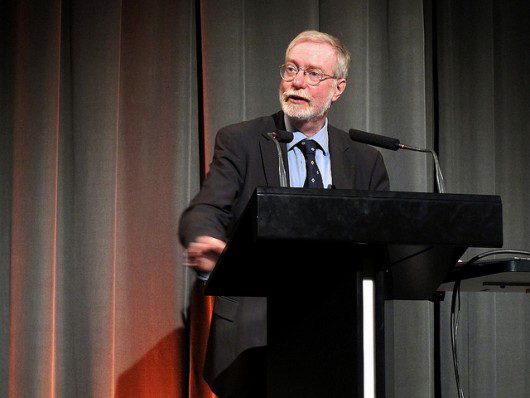
In this presidential race, Trump has been focused on illegal immigration in the U.S., particularly Mexican and Muslim immigration. He continuously affirms his belief that illegal immigrants are a national security concern. He also continues to voice his disapproval of immigrants from Syria migrating to the U.S.

Other hallmarks of his candidacy have been his unapologetic rhetoric. Trump’s controversial appeals have become his greatest asset in acquiring votes. In addition to immigration, he has been particularly vocal about the Islamic State group and the threat he believes the terrorist organization poses.

In contrast to fellow presidential candidate Bernie Sanders’ humble beginnings and opposition to wealth inequality, Forbes identified Trump as one of the richest American billionaires. So given his wealth and his stance on immigration, where does Donald Trump stand when it comes to foreign aid?

“It is necessary that we invest in our infrastructure, stop sending foreign aid to countries that hate us and use that money to rebuild our tunnels, roads, bridges and schools—and nobody can do that better than me.”

– Donald Trump’s Presidential Announcement 2016

“Pakistan’s a real problem because they have nuclear weapons… I would say we don’t give them any money unless they get rid of their nuclear weapons.”

– Donald Trump speaking on Fox News, May 9, 2011

“Money should be spent in our country. We should rebuild our country and also by the way reduce our $16 trillion in debt.”

– Donald Trump speaking about Afghanistan, March 13, 2012

In addition to his opinions on foreign aid, Trump’s discourse on decreasing the poverty rate in the U.S., which currently stands at approximately 14 percent of the population, consists of diminishing public assistance and handing responsibility for the poor over to volunteer organizations.

The results of this presidential election will reveal whether Americans prefer a leader with proven experience or charismatic promises. Foreign aid plays an essential role in the lives of millions around the globe. The continued provision of this foreign aid from the U.S. depends on which leader Americans choose to elect.

– Mayra Vega

Sources: India Times, Talk Poverty, NPR, The Atlantic
Photo: NY Daily News

March 19, 2016
https://borgenproject.org/wp-content/uploads/borgen-project-logo.svg 0 0 Borgen Project https://borgenproject.org/wp-content/uploads/borgen-project-logo.svg Borgen Project2016-03-19 01:30:542024-06-04 04:33:54Where Donald Trump Stands on Global Poverty
Aid, Foreign Aid, Global Poverty

The Bottom Billion: Causes and Solutions

The Bottom BillionAccording to Paul Collier, a professor of economics at Oxford University and the author of “The Bottom Billion,” a book about the poorest one billion people in the world, “the countries at the bottom billion coexist with the 21st century, but their reality is the 14th century: civil war, plague, ignorance.”

Countries and their citizens in the bottom billion find their conditions getting worse, not better. For instance, during the 90s, while globalization lifted millions out of poverty in China and India, the income of the bottom billion “actually fell by 5 percent.”

Most of the bottom billion live in 58 countries, 70 percent of which are in Africa and most of the rest, in Central Asia. These countries are among the poorest in the category of “developing countries or Third World countries.” Some of the countries in the bottom billion include Rwanda, Congo, Sudan, Chad, Somalia and Ethiopia.

So how does a country fall within the bottom billion group? The answer to this is multidimensional and lies in what Collier terms as “poverty traps.” According to Collier, these poverty traps include conflict, being landlocked, abundant natural resources and bad governance.

When it comes to war-torn countries, Rwanda, Congo, Somalia and Sudan are some examples that fall into this category. As a result of the conflict, the economy is destroyed, lives of innocent civilians are damaged and the political unrest also causes isolation and a lack of foreign investment.

Being landlocked with bad neighbors is also a disadvantage for developing countries. When we consider a country like Switzerland, a landlocked country in the developed world, its proximity to its surrounding countries does not compromise its security and it has the ability to trade with powerful and wealthy neighboring countries. This is not the case for developing countries, which are often surrounded by poor or unstable countries.

Having abundant resources may sound like a benefit rather than a disadvantage. However, with countries like Sudan and Somalia, even though natural resources such as copper and diamonds are abundant, corrupt politicians and other leading authorities within the country are able to seize power and divide the spoils, making their economies more vulnerable.

With the levels of corruption in developing countries, it is impossible for there to be sustainable growth. Accountability, transparency, monitoring and evaluation are needed to advance these countries and lift their citizens out of poverty.

To address these issues, Collier believes that aid should be increasingly concentrated in the most difficult environments and military intervention should be focused on “protecting democratic governments.” For instance, the British helping Sierra Leone is an example of productive military intervention.

Laws and charters have also been put forward as possible solutions. Collier suggests that international charters should be adopted for natural resources, budget transparency, post-conflict situations and investment.

Finally, Collier highlights that the bottom billion need to diversify their exports and are in need of temporary protection from Asia.

The situation faced by people in the bottom billion, though dire, can be addressed. While outside intervention may be necessary in some cases, change ultimately must come from within, with the end goal being for countries to prosper autonomously and independently.

– Vanessa Awanyo

Sources: The Guardian, The Economist, GSDRC
Photo: Flickr

March 16, 2016
https://borgenproject.org/wp-content/uploads/borgen-project-logo.svg 0 0 Borgen Project https://borgenproject.org/wp-content/uploads/borgen-project-logo.svg Borgen Project2016-03-16 01:30:022024-06-05 04:10:45The Bottom Billion: Causes and Solutions
Foreign Aid, Global Poverty

A Brief History of US Foreign Aid Initiatives

U.S. Foreign AidU.S. foreign aid has had a variety of strategic and humanitarian purposes throughout the 20th century. Although initiatives have changed across the decades to address the global “hot topics” of the day, the focus has always been on using aid to address crises, create security and spark development.

U.S. distribution of foreign aid began at the onset of World War I, when in 1914, President Hoover created the Commission for the Relief of Belgium (CRB) to combat a severe food shortage in German-occupied Belgium and Northern France.

In 1917, the U.S. Food Administration provided food for the United States Army and to the millions of people affected by World War I.

International development as a tool for foreign policy began following World War II. The Marshall Plan, diverting $13 billion in aid, allowed Europe to rebuild its infrastructure and strengthen its economy.

In 1949, President Harry S. Truman proposed an international development assistance program. This Cold War initiative sought to reduce poverty, increase production in developing countries and combat communism by helping countries thrive under capitalism.

In 1961, President Kennedy signed the Foreign Assistance Act, which created USAID. The president also introduced the Peace Corps the same year, which was intended to spread America’s goodwill and positive image across the globe.

In the 1970s, the Foreign Assistance Act underwent substantial changes that gave food, nutrition and healthcare aid priority when assisting a foreign nation.

In the 1980s, we saw the introduction of a new method of aid giving: using celebrities to gain support for a cause. In 1985, the Live Aid concert, featuring stars like Led Zepplin, Queen, Tina Turner and Madonna, raised $140 million toward fighting poverty and hunger in Africa. This was at a particularly urgent time due to a major drought in Ethiopia that caused widespread famine.

In the 1990s, with the end of the Cold War, USAID’s top priority of U.S. foreign aid became sustainable development, focusing on aid that would help nations become self-sufficient.

One of the major U.S. foreign missions was in Somalia in 1992. Famine and ongoing civil war in Somalia led to a humanitarian relief effort by sending troops and delivering basic supplies. Although the military intervention was largely unsuccessful, it served as a learning point for how both U.S. and U.N. interventions should be conducted.

The 2000s created an extra urgency around foreign aid as a means of creating stability. Development is included as one of three pillars of U.S. national security.

The President’s Emergency Plan for AIDS Relief was created in 2003 and President George W. Bush created the Millennium Challenge Corporation in 2004.

Some politicians argue that the U.S. should solve its own humanitarian issues before getting involved in other countries. However, America’s role as a world power makes it impossible for the country to turn a blind eye to the plights of other nations.

History has shown that U.S. foreign aid, if monitored and updated correctly, can do great things to fight poverty and ensure security.

– Taylor Resteghini

Sources: Oxfam America, PBS, USAID
Photo: Flickr

March 14, 2016
https://borgenproject.org/wp-content/uploads/borgen-project-logo.svg 0 0 Borgen Project https://borgenproject.org/wp-content/uploads/borgen-project-logo.svg Borgen Project2016-03-14 01:30:392020-06-19 19:02:38A Brief History of US Foreign Aid Initiatives
Page 44 of 61«‹4243444546›»

Get Smarter

  • Global Poverty 101
  • Global Poverty… The Good News
  • Global Poverty & U.S. Jobs
  • Global Poverty and National Security
  • Innovative Solutions to Poverty
  • Global Poverty & Aid FAQ’s
Search Search

Take Action

  • Call Congress
  • Email Congress
  • Donate
  • 30 Ways to Help
  • Volunteer Ops
  • Internships
  • Courses & Certificates
  • The Podcast
Borgen Project

“The Borgen Project is an incredible nonprofit organization that is addressing poverty and hunger and working towards ending them.”

-The Huffington Post

Inside The Borgen Project

  • Contact
  • About
  • Financials
  • President
  • Board of Directors
  • Board of Advisors

International Links

  • UK Email Parliament
  • UK Donate
  • Canada Email Parliament

Get Smarter

  • Global Poverty 101
  • Global Poverty… The Good News
  • Global Poverty & U.S. Jobs
  • Global Poverty and National Security
  • Innovative Solutions to Poverty
  • Global Poverty & Aid FAQ’s

Ways to Help

  • Call Congress
  • Email Congress
  • Donate
  • 30 Ways to Help
  • Volunteer Ops
  • Internships
  • Courses & Certificates
  • The Podcast
Scroll to top Scroll to top Scroll to top