• Link to X
  • Link to Facebook
  • Link to Instagram
  • Link to TikTok
  • Link to Youtube
  • About
    • About Us
      • President
      • Board of Directors
      • Board of Advisors
      • Financials
      • Our Methodology
      • Success Tracker
      • Contact
  • Act Now
    • 30 Ways to Help
      • Email Congress
      • Call Congress
      • Volunteer
      • Courses & Certificates
      • Be a Donor
    • Internships
      • In-Office Internships
      • Remote Internships
    • Legislation
      • Politics 101
  • The Blog
  • The Podcast
  • Magazine
  • Donate
  • Click to open the search input field Click to open the search input field Search
  • Menu Menu

Archive for category: Foreign Aid

Foreign aid coverage and information.

Development, Foreign Aid, Global Poverty

Cash on Delivery Could Be the Future of Foreign Aid

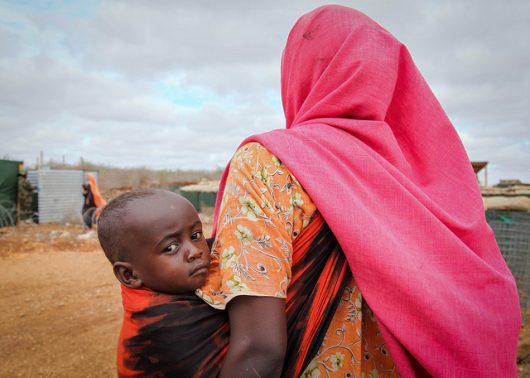
Cash on DeliveryCash on Delivery is a new approach to foreign aid that incentivizes turning laws and legislation into action. It works to strengthen government accountability to its citizens rather than the donor. It is a way that donors can pay for progress rather than set the platform for it.

Cash on Delivery works to provide funding for measurable development so that foreign aid can be more focused on results rather than disbursements. It is this type of results-based aid that is arising from the wonder of why money is being spent overseas rather than on local hospitals if results aren’t the main goal.

In the case of health funding, many developing countries such as Rwanda and Burundi are adopting this type of approach by setting a health standard and receiving, for example, $100 for every child at or above that standard.

Cash on Delivery aid (COD), named after a mail delivery option where you pay for the package upon delivery, is being crowned as the most refined form of results-based aid. It fosters a hands-off approach to development, providing the incentive to progress where the country can use all tools at it needs as long as results are generated.

As many believe foreign aid has long been plagued by micromanagement and transparent contracts, this hands-off approach encourages countries to make their own process decisions and remain independent both culturally and politically.

No more is the time when countries are forced to take fees for basic health services or resources for schools. By giving the decision-making power to the country, aid will be in service of the citizens rather than the donors.

The criticisms of this program lie in the potential risk and short-term feel, but the advantages lie with a more self-sustaining approach to progress. Providing the incentive and the tools to progress may prove just as valuable as the funding itself. Cash on Delivery may just be the future of aid.

– Tucker Hallowell

Photo: Flickr

August 28, 2017
https://borgenproject.org/wp-content/uploads/borgen-project-logo.svg 0 0 Borgen Project https://borgenproject.org/wp-content/uploads/borgen-project-logo.svg Borgen Project2017-08-28 07:30:332020-06-25 09:21:27Cash on Delivery Could Be the Future of Foreign Aid
Foreign Aid, USAID

Why USAID Is Important

Why USAID Is Important and EssentialWhen the topic of foreign aid comes up it is common to see headlines such as “USAID brings relief to Haitians after the occurrence of Hurricane Matthew,” but what exactly is this acronym? USAID is a government-funded agency that works to make the lives of millions of people easier.
There are many reasons as to why USAID is important and essential. USAID stands for the United States Agency for International Development. Working side by side with the military, USAID uses its resources to encourage countries to resolve conflict and end violence, working to lessen the need to send soldiers to dangerous areas.

Not only does it help end conflict, but USAID also helps elevate the roles of women and girls, provides assistance in the event of a disaster, invests in agricultural productivity to help food production in other countries, promotes human rights, combats diseases and more.

One of the greatest things that USAID’s work contributes to is the ending of extreme poverty. USAID has come up with a plan entitled “Vision for Ending Global Poverty,” which recognizes what needs to be done in order to fix the commonalities that each country has that causes them to struggle with poverty.

Despite common misconceptions, USAID does more than contribute to countries outside the U.S. Not only is USAID beneficial to those struggling in other countries, but it is also a benefit to the U.S. as well.

In a recent interview, Bill Gates explains the dangers of cutting USAID by explaining that foreign aid projects keep the U.S. safe. “By promoting health, security and economic opportunity, they stabilize vulnerable parts of the world,” says Gates, promoting the truth that helping others is of benefit not only to them but to America as well.

He continues explaining that USAID helps to stop major diseases such as HIV and AIDS, create more U.S. jobs and protects military members. The money goes to contractors, companies and volunteer organizations, all going towards promoting each country’s own financial well-being. Out of USAID’s top recipients in 2011, Pakistan received $343,698,200, Haiti $133,601,639, and Indonesia $17,848,628.

Keeping in mind that USAID’s proposed budget for 2018 is $15.4 billion, the United States Agency for International Development is distributing its funds in ways that help those who need it the most.

This is what USAID is and why USAID is important and essential to the alleviation of global poverty. U.S. involvement in foreign aid is not only saving the lives of those who live in developing and impoverished countries, but it is also saving and bettering the lives of Americans and American soldiers.

– Noel McDavid
Photo: Flickr

August 15, 2017
https://borgenproject.org/wp-content/uploads/borgen-project-logo.svg 0 0 Borgen Project https://borgenproject.org/wp-content/uploads/borgen-project-logo.svg Borgen Project2017-08-15 07:30:042024-05-28 00:15:28Why USAID Is Important
Foreign Aid, Global Poverty

Canada Follows Sweden’s Lead With Feminist Foreign Policy Plan

Feminist Foreign PolicyAccording to its website, the Swedish government gives gender equality high priority when it comes to foreign aid. Swedish leaders believe fighting for women’s rights is an essential step in establishing a secure and sustainable world. Consequently, they have launched a feminist foreign policy action plan to remove obstacles for women and girls in developing countries.

Since 2015, the nation has revisited and revitalized the initiative regularly. Goals for 2017 focus on increasing rights for female migrants and refugees; creating economic freedom for women via legislation; reducing violence against women; capitalizing on women’s potential to suppress conflict and encouraging sexual and reproductive rights.

A statement on the Government Offices of Sweden’s website details plans to service these goals. Leaders plan to allocate funds through relevant stakeholders, who will utilize aid to combat human rights abuses, endorse women’s financial and judicial empowerment and enact laws that provide women the same rights that men have.

Funds will also benefit initiatives to break down cultural associations between masculinity and violence, encouraging men to act as peacemakers in their homes and communities, as well as bolster movements to provide open access to contraceptives.

Canada has recently adopted a similar feminist foreign policy plan. Like Sweden, Canada recognizes that significant improvements in global poverty over the past few decades have not provided equal benefit to both men and women. To foster equal opportunities, Canada will strategically invest foreign aid in efforts seeking to improve women’s access to resources that can raise them from poverty.

A statement on the Government of Canada website acknowledges the challenges for women in developing countries. The difficulty lies in intersections of deeply-rooted inequality, conflict and consequences of climate change. The statement also highlights that with enough support, women can better help their families and communities.

Human dignity, security, climate action and inclusive governance comprise the core values of Canada’s plan. Their ultimate goal is to reduce poverty and promote economic advancement by empowering women to participate readily in politics, the workforce and their communities.

Canada’s statement also includes plans to involve men and boys by disputing the norms that reinforce gender-based injustice. They also provide an intersectional scope that includes the interests of people of all races, ethnic backgrounds, identities and abilities.

While timeworn power structures cause disproportionate struggles for destitute women and girls, leaders around the globe are eager to eradicate the imbalance. Feminist foreign policy is an essential step toward this goal.

– Madeline Forwerck

Photo: Flickr

July 27, 2017
https://borgenproject.org/wp-content/uploads/borgen-project-logo.svg 0 0 Borgen Project https://borgenproject.org/wp-content/uploads/borgen-project-logo.svg Borgen Project2017-07-27 01:30:492024-05-28 00:03:21Canada Follows Sweden’s Lead With Feminist Foreign Policy Plan
Foreign Aid, Global Poverty, Politics, War and Violence

Assad Diverts Foreign Aid from Those in Need

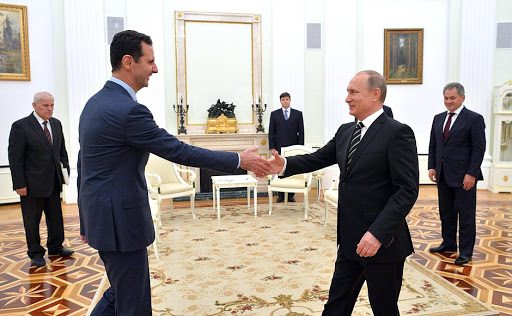
The U.S has spent a total of $6 billion in Syria as of 2016. The need for this assistance is extensive. USAID estimated that there are 13.5 million people in need of humanitarian assistance in Syria. However, President Bashar al-Assad of Syria diverts foreign aid from those who need it. He uses it for political goals.

Every day, Russian aircraft drop tons of food in the government-controlled neighborhood of Deir Ezzor. This has saved the lives of countless Syrians in the city. However, in towns controlled by the opposition, countless Syrians starve. Through the use of systematic regulations, President Assad diverts foreign aid from those in need. He then uses foreign aid as a political tool to increase his authority. Syrian expert Joshua Landis said that the Syrian government needs to manipulate foreign aid because “food is loyalty.”

The U.N. admits that it can only work with a small number of partners approved by Assad. Assad’s wife and close friend run two of these partnerships. Other humanitarian relief contracts are awarded to individuals under sanction and members of the Syrian regime known for their brutality and oppression. This is because the Syrian relief effort is the most challenging and complex operation the U.N. has ever seen. This gives Assad more bargaining power. He diverts foreign aid only to areas he controls. He only allows the U.N. into the country without interference if they play by his rules.

Moreover, a Russian airliner company, Abakan Air, carries out the aid transportation. Two Russian nationals, Nikolai Ustimenko and his son Patel, own the company. Both have previously been barred from doing business with the U.N. on account of bribery. It is unclear to what extent they play in Assad’s distribution of foreign aid.

It wasn’t always this way. Initially, the U.N. and Syrian Red Cross delivered aid impartially to the Syrian people. However, as the world turned its attention elsewhere, the Syrian government began blocking aid deliveries to rebel-controlled towns.

Advocates of the foreign aid program point to the amount of good aid have done in the region. Even through the aid only affects certain areas, civilians in need are still being fed. They say it would be unfair to punish those civilians in desperate need by withdrawing aid.

The USAID and UNICEF have done well to give aid. However, it is not good enough. The fact that Assad diverts foreign aid must be addressed. People are starving in Syria and aid needs to be distributed equally.

– Bruce Truax

Photo: Google

July 15, 2017
https://borgenproject.org/wp-content/uploads/borgen-project-logo.svg 0 0 Borgen Project https://borgenproject.org/wp-content/uploads/borgen-project-logo.svg Borgen Project2017-07-15 01:30:572020-05-29 08:07:28Assad Diverts Foreign Aid from Those in Need
Developing Countries, Foreign Aid, Global Poverty, USAID

How Foreign Aid Can Solve Instability in the Sahel Region

Instability in Sahel
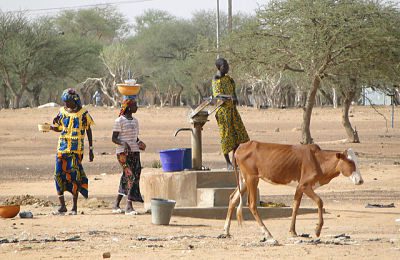
The Sahel region is a large transition zone in Africa between the Sahara and Southern Africa. The countries surrounding this belt include Sudan, Niger, Nigeria, Mali and Chad. According to the Permanent Interstate Committee for Drought Control in the Sahel (CILSS), more than 100 million people will inhabit the region by the year 2020, and 200 million will live there by 2050. With such a huge influx of people in this land, the poverty-related problems and instability in the Sahel region need to be addressed.

News outlet Africa Renewal reported that in 2012, 18 million people suffered during a major food crisis in the Sahel region. Just the next year, 11 million were experiencing hunger, more than 10 percent of them being children.

In a press release published by the U.N. in June, U.N. Deputy Secretary-General Amina Mohammed spoke to the joint Economic and Social Council-Peacebuilding Commission on the instability in the Sahel region. He claims that the Sahel region continues to deteriorate due to lack of government and harsh climate conditions; these countries sit right above the equator.

Currently, more than 30 million people in the Sahel region struggle with food insecurity. Terrorism affects many more citizens, driving out law enforcement and government forces. “Efforts to address [this] should be closely coordinated with the work of the United Nations Development Group and the Resident Coordinators of Sahel countries,” stated Mohammed. Not only is he calling for action, but Mohammed explains that action is already being taken.

The U.N. Security Council is deploying a G5 Sahel joint force of 5,000 military and police personnel to collaborate with another military in the area, such as the United Nations Multidimensional Integrated Stabilization Mission in Mali (MINUSMA). Together, they will continue to protect citizens and suppress terrorist violence.

Mohammed closed his address by stating, “the Secretary-General, his senior management and I, myself, are committed to improving the efficiency and effectiveness of the United Nations response to crises around the world.”

However, the U.N. isn’t the only organization committed to helping the Sahel region. The United States Agency for International Development (USAID) funds CILSS with around $3.4 million annually. Their mission, as stated on the USAID website, is “to devote efforts towards the search for food security and combating the effects of drought and desertification for a new ecological balance in the Sahel.”

The 2030 Sustainable Development Goals and many organizations are working to end instability in the Sahel region. With the objective of government reform, we will hopefully see goals reached before the end of 2030.

– Vicente Vera

Photo: Flickr

July 13, 2017
https://borgenproject.org/wp-content/uploads/borgen-project-logo.svg 0 0 Borgen Project https://borgenproject.org/wp-content/uploads/borgen-project-logo.svg Borgen Project2017-07-13 07:30:062024-05-28 00:02:55How Foreign Aid Can Solve Instability in the Sahel Region
Foreign Aid, Global Poverty

How Has U.S. Foreign Assistance Has Helped South Korea?

U.S. Foreign Assistance Has Helped South Korea
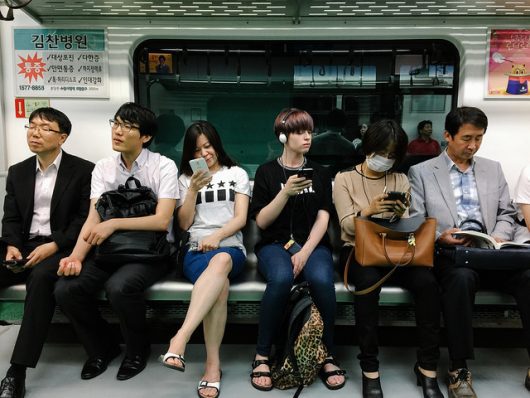
U.S. foreign assistance has helped South Korea rise from poverty and the economic devastation of The Korean War. South Korea now sustains a prosperous economy and contributes to foreign assistance worldwide.

The United States’ $35 billion investment in economic foreign assistance has helped the Republic of Korea (ROK), once one of the poorest nations, become the world’s 12th largest economy.

Ways U.S. Foreign Assistance Has Helped South Korea

The overall health of South Koreans has improved, including a better life expectancy, a decreased infant mortality rate, improved sanitation and prevention of infectious diseases. South Korea’s transformation is not only evident from the increased wellbeing of its people. The country’s GDP per capita grew from $876 in 1950 to $36,500 in 2015, with a GINI index of 30.2, indicating the distribution of wealth.

South Korea is now the U.S.’s seventh-largest trading partner due to its economic gain and position as a world power. In 2010, the U.S.-Korea trade agreement amounted to approximately $88 billion. According to estimates by The U.S. International Trade Commission, tariff cuts in the agreement increase U.S. exports by $11 billion annually.

Since overcoming poverty and benefiting from U.S. Foreign Assistance, South Korea has become an international donor of foreign aid and a member of the Organization for Economic Co-operation and Development (OECD) Development Assistance Committee (DAC), one of the world’s largest funders of foreign assistance.

Seoul, one of U.S.’s most important allied cities in the Asia-Pacific, contributes to international development assistance and increases foreign relational values. Its $680 million investment in Afghanistan has helped reconstruction efforts. They have helped build medical facilities and police training stations, paved roads and trained Afghan civil servants. Furthermore, in December 2013, Seoul invested $43 million in Afghanistan to improve women’s rights and access to medical services.

Ranked the world’s most innovative country in 2015, South Korea leads global development and expands opportunities for sustainable solutions. Its ingenuity yields significant results in public-private partnerships and in research and development.

Among South Korea’s contributions is its Creative Technology Solution (CTS), launched by the Korean International Cooperation Agency (KOICA). The Korean Ministry of Foreign Affairs also funded this program. KOICA CTS supports socio-economic growth, as well as reducing inequalities between countries and social classes. It also aims to create decent jobs and promote science, technology and innovation in the context of the U.N.’s Sustainable Development Goals.

South Korea, once a beneficiary of U.S. foreign assistance, is now a leading contributor to foreign aid and global development. U.S. foreign assistance has helped South Korea to create a prosperous economy and become a model example of foreign aid investment and surmounted poverty.

– Sarah Dunlap

Photo: Flickr

July 7, 2017
https://borgenproject.org/wp-content/uploads/borgen-project-logo.svg 0 0 Borgen Project https://borgenproject.org/wp-content/uploads/borgen-project-logo.svg Borgen Project2017-07-07 05:30:402020-05-15 20:34:44How Has U.S. Foreign Assistance Has Helped South Korea?
Aid, Foreign Aid, Global Poverty

Private Businesses Speak Up on Cutting of Foreign Aid Budget

Private Businesses Speak up on Cutting of Foreign Aid Budget
Shortly after taking office in 2017, the Trump administration released its proposed budget cuts for FY 2018. Among the proposed cuts was a 31 percent decrease in the foreign aid budget, which includes cutting funding to the United Nations, the World Bank and other diplomatic institutions. With the already low foreign aid budget potentially decreasing, impoverished nations still do have dependable allies in the U.S. other than the government.

After the release of the proposed foreign aid budget cuts, American business leaders from companies such as Walmart, Nike and Coca-Cola signed a letter to Secretary of State Rex Tillerson urging him to reevaluate the proposed cuts. The May 22 letter highlights the fact that 95 percent of the world’s consumers live outside of the U.S. and that “eleven of America’s top fifteen export markets are in countries that have been recipients of U.S. foreign assistance.”

Not only are private businesses lobbying the government to take responsibility when it comes to stepping up foreign aid policy, but they have also stepped up in their own funding to developing countries and their economies.

According to The Guardian, private sectors have invested money to developing countries at a faster rate than government foreign aid; they receive 27 percent more foreign business investments than development aid. The investments, which have increased nine-fold since the year 2000, are starting to bring countries out of poverty with increasing business capital flow into their economies.

As businesses see more market potential in countries where citizens could come out of poverty and would have more money to spend on luxury goods, they have an incentive to invest in development.

For example, The Coca-Cola Company and The Bill and Melinda Gates Foundation teamed up with TechnoServe to invest in eastern African farmers to produce fruit for their Minute Maid drinks. As a result, local farmers were educated on how to produce better crop yields that would benefit both Coca Cola’s production and the farmers’ incomes. This venture was titled Project Nurture and increased the incomes of 54,000 farmers.

“We are committed to working with you in your role as Secretary of State to share our perspectives on the importance of U.S. international affairs programs to boost our exports abroad and our jobs here at home,” read the May 22 letter to Tillerson. Whether the proposed 31 percent foreign aid budget cut goes into effect or not, private businesses will continue to invest in foreign markets and give aid to developing countries. It is also important to note that, in budgetary matters, Congress holds the power of the purse. While the President is able to propose budgetary cuts, they must be approved by Congress before going into effect.

– Vicente Vera

Photo: Flickr

July 4, 2017
https://borgenproject.org/wp-content/uploads/borgen-project-logo.svg 0 0 Borgen Project https://borgenproject.org/wp-content/uploads/borgen-project-logo.svg Borgen Project2017-07-04 07:30:532024-12-13 17:58:10Private Businesses Speak Up on Cutting of Foreign Aid Budget
Foreign Aid, Global Poverty

Timeline of the History of Foreign Aid

History of Foreign Aid
The evolution of modern foreign aid efforts and expectations was not an overnight process. After centuries of progress, the concept of foreign aid transformed the from a military strategy to a humanitarian mindset. Below is a timeline of the history of foreign aid.


History of Foreign Aid


18th Century: Beginning as a means to hold leverage and ensure loyalty, Frederick the Great of Prussia began providing assistance to less affluent countries. Consequently, this allowed his own people to feel confident that they had the military backing of these allies.


19th and Early 20th Centuries: The European superpowers gave large amounts of money in aid to their colonies as a strategy to improve infrastructure and increase economic efficiency.


1947: The first major act of foreign aid arrives with the Marshall Plan. Following World War II, the U.S. funded over $13 billion to assist in the reconstruction of Europe. This plan also led to the development of the World Bank, IMF (International Monetary Fund) and the United Nations.


1956: The amount of United States foreign aid continued to increase after the success of the Marshall Plan. In addition, the Cold War caused the Soviet Union to use foreign aid as a tactic to gain support at home.


1960s: Japan produced an extensive foreign aid program. Additionally, Robert McNamara became the head of the World Bank in 1968 and began promoting the idea of providing aid to developing countries in the forms of health, education and sanitation. People began discussing foreign aid as an issue of morality.


The 1980s: Due to the economic setbacks following the recession in the 1970s, foreign aid slowed down during this time period. Economies needed to be restructured and that left less money for social improvement.


The 1990s: The Soviet Union collapsed in 1991, and this reestablished democratic values in many countries. Philanthropists such as Bill Gates and George Soros initiated developmental projects, drawing attention to the global need.


The Present: Since then, the World Bank has established two sets of millennium goals to end poverty, with the most recent deadline in 2030. The resources given and countries involved are the greatest in the history of foreign aid.


Although foreign aid has grown exponentially over the last century, there is still massive need that overpowers much of the world. However, organizations are working to increase the budget for foreign assistance and put an end to poverty once and for all.

– Emily Trosclair

Photo: Flickr

July 3, 2017
https://borgenproject.org/wp-content/uploads/borgen-project-logo.svg 0 0 Borgen Project https://borgenproject.org/wp-content/uploads/borgen-project-logo.svg Borgen Project2017-07-03 07:30:572024-12-13 17:58:14Timeline of the History of Foreign Aid
Developing Countries, Foreign Aid, Global Poverty

LDCs and the Reasons Why Foreign Aid Is So Important


Foreign aid is very important to many less-developed countries (LDCs) around the globe. It can have a substantial effect on their improvement by providing much-needed programs that provide jobs, healthcare and sustainability to the regions of the globe that need it most. Providing aid to LDCs can also promote positive outcomes for the country giving aid.

Here are 10 reasons why providing foreign aid to LDCs is so important:

  1. It can be used as humanitarian aid. This form of aid is generally given during times of great distress such as natural disasters until the state can support the disaster relief effort. The European Consensus on Humanitarian Aid categorizes humanitarian aid as a “…needs-based emergency response aimed at preserving life, preventing and alleviating human suffering, and maintaining human dignity wherever the need arises if governments and local actors are overwhelmed, unable, or unwilling to act.”
  2. It can help LDCs fight against diseases such as HIV/AIDS. HIV and AIDS are still a major threat in countries such as Africa and require support from other countries willing to help with the crisis. Organizations and governments around the globe, such as UNITAID and PEPFAR, provide aid to help fight HIV/AIDS in LDCs. A new plan submitted by UNAIDS projects the end of the HIV epidemic as a public health threat by 2030. The new plan would need $26.2 billion by 2020 and an additional $22.3 billion by 2030 to eliminate the disease.
  3. It helps with economic growth in LDCs. Aid is generally given in countries that are characterized as low income or that have high unemployment rates. This results in low savings and investments, meaning the capital stock is small. Countries that are provided aid need rapid economic development. Providing aid stimulates the growth of the world economy along with promoting economic development within the region.
  4. It can help with market expansion. Providing aid to a country could mean the expansion of goods and resources that can be shared between the two countries. This can attract new investors into the country further improving the LDCs economy.
  5. It helps with basic infrastructure in LDCs. Another key component to promoting a strong economy is the expansion of a well-developed infrastructure. Basic necessities such as transport, communication, power, education, health services and industry serve as key components to building a strong and long-lasting infrastructure.
  6. It helps promote improvements in agriculture. Aid can be used to teach farmers how to utilize their land and resources more efficiently to produce more crops. This, in turn, provides vitamin and nutrient giving foods to people living in LDCs.
  7. It can help with poverty relief. In 2013, 767 million people (10.7 percent of the world population) lived on less than $1.90 a day, well below the world poverty line. This is a drastic improvement from the 1.85 billion in 1990 and the number has gotten significantly better over the years. However, there is still much to do. Many of the global poor live in rural areas where they do not have access to adequate medical treatment and education.
  8. It helps LDCs grow and become more independent. By providing aid to promote health, education, and infrastructure, LDCs can focus more on growing their economies. By reducing the amount of disease and poverty, citizens of these regions will be able to flourish and contribute to the growth of the country.
  9. It promotes political ties. Aid can be used to establish and strengthen the connection between the donor and recipient countries. Aid is given to both LDCs and developed countries alike to promote solidarity and companionship.
  10. It makes the world safer. Providing LDCs with aid and development reduces the threat of terrorist organizations by alleviating poverty in susceptible countries. A study provided by the RAND Corporation concluded that development is a more effective strategy against terrorism than military force.

Providing foreign aid is, first and foremost, a humanitarian gesture. The aid’s ultimate goal is to support or stabilize an LDC until it is capable of supporting itself. When aid is provided, there are benefits for all participating nations involved way. In most developed nations, foreign aid is still an important part of the legislation and the conversation.

– Drew Hazzard

Photo: Flickr

July 3, 2017
https://borgenproject.org/wp-content/uploads/borgen-project-logo.svg 0 0 Borgen Project https://borgenproject.org/wp-content/uploads/borgen-project-logo.svg Borgen Project2017-07-03 01:30:552024-12-13 17:57:52LDCs and the Reasons Why Foreign Aid Is So Important
Foreign Aid, Global Poverty

Exploring How Foreign Aid Builds Alliances


Over the past 20 years, terrorist attacks have become more common, and groups such as the Islamic State and al Qaeda have become global enemies. These occurrences raise the question: What is the best way to fight? Exploring how foreign aid builds alliances with a look at recent history may have the answer.

Less than 80 years ago, Germany, Italy and Japan declared war on the U.S. as a part of WWII. In response, the U.S.temporarily ended diplomatic relations with these nations. When the war ended, much of Europe was destroyed, and the continent faced wide-spread famine. In these conditions, the U.S. gave extensive foreign aid to these and other nations, helping to rebuild their communities, economies and daily  lives. Today, these three countries are some of our closest allies, giving evidence that foreign aid helps forge alliances.

The U.S. government feared that the Soviet Union could take advantage of Europe’s frailty and institute communism throughout the continent. In response, the new secretary of state, George Marshall, constructed the European Recovery Program, commonly called the Marshall Plan.

The Marshall plan appropriated $13 billion to 16 European nations. This was aimed at providing food to prevent famine as well as sending other basic necessities and supplies to begin rebuilding. These shipments allowed Europe to reestablish its economy and fueled the coal and steel industries that are so important today. This investment also made a path for the eventual creation of the North Atlantic Trade Organization (NATO).

Below are three examples of benefits when foreign aid builds alliances.

1. Germany is one of our leading trade partners

As of today, Germany no longer receives U.S. foreign aid and has the largest European economy. Not only do both the U.S. and Germany remain in NATO, but the countries work together to expand global trade. Germany is also a large supplier of goods for the U.S. They exported $125 billion worth of goods, while the U.S. exported $50 billion to Germany.

Beyond economic ties, Germany also works with the U.S. at the U.N. Germany has been integral to fighting the Islamic State and al Qaeda and to maintaining peace in Africa and the Balkans.

2. Italy helps the U.S. agenda on human rights, democracy and disease control

Italy is now a prosperous nation that no longer requires foreign aid.

Italy is a member of the U.N., the Organization for Security and Cooperation in Europe, G8, G20 and many other international organizations. In these roles, Italy works with the U.S. to cultivate democracy throughout the world and reduce conflict and terrorism. Italy also helps the U.S. in human rights, drug trafficking, human trafficking and fighting epidemics such as ebola. Rebuilding Italy after WWII helped create this strong alliance and gave the U.S. a powerful partner when negotiating complex international issues.

3. Japan partners with the U.S. to research innovative technology

The U.S. occupied Japan as a part of the treaty of surrender following WWII. This involved restructuring Japan’s political, social and economic systems. The country was demilitarized as the U.S. promised to protect it from any future conflict.

The beginning of the occupation focused on political and social reforms. Meanwhile, the Japanese economy began to collapse. At this point, the U.S. focused on rebuilding the economy through taxes restructured to reduce inflation. The Korean War soon began, and at the suggestion of occupying forces, the U.N. used Japan as its primary supplier during the war. As a result, Japan’s economy developed back into a healthy, sustainable one.

Japan remains a successful democracy and still has a robust economy. Japan no longer receives foreign aid and now offers aid to other developing nations. Moreover, they echo the voice of the U.S. agenda in East Asia. Japan supports political and military efforts of the U.S. in North Korea.

Japan also works with the U.S. in researching medicine and space travel. Together the two countries form the U.S.-Japan Science and Technology Agreement. For 25 years they have worked on advancing computer and energy technologies.

Less than 80 years ago these three countries were so devastated that their civilizations could have collapsed entirely. They are now world leaders along with the U.S. When foreign aid builds alliances, it creates strong countries and resilient partnerships. Foreign aid is able to turn our most sincere enemies into our friends.

– Mary Katherine Crowley

Photo: Flickr

June 17, 2017
https://borgenproject.org/wp-content/uploads/borgen-project-logo.svg 0 0 Borgen Project https://borgenproject.org/wp-content/uploads/borgen-project-logo.svg Borgen Project2017-06-17 07:30:592024-12-13 17:58:06Exploring How Foreign Aid Builds Alliances
Page 40 of 61«‹3839404142›»

Get Smarter

  • Global Poverty 101
  • Global Poverty… The Good News
  • Global Poverty & U.S. Jobs
  • Global Poverty and National Security
  • Innovative Solutions to Poverty
  • Global Poverty & Aid FAQ’s
Search Search

Take Action

  • Call Congress
  • Email Congress
  • Donate
  • 30 Ways to Help
  • Volunteer Ops
  • Internships
  • Courses & Certificates
  • The Podcast
Borgen Project

“The Borgen Project is an incredible nonprofit organization that is addressing poverty and hunger and working towards ending them.”

-The Huffington Post

Inside The Borgen Project

  • Contact
  • About
  • Financials
  • President
  • Board of Directors
  • Board of Advisors

International Links

  • UK Email Parliament
  • UK Donate
  • Canada Email Parliament

Get Smarter

  • Global Poverty 101
  • Global Poverty… The Good News
  • Global Poverty & U.S. Jobs
  • Global Poverty and National Security
  • Innovative Solutions to Poverty
  • Global Poverty & Aid FAQ’s

Ways to Help

  • Call Congress
  • Email Congress
  • Donate
  • 30 Ways to Help
  • Volunteer Ops
  • Internships
  • Courses & Certificates
  • The Podcast
Scroll to top Scroll to top Scroll to top