• Link to X
  • Link to Facebook
  • Link to Instagram
  • Link to TikTok
  • Link to Youtube
  • About
    • About Us
      • President
      • Board of Directors
      • Board of Advisors
      • Financials
      • Our Methodology
      • Success Tracker
      • Contact
  • Act Now
    • 30 Ways to Help
      • Email Congress
      • Call Congress
      • Volunteer
      • Courses & Certificates
      • Be a Donor
    • Internships
      • In-Office Internships
      • Remote Internships
    • Legislation
      • Politics 101
  • The Blog
  • The Podcast
  • Magazine
  • Donate
  • Click to open the search input field Click to open the search input field Search
  • Menu Menu

Archive for category: Foreign Aid

Foreign aid coverage and information.

Foreign Aid, Global Health, Global Poverty

President Obama and the Global Health Security Agenda (GHSA)

Health Security Agenda
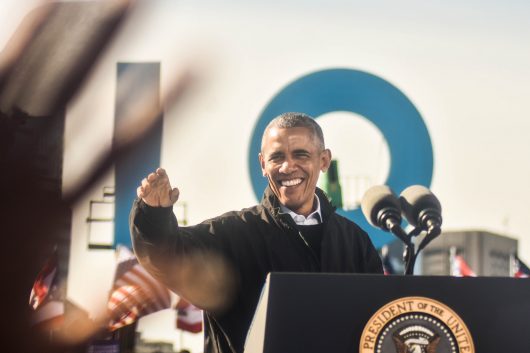
On Nov. 4, President Obama signed an executive order advancing the Global Health Security Agenda (GHSA), which the administration started in 2014. As a result, the United States will now prioritize the GHSA on a presidential level.

As part of the GHSA, the United States has joined with 55 different countries, nonprofit organizations and for-profit companies.  The GHSA’s top goals include the improvement of research accountability and outbreak detection, and 22 countries have already begun to evaluate outbreak responses and identify areas to improve upon.

Philippe Douste-Blazy, the under-secretary general of the United Nations, suggests that the WHO needs to focus on outbreak response as one of its five main priorities in order to ensure that the global health goals will be met by 2030.

According to USAID, the “GHSA promotes global health security as a national priority through targeted capacity building activities, such as improving laboratory systems, strengthening disease surveillance, improving biosafety and biosecurity, expanding workforce development, and improving emergency management.”

USAID also proposes to support the GHSA initiative by addressing animal health, human health and the environment. USAID’s Bureau for Global Health Assistant Administrator, Dr. Ariel Pablos Mendez, says that USAID’s attention to animal health is particularly important: 70 percent of new infectious disease outbreaks begin in animals.

WaterAid also celebrates the GHSA’s anticipated role in improving the safety of drinking water, sanitation and hygiene. WaterAid explains that the spread of infectious diseases such as cholera could end with access to safe water.

The GHSA’s intent to combat antimicrobial resistance relates directly to water quality. Access to safe water could prevent up to 60 percent of diarrhea cases. These cases require treatment with antibiotics, and increased use of antibiotics can lead to antibiotic resistance among bacteria.

People and diseases travel rapidly due to the spread of globalization. The CDC summarizes, “A disease threat anywhere can mean a threat everywhere.” The GHSA is designed to detect and prevent this spread of disease. “No single nation can be prepared,” the order declares, “if other nations remain unprepared to counter biological threats.”

– Madeline Reding

Photo: Flickr

November 12, 2016
https://borgenproject.org/wp-content/uploads/borgen-project-logo.svg 0 0 Borgen Project https://borgenproject.org/wp-content/uploads/borgen-project-logo.svg Borgen Project2016-11-12 01:30:362024-05-27 23:54:14President Obama and the Global Health Security Agenda (GHSA)
Foreign Aid, Humanitarian Aid, Refugees

Countries Pledge $2.1 Billion in Foreign Aid to Iraq

Foreign Aid to Iraq
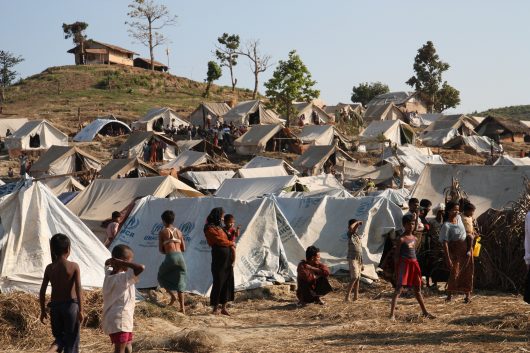
On July 20, representatives from 24 countries pledged more than $2.1 billion in foreign aid to Iraq at a Washington, D.C. conference co-hosted by the U.S., Canada, Japan, Kuwait, Germany and the Netherlands. The U.S. had hoped to raise around $2 billion in foreign aid to Iraq. State Department Spokesperson John Kirby said that the results of the meeting exceeded expectations, with $2.1 billion in confirmed pledges and more pending approval.

Coverage of the pledging conference indicates that countries recognize the need to help Iraq achieve long-term stability in addition to carrying out military operations against the Islamic State. Public Finance International reported that the donor meeting aimed specifically to deal with the fallout of an expected assault on the northern Iraqi city of Mosul, which is likely to be the largest yet.

According to Radio Free Europe/Radio Liberty, the U.N. estimates the humanitarian assistance needed after the attack at $284 million and reconstruction costs at $1.8 billion. In total, the country needs $4.5 billion.

Canada was among the first to come forward with a pledge. Foreign Affairs Minister Stéphane Dion announced $158 million CAD, or $121 million, in foreign aid to Iraq at the meeting, with $150 million CAD going towards humanitarian needs and $8 million CAD reserved for de-mining and helping refugees.

The conflict has seen 3.3 million Iraqis displaced. In addition to addressing the country’s current crisis, Canada is also donating $200 million CAD to the World Bank, which will be available to the Iraq government as a loan to assist with economic reforms.

The United Kingdom’s Department for International Development pledged $66 million. The European Commission (EC), the European Union’s executive body, gave $215.5 million, and Kuwait also contributed $176 million. Neven Mimica, the European commissioner for International Cooperation and Development, told Public Finance International that the EU hopes to provide humanitarian assistance as well as improve public spending on infrastructure in the country.

Foreign Minister Frank-Walter Steinmeier of Germany, which pledged $1.3 million at the conference and is the largest donor of foreign aid to Iraq, emphasized the importance of continued assistance. “We cannot lose the momentum of our efforts to stabilize Iraq now,” he said.

The $2.1 billion raised at the July 20 conference went above and beyond the $861 million the U.N. had appealed for Iraq. It is encouraging to see that countries in the coalition against the Islamic State, including the U.S., start to focus their efforts on humanitarian aid and long-term development.

– Philip Katz

Photo: Flickr

November 12, 2016
https://borgenproject.org/wp-content/uploads/borgen-project-logo.svg 0 0 Borgen Project https://borgenproject.org/wp-content/uploads/borgen-project-logo.svg Borgen Project2016-11-12 01:30:352020-05-20 08:54:20Countries Pledge $2.1 Billion in Foreign Aid to Iraq
Education, Foreign Aid

Increasing Education Foreign Assistance

Increasing Education Foreign Assistance: Unlocking a World of Promise
Knowledge is power. This simple statement is more resonant than ever as the world moves towards a knowledge-based economy. In spite of the tremendous importance of education in building the lives of youth around the world, only a small share of the United States’ foreign aid budget goes to education and social programs. By increasing education foreign assistance for such programs, the U.S. could bolster its contribution to global development.

Here are four facts about the current amount of U.S. foreign assistance for education:

  1. Since 2010, spending budgeted for foreign assistance for education has fallen by 44 percent from $1.75 billion to $1.21 billion in 2016. This stands in stark comparison to the seven percent decline in the overall foreign assistance budget and the 13 percent increase in total federal spending over the same time period.
  2. The U.S. spends only three percent of its total foreign assistance budget on social and educational programs, around half of which goes to basic education. By contrast, Australia spends around 25 percent of its foreign aid budget on such programs. The largest recipient of foreign assistance for education in the 2016 fiscal year is Afghanistan. Many of these programs target education for women and girls in a society where female education has traditionally received little support or even outright hostility.
  3. In 2016 the military budget for the U.S. was $604.5 billion and foreign assistance spending on security was $8.77 billion, respectively 500 and 7.2 times higher than spending on foreign assistance for education.
  4. Since 2006, 123 different countries have received foreign assistance for education from the U.S. Afghanistan received the most, $696.8 million, while Montenegro came in last with a little over $14,000. The other leading countries after Afghanistan were Ethiopia, Liberia, Kenya and Guatemala.

Increasing education foreign assistance can bolster economic growth, encourage gender equality and build local capacities. For each additional year of schooling in a country, annual GDP growth rises by 0.37 percent, allowing for greater trade opportunities. The higher the proportion of the population enrolled in secondary education, the lower the risk of war. Therefore it is key to U.S. economic and national security interests that we continue to provide foreign assistance for education.

– Jonathan Hall-Eastman

Photo: Flickr

November 6, 2016
https://borgenproject.org/wp-content/uploads/borgen-project-logo.svg 0 0 Borgen Project https://borgenproject.org/wp-content/uploads/borgen-project-logo.svg Borgen Project2016-11-06 01:30:012024-06-05 04:10:52Increasing Education Foreign Assistance
Foreign Aid, Poverty Reduction

Five Lessons the Marshall Plan Taught About Poverty Relief

The Marshall Plan
The battles from World War II resulted in some of the worst devastation in history, as military and civilian areas alike were targeted in aerial bombardment, which left millions dead and entire cities reduced to rubble. Devastation and breakdown of social fiber were so prevalent in Europe that the basic building block of civilization — the trade between farmers and urban dwellers offering food for goods and services — began to break down.

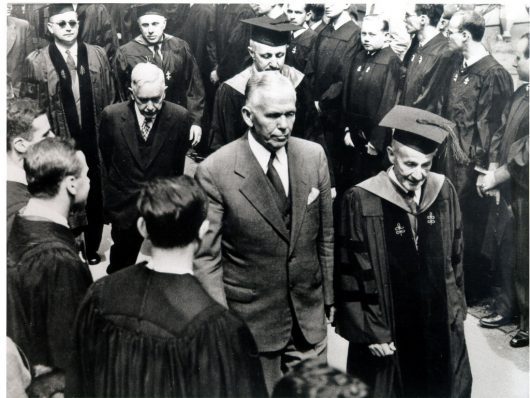
George C. Marshall, serving as the newly appointed secretary of state in 1947, outlined a plan to aid Europe with funds for rebuilding key infrastructure and industry. Though it has been criticized for reforming European markets in the style of the U.S. economy, the Marshall Plan undoubtedly helped spur economic recovery in Europe devastated by one of the most destructive wars in history.

The U.S. spent over $13 billion for the economic recovery of Europe between 1948 and 1951. In 2016 dollars the equivalent would be almost $130 billion. By helping to rebuild Europe, the U.S. found a new market for its manufactured goods that helped the country from sliding back into depression following the war. Today, the plan still holds lessons for combating poverty in the 21st Century.

Economic Development is Critical

Any approach to aid that doesn’t take the economic situation into account is doomed to short term success. The Marshall Plan made a point of focusing on rebuilding the economies of Europe including “…promoting industrial and agricultural production with the object of becoming independent of outside assistance…include(ing) projects for increased production of coal, steel, transportation facilities, and food.”

Oversight is Essential

The provisions of the Marshall Plan created a new organization, the Economic Cooperation Administration, consisting of an administrator, a deputy and a staff composed of economists, accountants, lawyers and administrative workers. The Act empowered the administrator to create rules and regulations regarding the distribution of aid based on ground conditions. The administrator was on equal footing with the secretary of state, which the president of the U.S. set as the arbitrator in any disputes between them. Other rules outlined two advisory boards and a special “roving ambassador” to aid the administrator. The plan even established a congressional “watchdog committee” for additional governmental oversight. These clearly defined duties helped to ensure the aid outlined in the plan made it to refugees who needed it most.

Confidence Must Be Restored in Local Economies

The Marshall Plan took measures to restore vital infrastructure and public schooling, which helped to give ordinary citizens the semblance of order necessary to build consumer confidence in their economies. Provisions in the plan also provided for “taking necessary financial and monetary measures to stabilize currency and exchange and balance the governmental budget of the signatory country.” The end goal of the stabilizing effects was to create a favorable environment for American investment in Europe.

Aid Should Be Focused Regionally, Not on Single Countries

Experts believe one of the greatest reasons for the success of the Marshall Plan was that it focused on rehabilitating an entire region as an economic unit rather than singling out specific countries. Aid efforts crossed borders and gave a sense that the continent was in the fight together to return to previous levels of economic development. Under the Marshall Plan, assistance was available to countries in the Western Hemisphere. The agreement tasked the U.S. secretary of state with negotiating the free entry of supplies to countries participating in the plan. The administrator was still able to refuse aid in the interest of national security in case it had become clear supplies were supporting military forces. Under this provision, countries in Eastern Europe falling under the Soviet bloc did not receive aid.

Aid Should Be Coordinated Through the UN

Aid through the Marshall Plan filtered through U.N. organizations for distribution. Also, the rules of the plan required the administrator to send progress reports to the international organization. By coordinating efforts through the U.N., the U.S. increased the legitimacy of its aid programs and allowed some measure of input from U.N. officials.

Marshall himself outlined the reasoning behind the aid in a speech at Harvard University on June 5, 1947. In the address he stated, “It is logical that the U.S. should do whatever it is able to do to assist in the return of normal economic health in the world, without which there can be no political stability and no assured peace. Our policy is directed not against any country or doctrine but against hunger, poverty, desperation, and chaos.”

– Will Sweger

Photo: Flickr

October 29, 2016
https://borgenproject.org/wp-content/uploads/borgen-project-logo.svg 0 0 Borgen Project https://borgenproject.org/wp-content/uploads/borgen-project-logo.svg Borgen Project2016-10-29 01:30:492020-06-08 15:34:57Five Lessons the Marshall Plan Taught About Poverty Relief
Foreign Aid, Global Poverty

Foreign Aid to Nepal: Managing Challenges

Foreign Aid to Nepal
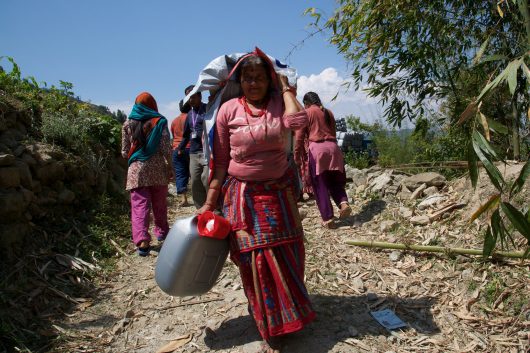
Nepal is a small landlocked country in the middle of Asia. It is a developing country with small savings and investments. The country relies heavily on foreign aid as one-third of the population lives under the absolute poverty line. For decades, this hindered a smooth path toward economic development due to multiple reasons.

The population in Nepal suffers from mass poverty and inequality. Poverty gap reduction is one of the biggest challenges for the Nepali government. In addition, infrastructure is underdeveloped. Many rural areas are not well integrated and connected with the capital, Kathmandu. The inability to provide services to inaccessible areas hinders development in Nepal. Furthermore, there is considerable unemployment — many youths have to work abroad.

Foreign aid is generally a tool to support development. However, Nepal is more dependent on foreign aid for meeting basic needs for its citizens instead of stimulating development. Generally, aid effectiveness depends on how and where it is used. For instance, aid spent on food programs in a specific region could have a higher impact than other areas. Foreign aid to Nepal is critical to get the country out of its development trap. Overall, there is an improvement in the effectiveness measures. Moreover, there is a growing realization among civil society and development partners regarding the need for collective work. It is very important to continually evaluate and coordinate aid programs.

One of the main changes that could enhance aid effectiveness is fewer projects with larger initiatives, which would stimulate investment. The Nepali government could be selective in aid packages by prioritizing the causes that require the most attention.

A survey was conducted to evaluate the effectiveness of foreign aid to Nepal. It will be submitted to the Global Partnership for Effective Development Cooperation in Kenya from Nov. 28 to Dec. 1. The survey was carried out on indicators such as whether development partners have been providing assistance based on the country’s need, the extent to which development partners are following the national system and if development cooperation funding is covered by indicative forward spending plans.

In addition, the survey considers the percent of development cooperation funding scheduled for disbursement recorded in the annual budgets approved by the developing country’s legislature. Pursuant to the survey’s results, aid providers will discuss new ideas for the effective utilization of foreign aid.

– Noman Ahmed

Photo: Flickr

October 26, 2016
https://borgenproject.org/wp-content/uploads/borgen-project-logo.svg 0 0 Borgen Project https://borgenproject.org/wp-content/uploads/borgen-project-logo.svg Borgen Project2016-10-26 01:30:242024-05-27 23:53:22Foreign Aid to Nepal: Managing Challenges
Foreign Aid, Global Poverty

The Challenges and Benefits of Foreign Aid Policy

Benefits of Foreign Aid Policy
In less than a decade, Europe suffered severe destruction and was quickly torn apart due to World War II. Soon after that, a huge foreign aid policy package known as the Marshall Plan helped European nations recover, seek a path of democracy and sustained peace.

Today, The U.S. continues to invest in foreign aid to advance its security and global leadership. This has played an indispensable role in strengthening U.S. strategy as well as economic and moral obligations.

Foreign aid policy can strengthen national security by cutting the roots of terrorism. It also helps in stabilizing weaker regimes, promoting regional security and long-term stability. Foreign aid helped nations such as South Korea and Colombia recover from instability.

Nations who receive aid could serve as potential markets and attract investors. Presidents like George W. Bush and Barack Obama emphasized such points. Also, President Reagan was a strong advocate of aid. He also argued strongly against those who claimed that national income was being wasted.

However, the success of the past decades is facing an uncertain, and perhaps unpromising future. The foreign aid budget planned for next year is only $34 billion. This number is expected to decrease further in the coming years.

Furthermore, there have been more conflicts in the twenty-first century that gripped the attention of the U.S. War in Afghanistan and Iraq coupled with a rising global trend of terrorism are some of the factors that challenge foreign aid programs. Hence, there comes a greater target zone for aid programs and more communities to address.

Such challenges make the process of development and the execution of programs a lot harder. Agencies are put under pressure as they have to provide support for a lot of people in a short time. Political dilemmas and conflicts complicate the tasks of agencies to access data and effectively manage aid programs.

With all the modern challenges of the twenty-first century, the U.S. aims to make the process of foreign development programs more transparent, accountable and effective.

Over the last decade, the U.S. has succeeded in creating new standards and metrics as part of foreign aid reform. Such transparency and accountability reforms can be expanded into developmental programs such as delivering aid packages and managing educational programs.

The U.S. Agency for International Development (USAID) understands the modern challenges standing in face of foreign aid policy. It aims to address such challenges by aligning resources with goals to achieve transforming development.

USAID also tailors programs according to needs and opportunities. The agency has also adopted the policy of increased selectivity in allocating resources. Despite the disappointing voice, aid programs are improving in their capability of dealing with all the modern challenges.

– Noman Ahmed

Photo: Flickr

October 22, 2016
https://borgenproject.org/wp-content/uploads/borgen-project-logo.svg 0 0 Borgen Project https://borgenproject.org/wp-content/uploads/borgen-project-logo.svg Borgen Project2016-10-22 01:30:202024-06-05 04:10:44The Challenges and Benefits of Foreign Aid Policy
Foreign Aid

USAID Offers $127 Million to Southern Africa After El Nino

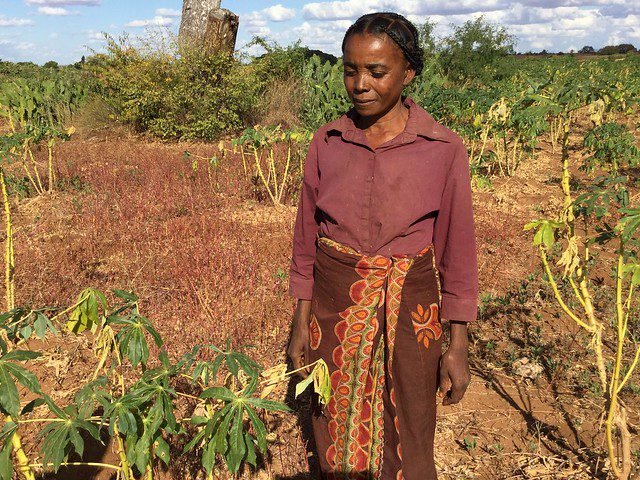
El NinoThe U.S. Agency for International Development (USAID) will contribute $127 million in humanitarian aid to Southern Africa to combat the effects of El Nino in the region. Funding from the U.N. and NGO partners will go to Lesotho, Malawi, Mozambique, Madagascar, Swaziland and Zimbabwe to combat drought and rebuild the region.
El Nino is the warming of the Equatorial Pacific that leads to increased rainfall in some areas and drought in others. USAID reports indicate that the funding will address the many needs of those harmed by the long-lasting effects of the phenomenon. These needs include health support, food assistance and treatment for people with HIV.

USAID also aims to provide Southern Africa with improved health, food and agricultural aid. However, Southern African countries still appealed for $2.8 billion to feed the millions of people affected by the drought.

The gap between what the region needs and what other nations have promised is not enough, especially since the number of those in need will increase as food becomes more scarce.

South African countries are not the only ones facing harm from El Nino. According to The Guardian, many countries in five continents are in states of emergency and are dealing with food insecurity. For example, Central America is suffering from the worst drought in decades.

El Nino will only become more difficult to predict, and could even double in its frequency over the next few decades due to human-induced climate change. An international effort to aid nations dealing with the consequences of the weather cycle is necessary, especially from those nations that have contributed the most to carbon emissions.

Communities impacted by El Nino need more resilience to help them combat the ever-evolving phenomenon. Increased humanitarian aid from USAID and international programs will help those struggling through El Nino deal with the unpredictable future.

– Addie Pazzynski

Photo: Flickr

October 19, 2016
https://borgenproject.org/wp-content/uploads/borgen-project-logo.svg 0 0 Borgen Project https://borgenproject.org/wp-content/uploads/borgen-project-logo.svg Borgen Project2016-10-19 01:30:392024-05-27 09:35:01USAID Offers $127 Million to Southern Africa After El Nino
Foreign Aid, Health

Annie Lennox Supports The Global Fund in APPG Meeting

Annie Lennox _ The Globa
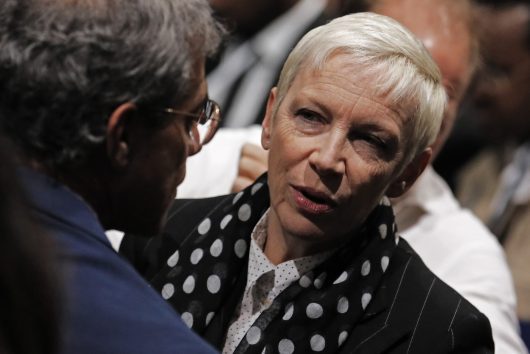
Activist and world-renowned musician, Annie Lennox, has become a powerful and influential voice for those suffering from malaria, HIV, AIDS and tuberculosis. Her dedication to the cause became even clearer at a recent All-Party Parliamentary Group (APPG) meeting in London where she spoke out in favor of the Global Fund and their efforts to reduce and treat disease in impoverished areas.

This is but one of the many ways in which Annie Lennox involves herself in issues of global poverty and disease. In the past, she has fundraised for the Treatment Action Campaign by donating the funds raised from her single, Sing. She is also a recipient of the British Red Cross’ Services to Humanity Award.

At the APPG meeting, she continued her charity work, by vocally supporting the Global Fund and their many initiatives. The Global Fund is a financing institution with the goal of providing support to countries suffering from diseases such as AIDS, tuberculosis and malaria.

The organization has set a $13 billion funding target for the 2017-2019 period. This money will go toward saving eight million people and stopping 300 million new infections across the span of three years. In order to reach this goal, donor nations will have to increase their offerings by 20%. Multiple nations such as Japan and Canada have agreed to this increase. However, the U.K.’s contribution is crucial to reaching this goal.

In her keynote speech, Annie Lennox urged British members of parliament to invest further in the Global Fund and increase their disease-fighting efforts. She said: “With the upcoming replenishment of the Global Fund, the U.K. government has the opportunity to show that their continued leadership and dedication to saving and improving quality of life has not waned.”

Award-winning actress Emma Thompson supported the call for the U.K. to step up their funding. Other notable speakers, such as The ONE Campaign’s U.K. Director, Saira O’Mallie, spoke on the same subject. O’Mallie addressed the pertinent issue through her statement, “Amid the uncertainty over the U.K.’s position in the world following Brexit, the Government’s continued commitment to the Global Fund will offer reassurance to millions of vulnerable people.”

The Global Fund does wonders to improve health across the globe, and should be supported across all countries in addition to the U.K.

– Jordan Little

Photo: Flickr

October 12, 2016
https://borgenproject.org/wp-content/uploads/borgen-project-logo.svg 0 0 Borgen Project https://borgenproject.org/wp-content/uploads/borgen-project-logo.svg Borgen Project2016-10-12 01:30:002024-05-27 09:34:56Annie Lennox Supports The Global Fund in APPG Meeting
Foreign Aid, Global Poverty

UK Tops US ODA Spending Target to Fight Global Poverty

Fight Global Poverty ODA Spending
David Cameron will be remembered by history as the Prime Minister who called the “Brexit” referendum, but during his last days in office, Cameron sought to stress a different achievement: lifting Official Development Assistance (ODA) spending to 0.7 percent of national income.

The target was met during a time of economic austerity and in spite of intense criticism from members of Cameron’s own political party. This resolve should inspire other wealthy countries to do their part in fighting global poverty.

Looking at the data, several facts jump out. The UK has a clear lead among G7 countries and is the only one to meet the UN’s recommended 0.7 percent target. The United States, despite being both the wealthiest country in the G7 on a per capita basis and the largest economy in the world, comes in last in ODA spending relative to national income.

If America spent the average 0.35 percent of other G7 countries, it would spend an additional $33 billion a year. Reaching the level of the UK would mean over $90 billion more.

Warren Buffet and Bill Gates have given away over $54 billion total as part of their philanthropic efforts. The Giving Pledge, Gates’ and Buffet’s initiative to encourage the wealthy to give away their fortunes, has so far attracted total pledges of around $360 billion from 139 of the wealthiest individuals in the world.

The yearly contribution America could give by rising to the UK’s level of ODA spending is larger than the total lifetime donations of two of the richest men in world and a third of the total amount pledged by 139 billionaires. This is a powerful reminder that the political process is a central part of the struggle against poverty.

The first of the post-2015 Sustainable Development Goals is to “end poverty in all its forms everywhere.” This ambitious goal calls for a concerted effort on the part of wealthier countries. Since the UN adopted the resolution in 1970 which stated ODA spending in developed countries should be at least 0.7 percent of their gross national product, only a handful of countries have risen to that level.

Aid skeptics often point out that waste, fraud and corruption mean that much of the aid meant for poor beneficiaries ends up lining the pockets of kleptocrats. This problem is exaggerated, but it should serve as a call to action for reforming aid distribution practices, rather than a reason to cut off support for those who need it most

– Jonathan Hall-Eastman

Photo: Flickr

September 30, 2016
https://borgenproject.org/wp-content/uploads/borgen-project-logo.svg 0 0 Borgen Project https://borgenproject.org/wp-content/uploads/borgen-project-logo.svg Borgen Project2016-09-30 01:30:152024-12-13 17:55:35UK Tops US ODA Spending Target to Fight Global Poverty
Foreign Aid, Global Poverty

Foreign Aid Critical to Reducing Poverty in Sierra Leone

 Poverty _Sierra Leone
As one of the poorest countries in the world, Sierra Leone is ranked 180 out of 187 on the U.N.’s Human Development Index and faces many challenges to creating sustained development. The year 2012, the last year for which official statistics are available, put the proportion of the population below the poverty line, at 60%.  Since the recent Ebola outbreak, current estimates indicate that 77.5% of the population suffers from poverty in Sierra Leone.

Ebola Epidemic and its Consequences

The Ebola epidemic significantly set back the progress made by the West-African nation since the end of its long civil war in 2002. Taking around four thousand lives, and disrupting the country’s health system, the outbreak rocked the developing country.

Until the outbreak, Sierra Leone made numerous strides in multiple aspects of development. The country was cited as a success story of peacebuilding missions and establishing good governance and stable institutions. GDP growth averaged over seven percent every year for the past decade, but shrank to two percent after the West-African Ebola crisis.

Sierra Leone’s Global Reliance

The country is heavily reliant on exports of iron ore to support its domestic economy, contributing to GDP more than all other factors combined. Most of the rest of the country’s revenue comes from agricultural products, which remain at low productivity levels across the board.

Additionally, the country has a high dependence on foreign aid, with more than half of investment coming from foreign sources.

Despite progress, lack of infrastructure and high youth unemployment remain large barriers to the country elevating to a middle-income status. With 70% of its youth unemployed and only about 40% of adults able to read, significant investments in economic development and education remain high priorities to eradicate poverty in Sierra Leone.

The poor nation also has one of the highest infant mortality rates in the world, with over 71 deaths per 1,000 live births.

Essential International Aid

Many international groups are engaging in efforts to reduce the level of poverty in Sierra Leone, including the International Finance Corporation branch of the World Bank, which is investing in many critical areas to boost economic and private sector development to hopefully make the country a self-sustaining middle-income country.

Additionally, the International Rescue Commission provides humanitarian relief efforts through local engagement to prevent death by preventable diseases. The organization accomplishes such feats through its healthcare and educational assistance which improves future prospects.

While the rise of Ebola may have temporarily derailed development efforts, Sierra Leone continues to march toward improved economic and social conditions with help from international organizations. While challenges exist, the country has been consistently improving since 2002.

The country hopes to bounce back from its recent hiccup as quickly as possible and to begin addressing the issue of poverty in Sierra Leone, which prevents it from becoming a middle-income country.

– Adam Gonzalez

Photo: Flickr

September 24, 2016
https://borgenproject.org/wp-content/uploads/borgen-project-logo.svg 0 0 Borgen Project https://borgenproject.org/wp-content/uploads/borgen-project-logo.svg Borgen Project2016-09-24 01:30:332024-05-27 09:34:51Foreign Aid Critical to Reducing Poverty in Sierra Leone
Page 43 of 61«‹4142434445›»

Get Smarter

  • Global Poverty 101
  • Global Poverty… The Good News
  • Global Poverty & U.S. Jobs
  • Global Poverty and National Security
  • Innovative Solutions to Poverty
  • Global Poverty & Aid FAQ’s
Search Search

Take Action

  • Call Congress
  • Email Congress
  • Donate
  • 30 Ways to Help
  • Volunteer Ops
  • Internships
  • Courses & Certificates
  • The Podcast
Borgen Project

“The Borgen Project is an incredible nonprofit organization that is addressing poverty and hunger and working towards ending them.”

-The Huffington Post

Inside The Borgen Project

  • Contact
  • About
  • Financials
  • President
  • Board of Directors
  • Board of Advisors

International Links

  • UK Email Parliament
  • UK Donate
  • Canada Email Parliament

Get Smarter

  • Global Poverty 101
  • Global Poverty… The Good News
  • Global Poverty & U.S. Jobs
  • Global Poverty and National Security
  • Innovative Solutions to Poverty
  • Global Poverty & Aid FAQ’s

Ways to Help

  • Call Congress
  • Email Congress
  • Donate
  • 30 Ways to Help
  • Volunteer Ops
  • Internships
  • Courses & Certificates
  • The Podcast
Scroll to top Scroll to top Scroll to top