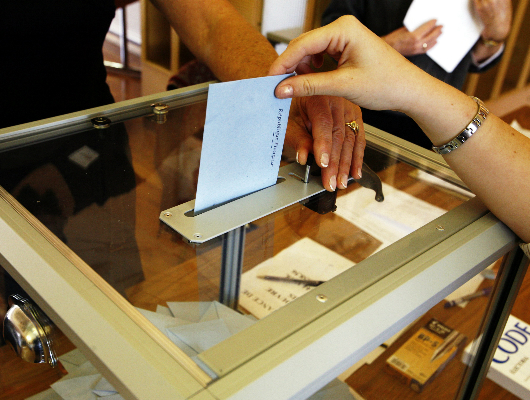
In 1991, political scientist Samuel Huntington hypothesized three historical waves of democratization across Europe and the Americas. Now, it is the African continent’s turn to create a fourth wave of democratic elections.
It started on Dec. 17, 2010, when Mohammed Bouazizi, a Tunisian produce seller, set himself on fire in front of a municipal building.
Bouazizi’s act ignited protests against the oppressive authoritarian regime all over Tunisia. In 2011, the dictator, Zine El Abidine Ben Ali, stepped down from power and fled the country.
In the following three years, Tunisia held its first democratic elections, rewrote its Constitution and saw peaceful transitions of power.
In 2011, similar transitions occurred in the North African countries of Egypt, Libya and Morocco. Along with uprisings in the Middle East, this movement is collectively called the Arab Spring.
The changes in government in these countries have yet to resemble the democracies in North America and Western Europe. But while transitioning from long-standing authoritarian rule to full-fledged democracy does not happen overnight, the Arab Spring undoubtedly sent a message rippling all over the African continent.
The message? The voices of the impoverished and oppressed can be heard.
Last May, U.S. Secretary of State John Kerry visited Nigeria and witnessed an incredible hand-off of power after President Goodluck Jonathan lost the general election.
Surprising critics who believed that Jonathan would not resign, Jonathan willfully stepped down and even congratulated his successor. This marked the first peaceful transition of power in Nigeria’s history.
This year, Kerry traveled back to Nigeria to emphasize Nigeria’s increasingly important position to help with security and development in Africa. He also reminded the new government of the precedent and example they set, as this year is becoming a crucial year for democracy in Africa.
Burkina Faso, Burundi, Chad, Egypt, Ethiopia, Guinea, Cote d’Ivoire, Central African Republic, Libya, Mauritius, Niger, South Sudan, Sudan, Tanzania, Togo and Zambia are all set to have elections this year.
These elections could turn out to be a critical turning point for countries like Chad, where the same leader has been in power for 24 years.
Some staples of democratic transition include a move to transparent elections, term limits, freedom to publicly support any candidate and voter enfranchisement.
Transparency and term limits are important in the election process because, without both, an authoritarian regime can stay in power for decades. Fraudulent elections are often the main reason why people refrain from voting in the first place.
When authoritarian regimes remain in power for decades, repeated policy mistakes stifle the economic development and empowerment of a country. Change can only come when those in power are committed to the needs of their constituencies.
Freedom to publicly support any candidate and voter enfranchisement are also very important steps for an African democratic transition.
When media is censored or run by the government, speaking out against the incumbent is often illegal and can even lead to dangerous consequences.
This is also a problem because, in many African countries, less than half of eligible voters are registered to vote, and many minority groups do not have the right to vote at all.
When it comes to poverty, these four aspects of democracy are key. When marginalized groups take part in policy-shaping, a country can grow together and mitigate inequality. Furthermore, when every voice is involved in decision making there is less chance for discontentment and violent revolt.
As Kerry points out, “A free, fair and peaceful presidential election does not guarantee a successful democracy, but it is one of the most important measuring sticks for progress in any developing nation.” The coming months’ elections will be a giant leap toward democracy and development in Africa.
– Celestina Radogno
Sources: Al Jazeera, BBC, The Brookings Institute, The Guardian, U.S. Department of State
Photo: Wikimedia

Extreme Poverty: Five Unique Facts Around the World
1. More than 1 billion people around the world live on the price of a vending machine candy bar.
Many people have only a $1.25 per day for food, medicine and shelter. Although there are 1.2 billion people living in extreme poverty, the number of people living on this amount has drastically decreased over the last three decades.
2. Poverty in India is different than poverty in China–and still different from poverty in other countries, too.
India has 179.6 million people living in poverty. India has a greater share of the world’s poor than it did 30 years ago. In the 1970s and 80s, India had about one-fifth of its people living in poverty. Now, that number has increased to one-third.
When living in poverty in India, families have to deal with many harsh conditions. Due to poor weather conditions, lack of water and misuse of insecticides, many families can’t grow the crops needed to live a sustainable lifestyle. Families suffering from these poor conditions may move to the slums of Mumbai to get away, where they face other harsh conditions like overcrowded communal bathroom facilities and the lack of proper sewage systems, meaning much of the water they consume is contaminated.
Many residents in India living in poorer conditions have put off things like health and education to keep on basic survival necessities. According to the World Bank, more than 70 percent of the 22 million people living in Mumbai live in the slums.
China, however, has 137.6 million people living in impoverished conditions. Poverty in China differs from poverty in India in that, as of August 2015, it had wiped out the majority of its poverty, but there are still people living in poverty in China’s rural regions. Between 50 and 55 percent of its people live in rural areas.
Over the last decade, the number of females has drastically increased as much of the male population has left to urban areas to find work. This has caused a decrease in farming knowledge among the general population. Farmers are also victims of devastating natural disasters that result in unpaved roads, decreased farm sizes and depleted resources.
3. There are people in the United States living in extreme poverty.
In 2012, a legislator in North Carolina stated there was no such thing as extreme poverty in the state. However, North Carolina is home to three of the top 10 poorest areas in the United States. Other areas include Nacogdoches, Texas; Dalton, Georgia and Gallup, New Mexico.
Over the last few years, the number of women living in extreme poverty in the United States increased from 5.9 percent to 6.3 percent from 2009 to 2010, meaning there are 42 million — about one in three — women living in or on the brink of poverty. One of every six of these women is elderly. In 2010 alone, more than 7.2 million women fell into extreme poverty.
4. More than enough food is produced in the world to keep everyone healthy.
Enough food in the world is produced to keep everyone on an adequate diet, but nearly 854 million people, or one in seven people, go hungry. About 2.8 million people still rely on wood, crop waste and other biomass to heat and cook their food, which can also lead to malnutrition. Luckily, there are many organizations, like Stop Hunger Now and World Hunger Organization, fighting hunger.
5. Poverty in Africa is caused by different effects than poverty in Latin America.
One of the major causes of poverty in Africa is unsustainable agriculture. Poverty in Africa takes place primarily in Africa’s rural regions, where citizens rely heavily on agriculture for sustenance and income. When the weather is harsh on crops, poor agricultural techniques are practiced or soil erosion prevents hearty crops, and many families suffer because of it.
In Latin America, one of the major causes is the inequality of wealth distribution. While poverty in Africa is mostly in rural areas, poverty in Latin America plagues both rural and urban regions. Other causes of poverty in Latin and South America are internal conflicts and issues with structural adjustments.
– Julia Hettiger
Sources: Mic, Gabriel Project Mumbai, The Guardian, Yahoo
Photo: Flickr
The World Bank Helps Increase Water Reliability in Lima
Lima’s future water reliability is of great concern to the local government, the water utility company SEDAPAL and the people who live and work there. Recently, the World Bank helped the water utility company SEDAPAL plan for increased reliability in an uncertain future and saved the city more than $600 million.
The World Bank has completed SEDAPAL’s $2.7 billion master plan for water resources for 2040. The World Bank used state-of-the-art methods for Decision Making under Deep Uncertainty (DMU), investigating key questions such as could the proposed investments ensure reliability in the face of deep uncertainties? What if there are delays? What’s the best sequence so that investments ensure both “no regrets” and maximum future adaptability?
Through the study, the World Bank helped SEDAPAL revise its Master Plan of 14 large-scale investments by identifying projects that are adaptable as conditions evolve. After analyzing the 14 projects, the Bank found that 75 percent of the full $2.7 billion plan could meet water reliability targets, so the investment could be reduced to $2.0 billion. The study saved the city more than $600 million.
“We have to make decisions even when we don’t know the future,” said Laura Bonzanigo, World Bank economist specializing in DMU. “Through the DMU methodology, we can look at the range of possibilities and come up with minimum requirements to meet every possibility — robust decisions with no regrets.”
According to Bonzanigo, nowadays, utility companies are not only used for construction, such as pumping stations, dams, water treatment plans and tunnels through mountains but also are used to solve some valuable things, such as working with farmers and ranchers to make ecological investments in the upper watersheds.
In order to solve water utility problems, the utility company reaches out to nongovernmental organizations (NGOs) to protect watersheds and groundwater aquifers. It also works with consumers to use less water per household and explores ways to recycle water for parks. Engaging Peruvian NGOs is significant because they work closely with communities in the upper watershed management and environmental monitoring. Moreover, universities are important in helping SEDAPAL spread their methods through training.
SEDAPAL has requested further World Bank support. Decision-Making under Deep Uncertainty is an increasingly important tool for any sector’s long-term planning and investments. Based on the study in Lima, final workshop participants Argentina, Paraguay and Brazil have already approached the World Bank country offices to request support in the water sector.
In a new methodological book “Confronting Climate Uncertainty in Water Resource Planning and Project Design: The Decision Tree Framework,” the World Bank includes more information on the Lima water study to help program managers demonstrate the robustness of their projects.
Through state-of-the-art study, the World Bank helped SEDAPAL decide on its Master plan of increasing water utility in Lima and saved the city $600 million. It not only contributed to solving the problem of water utility in impoverished areas but also cut the unnecessary cost to the city.
– Shengyu Wang
Sources: World Bank, BBC
Photo: Wikimedia
Giant Leap Towards An African Democratic Transition
In 1991, political scientist Samuel Huntington hypothesized three historical waves of democratization across Europe and the Americas. Now, it is the African continent’s turn to create a fourth wave of democratic elections.
It started on Dec. 17, 2010, when Mohammed Bouazizi, a Tunisian produce seller, set himself on fire in front of a municipal building.
Bouazizi’s act ignited protests against the oppressive authoritarian regime all over Tunisia. In 2011, the dictator, Zine El Abidine Ben Ali, stepped down from power and fled the country.
In the following three years, Tunisia held its first democratic elections, rewrote its Constitution and saw peaceful transitions of power.
In 2011, similar transitions occurred in the North African countries of Egypt, Libya and Morocco. Along with uprisings in the Middle East, this movement is collectively called the Arab Spring.
The changes in government in these countries have yet to resemble the democracies in North America and Western Europe. But while transitioning from long-standing authoritarian rule to full-fledged democracy does not happen overnight, the Arab Spring undoubtedly sent a message rippling all over the African continent.
The message? The voices of the impoverished and oppressed can be heard.
Last May, U.S. Secretary of State John Kerry visited Nigeria and witnessed an incredible hand-off of power after President Goodluck Jonathan lost the general election.
Surprising critics who believed that Jonathan would not resign, Jonathan willfully stepped down and even congratulated his successor. This marked the first peaceful transition of power in Nigeria’s history.
This year, Kerry traveled back to Nigeria to emphasize Nigeria’s increasingly important position to help with security and development in Africa. He also reminded the new government of the precedent and example they set, as this year is becoming a crucial year for democracy in Africa.
Burkina Faso, Burundi, Chad, Egypt, Ethiopia, Guinea, Cote d’Ivoire, Central African Republic, Libya, Mauritius, Niger, South Sudan, Sudan, Tanzania, Togo and Zambia are all set to have elections this year.
These elections could turn out to be a critical turning point for countries like Chad, where the same leader has been in power for 24 years.
Some staples of democratic transition include a move to transparent elections, term limits, freedom to publicly support any candidate and voter enfranchisement.
Transparency and term limits are important in the election process because, without both, an authoritarian regime can stay in power for decades. Fraudulent elections are often the main reason why people refrain from voting in the first place.
When authoritarian regimes remain in power for decades, repeated policy mistakes stifle the economic development and empowerment of a country. Change can only come when those in power are committed to the needs of their constituencies.
Freedom to publicly support any candidate and voter enfranchisement are also very important steps for an African democratic transition.
When media is censored or run by the government, speaking out against the incumbent is often illegal and can even lead to dangerous consequences.
This is also a problem because, in many African countries, less than half of eligible voters are registered to vote, and many minority groups do not have the right to vote at all.
When it comes to poverty, these four aspects of democracy are key. When marginalized groups take part in policy-shaping, a country can grow together and mitigate inequality. Furthermore, when every voice is involved in decision making there is less chance for discontentment and violent revolt.
As Kerry points out, “A free, fair and peaceful presidential election does not guarantee a successful democracy, but it is one of the most important measuring sticks for progress in any developing nation.” The coming months’ elections will be a giant leap toward democracy and development in Africa.
– Celestina Radogno
Sources: Al Jazeera, BBC, The Brookings Institute, The Guardian, U.S. Department of State
Photo: Wikimedia
Mobile Phone App Helps With Dengue Fever Prediction
In Pakistan, dengue fever was largely endemic in the southern city of Karachi; however, in recent years it has been appearing in a previously unaffected area — northeast Pakistan.
The World Health Organization (WHO) states that dengue fever is transmitted by the infectious bite of a mosquito, and currently there is no vaccine or specific medication for this illness, which usually results in a range of symptoms including “mild fever, to incapacitating high fever, with severe headache, pain behind the eyes, muscle and joint pain and rash.”
A recent article by SciDev describes the possibilities of a mobile phone app which can effectively predict epidemics by tracking the patterns of people.
“As the transmission of the virus that causes dengue fever is partly driven by human travel, analyzing how people move across the country allows researchers to predict when and where epidemics may break out,” SciDev says.
Telenor, a Norwegian mobile provider that operates in Pakistan, teamed up with researchers to track the call records from close to 40 million subscriber SIM cards within the last seven months of 2013.
Mathematical data pertaining to traveling patterns could be tracked and was later published in Proceedings of the National Academy of Sciences.
This information combined with clinical and climate data helped serve as a “model retroactively to predict the likely location and timing of epidemics across the country.”
This newfound data provided encouraging results that would enable researchers to “effectively target interventions, surveillance and clinical response” for where and when to expect dengue epidemics.
“The travel model predicted the geographic spread and timing of outbreaks in 2013 in both recently epidemic and emerging locations, the paper says. For example, it showed good overlap with the actual pattern of the first dengue cases in the northeastern cities of Lahore and Mingora,” says SciDev.
Predictive models may be the solution for mapping and creating early warning systems for diseases such as dengue. With such success regarding Dengue Fever prediction in Pakistan, it is possible for other Asian countries to adopt the same technology for other diseases, such as measles, malaria and influenza.
Soon, the very touch of a button may be able to save thousands from experiencing the disease via dengue fever prediction.
– Nikki Schaffer
Sources: WHO, SciDev, PNAS
Photo: Pixabay
Focusing on Education for Syrian Refugees
The Syrian Refugee conflict has been a hot topic globally for months now. Many countries have been accepting Syrian refugees since the climax of the crisis, but once a temporary home has been found, what next?
On average, a refugee will stay in a camp for 17 years. In these crowded and busy communities, individuals and families try to create a semi-normal life.
For smaller children though, living in these refugee camps means growing up without a fair chance to attend school. Therefore, greater focus needs to be placed on education for Syrian refugees.
According to The UN Refugee Agency, UNHCR, the Syrian refugee crisis could be a large contributor to another global crisis. Poverty rates, already at a high, could be negatively impacted if proper action is not taken.
In a study done by the UNHCR entitled “Living in the Shadows,” the organization stated, “Two in every three Syrian refugee households are below the absolute poverty line in Jordan, and one out of six is below the Jordanian abject poverty line…households’ economic vulnerability appears to increase over time.”
While humanitarian aid is a huge part of alleviating this problem, more needs to be done. Refugee education and training in vocational skills are a necessity to combat the struggle of poverty within and outside of these refugee camps.
According to The Guardian, “Globally, over 50% of refugees are children. Yet only one in every two refugee children attend primary school. Only one in four refugee adolescents receive secondary school education.”
It has been proven several times over that educational opportunities are one of the key solutions to eradicating poverty. With education comes new skills, a more secure future, and a more stable country.
Recently, more countries have started to pick up on this trend and are working to make necessary changes.
In Turkey, the refugee educational opportunities for children has risen from 199,000 in 2014 to 299,000 this school year.
Lebanon, the country with the highest amount of hosted Syrian refugees, is providing education opportunities for 200,000 of those children.
According to the University World News, “The University of Copenhagen has asked the Danish government for permission to create extra student spaces for refugees and migrants arriving in the country.”
For refugees, education is everything. It is the key to getting out of poverty and a source of hope amidst hardship. Continuance of improved and increased educational opportunities is one of the top essentials of getting Syrian refugees out of poverty and helping them contribute to society wherever they currently reside.
– Katherine Martin
Sources: UNHCR, The Guardian, Today’s Zaman, Huffington Post, University World News
Photo: Todays Zaman
Deaf Children in Poverty: A Right to an Education
Obtaining an education in a poverty stricken country is hard for most children living in those conditions. It’s almost impossible when that child is deaf and has no access to sign language assisted learning. Millions of children are struggling to learn or not attending school at all because of this fact.
Educational; Disadvantage
In countries like Nepal, Kenya, China and Northern Uganda, parents, teachers and the wider community often see deaf children as mentally impaired or just altogether incapable of learning. So while these children may be lucky enough to obtain cochlear implants or hearing aids, they are forced to miss out on important learning milestones.
Kenyan Natha Yare recalls being denied her right to an education growing up because she was deaf. Natha talks about how her quality of education was compromised even though she was able to attend a school for the deaf, which was a 15 hour trip by bus.
The teachers there did not know Kenyan Sign Language. They simply wrote on the board, expecting the children to copy down what they saw, which they did. The children were then allowed to play, never actually gaining an understanding of what had been copied.
USAID Provides Resources to Deaf Children
USAID is dedicated to changing the way deaf children in poverty are treated in many countries worldwide. Many poverty stricken countries simply do not have the funds or even the resources to provide sign language teachers or aids.
USAID has helped to promote the implementation of sign language projects in several countries including Ecuador, Georgia and Morocco.
It is important for deaf children to learn sign language in order to allow them the opportunity to be able to express themselves, communicate and learn. In order to ensure this, teachers who are qualified to teach national sign language, and at all educational levels, must be hired.
Deaf children who never learn sign language are highly likely to develop into adults who have a hard time communicating with family, friends and the larger community. This will make it very hard for them to achieve true independence and to lead fulfilling, successful lives.
Education is Always the Key
Every child deserves to have access to a proper education and “the right to education in sign language for deaf people is safeguarded by the United Nations Convention on the Rights of People with Disabilities.”
By safeguarding this right, especially for those children living in extreme poverty, we give each deaf child the opportunity to reach their full potential and break the cycle of poverty.
– Drusilla Gibbs
Sources: USAID, HRW
Photo: Pixabay
Could You Live on a Dollar a Day?
Could you live on a single dollar or less a day? That is what four college students set out to test for two months in rural Guatemala in 2010.
Two Months On a Dollar a Day
As part of their venture, they filmed their time in Guatemala and then released a documentary entitled “Living On One Dollar” that depicts their struggle living in poverty. The project was pioneered by Chris Temple and Zach Ingrasci and co-produced by Ryan Christoffersen and Sean Leonard.
The film won Best Documentary at the Sonoma International Film Festival and received endorsements from Nobel Laureate Muhammad Yunus, USAID Administrator Rajiv Shah, and the Director of the Hunger Games, Gary Ross.
In the documentary, the four allotted $1 a day per person and combined their entire budget into a single pool. Then they divided the total into smaller amounts ranging from zero to nine that would then be randomly selected as the amount of money they would receive each day.
This meant that some days they could earn $6 to spend on food, investing or saving, but it also meant some days they would be left with nothing. Throughout the movie, the four experienced intense hunger and parasites, but also found a connection with their Guatemalan neighbors.
A Film That Inspires
The project has been inspirational to others. Live Below the Line is an annual fundraiser where people spend only $1.50 on food and drink for a day. In 2015, it raised close to $480,000 for poverty alleviation programs in Peña Blanca and the surrounding villages.
In total, this year Live Below the Line has raised nearly $3 million for anti-poverty projects across the world, according to the group’s website.
Living On One, a non-profit directly linked to the film, accepts donations to help raise awareness about extreme poverty through distribution of the documentary.
In addition, the organization created a new video series and curriculum resources about issues of global poverty and to build an online platform to allow people to participate in the fight against extreme poverty through partner organizations.
A Lifetime On a Dollar a Day
Still the question remains, what does it mean for people to live consistently on a dollar a day? While $1 in America buys much less than the same amount in Guatemala, due to relative buying power and costs of living, a dollar a day is not nearly enough in Guatemala to acquire an adequate standard of living.
For example, even though the first six years of public schooling in Guatemala are free and mandatory, many families cannot afford the cost of supplies and transportation required for children to attend school.
Even if they could, many families need their children to stay home to work to provide an income. As a result, only three in ten children actually make it through the sixth grade.
– Brittney Dimond
Sources: IMDB, Global Education Fund, Global Envision, Living On One, Huffington Post
Photo: DORIGAMIFLOWER
Kio Kits: A Modern Education Solution
On a continent where electricity, let alone an internet connection or data coverage, is never a given, bringing technology to the classroom has proven to be a challenge in rural and poor urban regions of Africa.
A BRCK Initiative
But, the African software developers, engineers and technologists of the Kenyan company BRCK have recently rolled out an educational pilot program of tablets, specifically designed to combat connectivity problems.
The program, BRCK Education, comes from the creators of the original BRCK. A router and modem system boasting a built-in global SIM card, internal storage, surge protection, more than 8 hours of battery life, adaptable charging for solar panels, car battery and computer or wall outlet, BRCK grants access to the Cloud from anywhere.
BRCK Education’s pilot Kio Kit, which holds 40 tough Kio tablets, a set of headphones for each student, an original BRCK and wireless charging docks for the Kio, is designed to be a “holistic education technology solution that turns every classroom into a digital classroom,” according to BRCK.
Inside the Kio
The Kio Kits, which look like rugged, plastic suitcases, are not solely made for transporting and recharging the water and drop resistant Kio. The case houses an offline “micro-Cloud” server.
When the case is turned on, the micro-Cloud is activated, giving children and teachers access to the preloaded interactive content saved on the server, without the expense of having to connect to the internet.
Kio, meaning “window” in Swahili, kits are designed to give African school children the same quality education that their technologically more connected peers already enjoy.
The preloaded content is updated remotely, currently by four Kenyan education content companies and the international curriculum giant Pearson. This ensures that all children using the Kio are receiving the most up-to-date information.
But Pearson isn’t the only big-name backing the Kio Kits. Intel, Mozilla, and the African companies JP, e-limu and eKitabu are all getting in on helping the Kio Kits become a success.
Hope For Expansion
The pilot program is currently being run in schools in Kenya, Tanzania and Uganda. The African Wildlife Fund has also purchased Kio Kits to distribute to schools in Ethiopia, Congo and others.
If the pilot program goes well, BRCK is already designed to be used throughout the globe, making it a viable option for other developing nations.
The BRCK Education team hopes to positively change the lives of children who have little or no access to technology through the Kio Kits, in Africa and beyond.
The BRCK team is confident that their system will succeed in changing education for the better. As they claim on their website, “If it works in Africa it will work anywhere.”
– Claire Colby
Sources: BRCK 1, BRCK 2, Forbes, htxt.Africa
Photo: Potentash
Novak Djokovic Partners with World Bank in Serbia
Men’s world no.1 tennis player Novak Djokovic and The World Bank have teamed up to provide education and early childhood development to children from poor families. The announcement was made on Aug. 26, 2015, a week before the U.S. Open, at a press conference in New York.
In 2010, only 44 percent of children in Serbia attended preschool, with 29 percent recorded for children form rural areas, 22 percent for poor children and 8 percent for Roma children. Currently, less than 10 percent of children attending preschool are from the poorest households.
The initiative, called Early Wins for Lifelong Returns, will consist of advocating the importance of early childhood education globally, and improve access for disadvantaged children to merit early childhood development.
The alliance between Djokovic and The World Bank is currently engaged in discussions with the Serbian government to begin a $50 million project as the first step of the initiative. There are also plans to build new preschools and refurbish old schools into preschools, and provide financial opportunities for poor families.
The Early Wins for Lifelong Returns initiative will create programs that address physical, socio-emotional, language and cognitive aspects of development in children.
Research has shown that children exposed to poverty at a young age are likely to experience challenges in academia later in life. Investing in early development programs is important in breaking the cycle of poverty in Serbia.
At the press conference in New York, World Bank Group President Jim Yong Kim stated: “All children deserve an equal chance in life, yet millions fail to reach their full potential due to poverty, poor nutrition, and few opportunities for early learning and stimulation.”
Djokovic added: “Serbia’s education system faces many problems, including insufficient capacity, uneven distribution of facilities, financial constraints on poor parents, inadequate understanding on the importance of preschool education, as well as a lack of diversity of programs and services providers. We hope to change that for the better.”
– Marie Helene Ngom
Sources: Novak Djokovic Foundation, UNICEF
Photo: Novak Djokovic Foundation
Impact of #LightTheWay on Sustainable Development Goals
On Sept. 24, at sundown, thousands of candles, flashlights and lanterns were raised to the sky in support of the Sustainable Development Goals (SDGs).
The Sustainable Development Goals
These 17 goals, which would be announced by world leaders in New York the following day, range from ending poverty to protecting marine life and providing quality education.
Each country would decide whether or not to commit to the fifteen-year agenda to “end poverty, protect the planet, and ensure prosperity for all.”
The Sustainable Development Goals were designed to build upon their predecessors, the Millennium Development Goals (MDGs). The MDGs, implemented from 2000 to 2015, targeted the eradication of poverty, disease and hunger.
Now nations hope that the SDGs will finish the deal by directly addressing issues that promote poverty, such as unsanitary water and social inequality.
“This agreement marks an important milestone in putting our world on an inclusive and sustainable course,” says Helen Clark, the administrator of the United Nations Development Programme.
The biggest challenge now is ensuring that these goals remain on track and leaders exercise vigilance in carrying them out. This is where #LightTheWay steps in.
#LightTheWay For a Better Planet
#LightTheWay was founded by action/2015, one of the largest civil society campaigns. The idea was to “call on leaders to light the way to a better future for people and planet.”
#LightTheWay, described by Our Voices as “a tidal wave of humanity,” ensured that the Sustainable Development Goals will not be quickly forgotten. It tells leaders “we’ll be watching every step of the way to ensure they are met.”
Over 100,000 people in cities across the globe organized vigils in both public and private settings to send a message to world leaders that their citizens support the Sustainable Development Goals.
Organizations such as Our Voice and action/2015 encouraged participants to post pictures and videos of the vigils on social media with the caption “#Lighttheway.”
Some world leaders see the enthusiasm and determination as a promise of a better future and fully support their citizens’ efforts in #LightTheWay.
A Global Effort
After more than 150 people gathered on the Millennium Bridge in Dublin, Ireland’s President, Michael D. Higgins, said, “It is my hope that by 2030, we will look back on the 25 September 2015 as a decisive moment in global history.”
Even prominent figures such as Stephen Hawking and Malala Yousafzai participated in #LightTheWay to show their desire for a safer and more stable world.
Said UN Youth Delegate Eoin O’Liathain, “These new goals are lighting the way forward, everyone must work to make them a reality.”
– Sarah Prellwitz
Sources: Action 2015/span>, Our Voices, UNDP, UN , Development Education Programme
Photo: Action 2015