
“Together, we can make a difference.”
It sounds cliché, but in the world of humanitarianism, partnerships have been shown, again and again, to be key in fighting global poverty and injustices.
Of course, it occurs on an organizational level all the time. In the humanitarian community, organizations intersect in countless ways. At the end of almost any humanitarian website, there is a tab at the bottom called “Partnerships,” “Partners,” or “Work with Us.”
When one organization has the expertise to improve education opportunities, another has the educators on the ground, another has the finances, and another has the technology to create school supplies that are more affordable or efficient; a partnership can be massively beneficial.
Pooling resources to unite for a common goal means that more help can be brought to where it is needed most.
Historically, partnerships have occurred between countries in order to achieve common political, economic and sometimes humanitarian, goals.
Often, these arise out of necessity: wartime, natural disasters, disease epidemics, and so on. But when partnerships arise out of foresight, crises can be handled more efficiently and existing programs and policies can be improved.
An example is the countries united in a commitment to the Millennium Development Goals, which have been implemented over the last fifteen years to a largely successful degree.
In the partnership between GlaxoSmithKline (GSK) and Save the Children, there are five key elements: programming, research and development, joint-advocacy, employee engagement and cause-related marketing.
The Partnerships page of CARE, an organization whose mission is simply “to serve individuals and families in the poorest communities in the world,” is divided into sections: foundations and trusts, corporate partners, humanitarian partners, institutional donors, and research and technical partners.
The Office for the Coordination of Humanitarian Affairs (OCHA) is a part of the UN Secretariat. Its mission is to bring together humanitarian groups to make sure that responses to emergencies are coordinated and coherent.
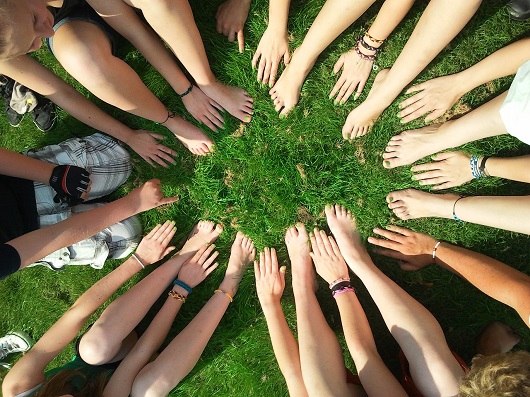 It works with governments, regional organizations, and groups at the national and international levels in order to make sure that the people who need help are getting as much as they can as quickly as possible.
These are all examples of the many ways that partnerships can be utilized. There are so many different aspects to any heartfelt mission, so organizations can connect in ways that the average person might never have considered. When opportunities are considered critically, the possibilities are endless.
It can all start to feel a little bit like alphabet soup sometimes: The IRRI works with HRDC, SKEPs, and a company called PRIME. UNAIDS cosponsors include UNHCR, UNICEF, WFP, UNDP, UNFPA, and UNODC.
But here is what lies at the core of it all: organizations are coming together, communities are coming together, and individuals are coming together to make a difference and to do what is right. With technology increasing the rate of globalization, partnerships are easier than ever to form, and this should be taken advantage of.
It can serve as a lesson to anyone about the importance of coming together.
For any individual who looks at everything that is wrong with the world and says, “But what can I do?” because their resources and the scope of their influence are limited, he can ask, “What do I need in order to make a difference?”
From there, he can reach out to other individuals and groups who have different resources to offer, who have a different sphere of influence, who can help the person to make the kind of impact that will really be worthwhile.
“Partnership” is a word that can mean so many things. It offers forth a range of possibilities that are almost infinite. Humanitarian groups are one of the most important examples of how much more can be achieved through communication and the formation of connections.
– Emily Dieckman
Sources: Care, OCHA 1, IRRI, OCHA 2
Photo: Pixabay1, Pixabay2

Genetic Counseling for Developing Countries
Genetic disorders are diseases that are caused by a mutation in the genetic structure of the cell. These mutations can arise from a modification of the nucleic chromatin material, as well as an alteration of one of the coding bases in the DNA structure.
Genetic mutations arise from many different causes and manifest in various ways as well. The genetic mutations can arise at two different levels: at a nucleotide level, or at a chromosomal level. A nucleotide is a building block of DNA- the hereditary, genetic material of any living cell.
Each nucleotide triplet can code for an amino acid, which is, in turn, a building block of proteins. Any insertion or deletion of a nucleotide can lead to a wrong protein structure.
At the chromosomal level, portions of the chromosome- which contains huge portions of the DNA strands- can be altered. Both of these mutations can lead to an alteration of protein structure, which is the physiological and anatomical basis for life.
Genetic mutations can lead to many devastating consequences for those affected by it. Cystic fibrosis, hemophilia, and neurodegenerative diseases like muscular dystrophy are some of the more familiar genetic diseases with terrible implications for the patient.
Genetic diseases are not generally preventable after an individual’s phenotype has been determined. Treatment of certain genetic diseases, such as cystic fibrosis, requires constant medication and therapy. The treatment is also expensive and experimental in most cases and inaccessible in many developing countries.
Genetic counseling is becoming widely popular in the Western, resource-rich countries as a preventative measure for genetic disorders. Genetic counseling involves advising at-risk patients–or those with familial histories of a disease–of the chances of transmitting or developing a disease.
Many genetic disorders have now been classified on the basis of their mode of transmittance, and parents can be advised of how probable it is for their children to develop the disease. If the probability of affected children is high, they can also be advised of alternative options, as well as the severity of disease if a child is affected.
Unfortunately, genetic testing and genetic counseling are facilities that are unavailable in many places where they are needed. For instance, sickle-cell anemia is a disorder where the red blood cells in the body are of a distorted structure. If untreated or undiagnosed, the disease can have fatal complications for the patient.
Genetic research has indicated the high rate of prevalence of the disease in mid-African populations. Similarly, the risk of genetic diseases is high in many Arab countries, due to inter-family marriage practices.
Despite the high genetic frequency of the sickle cell anemia trait in central Africa, little to no counseling resources are available. For example in Nigeria- where the trait occurs in 20-30 percent of the population- there is not one genetic counseling clinic available.
Studies have reported equally low genetic education in many Arab countries. The lack of knowledge and informative resources for genetic disorders inhibit the prevention of such diseases, which in turn can be a considerable strain on resources as well.
In light of these statistics, there is an exigent need for the establishment of genetic counseling clinics. The stance of many scientists is to spur the research in Western countries to ultimately come up with highly efficient and cost-effective solutions.
However, the high instance of genetic disease and genetic susceptibility to diseases is an issue that needs to be addressed in the present.
The prevention of serious diseases in the developing world can only be partially successful if genetic counseling and testing are omitted. Healthy nations are, after all, capable of realizing their potential to the fullest and providing a better life for their citizens.
– Atifah Safi
Sources: Afro, AJOL, BMJ, Genome, NIH, State
Photo: Google Images, Pixabay
The Power of Partnerships
“Together, we can make a difference.”
It sounds cliché, but in the world of humanitarianism, partnerships have been shown, again and again, to be key in fighting global poverty and injustices.
Of course, it occurs on an organizational level all the time. In the humanitarian community, organizations intersect in countless ways. At the end of almost any humanitarian website, there is a tab at the bottom called “Partnerships,” “Partners,” or “Work with Us.”
When one organization has the expertise to improve education opportunities, another has the educators on the ground, another has the finances, and another has the technology to create school supplies that are more affordable or efficient; a partnership can be massively beneficial.
Pooling resources to unite for a common goal means that more help can be brought to where it is needed most.
Historically, partnerships have occurred between countries in order to achieve common political, economic and sometimes humanitarian, goals.
Often, these arise out of necessity: wartime, natural disasters, disease epidemics, and so on. But when partnerships arise out of foresight, crises can be handled more efficiently and existing programs and policies can be improved.
An example is the countries united in a commitment to the Millennium Development Goals, which have been implemented over the last fifteen years to a largely successful degree.
In the partnership between GlaxoSmithKline (GSK) and Save the Children, there are five key elements: programming, research and development, joint-advocacy, employee engagement and cause-related marketing.
The Partnerships page of CARE, an organization whose mission is simply “to serve individuals and families in the poorest communities in the world,” is divided into sections: foundations and trusts, corporate partners, humanitarian partners, institutional donors, and research and technical partners.
The Office for the Coordination of Humanitarian Affairs (OCHA) is a part of the UN Secretariat. Its mission is to bring together humanitarian groups to make sure that responses to emergencies are coordinated and coherent.
These are all examples of the many ways that partnerships can be utilized. There are so many different aspects to any heartfelt mission, so organizations can connect in ways that the average person might never have considered. When opportunities are considered critically, the possibilities are endless.
It can all start to feel a little bit like alphabet soup sometimes: The IRRI works with HRDC, SKEPs, and a company called PRIME. UNAIDS cosponsors include UNHCR, UNICEF, WFP, UNDP, UNFPA, and UNODC.
But here is what lies at the core of it all: organizations are coming together, communities are coming together, and individuals are coming together to make a difference and to do what is right. With technology increasing the rate of globalization, partnerships are easier than ever to form, and this should be taken advantage of.
It can serve as a lesson to anyone about the importance of coming together.
For any individual who looks at everything that is wrong with the world and says, “But what can I do?” because their resources and the scope of their influence are limited, he can ask, “What do I need in order to make a difference?”
From there, he can reach out to other individuals and groups who have different resources to offer, who have a different sphere of influence, who can help the person to make the kind of impact that will really be worthwhile.
“Partnership” is a word that can mean so many things. It offers forth a range of possibilities that are almost infinite. Humanitarian groups are one of the most important examples of how much more can be achieved through communication and the formation of connections.
– Emily Dieckman
Sources: Care, OCHA 1, IRRI, OCHA 2
Photo: Pixabay1, Pixabay2
How the Richest Man in China Became its Top Philanthropist
China’s rich men have been passionate about philanthropy. In the latest Hurun Report, China’s FORBES list, Ma Yun (Jack Ma), the richest man in China, is also the country’s most generous person.
Ma Yun is the founder and executive chairman of Alibaba Group, a family of highly successful internet-based businesses. In 2014, according to the Bloomberg Billionaires Index, with an estimated net worth of $29.7 billion, he was listed as the richest man in China and the 18th richest person in the world.
In 2014, Ma Yun donated 14.5 billion RMB to the improvement of the environment, medicine and health care, as well as education and culture. Thus, it’s the first time in China that the richest guy is also the most generous one.
Recently, donation for philanthropies has been popular among China’s wealthy businessmen. Cai Chongxin, the second largest shareholder in Alibaba Group donated 6.2 billion RMB to philanthropies and thus become the top philanthropist in the region of Hong Kong, Macao and Taiwan.
The new record of the donated funding has been reached recently. The donation made by the first 100 philanthropists on the Hurun Report of Philanthropy has increased 264 percent compared with that in the last year.
Except Ma Yun, the rest of the philanthropists on the list have donated 8.6 percent more than last year on average. The level of being nominated for the list has increased 1 million RMB than last year. On the list, there are 71 newly nominated philanthropists.
Most philanthropists donated to the educational area, which occupied 27 percent in all the philanthropic donations. The second popular area that people donated was social charity. At the same time, disaster relief and poverty alleviation are also the main donated areas.
In 2014, Ma Yun and Cai Chongxin established two charitable trust funds based on their share holdings in Alibaba Group. After the Initial Public Offering, these two charitable trust funds are worth over $2 billion.
According to Ma, these two trust funds will be dedicated to pollution control and medical industry in China.
“I want to live in a world with bluer sky, cleaner water and better health care. I concern a lot about the environment, medical care and education in China, but only concerning can’t help. I’m passionate about contributing into and solving those problems.” Said Ma, a founder of charitable trust funds.
The establishment of two charitable trust funds made Ma Yun and Cai Chongxin known among worldwide famous philanthropists. In the press conference, Ma Yun received congratulations from many celebrated philanthropists, such as Bill Gates, Warren Buffett and Michael Bloomberg.
“Their donations set the new standard for the philanthropy in China, and other businessmen and business leaders are very likely to follow them.” Said Bloomberg.
– Shengyu Wang
Sources: Sina, Hurun Report, Financial Times China
Photo: Wikimedia
Moringa: The Miracle Tree
Moringa oleifera, the moringa tree, has been aptly nicknamed the miracle tree for its nutritional value and medical qualities. The moringa tree is native to South Asia and is known for how quickly it grows.
Many parts of the tree are edible, making it a valuable source of food in impoverished, rural areas especially in times of drought because the tree is very hardy.
Nearly every part of the moringa tree can be used. Although the wood from the tree is not very high quality, the fruit, leaves and pods are all edible.
The moringa tree leaves have a very high level of protein, calcium, iron, vitamin C as well as vitamin A. One cup of moringa leaves offers two grams of protein and more than 10 percent of the recommended daily allowance of vitamin C, vitamin B6, iron, and riboflavin. One cup of moringa pods offers 157 percent of the daily allowance for vitamin C.
The leaves have twice as much calcium and protein as whole milk when compared ounce for ounce. Considering approximately 670,000 children die from a vitamin A deficiency every year, the moringa’s nutrients are very valuable.
Moringa oil is extracted from the seed of the tree. This oil’s special quality is that it does not quickly go rancid. In impoverished areas where refrigeration is not an option, the oil can be a very good alternative to other vegetable oils.
One of the significant attributes of the moringa tree in light of global poverty is the purification quality of the seeds. There is a coagulant found in the crushed seed that can be used to reduce turbidity and alkalinity in water. There is also an antiseptic property withing the seed that helps purify it.
The nutrition within the tree makes the moringa a valuable asset in the alleviation of global hunger. The success of the moringa tree is evident as organizations have incorporated it into their programs for hunger alleviation. The Peace Corps in specific implements the use of the tree into the programs.
– Iona Brannon
Sources: Epoch Times, Fox News, International Journal of Development and Sustainability, Kuli Kuli, SABC
Photo: Flickr
In India Silkworms are an Economic Boon to the Poor
Silk has always been a highly coveted material. While silk production is said to have begun in China several thousand years ago, the vibrant and expensive material also has a long history in India. Today, silk production may represent a pathway out of poverty for India’s rural poor.
In the eastern state of Bihar, India, women like Munia Murmu are expanding their economic opportunities by farming silkworms and producing silk. Like much of rural India, Murmu lived in extreme poverty until she started raising the worms.
She belongs to a tribal community, generically referred to as an Adivasi, who suffer some of the worst scores on most development indicators such as income, life expectancy and health in India.
Fortunately, silkworm rearing and silk production, also known as sericulture, allow these rural, tribal communities to lift themselves out of poverty.
A local NGO called Pradan (short for Professional Assistance for Development Action) provides livelihoods and training to these communities, teaching them advanced techniques to efficiently rear and sell silkworms and silk.
This is especially attractive for rice farmers in the state of Bihar and nearby Jharkhand, who do not have irrigated crops and must depend on unreliable monsoon rains. Sericulture provides a much-needed buffer against the uncertainty of growing traditional crops but probably doesn’t represent a stable year-round source of income itself.
Demand for silk is enormous in India alone, which is the world’s largest consumer of silk as well as the second largest producer after China. Silk products are also highly valued in western markets like the U.S. and Europe, making sericulture a very lucrative option for farmers like Murmu who are subject to seasonal uncertainty.
During silkworm breeding season, lasting three months per year, Murmu earns about $770, an amount that clearly goes a long way in improving her quality of life. A global annual demand of 1500 tons of raw silk also eliminates any worries about overproduction. As long as rural villagers are willing to raise silkworms, they will be able to find a market for their products.
Though silkworm production isn’t a new phenomenon in eastern India, Murmu and her tribal community have managed to increase yields from the techniques introduced to them from Pradan. For example, the NGO showed her community how to inspect eggs for disease using microscopes, as well as how to plant trees that host worms and moths.
Pradan has also provided instruction in the rearing of higher-value varieties of silkworms, such as Tasar, which is particularly productive in the large forests of Bihar. These developments have allowed villagers to maximize their profits by using only the most productive worms.
Thankful for the extra income they provide, Murmu simply says, “Silkworms have changed our lives,” pointing out her newly-built house, water pump and indoor plumbing. With proper training, rural farmers in other parts of India could also supplement their income and potentially grow out of extreme poverty.
Like what the ancient philosopher Maimonides said about teaching a man to fish, teaching the rural poor how to raise silkworms can help them support themselves and their communities in a generational, inexpensive and sustainable manner.
– Derek Marion
Sources: Global Post, Academia, Pradan
Photo: Google Images
Transforming Global Health Through Data
An ongoing study involving more than 1,000 researchers in over 100 countries shows how data is transforming global health programs.
The Global Burden of Disease (GBD) study was created to be able to examine health data on a larger scale and understand what is making people sick and causing them to die on specific continents.
Instead of only including prevalence approximations when it comes to a disease, the study also contains information on the relative harm the disease causes.
The study is currently gathering data on death and disability in 188 countries about more than 300 diseases and injuries, ranging from 1990-present. By organizing the data, researchers are able to make comparisons between years, age groups and populations.
Additionally, the machinery used by GBD gives researchers regular updates when the new statistics become available. Such tools and statistics can be used at the international, national and local levels to make sense of trends over time when it comes to health.
The study comes in conjunction with reports from the World Health Organization that show people are still dying from curable diseases in low-income countries. Projections by the organization show that, over the next 15 years, such diseases could be some of the leading causes of death in those countries.
Data gathered by GBD shows that diabetes, heart disease, stroke and other chronic diseases cause 64 percent of deaths in low-income countries. Less than two percent of global health aid, however, is allocated toward these diseases.
Health data, in turn, allows for engagement and innovation and using the data can help lead to health equality.
That’s the goal of GBD. When presenting political leaders and health officials with data, researchers want them to understand the big picture in terms of public health.
One example of political leaders using health data is in Rwanda. When researchers discovered that indoor air pollution resulting from dirty cookstoves was the leading risk factor for health loss, the Rwandan government replaced around a million with clean ones.
– Matt Wotus
Sources: Devex International Development, Institute for Health Metrics and Evaluation, ONE Campaign
Photo: Google Images
Ellen DeGeneres And Zoella Team Up With Gap For GIRL Line
Famous YouTuber Zoe Sugg, also known as Zoella, and Talk Show Host Ellen DeGeneres have teamed up with Gap to release a new line of clothing for female empowerment.
The clothing line, called Gapkids x ED, encourages women of any age to feel strong and to voice their opinions. DeGeneres’ clothing brand, ED, has worked with Gap to combine comfy fabric and trendy styles with motivational quotes and symbols that inspire courage and confidence.
To show her support for the campaign, called GIRL, Sugg took a few minutes out of one of her vlog videos to flash one of her favorite t-shirts from the line. The British 25-year-old donned the GapKids x ED Energy Bolt Tee while introducing her involvement in GIRL to her nine million subscribers.
“This was something totally different, and I really, really loved this campaign. And I really wanted to get behind it and share it with you guys,” Sugg said in the video.
Expressing her backing for GIRL, DeGeneres said that one of the reasons she joined the campaign was because she shares some of the same ideals as Gap.
“Gap has always encouraged people to be themselves, and I love that they have the same values that I have; to be true to who you are and to wear cute pants,” DeGeneres said.
Not only do Gap and DeGeneres believe in sporting fashionable trousers, but they also think that self-image is a key step in female empowerment. DeGeneres said that she knows from experience that being true to yourself is important for growing and changing and that this campaign is demonstrating this notion by shining a light on real girls doing unique things.
GIRL focuses on three talented girls who each have something different to offer and demonstrate. The webpage for GIRL hosts three videos of each girl. Alexey, a young, bold and strong drummer, can be seen expertly beating her drum set. When asked what advice she has for girls, the little rocker gave a mature statement.
“Just follow what your heart says, and you can achieve it,” the 12-year-old said.
The other two girls featured by GIRL can also be seen in videos on the webpage. Torrae, a nine-year-old robotic hand technician, said that she is powerful because of her imagination. Twelve-year-old entrepreneur, Asia, started her own company when she was five and plans to start classes teaching kids her age about business.
Asia has big plans for her future. In her video, she proudly said that she wants to be a dancer, a singer, a rapper, a college graduate and the president of the United States.
Another girl representing the influence of personal voice is Sugg. With more than 700 million views on both of her YouTube channels combined, Sugg has been able to reach girls from all across the globe with her take on feminism in her fashion, beauty and life videos.
“So often, you can kind of get swept up in this world where you feel inferior or you feel like you should be doing something specific or you feel like you’re not doing something right. And it’s just a whole campaign basically to support girls to be who they are, and to be who they want to be. And I just think that that’s really amazing” Sugg said.
Like Sugg has done with her YouTube videos, DeGeneres said that this campaign has the ability to “break the internet.” GIRL encourages wearers of the brand to take selfies of themselves in the clothes and to share the pictures, as well as speak their views of feminism and equal rights.
DeGeneres added that there is also a collection by Gap x ED because they “believe in equal opportunity cuteness.”
– Fallon Lineberger
Sources: Gap 1, Gap 2, Paste Magazine, YouTube 1, YouTube 2
Photo: Google Images
Want to be a Part of Baylor’s Global Health Hackathon?
In September, Baylor Global Initiatives hosted their first Global Health Hackathon. While a hackathon may sound like a group of socially awkward nerds sitting in a dark basement stealing credit card information, it is actually something much less devious and much more relevant to reducing global poverty.
Hackathons are events hosted to bring together students and innovators from a myriad of disciplines. During the event, teams are created that then race to develop solutions to a given problem.
Baylor’s hackathon was held with the intent of generating solutions to global health issues, specifically the emergency response and procedural care being used by Baylor College of Medicine faculty in African countries.
A team’s final product can be anything that can improve global health: software, hardware, medical tools, delivery or financing mechanisms. Winning teams can win funding to further the development of their prototypes or concepts as well as a reward.
Baylor’s hackathon is a wonderful opportunity to work with thinkers who are hoping to make a difference and learn from world-renown faculty from several top-notch university and organizations, including Rice University, Texas A&M University and NASA.
Click here to see highlights from Baylor’s Global Health Hackathon.
– Brittney Dimond
Sources: Momentum, Baylor College of Medicine
Photo: Flickr
Food for Peace, the Past, Present and Future
In 2013, NPR reported that “a political war” was brewing over the Food For Peace Act.
Food for Peace, which has been the United States’ primary program for overseas food assistance, is estimated to have benefited 3 billion people in 150 countries.
The program began as a way for the United States to put its surplus foodstuffs to good use across the globe, and has since modernized into a competitive process in which the American government purchases commodities from US farmers (through a competitive process) and then allocates them to needy populations worldwide.
Or at least, most of those commodities are redistributed. There is a portion of that food that is deemed “non-emergency” and placed into the hands of non-profits that are able to sell it for profit. Being non-profit companies, these profits are intended to then be funneled into development initiatives.
In 2013, this tactic of redistribution was the subject of hot debate. Many critics, including Oxfam America told NPR that it was “a horribly ineffective way to pay for local development projects” and that “according to some calculations, at least a third of the money is wasted.”
Fast forward 2 years later and the war seems to be over. Those who called for reforms, like Oxfam America, were victorious. Food for Peace has recently undergone a fine-print makeover intended to streamline the United States’ role as a pipeline that brings nutrition to starving populations.
Senators Bob Corker (R-Tenn) and Chris Coons (D-Del.), members of the Senate Foreign Relations Committee, are leading the charge:
“With limited aid available it is our responsibility to ensure American resources are used in the most effective manner possible,” said Senator Corker. “These necessary reforms will allow us to better promote stability around the world by delivering lifesaving food to those in need more quickly and at a lower cost.”
Senator Coons added that “Our current system for acquiring and distributing food is inefficient and often hurts the very communities it is trying to help.”
So, what will these reforms look like?
They begin with a more cost-effective method of food procurement. This means that while the current program requires that 100 percent of food be produced in the United States, the reforms would allow US produced commodities as well as regionally produced ones (from places such as Latin America) to be considered for the program.
It will also expand the definition of “commodities” to include vouchers and even cash transfers, which have seen remarkable success in poverty reduction in Randomized Control Trials in Africa.
The reforms will also reduce the number of goods that must be shipped on American-flagged vessels (it is 50 percent currently) which will cut shipping costs an estimated $50 million annually.
For those concerned over how this will affect American shipping interests, a press release has estimated that this would have no tangible effect on the US shipping sector, as only .86 percent of US exports are channeled through Food for Peace.
Finally, the Food for Peace Reforms will deal a fatal blow to the “monetization” aspect—or the portion of food that is given directly to nonprofits–by eliminating this aspect of the program completely.
This comes on the recommendation of the Government Affair’s Office (GAO) who launched an investigation into “monetization” in regards to Food for Peace in 2011. The GAO found that monetization is “an inherently inefficient way to fund development projects and can cause adverse market impacts in developing countries.”
This is at odds with the 2013 claim that it is this program that ensures the continuance of aid assistance regardless of who sits in the oval office.
“If we remove the conditions about how the money should be spent, that money may never be available for those crises, at a key time when we need it,” said Jeffrey Grieco, chief of public and international affairs at International Relief and Development (IRD).
Regardless of the attitude towards monetization, which is likely to spark yet another war in Congress to match the 2013 conflict, these reforms are estimated to release $440 million in funds that could be used to feed 12 million more people. The gains of monetization would have to be at least that strong to hinder this reform bill’s progress through Washington.
– Emma Betuel
Sources: Senate, GAO, NPR
Photo: Google Images, Flickr
More Millionaires in Africa But Poverty Remains the Same
The most recent report from the research firm New World Wealth has released new statistics regarding the concentration of wealth across Africa.
According to the report, there are a total of 163,000 millionaires in Africa with a combined wealth of $670 billion. That’s higher than the GDP of Kenya and Nigeria, two of Africa’s largest economies, combined.
Most of Africa’s new millionaires are coming out of South African cities like Johannesburg and Capetown, which host 527 and 238 millionaires per 100,000 people, respectively.
One could assume that these new millionaires are a testament to Africa’s growth generating increased wealth, but the reality is much starker.
According to new World Bank data, GDP growth in Africa this year is forecasted to be 4.4% while per capita growth is expected to be only 1.7%.
“More people are likely living on less than $1.25 a day in Sub-Saharan Africa today than at the turn of the millennium—an estimated 413 million in 2010 compared with 376 million in 1999,” the World Bank report states. In addition, one out of every two Africans is currently living in poverty.
As far as who’s actually becoming a millionaire in Africa as poverty continues to be a crisis, it’s mostly those involved in politics, upper ranking government employees and those who were already well-off to begin with.
“It’s generally middle-class people becoming millionaires,” New World Wealth research head Andrew Amoils told Quartz.com. He stated that it’s “Difficult for poor people in Africa to become rich as schooling and healthcare are much better for wealthy people.”
– Alexander Jones
Sources: All Africa, BBC, Mohammed
Photo: African Business Review