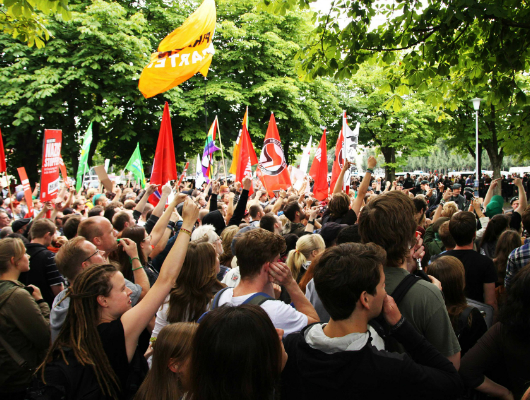
When the world’s problems seem too big, too complicated and too terrifying to even try and solve, the words of Margret Meade always seem to provide much-needed perspective, “Never doubt that a small group of thoughtful, committed citizens can change the world. Indeed, it’s the only thing that ever has.”
Activism, as defined by the Cambridge Dictionary, is “the use of direct and noticeable action to achieve a result, usually a political or social one.” By this definition, an activist is someone who does an action on behalf of a cause.
The traditional method of activism usually involved a picket and a protest. However, with the introduction of the Internet and the expanding access to information and connectivity, activism has begun presenting itself in diverse, and arguably more effective, ways.
Activism has played a role in ending slavery, protecting civil rights, promoting equality for women and many other issues, but as the way activism works begins to change, the need for activists grows.
Before globalization and the hyper interconnectivity of our world through trade and online access, problems were handled generally at a local level. Communities pushed against government policies they disagreed with or pushed for social change they deemed fit.
As issues expand to a global level, so must activism. But unlike the past, those most affected by certain life debilitating issues do not have the access needed to have their voices heard.
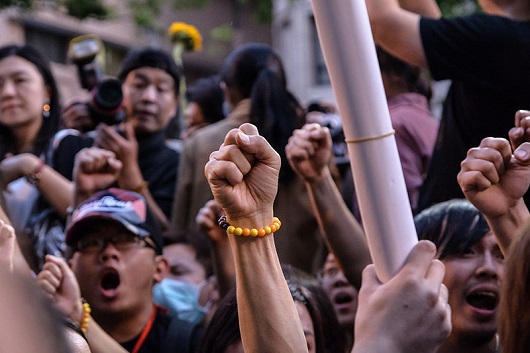 Nearly half of the world’s population — a staggering 3 billion people — live on less than $2.50 a day.
While the international poverty line has been drawn at living on a $1.25 or less a day, which more than 1.3 billion people do, it is important to acknowledge that a significant portion of the people living on earth today is barely getting by. Poverty is especially rampant in undeveloped nations.
So in addition to dealing with economic insecurity, citizens of poor countries have few avenues for social, political or economic change. They cannot simply sign a petition for their government to implement better social programs.
Many of them live in rural communities far removed from their governments, and most of the governments in developing countries are unable or unwilling to help their citizens break the bonds of poverty.
This is why we need more activists. Half of our world is essentially voiceless. They cannot adequately act on behalf of their own cause, but that does not mean they should not be heard. If the portion of our population, who has enough, did enough, then couldn’t we all have enough?
We need to use activism to scream that global poverty must be eradicated.
There is what seems like endless ways to become a voice for someone who needs to have their needs heard.
Join organizations who have made it their mission to address global poverty in one way or another, volunteer at their events, rally your friends to become involved, contact your local and federal governing representatives to encourage them to join the fight.
It does not matter how you choose to be an activist, it only matters that you act.
– Brittney Dimond
Sources: Do Something, BMartin, Cambridge Dictionary, One, Permanent Culture Now, Activists Handbook
Photo: Pixabay, Wikipedia

UK Students Sign Up to “Send My Friend to School”
Since the United Nations’ decision to focus on education in 2000, approximately 58 million more children have been able to attend school thanks to various governments and organizations like Send My Friend to School banding together.
While this number seems large, that still leaves 58 million children out of school. And that doesn’t account for all of the dropouts that have taken place since.
In developing countries, there are still many obstacles getting in the way of a primary education for all children. Disability, cost, work, distance, conflict and a lack of teachers are only a few of the struggles that are still being addressed.
In the United Kingdom, the Global Campaign for Education began a program entitled “Send My Friend to School” in order to help the remaining 58 million children that are currently unable to receive a primary education.
This campaign focuses on allowing the children of the U.K. to participate in the solution. According to the campaign website, “over 10,000 schools and youth groups, and millions of children, have been involved so far in the U.K.”
The focus for these children is to band together and speak out for everyone’s right to an education. By speaking with and reminding leaders about their promise to get every child in school, they are able to keep education a priority.
According to Oxfam, an educational resource site, “Send My Friend to School is asking UK pupils to imagine that they were a world leader and tell politicians what crucial decisions they would make to get every child worldwide into school now.”
Since the campaign’s start in 2005, success stories have built up showing how much these children are capable of.
After the Southfield School campaign targeting MP Philip Hollobone and David Cameron, the two leaders expressed, “I am very impressed by the concern you have shown for the education of children in developing countries. Your colourful drawings demonstrate this as well as your enthusiasm for the campaign.”
Other such success stories have flooded the U.K. news.
The Send My Friend to School campaign has consistently shown that children are excellent advocates for global education needs. When organizations and direction are in place, children are able to accomplish much good.
– Katherine Martin
Sources: Send My Friend, Oxfam, Southfield School
Photo: Flickr
Why We Need More Activists
When the world’s problems seem too big, too complicated and too terrifying to even try and solve, the words of Margret Meade always seem to provide much-needed perspective, “Never doubt that a small group of thoughtful, committed citizens can change the world. Indeed, it’s the only thing that ever has.”
Activism, as defined by the Cambridge Dictionary, is “the use of direct and noticeable action to achieve a result, usually a political or social one.” By this definition, an activist is someone who does an action on behalf of a cause.
The traditional method of activism usually involved a picket and a protest. However, with the introduction of the Internet and the expanding access to information and connectivity, activism has begun presenting itself in diverse, and arguably more effective, ways.
Activism has played a role in ending slavery, protecting civil rights, promoting equality for women and many other issues, but as the way activism works begins to change, the need for activists grows.
Before globalization and the hyper interconnectivity of our world through trade and online access, problems were handled generally at a local level. Communities pushed against government policies they disagreed with or pushed for social change they deemed fit.
As issues expand to a global level, so must activism. But unlike the past, those most affected by certain life debilitating issues do not have the access needed to have their voices heard.
While the international poverty line has been drawn at living on a $1.25 or less a day, which more than 1.3 billion people do, it is important to acknowledge that a significant portion of the people living on earth today is barely getting by. Poverty is especially rampant in undeveloped nations.
So in addition to dealing with economic insecurity, citizens of poor countries have few avenues for social, political or economic change. They cannot simply sign a petition for their government to implement better social programs.
Many of them live in rural communities far removed from their governments, and most of the governments in developing countries are unable or unwilling to help their citizens break the bonds of poverty.
This is why we need more activists. Half of our world is essentially voiceless. They cannot adequately act on behalf of their own cause, but that does not mean they should not be heard. If the portion of our population, who has enough, did enough, then couldn’t we all have enough?
We need to use activism to scream that global poverty must be eradicated.
There is what seems like endless ways to become a voice for someone who needs to have their needs heard.
Join organizations who have made it their mission to address global poverty in one way or another, volunteer at their events, rally your friends to become involved, contact your local and federal governing representatives to encourage them to join the fight.
It does not matter how you choose to be an activist, it only matters that you act.
– Brittney Dimond
Sources: Do Something, BMartin, Cambridge Dictionary, One, Permanent Culture Now, Activists Handbook
Photo: Pixabay, Wikipedia
UNAIDS And Faith-based Organizations Strengthen HIV Response
On Sep. 15, 2015, in the seventieth session of the United Nations General Assembly in New York, it was revealed that the five focus areas of the U.S. $4 million program are: collecting, analyzing and disseminating data; challenging stigma and discrimination; increasing demand for HIV services and retaining people in care; improving HIV-related service provision; and strengthening leadership and advocacy.
This new program is the result of suggestions made by faith leaders at a deliberation in April 2015. The conference hosted over 50 faith leaders from Kenya, Rwanda, Uganda and the United Republic of Tanzania.
The faith leaders called for more access to data, heightened accountability and better collaboration between FBOs and international partners.
The report, Building on Firm Foundations, which was released by the United Nations General Assembly, UNAIDS, PEPFAR and Emory University last month, highlights the impact of faith-based responses to epidemics in the four East African countries.
FBOs provided a majority of health services and sustained collaborative communities which maintain a disease-free environment for future generations.
PEPFAR’s partnership with FBOs has allowed them to reach 7.7 million people with lifesaving antiretroviral treatment, and treat 14.2 million pregnant women, thus decreasing mother-to-child transmission of HIV.
The recently launched PEPFAR 3.0 – Controlling the Epidemic: Delivering on the Promise of an AIDS-free Generation set the ambitious goal of 90-90-90.
By 2020, PEPFAR aims to achieve: 90% of people living with HIV who know their status, 90 percent of people who know their status and are receiving treatment and 90% of people on HIV treatment who have a suppressed viral load.
Thus it is important to strengthen partnerships with FBOs, as they are primary health providers for many communities, and allow UNAIDS and PEPFAR to expand their impact.
Luiz Loures, UNAIDS Deputy Executive Director, stated that “Faith-based organizations are essential partners, particularly in the areas of health service delivery and addressing stigma and discrimination. The partnership with faith-based organizations is critical to ending the AIDS epidemic and making sure that no one is left behind.”
– Marie Helene Ngom
Sources: UNAIDS, PEPFAR Report
Photo: Flickr
Syrian Conflict: Typhoid Outbreak Among Palestinian Refugees
The United Nations (U.N.) is calling for access to Yarmouk, a Palestinian refugee camp in the outskirts of Damascus, due to the increasing evidence of a typhoid outbreak. As of Sept. 20, a total of 90 cases has been reported.
The UN Relief and Works Agency (UNRWA) discovered the outbreak in August among Palestinian refugees outside Syria’s capital after conducting more than 500 medical exams.
The agency was able to gain access to one of the areas affected and established a mobile health point, which provides limited health care, water, sanitation and hygiene supplies, according to a UNRWA spokesperson.
Before the Syrian war began in 2011, there were 160,000 Palestinians in the Yarmouk camp, many of which were employed.
In late March of 2015 when the Islamic State entered the camp, there were 18,000 refugees. Since then, several thousand have fled and the U.N. has no access to the camp. ISIL left days later, but they still have a heavy presence on the al-Nursa Front.
Access has been blocked by the government as a result of clashes with rebels in December 2012. In addition, the government controls the entrance to the camp and sets limits on food, medicine and other humanitarian supplies that enter, claims the Jafra Foundation.
The organization adds that people are trapped inside with very little resources and estimates that there are about 5,000 to 8,000 people left within Yarmouk.
Other affected areas of the typhoid outbreak are Yalda, Babila and Beit Saham.
UNRWA’s $15 million Syria Crisis Program has only gotten 30.8 percent of the fund it needs for this year. The current situation is so dire that 95 percent of Palestinian refugees depend on UNRWA for their daily need of water, food and health care.
Additional help in priority intervention includes cash assistance, which can help up to 470,000 Palestinian refugees. There is still additional funding needed for critical non-food items such as blankets, mattresses and hygiene kits.
Typhoid is a life-threatening illness caused by bacteria in Salmonella typhi and spread by eating contaminated food and drinking contaminated water, according to the U.S. Centers for Disease Control and Prevention.
The disease can be treated with antibiotics but can be fatal in some cases. UNRWA is administering antibiotics, giving out water purifying tablets and educating the population.
– Paula Acevedo
Sources: Aljazeera, Associated Press, U.N. News Centre
Photo: Wikimedia
Lighting Up Myanmar With The National Electrification Plan
In rural Myanmar today, only 16 percent of households have electricity. The Myanmar government, in partnership with the World Bank, intends to drastically increase the number of connections to reach universal connectivity for rural residents by 2030 through the National Electrification Plan.
The Myanmar government has found that lack of access to electricity is more than a basic hindrance to the people of Myanmar. As it turns out, lack of access plays a major role in stunting community development and perpetuating the poverty cycle.
Students, in particular, suffer from the lack of universal connectivity, having to rely on expensive battery powered lights or candles. In a nation where the sun sets each evening before 7 p.m. year-round, that leaves a lot of rural school children in the dark.
Creating sustainable local businesses has also proven to be a challenge. Without electricity, markets are unable to operate at night, losing valuable employment opportunities for community members while causing a loss of community potential for outside investment.
Rural clinics also suffer due to the shortage of quality lighting but, more importantly, because of refrigeration issues. A wide variety of injectable medication requires constant refrigeration, such as lifesaving drug insulin.
The National Electrification Plan will be able to put an end to these problems. Designed with three checkpoints, the program intends to reach 50 percent access by 2020, 75 percent by 2025 and universal access by 2030, according to World Bank.
Due to some of the challenging geographic locations that require a connection, the program is incorporating solar power and mini-grid connections besides just increasing the size of the of the national grid.
As of Sept. 16, 2015, the Myanmar government was approved for a $400 million International Development Association (IDA) credit to move forward with the program. The entire project is estimated to require $6 billion of investments to connect all 7 million households.
The first phase of the project is estimated to cost $700 million and connect nearly 2 million homes and will be finished over the course of the next five years.
As for community welfare, 23,000 new connections have been designated for clinics, schools and religious buildings, and more than 150,000 public lights are planned to illuminate public spaces.
The Myanmar government hopes that the National Electrification Plan will help pave the way to increased economic and social prosperity throughout the nations, giving the people of Myanmar a brighter, more successful and sustainable future.
– Claire Colby
Sources: Timebie, World Bank, World Factbook
Photo: Pixabay
Where Could Your Foreign Aid Dollars Go?
And while 1 percent of the American budget is a large sum in absolute dollars, even compared to other developed nation’s foreign aid spending, America does not rank in the top 15 industrialized countries when compared to the percent of its gross national income. Britain, who does make the top 15, spent about 6 percent of its gross national income in 2012, so while they are spending less money in actual dollars, they are willing to allocate a higher percentage of their budget toward assisting economically struggling countries.
As the American foreign assistance budget stands now, citizens pay pennies on the dollar toward saving and improving the lives of people living in poverty. The average median income for residents of Washington State in 2013 was $58,405. Households making the median annual income would have paid roughly $10,000 in income taxes. Of their tax money, about $100 would have been put toward foreign aid.
Foreign aid dollars are worked in a variety of ways. In 2012, the economic assistance budget of about $31 billion was split among spending on development assistance, migration and refugee assistance, international narcotics control and law enforcement, and global health and child survival. According to a tax calculator created by the nonprofit ONE.org, that family’s $100 could have been used to provide someone with 268 days of HIV treatments, 61 life-saving vaccines or 11 bed nets that save lives.
Tax season is understandably not everyone’s favorite time of year, but it is good to know not only where our dollars are being spent, but also the amount of good they can do. Even with only a small percentage of our taxes being spent on foreign aid, they are managed through effective programs that make real differences.
– Brittney Dimond
Sources: Gates Notes, One, OFM, National Priorities, OXFAMAmerica
Photo: Flickr
Polio Eradication in Afghanistan Accelerated by Vaccine
On Sept. 30, 2015, the Minister of Public Health of Afghanistan, Dr. Ferozuddin Feroz, officially introduced the Inactive Polio Vaccine (IPV) into the vaccination program for all children under the age of 1 in Afghanistan. The vaccine is now available, free of charge, at health facilities across the country.
There were 12 reported cases of polio in Afghanistan in 2015. Afghanistan is one of three countries in the world which are still labeled “polio endemic” by the World Health Organization (WHO). The goal of this new vaccine is to enable polio eradication in Afghanistan.
The IPV, coupled with the Oral Polio Vaccine (OPV), which is already in the routine immunization schedule, boosts the immunity of children against polio and prevents polio transmission. IPV provides immunity to all three types of polio viruses.
Dr. Richard Peeperkorn, World Health Organization country representative, stated, “The introduction of IPV is a crucial step towards securing a polio-free Afghanistan and protecting the health of children.”
“Provision of the IPV vaccine is a key step to protect children from polio, and this should be supported by an ongoing effort to make parents and caregivers of children aware of the importance of IPV and all other vaccines,” said Akhil Lyer, UNICEF representative in Afghanistan.
The introduction of IPV would eventually require the removal of OPV once polio transmission has been interrupted in order to sustain a polio-free environment. However, since polio in Afghanistan is still prevalent, it is suggested that Afghans accept OPV and IPV when offered.
– Marie Helene Ngom
Sources: Health Canal, WHO
Photo: Polio Eradication
The US Struggles to Meet SDGs
According to a study conducted by Bertelsmann Stiftung, a German foundation that researches and advocates social responsibility, the United States is ranked among the countries least likely to complete the Sustainable Development Goals or SDGs aimed at ending poverty and combating climate change by 2030.
The Sustainable Development Goals are a set of 17 goals that were conceived at the 2012 U.N. Conference on Sustainable Development.
UN Secretary-General Ban Ki-moon says the goals will replace the Millennium Development Goals in January 2016 and are based on six elements: dignity, people, prosperity, our planet, justice and partnership.
“The MDGs were about resource transfer from rich countries. The SDGs are universal—they’re supposed to apply to all countries and try to overcome the ‘West lecturing the rest’ dynamic,” said Sarah Hearn, associate director and senior fellow at New York University’s Center on International Cooperation.
While the U.S. struggles to meet SDGs, Sweden, Norway, Denmark and Finland have the best chances of completing the goals. The countries with the lowest rankings are the U.S., Greece, Chile, Hungary, Turkey and Mexico.
Even though the U.S. has a high GDP, clean air and abundant housing, the country struggles with income inequality, over-consumption and environmental protection.
“We in the rich nations, with our growing social inequality and wasteful use of resources, can no longer present ourselves as the world’s teachers,” said Aart de Geus, Bertelsmann Stiftung chairman. “Rather, the analysis shows us where we, too, have to do our homework.”
During his visit to the U.S., Pope Francis addressed Congress and the U.N. Council, discussing the urgency of eradicating world poverty and climate change and how a solution cannot wait for future generations.
President Barack Obama, whose plans for a climate change bill were denied by Congress early in his presidency, agrees with the pope and his efforts to make the U.S. more involved.
“Holy Father, you remind us that we have a sacred obligation to protect our planet — God’s magnificent gift to us. We support your call to all world leaders to support the communities most vulnerable to a changing climate and to come together to preserve our precious world for future generations,” said President Obama.
– Alexandra Korman
Sources: ABC News, Council on Foreign Relations, Huffington Post, The Daily Star
Photo: Turner
How Farmers Following The SDGs Can Help End Hunger
The Sustainable Development Goals (SDGs) have been officially chosen and released with a target date of 2030. According to Farming First, “agriculture accounts for 37 percent of employment, 34 percent of land use, 70 percent of water use and up to 30 percent of greenhouse gas emissions.”
If agriculture can be made more efficient, we may have a shot at feeding everyone in the world, a number that will reach 9 billion in 2050.
Farmers following the SDGs can help end poverty and hunger, consequently reducing negative effects caused by these problems. They can also help fight climate change globally. Farming First talked to farmers to see what they had to say about what they needed most to help them reach goals that were attainable for them.
In Bangladesh, Anwar Hosen had been selling seed, fertilizer and crop protection without any formal kind of training. The Feed the Future initiative taught Anwar about high-quality agricultural inputs and was given more readily available access to these inputs. Anwar now understands the difference that high-quality seeds and fertilizer can make, as his clients have reported a higher crop yield.
In Cambodia, Chieng Sophat is a bean and cucumber farmer in the province of Battambang. Sophat has been farming since the 1980s and has always had trouble making money due to flooding that can often destroy an entire crop yield. Sophat notes that things are getting worse as climate change all over the globe intensifies.
Thanks to the project Cambodia HARVEST, Sophat has been shown ways to better manage the water on his farm. Through methods like raised plant beds and drip irrigation, which help get his crops through the dry season, Sophat has seen notable success.
He now has extra income from his higher crop yield that he is able to use to “pay for his children’s school and household improvements,” according to Impatient Optimists. Most of the world’s farmers live in developing countries, and growing agriculture has been proven to be twice as effective in reducing poverty compared to the growth of any other sector.
In order for us to be able to end global poverty and be able to feed 9 billion people by 2050, we must ensure that farmers have access to the knowledge and training that will allow them to increase the quantity, quality and diversity of their crops while using sustainable methods.
– Drusilla Gibbs
Sources: Farming First, Impatient Optimists
Photo: Pixabay
Deaf Education Raises Morale in Africa
The world recently celebrated Deaf Awareness Week, also known as the International Week of the Deaf. It was instigated in Rome, Italy in 1958 to “gather together and provide a united front to draw attention to deaf people, their accomplishments and to promote their rights.”
However, not all who are deaf and hard of hearing receive sufficient attention and rights, especially in the education department.
Many countries in Africa struggle to provide proper schooling for their growing numbers of deaf and hearing-impaired children. In fact, deaf education is almost nonexistent.
Hearing loss is prevalent in African countries where bacterial infections often go untreated. Due to poor screening and minimal awareness of hearing loss, it’s difficult to determine the percentage of deaf and hard of hearing persons in Africa.
Still, researchers estimate that about one in seven children in Nigeria experiences a decreased hearing capacity or total deafness.
The deaf and hard of hearing are often perceived as impaired and unable to learn. When Georgine Auma of Kenya went deaf at the age of 9, her parents pulled her out of school for an entire year until they could decide what to do with her.
Even with hearing aids, she experienced isolation and identity crisis. Many deaf and hearing-impaired children are left to grow up illiterate, which limits their opportunities and puts them at greater risk of extreme poverty.
What is being done about this? Human aid programs Signal and SignHealth Uganda (SHU) are working hard to provide special schools for deaf children and sign language training for parents and teachers.
“I thought I was the only deaf person in the world until I discovered Kenyan Sign Language at Maseno School for the Deaf,” said Auma. Her deaf education gave her a “sense of belonging” that she hadn’t felt since she lost her hearing.
Deaf education provides hearing-impaired children with increased self-confidence and the ability to learn. Since 2009, students have demonstrated an increase in literacy and capacity for learning at a faster level. They also interact better with their hearing peers.
In addition to improving deaf education, Signal and SHU strive to change the social stigma against the deaf and hearing impaired. More and more graduating students can find careers and avoid becoming a burden on society.
Slowly but steadily, Signal and SHU are building a positive attitude toward deafness that will improve the overall morale of Africa. When a nation’s children are educated and happy, the country prospers as a whole.
Auma, now a young adult, participates in the Young African Leaders Initiative to bring greater awareness to the need for deaf education. Her deaf and hard-of-hearing peers can look forward to a happier future full of possibilities.
– Sarah Prellwitz
Sources: USAID, Deafness, Hear-it, Signal
Photo: Wikimedia