 The Tech Awards is an annual competition that recognizes work done by startups around the world that help to improve the standard of living in impoverished areas. Through the work done by these startups, many people are able to gain access to tools to better their education, communication and rights.
From the 2016 Tech Awards, the panel of judges recognized six Tech Awards laureates who have continued to improve communities over the last 15 years. Each startup won an award related to the work they do. These are the six companies and their impact on the communities they help.
Source International
Source International was named a Tech Awards laureate in 2014. In 2016, they won the Intel Environment Award. Source International is an Italian company that works with communities to deal with environmental pollution and health issues that arise because of it.
Source International provides these services free of charge in communities where their services work. Furthermore, they train local leaders to develop and promote environmental monitoring systems to benefit those communities.
Equal Access International
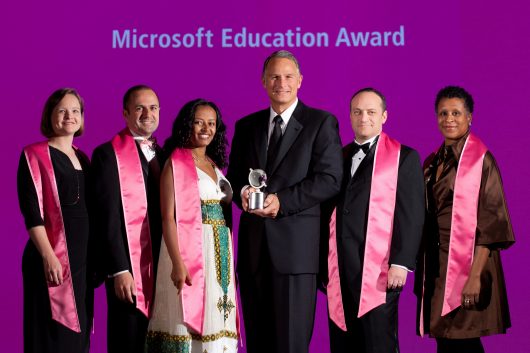
Equal Access International was named a Tech Awards laureate in 2003. In 2016, they won the Microsoft Education Award. Equal Access International is a non-profit organization that creates informative and educational media programs to address women’s rights and education issues in different countries across the world.
Equal Access International currently works in nine countries across Africa, Asia and the Middle East. They use a multimedia approach as well as direct community involvement to raise awareness of these issues, educate people on how to overcome these issues and train people to actively change unfavorable laws and legislation.
Souktel
Souktel was named a Tech Awards laureate in 2010. In 2016, they won the PayPal Equality Award. Souktel is a company that connects employers with employees using development and tech expertise to expand technological communication.
Souktel is focused in areas where unemployment is high due to the lack of access to communication. They work directly with companies to establish platforms for companies to use mobile phones, hotlines and more, while Souktel provides servers to host the platform, as well as customer support.
Angaza
Angaza was named a Tech Awards laureate in 2012. In 2016, they won the Katherine M. Swanson Young Innovator Award. Angaza works to provide affordable solar energy to areas that rely on more toxic forms of lighting, such as kerosene.
Angaza developed a pay-as-you-go platform that allows people in low-income areas to make micro-payments in order to pay for solar products. This creates an affordable way to access cleaner and safer energy for those who need it most.
IDE-India
IDE-India (IDEI) was named a Tech Awards laureate in 2004 and 2010. In 2016, they won the Sobrato Organization Economic Development Award. IDEI is an Indian organization that focuses on providing water access to poor and smallholder farmers. 57 percent of the Indian population relies on agriculture to provide for their families.
According to the Tech Awards website, “IDEI created a low-cost drip irrigation system and foot-powered water pump, which currently reaches 1.38 million households.” Through the improved accessibility of water for small farmers, they are able to generate more income and thrive as businesses.
D-Rev
D-Rev was named a Tech Awards laureate in 2013. In 2016, they won the Sutter Health Award. D-Rev is a company that creates medical technologies at affordable prices for low-income areas. This helps to close the quality healthcare gap for underserved areas.
One example of their medical technology is a phototherapy lamp used to treat jaundiced newborns. Most phototherapy lamps cost thousands of dollars; however, D-REV’s Brilliance phototherapy lamp starts at only $400. It also saves hospitals up to $240 per year on bulb replacements.
These six startups have worked to create innovative solutions to help those in need. From medical and agricultural technologies to communication accessibility, many underserved areas of the world are gaining access to important technologies to help their communities thrive. Not only are these startups improving the lives of those in impoverished areas, but the Tech Awards focus on important companies and organizations such as these increase their ability to help others.
– Rebekah Covey
Photo: Flickr

Yemen’s Human Trafficking Crisis
Amid the continued civil unrest and armed conflicts, the Republic of Yemen’s human trafficking crisis is continuously getting worse. The weakening of Yemeni government control over a significant portion of territory, following the 2011 uprising, has allowed human trafficking to thrive. Now, NGOs are reporting that vulnerable populations are at an increased risk of falling victim to the human trafficking network.
Yemen’s human trafficking crisis has not been properly addressed since 2006. According to the U.S. State Department’s annual Trafficking in Persons report, released in 2014, Yemen was demoted from a Tier 2 to a Tier 3 rating. Tier 2 recognizes that a nation does not comply with the Trafficking Victim’s Protection Act’s (TVPA) standards but is making efforts to achieve compliance.
Yemen’s current Tier 3 rating (since 2011) means that Yemen is not complying with the TVPA and that it has ceased making significant efforts to improve. That same year, the United Nations Refugee Agency reported over 103,000 new arrivals in Yemen, having been smuggled or trafficked to the country.
As of 2017, Yemen’s human trafficking crisis has not changed for the better. Due to the tenuous political circumstances, the government faces serious obstacles in combatting trafficking. Yemen is dealing with substantial internal security threats, weak institutions, widespread corruption, economic dilapidation, limited territorial control and poor law enforcement capacities.
However, the greatest threat is the inherently increased risk for human trafficking due to the nation’s failure to implement and enforce any anti-trafficking laws. The lack of government control has also resulted in little oversight or activity in the courts. Without the government to prosecute, convictions and punishments are not being sought.
Allegedly, some officials willfully ignore the trafficking crimes in their regions. The most vulnerable to Yemen’s human trafficking crisis are migrant workers who attempt to flee poverty by finding work in the Gulf states and are unaware of the situation. As they travel to their destination, they are caught in large crowds, pushed overboard, and taken hostage by the smugglers.
Locals are also at risk. A common practice known as “sex tourism” (described as brief marriages between visitors and young Yemeni girls) has largely resulted due to raising poverty levels in rural areas.
The criminal networks do not stop at Yemen’s borders, but rather extend to Ethiopia, Djibouti and Saudi Arabia. As the smugglers continue to move victims internationally and Yemen further develops into a place of origin and transit, the chances that victims are recovered and returned to their families decreases.
By combatting poverty in Yemen, many of the workers who desperately search for opportunities and fall prey on fraudulent job offers would decline. However, until people can provide food and basic necessities for themselves, they may have no choice but to accept any work they can. Unfortunately, smugglers will exploit this. Thus, by combatting poverty, Yemen’s human trafficking crisis can be addressed, too.
– Taylor Elkins
Photo: Flickr
Education in Mongolia
Previously, Mongolia had a 5-4-2 education structure, meaning students attended five grades of primary school, four grades of lower secondary school and two grades of upper secondary school. In 2016, a new 6-3-3 plan was fully implemented. Under both systems, all public education is free – though costs associated with education still deter some students – and the primary and lower secondary levels are compulsory.
Current Issues
Education in Mongolia faces the following issues: poor quality of curriculum, materials and teacher training, inconsistent standards, low-quality learning environments and conditions and irrelevant vocational programs. Specific parts of the population also face more specific barriers to educational attainment. For example, children with disabilities (especially if they are non-ambulatory) have very few accessible options and the schools which are open to them receive far less funding than “mainstream” schools.
Children from poor, rural communities, such as those in the Khangai and Western areas, are significantly less likely to attend school at all. Ethnic minorities, including Indigenous children, face discrimination and stigma as well as inadequate curriculum and language materials. Despite the 1995 Basic Principles of Education Law – which guarantees all citizens education in their native language – many students such as Kazakh students (who are the largest minority group) do not have access to textbooks written in their native language.
Successes and Positive Measures
There are many initiatives from within Mongolia and from external nongovernmental organizations looking to improve education in Mongolia. The READ (Rural Education and Development) Project created 3,560 libraries in 383 rural primary schools. This increased classroom reading time by 100 percent.
The Basic Education Program, part of UNICEF, assists the government in the development and implementation of its own education policies. UNICEF also funded upgrades to the Non-Formal and Life-Long Education Center of Nalaikh District, a school that is accessible to children with disabilities (including those in wheelchairs) and provides education to children who would otherwise have to stay home.
An initiative called the Indigenous Peoples Planning Framework has the mandate to recommend changes to the Mongolian Education Quality Reform Project in order to make it more useful to Indigenous children. In its initial form, this reform project would likely not hurt Indigenous children, but it contained no specific measures to help them.
Today, the system of education in Mongolia faces several issues of accessibility and suitability, particularly toward disadvantaged population groups. However, it is on the right path to improving access and quality of education for all.
– Olivia Bradley
Photo: Flickr
10 Facts About the Holocaust Genocide
The Holocaust genocide, which occurred between 1933 and 1945, is the deadliest genocide in history. As part of Adolf Hitler’s Final Solution, the Holocaust genocide saw the slaughter of approximately six million Jewish people and five million Slavic, Roma and disabled people in concentration camps scattered throughout areas in Europe such as Germany and Poland. The Holocaust genocide can be further understood through history and facts.
Top 10 Facts about the Holocaust
These 10 facts about the Holocaust genocide do not even begin to cover the disturbing and horrific details of the historical tragedy. It is incredibly important to study the circumstances in which the Holocaust genocide was developed and executed in order to prevent any group of people from being treated in such an inhumane manner in the future.
– Emily Santora
Photo: Flickr
6 Tech Awards Laureate Startups That Improve Lives
From the 2016 Tech Awards, the panel of judges recognized six Tech Awards laureates who have continued to improve communities over the last 15 years. Each startup won an award related to the work they do. These are the six companies and their impact on the communities they help.
Source International
Source International was named a Tech Awards laureate in 2014. In 2016, they won the Intel Environment Award. Source International is an Italian company that works with communities to deal with environmental pollution and health issues that arise because of it.
Source International provides these services free of charge in communities where their services work. Furthermore, they train local leaders to develop and promote environmental monitoring systems to benefit those communities.
Equal Access International
Equal Access International was named a Tech Awards laureate in 2003. In 2016, they won the Microsoft Education Award. Equal Access International is a non-profit organization that creates informative and educational media programs to address women’s rights and education issues in different countries across the world.
Equal Access International currently works in nine countries across Africa, Asia and the Middle East. They use a multimedia approach as well as direct community involvement to raise awareness of these issues, educate people on how to overcome these issues and train people to actively change unfavorable laws and legislation.
Souktel
Souktel was named a Tech Awards laureate in 2010. In 2016, they won the PayPal Equality Award. Souktel is a company that connects employers with employees using development and tech expertise to expand technological communication.
Souktel is focused in areas where unemployment is high due to the lack of access to communication. They work directly with companies to establish platforms for companies to use mobile phones, hotlines and more, while Souktel provides servers to host the platform, as well as customer support.
Angaza
Angaza was named a Tech Awards laureate in 2012. In 2016, they won the Katherine M. Swanson Young Innovator Award. Angaza works to provide affordable solar energy to areas that rely on more toxic forms of lighting, such as kerosene.
Angaza developed a pay-as-you-go platform that allows people in low-income areas to make micro-payments in order to pay for solar products. This creates an affordable way to access cleaner and safer energy for those who need it most.
IDE-India
IDE-India (IDEI) was named a Tech Awards laureate in 2004 and 2010. In 2016, they won the Sobrato Organization Economic Development Award. IDEI is an Indian organization that focuses on providing water access to poor and smallholder farmers. 57 percent of the Indian population relies on agriculture to provide for their families.
According to the Tech Awards website, “IDEI created a low-cost drip irrigation system and foot-powered water pump, which currently reaches 1.38 million households.” Through the improved accessibility of water for small farmers, they are able to generate more income and thrive as businesses.
D-Rev
D-Rev was named a Tech Awards laureate in 2013. In 2016, they won the Sutter Health Award. D-Rev is a company that creates medical technologies at affordable prices for low-income areas. This helps to close the quality healthcare gap for underserved areas.
One example of their medical technology is a phototherapy lamp used to treat jaundiced newborns. Most phototherapy lamps cost thousands of dollars; however, D-REV’s Brilliance phototherapy lamp starts at only $400. It also saves hospitals up to $240 per year on bulb replacements.
These six startups have worked to create innovative solutions to help those in need. From medical and agricultural technologies to communication accessibility, many underserved areas of the world are gaining access to important technologies to help their communities thrive. Not only are these startups improving the lives of those in impoverished areas, but the Tech Awards focus on important companies and organizations such as these increase their ability to help others.
– Rebekah Covey
Photo: Flickr
Combating Female Genital Mutilation
Some cultures believe a woman’s ability to be stimulated sexually is impure within the definition of their religious practices. Others believe women are unmarriageable if they have not been cut, and therefore the practice is often perpetuated by mothers to ensure their children are not cast out societally. It is also believed that having their children cut can reduce the chances of extramarital affairs. Female genital mutilation is an epidemic with little justification for its practice.
There are four types of FGM:
The short-term effects of female genital mutilation include severe pain, infections, abscesses and recurring cysts. Long-term effects include painful intercourse, menstrual complications, increased risk during childbirth, sexual dysfunction and psychological trauma.
In spite of legislation to end the occurrence of FGM, in some cultures, it is an ingrained rite of passage for women to enter womanhood. Mona Eltahawy, an op-ed contributor to the New York Times, interviewed a 53-year-old FGM survivor from Cairo who said, “It must be carried out because that’s the way to maintain the purity of girls, to make sure the girl is not out of control. We don’t care if it’s against the law or if they’re trying to stop it. We know doctors who are willing to continue and have done so.”
In October 2014, the U.N. Secretary-General announced a global campaign to end the practice of FGM within a generation. The government of Egypt banned it in 1959, then permitted again in some forms including “medical” genital cutting. Then a universal ban on all FGM was enacted in 2008. The Committee of Ministers of the Council of Europe has ensured that everyone within their jurisdiction has the rights and freedom defined in the Convention for the Protection of Human Rights and Fundamental Freedoms.
The Guide to Good and Promising Practices Aimed at Preventing and Combating Female Genital Mutilation, written by the Steering Committee for Human Rights, outlines the Four Ps implemented to combat FGM.
The Four Ps:
Several countries and organizations have employed methods to fight FGM on a large scale. Senegal has been hailed as a success story not for eradicating the practice but reducing the rate at which it is performed. Their methods include alternative rites of passage into womanhood, campaigns that include brides and bridegrooms to reject the custom, involving priests and clerics and helping women to reach higher levels of education.
A group of young women in Kenya who call themselves The Restorers developed an app to prevent female genital mutilation and other gender-based violence. The Restorers entered their app, i-Cut, into the Technovation Challenge. The app includes an SOS option for those who believe they may become victims of FGM or other gender-related violence, as well as an option to report if they have been victimized.
The Restorers didn’t win the competition, and many Kenyan leaders have not embraced the app, claiming that the girls have “become too westernized and are ruining African culture.” However, they plan to submit the app to Google Play and other digital marketplaces. This type of innovation complements more traditional preventative measures by raising awareness and giving women the option of reporting FGM.
The Committee of Ministers of the Council has stressed the need to raise awareness and improve educational campaigns to combat gender stereotypes that drive discrimination against women and girls. These campaigns must involve both genders collaborating to prevent the spread of harmful ideologies fueling violence against women and specifically female genital mutilation.
The issue is not strictly legal and not entirely social. In order to truly end this custom, the underlying issues regarding gender and power dynamics must be addressed.
The causes of FGM are rooted in the promotion of misconceptions about female sexuality in addition to detrimental gender politics within societal structures. Confronting FGM and its sources requires a multidimensional approach that enacts policies that dictate preventative measures, campaigns to influence the cultural perception of the practice, programs to improve gender equality and safety for women and girls worldwide.
– Rebekah Korn
Photo: Flickr
The Nicaraguan Investment Conditionality Act Passes House
The legislation opposes loans made by U.S. international financial institutions for the government of Nicaragua. This measure is in response to the alleged fraud and irregularities associated with the recent reelection of Daniel Ortega as president of Nicaragua. Former United States Ambassador to Nicaragua Robert Callahan testified that “Daniel Ortega’s candidacy was illegal, illegitimate and unconstitutional.” Callahan also went on to claim that the period leading up to the election as well as the elections themselves were “marred by serious fraud.”
After a brutal civil war that decimated the Nicaraguan economy in the 1970s, Daniel Ortega and his quasi-communist Sandinista party first took power in 1979. He was voted out in 1990, however, and lost later elections in 1996 and 2001. Having lost three prior elections, his victory in 2006 surprised the world and was reasonably met with skepticism. Ortega has since seized control over all four branches of the Nicaraguan government: the presidency, the judiciary, the National Assembly as well as the Supreme Electoral Council.
Since the 1990s, when Ortega was first ousted from office, the U.S. has sought to assist Nicaragua in establishing a fair democracy, a free-market economy as well as improving respect for basic human rights.
Consequently, until Nicaragua is prepared to make progress towards increased political transparency and fair elections, the U.S. Congress proposes to not allow any new loans to be given to Nicaragua unless they are proven to help improve democracy and address human rights. The Nicaraguan Investment Conditionality Act will put pressure on Ortega to insist upon free and fair elections by cutting off vital financing. Through this legislation, the U.S. will be prevented from encouraging the behavior of a budding dictator and hopefully pave the way for a liberated Nicaragua.
– Micaela Fischer
Photo: Flickr
Education in Moldova Shows Encouraging Improvement
Upper secondary—or lyceum—includes grades 10 through 12. Graduating from lyceum qualifies students to receive their “Scoala Medie de Cultră general,” or general certificate of completion. Students may also be awarded a Diploma de Bacalaureat if they opt to take and pass the national baccalaureate exam.
Higher education is offered by both private and public universities, academies and institutes. Getting a degree from any of these can take four to five years depending on the chosen upper secondary education. Undergraduate, Masters and Doctoral studies are also available.
The Moldovan Constitution guarantees that state public education be free and all citizens have the right to access to education. Higher education in Moldova is more or less free. Tuition fees for students living off-campus is an average of 5000 Moldovan Lei, or $280.
The Organisation for Economic Co-operation and Development’s Programme for International Student Assessment (PISA) occurs every three years in order to test the effectiveness of education in Moldova, with a two-hour-long exam on math, science and reading for 15-year old students. The program is a global effort that engages over half a million students from 72 countries in order to evaluate education systems worldwide.
PISA encourages the development of facilitative learning environments and improved educational systems for low and middle-income countries and aims for inclusive learning for all students. PISA is designed to assess students’ ability to apply what they have learned in school to real-life situations. The organization’s main goal is to measure a country’s effectiveness in preparing students for success in higher education and a professional career.
In 2009, Moldova scored below average in all areas of study according to PISA test results. However, in 2015, Moldovan students had a 15-point increase in the sciences, a 28-point increase in reading and a 23-point increase in math. Equity rankings between boys and girls and social backgrounds are about equal.
In 2013, the Moldovan government devised and instituted pivotal changes that may be responsible for improved scores: increased funding and academic accountability. Increased financing for public educational institutions has undoubtedly improved conditions.
The implementation of the Education Management Information system (EMIS) which includes information about a school’s ranking and performance marks, has motivated schools to improve their quality of education. This also allows parents to make informed decisions when choosing a school for their child.
The students’ PISA scores offer a hopeful insight into education in Moldova. Although it may not be the best, it is improving.
– Sloan Bousselaire
Photo: Flickr
10 Facts About the Burundian Unrest
Nkurunziza is a former Hutu rebel leader and was elected in 2005 – one of the final steps in a peace process meant to end years of fighting between Hutu rebels and the Tutsi-controlled army. He has since been slowly seeing accusations of authoritarianism, with people boycotting the polls in 2010 and in 2015 when he ran for president again, despite the Burundian constitution limiting presidents to two terms.
These new refugees joined the 250,000 refugees from the year before and are spread out throughout Tanzania, Rwanda, Uganda and the Democratic Republic of the Congo. The refugees find themselves in shelters that are underfunded and overcrowded. Refugees risk a lot running away from Burundi because if they get caught by the militia, they are labeled “traitors” and are either sent back with a warning or, in extreme cases, assaulted and murdered.
The crisis in Burundi is still rampant, but there are ways that everyday American citizens can help. The International Rescue Committee (IRC) has been assisting Burundi since 1996 to help victims recover from the war. The IRC is now focusing its efforts on Burundi’s border with Tanzania and around Bujumbura, the capital. They are providing emergency relief, deinstitutionalizing children in orphanages, teaching young people job skills, helping to manage refugee camps, safeguarding the human rights for refugees and more. Donations to them and organizations like them will go a long way for the people in Burundi and will hopefully allow the Burundian Unrest to begin settling.
– Téa Franco
Photo: Google
Aid Organizations Look to Switzerland to Fight Global Hunger
Hunger has been defined in many different ways. Richard D. Mattes and Mark I. Friedman define hunger as “a physiological or metabolic state that results from a lack of energy or nutrients.” The two researchers detail the physical responses that occur within our bodies when proper nutrition isn’t provided in their 1993 paper, “Hunger.”
According to the Economic Development Association, nearly one billion people currently suffer from hunger worldwide. Although this number is appalling, efforts are being made around the world to decrease global hunger. The World Food Program (WFP) is a leading humanitarian organization that has aided in providing food to roughly 100 million people in more than 70 countries annually. It abides by two key missions: providing humanitarian relief and achieving developmental goals.
Its highest financial contribution comes from Switzerland’s humanitarian assistance program. Switzerland has committed to ending global hunger under the Food Aid Convention, its objective being to “improve the ability of the international community to respond to emergency food situations and other food needs of developing countries.” In its involvement with the WFP operations, Switzerland considers the following conditions:
Switzerland finances experts from the Swiss Humanitarian Aid Unit to plan programs to alleviate hunger in affected countries. Trained specialists manage everything from emergency care to cash and voucher programs. The Swiss Agency for Development and Cooperation states that there is a condition for providing this assistance: “it is essential to ensure that international humanitarian law and international humanitarian standards and principles are respected.”
Switzerland is devoted to the sustainable use of natural resources in its war against global hunger. This includes better access to loans, drought-resistant seeds and local food markets in the most deprived countries. Switzerland has supported a variety of causes, from the construction of wastewater purification systems and drinking water plants in Macedonia to the Small Enterprises Assistance Fund, a venture capital fund for small and medium-sized enterprises. During its 27 years of support, the fund’s mission has been to improve the lives of those who greatly require it.
– Nicole Suárez
Photo: CIA World Factbook
Fighting Hunger in Gabon
On a continent where a number of countries struggle with the issue of hunger, the western African nation of Gabon has proven to be a relatively optimistic case. Hunger in Gabon has gone down in absolute terms over the past decade.
In general, western Sub-Saharan Africa has improved its hunger situation in recent years. The prevalence of undernourishment in the region has been reduced from 24.2 percent in 1992 to 9.6 percent in 2016. In Gabon alone, the proportion of undernourished people went from 9.5 percent to 2.7 percent between 1992 and 2016. For Gabon, one of the most notable gains has been the wellbeing of children. Prevalence of growth stunting in children has dropped from 26.7 to 17.5 percent and the under five mortality rate has decreased from 9.1 to 5.1 percent in the span of 1992 to 2016. A big part of this improvement in western Africa has been the developments in infrastructure in the region. This has led to increased agricultural productivity.
Another reason for the decrease in hunger, including hunger in Gabon, is the increased cooperation between western African states. Several organizations have sprung up, including the Economic Community of West African States, the West African Monetary and Economic Union, and the Permanent Interstate Committee for Drought Control in the Sahel. Additionally, the region has adopted the Comprehensive Africa Agriculture Development Program, which, among other things, aims to right gender imbalances, promote nutrition and encourage investment in agriculture.
There are still some factors that may be perpetuating hunger in Gabon. According to the Hunger Reduction Commitment Index Africa, Gabon lacks access to agricultural research, functioning social protection systems and equal access for women to agricultural land. Gabon also lacks a constitutional right to food. However, access to land was rated as “moderate,” which is an improvement.
Overall, hunger in Gabon still persists. However, the country is making strides in the right direction. If it continues to cooperate with its neighboring states and expand the access of its people – especially in the rural zones – to the resources they need, it will continue down the path to ending hunger.
– Andrew Revord
Photo: Pixabay