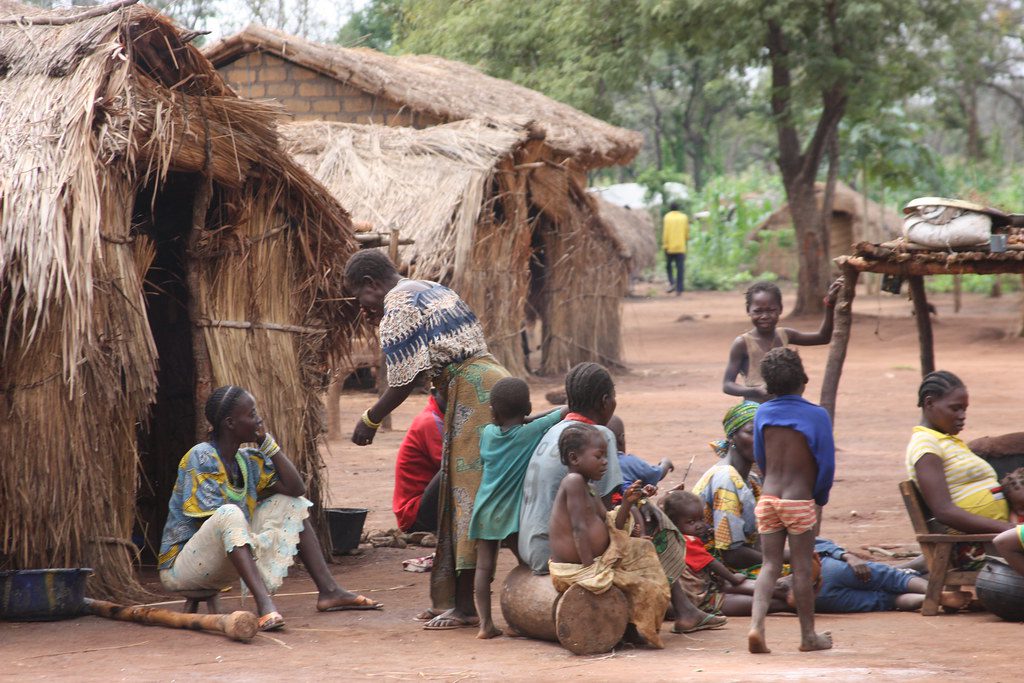
 Newly released U.N. data suggests that violence decreased in the Central African Republic in the aftermath of a peace deal between the government and armed groups in February 2019. While it is yet unclear whether this peace deal will be successful in the long-term, this represents a small bit of hope for the Central African Republic, which has been entrenched in a civil war since 2012.
Organizations including the U.N., USAID and Mercy Corps have been providing humanitarian aid in the Central African Republic, and a successful peace agreement may change the humanitarian context in the country.
Conflict Overview
In December 2012, armed Muslim groups, organized into a coalition known as the Seleka, attacked the Central African Republic government, seizing the capital city and staging a coup in early 2013. Anti-Balaka — Christian armed forces — rose up in response, committing violence against primarily Muslim civilians and contributing to the displacement of innocent citizens.
Although the new government officially disbanded Seleka forces, many ex-Seleka fighters initiated revenge attacks. Both the ex-Seleka and anti-Balaka groups have committed war crimes and crimes against humanity, according to the U.N. and other human rights groups. The continuing violence caused thousands of deaths.
The government maintains control of the capital, but armed groups who continued fighting dominate the rest of the nation. In addition to ex-Seleka and anti-Balaka forces, a number of other armed groups joined the conflict, many of which were already in existence. These include The Central African Armed Forces (FACA), Revolution and Justice (RJ), The Democratic Front of the Central African People (FDPC), The Convention of Patriots for Justice and Peace (CPJP), The Movement of Central African Liberators for Justice (MLCJ), Union of Republican Forces (UFR), The Popular Front for Recovery (FPR) and The Lord’s Resistance Army (LRA).
The widespread conflict caused by these groups has had disastrous effects on the economy of the Central African Republic, causing approximately three-quarters of the population to live in poverty, with nearly 650,000 civilians displaced.
Humanitarian Aid
In response to the crisis, several international actors became active in the nation, providing humanitarian aid in the Central African Republic.
Mercy Corps began working in the Central African Republic in 2007, in response to its already high poverty rate. It estimates that 2.9 million people in the Central African Republic need humanitarian assistance, noting that basic services, including clean water, health care and education, are scarce.
In the Central African Republic, some of the work that Mercy Corps does involves providing assistance to displaced families, operating support centers for victims of gender-based violence, leading child protection committees, constructing wells to provide clean water and training community leaders to manage disputes and help maintain peace.
In addition to Mercy Corps, USAID also provides humanitarian aid in the Central African Republic primarily through funding for humanitarian partners. USAID helps fund programs by organizations such as Oxfam, Plan International and UNICEF in the Central African Republic to provide relief to victims of violence and displacement.
According to USAID, the U.S. government provides the most humanitarian funding to the Central African Republic, with more than $173 million provided in 2018 and early 2019. Following the U.S. are Germany and the European Commission, both contributing just over $50 million. Other countries, including Sweden, the United Kingdom and Canada, also made significant contributions.
Finally, the U.N. is active in the Central African Republic through its peacekeeping organization known as MINUSCA (United Nations Multidimensional Integrated Stabilization Mission in the Central African Republic). MINUSCA was established to protect civilians and disarm militia fighters. The U.N. has 15,000 personnel providing humanitarian aid in the Central African Republic and working towards peace.
New Developments
The government and 14 armed groups reached a peace deal in February 2019, after talks began on Jan. 24. Though whether the deal will ultimately be successful is still unknown, this represents a crucial step in ending the cycles of violence that kept the Central African Republic trapped in poverty and suffering.
In the aftermath of the peace deal, MINUSCA noted that between January and June 2019 there were only 565 incidents of human rights violations or abuse, including rapes, violent attacks and the recruitment of children into armed groups. Between January and June in 2018, there were 1,674, nearly three times as many incidents. MINUSCA is reluctant to be optimistic, however, as peace talks failed in 2014, 2015 and 2017. Musa Gassama, the director of the human rights division of MINUSCA, stated the armed groups still control much of the nation.
The U.N. Special Representative for the Central African Republic, Parfait Onanga-Nyanga, noted that support from the international community is crucial to successfully implementing a peace agreement.
Moving Forward
A successful peace deal would not stop the need for humanitarian aid in the Central African Republic in the near future, but it could alter the humanitarian context. Increased assistance may actually be needed if peace is achieved. Indeed, internally displaced persons and refugees will need assistance in returning to their homes and re-establishing their lives there.
The need for humanitarian aid in the Central African Republic will continue to be high, even in the aftermath of the conflict. Hopefully, organizations such as USAID and Mercy Corps will continue to be active in the nation, adapting to new contexts and working to benefit as many civilians as possible.
– Sara Olk
Photo: Flickr

10 Facts About Life Expectancy in Puerto Rico
The island of Puerto Rico is a country located in the Caribbean Islands. After the devastating effects of Hurricane Maria in 2017, Puerto Rico and various organizations are making efforts to ensure life expectancy for those victimized. Below are 10 facts about life expectancy in Puerto Rico and how people are seeking to improve it despite obstacles.
10 Facts About Life Expectancy in Puerto Rico
This varied information about the lives of Puerto Rican citizens indicates that life expectancy in Puerto Rico is fairly average. These 10 facts about life expectancy in Puerto Rico also indicate that despite the country’s recent hardships, its people are vigilant.
– Natalie Casaburi
Photo: Pixabay
Access to Medicine in Developing Countries
In the late 1990s, large pharmaceutical companies priced their HIV/AIDS medications at an exorbitant $15,000 a year, barring people from access to medicine in developing countries who suffered the most from the epidemic and raising public outcry across the world. Pharmaceutical companies defended their right to maintain these prices in the name of protecting their patent of these medical, life-saving drugs.
The good news is, leading pharmaceutical companies in recent years have turned their focus to helping the poor, in what they call “equitable pricing strategies.” This strategy targets middle-to-lower income countries. Large companies have priced HIV/AIDS medication for only $100 a year, a drastic decrease since the 1990s, and have made treatments for malaria, tuberculosis, hepatitis C and some cancers accessible in developing countries.
Impact of These Changes
Nearly 20 million Africans are on HIV/AIDS medication now, a statistic that stands in stark contrast to the thousands of people that died of HIV/AIDS each day in Africa 20 years ago due to the lack of access to medicine in developing countries.
The Access to Medicine Index ranks pharmaceutical companies on how accessible and affordable their medicine is. It ranked 20 of the world’s largest (research-based) pharmaceutical companies, indicating a healthy trend towards affordable medicine that can go to those most affected by common illnesses and diseases.
The Access to Medicine Foundation performs a deep analysis of these companies. For example, the foundation observes whether companies pay attention to the socioeconomic statuses of their customers in order to tailor the prices of their medicine effectively. The foundation has also remarked that large pharmaceutical companies have departed from previous policies and have granted licenses to generic drug companies who can produce a greater quantity of medicine at a lower price.
Cause of These Changes
Statistics show disparities between the health of high-income and low-income populations. In 2011, the life expectancy between high and low-income countries was as extreme as a 36-year gap. Given such a difference, it makes sense that pharmaceutical companies have specifically researched and developed cures for five main illnesses, including lower respiratory infections, diabetes, hepatitis, HIV/AIDS and malaria, that lead to premature deaths. It did this by improving access to medicine in developing countries.
FDA Involvement
The U.S. Food and Drugs Association (FDA) has also taken part in global health and access to medicine crisis in developing countries. The FDA awarded $50,000 to four companies and $25,000 to two companies during its National Capital Consortium for Pediatric Device Innovation. These six companies received awards for their innovative solutions for childcare, ranging from devices that diagnose spinal deformities to technology that cleans central-line associated bloodstream infections. Developing and investing in these technologies could have huge impacts on access to medicine in developing countries where child mortality still poses a serious threat.
Growth for Big Pharma
There are also economic reasons for these changes in the pharmaceutical industry. Research has shown that improving public health boosts the economy. Even incremental improvements in life expectancy can increase yearly economic growth rates by nearly 0.5 percent. As populations become healthier, it increases the demand for medicine. Consequently, pharmaceutical companies have witnessed growing revenues from emerging markets in developing countries. In fact, two large pharmaceutical international companies, AstraZeneca and Sanofi, receive a third of their revenues from developing markets. In short, improving access to medicine in developing countries means future profits for pharmaceutical companies.
The Upshot of These Changes to Access of Medicine in Developing Countries
Despite all the progress that pharmaceutical companies have made, there is still a persistent problem they will only invest and research in drugs that they think will make a profit. Drug prices are often high because of rebates, the cost of taking on risks for development and research of life-saving drugs and fees for intermediary pricing companies. In order to change these persistent industry practices, public pressure seems to play the strongest role, especially in America.
The continued change will come from the convincing of top leadership in pharmaceutical companies to focus on helping the world’s poor and sick, especially in developing countries. For example, under the direction of former Chief Executive, Andrew Witty, for GSK, a British-based pharmaceutical company which has always ranked first on the Access to Medicine Index, has pledged to do as much as he could for the poor in Africa and Asia. It is up to large pharmaceutical companies to set the tone in this new era of providing access to medicine in still developing countries.
– Luke Kwong
Photo: Pixabay
Five Facts About the Philippines’ Poverty Reduction
In 2015, the poverty rate in the Philippines was at 21.6 percent, which is a five percent decline from 2006. Although poverty rates have been declining, 22 million Filipinos still live in poverty as of 2015. That makes up about one fifth of the country’s population. Here are five facts about the Philippines’ poverty reduction efforts.
Five Facts about the Philippines’ Poverty Reduction
The government is hopeful that its goals will be achieved by 2020, given all the programs and efforts it is putting into eradicating poverty. These five facts about the Philippines’ poverty reduction efforts highlight the progress that has been made in the past decades. They also show areas that still need to improve in order to fully eradicate poverty in the country.
– Laura Rogers
Photo: Flickr
New Developments and Humanitarian Aid in the Central African Republic
Organizations including the U.N., USAID and Mercy Corps have been providing humanitarian aid in the Central African Republic, and a successful peace agreement may change the humanitarian context in the country.
Conflict Overview
In December 2012, armed Muslim groups, organized into a coalition known as the Seleka, attacked the Central African Republic government, seizing the capital city and staging a coup in early 2013. Anti-Balaka — Christian armed forces — rose up in response, committing violence against primarily Muslim civilians and contributing to the displacement of innocent citizens.
Although the new government officially disbanded Seleka forces, many ex-Seleka fighters initiated revenge attacks. Both the ex-Seleka and anti-Balaka groups have committed war crimes and crimes against humanity, according to the U.N. and other human rights groups. The continuing violence caused thousands of deaths.
The government maintains control of the capital, but armed groups who continued fighting dominate the rest of the nation. In addition to ex-Seleka and anti-Balaka forces, a number of other armed groups joined the conflict, many of which were already in existence. These include The Central African Armed Forces (FACA), Revolution and Justice (RJ), The Democratic Front of the Central African People (FDPC), The Convention of Patriots for Justice and Peace (CPJP), The Movement of Central African Liberators for Justice (MLCJ), Union of Republican Forces (UFR), The Popular Front for Recovery (FPR) and The Lord’s Resistance Army (LRA).
The widespread conflict caused by these groups has had disastrous effects on the economy of the Central African Republic, causing approximately three-quarters of the population to live in poverty, with nearly 650,000 civilians displaced.
Humanitarian Aid
In response to the crisis, several international actors became active in the nation, providing humanitarian aid in the Central African Republic.
Mercy Corps began working in the Central African Republic in 2007, in response to its already high poverty rate. It estimates that 2.9 million people in the Central African Republic need humanitarian assistance, noting that basic services, including clean water, health care and education, are scarce.
In the Central African Republic, some of the work that Mercy Corps does involves providing assistance to displaced families, operating support centers for victims of gender-based violence, leading child protection committees, constructing wells to provide clean water and training community leaders to manage disputes and help maintain peace.
In addition to Mercy Corps, USAID also provides humanitarian aid in the Central African Republic primarily through funding for humanitarian partners. USAID helps fund programs by organizations such as Oxfam, Plan International and UNICEF in the Central African Republic to provide relief to victims of violence and displacement.
According to USAID, the U.S. government provides the most humanitarian funding to the Central African Republic, with more than $173 million provided in 2018 and early 2019. Following the U.S. are Germany and the European Commission, both contributing just over $50 million. Other countries, including Sweden, the United Kingdom and Canada, also made significant contributions.
Finally, the U.N. is active in the Central African Republic through its peacekeeping organization known as MINUSCA (United Nations Multidimensional Integrated Stabilization Mission in the Central African Republic). MINUSCA was established to protect civilians and disarm militia fighters. The U.N. has 15,000 personnel providing humanitarian aid in the Central African Republic and working towards peace.
New Developments
The government and 14 armed groups reached a peace deal in February 2019, after talks began on Jan. 24. Though whether the deal will ultimately be successful is still unknown, this represents a crucial step in ending the cycles of violence that kept the Central African Republic trapped in poverty and suffering.
In the aftermath of the peace deal, MINUSCA noted that between January and June 2019 there were only 565 incidents of human rights violations or abuse, including rapes, violent attacks and the recruitment of children into armed groups. Between January and June in 2018, there were 1,674, nearly three times as many incidents. MINUSCA is reluctant to be optimistic, however, as peace talks failed in 2014, 2015 and 2017. Musa Gassama, the director of the human rights division of MINUSCA, stated the armed groups still control much of the nation.
The U.N. Special Representative for the Central African Republic, Parfait Onanga-Nyanga, noted that support from the international community is crucial to successfully implementing a peace agreement.
Moving Forward
A successful peace deal would not stop the need for humanitarian aid in the Central African Republic in the near future, but it could alter the humanitarian context. Increased assistance may actually be needed if peace is achieved. Indeed, internally displaced persons and refugees will need assistance in returning to their homes and re-establishing their lives there.
The need for humanitarian aid in the Central African Republic will continue to be high, even in the aftermath of the conflict. Hopefully, organizations such as USAID and Mercy Corps will continue to be active in the nation, adapting to new contexts and working to benefit as many civilians as possible.
– Sara Olk
Photo: Flickr
What is Global Development?
Global development is a term that politicians, think tanks and scholars frequently use when they discuss foreign aid, but what is it? Simply put, global development refers to the actions countries or organizations take to lend aid to other countries in need around the world. The United States frequently contributes to global development in the form of directed financial aid through the United States Agency for International Development (USAID). In 2018, the U.S. gave a total of $29 billion of foreign aid. The countries that received the largest amount of aid in 2018 include Ethiopia, South Sudan, Afghanistan and Syria. The monetary aid that countries or organizations provide, such as the $29 billion from the U.S., supports a specific program of development. The breakdown for monetary aid to Ethiopia in 2018 shows that the primary sector receiving aid was Emergency Response at approximately $409 million with Developmental Food Aid receiving the second-largest amount of aid at approximately $142 million.
Global Development and Climate Change
With the increased degradation of natural resources and the frequent occurrence of natural disasters, sustainable development acquires a new meaning. In Ethiopia, USAID implemented a program under its Food Security sector to help pastoralists living in rural areas of Ethiopia to sustain themselves despite worsening droughts. A USAID program in Ethiopia has made it possible for pastoralists to collect and sell their milk to a regular buyer, thus creating a dependable source of income for many families in the area. Programs such as this one create food and economic security for families where there previously was none or where security was undependable.
Past programs for global development have found success by taking into account the resources that communities require and what the availability of those resources might be in the future. The focus of the development itself may also face necessary change in response to a changing environment. If a community has begun to experience repeated damage from natural disasters, foreign aid for development could focus on preparing the community to meet future disasters. For example, the Pacific Islands have experienced an increase in weather-related natural disasters in recent years resulting in washed-out roads, a shortage of freshwater and widespread power outages. Recurring storms of this strength make life difficult for all people living on the islands, but especially those with disabilities. In 2017, USAID partnered with the University of the South Pacific as part of its USAID Ready Project to work to create a five-month-long management course for individuals with disabilities. This course gives participants skills in risk assessment and business communications to equip them to advocate for the creation of sustainable solutions to the impacts of climate change that include people with disabilities.
Global Development Projects
There are many ongoing projects for global development around the world. Currently, the World Bank is developing a project of the Greater Accra Resilient and Integrated Development Project for Ghana. As it currently stands, the Odaw River Basin floods frequently and the lack of poor drainage for waste in the area contaminates the water of the river which is necessary for life in the region. This project’s objective is to create long-term solutions to flood and waste management of the Odaw River Basin in the Greater Accra Region of Ghana with a projected closing date of December 31, 2025. By this projected end date, the World Bank aims to increase the capacity of the Odaw River to carry floodwaters, increase the upstream detention of floodwater, create a forecast system for floods, increase the amount of solid waste that people dispose of in sanitary landfills and increase the number of people who have access to urban living conditions. This program plans to achieve these end goals through the creation of new drains in the Odaw River as well as the rehabilitation of existing drains and the implementation of improved sanitation practices within low-income communities. With the proposed development in the Odaw River Basin from the World Bank, the quality of life for the people of this particular region of Ghana would improve significantly and see sustained improvement for future generations.
Global development is a common and effective approach to foreign aid. When employed responsibly and intentionally, global development can be a force for good and a tool for the improvement of life for thousands of people around the world.
– Anne Pietrow
Photo: Flickr
6 Poverty-Fighting Advances in Agriculture
Advances in agriculture are key to both reducing world poverty and maintaining the health of the planet. A 2016 study by the World Bank Group found that 65 percent of adults living in poverty support themselves through agriculture. Additionally, economic growth in the agriculture sector has two to four times the potential to raise income among the world’s poor than growth in any other sector.
However, for all the benefits of agriculture, the industry can also be harmful to the planet. Agriculture is responsible for 70 percent of freshwater use and 24 percent of greenhouse gas emissions. So, it is important for small farmers to utilize advancements that minimize pollution and waste while cutting costs and increasing yields. These six poverty-fighting advances in agriculture and technology are key ways for poor farmers to achieve both of these goals.
6 Poverty-Fighting Advances in Agriculture
Small farms face more and more challenges from problems like desertification, drought and the spread of pests and diseases. With these poverty-fighting advances in agriculture, farmers are better prepared to meet the challenges and lift themselves and their families out of poverty.
– Clarissa Cooney
Photo: Flickr
10 Facts About Hunger in Jordan
Jordan is located in Southwest Asia with a population of 9.5 million. Although there have been improvements, the country still suffers from high rates of food insecurity. Here are 10 facts about hunger in Jordan.
10 Facts About Hunger in Jordan
These 10 facts about hunger in Jordan present areas of focus and improvement to better the country and reduce food insecurity. Despite these challenges, there are several organizations that work towards helping fight food insecurity in Jordan. With the attention and support of political leaders, these issues can come to a stop.
– Merna Ibrahim
Photo: Flickr
Top 7 Blockchain Projects for Poverty
Traditional perceptions of blockchain technology involve uses in financial technology and under the table transactions. Blockchain, however, has possibilities far beyond finance and digital currency. By its nature, blockchain provides unparalleled security and transparency. By creating a decentralized network of highly-encrypted blocks, a blockchain system creates a secure, unchangeable ledger. No one person can make changes and the encryption means that it is extremely difficult to hack, thus making blockchain one of the most secure and transparent technologies in the world. This technology has the power to revolutionize poverty reduction. Below are the top seven blockchain projects that represent the most successful blockchain for poverty projects that address real, pressing global issues.
Top 7 Blockchain Projects for Poverty
People limit the use of blockchain technology by relegating it to banking or shady online transactions alone. The above top seven blockchain projects show that blockchain has value as a tool to develop solutions for multiple global issues. A blockchain is a useful tool that can address multifaceted issues in fighting poverty. Though it is still an emerging technology, blockchain deserves widespread research and support.
– Melanie Rasmussen
Photo: Flickr
10 Facts About Life Expectancy in Mali
In 2020, the country of Mali will celebrate its 60th anniversary of independence from French colonial rule. However, since 1960, Mali has had a tumultuous history filled with numerous civil wars, coups and failed revolutions. Despite these setbacks, Mali is making strides to improve the quality of life for its citizens. Here are 10 facts about life expectancy in Mali.
10 Facts About Life Expectancy in Mali
As these 10 facts about life expectancy in Mali show, life expectancy in Mali is significantly lower than in other parts of the world, but the country is making strides forward to combat illness and poverty. With help from the global community, Mali is moving forwards towards a brighter future.
– Kelton Holsen
Photo: Flickr
How the Eco Cooler is Changing Lives in Bangladesh
Bangladesh is one of the worlds most populated countries and is also a country stricken with poverty. As of 2018, 21.8 percent of all people in Bangladesh were living below the poverty line. Sixty percent of the inhabitants of Bangladesh live in huts made of tin that become extremely hot in the summer months and in rural areas without access to electricity. Inhabitants of these areas often find it challenging to stay cool in the sweltering summer heat. Luckily, Ashis Paul, a Bangladesh native, invented an efficient, cheap way for people to cool down their homes. His invention, the eco cooler, is changing lives in Bangladesh.
The Eco Cooler
The reason that the eco cooler is so cost-efficient is that it comprises of objects that are always around and easy to find. These objects are old soda bottles. People do not regularly practice recycling in Bangladesh so the number of old soda bottles on the street is high. To assemble the eco cooler, Ashis Paul cut the soda bottles in half and placed them on a board with holes in it. After he mounted the cut bottles onto the board, he placed the board over a window with the wide end of the soda bottles facing outside of the house.
The Way the Eco Cooler Works
The science behind the eco cooler is somewhat simple. The idea of creating the eco cooler came to Paul when he overhead his daughter’s physics teacher giving a lesson about how when a gas expands rapidly, it cools. The more scientific term for this phenomenon is the Joule-Thomson effect which has to do with the gas temperature dropping when it expands rapidly. When the air enters the house through the large end and passes through the small end of the soda bottle, the pressure drops and the cooling occurs, making the air on the inside of the house cooler than on the outside.
Paul claims that the eco cooler is changing lives in Bangladesh by reducing temperatures to up to five degrees celsius, but a scientific study that mimicked the design of the eco cooler claims that the device can only cool rooms up to two degrees celsius. Still, two degrees celsius is a noticeable difference.
Partnership with Grey Dhaka
Grey Dhaka is a communication company in Bangladesh that teamed up with Paul to spread the news about eco coolers, helping distribute them to civilians. Grey has also posted videos online detailing how to create these eco coolers. Since the birth of this invention, Grey Dhaka and Paul have installed eco coolers in 25,000 homes in Bangladesh and are helping many people fight the extreme heat of the summer months.
The eco cooler is changing lives in Bangladesh. It is a cheap solution for beating the heat and is accessible to everyone, even those living in poverty. Simply making an eco cooler also benefits the planet by providing an alternative use for plastic bottles that would otherwise be considered waste. The eco cooler is a green, sustainable alternative to regular air conditioning and it also helps fight the energy crisis, which has to do with using limited resources to create energy.
– Joslin Hughson
Photo: Flickr