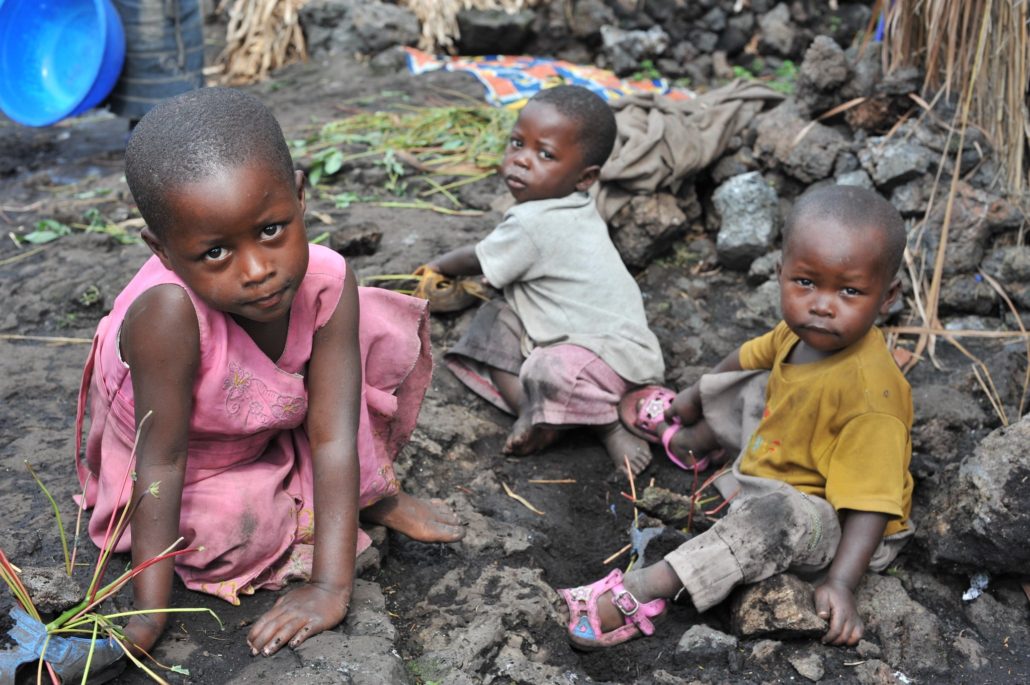
With 80 million hectares of arable land and over 1,100 precious metals and minerals, the Democratic Republic of the Congo has quickly established itself as a large exporter in the lucrative diamond industry. Despite this, the DRC ranks 176th out of 189 nations on the UN’s Human Development Index and over 60 percent of the 77 million DRC residents live on less than $2 a day. Internal and external war, coupled with political inefficacy and economic exploitation, has hindered the country’s ability to combat poverty and improve health outcomes. Listed below are some of the most deadly diseases that are currently affecting individuals in the DRC and the different strategies that governments and NGOs have taken to fight disease in the DRC.
3 Deadly Diseases Currently Affecting Individuals in the DRC
- Malaria
The DRC has the second-highest number of malaria cases in the world, reporting 15.3 million of the WHO-estimated 219 million malaria cases in 2017. Of the more than 400 Congolese children that die every day, almost half of them die due to malaria, with 19 percent of fatalities under 5 years attributed to the disease. However, some are making to reduce malaria’s negative impact. For example, the distribution of nearly 40 million insecticide-treated mosquito nets, or ITNs, has helped lower the incidence rate by 40 percent since 2010, with a 34 percent decrease in the mortality rate for children under 5. The DRC government procured and distributed the nets with international partners such as the Department for International Development, Global Fund and World Bank. In addition, the President’s Malaria Initiative, a program implemented in 2005 by President Bush and carried out by USAID, has distributed more than 17 million nets. UNICEF has also been a major contributor in the efforts to fight malaria and recently distributed 3 million ITNs in the DRC’s Kasaï Province. However, the country requires more work, as malaria remains its most frequent cause of death.
- HIV/AIDS
Among its efforts to fight disease in the DRC, the country has made significant progress recently in its fight against HIV/AIDS. As a cause of death, it has decreased significantly since 2007, and since 2010, there are 39 percent fewer total HIV infections.
This particular case illuminates the potential positive impact of American foreign aid. The DRC Ministry of Health started a partnership with the CDC in 2002, combining efforts to fight HIV/AIDS. PEPFAR, signed into U.S. law in 2003 to combat AIDS worldwide, has invested over $512 million since 2004, which has helped to fund antiretroviral treatment for 159,776 people. In 2017, it funded the provision of HIV testing services for 1.2 million people.
The country is also addressing mother-to-child transmissions. In the DRC, approximately 15 to 20 percent of mothers with HIV pass the virus onto their child. The strategy to end mother-to-child transmissions involves expanding coverage for HIV-positive pregnant women, diagnosing infants with HIV earlier and preventing new infections via antiretroviral drug treatment. UNAID, The Global Fund and the DRC Ministry of Health have undertaken significant work to accomplish these objectives and their efforts have resulted in the coverage of 70 percent of HIV-positive pregnant women. However, much work remains to cover the remaining 30 percent of pregnant HIV-positive women.
Overall, there is still a lot of necessary work to undergo in the fight against HIV/AIDS in the DRC and around the world. In total, UNAIDS estimated that HIV/AIDS was the cause of 17,000 deaths in the DRC in 2018. While this is a decrease from previous years, it shows that the DRC still has a long way to go in order to fully control the spread of the disease. Additionally, there must be more global funding. The U.N. announced on July 2019 that annual global funding for fighting HIV/AIDS decreased in 2018 by almost $1 billion.
- Ebola
Since 2018, the DRC has undergone one of the world’s largest Ebola outbreaks. On July 17, 2019, WHO declared the outbreak an international health emergency. Since August 2018, more than 2,500 cases have occurred, with over 1,800 deaths.
However, the country is making efforts to prevent the transmission and spread of Ebola in the DRC. Recently, more than 110,000 Congolese received an experimental Ebola vaccine from Merck & Co. The vaccine is called rVSV-ZEBOV, and studies have shown the vaccine to have a 97.5 percent efficacy rate. This vaccine provides hope that people will be able to control Ebola breakouts in the near future.
While there have been attempts to fight disease in the DRC in recent years, such as malaria, HIV/AIDS and Ebola, each disease remains a major issue. In the coming years, the country must continue its efforts.
– Drew Mekhail
Photo: Flickr

10 Facts About Life Expectancy in Guyana
Guyana is a country in northeastern South America that Brazil, Venezuela and Suriname border. In 1966, the country gained independence from its English colonizers. Since the liberation of Guyana, the country has found itself in political unrest that has resulted in an inability to thrive economically. As the country has grown and developed as an independent entity since 1966, it has seen a drastic improvement in life expectancy through government initiatives and treatment development. The 10 facts about the current life expectancy in Guyana will display that.
Though Guyana boasts rich gold, sugar, bauxite, shrimp, timber and rice industries – with great potential for expansion – the country still finds itself struggling to come out of poverty and attract foreign industry. However, in May 2019, the Guyanese government paired up with the U.N. Environment to tackle establishing the Green State Development Plan. The plan would work to develop sustainable economic growth in the country while still protecting its vast natural resources. The project would also work to diversify the Guyanese economy and steer them away from their current resource-reliant industry. Guyana would slowly transition into being a low-carbon developer bolstering a diverse economy, draw foreign investment, lower emigration rates and produce an ever-bettering quality of life for its people. Here are the 10 facts about life expectancy in Guyana.
10 Facts About Life Expectancy in Guyana
These 10 facts about life expectancy in Guyana show that although Guyana is still struggling with disease control and various disease’s effects on life expectancy, it is taking great initiatives to work towards improving and solving its current issues.
– Emma Hodge
Photo: Flickr
4 Organizations Improving Mental Health in Nigeria
Despite the mental health crisis that is looming there are several organizations working to improve mental health in Nigeria.
4 Organizations Improving Mental Health in Nigeria
Neem Foundation: This nonprofit, nongovernmental organization is doing important work in Borno State to help those who have suffered trauma as a result of attacks by the Boko Haram islamic militant group. In 2017 alone, the organization provided psychological services to over 7000 people in Borno. In order to reach their target of getting to 16,000 more clients by 2019, the foundation began a Counseling on Wheels program which has counselors use motorcycles or motor tricycles to take counseling services to people’s doorsteps. By doing this, they have managed to raise the number of their client reach 12,000 people so far. Besides providing mental health support to individuals, the Neem Foundation also offers training in counseling, trauma care and child-centered therapy.
Mentally Aware Nigeria Initiative (MANI): Launched in June 2016, this Lagos-based nonprofit focuses on creating awareness on mental health and illnesses as well as helping its clients connect to mental health professionals. MANI has a suicide/distress hotline and is planning on launching a mobile app to connect mental health professionals to people in need of help. The organization promotes its advocacy campaigns online using channels such as Twitter, Facebook, Instagram, Youtube and its website to draw attention to different mental health illnesses or other related topics each month. Since 2016, MANI has managed to expand its work to four Nigerian states and provide support to more than 5,000 people.
She Writes Woman: This organization has made great strides since its inception in April 2016. The organization launched the first privately-held, 24-hour mental health line in July 2016 and in April 2018 added a helpline chat service that has received 6,000 messages to date. The organization also founded and curates Safe Place – a support group where women in Nigeria can meet, discuss mental health issues and get the help they need. So far, more than 800 women have benefitted. In partnership with Airtel Nigeria, they have grown and founded Safe Place Nigeria – a walk-in clinic where young people can seek mental health care.
Love, Peace and Mental Health Foundation (LPM): Launched in 2012 in Lagos, LPM carries out advocacy and awareness campaigns to the youth in Nigeria. LPM also founded and curates Umbrella, a men’s-only support group which meets monthly. During the support group meetings, mental health professionals are on hand for observation and consultancy. The foundation also partners with various psychologists and consultants to provide free therapy sessions during these meetings. LPM also ran the #SAVE campaign in 2017 which encouraged creatives to embrace photography, music, art and fashion to raise awareness of mental health in Nigeria.
By creating awareness and challenging the misconceptions and stigma held by the public, these four organizations are helping create an environment in which those suffering from mental health illnesses do not need to isolate themselves or shy away from seeking help. Mental health in Nigeria is sure to improve because of these and other organizations and initiatives.
– Sophia Wanyony
Photo: Flickr
New Online Business School Launched in Nigeria
In July 2019, business coach and trainer Tricia Ikponmwonba launched a new online business school called Business Lab Africa (BLA), which provides qualitative and relevant knowledge for growth in the business field to entrepreneurs from around the world. Ikponmwonba, who has trained over 20,000 entrepreneurs across 10 different countries and has worked with multinational corporations such as Nokia, Coca Cola and Wrigley’s, is not offering the course content for free. The monthly subscription for either of its categories (for growing businesses and for established businesses) is very cheap, however.
Course Topics and Accessibility
Business experts from all over the globe teach the BLA’s courses, which people can access via mobile applications as well as the school’s website. Classes range from marketing and management to finance and business structure, and each month, the courses offered focus on one particular area of study for each type of business. In-depth explanatory videos that instructors recorded and live classes with field experts supplement these focus areas. They also include worksheets and templates geared towards helping students retain the material that they are learning.
The new online business school also uses peer-to-peer learning techniques in its online community where students can collaborate with each other. This is a major cornerstone of the program, as it stresses the importance of students being able to share ideas and techniques with each other, which can help students learn quicker and more efficiently. BLA also places a special emphasis on updating the quality and content of its program regularly to fit the current work environment. This is an important aspect of the program because the business world is always changing and many individuals and businesses must continue to learn new skills in order to succeed.
Positive Testimony
The fact that there are already numerous success stories from individuals who have taken classes from the BLA is a testament to the quality of the courses. Boyede Adebanjo, who is the Director of Administration at an elementary school in Nigeria, claims that the classes she took—Business Structure and Customer Service—gave her, along with her colleagues, insightful knowledge as to how to work on and improve the school’s five-year business strategy and overall business structure. Since these enhancements, Adebanjo has seen major improvements in worker productivity, which has helped improve the quality of education that the school can offer young children.
Looking Ahead
By 2022, the BLA hopes to have reached 100,000 entrepreneurs, giving each the knowledge and tools that they will need to succeed in the business world. While the company is not yet certified, it likely will be in the near future as it continues to produce results for its clients. All said it seems clear that this new online business school will continue to progress in a positive direction in the coming years.
– Jillian Rose
Photo: Flickr
The Effects of the US Foreign Aid Freeze
On August 3, 2019, the White House Office of Management and Budget (OMB) ordered two federal agencies to temporarily freeze billions of foreign aid funding. This decision ordered the State Department and the United States Agency for International Development (USAID) to provide accounts for all unobligated resources of foreign aid. Rachel Semmel, a spokeswoman for the Budget Office, said the order aims to ensure accountability. According to the Associated Press (AP), the letter lists 10 areas that the U.S. foreign aid freeze targets, including development assistance, global health programs and United Nations peacekeeping. In total, the freeze puts $2 billion to $4 billion of congressionally-approved funding on hold.
Subsequent Response
The U.S. foreign aid freeze has met with bipartisan criticism. Chairman of the House Foreign Affairs Committee, Rep. Eliot Engel said that the Trump administration has amounted to contempt and emphasized that congressionally-approved foreign aid is law and backed by the Constitution. Sen. Lindsey Graham’s criticism was harsher, labeling the freeze insane. In a letter to the OMB, lawmakers from both parties agreed that cutting foreign aid and development spending would not be in the interest of national security.
Critics of the OMB’s decision point to the fact that foreign aid spending makes up less than one-tenth of 1 percent of the federal budget. Before the freeze, the U.S. spent $30 billion annually on programs to reduce global poverty. Liz Schrayer, the chief executive of the U.S. Global Leadership Coalition, claims the OMB is cutting one of the smallest portions of the federal budget, but one that could have catastrophic impacts on U.S. economic and national security interests.
Impacted Countries
The U.S. foreign aid freeze will directly affect Malawi, one of the world’s least developed countries. The nation consistently ranks very low in various health indicators, such as life expectancy, infant mortality rate and maternal mortality rate. In addition, an estimated one million people or 9.2 percent of adults in Malawi live with HIV/AIDS with an estimated 13,000 deaths annually. In Malawi, USAID works to improve the quality of life by supporting development, education and health programs, especially those that prevent and treat malaria, tuberculosis and HIV. Due to the Trump administration’s order, Malawi may not have aid for the remainder of this financial year. According to documents that Foreign Policy obtained, the freeze could also affect foreign aid to countries in Africa, Asia and the Middle East.
Funding for UNICEF projects to protect children account for a large portion of the U.S. foreign aid freeze. One of these programs involves early childhood education and development in Uzbekistan. According to UNICEF, only 30 percent of Uzbek children attend preschool while 70 percent are unable to achieve their full potential due to a lack of early education. UNICEF is rolling its program out across six regions in Uzbekistan and it has designed it to increase access to quality education for children. Regional instructors have trained 2,159 preschool teachers in child-centered learning and model schools, which have increased enrollment by 2,841 children. The U.S. foreign aid freeze will have a direct impact on similar programs across the globe.
Bipartisan Solution
On August 15, 2019, the OMB sent an official rescission request to the State Department to cut foreign aid funding by more than $4 billion, yet canceled the request a few days later. Since taking office in 2017, the Trump administration has made numerous attempts to cut foreign aid funding, and in some cases by as much as 30 percent. Members of both parties in Congress firmly rejected all attempts. Daniel Runde, former director of the Global Development Alliance (GDA) in the Bush administration, says development, diplomacy and defense experts are in full agreement that the Trump administration should work collaboratively with Congress to create a more robust and sustainable approach to foreign aid and development.
– Adam Bentz
Photo: Flickr
Efforts to Fight Disease in the DRC
With 80 million hectares of arable land and over 1,100 precious metals and minerals, the Democratic Republic of the Congo has quickly established itself as a large exporter in the lucrative diamond industry. Despite this, the DRC ranks 176th out of 189 nations on the UN’s Human Development Index and over 60 percent of the 77 million DRC residents live on less than $2 a day. Internal and external war, coupled with political inefficacy and economic exploitation, has hindered the country’s ability to combat poverty and improve health outcomes. Listed below are some of the most deadly diseases that are currently affecting individuals in the DRC and the different strategies that governments and NGOs have taken to fight disease in the DRC.
3 Deadly Diseases Currently Affecting Individuals in the DRC
The DRC has the second-highest number of malaria cases in the world, reporting 15.3 million of the WHO-estimated 219 million malaria cases in 2017. Of the more than 400 Congolese children that die every day, almost half of them die due to malaria, with 19 percent of fatalities under 5 years attributed to the disease. However, some are making to reduce malaria’s negative impact. For example, the distribution of nearly 40 million insecticide-treated mosquito nets, or ITNs, has helped lower the incidence rate by 40 percent since 2010, with a 34 percent decrease in the mortality rate for children under 5. The DRC government procured and distributed the nets with international partners such as the Department for International Development, Global Fund and World Bank. In addition, the President’s Malaria Initiative, a program implemented in 2005 by President Bush and carried out by USAID, has distributed more than 17 million nets. UNICEF has also been a major contributor in the efforts to fight malaria and recently distributed 3 million ITNs in the DRC’s Kasaï Province. However, the country requires more work, as malaria remains its most frequent cause of death.
Among its efforts to fight disease in the DRC, the country has made significant progress recently in its fight against HIV/AIDS. As a cause of death, it has decreased significantly since 2007, and since 2010, there are 39 percent fewer total HIV infections.
This particular case illuminates the potential positive impact of American foreign aid. The DRC Ministry of Health started a partnership with the CDC in 2002, combining efforts to fight HIV/AIDS. PEPFAR, signed into U.S. law in 2003 to combat AIDS worldwide, has invested over $512 million since 2004, which has helped to fund antiretroviral treatment for 159,776 people. In 2017, it funded the provision of HIV testing services for 1.2 million people.
The country is also addressing mother-to-child transmissions. In the DRC, approximately 15 to 20 percent of mothers with HIV pass the virus onto their child. The strategy to end mother-to-child transmissions involves expanding coverage for HIV-positive pregnant women, diagnosing infants with HIV earlier and preventing new infections via antiretroviral drug treatment. UNAID, The Global Fund and the DRC Ministry of Health have undertaken significant work to accomplish these objectives and their efforts have resulted in the coverage of 70 percent of HIV-positive pregnant women. However, much work remains to cover the remaining 30 percent of pregnant HIV-positive women.
Overall, there is still a lot of necessary work to undergo in the fight against HIV/AIDS in the DRC and around the world. In total, UNAIDS estimated that HIV/AIDS was the cause of 17,000 deaths in the DRC in 2018. While this is a decrease from previous years, it shows that the DRC still has a long way to go in order to fully control the spread of the disease. Additionally, there must be more global funding. The U.N. announced on July 2019 that annual global funding for fighting HIV/AIDS decreased in 2018 by almost $1 billion.
Since 2018, the DRC has undergone one of the world’s largest Ebola outbreaks. On July 17, 2019, WHO declared the outbreak an international health emergency. Since August 2018, more than 2,500 cases have occurred, with over 1,800 deaths.
However, the country is making efforts to prevent the transmission and spread of Ebola in the DRC. Recently, more than 110,000 Congolese received an experimental Ebola vaccine from Merck & Co. The vaccine is called rVSV-ZEBOV, and studies have shown the vaccine to have a 97.5 percent efficacy rate. This vaccine provides hope that people will be able to control Ebola breakouts in the near future.
While there have been attempts to fight disease in the DRC in recent years, such as malaria, HIV/AIDS and Ebola, each disease remains a major issue. In the coming years, the country must continue its efforts.
– Drew Mekhail
Photo: Flickr
4 Microlending Organizations that Empower the Poor
In the fight against global poverty, one hot-button issue is how to provide aid without the implication of paternalism, the idea that one person or group knows the interests of another group better than that group knows its own interests. Tariq Fancy, the founder of the nonprofit The Rumie Initiative, recalls hearing a Kenyan relative’s view on problems with international aid, saying “don’t walk in assuming that from your perch in North America you figured out all the answers for Africa.” Putting resources and power in the hands of communities both provides aid and acknowledges that they can make decisions about local interests. Microlending organizations have the power to do just that
Microloans are small loans at low-interest rates. Individuals living in poverty often have difficulty securing loans from traditional financial institutions due to a lack of borrowing history and assets to use as collateral. Even when people can get loans, interest rates are often high. People often use microloans to finance small businesses in their early stages, enabling people to overcome barriers and progress toward lifting themselves and their families out of poverty.
Microlending organizations can also issue loans for community projects, like building wells or funding schools. Microlending organizations typically, but not always, issue loans funded by individuals rather than by banks or other financial institutions. Here are four companies and organizations that use microlending in different forms to empower people living in poverty.
Four Microlending Organizations that Empower the Poor
The efficacy of microlending in pulling people out of poverty is up for debate, but some cases have shown promising results. A microfinance program in Uzbekistan resulted in 71 percent of participants reporting an increase in food intake quality. One study showed that when a microfinance program was put in place, there was an 18 percent decline in extreme poverty. While different studies report differing results, microlending organizations like Kiva, Zidisha, BRAC and WMI have certainly been a success.
– Meredith Charney
Photo: Flickr
5 Ways Convoy of Hope is Making an Impact
5 Ways Convoy of Hope is Making an Impact
It goes without saying that Convoy of Hope has made strides helping those dealing with poverty around the world, with more than 115 million people receiving various forms of assistance since 1994.
– Jessica Winarski
Photo: Flickr
10 Martin Luther King Jr. Quotes on Courage
10 Martin Luther King Jr. Quotes on Courage
Courage is the first step to growth, especially when the growth occurs in spite of unjust circumstances. Remembering these top 10 Martin Luther King Jr. quotes on Courage quotes may be the perfect catalyst to push one forward on whichever path they choose.
– Fatemeh Zahra Yarali
Photo: Flickr
Inflation in Venezuela
Venezuela has been in a decades-long economic crisis. Its economic decline is historically marked by el Viernes Negro or Black Friday. Black Friday took place on February 18, 1983, when the nation’s bolivar began depreciating in value. Inflation in Venezuela has been rising ever since. Recent hyperinflation in Venezuela has caused mass poverty across the nation. The result have been shortages of food and medical supplies and an unemployment rate of 35 percent as of December 2018.
Origins of Depreciation
In order to understand potential ways to alleviate Venezuela’s rising inflation rates, it is essential to understand how the economy reached this point. Back in the 1970s and early 1980s, Venezuela was a flourishing oil tycoon in possession of some of the world’s largest oil deposits. A worldwide shortage of oil raised the prices of barrels and created a golden period of economic growth for oil giants like Venezuela. Once the 1980s rolled in, oil prices stabilized. People started looking for more affordable, alternative energy methods.
This was detrimental to Venezuela’s economy since there was less demand for oil. Heightened production due to the previously increased oil prices left Venezuela with an abundance of oil produced and less demand. Venezuela’s reliance on exporting oil became its undoing. The price of oil continued to drop as the years progressed. Venezuelan oil production continued to exceed the actual demand. Inflation in Venezuela began here as the nation struggled to adapt in the face of failing exports.
Worsening Factors
Several factors contributed to the inflation of the Venezuelan bolivar. One factor was increased spending on social welfare programs and the importation of basic goods during Hugo Chávez’s presidency. While these actions helped to alleviate social unrest, this type of spending couldn’t be sustained as the oil-based economy tanked. In 2008, the global price of oil dropped to around $34 dollars per barrel, a record low that severely cut Venezuela’s core income. In 2014, another record low sealed Venezuela’s economic down spiral as the nation could no longer rely on its chief export for a means of financial stability.
However, this did not deter spending on welfare programs and imports, which led the nation into deficit spending. Deficit spending continues to be a major factor in increasing inflation in Venezuela. The further the nation falls into debt, the more the value of the bolivar depreciates. Currently, the full value of Venezuela’s debt is exceeds “the value of its exports” by 738 percent. Because of its massive debt, the U.S. implimented trade restrictions in early 2019. This has further decreased the sales from exports and the nation’s gross revenue.
Currency printing has been another cause of inflation in Venezuela. In order to pay for the importation of basic goods, more money has and is being printed by banks and the government. The value of the bolivar depreciates the more that is printed. It should be kept in mind, however, that these aren’t the only factors in inflation. The situation is deeply complex, spanning over decades of domestic mismanagement and failing international relations.
Qualifications for Hyperinflation
According to Forbes, a nation’s economy reaches hyperinflation once its monthly inflation rate surpasses 50 percent for a full thirty days. Once that inflation rate drops below 50 percent for another full thirty days, it is no longer in hyperinflation. Venezuela has been in a continued episode of inflation with some peaks of hyperinflation since November 2016.
Because of the longevity of Venezuela’s financial crisis, the nation’s economy is considered to be in hyperinflation. According to the International Monetary Fund, Venezuela’s GDP will drop another 25 percent by the end of 2019. The projected inflation rate by the end of 2019 will surpass 10 million percent.
Alleviating Inflation
Despite the economic down spiral in Venezuela, there is a potential solution that is common across business analysts. Forbes and Bloomberg Business both suggest that Venezuela adopts “dollarization.” This means abandoning the domestic currency in favor of foreign currency. Dollarization allows the economy to stabilize as Venezuela could leave behind the bolivar and adapt to an already stable foreign currency.
The reasons for inflation in Venezuela are numerous. There are some solutions out there, but they have yet to be implemented. In this case, adopting the American dollar may be the best approach to curb the rising inflation in Venezuela and reduce the poverty caused by inflation.
– Suzette Shultz
Photo: Flickr
How Erasing Tax Havens Can End Global Poverty
Currently, about 50 percent of countries have poverty rates that are lower than 3 percent. Despite the declining rate of global poverty, poverty rates in poor countries remain high. The existing global system allows for both wealthy companies and individuals to benefit within the global economy through tax avoidance with the use of tax havens, but erasing tax havens and having corporations pay more legitimate and realistic taxes could eliminate global poverty and inequality.
What are Tax Havens?
Tax havens are countries or territories where corporate houses register and operate. According to tax laws, these corporate houses do not have to pay taxes on the profits they make in the area where they operate. The corporate houses do not pay taxes based on the overall group economic performance of the companies but rather based on individual entity. The multinational companies also have an element of secrecy in that tax havens share limited to no information regarding finances with foreign tax authorities.
Effects of Tax Havens
The use of tax havens is not just unique to multinational companies; some wealthy individuals utilize the system as well. The mass amounts of unpaid taxes are denying the world’s poorest governments billions of dollars. In February 2015, a few rich individuals with ties to Kenya were storing more than $560 million in bank accounts in Switzerland. The hidden wealth in tax havens could salvage the lives of four million children and 200,000 mothers in African countries. The gap between the wealthy and the poor in the world grows wider every year, and tax havens primarily fuel it. This is considering that $7.6 trillion of personal wealth hides in offshore accounts that tax havens run. This negatively impacts the fight to eliminate global poverty.
In the 1990s, 5 to 10 percent of global profits from multinational companies shifted, meaning that the jurisdictions where the economic activity took place proclaimed the profits for tax purposes. By the early 2010s, 25 to 30 percent of multinational companies’ global profits shifted. According to the International Monetary Fund, the active practice of corporate tax avoidance around the world has put the global revenue losses between $200 billion and $600 billion and lower-income countries make up around $200 billion of the global revenue loss. There are approximately 650 million poor people globally who live beneath the international poverty line of $1.90 per day. If a new country emerged with a Gross Domestic Product of the $200 billion revenue from low-income countries due to tax havens, the country could eliminate global poverty just by giving $2 every day to those 650 million people.
The Unitary Tax Approach
One way multinational companies are trying to curb tax avoidance is through the apportionment reform programs or the unitary tax approach. Through the unitary tax approach, global governments would assess tax havens’ profits as a group rather than as individual entities. This method would apportion the profits that the tax havens make as a group to each of the countries where the companies operate based on how much economic activity took place in the respective countries.
In using the unitary tax approach, multinational companies would receive taxes where employees do the actual work rather than where the ledgers hide. Due to the fact that the economic activity that the tax havens are carrying out in countries would be more authentic, a greater deal of the global shares of the corporation’s profits would distribute to the countries, and then each country would have more reign to exercise their taxing rights and tax its shares of global profits at a more reasonable rate. A global shift to the unitary tax shift approach overall would benefit not just the U.S., but also low-income countries in the fight to eliminate global poverty.
Erasing tax havens is necessary as they are detrimental to the global system in that they rob governments of the opportunity to eliminate global poverty and socioeconomic inequality by depriving governments of needed public service resources such as health and education. Erasing tax havens is vital to eliminating global poverty, and global tax laws need to modify to benefit many, not just a few.
– Cydni Payton
Photo: Flickr