• Link to X
  • Link to Facebook
  • Link to Instagram
  • Link to TikTok
  • Link to Youtube
  • About
    • About Us
      • President
      • Board of Directors
      • Board of Advisors
      • Financials
      • Our Methodology
      • Success Tracker
      • Contact
  • Act Now
    • 30 Ways to Help
      • Email Congress
      • Call Congress
      • Volunteer
      • Courses & Certificates
      • Be a Donor
    • Internships
      • In-Office Internships
      • Remote Internships
    • Legislation
      • Politics 101
  • The Blog
  • The Podcast
  • Magazine
  • Donate
  • Click to open the search input field Click to open the search input field Search
  • Menu Menu

Tag Archive for: Tourism

Posts

Foreign Aid

How the US Benefits from Foreign Aid to Jamaica

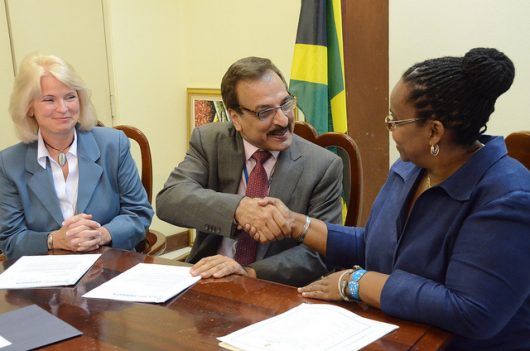
U.S. benefits from foreign aid to JamaicaJamaica faces many economic struggles and is often in need of foreign aid. For the past five years, the U.S. has been the biggest provider of foreign aid and investment in the country. The aid is valuable for both countries as the U.S. benefits from foreign aid to Jamaica in many ways.

Tourism

Although a popular destination for travelers, Jamaica faces many economic issues, including high unemployment rates, crime and corruption. The country is also prone to natural disasters. Although tourism helps support the economy of Jamaica, it is not enough to sustain it.

Jamaica believes that foreign aid and investment is a key aspect of growing its economy and has made governmental reforms to better accept and use these funds. This makes the funding process easier for countries like the U.S. and provides greater assurance that the funds will be allocated and implemented properly.

The way the U.S. benefits from foreign aid to Jamaica far outweighs the risk of investing in the county. Jamaica is a major economic partner to the U.S. The country is already a major tourist destination with developed infrastructure. Jamaica’s infrastructure boasts world-class transportation on land, air and sea, as well as a developed telecommunications system.

Funding toward the tourism sector would only strengthen it further, improving Jamaica’s economy. This, in turn, would help provide for Jamaica’s funders. This includes the countries that directly fund it through foreign aid, as well as those investing privately through businesses. These businesses include tourism but also focus on a variety of other fields such agribusiness, mining, energy and manufacturing.

Investing in Business

There are many ways in which Jamaica has made investing more accessible to countries like the U.S. and helped to ensure that both countries benefit as much as they can from it. One example is the improvement of credit access, which makes the starting of a business more accessible in consideration of price, especially for the electricity sector. It also affects how businesses are taxed and generally start-ups have a lower tax. Improved credit access provides the opportunity for more businesses to be formed and for more investments to be made toward them.

Democratic Ally

Another way the U.S. benefits from foreign aid to Jamaica is through similar political interests. The government of Jamaica is already a prime example of democracy, having elections every five years. Continuing aid and investment in the country will only help improve it. Jamaica is a democratic ally to the U.S., which not only benefits both countries politically but also economically. As aid continues to grow and both countries benefit from one another, this will serve to further an alliance between them.

There are many ways in which the U.S. benefits from foreign aid to Jamaica, which is an incredibly beneficial country to invest in. Not only has government reform made it easy to fund and aid the country but also provides many ways for businesses and their investors to flourish. Jamaica is a strong economic benefit and ally to the U.S., as well as a great representative of democracy. A partnership and alliance will continue to grow between the two countries with the continued support of the U.S.

– Keegan Struble

Photo: Flickr

February 28, 2018
https://borgenproject.org/wp-content/uploads/borgen-project-logo.svg 0 0 Borgen Project https://borgenproject.org/wp-content/uploads/borgen-project-logo.svg Borgen Project2018-02-28 19:30:062024-12-13 17:58:37How the US Benefits from Foreign Aid to Jamaica
Global Poverty

Infrastructure in Algeria Under Significant Improvement

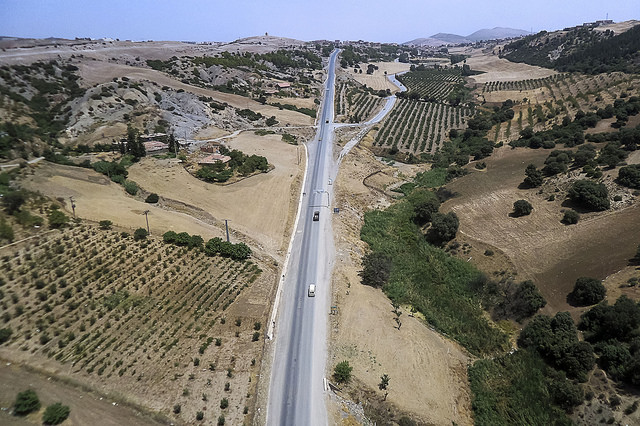
Recovering from a gruesome civil war that left the nation paralyzed between 1991 and 2001, Algeria has slowly been restoring the backbone of its infrastructure. Algeria’s infrastructure system is highly important, as it serves as a gateway between North Africa and Europe.

The Algerian government has launched an extensive public investment program in an effort to make transport a top priority. According to CountryWatch, in 2010, Algeria began “a five-year $286 billion development program to update its infrastructure and provide jobs.”

Another area of improvement that will directly impact infrastructure in Algeria is tourism. In 2012, the government began investing in the tourism sector and set a target of attracting 3.5 million tourists by 2015. The tourism sector has been the main focus of delivering employment in Algeria to better improve living conditions. The Minister of Tourism and Handicrafts, Hacène Mermouri, announced in December 2017 that 1,812 new hotel infrastructure projects have been approved by the Ministry.

These changes also impact nearby airports within the region. New terminals are being built to better accommodate international tourists in Oran and Algiers. Additional renovations include the establishment of Algeria’s first underground metro system, as well as extending roads and rail services.

The Ministry of Transport has reaped the successes from infrastructure in Algeria, earning €35.7 billion between 2010 and 2014. Such investments are expected to improve Algeria’s logistics performance, as well as reduce congestion and transport costs in a hub that serves as the primary source of transportation.

A surge in the number of vehicles that are to circulate Algeria’s roads is also concerning, leading the government to focus on expanding the country’s road network. According to the Ministry of Public Works, from the start of 2000 to 2014, the government invested in €46.9 billion in road infrastructure.

Some caveats that may impede Algeria’s growth in the near future are the fall of oil demand from nations such as the U.S., allocating between 20 to 25 percent of all Algerian exports. In addition, there has been a decrease in gas and oil production, of which Algeria ranks fourth and tenth as the largest exporter worldwide, respectively.

Per a PricewaterhouseCoopers (PWC) report, this decrease is putting increasing pressure on Algeria’s government to liberalize its economic and investment policies. Despite such internal worries, Algeria has significantly improved its logistics infrastructure, which had them ranked 140th in 2007, to which they have climbed to 96th out of 160 countries.

The central component of Algeria’s projected growth resonates with the success of the $262 billion five-year investment plan. This project is aimed at “boosting domestic production and moving the country’s economy away from oil and gas reliance,” per CountryWatch.

In a nation where poverty remains widespread, a high unemployment rate, particularly among the youth, is obstructing the country from any consistent growth. Moreover, PWC reports that the labor market is inefficient, ranking “last globally in the 2013 Global Competitiveness Index.”

Reforming institutions and monetary policies are vital to an environment crippled by political unrest and faced with strenuous complications. Infrastructure in Algeria, especially under the five-year plan, is set to ensure “significant continued development of transportation networks in the coming years,” as Oxford Business Group reports. Apart from the advertised objectives, the future of Algerian development is also contingent upon its domestic production. Algeria has a plan, but its path forward in a rapidly adjusting global system remains to be seen.

– Alexandre Dumouza

Photo: Flickr

January 9, 2018
https://borgenproject.org/wp-content/uploads/borgen-project-logo.svg 0 0 Borgen Project https://borgenproject.org/wp-content/uploads/borgen-project-logo.svg Borgen Project2018-01-09 07:30:192019-11-12 21:56:35Infrastructure in Algeria Under Significant Improvement
Economy, Global Poverty

The Issue of Overfishing in Saint Pierre and Miquelon

Overfishing in Saint Pierre and Miquelon

The French islands of Saint Pierre and Miquelon are located off the coast of Newfoundland and have a population of about 5,533, according to July 2017 data. It is estimated that about 90 percent of inhabitants live on St. Pierre, while a smaller population lives on Miquelon. The islands focus largely on the fishing industry and have for over a century, but overfishing in Saint Pierre and Miquelon has led to Canada imposing a long-term closure of the industry, causing a negative ripple effect on the economy of the islands.

The overfishing in Saint Pierre and Miquelon started when the United States repealed Prohibition in 1933. The islands’ thriving economy decreased dramatically and forced the laborers to turn back to fishing. Since then, Saint Pierre and Miquelon have constantly been fishing, leading to the overfishing problem.

In addition to the issue of overfishing in Saint Pierre and Miquelon, there has been a decline in the number of ships using the Saint Pierre harbor. This could be due to the weather and the natural environment of the islands. Surrounding the islands are “treacherous currents and fog [that] have contributed to hundreds of shipwrecks off Saint Pierre and Miquelon.”

The four-mile strip of water between Saint Pierre and Miquelon is called “The Mouth of Hell” by the local fisherman because of the strong currents that have contributed to about 600 shipwrecks near the islands. The residents of Saint Pierre and Miquelon have used this to their benefit, as they can add to their earnings from fishing somewhat by salvaging the wreckage.

Dealing with overfishing in Saint Pierre and Miquelon has not been easy for the residents of the islands, but there has been some progress with sustainability and trying to stabilize the island’s economy, as the residents have turned to other kinds of seafood fishing such as crab fishing. They have slowly developed other types of agricultural farming, including vegetables, poultry, cattle, sheep and pigs. The government of Saint Pierre and Miquelon is also working to grow its tourism industry. With the hope of more tourism on the islands, a more sustainable way of fishing and more farming, Saint Pierre and Miquelon’s prospects are looking brighter and more stable.

– Jennifer Lightle

Photo: Flickr

October 21, 2017
https://borgenproject.org/wp-content/uploads/borgen-project-logo.svg 0 0 Kim Thelwell https://borgenproject.org/wp-content/uploads/borgen-project-logo.svg Kim Thelwell2017-10-21 01:30:042024-05-29 22:27:40The Issue of Overfishing in Saint Pierre and Miquelon
Economy, Global Poverty

How to Help People in Andorra

How to Help People in Andorra

Mountains draw people to the European microstate of Andorra, which offers the best skiing and resorts in the Pyrenees. Prior to World War II and the modernization of Andorra, subsistence agriculture was the dominant industry, even though its mountainous geography is not conducive to large agricultural gain. After the war and the integration of Europe, Andorra quickly modernized and moved toward a lucrative service economy based on tourism. Today, with the rise of the tourism industry, agriculture makes up a small proportion of Andorra‘s industry. Most families own hotels, restaurants and other businesses rather than supporting themselves through farming, greatly increasing their quality of life and wealth.

Andorra has a very low poverty rate due to its booming service economy fueled by its tourism industry. Over 95% of people work in the service industry and only 3.7% of people were unemployed as of 2016. Poverty is so low that the percentage of the population below the poverty line is not measured. One can help people in Andorra stay out of poverty by supporting the Andorran tourism industry, thus sustaining Andorra’s equitable living standards and strong economy, with the added benefit of exploring Andorra’s culture in its beautiful Pyrenees location.

As of 2016, Andorra’s population was 77,281. Its GDP from the year prior was $3.327 billion. Its GDP per capita from 2015 was $49,900, making it the twenty-fifth wealthiest nation in the world as of 2015. These figures show the country’s strength and the lack of direct need to help people in Andorra.

Although there is not a crucial need for foreigners to help people in Andorra, it is important to maintain the success of Andorra, which can only continue by foreigners continuing to visit Andorra and support its tourism industry — an enjoyable way for one to help Andorrans.

– Mary Kate Luft

Photo: Flickr

October 18, 2017
https://borgenproject.org/wp-content/uploads/borgen-project-logo.svg 0 0 Kim Thelwell https://borgenproject.org/wp-content/uploads/borgen-project-logo.svg Kim Thelwell2017-10-18 01:30:512024-05-28 00:16:14How to Help People in Andorra
Economy, Global Poverty

Causes of Poverty in San Marino

Causes of Poverty in San Marino

San Marino is a small, landlocked country located within Italy. It is a remnant from a time when city states dotted the European landscape. San Marino is believed to be the world’s oldest surviving republic, and tourism plays the largest role in the economy. More than three million people visit the republic each year. However, the nation still struggles with poverty. Here is a look at causes of poverty in San Marino.

One of the causes of poverty in San Marino was the recession of 2008. San Marino‘s economy is heavily reliant on tourism, and the recession incited a drop in tourism rates.

Although tourism is a large part of the economy, San Marino also acted as a tax haven for the wealthy people of Europe. This changed when the European Union and Italy pressured San Marino into going along with a crackdown on tax evasion and money laundering.

The United States Department of State reported that the strict regulations placed on the financial sector has led to a decrease in money laundering. There is not a large enough market for illegal goods, so most money laundering was done on the behalf of people outside of the country looking to avoid higher tax rates in their own countries.

A number of top executives at the Cassa di Risparmio della Repubblica di San Marino were arrested on money laundering charges. This was the nation’s top bank, so the arrests dealt a heavy blow to the nation’s economy. Thus, while it is good for the global economy, the inability to launder money is another one of the causes of poverty in San Marino.

The government of San Marino has taken actions in order to combat the economic downturn, which includes subsidized credit for businesses. San Marino has also taken steps to move its economic growth model away from a dependence on bank and tax secrecy.

Due to its low corporate taxes compared to other nations, the economy can profit from foreign investment as well. San Marino’s income tax is also about one-third the amount compared to other nations in the EU.

The Organization for Economic Cooperation (OECD) removed the small nation from its list of tax havens that have not fully complied with global tax standards in 2009. San Marino also signed tax information exchange agreements with most major nations in 2010.

Causes of poverty in San Marino are largely due to the loss of tourism and its strict regulations on the financial sector, but with its advantages for foreign investments, the small nation hopes to turn its economic woes around.

– Fernando Vazquez

Photo: Flickr

October 17, 2017
https://borgenproject.org/wp-content/uploads/borgen-project-logo.svg 0 0 Borgen Project https://borgenproject.org/wp-content/uploads/borgen-project-logo.svg Borgen Project2017-10-17 07:30:202024-05-29 22:27:33Causes of Poverty in San Marino
Economy, Global Poverty

The Poverty Rate in Tonga: A Nation in Need of Assistance

Tonga Poverty RateThe Polynesian Kingdom of Tonga is home to around 102,000 people. Tonga is an archipelago comprised of 171 islands, only 45 of which are inhabited. In 2005, the U.N. estimated 77 percent of the population lives in rural areas.

The poverty rate in Tonga is 22.1 percent; in other words, one out of every five Tongans lives below the poverty line. Among the eight nations in the Pacific region, Tonga has the third lowest poverty rate, proceeded by the Solomon Islands and Vanuatu.

Tonga’s impoverished communities are primarily in rural areas on the outer islands. The main island of Tongatapu has the highest GDP per capita, but the citizens of the farther islands of ‘Eau, Ha’apai, the Niuas and Vava’u struggle to find work. The higher poverty rates on these islands are due to a lack of access to goods, transportation and marketing opportunities.

The poverty rate in Tonga worsened after the 2008 global financial crisis. The cost of living skyrocketed due to increased prices of imported fuel and food. The crisis also caused Tongans overseas to lose their jobs in fields such as construction and landscaping, rendering them unable to send money back home. It is estimated that there are more Tongalese expatriates than current citizens, and many of them reside in the neighboring countries of Australia and New Zealand.

Tonga’s economy is primarily agricultural. Their main cash crops are squash, fish, copra and coconut products, vanilla bean extract and bananas. Tonga’s main mode of foreign exchange is through agricultural exports, tourism and remittances. The Tongalese economy also relies on foreign aid to offset its chronic trade deficit.

The biggest hope for improving the Tongan economy is tourism. Tonga hopes to increase high-value tourism among the outer islands, which have white sandy beaches and ideal sailing conditions. The Tongan tourism industry still has problems with remoteness, infrastructure and poor marketing. However, conditions are improving. In January 2011, tourist receipts totaled 60 million Tongan dollars, the highest point in the last decade.

Like many countries, Tonga is still in the process of rebuilding its economy after the 2008 financial shock. International cooperation will also be instrumental in doing so, as Tonga continues to rely on foreign aid for emergency assistance and filling the gaps in trade deficits. With further cooperation and the development of local markets, there is hope to lift many more Tongans out of poverty.

– Hannah Seitz

Photo: Flickr

October 3, 2017
https://borgenproject.org/wp-content/uploads/borgen-project-logo.svg 0 0 Kim Thelwell https://borgenproject.org/wp-content/uploads/borgen-project-logo.svg Kim Thelwell2017-10-03 01:30:402024-05-29 22:27:03The Poverty Rate in Tonga: A Nation in Need of Assistance
Global Poverty

Reducing the Poverty Rate in the Solomon Islands

Poverty Rate in the Solomon IslandsIn 1568, Spanish explorer Álvaro de Mendaña became the first European to visit the 992-island archipelago known today as the Solomon Islands. He named the islands after the wealthy and wise biblical king of Israel, inspired, as legend goes, by a belief that their cerulean seas and white-sand shores guarded untold riches. That assumption was largely mistaken, as seen in the poverty rate in the Solomon Islands today.


Exploring the Poverty Rate in the Solomon Islands


Although modern tourism has added to the Islands’ economic portfolio, these profits are still few and far between and unevenly distributed. The vast majority of wealth is concentrated in the capital city, Honiara, in which 85 percent of the population is in the Islands’ highest wealth quintile.

According to the Asian Development Bank, in 2013, 12.7 percent of Solomon Islanders lived below the national poverty line. Nutrition-wise, they fared better: only 4.4 percent lived below the food poverty line. However, a mere 35.1 percent had access to electricity.

Technological developments and investment continue to play a vital role in reducing poverty in the Solomon Islands. In April 2017, the World Bank reported that the Green Climate Fund has approved $86 million toward the Tina River Hydropower Project, an effort to reduce reliance on imported fuel for electricity generation. This investment accompanies the $15 million provided by the International Renewable Energy Agency/Abu Dhabi Fund for Development (IRENA/ADFD).

The Solomon Islands’ electricity retail tariffs are currently among the highest in the world, at $0.65 per kilowatt-hour. Given that the Islands generate 97 percent of their electricity from diesel fuel and only 12 percent of homes are currently connected to grid power, this project stands to reduce the burden on working families and illuminate the islands like never before.

And, with electricity, the Islands should see an economic boost. The Asian Development Bank notes that tourism is a largely untapped market with great potential for development. Cheaper and more abundant energy is good for more than just powering residential areas: it can also lay groundwork for the sort of 24-hour “City of Light” that modern tourism creates and feeds on. With a stronger, cheaper energy grid in place, private investment will follow.

New technology and investments like these, guided by sound and prescient public policy, will be crucial to reducing the poverty rate in the Solomon Islands and materializing those mythical riches dreamed of since the days of de Mendaña.

– Chuck Hasenauer

Photo: Flickr

September 26, 2017
https://borgenproject.org/wp-content/uploads/borgen-project-logo.svg 0 0 Borgen Project https://borgenproject.org/wp-content/uploads/borgen-project-logo.svg Borgen Project2017-09-26 07:30:332024-05-29 22:26:50Reducing the Poverty Rate in the Solomon Islands
Global Poverty

Alleviation of Global Poverty a Benefit of Tourism

Alleviation of Global Poverty
After the United Nations declared 2017 the International Year of Sustainable Tourism for Development, governments worldwide have been growing their tourism industries to facilitate the alleviation of global poverty.

Year after year, the United Nations has seen an increase in money circulating in various countries’ tourism industries. However, these countries are some of the wealthiest in the world, among them the United Kingdom, United States and Germany.

The United Nations is working to increase the benefits of tourism in countries struggling with immense poverty, but it will not be easy. To accommodate tourists, a large amount of money—money that these countries do not have—will need to be spent on building and maintaining hotels, airports and other tourist amenities.

If these countries are able to build successful tourism industries, an abundance of jobs will be created and a large percentage of the profits can go directly to local communities living in poverty.

Samoa is an example of this progress. From 2005 to 2015, Samoa’s tourism industry grew from $73 million to $141 million. Samoa’s tourism industry had an impact on the alleviation of global poverty, as it ensured that visitor dollars resulted in local benefits.

Similar to Samoa, Ecuador, South Africa and Fiji are among other countries that have seen poverty relief as a benefit of expanding their tourism industries. The United Nations has played a role in the alleviation of global poverty by helping poor countries finance transport connectivity and facilitate infrastructure investment.

African countries have benefited greatly from the United Nations’ assistance with their tourism industries. Today, Africa’s tourism industries support more than 21 million jobs and have aided the alleviation of global poverty through sustainable development in struggling countries. The sustainable development seen in Africa relies on tourists making ethical travel choices. Tourists are encouraged to “go local” with food, craft purchases and tour companies when traveling in developing countries.

Tourism alone cannot end global poverty. However, if travelers, local companies and large organizations such as the United Nations continue to show their support for developing countries, the world will be one step closer to total alleviation of global poverty.

– Kassidy Tarala

Photo: Flickr

September 24, 2017
https://borgenproject.org/wp-content/uploads/borgen-project-logo.svg 0 0 Borgen Project https://borgenproject.org/wp-content/uploads/borgen-project-logo.svg Borgen Project2017-09-24 01:30:392020-07-09 18:00:09Alleviation of Global Poverty a Benefit of Tourism
Developing Countries, Development, Global Poverty

The Positive Perspective on Tourism in Developing Countries

Tourism in Developing CountriesOver the years, there has been a longstanding debate about whether or not the unintended consequences of tourism in developing countries could be detrimental to locals in a developing community. On the other side of the argument, some tourists argue that tourism contributes to a flourishing economy and increases diversity.

One important aspect that contributes to a more positive outlook on tourism is the attitude of both tourists and locals regarding foreign travel. Leaders of countries with successful tourism industries tend to emphasize certain ground rules to encourage the community to view the tourists as a source of wealth creation, not of charity. This attitude contributes to a more healthy relationship between tourists and locals and fosters more respectful interactions instead of a transactional relationship.

In Rwanda, the majority of the country’s revenue comes from wealthy safari tours and other tourism cooperatives. The natives have welcomed tourism as a large contributor to their economy and a necessary part of life.

The life of Mukasinadere, a member of a weaving cooperative in Rwanda, has been completely changed by the tours. Working as a weaver and selling baskets to tourists, she is now able to pay for her family’s basic needs. As a result of these cooperatives, the economy in Rwanda is flourishing, food is abundant and mortality rates have decreased substantially.

Aside from financial improvements, tourism also has positive effects on infrastructure development. Tourism encourages local customs, artwork and festivals which contribute to a better cultural understanding for both tourists and locals.

Facilities in areas with high tourist traffic are often much more high-quality, not to mention more sanitary, than local facilities which increases the quality of life and health for locals. Environmental tourism encourages wildlife and nature preservation in addition to providing funding for these causes that might not have received allocations otherwise.

While tourism in developing countries is a controversial and often stigmatized topic of discussion, it is important to remember the positives that tourism affords for the local community and aspects of cultural acceptance.

– Sarah Coiro

Photo: Pixabay

September 15, 2017
https://borgenproject.org/wp-content/uploads/borgen-project-logo.svg 0 0 Borgen Project https://borgenproject.org/wp-content/uploads/borgen-project-logo.svg Borgen Project2017-09-15 01:30:562024-05-28 00:16:22The Positive Perspective on Tourism in Developing Countries
Global Poverty

Andorra: Europe’s Tax Haven and Tourism Getaway

AndorraSituated in the mountains between Spain and France, it’s easy to forget about Andorra, one of the smallest states in Europe. Because of its duty-free shopping, winter sports and hot summers, it is a popular destination for the eight million tourists that visit annually. Travelers enter the country from either France or Spain, since it has no airport. The following facts and figures in Andorra paint a picture of prosperity and ongoing challenges.

  1. Andorra doesn’t get much press. This may be due to the small population (less than 100,000), and the actual area of the country is only about two-and-a-half times the size of Washington, D.C.
  2. Most of the country’s GDP comes from tourism and investments. The majority of employed individuals work in a service-industry position. The population enjoys a high standard of living. In 2016, unemployment was 3.7 percent. Poverty statistics are currently unavailable.
  3. Andorra has six major political parties. Additionally, there are several smaller parties at the parish level.
  4. Despite being so small, It also has a higher per-capita income than both Spain and France. It was a tax haven until France and Spain opened its borders. Andorra has no external debt.
  5. Andorra imports all of its food. Only 5.5 percent of its land is arable.
  6. Andorra is not without problems. One concern is affordable housing. While most of the housing in the country is new, it is also scarce. A look at lucasfox.com shows properties selling from 200,000 Euros ($228,000 USD) to well over a million Euros ($1,141,000 USD). Amendments to residency requirements have recently been made in order to open the market. It used to be a person buying property in Andorra had to have lived there for at least 20 years. Locals continue to live with their families in farmhouses.
  7. Environmental concerns included solid waste disposal, deforestation and overgrazing.
  8. In terms of health, nearly a third of the population is obese. According to 2014 statistics, 8.1 percent of its GDP (an estimated $3.327 billion as of 2015) was spent on health. Life expectancy is 82.8 years.
  9. Andorra is looking to attract foreign investing. Before 2008, non-residents could own 33 percent of a company. After living in the country 20 years, they could then own 100 percent of a company. This was due to concerns about foreign ownership on the economy.

As these facts and figures in Andorra show, it is a peaceful, small country as a retirement haven, or for those looking for an out-of-the-way skiing vacation.

– Gloria Diaz

Photo: Pixabay

August 24, 2017
https://borgenproject.org/wp-content/uploads/borgen-project-logo.svg 0 0 Borgen Project https://borgenproject.org/wp-content/uploads/borgen-project-logo.svg Borgen Project2017-08-24 01:30:152024-05-28 00:15:36Andorra: Europe’s Tax Haven and Tourism Getaway
Page 7 of 10«‹56789›»

Get Smarter

  • Global Poverty 101
  • Global Poverty… The Good News
  • Global Poverty & U.S. Jobs
  • Global Poverty and National Security
  • Innovative Solutions to Poverty
  • Global Poverty & Aid FAQ’s
Search Search

Take Action

  • Call Congress
  • Email Congress
  • Donate
  • 30 Ways to Help
  • Volunteer Ops
  • Internships
  • Courses & Certificates
  • The Podcast
Borgen Project

“The Borgen Project is an incredible nonprofit organization that is addressing poverty and hunger and working towards ending them.”

-The Huffington Post

Inside The Borgen Project

  • Contact
  • About
  • Financials
  • President
  • Board of Directors
  • Board of Advisors

International Links

  • UK Email Parliament
  • UK Donate
  • Canada Email Parliament

Get Smarter

  • Global Poverty 101
  • Global Poverty… The Good News
  • Global Poverty & U.S. Jobs
  • Global Poverty and National Security
  • Innovative Solutions to Poverty
  • Global Poverty & Aid FAQ’s

Ways to Help

  • Call Congress
  • Email Congress
  • Donate
  • 30 Ways to Help
  • Volunteer Ops
  • Internships
  • Courses & Certificates
  • The Podcast
Scroll to top Scroll to top Scroll to top