• Link to X
  • Link to Facebook
  • Link to Instagram
  • Link to TikTok
  • Link to Youtube
  • About
    • About Us
      • President
      • Board of Directors
      • Board of Advisors
      • Financials
      • Our Methodology
      • Success Tracker
      • Contact
  • Act Now
    • 30 Ways to Help
      • Email Congress
      • Call Congress
      • Volunteer
      • Courses & Certificates
      • Be a Donor
    • Internships
      • In-Office Internships
      • Remote Internships
    • Legislation
      • Politics 101
  • The Blog
  • The Podcast
  • Magazine
  • Donate
  • Click to open the search input field Click to open the search input field Search
  • Menu Menu

Tag Archive for: Tourism

Posts

Development, Global Poverty

Tourism in the Philippines to Help the Poor

Tourism_Philippines_Poverty
USAID and the Philippines Department of Tourism and Department of Social Welfare and Development recently announced a program to include pro-poor tourism activities in areas of high poverty in the country. The Departments and USAID signed a Memorandum of Understanding (MOU) August 5th. Tourism in the Philippines has significant potential to boost the economy and alleviate poverty.

The program, dubbed “The One-Step Project,” will seek to incorporate pro-poor aspects in the tourism trade in five pilot areas characterized by high poverty and high tourism. These five areas are chosen from the 78 tourism development areas designated by the Department of Tourism. Regional and provincial officers in the five areas will be consulted by a central technical working group. While a project amount has not yet been set, The One-Step Project will take place over four years and will focus on infrastructure, job creation through community-based projects, and private sector engagement.

In 2010, the Philippines received 3.5 million visitors, generating US$2.4 billion from tourism. The Philippine government has focused on the tourism industry in recent years, but, despite its many natural attractions the Philippines, still trails other regional countries in tourism numbers.

A variety of factors contribute to this sluggishness: remote location, susceptibility to natural disasters, and unrest often resulting in kidnappings. However, tourism does hold the potential for new job creation. Including the poor in tourism strategies and job creation is an important development opportunity within this sector. While the Department of Tourism has included these strategies in the past, this will be their first partnership with USAID.

This will not be the first time the Philippine Department of Tourism has focused on pro-poor tourism actions. In 2000, the Department’s regional branch helped villagers in Sta. Juliana organize in order to take advantage of a new influx of tourism.

Residents of the village, suffering from a decade of neglect, struggle to make ends meet. They are hampered by lack of appropriate infrastructure to get their agriculture goods to market and a lack of telecommunications. The regional Tourism department helped the villagers form the Sta. Juliana Tourism Council, Inc. which has educated residents on the trade’s benefits. New jobs and livelihoods evolved to capitalize on this influx.

The One-Step Project falls under USAID’s Partnership for Growth program, running until 2016. Additional projects in the Philippines will be implemented by USAID focusing on tourism. Most of these projects will take the form of technical assistance and policy reform. The USAID Philippine budget reached $102 million for fiscal year 2011. This is distributed across USAID’s four focus areas: democracy and governance, economic growth, health and education, and energy and environment. The US government is the Philippines largest grant donor. The collaborative One-Step Project has great potential to continue tourism-focused aid to the poorest communities in the Philippines.

– Callie D. Coleman

Sources: Business Mirror, CNN, The Philippine Department of Tourism , USAID
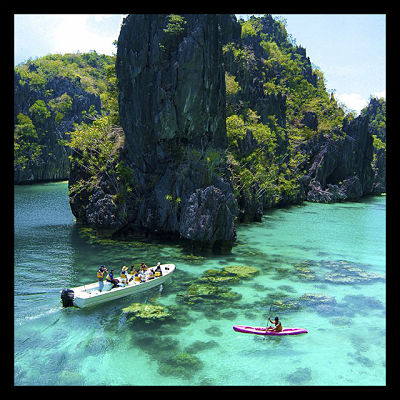
Photo: AUSTRONESIA

August 16, 2013
https://borgenproject.org/wp-content/uploads/borgen-project-logo.svg 0 0 Borgen Project https://borgenproject.org/wp-content/uploads/borgen-project-logo.svg Borgen Project2013-08-16 09:43:022024-05-25 00:15:35Tourism in the Philippines to Help the Poor
Global Poverty

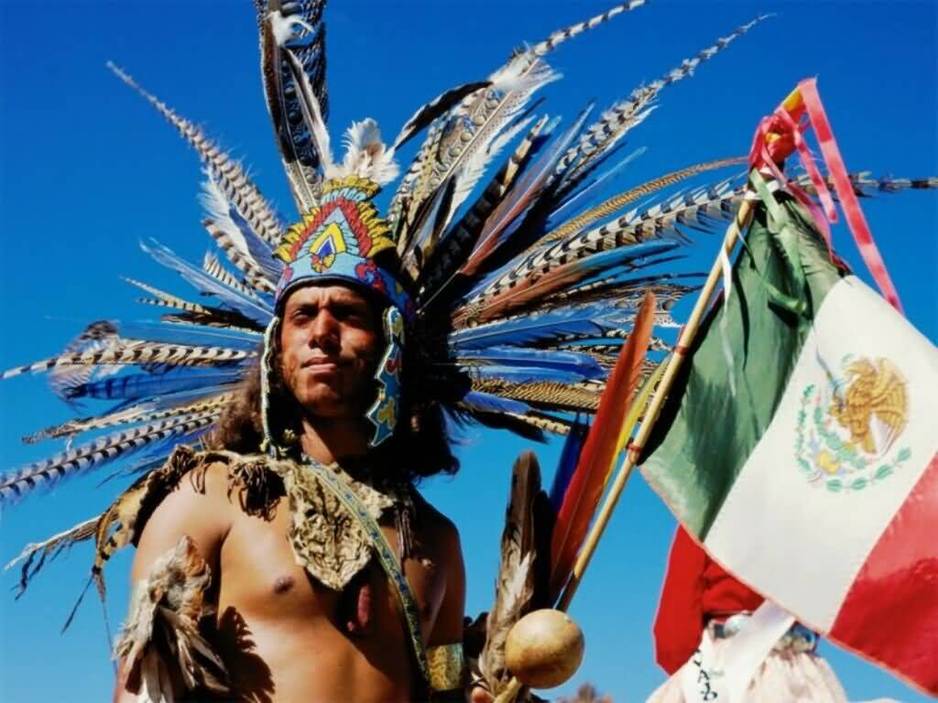
5 Ways to Be an Effective Cultural Tourist in Mexico

5 Ways to Be an Effective Cultural Tourist in Mexico
Cultural tourism is a slippery slope for travelers. Some think that tourism is an industry that contributes greatly to poverty reduction and economic stability in developing nations. Not everyone agrees, however, as many attest that tourism in more rural, traditional areas are catering to tourists, reducing the authenticity of the culture and exploiting locals and their traditions in the process.

One of the most popular tourist destinations is Mexico; tourists flock here from all over the world every year. While Mexico often gets unfairly stereotyped, different areas within the country provide a much different experience. Two of the most popular tourist destinations are Mexico City, one of the largest cities in the world, and the state of Chiapas, where 70% of its people live below the poverty line. Deciding where to visit is a challenging decision, but tourists’ responsibility doesn’t end once they arrive at their destination: it continues until they return home.

When visiting any country — especially a country like Mexico, which changes on a dime depending on the area — there are certain tips to follow in order to be an effective cultural tourist and help support the local economies.

  1. Eat local. Yes, there is a McDonalds almost anywhere you go in Mexico City, but why eat at a place you can go to every day back in the States? Being in another country gives you the opportunity to experience new things; local cuisine is both delicious and cheap. Try some of the local taco stands. Most are fresh, quite delicious and will be a good economic contribution in the end.
  2. Learn proper bargaining. While much of what is for sale in Mexico is at a fairly responsible price, it is still a common practice to bargain and is done daily among locals as well. However, don’t haggle too far below the asking price. Tourists should remember that while they want to get the best value for their money, those working in the markets and shops do this for a living and need to provide for their families back home.
  3. Respect the culture (especially in rural areas). In states such as Chiapas, most of the population is indigenous (ethnic minorities who have been marginalized as their historical territories became part of the state) and have a different way of doing things. Behavior that might be commonplace in the States might not always be accepted as openly by those who are not used to the American way of life. Make sure you ask before you take any pictures of the locals or their children. Many feel that this is disrespectful and inconsiderate. Cameras are also not allowed in church and locals will become very aggressive and demand payment for disrupting their ceremonies.
  4. Buy goods from local vendors. Although some tourists think that visiting rural areas and buying from locals exploits their culture and dilutes their traditional way of life, the reality is that tourists make contributions that are appreciated greatly. Take time to speak to the locals, especially in lower-income areas like Chiapas. Visitors will often find themselves engaging with people who love what they do. Often the locals work more than one job, selling items on the street while holding down another position in a bigger city to help make ends meet.
  5. Be careful about the environment: Locals in rural areas appreciate their traditional way of life. Try not to leave articles of yours behind and clean up after yourself. The environment is also very important in rural areas, so to reduce your carbon footprint walk through towns instead of taking a taxi or bus.

Traveling to a country like Mexico is a wonderful experience, one that should be had by anyone who has the chance. In tough economic times, tourists should maximize their time and tight budgets, but also respect the land, culture and environment that they are visiting. These tips should come in handy for the traveler and help stimulate the local economy.

– Taylor Rae Schaefer

Sources: Imagine Mexico, World Nomads
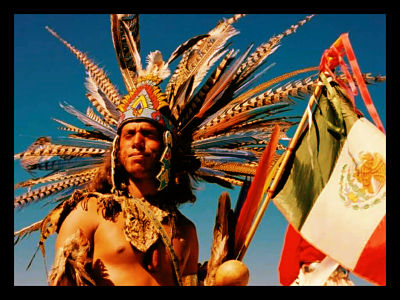
Photo: History Martinez

July 25, 2013
https://borgenproject.org/wp-content/uploads/borgen-project-logo.svg 0 0 Borgen Project https://borgenproject.org/wp-content/uploads/borgen-project-logo.svg Borgen Project2013-07-25 05:00:352020-07-19 22:01:015 Ways to Be an Effective Cultural Tourist in Mexico
Global Poverty

Is Somalia the Next Tourist Hotspot?

Business is booming in Mogadishu, the capital of war-torn Somalia. This economic renaissance of sorts might come as a surprise considering the recent history of the nation, which has suffered from political instability and terrorist insurgency for the past twenty years.

However, after the people of Somalia elected their own president to represent them just last year, the economy of the nation has already shown considerable signs of steady improvement. On top of this, Somalia’s recently adopted provisional constitution, which has been praised as “one of the top legal documents in the world,” has had a powerful impact on the Somalian economy as well. According to many Somalian businessmen, peace inevitably leads to prosperity.

Bashir Osman, a real estate developer, knows that he took a huge risk by buying land for a luxury beach resort in Mogadishu, but he also is very confident that his investment will pay off. “[The tourists] were so excited when they saw how Mogadishu looks like, how beautiful city we have, how beautiful beach we have and that is what we want to show them again and again,” Osman tells.

Many believe that the economic resurgence in Somalia is not only because of businessmen like Osman but also because of the diaspora returning to rebuild the country. Somalian citizens who escaped the country to avoid the violence and political upheaval that plagued the last two decades are now coming back to reshape Mogadishu and other major cities.

The recent success of Somalia’s economy is not only found in the real estate sector but also in the telecommunications and aviation industry, further facilitating Mogadishu as a tourist hotspot. The nation’s economy is supported by aid from donor governments; Somalia’s pending success story is a testament to the vitality of these programs.

– Sagar Desai
Sources: Xinhua, CNN
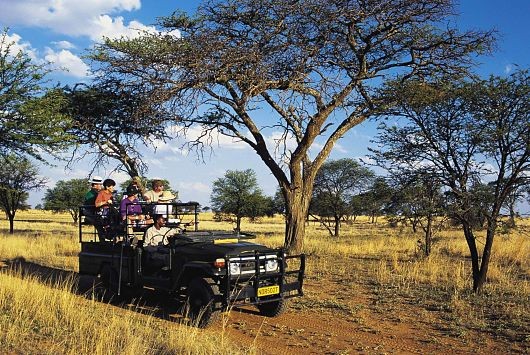
Photo: Go Africa

July 24, 2013
https://borgenproject.org/wp-content/uploads/borgen-project-logo.svg 0 0 Borgen Project https://borgenproject.org/wp-content/uploads/borgen-project-logo.svg Borgen Project2013-07-24 12:10:152024-05-25 00:06:50Is Somalia the Next Tourist Hotspot?
Education

More than a Tourist: O’Sullivan’s Travels

O'Sullivan's Travels
Chris O’Sullivan may not be a celebrity, but he definitely is not your average wait-for-the-employer-to-call college graduate. O’Sullivan’s Travels is much closer to Gulliver than Sullivan. Unlike Gulliver, however, he not only reaches out to the world but lets the world reach back—the world of South African students struggling with disadvantages and the world of donors given the opportunity to really make an impact and watch their money make a huge difference.

After graduating with a degree in Education from Shippensburg University, O’Sullivan traveled to the Stellenbosch region of South Africa to aid a school of 1,800 students divided amongst only 40 teachers with few supplies at their disposal. Despite the creativity, passion, perseverance, and best intentions, one teacher can only do so much with 50 students and limited resources.

O’Sullivan taught English and math to 6th grade students and experienced first hand the disadvantages these students and their teachers faced. In a world numbered one to three, first world students have pencils, pens, markers, crayons, posters, desks, charts, graphs, computers, iPhones, and 20 peers. In the second world students have pencils, pens, maps, graphs, paper, a few posters, a computer, mobile phones, and 35 peers. In the third world students have a pencil, some paper, their creativity, ambition, determination, and their teacher’s knowledge to rely on.

Two years later, 2 months from now, O’Sullivan is returning to Kayamandi to again lend his skills and experience. O’Sullivan is not returning empty-handed. He is bringing his network of support. His goals for this trip are twofold: First, he wants to give South Africa to the South Africans. Having a slim-to-none chance of ever going on vacation to a domestic or foreign destination, O’Sullivan wants to bring the beauty and wonder of South Africa to the students of Kayamandi. “Imagine living on the doorstep of Disney World and never being able to step inside.” So many of the students have never ridden in a van, slept in their own bed, eaten in a restaurant, or even seen the ocean (South Africa has 2,798 km of coastline!). His second goal is to stock the school with supplies. Pencils, paper, posters, books and magazines will go a long way towards improving the education the students receive.

The count down has begun. Two months to go. O’Sullivan has spent the last year working numerous part time jobs to pay for his trip and received support from friends, family, and a larger network.

Chris O’Sullivan is not a celebrity. Not by television standards anyway. But, ask any student in Kayamandi, South Africa, and you can bet they’ll know who he is.

– Katherine Zobre

Sources: O’Sullivan’s Travels, CIA World Factbook
Photo: O’Sullivan’s Travels

June 3, 2013
https://borgenproject.org/wp-content/uploads/borgen-project-logo.svg 0 0 Borgen Project https://borgenproject.org/wp-content/uploads/borgen-project-logo.svg Borgen Project2013-06-03 06:30:092024-06-04 02:43:52More than a Tourist: O’Sullivan’s Travels
Health

Cook It, Wash It, Peel It or Forget It

How to avoid getting sick overseas
As any traveler knows, after a long plane, train, and/or bus ride, all you want to do is take a shower, change your clothes, take a nap and get some grub! The last thing you want is to wind up back in bed or the bathroom with a sour stomach…or worse, the hospital. While there are several sources of health risk to travelers, the most common is contaminated food and water. Travelers trying exotic and exciting foods should follow these simple rules: cook it, wash it, peel it or forget it! And do not forget about ice. Freezing water does not remove contaminants and even alcoholic drinks are risky with contaminated ice.

There are several other sources of risk: poor sanitation and other diseases. Before you go, check out the World Health Organization (WHO) and with the Center for Disease Control (CDC) for risks at your destination. It is also extremely important to get any vaccinations recommended for your destination. The CDC has detailed documentation on requirements for each country.

Many diseases and infections are transferable between people. Sick people are also an indication that there may be a disease source near by—such as insects or poor sanitation. It is also important to be aware of how much sun/cold/oxygen you are exposed to. Too much sun exposure can lead to severe sunburns and dehydration. Sun block is expensive and not a common feature in many developing countries’ convenience stores. Observe local customs for avoiding the extreme weather and bring sunblock with you.

Most importantly for food, however, cook it, wash it, peel it or forget it.

– Katherine Zobre

Source: CNN
Photo: Lee-Reid Family Travels

June 2, 2013
https://borgenproject.org/wp-content/uploads/borgen-project-logo.svg 0 0 Borgen Project https://borgenproject.org/wp-content/uploads/borgen-project-logo.svg Borgen Project2013-06-02 06:01:462024-12-13 17:49:21Cook It, Wash It, Peel It or Forget It
Poverty Reduction

Biking in Bangkok is More Than a Tour

Biking in Bangkok is More Than a Tour
For two bicycle tour companies, biking in Bangkok is more than a tour. These two extraordinary companies not only give excellent guided tours of the hidden gems of this city, but also have significant impacts on the poverty in and around Bangkok.

Bangkok, the coastal capital of Thailand has two seasons, covers 606 sq miles, and 18 million residents, and approximately 1.5 million slum dwellers. There are over 400 Buddhist temples and thousands of other tourist attractions including the Royal Palace and the famous Khaosan Road.  One could spend a lifetime discovering new parts of Bangkok. As a tourist with limited time, the best way to see the real Bangkok is to pound the pavement with locals.

The first bicycle tour company is Co van Kessel. Mr. van Kessel, a Dutch ex-patriot, started the tour company over 30 years ago. Frustrated with the image of Bangkok as a city of uninhibited urban sprawl, grid-lock traffic and suffocating pollution, Mr. van Kessel started a bicycle tour company to change this image. His was the first bicycle tour company in Bangkok and has been working towards making Bangkok a cyclist-friendly city ever since.

In addition to being an entrepreneur, Co van Kessel bike tour company is also generous with their time and money. They often donate money to local charity organizations. Additionally, every year they donate bicycles that are unfit for tours but still in good working condition to villages in the north of Thailand. The bicycles serve the villagers as their primary form of transportation thereby allowing them to pursue livelihoods otherwise unavailable.

The second, Recreational Bangkok Biking (RBB), is also run by a Dutch ex-patriot, Andre Breuer. RBB offers several different tours each with their own extraordinary sights. They offer a variety of walking, biking, rickshaw, boat and combination tours throughout the city. Their goal is to give tourists a chance to see what Thai life is really all about—colorful markets full of sounds and smells that make your whole body tingle, daily life along the canals that wind through the city, and stretches of green space one could hardly imagine existed when limited to main tourist areas.

What makes this company stand out is not only the high quality of the tours but also the social commitment Mr. Breuer insists on. His employees are local, mostly low-class Thais. The employees start out as bicycle mechanics and learn English through interacting with foreigners—two skills that are extremely valuable to enhancing their living standards. The restaurants, food stands, boat drivers, and bicycle repair establishments are locals, mostly slum dwellers. Mr. Breuer also uses his influence and business network to help fund a local orphanage, the Mercy Center, and a kindergarten. (Mercy Center is located in the largest slum in Bangkok, Khlong Toey and serves as an orphanage and rehabilitation center for those with AIDS.)  Tourists have the option of stopping at the school and talking to the children, who learn English from their frequent interactions.

It is easy to get sucked into the tourist traps in Bangkok. Everyone wants to take you for a ride. Let yourself be taken by Recreational Bangkok Biking or Co van Kessel and you will not regret it!

– Katherine Zobre

Sources: Co Van Kessel , The Mercy Center
Photo: Google Plus

May 6, 2013
https://borgenproject.org/wp-content/uploads/borgen-project-logo.svg 0 0 Borgen Project https://borgenproject.org/wp-content/uploads/borgen-project-logo.svg Borgen Project2013-05-06 10:24:342020-05-26 08:49:19Biking in Bangkok is More Than a Tour
Page 10 of 10«‹8910

Get Smarter

  • Global Poverty 101
  • Global Poverty… The Good News
  • Global Poverty & U.S. Jobs
  • Global Poverty and National Security
  • Innovative Solutions to Poverty
  • Global Poverty & Aid FAQ’s
Search Search

Take Action

  • Call Congress
  • Email Congress
  • Donate
  • 30 Ways to Help
  • Volunteer Ops
  • Internships
  • Courses & Certificates
  • The Podcast
Borgen Project

“The Borgen Project is an incredible nonprofit organization that is addressing poverty and hunger and working towards ending them.”

-The Huffington Post

Inside The Borgen Project

  • Contact
  • About
  • Financials
  • President
  • Board of Directors
  • Board of Advisors

International Links

  • UK Email Parliament
  • UK Donate
  • Canada Email Parliament

Get Smarter

  • Global Poverty 101
  • Global Poverty… The Good News
  • Global Poverty & U.S. Jobs
  • Global Poverty and National Security
  • Innovative Solutions to Poverty
  • Global Poverty & Aid FAQ’s

Ways to Help

  • Call Congress
  • Email Congress
  • Donate
  • 30 Ways to Help
  • Volunteer Ops
  • Internships
  • Courses & Certificates
  • The Podcast
Scroll to top Scroll to top Scroll to top