• Link to X
  • Link to Facebook
  • Link to Instagram
  • Link to TikTok
  • Link to Youtube
  • About
    • About Us
      • President
      • Board of Directors
      • Board of Advisors
      • Financials
      • Our Methodology
      • Success Tracker
      • Contact
  • Act Now
    • 30 Ways to Help
      • Email Congress
      • Call Congress
      • Volunteer
      • Courses & Certificates
      • Be a Donor
    • Internships
      • In-Office Internships
      • Remote Internships
    • Legislation
      • Politics 101
  • The Blog
  • The Podcast
  • Magazine
  • Donate
  • Click to open the search input field Click to open the search input field Search
  • Menu Menu

Tag Archive for: Tourism

Posts

Global Poverty

What are the Killing Fields of Cambodia?

Cambodia Killings FieldsForty years ago, a massacre took place in Cambodia that, while not very known, proved to be one of the most violent in history. The Cambodian genocide took place over four years and killed more than one million people. This led to the formation of killing fields in Cambodia.

The Khmer Rouge regime, led by Pol Pot, took over Cambodia in 1975. During its four-year rule, over one-quarter of the country’s entire population was killed in the regime’s ruthless pursuit of totalitarian control. In 1979, the Vietnamese ended the corruption by invading Cambodia and seizing power from the regime.

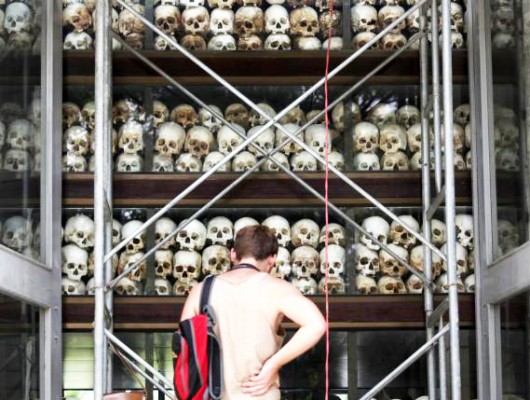
The largest pieces of evidence from this time in history are the remains of the killing fields of Cambodia. These were the places where those who did not cooperate were sent to work to their death. The fields exist today as a museum of sorts, with 20,000 people buried underground. The fields also hold displays, such as 8,000 human skulls placed in glass shrines.

The experiences that the Cambodian people underwent were deeply inhumane. Men, women and children were starved, worked to their death or were murdered in these fields. The fields are not just one inclusive area; there are 343 fields that have been discovered. Especially gruesome is that when it rains on the fields, bone and teeth fragments often wash up.

Cambodia coordinated with the U.N. General Assembly almost three decades after the Khmer Rouge were driven out. On Jun. 6, 2003, the Cambodian government agreed to prosecute the crimes committed during the genocide, which established the Extraordinary Chambers in the Courts of Cambodia (ECCC). Though many perpetrators had already passed away by this time, the ECCC did prosecute five men involved.

Although they hold a dark past, the killing fields of Cambodia have actually become a positive asset to the country. According to National Geographic, tourism in Cambodia has increased by 40 percent every year since 1998 as curiosity about the genocide has grown. The fields have created many tour guide jobs for hundreds of Cambodians and the large rise in tourists has helped boost the country’s economy.

When people visit this site, however, they are most importantly paying their respects to Cambodia’s history and those who have passed. The fields will continue to exist as a reminder of the horror that comes when tyranny and genocide take hold.

– Kerri Whelan

Sources: World Without Genocide, National Geographic, University of Rochester, MTVU, CyberCambodia
Photo: Reuters Media

February 28, 2016
https://borgenproject.org/wp-content/uploads/borgen-project-logo.svg 0 0 Borgen Project https://borgenproject.org/wp-content/uploads/borgen-project-logo.svg Borgen Project2016-02-28 01:30:512024-06-05 02:36:35What are the Killing Fields of Cambodia?
Activism, Global Poverty, Volunteer

Voluntourism Q&A

Voluntourism Q & AWhat is voluntourism?

Voluntourism (volunteer tourism) is a growing travel trend. It involves trading a typical vacation for an experience volunteering in orphanages and communities in poorer regions of the world. It is an opportunity for others to assist women, men and children in need.

Who participates in voluntourism?

Typically, privileged Americans and Europeans are participants in voluntourism. Most volunteers are women between the ages of 20-25. In some cases, colleges and universities offer volunteer travel courses that replace “fun and sun” spring break trips.

When did voluntourism begin?

Voluntourism began in the 1960s when the Peace Corps was founded. Since then, the number of those volunteering as a form of vacation have steadily increased. Each year, about 1.2 million volunteers participate in voluntourism.

What are the positives associated with voluntourism?

 Traveling volunteers have the ability to engage others with important world issues. For example, after helping in Ghana, a person can return to the U.S. equipped with knowledge and stories that engage advocates. By speaking about their experience, they interest others in the cause. By doing this, more people can strive to make a difference in the lives of others. In addition, they are deepening their understanding of humanity, which contributes to a desire to create a better world for all.

What are the criticisms of voluntourism?

The biggest criticism of voluntourism is that it is a form of narcissism that allows travelers to make themselves the superheroes, the ones who “do good” for people who are impoverished. This idea can be seen when people post photos of themselves with children (that they do not know) or with people who they are helping. By posting these photos, volunteers are showcasing suffering and glorifying themselves.

For those who plan to participate in voluntourism, how can they truly have a positive experience?

The people who participate in voluntourism are by no means malicious. The problem comes when travelers are beefing up their resumes or adding a million pictures to Facebook. Voluntourism is not about self-fulfillment. For more meaningful work, leave IPhones at home or take pictures with the people you actually know. At the end of the trip, the experience isn’t really about making travelers feel good, but about donating time to help those who need it most.

– Kelsey Parrotte

Sources: The Guardian, Huffington Post 1, Huffington Post 2, NPR, Pacific Standard Magazine, Responsible Travel Report
Photo: Flickr

September 28, 2015
https://borgenproject.org/wp-content/uploads/borgen-project-logo.svg 0 0 Borgen Project https://borgenproject.org/wp-content/uploads/borgen-project-logo.svg Borgen Project2015-09-28 02:36:402020-06-29 14:57:18Voluntourism Q&A
Global Poverty

Ferries Between Cuba and Florida Set to Begin

Ferry-Between-Cuba-and-Florida
For the first time in half a century, diplomatic relations between Cuba and the U.S. are being restored. Ferry operators in Florida are quickly receiving the approved licenses to begin offering transit to and from Havana. It is estimated that as early as this coming fall, the once popular U.S. travel destination will no longer be off limits for tourists after more than half a century.

During this time, hundreds of thousands of Cubans have attempted to brave the 90-mile ocean journey between Cuba and Florida. In lieu of proper aquatic vessels, many of these migration attempts have been made on makeshift rafts and old converted cars.

Since the renewing diplomatic discussions, there has once again been a recent surge of Cubans attempting to make the voyage to the U.S. This past year alone, the U.S. Coast Guard detained almost 4,000 Cubans in the waters off the coast of Florida. In fact, during the past two years, the number of Cubans attempting the journey has doubled.

In 1965, Fidel Castro opened the port of Camarioca, which allowed almost 3,000 Cubans to flee, before he suddenly announced its closure and revisited restrictions. Once more in 1980, Castro opened the port of Mariel, and a mass exodus of over 125,000 Cubans took their chances in the open water.

In 1991, when the Soviet Union collapsed, a severe economic downfall in Cuba happened. This resulted in hundreds of thousands fleeing the country and making the perilous sea journey. This influx of immigrants and detainees caused President Clinton to amend the Cuban Adjustment Act (CAA) in 1994.

The revisions effectively limited asylum to refugees who were not intercepted by the U.S. Coast Guard. Refugees who made it to dry land were allowed to stay; all others were detained and sent back to Cuba. This distinction became known as the “wet foot-dry foot” policy.

In 2013, Cuba altered its own travel policy, allowing Cubans to travel and work abroad for up to two years without losing their citizenship. While this policy provided leeway, it did not provide transportation due to the travel ban, and Cubans were also subject to the “wet foot-dry foot” policy in the U.S.

For a long time, hopeful refugees had been left with few options: brave the seas themselves in homemade water crafts or rely upon human smuggling networks who charge upwards of US$10,000. Since Cuba’s annual GDP is approximately US$6,000, the former option proved to be the most common. Cubans had to wait for months to save enough money to buy parts and to build their own makeshift water crafts.

Like migrants from many poor countries, Cubans have been fleeing their country in efforts to find economic opportunities and escape Communist oppression. Many also have been seeking to provide for their families who still reside in Cuba. These severe risks that come with the journey combined with the adverse conditions clearly state the desperation of Cuban citizens. These ferry services offered are symbolic of the new era of cooperation and could signal the end to a tragic side effect of the 50-year standoff.

Renewed relations between the two nations will provide Americans a chance to visit Cuba, but, more importantly, desperate Cubans will have the opportunity to provide for themselves and their families. One-way tickets will be starting at around US$150. The combination of the relatively inexpensive ticket price coupled with Cuba’s reformed travel policy provides desperate Cubans better chances of economic opportunity.

– The Borgen Project

Sources: Daily Signal, BBC, Miami Herald, The New York Times
Photo: Tampa Bay Times

July 20, 2015
https://borgenproject.org/wp-content/uploads/borgen-project-logo.svg 0 0 Borgen Project https://borgenproject.org/wp-content/uploads/borgen-project-logo.svg Borgen Project2015-07-20 08:31:122024-12-13 17:51:54Ferries Between Cuba and Florida Set to Begin
Economy, Global Poverty

How Tourism Can Revamp a Country’s Image

TourismMillions of people travel around the world every day, whether for work, vacation, personal leisure or to visit family and friends. In less than a day, you can fly to any corner of the world you please; you can go to sleep on a flight leaving from the U.S. and wake up in Europe or Asia. Advancements in international travel have shrunk the world, making once inaccessible regions open to tourists from all over the globe.

The travel and visitation to other countries, known as tourism, not only allows for personal exploration and adventure, but it also serves as a key factor in maintaining international relations and the international economy. Here are some reasons why tourism can help redefine a country’s image:

1. Tourism campaigns can change the way foreigners perceive a country.

A prime example of this phenomenon is seen in South Africa. In South Africa’s history filled with racially-based conflict and identity challenges, the detrimental period of apartheid has become one of the nation’s most well-known historical markers. The government, largely through the tourism sector, has successfully managed to secure its newfound democratic identity as an interracially knit community of diverse peoples which is equally supportive of all races and ethnicities. Through various video and advertising campaigns, the country created a new label for itself: the rainbow nation. Since then, South Africa’s tourism sector has seen widespread growth, and the country’s efforts to unite its ethnically and culturally diverse population has led to a revamping of the entire economic sector, largely caused by tourism.

2. Tourism boosts the economy.

Tourism is widely used as a tool to ignite economic and internal progress. According to the U.S. Travel Association, the tourism industry generates over two point one trillion dollars in economic output every year. This type of large-scale spending is often the sole savior for countries buried in debt. Additionally, 15 million jobs are supported by travel expenditures (includes eight million directly in the travel industry and seven million in other industries). Think about the wide variety of employment opportunities here: airlines, tour guides, travel consultants, and many more.

3. Tourism creates domestic and foreign appreciation of culture and heritage.

When you visit another country, you gain a sense of appreciation for that country’s existing culture and heritage. Many travelers use tourism solely for this purpose: to learn and appreciate the diverse ways in which other people live their lives. This appreciation, however, goes both ways. When a country creates tourism campaigns and celebrates its own national pride and beauty in order to convince foreigners to visit, this also fosters a sense of citizens’ pride and national identity.

4. Tourism can help a country re-populate.

Tourism Excellence, a business created to help the tourism industry prosper, said, “In many areas tourism has helped to slow or halt the drift to cities, by not only making the local area and its employment opportunities more attractive to young people, but by attracting ‘sea changers and ‘tree changers’ from major population centers.” Increasing an area’s population can transform a place from being a small town to a highly-populated, desirable location to live, which has unending benefits for a country’s image.

All of these points further clarify the importance of the tourism industry to a country. Travel and tourism remain essential components of a country’s economic, cultural, and social success.

– Hanna Darroll

Sources: Tourism Excellence, U.S. Travel Association
Photo: Karibu

July 2, 2015
https://borgenproject.org/wp-content/uploads/borgen-project-logo.svg 0 0 Borgen Project https://borgenproject.org/wp-content/uploads/borgen-project-logo.svg Borgen Project2015-07-02 10:26:162020-07-14 10:55:01How Tourism Can Revamp a Country’s Image
Global Poverty

Himalayan Sherpas Left Lost Following Nepal Quake

sherpas
With nearly 5,900 dead and monetary growth stalled, loss has become commonplace in the wake of Nepal’s 7.8-magnitude earthquake. The tourism sector, constituting eight percent of the country’s gross domestic product, now looks gutted – a reality that could have grim implications for Himalayan Sherpas.

Jagged snow-capped peaks and olive-green farmlands frame rural villages in Nepal. It is here, with the beast’s shadow looming, that backpackers from across the world come to tackle Mt. Everest. Himalayan Sherpas, indigenous people notorious for their mountaineering prowess, lead nearly 100,000 through the unforgiving ice fields each year.

Making upwards of $7,000 in a single trekking season, 10 times the average Nepalese wage, the Sherpas contribution benefits Nepal’s economy. By filling hotels, airplane seats and sporting goods stores, the sun-aged workers have created their own niche in tourism.

This once lucrative business, however, is taking a turn for the worse following April’s earthquake.

In Chaurikharka, a rural area in Nepal, villagers and Buddhist monks gather in a hut, its walls crumbling and sagging in the dim lamp light. They mourn the loss of Dawa Chiri, a 27-year-old Himalayan Sherpa killed alongside 17 other trekkers and guides during an avalanche caused by the quake.

Dawa’s wife, Phura Yangzi, is now left with an 18-month old child. With the baby strapped to her back, Yangzi explains that she will now turn to street vending, selling soda and mineral water in hopes of supporting the family.

“It will be difficult but I will try,” she said. “I have to.”

Mountaineering companies, hearing of these tragic and devastating stories, have called off all spring expeditions. From teahouses to airlines, the effects of a poor trekking season will be felt by many – a big blow for Nepal’s economy.

“Foreign clients will be reluctant to climb next year,” David Morton, executive director of the Juniper Fund charity, said. “There are concerns about danger, sure, but also cost, after climbers lost all that money.”

With nearly 40 percent of villages already living below the poverty line, this drastic decline in tourism will leave high-altitude families reeling. Most, now camped in makeshift nylon tents, may never secure the funds to rebuild their homes.

“I have lost everything,” Pasang Lamu, a 55-year-old villager in Khunde said, choking back sobs. “Please help us.”

Foreign aid efforts, though effective for urban centers, prove futile for most Himalayan towns. The only way in or out is by foot making travel for international aid workers, reporters and government officials impossible.

“It has been the main economic driver for many people and now, the industry will take a hit,” nonprofit director Ben Ayers said of the tourism sector. “We are looking at hunger, disease and suffering for a lot of people.”

Yangzi will be one of those people. Her face tired, the 22-year-old widow explains how she wishes her husband’s death was simply a nightmare. She tries to think of it as a dream, but then remembers the last words he spoke a day before the earthquake.

“Tomorrow,” the Sherpa said. “Is my rest day at base camp.”

– Lauren Stepp

Sources: Bloomberg Business, CNN, The Economic Times
Photo: Flickr


May 14, 2015
https://borgenproject.org/wp-content/uploads/borgen-project-logo.svg 0 0 Borgen Project https://borgenproject.org/wp-content/uploads/borgen-project-logo.svg Borgen Project2015-05-14 08:00:312020-07-18 11:36:51Himalayan Sherpas Left Lost Following Nepal Quake
Global Poverty

Gorillas in Rwanda Help Development

Volcanoes National Park in Rwanda is home to over 500 gorillas that are changing the face of Rwanda’s communities. A tourism revenue-sharing scheme allows five percent of the annual income in the national park to be distributed among local areas.

Mountain gorillas in Rwanda are an endangered species that can only be found along the borders between Rwanda, Uganda and the Democratic Republic of the Congo. They attracted more than 1 million tourists between the years of 2006 and 2013 and generated $75 million in revenue for the national park system.

With this large amount of money coming in, the Rwandan government created a system where five percent of the national park’s income would be divided among surrounding communities.

According to the Rwanda Development Board, more than 39,000 people have benefited from this program.

Since the program’s conception in 2005, $1.83 million has been distributed to fund 360 community projects across the country. These projects have included things like roadwork, building bridges, bee keeping, water and sanitation projects, handiworks and small and medium enterprises.

Many of these initiatives have had a focus on sustainability. Conservation of nature is a priority for Rwanda, as it has such a positive impact on the country as a whole.

In addition to community projects, the money has been used for various public works. The Rwandan government built 57 primary schools throughout 13 districts, reaching about 13,700 students in the past 10 years. Twelve health centers have been built in areas where health care was previously difficult to acquire.

There is a lengthy process to determine which projects will receive funding from the tourism revenue program.

The Rwanda Development Board analyzes each community to ensure funds are allocated to the appropriate initiatives.

“We sit down with community leaders and decide how to distribute the money according to the priorities in the area, to address the issues that prevail in the area,” said Telesphore Ngoga, the conservation division manager at The Rwanda Development Board.

The tourism revenue-sharing scheme has allowed communities to thrive in a way that would not be possible otherwise.

“Local residents are the primary beneficiaries as it has helped set up community businesses and income generating projects that has improved lives and the communities’ economy,” said Rwanda’s Prime Minister, Dr. Pierre Damien Habumuremyi.

– Hannah Cleveland

Sources: The Guardian, Rwanda Eye
Photo: The Guardian

August 1, 2014
https://borgenproject.org/wp-content/uploads/borgen-project-logo.svg 0 0 Borgen Project https://borgenproject.org/wp-content/uploads/borgen-project-logo.svg Borgen Project2014-08-01 10:53:352024-05-27 09:20:36Gorillas in Rwanda Help Development
Global Poverty

Finding Beauty Between Poverty and Tourism

In Western countries, traveling is a privilege. Travel softens people’s psyche, allowing even the simplest of sights and gestures to hit travelers with an overwhelming sense of humility. Travel is a means of escape and rejuvenation, but sometimes it comes at the cost of the destination’s native population.

In her guest post on Kelsey Timmerman’s website, Callan Gaines attributed her experience in Guatemala to the beauty that was brought forth by the country’s poverty. She remarked how Americans lacked the villagers’ selflessness and gratitude, traits which stem from the villagers’ modest lifestyle. She was in awe at the ease with which she was moved by a smile or a hug. She reveled in community’s cozy atmosphere.

It is all too easy to romanticize poverty. However, sometimes it can inspire people to lend a hand and make a difference. Trips abroad humble and awaken visitors, especially when both travelers and host communities are respectful, creating a friendly environment.

Not all travel stories share Callan Gaines’ positive perspective, especially when that perspective comes from behind the curtain. Haiti’s Jalousie, a hillside slum in one of the capital’s districts, is going up in colors. Jalousie en Colors is a government project aiming to liven up the area by painting 1,000 houses in bright colors.

The underlying philosophy is that life will take a better turn when beauty is introduced. However, the money should not be going towards painting when there are more pressing issues facing Jalousie.

With a secondary fault line running underneath the hillside slum, Jalousie is at risk of enduring earthquakes and mudslides. In addition to these environmental hazards, residents need schools, electricity and a water supply. Instead of heeding these concerns, the Haitian government is changing Jalousie from an eye sore to a tourist backdrop. Despite claims that beautifying Jalousie is to lift the spirit of residents, only the houses facing the nearby hotels are painted.

Phase 2 of the project is underway, with an agenda to have 3,000 more houses painted and the reparation of a local soccer field. Concerns regarding the safety and infrastructure of Jalousie have been promptly dismissed.

In South America, preparation for the World Cup in Brazil has sparked distress across many of Brazil’s favelas. Residents face eviction threats as the government gathers momentum through their plans of urbanization. The government uses geological hazards as an excuse to justify their eviction intentions when the past few decades are a testament to the contrary. Residents cannot bear to leave behind the rich culture, history and diversity that has taken so long to come together, nor do they want to separate from families and neighbors.

The campaign to empty out favelas is still at full speed with the 2016 Olympics ahead. The government denies services to residents like garbage collection and lighting. There are rent increases and demolitions, and the evicted are dropped off in public housing. The gentrification of favelas crushes education, sanitation and infrastructure in order to sell an idealistic and exotic image of Brazil to the world.

Tourism is a large source of revenue. However, if poorly managed, tourism can severely damage a country. India and Nigeria are countries with failed tourism development strategies. Social injustice carves rifts between classes and weak policies can lead to irreparable destruction for the environment. The influx of foreigners and the government’s need to impress create a wave of low paying and exploitative jobs, used to keep up a welcoming illusion.

The United States Institute of Peace (USIP) Report on Tourism in the Developing World asserts that the host community, host government and foreign stakeholder must take responsible and respectful action in order to implement healthy tourism. Tourism should elicit positive feelings from both host and guest. The idea is that tourism promotes pride, peace, understanding and acceptance. It goes without saying that the idea needs to be a reality.

– Carmen Tu

Sources: ReliefWeb, USIP, The Guardian, Where Am I Wearing
Photo: UN

July 26, 2014
https://borgenproject.org/wp-content/uploads/borgen-project-logo.svg 0 0 Borgen Project https://borgenproject.org/wp-content/uploads/borgen-project-logo.svg Borgen Project2014-07-26 04:00:342024-06-05 01:57:48Finding Beauty Between Poverty and Tourism
Global Poverty

The Reemergence of Tourism in Cuba

Before the Cuban Revolution and Fidel Castro’s rise to power in 1959, Cuba was a popular tourist destination for Americans. Now, only those over the age of 60 can remember a time when the governments of the United States and Cuba were on speaking terms.

In recent years, the Obama Administration has made efforts to improve relations with the neighboring country, including easing the economic embargo—though not lifting it—and allowing Cuban Americans to visit and send money to their families. This has been progressed in part by Raúl Castro taking over as president of Cuba. He has expressed interest in working with the U.S., something his brother never did.

In the wake of these changes, it is also much easier for the average American citizen to travel to Cuba. In the past, it was nearly impossible to reach Cuba without going through another country first. However, it was not the Cubans attempting to keep out American tourists, but rather the American government trying to keep American tourists out of Cuba in order to prevent the spread of communism.

Even now, with the Cold War long over, tourists must travel with a tour group, which will keep them busy with a multitude of activities every day, leaving barely any time for individual exploration. Despite this restricted travel, it has been reported that a half million Americans now legally travel to Cuba every year. This number is expected to grow in the coming years. The nation’s best year for tourism to date was 2013. Tourism is once again becoming an integral part of the Cuban economy.

A typical job in Cuba pays $16 a month. Someone with a well-paying career, like a doctor, will make $30 a month. Now, with an increase in tourism, working at a hotel is a coveted position. One waitress who serves in a hotel restaurant said that on a good night she will make roughly $15 in tips, which is enough to eat three meals a day, pay the electricity bill and purchase a new pair of shoes.

While some believe that the money coming in through tourism in Cuba will trickle down and benefit all Cubans, there is concern among many that it will only serve to create an economic divide between the “haves and the have nots” similar to pre-revolution Cuba. Though the Castros have been promising for years to create a socialist society that still allows for a somewhat capitalist economy with privately owned businesses and competition, changes have been slow to come about. The typical Cuban town is a mix of old, dilapidated buildings with propaganda posters of Fidel Castro in the windows and new, nicer businesses that attract tourists and Cubans who possess more money to spend than the average citizen.

Despite the fact that change may be slow, there is no denying that it is coming. The majority of Cubans are optimistic about the future of their country and their own livelihoods. Even simple sugarcane farmers express excitement that the world is paying more attention to Cuba, citing recent investments from Canada into Cuban sugarcane. The country’s hope and optimism lies in the possible end to the Castro era and the U.S. embargo, which they feel would create the new, prosperous Cuba that is just out of reach.

– Taylor Lovett

Sources: NPR, WABE, Time
Photo: Vintage Ad Browser

July 8, 2014
https://borgenproject.org/wp-content/uploads/borgen-project-logo.svg 0 0 Borgen Project https://borgenproject.org/wp-content/uploads/borgen-project-logo.svg Borgen Project2014-07-08 12:00:152024-05-27 09:18:16The Reemergence of Tourism in Cuba
Global Poverty

The Sherpas and Mount Everest Tourism

On April 18, 2014, an avalanche on Mount Everest tumbled down upon the nearby Everest Base Camp—at the altitude of 1,900 feet above sea level—killing 16 Nepalese guides. The victims of the deadliest accident on Mt. Everest ever recorded were mainly Sherpa mountain guides.

After Tenzing Norgay helped Sir Edmund Hillary reach the summit of Mount Everest in 1953, this ethnic group came to be associated—at least in mainstream Western imagination—with expeditionary mountaineering. In fact, more than half a decade after Norgay, many Sherpas still make their living from this perilous occupation. As part of their tasks, Sherpa guides often embark on 20-25 round trips carrying climbing kit and supplies to base camps closer to the summit. This physically demanding and dangerous activity exposes those working in this tourism sector to great risks.

Historically, people living along the Himalayan ranges used to make their living carrying goods between Nepal and Tibet and exchanging them for wheat and sugar. Although Sherpa guides recognize that they are working in an immensely dangerous job, they also admit that work in other sectors are difficult to come by. Despite that not a year goes by without at least one death; in a country where the average annual income is $700 USD, an opportunity to make up to $5,000 USD in three months is indeed hard to turn down. Furthermore, an expedition to the summit may cost up to $90,000 USD for those wishing to undertake it.

Thus, despite the inevitable dangers that multiple journeys up Mount Everest entail, many find it an indeclinable chance to quickly earn a living. The Sherpas, once among Nepal’s poorest communities, have been benefiting from visitors to the world’s highest peak. Tourism has allowed this once isolated ethnic community to form their own middle-class. Nevertheless, as trail preparers as well as porters, Sherpa guides face much higher risks than their co-expeditionary clients. Being the first on every journey to scout the trail and having to break the ice and deep snow, to lay ropes and to carry heavy equipment, in case of an accident, the guides are much more likely to bare the brunt of it. Other potential risks include altitude sickness, the lack of oxygen, hypothermia and avalanches.

Tourism—now Nepal’s largest industry as well as a major source of foreign revenue—decidedly has been beneficial for Nepal and the Sherpa community in certain aspects. Many Sherpa families now own trekking companies and only work in well-paid high-altitude expeditions. As for Nepal itself, although tourism attracts more than 700,000 foreign tourists annually—most of whom visit the Himalayan nation for trekking—the country has been dramatically transformed from the remote Himalayan kingdom that Sir Hillary encountered to a republic bustling with tourists on the crossroad of two global economic giants.

As for the Sherpa community, following the tragedy that struck their community, many are demanding better compensation as well as higher insurance payments for the lives lost in the avalanche. The Nepalese government has so far offered only $400 USD to the families of the guides perished in the incident. Nevertheless, is the money earned from trekking worth the risks that frequent trips up the world’s highest mountain pose? Although Mt. Everest’s tourism industry brings much prosperity to the Sherpa community and to Nepal as a whole, the guides have to put their own lives and the livelihood of their families at what would, in “more regular circumstances,” be considered unacceptable risks. $5,000 USD during the climbing season—approximately three months in duration with multiple journeys involving a wide range of dangers and annual fatalities—would certainly not be considered a sufficient remuneration in high-income countries. What then makes the lives of the Sherpa guides less valuable? The exchange rates and the cost of living?

– Peewara Sapsuwan

Sources: BBC News, South China Morning Post, Global News, Newser, The Guardian

April 23, 2014
https://borgenproject.org/wp-content/uploads/borgen-project-logo.svg 0 0 Borgen Project https://borgenproject.org/wp-content/uploads/borgen-project-logo.svg Borgen Project2014-04-23 21:02:382024-05-26 23:28:40The Sherpas and Mount Everest Tourism
Economy

Marijuana Tours Help Jamaican Economy

As of January 2014, Jamaica had an unemployment rate of 14.9%, which was a decrease from the 15.4% in December 2013.

Jamaican reggae singer Bob Marley’s celebrity in the U.S. and openness about his use of marijuana has formed a reputation for Jamaica as being an island where marijuana use and sales are legal. Jamaica is in actuality a very conservative country that prohibits the use and distribution of marijuana.

The growth of marijuana crops, in fact, have steadily declined because of the war on drugs by the U.S. and other competitors, but this has not hindered American travelers from visiting Jamaica in hopes of experiencing the effects of marijuana that Bob Marley openly supported.

Regardless of the decline, Jamaica still has a vast supply of marijuana tourists from the U.S. and all over the world. Jamaica is still the lead smuggler of marijuana into the U.S., which brings a great deal of people into the country to buy weed and explore the cannabis culture in Jamaica.

Many growers are quickly learning that making money off of tourists is quite easy when it includes marijuana. Nine Mile, famous for being the hometown of Bob Marley, offers many different marijuana tours, each of which take relatively large groups of Americans, Germans and Russians through small marijuana farms.

These tours are also common in Negril, Jamaica, and are slowly adapting to become common in places such as Colorado and Washington state, where marijuana has become legalized.

With these tours, average-to-minimum waged locals are able to make a decent chunk of money by letting tourists explore their farms and sample their inventory, often leading many of the tourists to purchase their product.

One Jamaican marijuana farmer dubbed “Breezy” sells his bags of marijuana through the wall-hole of a museum, where marijuana tourists line up and smoke weed, usually just for the sheer novelty that Bob Marley smoked weed on the same island.

One tourist traveling from Minnesota stated, “I can get stronger stuff at home, but there’s something really special about smoking marijuana in Jamaica. I mean, this is the marijuana that inspired Bob Marley.”

The large amount of marijuana tourism that is illegally occurring in Jamaica begs the question of why it hasn’t been legalized.

Marijuana could prove to be a great benefit and a pillar for health tourists. One Jamaican scientist named Henry Lowe, who was a partner in developing a marijuana-based glaucoma treatment, believes that legalizing marijuana could bring in even more tourism than there already is.

By legalizing marijuana, attention and money is estimated to be pulled from gangs and arresting large criminal parties and be refocused on other important matters, such as creating official jobs for those living below the poverty line and helping lower class growers gain a larger following. Overall, the island would benefit and reap massive economic gain by legalizing marijuana and freeing up money.

– Becka Felcon

Sources: Trading Economics, The Guardian, Telegraph
Photo: High Times Caribbean

April 21, 2014
https://borgenproject.org/wp-content/uploads/borgen-project-logo.svg 0 0 Borgen Project https://borgenproject.org/wp-content/uploads/borgen-project-logo.svg Borgen Project2014-04-21 04:00:342024-12-13 17:50:14Marijuana Tours Help Jamaican Economy
Page 9 of 10«‹78910›

Get Smarter

  • Global Poverty 101
  • Global Poverty… The Good News
  • Global Poverty & U.S. Jobs
  • Global Poverty and National Security
  • Innovative Solutions to Poverty
  • Global Poverty & Aid FAQ’s
Search Search

Take Action

  • Call Congress
  • Email Congress
  • Donate
  • 30 Ways to Help
  • Volunteer Ops
  • Internships
  • Courses & Certificates
  • The Podcast
Borgen Project

“The Borgen Project is an incredible nonprofit organization that is addressing poverty and hunger and working towards ending them.”

-The Huffington Post

Inside The Borgen Project

  • Contact
  • About
  • Financials
  • President
  • Board of Directors
  • Board of Advisors

International Links

  • UK Email Parliament
  • UK Donate
  • Canada Email Parliament

Get Smarter

  • Global Poverty 101
  • Global Poverty… The Good News
  • Global Poverty & U.S. Jobs
  • Global Poverty and National Security
  • Innovative Solutions to Poverty
  • Global Poverty & Aid FAQ’s

Ways to Help

  • Call Congress
  • Email Congress
  • Donate
  • 30 Ways to Help
  • Volunteer Ops
  • Internships
  • Courses & Certificates
  • The Podcast
Scroll to top Scroll to top Scroll to top