• Link to X
  • Link to Facebook
  • Link to Instagram
  • Link to TikTok
  • Link to Youtube
  • About
    • About Us
      • President
      • Board of Directors
      • Board of Advisors
      • Financials
      • Our Methodology
      • Success Tracker
      • Contact
  • Act Now
    • 30 Ways to Help
      • Email Congress
      • Call Congress
      • Volunteer
      • Courses & Certificates
      • Be a Donor
    • Internships
      • In-Office Internships
      • Remote Internships
    • Legislation
      • Politics 101
  • The Blog
  • The Podcast
  • Magazine
  • Donate
  • Click to open the search input field Click to open the search input field Search
  • Menu Menu

Tag Archive for: Refugees

Posts

Global Poverty, Refugees and Displaced Persons

Ten Facts About Laos Refugees

Laos Refugees
Laos is one of the poorest countries in Asia and one of the last remaining communist nations. The Indochina War, which lasted for over 20 years, displaced about a quarter of the entire population resulting in major refugee migration.

Top 10 Facts about Laos Refugees:

  1. They are ethnically diverse. Laos has approximately 100 ethnic minorities. Many of these groups were cultivators who moved around regularly. They were disproportionately affected by the war.
  2. They come from the most heavily bombed country in the world. Between 1963 and 1974, the United States dropped two million tons of bombs on the Michigan-sized country. This is more than the amount dropped on Germany and Japan combined during World War II.
  3. They are the victims of a “secret war.” The conflict in Laos was the CIA’s largest paramilitary operation. It was conceived as a way of “bypassing” the Geneva Accords. The Indochina War thus set the precedent for future large-scale secret wars.
  4. Many were first relocated to Thailand. When the U.S. removed military support in May 1975, it transported thousands of refugees into Thailand. By the end of that year, more than 40,000 other refugees had also fled to Thailand.
  5. Some have been living in Thai camps for over a decade. Many have chosen to make Thailand their new home, while some are still waiting for assurance of safety to return to Laos. Others are anticipating a reunion with family members before moving on to finally resettle in another country.
  6. Some were forcibly repatriated to Laos. Thailand began instituting increasingly restrictive measures for people to claim refugee status so that many would be obliged to return to Laos.
  7. They constitute the majority of Hmong refugees in the United States. Many of the Hmong were recruited by the CIA to serve as spies against the communists. As a result, when the communists seized control, many of the Hmong were forced to flee the country for their anti-communist involvement. Approximately 90% of Hmong refugees have resettled in the United States following the Indochina War.
  8. Most speak White or Green Hmong. White Hmong is considered more proper and is the basis for Hmong writing, but it is understood by Green Hmong speakers.
  9. They are traditionally animistic. Hmong religion centers around the Txix neeb or shaman. They believe that the body is home to a number of souls.
  10. Most have resettled in California and the Midwest. Approximately 40% of Hmong refugees are living in California, while another 45% reside in either Minnesota or Wisconsin.

These 10 facts about Laos refugees are a useful starting point for learning about refugees, but every individual has a unique story. Meaningful understanding of Laos refugee problems only comes through building relationships with them.

– Rebecca Yu

Photo: Flickr

February 28, 2017
https://borgenproject.org/wp-content/uploads/borgen-project-logo.svg 0 0 Borgen Project https://borgenproject.org/wp-content/uploads/borgen-project-logo.svg Borgen Project2017-02-28 01:30:422024-12-13 17:56:40Ten Facts About Laos Refugees
Global Poverty, Refugees

How Syrian Refugee Families Saved a Village in Germany

Village in Germany
As hostility and division in Germany have grown over the course of entering the nation, one village has remained untouched by the discourse.

Golzow is a small, yet famous, village on the German-Polish border. Film fans know it by a 42-hour documentary filmed over five decades, The Children of Golzow. In spite of the film’s success, the population of Golzow has decreased by 12% — down to 835 people. By March 2015, the school of Golzow couldn’t reach the number of students needed to hold class and had to be closed.

Nevertheless, mayor Frank Schütz had the solution: invite Syrian refugee families with primary school-age children to join the community of Golzow and donate to them the now-empty apartments. By helping those in need, Golzow’s need would be fulfilled as well.

The first family who accepted the invitation brought six school-age children with them. This allowed the school of Golzow to exceed the number of students necessary to keep it open. The mother recalled her family’s arrival, describing, “Everyone came to welcome us here with flowers. [Golzow] is very open, it’s a very small village and the people are very beautiful.” As the Syrians found a home,  the school and the town found new life.

Other Syrian refugee families have followed in their footsteps. In February 2016, Golzow welcomed its third Syrian refugee family. Halima, her husband, and her children were able to act as Golzow’s very own unofficial translators between Arabic and German.

Since 2015, more than one million refugees have sought asylum in Germany. Unfortunately, after experiencing violence and economic hardship, the climate of the culture towards Syrian refugees has begun to sour. Today, as the once-warmly welcoming Germany is paying asylum seekers to return to their countries, Golzow serves as a reminder that those who stay have a purpose.

– Brenna Yowell

Photo: Flickr

February 26, 2017
https://borgenproject.org/wp-content/uploads/borgen-project-logo.svg 0 0 Borgen Project https://borgenproject.org/wp-content/uploads/borgen-project-logo.svg Borgen Project2017-02-26 01:30:382024-05-24 23:41:32How Syrian Refugee Families Saved a Village in Germany
Aid, War and Violence

Eight Facts About the Libyan Crisis

8 Facts About the Libyan Crisis
Disputes in Libya date back to the 7th century when the Arabs conquered Libya and first spread Islam. Since then, it has developed first into a united country, then into a divided one. Now, the Libyan crisis is worsening. Here are eight facts about the Libyan crisis:

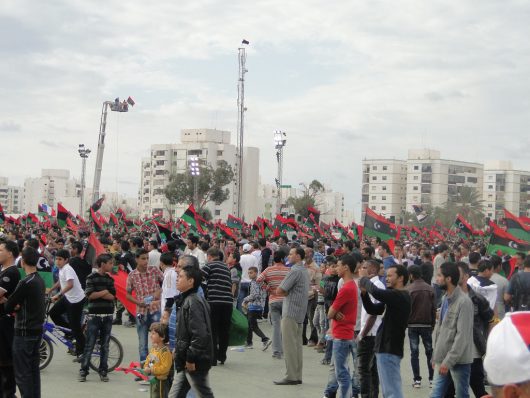
  1. Conflict in Libya has a long history. The beginning of the conflict in Libya dates back to the 7th century when Islam spread widely and became the national religion. In 2011, Arab Spring protests led to the first civil war in Libya.
  2. The conflict that led to the 2011 civil war began in 1969. Muammar Gaddafi led a group of military officers in a protest against King Idris in 1969, which landed Gaddafi in power of the new Libyan African Republic. As all power and wealth within Libya were under Gaddafi’s control, many pro-monarchy civilians lashed out, and anti-Gaddafi groups formed.
  3. Protests in neighboring countries spurred the war on. Word spread of revolts in neighboring countries, which inspired protests in Benghazi and other cities in Libya. War broke out in early 2011 as rebels opposed the Gaddafi government, but security forces defeated them. With the National Transitional Council, the main opposition group, now recognized as the new Libyan government, the first civil war ended in October 2011. The second civil war began in 2014, as the conflict began between various rebel groups seeking control of Libyan territory.
  4. During the Libyan civil war of 2011, it is estimated that between 10,000 and 15,000 people were killed. Death sources are from rebel sides, government forces and civilians. To date, since the 2014 crisis broke out, there have been 5,871 civilian deaths in Libya.
  5. Countries across the world have aided Libya’s citizens in a number of ways. Over the course of the Libyan crisis, the European Union has given almost $160 million in aid. Aid came in different forms: civilian resources, transportation, sanitation, healthcare resources, food supplies. Many other countries around the world have also donated generously, but those within the EU take the lead as a combined force.
  6. The Libyan crisis has produced thousands of refugees who flee to neighboring countries, for example, Egypt, seeking asylum. In May 2011, already around 746,000 people had fled Libya since the beginning of the War. Most Libyans fled to Italy, where 36,222 refugees currently reside. Surrounding European countries also continue to allow migrants to seek refuge.
  7. Gaddafi’s capture was a major turning point. The rebels captured and killed Colonel Gaddafi on Oct. 20, 2011. This is a key event within the Libyan crisis because the beginning of the conflict started with pro-Gaddafi forces and anti-Gaddafi rebels.
  8. International organizations tried to help Libya in solving civil issues. In March 2011, the United Nations Security Council issued a no-fly zone over Libya. NATO then authorized air strikes in order to protect civilians. Many countries give help by providing Libya with vital resources for its citizens, such as warmth, food and shelter.

For now, Libya continues its division while the international community continues providing aid. Recently, African leaders have held a mini-summit in Congo to discuss what further action is necessary. They decided that lifting the arms embargo was necessary to begin a more proactive approach to ending the war in Libya. Over 29 countries in the Middle East and Europe are continuing to open their borders to refugees, which is the greatest help that Libyan citizens can receive at present.

– Georgia Boyle

Photo: Flickr

February 19, 2017
https://borgenproject.org/wp-content/uploads/borgen-project-logo.svg 0 0 Borgen Project https://borgenproject.org/wp-content/uploads/borgen-project-logo.svg Borgen Project2017-02-19 01:30:372020-06-01 14:32:43Eight Facts About the Libyan Crisis
Children, Refugees, War and Violence

Three Reasons to Welcome Refugees

Welcome RefugeesThe current refugee situation has been called the worst humanitarian crisis of our time. In 2015, the United Nations High Commissioner for Refugees (UNHCR) estimated that there were more than 65 million forcibly displaced people worldwide. More than half of all refugees come from three countries: Syria, Afghanistan and Somalia. For the countries to which these refugees have fled, the massive influx of displaced persons is often viewed as a burden. However, with the right policies and integration services, host countries can benefit from them. Here are three reasons to welcome refugees:
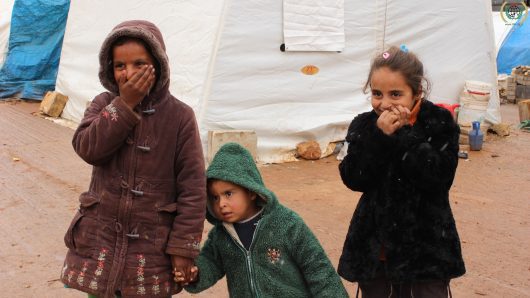
  1. Successful integration can lead to significant economic benefits. Economic growth is strongly correlated with the available workforce. Over the past decade, immigrants have constituted 47 percent and 70 percent of the workforce increase in the United States and Europe, respectively. According to a study by McKinsey Global Institute, the refugee population has the potential to increase the GDP of European countries by more than 60 billion euros annually (USD$65 billion). As productive members of their new communities, refugees would place less of a burden on social welfare programs.
  2. Successful integration decreases the risk of social conflict and radicalization. Approximately half of the 21.3 million refugees worldwide are children. Coordinated efforts should be made to incorporate these children into education systems, as education boosts their future economic prospects and decreases the risk of radicalization. Language programs for adults and children would help refugees build relationships with native speakers in their communities.
  3. It’s a moral imperative. Though this is the least tangible of the three reasons to welcome refugees, it is perhaps the most compelling. A refugee is defined as “someone who is unable or unwilling to return to their country of origin owing to a well-founded fear of being persecuted for reasons of race, religion, nationality, membership of a particular social group, or political opinion.” According to the 1951 Convention Relating to the Status of Refugees, refugees are entitled to access to courts, education, work, and documentation as part of their basic rights. As such, refugees are not threats– they are fellow human beings seeking life, liberty, and the pursuit of happiness.

– Rebecca Yu

Photo: Flickr

February 3, 2017
https://borgenproject.org/wp-content/uploads/borgen-project-logo.svg 0 0 Borgen Project https://borgenproject.org/wp-content/uploads/borgen-project-logo.svg Borgen Project2017-02-03 01:30:332020-05-28 08:43:23Three Reasons to Welcome Refugees
Activism, Foreign Policy, Refugees, Refugees and Displaced Persons

U.S. Must Reverse President Trump’s Refugee Ban

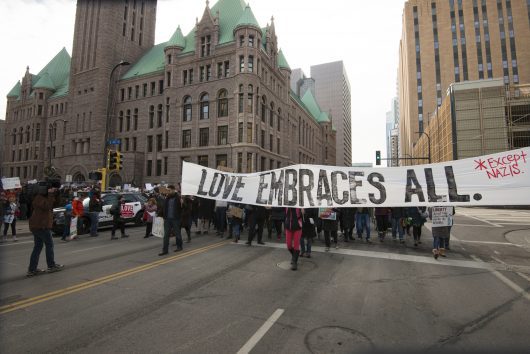
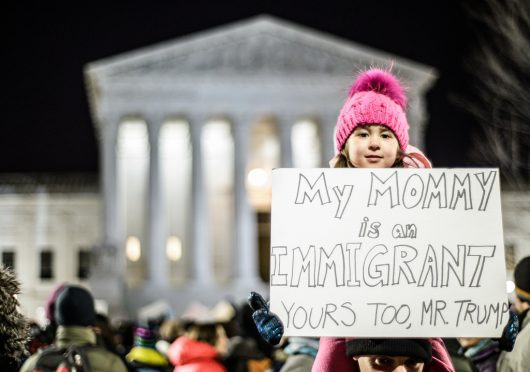
U.S. Must Reverse President Trump's Refugee BanIn the continuing fight for the rights of refugees, The Borgen Project is committed to working to reverse President Trump’s refugee ban. The executive order signed on Friday afternoon barred all refugees from entering the U.S. for 120 days, barred nationals from Iran, Iraq, Libya, Somalia, Sudan, Syria and Yemen for 90 days, and put a permanent ban on Syrian refugees.
President Trump’s refugee ban came as a surprise to diplomatic and airport staff in the U.S. and overseas, and many scrambled to respond with various interpretations. The executive order has caused protests and lawsuits and has drawn condemnation from dozens of diplomats and former President Barack Obama.

The current refugee crisis is unprecedented. The number of people displaced by conflict in 2016 was the highest since the end of the Second World War, at almost 60 million. Only joint solutions will credibly and effectively lessen the increasing suffering and social and political turmoil.

Therefore, labeling refugees fleeing conflict zones like Syria and other countries as terrorists has only made matters worse for these vulnerable individuals. A refugee is a person seeking shelter, a life of dignity, freedom and safety for themselves and their families. There is no excuse for treating other human beings who have come to the U.S. seeking these things with hostility, suspicion and intolerance.

About 30,000 Syrians have been evacuated from Aleppo, and 100,000 more are still fleeing violence in the area. Children continue to be massacred every day while the U.S., under this executive ban, is slamming its doors.

For all of the world’s refugees, do not look away. You can help change lives, not just for people in Syria, but for those in more than 90 countries who are fighting to overcome hunger, poverty and violence.

It is un-American to turn away those seeking safety and to discriminate against groups of people because of nationality and religion. Let us stand with refugees and not against them, in their hour of need. Remember that every refugee is someone’s mother, father, son, daughter, sister, brother or newborn baby.

You can call Congress and take action on this serious issue. Please stand with leaders from both parties to reverse President Trump’s refugee ban and welcome those in need of our help.


Photo: Geoff Livingston via photopin (license).

February 1, 2017
https://borgenproject.org/wp-content/uploads/borgen-project-logo.svg 0 0 Borgen Project https://borgenproject.org/wp-content/uploads/borgen-project-logo.svg Borgen Project2017-02-01 08:56:522020-05-28 09:00:05U.S. Must Reverse President Trump’s Refugee Ban
Refugees

Where Are the Main Syrian Refugee Camps Located?

So Where Are the Main Syrian Refugee Camps Located?
Since its outbreak in 2011, the Syrian civil war has created an estimated 11 million refugees. Many of these refugees have fled to neighboring countries, but the conflict has created a global refugee crisis. Contrary to popular belief, however, only an estimated one in 10 of these refugees live in camps. So where are Syrian Refugee Camps? Most are located in the surrounding countries of Turkey, Jordan, Iraq and Greece.

Turkey

Although Turkey houses more than 2.5 million Syrian refugees, their camps can only house 200,000 people. This has become a cause for concern as photos from these camps show extremely cramped and dangerous conditions. While life in these camps is often less than ideal, the UK has deemed Turkey to be a safe country for refugees.

Jordan

Jordan hosts more than 650,000 Syrian refugees. The largest Syrian refugee camp in the world is located in Jordan, and the conditions here are much better than camps found in other parts of the world. This camp called Zaatari is home to 3,000 refugee-owned businesses. These businesses provide entrepreneurial opportunities for refugees and contribute to Jordan’s economy, generating an estimated $13 million per month.

Iraq

Iraq is home to more than 200,000 Syrian refugees, and all of these refugees are in areas controlled by the Kurdish Regional Government. Camps here, such as the al-Hol camp have become home to both Syrian refugees and Iraqi citizens fleeing violence in places like Mosul, resulting in extremely crowded conditions. As the number of Syrian refugees shows no sign of slowing, access to basic necessities in these camps is becoming a serious concern.

Greece

Where are Syrian refugee camps in Europe? Many exist in Greece, where conditions are often dismal. Human rights groups have raised concerns about the conditions that Syrian refugees are facing in Greek camps as they wait for asylum or relocation. Many of these camps are overcrowded, and refugees have reported poor hygiene, a lack of medical care and dehydration. The situation for refugees living in Greek camps is especially dangerous with the impending onset of a cold winter.

In 2014, the U.N. refugee agency reported the highest total number of displaced people since World War II. Syria is one of the three countries with the most refugees, and the situation within the country shows no signs of improving. This refugee crisis is a humanitarian disaster and it is imperative that the global community respond by ensuring better living conditions for those seeking asylum and those living in Syrian refugee camps.

– Eva Kennedy

Photo: Flickr

December 23, 2016
https://borgenproject.org/wp-content/uploads/borgen-project-logo.svg 0 0 Borgen Project https://borgenproject.org/wp-content/uploads/borgen-project-logo.svg Borgen Project2016-12-23 01:30:592024-12-13 17:56:24Where Are the Main Syrian Refugee Camps Located?
Refugees, Technology

Drones for Refugees: Saving Lives in the Mediterranean

Drones for Refugees: Saving Lives in the Mediterranean
Since 2014, 10 people have died every day attempting to travel to Mediterranean countries by sea. The Drones for Refugees project wants to make the voyage safer.

The drones livestream areas heavily trafficked by refugees in the Mediterranean Sea and use infrared sensors to allow easy viewing at night. The drones run on solar batteries and use wireless internet connection, requiring little human involvement. Workers in ground stations monitor the footage on a computer or mobile device and collect information such as the number of people on a boat, the coordinates, whether the route is correct and whether there are enough life vests. In the case of an emergency, monitors quickly alert rescue crews. Newer drone prototypes carry an emergency aid package that can be released when needed. This quick response can save many lives.

The prototype was tested in Lesbos between July and August 2016. A more advanced version will debut in Sicily in the spring of 2017. Drones for Refugees is currently self-funded, but with help from investors and donors, the organization hopes to produce larger drones capable of traveling longer distances.

Project director Mehdi Salehi originally co-founded Good Drones, an innovation and design lab focused on using drones to solve social problems. Drones for Refugees is only one of the projects of the Good Drones initiative. Salehi was inspired by news footage of Syrian refugees traveling on worn-down boats in the middle of the Mediterranean Sea, as well as his own personal experiences.

In 2001, Salehi was an Afghani refugee. He and a friend traveled to Greece on a small boat. Once he arrived in Greece, Salehi was imprisoned for five months. Eventually, with the help of a Greek lawyer, he was able to receive political asylum. He went on to graduate from the University of Volos and moved to New York to attend Parson School of Design. He says about his experience, “I was very lucky. I got a lot of support from people that met me along the way, especially in Greece. They encouraged me and believed in me. Refugees and migrants, that’s what we need: an opportunity to thrive.”

For refugees, crossing the Mediterranean can be an exhausting and terrifying experience. Drones for Refugees wants to ensure that refugees are given a fighting chance to escape the violence and oppression in their home countries.

– Karla Umanzor

Photo: Flickr

December 23, 2016
https://borgenproject.org/wp-content/uploads/borgen-project-logo.svg 0 0 Borgen Project https://borgenproject.org/wp-content/uploads/borgen-project-logo.svg Borgen Project2016-12-23 01:30:182024-12-13 17:56:24Drones for Refugees: Saving Lives in the Mediterranean
Global Poverty, Refugees, War and Violence

Anderson Cooper and Kelly Ripa Honor “CNN Heroes”

Anderson Cooper and Kelly Ripa Honor "CNN Heroes"Last weekend, CNN continued its annual tradition of honoring ten brave and thankless role models throughout the world. Headlined by Anderson Cooper and Kelly Ripa, the “CNN Heroes” award gala took place at New York’s American Museum of Natural History. The two-hour live event featured clips detailing the work of each hero, and at the end, 2016’s Hero of the Year was revealed as chosen by the viewer audience.

From adventurous kayaker Brad Ludden’s First Descents to young father Sheldon Smith’s Dovetail Project, the organizations represented were truly diverse, with notables including those furthering progress in the developing world.

CNN Heroes kicked-off by celebrating Luma Mufleh and her organization, Fugees Family. Founded in 2004, Luma assists refugee children to the United States by offering free academic enrichment programs and coaching after-school soccer games. As a Jordanian refugee herself, she targets children displaced due to war, and tailors services to meet individual needs, whether overcoming language barriers, learning about American institutions or combating discrimination. To date, Fugees Family has assisted more than 850 kids from 28 countries.

Another highlight is Umra Omar’s Safari Doctors which began in 2014. Umra temporarily lived in the U.S. but returned to her home in Kenya to provide medical care to the remote Lamu archipelago near the Somali border. Faced with frequent threats and spillover attacks by Al-Shabaab terrorists, most professionals in health care and education fled the Lamu area. However, Umra looks past the danger and now delivers immunizations and other basic health services, arriving on her own by boat. She estimates that she has treated over 2,000 people so far and maintains that these dire communities would benefit most from the return of trained professionals.

Finally, the 2016 Hero of the Year? Jeison Aristizabal, a native of Cali, Colombia, began a project known as ASODISVALLE to assist disabled persons in one of the poorest areas of his home country. Jeison suffers from cerebral palsy and since 2000, has worked to triumph over prevailing stigmas for all. Part of his mission focuses on the identification of other disabled people in the region, but the more important part focuses on providing inclusive rehabilitation and educational services to integrate these citizens back into the community. He offers everything from job training to healthy meals, stimulating the opportunities and happiness of thousands in the area.

Hosts Cooper and Ripa were seen getting emotional more than once at the event, a testament to their support for such projects around the developing world. Cooper has been a part of the program since its inception 10 years ago, and Ripa joined just this year, though making appearances as a presenter during the last two ceremonies. Ripa is also a known supporter of UNICEF.

While the real stars of the event are undoubtedly the remarkable CNN Heroes honorees, it is likely that Cooper and Ripa will both continue to use their presence to draw attention to similar causes in upcoming years.

– Zachary Machuga

Photo: Flickr

December 21, 2016
https://borgenproject.org/wp-content/uploads/borgen-project-logo.svg 0 0 Borgen Project https://borgenproject.org/wp-content/uploads/borgen-project-logo.svg Borgen Project2016-12-21 01:30:042024-12-13 17:56:22Anderson Cooper and Kelly Ripa Honor “CNN Heroes”
Refugees, United Nations

Helping Refugees Worldwide: Three Simple Ways

Helping Refugees Worldwide
According to the U.N. High Commissioner for Refugees, humanity is facing its largest displacement crisis on record. Violence, persecution and regional instability have caused more than 65 million people to abandon their homes and seek refuge in other lands. These numbers are devastating, and they leave citizens of stable countries wondering what they can do as individuals in helping refugees worldwide.

The White House website states that the U.S. has been active alongside many countries offering sanctuary and assistance to refugees, providing shelter, medical care, and basic services “But the need remains great. Helping refugees isn’t just up to governments — every American can play a role, too.”

Here are three simple ways Americans can begin helping refugees worldwide:

  1. Make a donation.
    The U.N. Refugee Agency states that every donation it receives goes toward worldwide field operations. Currently, the organization is making an urgent appeal for donations that will go toward the crisis in Iraq. Fighting in Mosul and Northern Iraq has resulted in a humanitarian crisis. The website lists what each amount of money will accomplish. As little as $50 will provide five people with sleeping mats and keep them off the ground at night; $200 will provide emergency shelter for two whole families.The International Rescue Committee (IRC) is another organization that, for every dollar donated, spends 90 cents on programs and services that directly benefit refugees. This organization consistently receives high marks from charity watchdog organizations. When making a donation, research where the money will go. Decide what organization is doing an effective job in helping refugees; information about their finances should be available on their website.

    One might wonder how to support refugees on an ongoing basis. The IRC, for example, encourages monthly donations as a Rescue Partner. This steady support allows them to, “respond swiftly and effectively when conflict strikes, to rescue lives in the midst of chaos and to help fragile communities rebuild and move toward a more stable future.”

  2. Fundraise.
    One individual is only able to give so much financially. Another option to help refugees is to become a fundraising partner. By mobilizing others in the surrounding community, one person can have an even greater impact than would have been possible with a single wallet.The organization Help Refugees will launch its “Choose Love” campaign this month, a series of events designed to encourage empathy, promote awareness and expand the organization’s reach on the frontlines of this crisis. Help Refugees encourages people to raise money with t-shirts, bake sales, events and more.
  3. Keep asking questions.
    The displacement of 65 million people is devastating, but lives can be saved through the collaborative efforts of millions of individuals willing to help. By simply asking the question ‘What can I do to help refugees?’, you are the beginning of the solution.

    Continue searching for organizations fighting against silence in the face of tragedy. Have open conversations with people seeking to discover new ideas and viewpoints concerning how to help refugees.

Help Refugees says, “As a brutal winter approach, we need you now more than ever. This is still a crisis, but we are not powerless.”

– Rebecca Causey

Photo: Flickr

December 17, 2016
https://borgenproject.org/wp-content/uploads/borgen-project-logo.svg 0 0 Borgen Project https://borgenproject.org/wp-content/uploads/borgen-project-logo.svg Borgen Project2016-12-17 01:30:172024-12-13 17:56:21Helping Refugees Worldwide: Three Simple Ways
Refugees

Afghan Refugees in India: A Case Study on Entrepreneurship

Afghan Refugees in India
Over the last few decades, pockets of Delhi, India, have become microcosms of Kabul. Afghan refugees forced out of their homes by war and extremism have found themselves living in meager conditions in poorer parts of the city. Despite their less than satisfactory living situations, these refugees have brought their entrepreneurial spirit with them, finding ways to share their Afghan culture with Indians.

Perhaps the best example of this phenomenon is Ilham, a catering service set up by four Afghan women in 2015 with the help of Access, an NGO working in collaboration with UNHCR. The women create local Afghan delicacies such as Kabuli Pulao (rice with spices, vegetables and meat), Mutton do Piaza (mutton curry) and Firni (rice pudding). Since Afghanistan and India have always shared a particularly friendly relationship, these are dishes that have already been popularized in local Indian culture. However, by providing authentic versions, Ilham has managed to gain a large customer base in just over a year.

The success of this and other ventures set up by Afghan refugees in India, can be measured by the reactions of the women of Ilham when asked about their work. For example, Zameera sees not only the financial independence it has brought her, but also the emotional relief from the despair of losing her home and being separated from her family and country. For Zameera, Ilham is as much a business as it is therapy.

For the nearly 11,000 Afghan refugees in India registered with the UNHCR, as well as that much more living unregistered in the country, initiatives like Ilham have become a way of life. A culture of Afghan cuisine has developed in Delhi, where most of the refugees have settled.

The Green Leaf Restaurant, a popular eatery run by Afghan refugees is another success story. Green Leaf has been beneficial for both the owners as well as the surrounding community. Thus, these refugees contribute to the local economy by providing a niche service driven by high consumer demand.

Anecdotes from Afghan refugees in India offer a valuable insight into how the integration of refugees into local communities can be advantageous to both groups. Rather than detracting from Indian culture, Afghan people have added new aspects to it and strengthened an already strong political partnership. In a time when xenophobia is rampant and fear of job loss is high, it is important to remember that the mingling of cultures can create both enhanced identities as well as new markets for new jobs. The Afghan-Indian experience bears testament to the possibility of a harmonious integration and cultural exchange.

– Mallika Khanna

Photo: Flickr

December 16, 2016
https://borgenproject.org/wp-content/uploads/borgen-project-logo.svg 0 0 Borgen Project https://borgenproject.org/wp-content/uploads/borgen-project-logo.svg Borgen Project2016-12-16 01:30:482024-12-13 17:56:20Afghan Refugees in India: A Case Study on Entrepreneurship
Page 23 of 32«‹2122232425›»

Get Smarter

  • Global Poverty 101
  • Global Poverty… The Good News
  • Global Poverty & U.S. Jobs
  • Global Poverty and National Security
  • Innovative Solutions to Poverty
  • Global Poverty & Aid FAQ’s
Search Search

Take Action

  • Call Congress
  • Email Congress
  • Donate
  • 30 Ways to Help
  • Volunteer Ops
  • Internships
  • Courses & Certificates
  • The Podcast
Borgen Project

“The Borgen Project is an incredible nonprofit organization that is addressing poverty and hunger and working towards ending them.”

-The Huffington Post

Inside The Borgen Project

  • Contact
  • About
  • Financials
  • President
  • Board of Directors
  • Board of Advisors

International Links

  • UK Email Parliament
  • UK Donate
  • Canada Email Parliament

Get Smarter

  • Global Poverty 101
  • Global Poverty… The Good News
  • Global Poverty & U.S. Jobs
  • Global Poverty and National Security
  • Innovative Solutions to Poverty
  • Global Poverty & Aid FAQ’s

Ways to Help

  • Call Congress
  • Email Congress
  • Donate
  • 30 Ways to Help
  • Volunteer Ops
  • Internships
  • Courses & Certificates
  • The Podcast
Scroll to top Scroll to top Scroll to top