• Link to X
  • Link to Facebook
  • Link to Instagram
  • Link to TikTok
  • Link to Youtube
  • About
    • About Us
      • President
      • Board of Directors
      • Board of Advisors
      • Financials
      • Our Methodology
      • Success Tracker
      • Contact
  • Act Now
    • 30 Ways to Help
      • Email Congress
      • Call Congress
      • Volunteer
      • Courses & Certificates
      • Be a Donor
    • Internships
      • In-Office Internships
      • Remote Internships
    • Legislation
      • Politics 101
  • The Blog
  • The Podcast
  • Magazine
  • Donate
  • Click to open the search input field Click to open the search input field Search
  • Menu Menu

Tag Archive for: Refugees

Posts

Global Poverty, Refugees

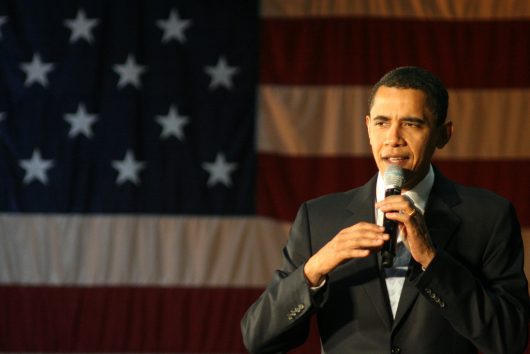
President Obama Visits Greece: Talking Economy and Refugees

President Obama's Visit to Greece: Talking Economy and Refugees
As the year comes to a close, President Obama embarks on one last official trip to Europe. One of the stops is Athens, Greece. In his two-day trip, he addresses the future of the country.

President Obama’s visit to Greece sparked a lot of debate about the country’s economic recovery and well as social issues. In the president’s opinion, Greece needs continued debt relief in order to fully stabilize the economy and ensure a prosperous future.

Greece has endured an economic crisis for the past eight years. The crisis began after years of understating the national debt caused the financial markets to deny loan money to the country. By 2010, Greece was moving towards bankruptcy. In order to salvage the economy, Greece received bailouts. As of today, it has been given 274 billion in bailout loans since May 2010. There have also been numerous economic reforms that have caused unrest among the Greek population.

President Obama spoke on the discontent of the Greek people. He argues that other than debt relief, “people need to see hope.” Drawing on the example of Brexit earlier this summer and the recent American election he says, “If people feel that they’re losing control of their future, they will push back.” The “push back” in Greece has been readily present since the beginning of the economic crisis.

The two bailouts given to Greece have come with austerity measures which have been met with anger. The first program included salary cuts of public-sector workers and increase sales tax. The second program increased taxes on certain goods and included pension reforms. As a response, citizens continue to have demonstrations and often clash with law enforcement which has ended in violence.

In anticipation of President Obama’s visit to Greece, a peaceful protest in Athens turned violent when supposed anarchist threw rocks and Molotov cocktails in support of anti-capitalism. “No Hope” was written on buildings.

Nonetheless, President Obama will actively continue to encourage creditors to provide debt relief so Greece can achieve a sustainable economy once again. He also praised Greece for opening up its border to refugees even in the midst of an economic crisis. President Obama said “The Greek people’s generosity towards refugees arriving on your shores has inspired the world. That doesn’t mean that you should be left on your own, and only a truly collective response by Europe and the world can ensure that these desperate people receive the support that they need.”

President Obama’s visit to Greece encouraged continued debt relief to rehabilitate the economy and bring hope to the Greek people.

– Karla Umanzor

Photo: Flickr

December 7, 2016
https://borgenproject.org/wp-content/uploads/borgen-project-logo.svg 0 0 Borgen Project https://borgenproject.org/wp-content/uploads/borgen-project-logo.svg Borgen Project2016-12-07 01:30:052024-12-13 17:56:19President Obama Visits Greece: Talking Economy and Refugees
Migration, Refugees

Ten Facts About Kiribati Refugees

Kiribati Refugees
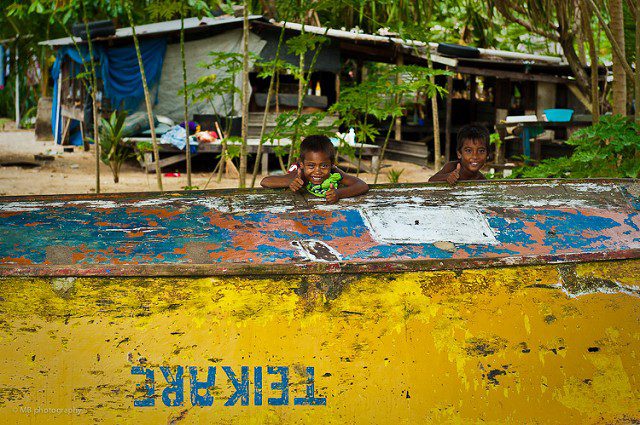
Climate change will drive migration on a massive scale in the coming years. Estimates of people fleeing natural disasters range from 25 million to 1 billion. The small island nation of Kiribati in the Pacific will be extinct by 2100. The government is trying to help the Kiribati refugees migrate with dignity, but their legal status is still in limbo.

    1. Most of the land of the Kiribati islands is less than two meters above sea level. It is therefore very vulnerable to rising sea levels due to climate change. Its residents may have to be the first climate change refugees.
    2. In 1999, two islands disappeared underwater. The nation is made up of 33 small islands, whose land is being swallowed by the ocean at a rate of almost 4 millimeters a year. According to the U.N., the entire nation will be submerged by 2100.
    3. Even before this drastic event occurs, changes in weather patterns are likely to produce Kiribati refugees. Droughts are becoming more severe, whilst rainfall is increasing, causing flooding. The oceans are acidifying, disturbing the delicate balance of coral reefs, whose marine ecosystems are the source of many people’s livelihoods.
    4. Freshwater supply is also problematic, as saltwater from high ocean tides is polluting wells and prolonged droughts are pushing water supplies to their limits. Many residents of South Tarawa, the island housing half of the country’s 100,000 people, are now completely reliant on rainwater.
  1. In 2003, the Kiribati government cooperated with the World Bank in the $17.7million Kiribati Adaptation Program. They built coastal sea walls, planted mangroves on the shores, developed water-management plans and invested in rainwater harvesting infrastructure, to postpone the effects of the rising ocean. The project has managed to protect one of 710 miles of Kiribati’s coastline.
  2. The former president, Anote Tong, started the “Migration with Dignity” program to ensure the Kiribati refugees will move to other states with dignity. The government has increased the level of qualifications available to citizens to those of Australia and New Zealand so that they are employable.
  3. The former president also bought 6,000 acres of land in Fiji, an island nation more than 1,000 miles away. This will act as a refuge for any Kiribati residents who will need to relocate.
  4. A Kiribati citizen applied for asylum in New Zealand in 2011. Four years later he was rejected and deported back to his sinking homeland.
  5. The 1951 Refugee Convention defines refugees as those “fleeing persecution at home.” As such, the Kiribati refugees are not protected by international law. “The truth is no one agency in the system because no one could have imagined this situation 60 years ago,” said José Riera, a senior advisor to the U.N. High Commission for Refugees.
  6. The Paris Agreement signed this past April does little to help climate change refugees. It didn’t resolve the issue of their legal status or mandate their protection.

It is hopeful that with the help of the government and international aid, each refugee, resident and the overall island will be preserved.

Eliza Gkritsi

Photo: Flickr

December 4, 2016
https://borgenproject.org/wp-content/uploads/borgen-project-logo.svg 0 0 Borgen Project https://borgenproject.org/wp-content/uploads/borgen-project-logo.svg Borgen Project2016-12-04 01:30:502024-12-13 17:56:13Ten Facts About Kiribati Refugees
Refugees

Resisting the Closure of Dadaab Refugee Camp

Resisting the Closure of Dadaab Refugee Camp
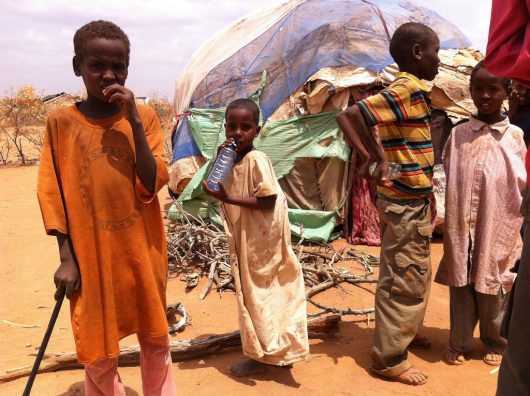
On May 6, 2016, Kenya announced plans for the closure of Dadaab refugee camp by Nov. 30 this year. This closure of the largest refugee camp in the world could cause a number of problems for the refugees forced to leave.

The vast majority of the refugee population in Dadaab is Somalian. Forcing Somalians to return home in an atmosphere of continued unrest and insecurity is a recipe for disaster. The most visible problem is that as of now, parts of Somalia are still under the control of al-Shabaab, an armed group committing abuse and targeting civilians even in government-controlled areas. As a result, a large share of the country is extremely dangerous and could be fatal for refugees returning.

The closure of Dadaab refugee camp could cause less visible, but equally dangerous consequences on refugee health and education. A substantial number of Somali refugees in Dadaab today are there not because of the conflict but in order to escape the situation of drought and famine in the province of Jubbaland. Returning would, therefore, mean putting pressure on the resources of an already thinly stretched economy, as well as causing a negative impact on refugee health.

The Bhekisisa Center for Health Journalism predicts that the closure of Dadaab could lead to the next health crisis. A forced and involuntary return could escalate refugees’ vulnerability to malnutrition, weaken their immune systems and make them vulnerable to infectious diseases. Lack of health care resources including basic vaccinations in Somalia would make it hard for refugees to be treated for diseases brought back from the camp, as well as for chronic illnesses.

The good news is that as recently as August 2016, Interior Minister Joseph Nkaissery announced that the government of Kenya would hold back its decision to close the camp until peace in Somalia is restored. However, this decision is not without its own backlash. Two-thirds of all Kenyans support sending all refugees home. This backlash comes from a combination of fear of al-Shabaab attacks and a fear of the change in the ethnic composition of Kenya.

In order to address these understandable concerns of Kenyan citizens, the Kenyan government, working with UNHCR has been attempting to encourage voluntary returns among refugees. Under the tripartite agreement signed by the Somalian and Kenyan governments with UNHCR in November 2013, each party is responsible for developing and implementing a plan for the large-scale voluntary return of Somali refugees.

Any plan created for this purpose must involve building infrastructure, hospitals, clinics and improve security in Somalia as a solution to the refugee problem. Repatriation is not enough; post-conflict infrastructure must be a priority. This can only be done through continued support from the international community.

Creating a hospitable environment for refugees to return to Somalia is not a mere solution. For the time being, Dadaab refugee camp is the only resource a huge portion of the Somali population has. Keeping it open requires both financial support as well as greater empathy for the struggles of refugees. Many organizations are responding to both these needs.

– Mallika Khanna

Photo: Flickr

November 17, 2016
https://borgenproject.org/wp-content/uploads/borgen-project-logo.svg 0 0 Borgen Project https://borgenproject.org/wp-content/uploads/borgen-project-logo.svg Borgen Project2016-11-17 01:30:352024-12-13 17:56:05Resisting the Closure of Dadaab Refugee Camp
Refugees

German Health Care: A Broken System for Asylum-Seekers?

German Health Care: A Broken System for Asylum-seekers?
German health care, geared to caring for a population of 80 million, is dealing with an unexpected and intimidating challenge by the continuous influx of about 1.1 million refugees in 2015 alone. Escaping poverty, war and repression, as well as family reunification are among the main reasons people attempt to enter Germany both legally and illegally.

Despite having opened its doors to more refugees than any other European country since 2013, Germany restricts asylum-seekers’ health care access to emergency care, treatment for acute diseases and pain, maternity care and vaccinations. Additional care can be provided, however, patients must file various petitions and jump through multiple hoops before getting approval for the same.

The aim of restricting asylum-seekers’ access to German health care dates back to the 1990s when rising numbers of asylum-seekers from former Yugoslavia created a need to reduce Germany’s pull factor. However, it is evident from various studies that this policy has done nothing to bring down the number of people seeking asylum in the country.

In spite of limiting access to health care, the sociomedical system is crumbling with news reports about vaccines not being available for German citizens till 2017 in the normal quantities. Doctors are having to undergo courses in screening and treating diseases like tuberculosis, scabies and psychological trauma.

In addition, there is the cost of material resources like medicines and hospital beds, diagnostic and surgeries that have spiraling economic repercussions. The siphoning of medical services, even in their most basic form, to asylum-seekers, is resented by many German citizens.

However, despite this backlash, there are many reasons for the country to consider providing full access to German health care, both for asylum seekers and undocumented immigrants. The most obvious of these is that any communicable disease can skyrocket the economic cost to the country by a loss of productivity.

In addition, according to experts such as Dr. David Ingleby from the University of Amsterdam, research has shown that, “denying easy and early access to healthcare not only ignores the right to health but actually increases costs: a new study estimated that since their introduction, these restrictive policies have increased the cost of healthcare by 376 euros per year for each asylum seeker.” Clearly, restrictive policies benefit neither immigrants nor state.

Some states like Bremen and Hamburg have been providing their asylum-seekers with health insurance cards like those used by the general population. These enable direct access to doctors and hospitals without having to apply for a certificate of entitlement.

Officially, the restriction on acute and emergency services remains, but the decision is now moved to the doctor’s medical discretion and no longer made by a municipal administrator. An innovative solution, this could be extended to the legal system, resting the decision of what warrants medical attention to the hands of those in the know.

Another solution being considered is granting anonymous insurance certificates that allow refugees without proof of citizenship to seek medical help without legal repercussions. In Berlin alone, up to 250,000 people live without any personal identity documents which are essential to get full medical treatment, making this idea almost a necessity.

In order to provide funding for these and other such policies for less restrictive health care, the European Union Health Program released a statement pledging fund actions supporting the Member States under particular migratory pressure in January this year. Hopefully, with this positive impetus, the German health care system will move to a more inclusive model for both asylum-seekers and undocumented immigrants.

– Mallika Khanna

Photo: Flickr

November 10, 2016
https://borgenproject.org/wp-content/uploads/borgen-project-logo.svg 0 0 Borgen Project https://borgenproject.org/wp-content/uploads/borgen-project-logo.svg Borgen Project2016-11-10 07:28:462024-12-13 17:55:57German Health Care: A Broken System for Asylum-Seekers?
Refugees, Technology, United Nations

Biometric Identification in Refugee Camps

Biometric Identification in Refugee Camps
The U.N. High Commissioner for Refugees (UNHCR) estimates that more than 65 million people are displaced because of armed conflict and persecution. More than 21 million are classified as refugees, which means they are protected by international law and cannot be forced to return to places where their lives and freedom are at risk. The UNHCR is using biometric identification technology in an attempt to keep track of so many people.

The logic for protecting and helping refugees through global humanitarian networks seems simple. People who travel thousands of miles to escape dangerous conflicts should have a safe place to work, raise their children and live their lives in peace. Yet the global refugee crisis shows us that many nations continue to struggle to meet the needs of refugees at their borders and efficiently deliver social services.

For instance, consider the rapid increase of Syrian refugees in response to the country’s ongoing civil war. Amnesty International reports that, as of February 2016, more than half the nation’s population is displaced. Over 4.5 million refugees have poured into the neighboring countries of Jordan, Turkey, Lebanon, Iraq and Egypt. However, global resettlement efforts have only managed to successfully resettle 162,151 people, a mere 3.6% of the total refugee population.

While resettlement is the ultimate goal of refugee relief efforts, Syria’s neighbors lack the resources and capacity to do it all themselves. Until other nations agree to take in more refugees, one way to help refugees living in border camps is to register them with the UNHCR.

Once registered, refugees are eligible to receive social and medical assistance from various humanitarian organizations. Refugee status protects adults from refoulement (forced return to their war-torn place of origin) and protects children from military recruitment. Registration also helps keep families together and gives them opportunities to contact other friends and loved ones.

The UNHCR is working to deliver faster assistance to refugees by implementing a biometric identification registration system. Currently, refugee camps employ a combination of methods to register refugees, usually involving time-consuming paperwork and fingerprinting. Not only are paper records increasingly difficult to archive as the refugee population steadily climbs, but fingerprinting requires training. The UNHCR hopes biometric identification, designed in partnership with Accenture, will drastically expedite the registration process and help refugees receive faster care after making the life-threatening journey out of dangerous regions.

Biometrics refer to a set of measurements and analyses of physical characteristics to verify personal identity. In the context of refugee registration, biometrics refer to digitally stored fingerprints, iris data and facial images. Once collected, the data gets encoded into a personal ID, which refugees can use throughout UNHCR facilities. Many refugees are forced to leave home on a moment’s notice, without enough time to collect important personal documents. Biometric ID cards can provide them with a secure form of personal identification to use as they build a new life.

The Biometric Identity Management System (BIMS) is designed to endure rugged field conditions like extreme heat, dust, humidity, power and connectivity outages. It’s relatively easy to operate, which is necessary in refugee camps where workers come and go on a regular basis and have varying levels of technological experience.

Accenture’s BIMS has already seen incredible success. The UNHCR piloted the technology at the Dzaleka Refugee Camp in Malawi, where it rapidly enrolled and verified 17,000 of the camp’s refugees. Then, in Thailand, the BIMS added another 120,000 individuals to the international database of refugees.

The UNHCR has proved how an integrated database of biometric identification information can meet the growing demand for greater security and efficiency in the registration process. Once fully launched, the system can be used remotely or in high-risk areas to register refugees, verify their identity and improve the UNHCR’s ability to keep track of their needs.

– Jessica Levitan

Photo: Flickr

October 27, 2016
https://borgenproject.org/wp-content/uploads/borgen-project-logo.svg 0 0 Borgen Project https://borgenproject.org/wp-content/uploads/borgen-project-logo.svg Borgen Project2016-10-27 01:30:232024-12-13 17:55:44Biometric Identification in Refugee Camps
Global Poverty

Ten Facts About Honduran Refugees

Honduran Refugees
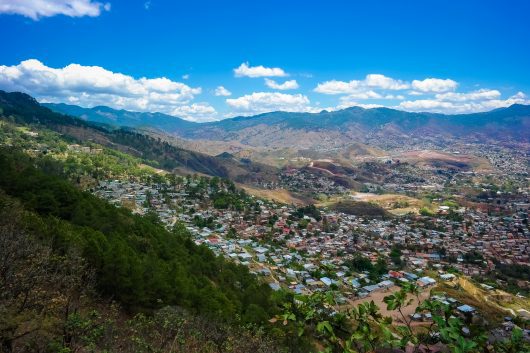
Honduras, the small Central American country nestled between Guatemala and Nicaragua, is home to a rich, cultural heritage, stunning wildlife, beaches and forests. Despite the beauty this country has to offer, many of its citizens are seeking a safe haven far from the country they know. Here are 10 things you need to know to better understand Honduran refugees.

  1. The countries of Honduras, Guatemala and El Salvador often are reported on in tandem. This grouping, referred to as Central America’s Northern Triangle, experiences similar problems leading all three to their high refugee rates.
  2. Honduras is struggling with an incredibly high homicide rate. The country is currently tied with El Salvador for the highest homicide rate in the world and in 2015, over 17,000 homicides were recorded across the Northern Triangle.
  3. Many of these killings are related to gang or criminal organization activity. Citizens of Honduras run the risk of being extorted by these groups and are often threatened with violence if they are unable to pay fees.
  4. Honduras is dangerous for women. The U.N. High Commissioner for Refugees reported that women fleeing the Northern Triangle often report being assaulted, extorted and threatened. Honduras averages at 10.9 female homicides per 100,000 people. In comparison, the same statistic for the U.S. is 1.9 per 100,000.
  5. The number of Honduran refugees is growing. Nearly 10 percent of the region’s 30 million citizens have fled in the past 10 years. An analysis from the Council on Foreign Relations said that the number of people from Honduras, El Salvador and Guatemala living in the U.S. increased from 1.5 million to 2.7 million between 2000 and 2013.
  6. In addition to the threat of violence, Honduran refugees may also be fleeing from their countries for climate-related reasons. Honduras is experiencing prolonged drought effects due to the El Nino weather phenomenon.
  7. This drought is having a severe effect on food prices and on farming in the country. Bean and maize harvests have been cut in half due to the drought leading to an increase in food prices.
  8. Malnutrition is a serious risk for families. The U.N.’s World Food Project reports that around a quarter of children aged six months to two-and-a-half years struggle due to chronic malnutrition.
  9. The U.S has begun attempts to help the situation. In 2015, the Obama Administration appropriated $750 million to help address the root causes of the influx of refugees.
  10. The U.S. Refugee Admission Program has been established to aid refugees from the Northern Triangle. The program will seek to identify families in need, and then relocate them as permanent residents in the U.S.

Though the situation in Honduras looks grim, the U.S. has the opportunity to make a difference through programs that will alleviate poverty-induced violence and restore the country that is home to so many refugees.

– Jordan Little

Photo: Flickr

October 23, 2016
https://borgenproject.org/wp-content/uploads/borgen-project-logo.svg 0 0 Borgen Project https://borgenproject.org/wp-content/uploads/borgen-project-logo.svg Borgen Project2016-10-23 01:30:412024-12-13 17:55:42Ten Facts About Honduran Refugees
Refugees and Displaced Persons

10 Facts about Cambodian Refugees

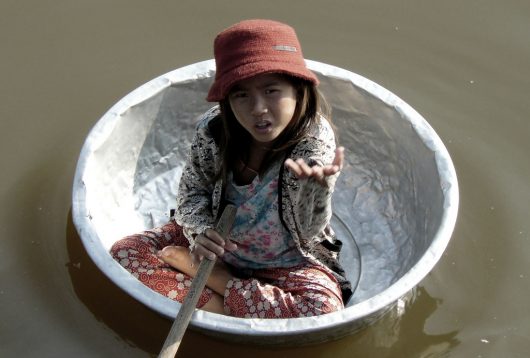
 Cambodian RefugeesCambodian refugees have been fleeing their country since the beginning of the violent regime of Khmer Rouge in the 1970s. The Communist Party of Khmer Rouge was in power from 1975-1979 and led by the Marxist leader Pol Pot, whose main goal was to make Cambodia an agrarian utopia, resulting in millions of deaths.

One could believe that things have since settled in what is viewed as one of the most corrupt nations on the planet. However, Cambodia and its people are still waiting for a stable future.

Obstacles continually arise for Cambodia and its people while they are only presented with small reliefs. Below are 10 facts about Cambodian Refugees and their current status:

  1. Australia and the United States provide a wealth of opportunities for new settlers and have been a safe-haven for many Cambodian refugees since the mid-to-late 1980s.
  2. In September of 2014, Australia and Cambodia signed an agreement without the parliament or civil society in either country knowing about it. The agreement stated all refugees currently residing in Nauru, under Australia’s watch, would be relocated to Cambodia.
  3. Cambodia is a signatory to the 1951 Refugee Convention. The Convention defines what a ‘refugee’ is and outlines the rights of the displaced, as well as the legal obligations of States to protect them.
  4. In the last six years, over 2,300 former stateless Cambodian refugees have received citizenship in Vietnam. The United Nations High Commissioner for Refugees (UNHCR) regional protection adviser Thomas Vargas stated “this [citizenship] sets an excellent example in the region for resolving statelessness and is a great way to start commemorating the 50th anniversary of the 1961 Convention on the Reduction of Statelessness.” Vargas has also encouraged other Asian countries to look to Vietnam when it comes to finding solutions for statelessness.
  5. Hun Sen, current Prime Minister of Cambodia and President of the Cambodian People’s Party, has been in power since 1985. “For three decades, Hun Sen has repeatedly used political violence, repression, and corruption to remain in power,” Brad Adams, the Asia director of Human Rights Watch, stated in his 2015 report.
  6. Many Cambodian refugees have faced major difficulties during their resettlement in the U.S. One such difficulty is how American society has received and treated Cambodians as a people. The second difficulty involves the horrific hardships Cambodian refugees have faced in comparison to other immigrant groups.
  7. Long Beach, California and Lowell, Massachusetts are dubbed as the “Cambodian Capitals of America.”
    The early 80s punk band “The Dead Kennedy’s” released the song “Holiday in Cambodia” which is critical of Pol Pot’s regime in Cambodia as well as the United States’ lack of aid.
  8. Refugees of Cambodia are reported as having the highest levels of psychological distress out of all the Southeast Asian refugee population in the U.S.
  9. Since 2002, there have been over 500 people deported from America to Cambodia due to the signing of a repatriation agreement.
  10. The settlement and deportation of Cambodian refugees and all Southeast Asian refugees alike is proving to be a history lesson on supporting future refugee populations for all nations.

Since it is apparent a more humanitarian approach to the Cambodian people will not begin within the country’s borders, the world will have to focus more humanitarian attention on Cambodia. In the meantime, countries should welcome and help resettle the large number of Cambodian refugees around the globe.

– Keaton McCalla

Photo: Flickr

October 4, 2016
https://borgenproject.org/wp-content/uploads/borgen-project-logo.svg 0 0 Borgen Project https://borgenproject.org/wp-content/uploads/borgen-project-logo.svg Borgen Project2016-10-04 01:30:512024-05-27 23:53:1810 Facts about Cambodian Refugees
Global Poverty, Human Rights, Refugees, Refugees and Displaced Persons

German Companies Give Refugees in Germany a Chance

Refugees in GermanyGerman chancellor Angela Merkel has made refugees in Germany a priority. As the Syrian refugee crisis unfolded, the chancellor decided on an open-door policy, which allowed over one million refugees to resettle in Germany. Recently, Merkel urged German corporations to integrate refugees into companies more quickly, arguing that refugee employment will support the German economy. And there is no shortage of refugees in Germany who are ready to work; the latest reports provided by the Federal Employment Agency state that 346,000 people with asylum status sought employment in the month of August alone.

Large German companies are hesitant to hire refugees for a myriad of reasons. Companies argue that they do not want to risk their productivity by employing refugees who don’t currently possess the necessary skills. Companies may also have qualms about the fact that many refugees have yet to become fluent in German, and that 80 percent of asylum seekers do not possess a primary- or secondary-level education.

Legal issues still remain, such as incomplete paperwork for asylum approval and a lack of proper identification for background checks. Merkel and some German companies, however, are working to make it easier for refugees to land jobs that not only provide income but also the skills necessary to be qualified contenders in the job market.

Despite the trepidation of some German companies towards refugee employment, many are using the influx of people to their advantage. Germany’s national rail carrier, Deutsche Bahn, announced that over the next two years it will create room for an additional 150 refugees in its qualification program, which includes German language courses. Deutsche Post currently employs more than 100 refugees, and national internet service provider Deutsche Telekom plans to hire 75 refugees through an apprenticeship program as well. Companies such as Mercedes, Siemens and Daimler have even created pre-training programs to prepare refugees for apprenticeships.

With the support of German companies, refugees in Germany can build better lives.

– Mariana Camacho

Photo: Flickr

October 4, 2016
https://borgenproject.org/wp-content/uploads/borgen-project-logo.svg 0 0 Borgen Project https://borgenproject.org/wp-content/uploads/borgen-project-logo.svg Borgen Project2016-10-04 01:30:352020-06-05 10:51:53German Companies Give Refugees in Germany a Chance
Refugees

Ten Facts about Refugees in Iceland

Refugees in Iceland
As Iceland stands geographically remote with wisps of chilly Arctic air and an intimate population of 323,000, refugees in Iceland who have been granted asylum have experienced a unique assimilation. In a Telegraph article, a Syrian refugee commented, “For us, [Iceland] is the freezer” while Audur Magnuscdottir, a biochemist helping a family settle said, “[Iceland] is dark, it’s cold and it’s windy – it must be hell. Just to get used to going out in the cold is a huge step.”

Yet in light of Iceland’s unusual characteristics, the majority of Icelanders have welcomed refugees with open arms. Here are 10 facts about refugees in Iceland:

  1. Since Iceland’s refugee policy first initiated in 1956, the country has accepted a grand total of 584 refugees, a rate lower than other Nordic countries. According to data from the United Nations High Commissioner for Refugees, there has been a total of 17,785 refugees accepted in Denmark, 142,207 in Sweden and 47,043 in Norway.
  2. Since 1956, groups and families of refugees have arrived from a diverse range of countries — Vietnam, Poland, Hungary, former Yugoslavia and Serbia.
  3. Post-recession, Iceland’s economy has recovered at a four percent growth rate per year. However, according to a PBS report, Iceland would require 2,000 new immigrants a year to maintain that level of growth — refugees would contribute to this number. Mayor of Akureyri, Iceland, Eirikur Bjorgvinsson, explains that refugees contribute more to Iceland’s economy than the amount of assistance that they are actually receiving.
  4. In order to become assimilated in Iceland society, the government offers financial assistance, education, health services, housing, furniture and a telephone for up to one year to refugees in Iceland.
  5. According to the Ministry of Welfare, the policy in Iceland has welcomed a quota of 25 to 30 refugees every year. However, this quota has changed in the last few years with the crisis in Syria, protests from Icelandic citizens and an exception in 1999 with the outbreak of the war in Kosovo.
  6. The largest group of refugees accepted together in Iceland was comprised of 75 people, who were all from Kosovo in 1999. The smallest group to migrate to Iceland in a single year was comprised of five people in 2014, who hailed from Zimbabwe, Cameroon, Uganda and Syria.
  7. In September 2015, via Facebook, 11,000 Icelanders called on the government to increase its intake of refugees. At that time, the Icelandic government had only pledged to accept 50 refugees.
  8. Amid the conflict in Syria, with 4 million Syrians fleeing the country and a further 7.6 million being displaced inside Syria, 48 Syrian refugees from the United Nation’s refugee camp in Lebanon have found new homes in Iceland since January 19 of this year. An additional 40 refugees will be arriving in Iceland this fall.
  9. A refugee committee suggested that the municipalities of Reykjavik, Árborg and Hveragerði, Iceland receive Syrian refugees due to its strength in employment opportunities, housing and abundance of Red Cross chapters.
  10. Although many refugees in Iceland have found peaceful relocation to Iceland with citizens embracing the new diversity created with the influx among their predominantly white and Christian population, many who have entered Iceland with false and forged passports have been jailed due to a violation of international law. The typical sentence is 30 days in jail, legal fees from 50,000 to 125,000 ISK.

– Priscilla Son

Photo: Flickr

September 30, 2016
https://borgenproject.org/wp-content/uploads/borgen-project-logo.svg 0 0 Borgen Project https://borgenproject.org/wp-content/uploads/borgen-project-logo.svg Borgen Project2016-09-30 01:30:372024-05-27 23:53:22Ten Facts about Refugees in Iceland
Refugees

10 Facts about Vatican City Refugees

 Vatican_Refugees
The Vatican has taken in several Syrian refugees over the last few months. In April of 2016, Pope Francis took 12 Muslim Syrians from three different families into the Vatican as refugees. In June, he welcomed nine more Syrians as Vatican City refugees, seeming very symbolic to many individuals throughout Europe and the rest of the world. The refugees that were brought into the Vatican were very grateful for the Pope’s “gesture of hope” and some even went on to call him a savior.

Being a refugee is difficult but being a refugee in Vatican City is not only difficult but also very interesting due to the uniqueness of the situation. Here are 10 facts about Vatican City refugees:

    1. The Greek island of Lesbos is where many Syrian refugees are being held and where the Pope took in a portion of the refugees in Vatican City. Most of the refugees on the island of Lesbos feel as though they are trapped as prisoners in the neglected detention center. They are also constantly at risk of being sent back to Turkey due to a new deportation deal between the E.U. and Turkey.
    2. The refugees the Pope took from Greece on his visit in April consisted of three families whose homes had been bombed in the Syrian war. After bringing these refugees to the Vatican, the Pope declared that he wanted to make a gesture of welcome for the refugees.
    3. Even though many thought the Pope’s action in taking in these refugees were on a whim, his actions were actually carefully thought out and had involved a large amount of planning and paperwork for not only the Vatican and Italy, but also Greece.
    4. The Pope’s refugees will all be taken care of by the Catholic charitable association, Sant’Egidio, which will help care for the families and assist them in finding work.
    5. When questioned about why these specific families were chosen to be taken from Greece to the Vatican, the Pope did not explain, but instead simply stated that: “They are guests of the Vatican.”
    6. Beginning in the summer of 2015, thousands of migrants, mostly from Syria, Iraq and Afghanistan, journeyed into Lesbos after paying smugglers to make the brief sea journey from Turkey. This smuggling of refugees caused the E.U. to have a political crisis which, in turn, led several countries to either restrict or completely close their borders.
    7. The number of migrants coming into Greece has fallen significantly since Turkey agreed to take back all of the individuals coming into the Greek islands for billions of dollars in E.U. cash. Over 1.1 million people have covertly crossed from Turkey to Greece since the start of 2015, and hundreds have drowned in this journey.
    8. In 2015, the Pope appealed to all Catholic diocese in Europe to take in a refugee family. Unfortunately, the Pope’s appeal was ignored by the majority of individuals across Europe.
    9. The Pope continued to fight for refugees when he offered special praise for ordinary Greeks who have taken refugees into their homes. Other religious leaders have called upon the E.U. to provide more help for Greece in this migrant crisis.
    10. Currently, there are 20 Syrian refugees living in the Vatican, which consists of 1,000 inhabitants.

While the Pope has clearly been doing his part in the Syrian refugee crisis, the issue has not been solved. However, using the Pope as a model by taking in refugees to the Vatican and treating them with respect, many individuals in Europe and around the world should have a better outlook on Syrian refugees and how they should be treated.

– Bella Chaffey

Photo: Flickr

September 24, 2016
https://borgenproject.org/wp-content/uploads/borgen-project-logo.svg 0 0 Borgen Project https://borgenproject.org/wp-content/uploads/borgen-project-logo.svg Borgen Project2016-09-24 01:30:172024-12-13 17:55:4310 Facts about Vatican City Refugees
Page 24 of 32«‹2223242526›»

Get Smarter

  • Global Poverty 101
  • Global Poverty… The Good News
  • Global Poverty & U.S. Jobs
  • Global Poverty and National Security
  • Innovative Solutions to Poverty
  • Global Poverty & Aid FAQ’s
Search Search

Take Action

  • Call Congress
  • Email Congress
  • Donate
  • 30 Ways to Help
  • Volunteer Ops
  • Internships
  • Courses & Certificates
  • The Podcast
Borgen Project

“The Borgen Project is an incredible nonprofit organization that is addressing poverty and hunger and working towards ending them.”

-The Huffington Post

Inside The Borgen Project

  • Contact
  • About
  • Financials
  • President
  • Board of Directors
  • Board of Advisors

International Links

  • UK Email Parliament
  • UK Donate
  • Canada Email Parliament

Get Smarter

  • Global Poverty 101
  • Global Poverty… The Good News
  • Global Poverty & U.S. Jobs
  • Global Poverty and National Security
  • Innovative Solutions to Poverty
  • Global Poverty & Aid FAQ’s

Ways to Help

  • Call Congress
  • Email Congress
  • Donate
  • 30 Ways to Help
  • Volunteer Ops
  • Internships
  • Courses & Certificates
  • The Podcast
Scroll to top Scroll to top Scroll to top