• Link to X
  • Link to Facebook
  • Link to Instagram
  • Link to TikTok
  • Link to Youtube
  • About
    • About Us
      • President
      • Board of Directors
      • Board of Advisors
      • Financials
      • Our Methodology
      • Success Tracker
      • Contact
  • Act Now
    • 30 Ways to Help
      • Email Congress
      • Call Congress
      • Volunteer
      • Courses & Certificates
      • Be a Donor
    • Internships
      • In-Office Internships
      • Remote Internships
    • Legislation
      • Politics 101
  • The Blog
  • The Podcast
  • Magazine
  • Donate
  • Click to open the search input field Click to open the search input field Search
  • Menu Menu

Tag Archive for: Refugees

Posts

Global Poverty, Refugees

10 Facts About Sudan Refugees

Facts about Sudan refugees
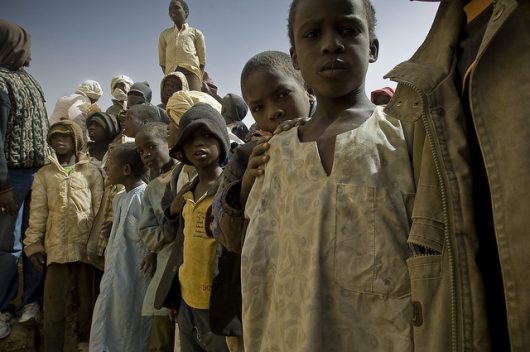
Historically, Sudan has been the site of great conflict and famine since the mid-twentieth century. As a result, a constant outflow of refugees streamed into neighboring countries and all around the world. Here are ten significant facts about these Sudan refugees.

10 Facts about Sudan Refugees

  1. According to the U.N. Refugee agency, there are currently 666,000 displaced Sudanese. Sudan has recorded high numbers of refugees since 1990.
  2. Major causes for the Sudanese exodus are prolonged civil war and famine. There have been three major Sudanese conflicts and ongoing hostilities since 1969, with the most recent South Sudanese Civil War beginning in 2013.
  3. A major spike in refugees from Sudan occurred following a famine in 1998. In the subsequent six years, Sudan’s refugee numbers doubled before decreasing rapidly during a period of relative stability.
  4. Refugees fleeing Sudan were about half as numerous in 2009, but large-scale ethnic conflicts displaced hundreds of thousands in the 2010s, particularly in the Darfur region.
  5. Neighboring South Sudan, which gained independence in 2011, houses many Sudanese refugees, despite the ongoing conflicts in the region. The opposite is also true, with many South Sudanese fleeing north to Sudan, an area that is regarded as slightly safer by the Global Peace index.
  6. Despite the split of Sudan and South Sudan, the Sudanese have continued to seek asylum in other countries since 2011. The number of Sudanese refugees steadily increased through 2014, before decreasing ever so slightly in 2015.
  7. One of the most interesting facts about Sudan refugees are the final places where the migrants eventually end up. The U.S. Census estimated there were about 41,000 Sudanese Americans in 2012, many of whom left Sudan in the 1980s and 90s during civil war. Australia also hosts many Sudan refugees, reporting almost 20,000 in their national census.
  8. The ongoing hostilities and large numbers of refugees have decreased Sudan’s annual population growth rate to less than 1 million per year, lower than Iraq, Vietnam and Afghanistan.
  9. While current numbers of refugees from Sudan and South Sudan are undoubtedly high, (both above 600,000) there have been significantly more Sudanese displaced in the past. For example, during the second Sudanese Civil War, approximately 4 million people were forced to leave Sudan.
  10. Despite the extremely complex and difficult nature of the Sudanese exodus, the UNHCR was able to assist 39,470 Sudanese refugees, with 2/3 of them living in adequate dwellings through almost $75 million in aid.

These facts about Sudan refugees are not all-encompassing, but they do offer great insight into the critical Sudanese refugee situation. Fortunately, there’s hope that current peace talks in South Sudan may help stabilize the region, despite the failure of previous regimes to put an end to Sudanese violence.

In the meantime, the UNHCR and refugee-hosting first world countries continue to be an ally for the huge numbers of displaced Sudanese.

– John English

Photo: Flickr

September 10, 2016
https://borgenproject.org/wp-content/uploads/borgen-project-logo.svg 0 0 Borgen Project https://borgenproject.org/wp-content/uploads/borgen-project-logo.svg Borgen Project2016-09-10 01:30:362024-06-05 02:12:1310 Facts About Sudan Refugees
Global Poverty, Refugees, Refugees and Displaced Persons

Jeans for Refugees: Celebrities and Artists Join Forces

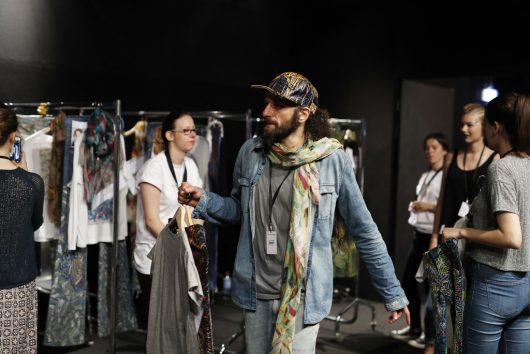
Jeans for RefugeesJeans for Refugees is a project that raises funds and awareness about the needs of refugees around the world. Artist Johny Dar wants refugees to know that the world can mobilize in different ways to help them and that they will not be forgotten.

“Ever seen the news and felt helpless, sad or angry about why things are the way they are? You are not alone!” says the Jeans for Refugees website. “And our mission is to make sure that neither are the millions of refugees who are homeless, hungry and suffering the effects of war and destruction.”

Jeans for Refugees uses art and celebrity culture as tools to raise awareness. Their website explains that the project, “galvanizes celebrity culture to focus a global audience on a global humanitarian cause.”

Actors, artists, models, singers and songwriters have donated jeans that Dar will paint and sell in an auction at the end of October. The proceeds will be donated to International Rescue Committee (IRC) projects that provide relief to millions affected by the global refugee crisis.

Alicia Vikander, Benicio del Toro, Bryan Adams, Daniel Radcliffe, Emma Watson and Ryan Gosling are some of the celebrities involved in the project. Dar paints each pair of jeans to reflect the personality of the celebrity who donated them. Dar told Vogue News that celebrities do not need convincing to donate a pair of their jeans.

“I believe they were convinced the same way that I was convinced myself, and how everyone else became convinced too — this is a humanitarian cause that is much grander than me and everyone involved in it,” said Dar.

Platoon Cultural Development claims Dar is a renaissance man, whose name is big in fashion, textiles, body art, painting and many other artistic fields.

Having Dar’s signature on the Jeans for Refugees movement places the humanitarian cause at the forefront of popular modern art and in the sights of the millions involved in the art community.

The enthusiastic response from celebrities shows how individuals with influence are eager to support a worthy cause. The hope is that others will follow these celebrities’ examples and react as quickly when given the opportunity to help those in need.

Dar’s art has the potential to be a major awareness-raising tool as it reminds people that every life deserves a chance.

– Christina Egerstrom

Photo: Zimbio

September 7, 2016
https://borgenproject.org/wp-content/uploads/borgen-project-logo.svg 0 0 Borgen Project https://borgenproject.org/wp-content/uploads/borgen-project-logo.svg Borgen Project2016-09-07 01:30:522024-06-05 04:10:53Jeans for Refugees: Celebrities and Artists Join Forces
Education, Global Poverty, Refugees

10 Facts About the Canadian Refugee System

Canadian Refugee System
According to the United Nations High Commissioner for Refugees (UNHCR), refugees are “people fleeing conflict or persecution. They are defined and protected in international law, and must not be expelled or returned to situations where their life and freedom are at risk.” Below are 10 facts about the Canadian refugee system.

  1. The Canadian Refugee system has two primary sections: the Refugee and Humanitarian Resettlement Program and the In-Canada Asylum Program.
  2. The Refugee and Humanitarian Resettlement Program deals with claims for asylum that come from outside of Canada.
  3. The In-Canada Asylum Program works to help people making refugee protection claims from within Canada.
  4. Initial assistance for refugees coming to Canada comes from the federal Canadian government, a private sponsor (such as an organization or wealthy person), or the Province of Quebec.
  5. Income support for refugees is provided for up to one year or until the refugee/refugee’s family becomes self-sufficient, whichever comes first.
  6. Immigration, Refugees and Citizenship Canada (IRCC) funds language training in English and French for incoming refugees who lack the language skills necessary to function successfully in Canada.
  7. Canada has a long history of accepting refugees, stretching back to 1770 when they allowed Quakers (who were being pushed out of America due to their religious practices) to settle in southern Ontario.
  8. Canada’s Immigration Act of 1976 required the government to establish targets for immigration and consult explicitly with provinces regarding Canadian immigration (including refugee immigration).
  9. In 1986, the Office of the United Nations High Commissioner for Refugees awarded the people of Canada the distinguished Nansen medal for their efforts during the Indochina refugee crisis of 1979-1980, wherein Canada helped settle over sixty thousand refugees.
  10. Currently, as part of the #WelcomeRefugees initiative, Canada has been resettling Syrian refugees across the country. As of June 2016, the government resettled upwards of 28,000 Syrian refugees.

– Bayley McComb

Photo: Migration Bureau Corp.

July 28, 2016
https://borgenproject.org/wp-content/uploads/borgen-project-logo.svg 0 0 Borgen Project https://borgenproject.org/wp-content/uploads/borgen-project-logo.svg Borgen Project2016-07-28 01:30:062024-12-13 17:54:4110 Facts About the Canadian Refugee System
Global Poverty, Refugees, Refugees and Displaced Persons

How Three Berliners Have Made Refugees Welcome

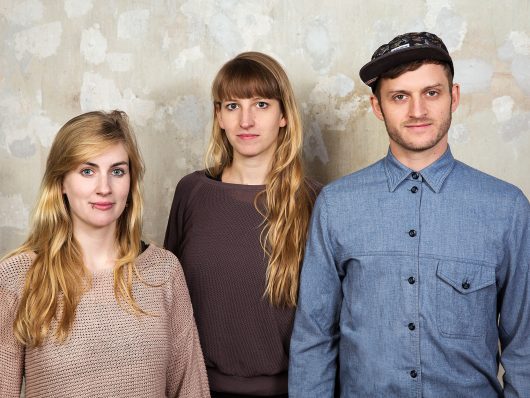
Refugees WelcomeRefugees Welcome, a non-profit organization founded by Germans Mareike Geiling, Jonas Kakoschke and Golde Ebding, provides an online platform for people to lend a room to an asylum-seeking refugee.

Often called the “Airbnb for refugees,” the organization aims to help refugees integrate into their new communities and create a more welcoming culture, according to The Independent.

Founded in Germany in 2014 in response to the growing refugee crisis, Refugees Welcome has quickly spread to eight other European countries and Canada. It is also supporting groups in more than 20 additional countries to set up the platform there. As of mid-July, Refugees Welcome has already placed 791 refugees in shared flats.

To offer a room to a refugee, individuals must register online through the organization’s website. There they fill out basic information such as how much space they have available and for how long. Similarly, refugees fill out a questionnaire to facilitate the matching process.

Once a match is made, the potential new roommates have the chance to meet up to see if they will be a good fit. Rent and utilities are paid for with micro-donations made to Refugees Welcome or by government programs.

According to The Independent, “Although people have offered the group entire empty houses and flats, Ms. Geiling said that would defeat one of the key aims of the initiative – to integrate.” Geiling further expressed that the program is “about living with people and getting to know them.”

In typical refugee situations, overwhelmed officials frequently place refugees in unorthodox living places such as old schools or shipping containers. In an NPR interview, Kakoschke notes that in these cases, refugees cannot work or learn the local language and often become depressed due to the stagnant nature of their living situation.

The Refugees Welcome website explains that through their program, refugees have an opportunity to learn the local language more quickly than they would in typical accommodations granted to refugees, and they can more easily acclimate themselves to their new country.”

The website adds, “You, on the other hand, will get to know a different culture and help a person in a difficult situation.”

– Laura Isaza

Photo: The Independent


July 22, 2016
https://borgenproject.org/wp-content/uploads/borgen-project-logo.svg 0 0 Borgen Project https://borgenproject.org/wp-content/uploads/borgen-project-logo.svg Borgen Project2016-07-22 01:30:582024-12-13 17:54:40How Three Berliners Have Made Refugees Welcome
Global Poverty, Refugees

Norwegian Refugee Council: Fight Against Crisis in Fallujah

Crisis in FallujahWeeks of combat in Fallujah, initiated by Iraqi military forces in an attempt to eradicate ISIS militants from the city, have left tens of thousands of civilians displaced. The Wall Street Journal reports that upwards of 80,000 men, women and children have been forced to flee their homes, in what has become the largest refugee crisis in Iraq.
The Islamic State invaded Fallujah in 2014 and has been in control of it since. In an interview with NPR, Karl Schembri, a member of the Norwegian Refugee Council working in Fallujah, stated that it has been “a nightmare” for those in the city.

Schembri noted that individuals were living on “animal feed, on expired dates and drinking the river water, which is undrinkable.” He went on to say that ISIS soldiers shot any civilians attempting to escape from the city.

Although Fallujah has officially been liberated by the Iraqi military, civilians cannot return to their homes. Fighting has left buildings destroyed and, according to the Chicago Tribune, “only a third of the city has been cleared of the militants”. Civilians must travel for miles to reach refugee camps, only to find that they are running out of food, water, toilets, shelter and funds.

The Norwegian Refugee Council (NRC) has been leading the fight against the refugee crisis in Fallujah. The NRC is a humanitarian organization comprised of about 5,000 people focused on providing “food assistance, clean water, shelter, legal aid and education” to refugees across the world.

As more and more refugees flood to the camps the NRC, United Nations and International Organization for Migration have become desperate for additional aid. These organizations can no longer accommodate all the refugees. Often they are forced to disclose that there is no more room in the tent cities.

Iraq’s budget for aid is stretched thin as ISIS has displaced people across the entire country and, according to The Wall Street Journal, “foreign governments have only provided one third of the financial assistance the U.N. has said it needs to cover humanitarian needs in Iraq this year.”

However, the U.N. and other countries recently appealed for $298 million in emergency aid and it has been answered. The U.S. Department of State announced on June 21st that it was donating an additional $20 million to the U.N. for relief in Fallujah. The U.S. challenged other governments to answer the U.N.’s appeal so that the refugee crisis in Fallujah can be properly handled by organizations such as the Norwegian Refugee Council.

– Liam Travers

Photo: Flickr

July 8, 2016
https://borgenproject.org/wp-content/uploads/borgen-project-logo.svg 0 0 Borgen Project https://borgenproject.org/wp-content/uploads/borgen-project-logo.svg Borgen Project2016-07-08 01:30:252024-12-13 17:54:43Norwegian Refugee Council: Fight Against Crisis in Fallujah
Global Poverty, Refugees and Displaced Persons

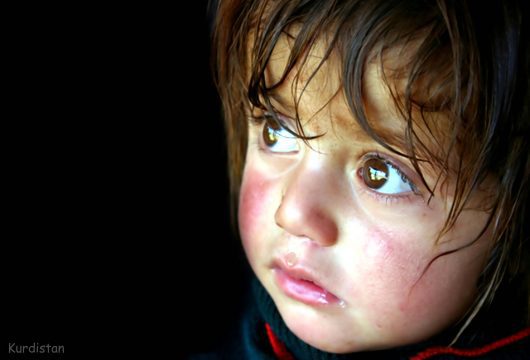
Amnesty International, Kurdistan to Protect Human Rights

Amnesty International
On May 4, Amnesty International’s Secretary-General Shalil Shetty met with the President and Prime Minister of the Kurdistani Regional Government, or KRG, to discuss the humanitarian crisis in the region and collaborate to prevent human rights abuses by all parties.

This meeting, taking place in Kurdish Iraq, came just months after Amnesty International published a report in January accusing the KRG of rights abuses. Amnesty International’s report earlier in the year accused Kurdish allied forces of demolishing Iraqi homes and preventing Arab Iraqis from returning to their communities after they were recaptured from the Islamic State.

The report argued that displacements without military justification could be considered a war crime, but also acknowledged that many of the territories had been disputed prior to the Islamic State, with many ethnically cleansed of Kurds by Saddam Hussein’s regime.

Amnesty International also acknowledged that the alleged abuses were occurring in the context of an unprecedented security, humanitarian and financial crisis for the Kurdistani Regional Government. Still, they asserted that the government cannot allow that to justify turning a blind eye to abuses within its territories.

More than a million foreign refugees and internally displaced persons are currently seeking shelter in Iraqi Kurdistan.

The KRG immediately responded to Amnesty International’s report, contending that it is the policy of its armed forces not to allow immediate return to recently recaptured territories for civilians of any ethnicity, due to proximity to continued conflict and due to the Islamic State’s tendency to leave IEDs behind when it withdraws.

In a further expression of concern for human rights, the KRG promised to conduct a full investigation into the reports compiled by Amnesty International. They granted AI and other rights groups full access to its territories in order to conduct their own independent investigations to ensure the protection of human rights.

Shetty thanked the KRG for its commitment to preventing abuses in the face of tremendous adversity, and acknowledged the long history of Kurdish cooperation with AI and other rights groups.

– Hayden Smith

Photo: Flickr


July 5, 2016
https://borgenproject.org/wp-content/uploads/borgen-project-logo.svg 0 0 Borgen Project https://borgenproject.org/wp-content/uploads/borgen-project-logo.svg Borgen Project2016-07-05 01:30:432024-12-13 18:06:08Amnesty International, Kurdistan to Protect Human Rights
Refugees

LightHouse Relief Brings Hope to Refugees on Greek Shores

Refugee_GreeceMany know the island of Lesbos as a small, quiet vacation island. It embodies the quaint characteristics of Greece, with its freshly caught fish and rural roads through mountain ranges. But what many people do not know is that Lesbos also accepted nearly 60 percent of the migrants that entered Greece last year because of its location at the northern tip of the country.

The small town of around 100 residents became a familiar name for media centers around the world covering the refugee crisis, as most Middle Easterners seeking asylum, shelter and safety arrive in the town on a daily basis.

Already doomed by the government’s economic crisis, the island has been overwhelmed with balancing compassion and aid for refugees while having their tourist-dependent economy wane because of the arrival of the refugees. Along with the refugees, international organizations like the United Nations and other NGOs also began to arrive in an attempt to stabilize the region and help the refugees. One of the most notable of these organizations is Lighthouse Relief.

LightHouse Relief, a Swedish nonprofit organization, works to provide relief to refugees who arrive in the Katsikas and Ritsona camps in mainland Greece, in addition to providing ecological support of Lesvos. Skilled volunteers from around the world give their time to work with the organization on the ground to help people.

The organization was started in September 2015 by a group of volunteers working on the northeastern coast of Lesvos in Skala Sikamineas. There were no other organizations present at that time to help the Greeks who were attempting to aid the incoming refugees, so LightHouse Relief volunteers rented nearby land and prepared to have a long-term presence.

The organization’s main goal is to provide relief to children, women, and the elderly through their various programs and initial help of migrants when they arrive on shore. Since October 2015, LightHouse Relief has been able to provide a reception camp with electrically-heated tents and playgrounds for children.

One of their biggest projects is Lighthouse ECO Relief,which stands for Environmental Clean-Up Operation. So far, 600,000 lifejackets and 10,000 rubber dinghies have been discarded on the shores all around Lesvos, hurting the ecosystem of the area and making it a more dangerous destination for subsequent migrants. This project removes trash, lifejackets and broken boats.

All volunteers have to at least be 21 and committed to staying for a minimum of three weeks. Holidays are no exception, as multiple volunteers were standing on the shore waiting for migrants to arrive on Christmas morning, prepared to give warm clothes and a Christmas Dinner on the beach to help the refugees feel as though they were home as well.

Volunteers must also have some sort of a background in the resources that the organization tries to provide. From nutrition to being a midwife, to language skills, all of their volunteers are prepared to have lasting effects on all of the people they encounter.

– Ashley Morefield

Photo: Flickr

July 4, 2016
https://borgenproject.org/wp-content/uploads/borgen-project-logo.svg 0 0 Borgen Project https://borgenproject.org/wp-content/uploads/borgen-project-logo.svg Borgen Project2016-07-04 01:30:252020-05-30 13:21:13LightHouse Relief Brings Hope to Refugees on Greek Shores
Global Poverty, Refugees and Displaced Persons

4 Movies About Refugees That You Need To See

RefugeesFilm is undoubtedly one of the most compelling forms of storytelling and some of the most powerful yet untold stories are those of the refugees.  Many millions have left their homelands and travelled across the globe throughout history, inspiring film-makers to capture their journeys. Here are four movies about refugees—two older, fictional films and two newer, real-life stories—that portray the experiences of refugees in an important and meaningful way. Although this list is only comprised of four movies about refugees, hundreds of documentaries, feature films and shorts are available online and in stores.

Fiction

In This World (2002): Shot like a documentary, In This World portrays two Afghan refugees’ land journey. Unlike many other fictitious films about refugees, this film shows a fairly complete picture of a refugee’s journey, which includes the endless hours of waiting, hours of panic, and brief, beautiful moments of hope.

Welcome (2009): A beautiful, artistic and rather unsentimental picture of one Iraqi Kurd’s attempt to swim the English Channel in order to gain asylum, this French film portrays the stark situation of many homeless refugees living in France at the time and the legal dangers that awaited the French people who helped asylum-seekers.

Documentaries

The Land Between (2014): Documenting the everyday lives of Sub-Saharan migrants trapped between their homelands and the prospect of a new life in Europe, The Land Between addresses one of the most important questions of all migrant crises, whether past, present or future: why, and how, do people risk their lives and everything they own?

Neuland (2015): Neuland explores the lives of immigrants and refugees from all over the globe as they acclimate to life in Switzerland. Following the students in one class, the film shows the hardships and joys of building a new life in a foreign country.

In addition to many other full-length fictitious and real-life movies about refugees, many organizations, like Amnesty International, compile short films to spread awareness about refugees. In the end, whether short or long, real or imagined, movies about refugees provide an invaluable window into the lives of victims from all over the world.

– Sage Smiley

Photo: Flickr

June 21, 2016
https://borgenproject.org/wp-content/uploads/borgen-project-logo.svg 0 0 Borgen Project https://borgenproject.org/wp-content/uploads/borgen-project-logo.svg Borgen Project2016-06-21 01:30:072024-12-13 17:54:344 Movies About Refugees That You Need To See
Global Poverty, Refugees and Displaced Persons

6 Ways to Help Refugees Survive the Crisis

help Refugees

According to the International Rescue Committee, Syrian refugees account for between a quarter and a third of Lebanon’s population. Jordan has about 630,000 Syrian refugees—proportionally, that is the same as the United States taking in all 64 million residents of the United Kingdom.

Those who would like to extend a helpful hand are often unsure of where to begin. Here are six ways to help refugees:

    1. With the Syrian crisis alone resulting in over 4 million refugees, many agencies doing valuable work are stretched thin. A New York Times story on the refugee crisis includes links to several well-ranked charities that are seeking donations to help refugees.
    2. For those interested in more hands-on work, the Office of the United Nations High Commissioner for Refugees (UNHCR) connects volunteers to refugee programs worldwide, though this initiative is geared towards highly skilled professionals.
    3. There are several other ways the average person can volunteer, however. The International Rescue Committee has local offices across the United States offering volunteering opportunities, such as working with refugee children or helping adults with their job search.
  1. The White House has a portal for volunteering to help refugees. If you enter your location, it provides a map and list of locations in your area that help refugees. For example, if you enter Washington, D.C., one of the results is the local Ethiopian Community Development Council, which helps African refugees resettle and build new, fruitful lives.
  2. You can also donate items. While many organizations do not accept physical donations like clothing on an international level, many local offices do. The International Refugee Council, for example, says local offices are often in need of items such as clothing and children’s items.
  3. Contact your senators and contact your representative. There are a variety of things you can encourage them to do, such as make pathways to accept refugees, increase funding for foreign aid or give more support to U.N. programs working with refugees.

This list is a good starting point for those interesting in aiding refugees to overcome global crises.

– Emily Milakovic

Photo: Flickr

June 4, 2016
https://borgenproject.org/wp-content/uploads/borgen-project-logo.svg 0 0 Borgen Project https://borgenproject.org/wp-content/uploads/borgen-project-logo.svg Borgen Project2016-06-04 01:30:132024-12-13 18:06:076 Ways to Help Refugees Survive the Crisis
Global Poverty

Refugee Volunteers: Assistance Amid Crisis

refugee volunteers

Crossing by sea and land, over 1 million refugees sought asylum in Europe in 2015, according to the BBC. The source says that numbers continue to increase, reaching 135,711 refugees between January and early March of this year.

Those fleeing conflict in Syria, in addition to Afghanistan, Iraq, Kosovo, Albania, Pakistan and other high-risk countries, are often left stranded and unable to return to their home country. Unfortunately, refugees typically have a difficult time assimilating into society when they are accepting into host countries.

In Across Borders, a month-long online conversation hosted by Devex and other partners, Richard Dictus, the executive coordinator of United Nations Volunteers (UNV), writes about the conditions of displaced individuals and asylum seekers.

In addition to the problem of refugee assistance, he notes that human migration brings to light issues surrounding discrimination as well as sexual and gender-based violence within these groups.

Larger international organizations such as the UNHCR Volunteers, the International Rescue Committee (IRC) and Exodus Refugee have been active members in assisting refugees during this crisis.

According to Amnesty International, 104,410 resettlement places have been offered globally since the start of the Syrian crisis. Close to half of these asylum applications were submitted to Germany and Sweden.

In addition to European intervention, United Nations Volunteers (UNVs) working on endeavors in Lebanon, Jordon Turkey, Iraq and Egypt—where more than 4 million refugees from Syria are located—have made a significant impact.

Of note, a collaborative project between the U.N. Relief and Works Agency and the European Union, where national UNV teachers are deployed to schools for Palestinian refugees located throughout Lebanon, promotes the integrity of refugees within the humanitarian crisis with refugee-to-refugee assistance.

The program mobilizes former Palestinian refugees, who have become integrated into Lebanon culture, as administrators to the new wave of refugees. The communication with these refugee volunteers can go along way in providing advice and guidance, since they share similar experiences.

Partnerships both in and outside of the European continue to make headway in terms of providing refugee volunteers and much-needd assistance. Refugee-to-refugee volunteerism serves as yet another way in which human integrity is upheld within a time of great need.

— Nora Harless

Photo: Flickr

May 28, 2016
https://borgenproject.org/wp-content/uploads/borgen-project-logo.svg 0 0 Borgen Project https://borgenproject.org/wp-content/uploads/borgen-project-logo.svg Borgen Project2016-05-28 01:30:052024-12-13 18:05:59Refugee Volunteers: Assistance Amid Crisis
Page 25 of 32«‹2324252627›»

Get Smarter

  • Global Poverty 101
  • Global Poverty… The Good News
  • Global Poverty & U.S. Jobs
  • Global Poverty and National Security
  • Innovative Solutions to Poverty
  • Global Poverty & Aid FAQ’s
Search Search

Take Action

  • Call Congress
  • Email Congress
  • Donate
  • 30 Ways to Help
  • Volunteer Ops
  • Internships
  • Courses & Certificates
  • The Podcast
Borgen Project

“The Borgen Project is an incredible nonprofit organization that is addressing poverty and hunger and working towards ending them.”

-The Huffington Post

Inside The Borgen Project

  • Contact
  • About
  • Financials
  • President
  • Board of Directors
  • Board of Advisors

International Links

  • UK Email Parliament
  • UK Donate
  • Canada Email Parliament

Get Smarter

  • Global Poverty 101
  • Global Poverty… The Good News
  • Global Poverty & U.S. Jobs
  • Global Poverty and National Security
  • Innovative Solutions to Poverty
  • Global Poverty & Aid FAQ’s

Ways to Help

  • Call Congress
  • Email Congress
  • Donate
  • 30 Ways to Help
  • Volunteer Ops
  • Internships
  • Courses & Certificates
  • The Podcast
Scroll to top Scroll to top Scroll to top