• Link to X
  • Link to Facebook
  • Link to Instagram
  • Link to TikTok
  • Link to Youtube
  • About
    • About Us
      • President
      • Board of Directors
      • Board of Advisors
      • Financials
      • Our Methodology
      • Success Tracker
      • Contact
  • Act Now
    • 30 Ways to Help
      • Email Congress
      • Call Congress
      • Volunteer
      • Courses & Certificates
      • Be a Donor
    • Internships
      • In-Office Internships
      • Remote Internships
    • Legislation
      • Politics 101
  • The Blog
  • The Podcast
  • Magazine
  • Donate
  • Click to open the search input field Click to open the search input field Search
  • Menu Menu

Tag Archive for: Education

Posts

Education, Global Poverty

Action Plan to 2014 Improves South African Education

Action Plan to 2014
At about seven percent of gross domestic product and 20 percent of total state expenditure, South Africa has one of the highest rates of public investments in education in the world. The South African Schools Act of 1996 makes education compulsory for all South Africans from the age of 7 to the age of 15.

President Jacob Zuma told Parliament on February 13 that the country’s matric pass rate went up from about 61 percent in 2009 to 78 percent last year. The matric pass rate is calculated by annual national assessments.

South Africa has 23 state-funded post-secondary institutions, 11 universities, six universities of technology and six comprehensive institutions.

As a result of education inequalities during apartheid, 18 percent of adults are illiterate. Today, almost 59 percent of whites attend higher education institutions; only 14 percent of blacks attend. The disparate percentage is a consequence of inadequate primary and secondary schooling due to apartheid.

The Accelerated Schools Infrastructure Delivery Initiative has delivered 370 new schools throughout the country. The program replaces unsuitable infrastructure with schools.

Meanwhile, enrollment at universities has increased 13 percent since 2009 and Further Education and Training (FET) college enrollments have increased by 90 percent.

South Africa has implemented a plan for schools called Action Plan to 2014, a part of a larger vision called Schooling 2025, which aims to improve learning and teacher training. By 2025, South Africa wants to see students attend school every day and are on time. The country aims for schools to be accessible, clean and safe learning environments.

The program also includes teacher training, which will improve their capabilities and confidence. The focus of the program is on literacy and numeracy. This curriculum is known as the national Curriculum and Assessment Policy Statement (CAPS,) which provides specific guidelines for what is taught in schools.

Improving educational opportunities helps create tomorrow’s leaders. By giving students the opportunity to learn in a safe, clean and accessible environment, South Africa is helping to alleviate poverty, one step at a time.

– Haley Sklut

Sources: All Africa, South Africa Info
Photo: YWC Project

February 24, 2014
https://borgenproject.org/wp-content/uploads/borgen-project-logo.svg 0 0 Borgen Project https://borgenproject.org/wp-content/uploads/borgen-project-logo.svg Borgen Project2014-02-24 20:25:482020-07-31 11:19:56Action Plan to 2014 Improves South African Education
Education, USAID

Promoting Liberian Education System Essential

Liberian Education System
Liberia has a unique connection to the United States. African Americans immigrating from the U.S. to the West African Coast officially founded the nation in 1847. While the country has struggled to achieve prosperity and economic stability for its citizens, the Liberian education system has made considerable recent progress.

Liberia is still recovering from the civil wars that began in 1980 and lasted until 2003. As a result, Liberia ranks near the bottom of the United Nations Development Program Human Development Index at 174th out of 187. Correspondingly, nearly 36 percent of the Liberian population suffers from malnutrition.

During the years of civil car, educational systems were almost nonexistent. This leaves a massive gap in skilled workers entering the job market and by extension, extreme unemployment (close to 80 percent) and poverty. Liberia has a literacy rate of 60.8 percent, and an education system described as “a mess” by Liberian President Ellen Johnson Sirleaf.

Not all news about the Liberian education system is bleak, however. In 2011, President Sirleaf signed into law the Education Reform Act, which seeks to decentralize the education system and help create a new educational management structure more locally focused. The U.S. Agency for International Development (USAID) has also instituted the Liberia Teacher Training Program to help train, develop and recruit more teachers for the nation.

An additional component of USAID’s work in Liberia is encouraging participation in education by girls and women. The Girls’ Opportunities Access Learning Program hopes to increase school enrollment and retention for girls by identifying key policy issues with Liberia’s Ministry of Education.

According to the U.N. Educational, Scientific and Corporal Organization’s Education for All Initiative, at least 15 percent of a nation’s budget should be allocated for education. Currently, Liberia only spends around 3 percent of its national budget on education.  In order to fully jumpstart educational progress in Liberia, there is much more to be done.

– Taylor Diamond

Sources: The Guardian, USAID, WFP, Liberian Education Trust
Photo: International Book Bank

February 24, 2014
https://borgenproject.org/wp-content/uploads/borgen-project-logo.svg 0 0 Borgen Project https://borgenproject.org/wp-content/uploads/borgen-project-logo.svg Borgen Project2014-02-24 15:10:052024-12-13 17:50:05Promoting Liberian Education System Essential
Economy, Education, Global Poverty

Poverty and Violence in Honduras

Violence_Poverty_Exacerbate_Homelessness_Honduras
Birthplace of the term “banana republic” and victim of the brutal fruit companies-led coup, Honduras is among the countries with the lowest incomes in Latin America, poverty is very pronounced problem in this Central American nation. Despite an economic growth of around 3 percent per annum, the gross domestic product (GDP) per capita of the country remains stagnant.

This discrepancy could indicate that there is a widening disparity gap.

In fact, since the coup d’état in 2009, Honduras witnesses the most rapid rise in inequality in Latin America, a factor that contributes to prevailing climate of violence. Equally frustrating, the top 10 percent of the population also earns virtually all of the republic’s real income gains.

Furthermore, the 2009 coup d’état had increased the overall rates of poverty and extreme poverty. This climate of political crisis had reverted the economic advances that took place in the country. In addition, the government of President Porfirio Lobo, who came into power after the post-coup elections of 2010, had reduced social spending despite the boost in public spending.

It is estimated that 71 percent of the 8.3 million Hondurans live in poverty, a major problem that contributes to the frequent instances of violence that plague the nation. Because of this astronomic number of people living in poverty, a large sector of Honduras’ population is also deprived of education.

Only a lucky few can afford any education beyond sixth grade.

What’s more, Honduras has the highest rate of homicide in the world, with the average of 20 people murdered daily, 90 percent of whom are male victims. This frightening data stem from the burgeoning narcotic business, which has given rise to many organized crimes. This epidemic problem of homicides also takes away from the country’s meager income by necessitating the Honduran government to spend 10.5 percent of the national GDP in the combat of violence.

Due to Honduras’ constant history of political instability, there has always been very little opportunity for Honduras to develop democratic institutions to impose the rule of law. Instead, centuries of colonialism and decades of dictatorship have marginalized the poor, leaving them with minimal choices to make a living.

This scarcity of upward economic mobility and grinding poverty have driven many towards illicit ways of earning money.

In its attempt to encourage Honduras to alleviate poverty, the World Bank has suggested the country to support the stability and the growth of its macro-economy as well as to improve the quality of its education. But, these key options to improve the situation of the country are easier said (or suggested) than done. Development and democracy are not phenomena whose advent can be brought about at an instant.

Instead, they require years of institutional and systematic reforms for a society to have a functional democracy and a sustainable development.

 – Peewara Sapsuwan

Sources: El Pais Internacional, El Heraldo, El Heraldo, Los Angeles Times, World Bank, World Bank
Photo: Zimbio

February 24, 2014
https://borgenproject.org/wp-content/uploads/borgen-project-logo.svg 0 0 Borgen Project https://borgenproject.org/wp-content/uploads/borgen-project-logo.svg Borgen Project2014-02-24 12:53:402024-06-05 01:57:10Poverty and Violence in Honduras
Advocacy, Children, Developing Countries, Extreme Poverty, Global Poverty

Best Solution for Poverty: Investing in Children

L_children_playing_africa
Across the world, almost one billion children live in poverty. They live without access to proper nutrition, healthcare and especially, adequate education. Children are the future of the world and need to be nurtured to become successful. When children grow up with skills to join the labor force, they can help pull their countries out of poverty by making changes in the political system and economy. As educated citizens, they will be less likely to engage in unethical behavior and more likely to have fewer children. As a result, both mortality and overpopulation rates decline.

By ignoring children’s education, developing countries are also unaware of talented children.

Talented children are more likely to achieve higher degrees and may go into professions such as being educators, business leaders and scientific researchers. These children have the capacity to make huge contributions to society in various fields that will support economic growth in developing countries.

Therefore, nurturing talent, both physically and psychologically is a crucial to reducing global poverty in the long run.

From a physical perspective, children need to have a good nutritional diet so that they can be healthy both physically and mentally. Lacking necessary nutrition can cause children to develop slower and not be able to absorb education properly.

From a psychological point of view, education systems and societal support are the keys to unlock the full potential for young talents. Good education gives children the chance to prove themselves as well as the basic knowledge to pursue their dreams. At the same time, support from society gives them the motivation to overcome challenges in their daily life and strive to become a better citizen of the world.

– Phong Pham

Sources: Spring: Gifted Children, Spring, UNICEF
Photo: Borgen Project

February 24, 2014
https://borgenproject.org/wp-content/uploads/borgen-project-logo.svg 0 0 Borgen Project https://borgenproject.org/wp-content/uploads/borgen-project-logo.svg Borgen Project2014-02-24 12:11:012024-12-13 17:53:49Best Solution for Poverty: Investing in Children
Education

READ Global Removes ‘Foreign’ from Aid

Nepal_India_Read_Nonprofit_Literacy
The organization READ Global has turned the concept of ‘foreign’ aid on its head. What once began as a rural library outreach program in Nepal has grown into a massive network of educational centers spanning three countries and reaching 2 million rural villagers.

Founded by Dr. Antonia Neubauer in 1991, the Rural Education and Development (READ) organization creates self-sustaining library and resource centers in rural areas owned and operated by the communities they serve.

Foreign aid programs are commonly criticized for being invasive and generally ineffective in the long run. Some of the problems originate from U.S. foreign aid regulations, which stipulate that at least 80% of funds destined for foreign countries must originate from U.S. sources.

A recent example of this restriction occurred after Hurricane Haiyan, when U.S. aid organizers were forced to ship American rice to the Philippines instead of buying it from neighboring countries like Thailand, an arguably cheaper and faster option.

Such actions flood local markets with foreign goods, making it extremely difficult for merchants to rebuild their businesses and creating a cycle of dependence on foreign aid.

The READ Global program aims to change that. Operating out of Nepal, Bhutan and India, the organization has established community centers in rural areas that establish both standard library services as well as life-changing educational classes.

“They provide the literacy classes, they provide the livelihood trainings, like mushroom farming, organic farming [and] we provide basic health training,” states READ Global’s website. “The opportunities are not only for women but children, [the] elderly population.”

The organization focuses on four main areas: education, economic empowerment, technology and women’s empowerment. It selects regions with particularly high rates of illiteracy and poverty and then creates for-profit enterprises that sustain the centers and educate villagers on financial self-sufficiency.

“All of our centers are owned and managed by the local communities,” said Shrestha.  “For example one of the centers…has raised 70,000 USD and that money will go to the sustaining enterprise of that center.”

Since its inception in 1991, READ Global has established 69 centers in the three countries where it operates and hopes to open 30 more in the next five years. Their enterprises include tractor rental businesses, community radio stations and agricultural cooperatives.

“We envision a world where individual family and societies have equitable access to knowledge, information and resources,” Sanjana Shrestha, the READ Nepal Country Director. “We work in Asia to create the vibrant place where community can live and thrive.”

– Emily Bajet

Sources: Christian Science Monitor, READ Global, NPR

Photo: New Global Citizen

February 22, 2014
https://borgenproject.org/wp-content/uploads/borgen-project-logo.svg 0 0 Borgen Project https://borgenproject.org/wp-content/uploads/borgen-project-logo.svg Borgen Project2014-02-22 04:00:392024-05-26 23:13:11READ Global Removes ‘Foreign’ from Aid
Development, Education, Technology

Uruguay Pioneers One Laptop Per Child Project

One Laptop Per Child
Uruguay was the first country in the world to provide a laptop to every primary school student. Plan Ceibal, Uruguay’s national One Laptop Per Child project, provided an XO laptop to each of the 395,000 children in first through sixth grades. The acronym Ceibal stands for Basic Informatic Educative Connectivity for Online Learning (Conectividad Educativa de Informática Básica para el Aprendizaje en Línea).

One Laptop Per Child, a non-profit based in Massachusetts, strives to provide each child in developing nations with a low-cost, low-power laptop. Through this technology, children become more engaged in their education and more connected to one another. The laptops are designed to be highly power efficient, with the ability to use solar power, generators, wind power or water power.

“This is not simply the handing out of laptops or an education program. It is a program which seeks to reduce the gap between the digital world and the world of knowledge,” Miguel Brechner explained, director of the Technological Laboratory of Uruguay and in charge of Plan Ceibal.

In Uruguay, the Plan Ceibal program has a cost of $260 per child, including maintenance costs, equipment repairs, teacher training and internet connection. The total figure represents less than 5 % of the country’s education budget.

The XO laptops, with Linux operating software, can connect directly to one another, meaning that a single point of access can be shared among a community of XO users.

Education in Uruguay is among the best of the Latin American countries. Uruguay has one of the highest adult literacy rates of all of Latin America. Elementary education is mandatory and free; secondary and technical education are also free. As the first country to implement a One Laptop Per Child program, Uruguay is setting the model for other countries, such as Rwanda, Nicaragua, Paraguay and Peru, which have all adapted a One Laptop Per Child program.

– Haley Sklut

Sources: One Laptop Per Child, Sources: BBC
Photo: Kit Guru

February 21, 2014
https://borgenproject.org/wp-content/uploads/borgen-project-logo.svg 0 0 Borgen Project https://borgenproject.org/wp-content/uploads/borgen-project-logo.svg Borgen Project2014-02-21 17:00:322024-05-26 23:13:23Uruguay Pioneers One Laptop Per Child Project
Children, Developing Countries, Development, Economy, Education, Global Poverty, Government, Human Rights, Inequality

Education in India Suffers from Income Inequality

education_india
India is known for having one of the fastest growing economies in the world. Currently, the growth for GDP within India rests at 4.9 percent, but this is far below its potential.

Similarly to the United States, India is another one of the world’s largest democracies. However, they both also have some of the worst cases of income inequality. In the past 15 years, the net worth of India’s top billionaires have increased 12 times, enough to eliminate poverty in India twice.

The public infrastructure of India is developing at a decent pace, but there are problems that are often left unaccounted for by the Indian government. For example, education in India is a system in dire need of improvement.

According to UNESCO’s Education For All global monitoring report, “At 287 million, India has 37 percent of the total population of illiterate adults across the world.” The report also asserts that the poorest of India will not expect to receive universal education until around the year 2080.

In regards to the specific problems that India faces with education, access and quality are two of the greatest concerns. Much of it is tied to the proper functioning and funding of Indian government, which may not be reliable in certain instances.

90% of people do not continue to college in India, 58% do not finish primary school and 4% never even have the opportunity to start.

The extensive lack of universal education in India also goes on to provide problems for India’s human capital in general. Out of 122 total countries released by the World Economic Forum’s Human Capital Index, India is ranked a measly 78.th The problems India faces may require the nation to make steps toward realizing more inclusive growth and development.

Income inequality ought to be addressed in India for their human capital to rise.

This means core public services including basic healthcare, education and power or water supply must be established by Indian government at multiple levels. Investment in people has proven a successful method to national development. In other words, India still has a ways to go in realizing its full potential.

– Jugal Patel

Sources: World Bank, India Times, Teach For India, Live Mint, Outlook India
Photo: The New York Times

February 13, 2014
https://borgenproject.org/wp-content/uploads/borgen-project-logo.svg 0 0 Borgen Project https://borgenproject.org/wp-content/uploads/borgen-project-logo.svg Borgen Project2014-02-13 16:33:072019-08-13 13:15:12Education in India Suffers from Income Inequality
Children, Education, Global Poverty

The Problems of Dressing for Success in Kenyan Schools

Kenyan Schools
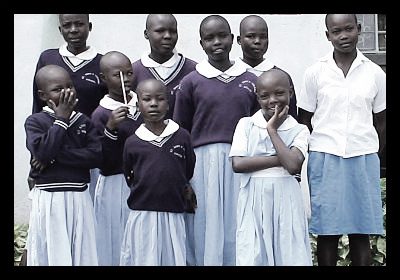
Global access to education should not always be uniformly approached. Many countries have been successful in reducing school fees since the installment of the UN Millennium Goals, and attendance has skyrocketed. However, the expense of the school uniform is still preventing too many children from the benefits of an education.

Kenya progressively eliminated tuition in 2002, under the leadership of President Mwai Kibaki. Yet the strictly enforced tradition of uniforms is still very much in place. Students in the Sub-Saharan African country are required to dress appropriately, or else risk dismissal at the discretion of their teacher.

Even if a child is not sent away, the lack of a uniform greatly inhibits education and encourages drop out rates. Just like in school, environments anywhere else have the pressure to fit in and the fear of ridicule can be crippling for Kenyan adolescence. Stigmatization and reprimand from teachers and peers are highly demotivational in the classroom, leading to attendance and concentration issues.

These sentiments have been proven by ISC-Africa, and NGO that funds the Child Sponsorship Program and focuses on the distribution of school supplies. Since the program began providing annual school uniforms to sponsored children in rural Kenyan schools, drop out rates decreased almost in half, from 15% to 8.6%.

Uniforms remain an unaffordable luxury, though, for many Kenyan families. The cost could be anywhere between 325 and 550 shillings, or $4.33-$7.33, per outfit. Although their educational purpose is essential, the value of a uniform naturally ranks lower in the household budget than, say, the next meal.

So, if uniforms are so detrimental to the access of education, then why are they still in place? Many parents support them because they encourage good behavior in the classroom and qualify students for reduced fees on public transportation. A more cynical theory speculates that teachers, whose regional assignments are decided based on student test scores, are motivated to exclude the lowest income, and most likely lowest scoring, students.

Cheaper alternatives have been explored such as matching badges or a school color scheme. The fact remains though, that providing education for all is a complicated and multi-faceted issue. The Millennium Goals must take this into account in its approach to reducing global poverty.

– Stefanie Doucette

Sources: World Bank, CESLA
Photo: Rabondo Community Project

February 2, 2014
https://borgenproject.org/wp-content/uploads/borgen-project-logo.svg 0 0 Borgen Project https://borgenproject.org/wp-content/uploads/borgen-project-logo.svg Borgen Project2014-02-02 21:47:132024-05-26 23:10:02The Problems of Dressing for Success in Kenyan Schools
Global Poverty

Fundraising Ideas for School

fundraising_school_walk-a-thon
This year marks the 50th anniversary of former United States President Lyndon B. Johnson’s State of the Union address where he boldly declared a war on poverty.

His New Deal created many welfare programs and provided millions of Americans with a social safety net.  If the U.S. wants to keep this tradition of helping the nation’s less fortunate population, it must continue to instill humanitarian values in our young generations.

Schools can help foster this sense of care and compassion by teaching lessons and engaging students in a variety of techniques that connect them to their communities and the world around them.  Many schools organize various activities that help raise funds that can be donated to worthy causes that combat poverty around the world.

Here are four fundraising ideas of activities one implement in their school so students, teachers, family and friends can join in the battle against poverty:

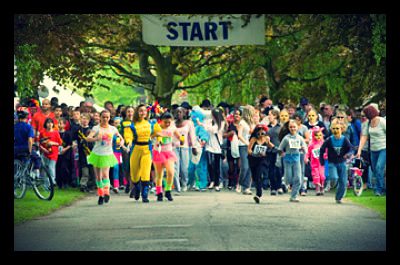
1. Walk-a-thon The idea here is simple: Organize an event at the school track.  Participants will run or walk a predetermined distance, for example, five kilometers, and sign up sponsors that are willing to pledge money for an agreed upon distance traveled.  The non-competitive nature of this event attracts people from all backgrounds and is a great way to meet community members and raise money for a worthy cause.

2. Penny Wars This contest works great in a high school setting.  For each school class (freshmen, sophomore, junior and senior), set up a container near the school’s cafeteria or other common areas.  Over a predetermined period, say, two weeks, students will dump pennies and other coins into the jars.  The idea is to see which student class can dump the most coins in the jars.  The winning class can receive a day off, can participate in a “fun day” such as wearing pajamas to school or receive a prize or certificate.

3. Car Wash The car wash has become one of the easiest and fun ways to raise money for a worthy cause.  Students can designate certain weekends during the school year or summer to wash their fellow community member’s cars.  In this do-it-yourself car wash, the school can provide soap, water, and towels for students.  Promote the car wash by posting signs throughout the town and have groups of students standing on corners attracting customers.

4. Raffle Attracting various business’s throughout the town to donate prizes for the raffle in exchange for advertising, students can hold a prize raffle by selling tickets to students during lunch breaks.  Proceeds can be donated to a worthy cause of the school’s choice.

– Sunny Bhatt

Sources: Scholastic, Brain Child
Photo: Eventish

January 28, 2014
https://borgenproject.org/wp-content/uploads/borgen-project-logo.svg 0 0 Borgen Project https://borgenproject.org/wp-content/uploads/borgen-project-logo.svg Borgen Project2014-01-28 18:44:432024-05-26 23:08:03Fundraising Ideas for School
Activism, Advocacy, Charity, Developing Countries, Education, Foreign Aid, Foreign Policy, Global Poverty, Philanthropy, Politics and Political Attention, Poverty Reduction

What U.S. Foreign Aid Does for Education

u.s. foreign aid
The money the United States gives out in foreign aid is usually focused in areas of direct impact, such as food to famine-stricken countries or in disaster relief efforts. Some of the lesser-known impacts are in the field of education. In particular, scholarships in foreign aid have allowed students to attend universities throughout the United States which provide more opportunities than would schools in their home countries.

This form of foreign aid is, however, not unique in the Western world. In fact, just as the United States lags behind in the overall standings for foreign aid, it falls behind its Western allies in funding for foreign scholarships as well. France leads all nations in foreign scholarship aid with 18% ($1.36 billion) of its foreign aid going to education, with Germany ranking second, at 13% ($1.05 billion), according to University World News. The U.S., on the other hand, only gives about 3.5% ($805 million) of its own foreign aid to scholarships.

U.S. foreign aid is directed to a number of other areas, but the one area that outshines all others is foreign military assistance. As it stands, roughly 38% ($14 billion) of the U.S. foreign aid budget goes to foreign military assistance. Comparing this to the budget given to foreign scholarships shows where the aims of U.S. foreign policy lie, as they push their military agendas overseas.

The military agenda of the United States looks toward the promotion of friendly democracies in places that the United States does not currently have allies. This can be seen in the United States invasions of Afghanistan and Iraq, as well as support given to rebels in Syria and Libya.  In hopes of achieving these goals, the United States pumps dollars towards friendly foreign militaries in hopes that they will create functioning democracies, with informed and supportive citizens.

In a recent Seattle Times Article, columnist Thomas L. Friedman took aim at this disparity by comparing the figures of foreign military aid for Egypt ($1.3 billion) and foreign scholarships for Jordan ($13.5 million). Friedman wrote that, “merit-based college scholarship program promote(s) tolerance, gender and social equality and critical thinking.”

These qualities of ideal democratic citizens that the United States is hoping to instill in foreigners would be much better fostered through foreign education aid, according to the first-hand observer, Friedman. While Egypt remained in a state of flux during 2013, Jordan has dedicated itself to working towards a state of democracy.  The comparison put forward by Friedman is an informative one for a casual observer, as one can see the benefits that current education aid gives and the potential of what the United States could do.

– Eric Gustafsson

Sources: National Priorities Project, University World News, Seattle Times
Photo: Giphy.com

January 15, 2014
https://borgenproject.org/wp-content/uploads/borgen-project-logo.svg 0 0 Borgen Project https://borgenproject.org/wp-content/uploads/borgen-project-logo.svg Borgen Project2014-01-15 17:15:522017-02-15 10:33:53What U.S. Foreign Aid Does for Education
Page 58 of 67«‹5657585960›»

Get Smarter

  • Global Poverty 101
  • Global Poverty… The Good News
  • Global Poverty & U.S. Jobs
  • Global Poverty and National Security
  • Innovative Solutions to Poverty
  • Global Poverty & Aid FAQ’s
Search Search

Take Action

  • Call Congress
  • Email Congress
  • Donate
  • 30 Ways to Help
  • Volunteer Ops
  • Internships
  • Courses & Certificates
  • The Podcast
Borgen Project

“The Borgen Project is an incredible nonprofit organization that is addressing poverty and hunger and working towards ending them.”

-The Huffington Post

Inside The Borgen Project

  • Contact
  • About
  • Financials
  • President
  • Board of Directors
  • Board of Advisors

International Links

  • UK Email Parliament
  • UK Donate
  • Canada Email Parliament

Get Smarter

  • Global Poverty 101
  • Global Poverty… The Good News
  • Global Poverty & U.S. Jobs
  • Global Poverty and National Security
  • Innovative Solutions to Poverty
  • Global Poverty & Aid FAQ’s

Ways to Help

  • Call Congress
  • Email Congress
  • Donate
  • 30 Ways to Help
  • Volunteer Ops
  • Internships
  • Courses & Certificates
  • The Podcast
Scroll to top Scroll to top Scroll to top