• Link to X
  • Link to Facebook
  • Link to Instagram
  • Link to TikTok
  • Link to Youtube
  • About
    • About Us
      • President
      • Board of Directors
      • Board of Advisors
      • Financials
      • Our Methodology
      • Success Tracker
      • Contact
  • Act Now
    • 30 Ways to Help
      • Email Congress
      • Call Congress
      • Volunteer
      • Courses & Certificates
      • Be a Donor
    • Internships
      • In-Office Internships
      • Remote Internships
    • Legislation
      • Politics 101
  • The Blog
  • The Podcast
  • Magazine
  • Donate
  • Click to open the search input field Click to open the search input field Search
  • Menu Menu

Tag Archive for: Education

Posts

Education, Global Poverty

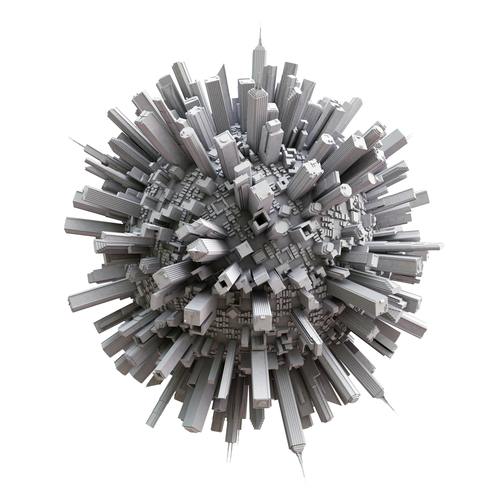
Why PISA Scores are Deceptive

gas
For many nations, the recent revelation of the Program for International Student Assessment (PISA) results were a call for celebration. For others, they were a sign that their nation might be falling behind—and, perhaps, cause for outright embarrassment.

PISA is a standardized test designed to evaluate the scholastic performance of 15-year-old students in math, reading and science. Ideally, nations will be able to use these results in order to develop better, more comprehensive curricula and learning strategies.

However, this program is not without its flaws, critics claim.

While the results speak to the scholastic achievement, it fails to account for other educational outcomes. Critics suggest that not only are PISA results not enough to determine the quality of education reliably, some argue that such a task might not even be possible.

Svein Sjøberg of the University of Oslo believes that PISA is comparing apples and oranges in most cases. For Sjøberg, the contextual differences between nations trouble PISA’s fundamental assumption: it is possible to create a universal test that validly measures student achievement across the borders of language, culture and curriculum.

As far as problems go, he argues, this is the tip of the iceberg. A perhaps even more important concern lies within how these scores are interpreted—how they might be used to express the success or failure of an entire system that might have other larger problems.

In Vietnam, for instance, there can be little doubt that their recent ranking was an immense success. Vietnam was ranked 17th overall out of 65 nations, beating many larger industrialized nations.

However, Christian Bodewig of the World Bank has called into question the validity of such scores. He argues that there is other relevant data that PISA largely ignores.

Bodewig says that while many of the students participating in the PISA evaluations did perform well, their performance is not a perfect reflection of the state of education in a given nation. The primary reason for this is that enrollment numbers between nations vary enormously and, in poorer nations in particular, this sort of tabulation can be misleading.

In the case of Vietnam, only some 65 percent of school age children are actually enrolled in school. Compare that with the nearly 90% enrollment rate of the US and the picture of Vietnamese education becomes a bit fuzzier.

The Economist reports that the problems for Vietnamese education are legion, ranging from corruption to homogeneity.

So, what do PISA rankings actually tell us?

Professor Svend Kreiner from the University of Copenhagen in Demark, argues that they don’t tell us that much. In fact, his analysis of the PISA testing model suggests that rankings are largely arbitrary and based on what amounts to luck of the draw.

Depending on which questions a particular set of students receive, their global ranking can fluctuate dramatically.

Still, the Organization for Economic Co-operation and Development (OECD) stands by their methodology as the best and most accurate measure of global scholastic achievement available.

It is also clear that participating nations continue to see the value in PISA. Despite its flaws, PISA still helps nations make decisions with regard to the robustness of their systems of education—even if it doesn’t paint a complete picture.

– M. Chase

Sources: The Economist, Sjoberg, Tes Connect, OECD
Photo: Vintage 3D

January 15, 2014
https://borgenproject.org/wp-content/uploads/borgen-project-logo.svg 0 0 Borgen Project https://borgenproject.org/wp-content/uploads/borgen-project-logo.svg Borgen Project2014-01-15 17:04:372024-05-26 23:01:56Why PISA Scores are Deceptive
Global Poverty, Politics and Political Attention, Women, Women and Female Empowerment

Female Politicians Lead Pack in Latin America


Latin_American_Female_Politicians
Chileans are choosing between a former president who aims to increase accessibility to higher education and a right wing politician wanting to keep taxes low are the candidates in the December 2013 presidential election. What is secondary, but notable, about these candidates is that both are also women.

The Chilean election is indicative of a larger trend in Latin America and the Caribbean of the ascension of female political leaders.

Eight of roughly 29 female presidents worldwide since the 1970s have headed countries in Latin America and the Caribbean, with half elected in the last eight years.

Quotas for women in government explain part of this progress. Argentina pioneered the quota system in the early 1990s with a law requiring that 30 percent of legislative candidates be women. As of 2006, 50 countries have adopted the quota system, including many in Latin America.

In Costa Rica, Ecuador, and Bolivia, every other candidate on a party’s election list is required to be a woman.

In North and South America, with the noteworthy exception of the United States, women are being elected to the highest offices of government.

In Latin America’s largest nation of Brazil, Dilma Rousseff was elected president in 2010 and will run again in 2014.  She previously held the position of energy minister and was ranked #20 in Forbes’ Most Powerful People list in 2013 and second on its list of Most Powerful Women.

Argentina’s Cristina Fernández de Kirchner is serving her second term as the country’s first elected female president, and Laura Chinchilla is Costa Rica’s first female president.

Jamaica’s Prime Minister Portia Simpson-Miller is the island nation’s first female Prime Minister and has fought for full rights for LGBT Jamaicans. Time Magazine put her on the 100 World’s Most Influential People List in 2012, and U.S. Congresswoman Yvette D. Clarke has said that Simpson-Miller is “inspiring a new generation of women, particularly from the Caribbean diaspora, to get involved in public service and make a difference.”

Also in the Caribbean region is Kamla Persad-Bissessar, Trinidad and Tobago’s first female Prime Minister.

According to polls, a substantial shift is taking place in the minds of people in Latin America. Roughly 80 percent of people in the region now believe that women should participate in politics.  That figure contrasts sharply to the 30% who believed this in the 1990s.

Progress for women in some parts of Latin American politics has been relatively recent, with El Salvador allowing women to run for office only since 1961 and Paraguay’s constitution giving women the right to vote that same year.

Despite women rising to the highest levels of government, participation in parliaments is still low even in countries with female heads of state.

Latin America nonetheless boasts the second highest average number of women in the lower houses of congress with 24 percent, only less than Scandinavian and Nordic countries, which both have 42 percent.

Rwanda is the only country in the world where more women than men serve in the lower house of parliament, with Andorra coming in second at 50 percent. In Latin America, Nicaragua has the highest number of female politicians in the lower house at 40 percent.

While these numbers are promising, no country in the region has therefore achieved gender parity, and experts worry that progress for women in government could be reversed. Ingrained sexism, income gaps between the sexes and male dominance in corporations still persist.

In Chile, the income gap between men and women has gotten greater in recent years, with men earning $1,172 per month compared to women’s $811.

Each region and country in the world struggles to bring about political, social, and economic equality of the sexes, but Farida Jalalzai, a gender politics scholar at the University of Missouri-St. Louis asserts, “Latin America is really ahead of the pack. This is interesting because it had seemed to stall by the early 2000s, but no more.”

– Kaylie Cordingley

Sources: New York Times, Time Magazine, Forbes, The Quota Project, The Guardian
Photo: AARP

January 15, 2014
https://borgenproject.org/wp-content/uploads/borgen-project-logo.svg 0 0 Borgen Project https://borgenproject.org/wp-content/uploads/borgen-project-logo.svg Borgen Project2014-01-15 17:04:032018-01-30 13:14:10Female Politicians Lead Pack in Latin America
Activism, Advocacy, Education, Foreign Aid, Global Poverty, Nonprofit Organizations and NGOs, Philanthropy, Women & Children, Women and Female Empowerment

Empowering Education: Girls Learn International

Girls_Learn_International
One in six girls in the developing world will not complete an education past the sixth grade.  Add this sobering statistic to shocking numbers which illustrate that the entire continent of Africa has less than a 60% literacy rate, and one can see just how many challenges in completing an education the youth of the developing world face.  However, girls in particular face an even greater challenge due to the widespread gender inequalities that still exist.

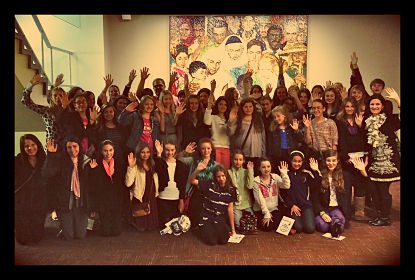
Girls Learn International (GLI) is a nonprofit, student-run organization and movement that encourages U.S. students to promote education for women throughout the world.  Lisa Alter founded the movement with her two teenage daughters in 2003.  Alongside Arielle and Jordana, Lisa began to inspire various youths to get involved in humanitarianism and women’s rights while still in school.  As a result, GLI currently has 114 chapters in over 26 states across the country. GLI also boasts partnerships with 47 schools in 11 countries, including Afghanistan, India, and Ghana.

Countries not providing equal access to education for women will end up losing out on $92 billion for their respective economies, according to Girls Learn International.  Additionally, 7 million cases of HIV/AIDS could be prevented if every child received a primary education, hence why GLI lives by the creed, “Women’s Education is a Basic Human Right.”

Furthermore, GLI has numerous partnerships and sponsors.  GLI is part of the Feminist Majority Foundation, the  Feminist Campus, and is a sister organization to Ms. Magazine.  The organization has also partnered with the Global Campaign for Education’s U.S. Chapter while also fielding a delegation to the United Nations Commission of the Status of Women.

The organization seeks to empower young women and have them take initiatives towards working for global education.  However, gender equality cannot be achieved without the contributions of idealistic young men as well.  To drive this point home, GLI boasts having an all boys’ chapter in Pennsylvania.  Regardless of gender, if you are a young person interested in providing education for women everywhere, GLI is the organization for you.

– Taylor Diamond

Sources: Girls Learn International, Global Campaign for Education
Photo: The Alternative Press

January 15, 2014
https://borgenproject.org/wp-content/uploads/borgen-project-logo.svg 0 0 Borgen Project https://borgenproject.org/wp-content/uploads/borgen-project-logo.svg Borgen Project2014-01-15 08:49:032024-06-04 03:01:13Empowering Education: Girls Learn International
Education, Global Poverty, Violence Against Women

Eradicating Violence Against Women in Schools

Eradicating Violence Against Women in Schools
It’s simple: violence against women exists in various personal and professional settings.  One in three women throughout the world will experience some sort of sexual violence in their lifetime.  It is an epidemic.  Such violence not only creates physical and emotional scars, but it impedes all forms of progress.  It keeps women from being equal participants in the workforce, and as a result, nations that do little to curtail violence against women are losing about $5 billion per year in healthcare costs and lost productivity.

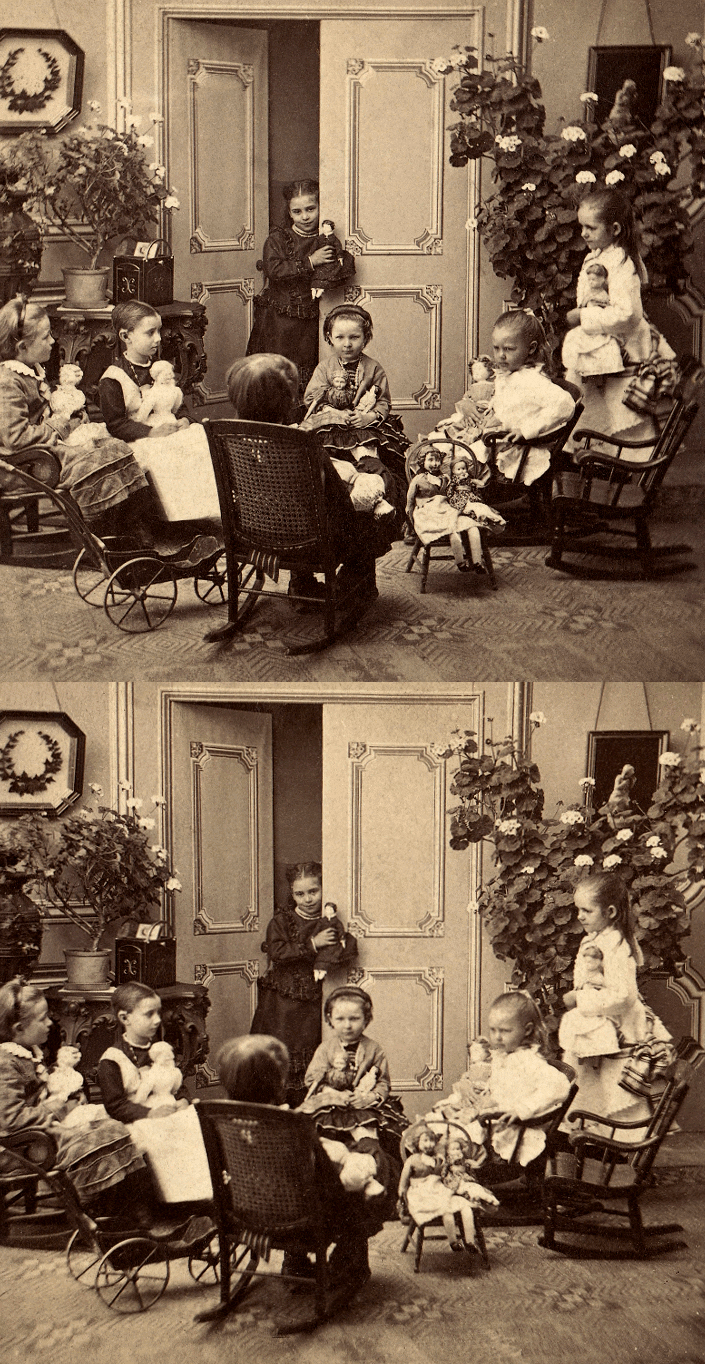
This gendered violence is seen even greater in school settings, where gender discrimination leads young women to perform poorly or even drop out of school.  This leaves many young girls illiterate and impoverished.  Known to the United Nations Girls’ Education Initiative as “School-related gender-based violence” (SRBGV,) this form of violence against women affects millions of female students worldwide.  Such violence goes far beyond just physical violence, but includes all forms of gender bullying, and verbal harassment as well.

The U.N. recognizes the importance of eradicating violence against women in schools.  Partnering with Education International and the Global Education First Initiative, the U.N. Girls’ Education Initiative announced a Joint Statement on the International Day for the Elimination of Violence Against Women on November 25.  The Statement sees SRGBV as a “serious obstacle” to the U.N.’s Education for All and Millennium Development Goals.

“Too often, SRGBV remains undetected, unreported, and even overlooked in school, the very social institution where children are expected to be safe, protected, and empowered,” reads the U.N.’s joint statement. “Yet teachers, schools, and education systems are also fundamental in transforming practices, attitudes, and values.  Quality education for all can only be realized in safe and supportive learning environments.”

Addressing violence against women in school settings must be a priority for any global education initiative.  The U.N.’s joint statement on the International Day for the Elimination of Violence Against Women is hopefully an effective step in stopping this epidemic.

– Taylor Diamond

Sources: United Nations Girls’ Education Initiative, Think Progress, Thomas Reuters Initiative
Photo: Vintage 3D

January 13, 2014
https://borgenproject.org/wp-content/uploads/borgen-project-logo.svg 0 0 Borgen Project https://borgenproject.org/wp-content/uploads/borgen-project-logo.svg Borgen Project2014-01-13 22:22:052024-06-11 02:18:01Eradicating Violence Against Women in Schools
Education, Global Poverty, Health, Hunger

Overpopulation and Public Health

overpopulation public health
There is much debate whether overpopulation poses public health risks. Some believe it is the cause of hunger and poverty throughout the world while others feel that it has never been a problem.  It is important to shed light on this fear of overpopulation as its consequences are said to be evident in all developing countries.

Several reports about Africa’s growing population has been connected to the starvation of millions of people. Every year 32.5 percent of children in developing countries suffer from malnutrition. Sustainable population advocates have pointed to the approximate 200 million hunger-related deaths in the past twenty years. Deterioration in global biodiversity has also been linked to overpopulation. Substantial data of species loss has been presented by countries such as China, Brazil and Mexico. Human settlements that are gradually increasing according to the rate of population is said to ruin the benefits of nature and destroy habitats. The consequences of overpopulation is also suggested in access to education, primarily in Africa. In African classrooms, children are unable to learn due to overcrowding.  Access to water, medical care and housing are all diminished when there are more people that require aid. Data from the United Nations further suggests that by 2050, 10 percent to 15 percent of land that is farmed today will not be available. This could potentially lead to a food crisis as the current population increases at a faster rate.

Those supporting a sustainable population see hope in public policies being employed in countries such as Bangladesh, Iran and Thailand. Results from securing social services to women and families indicate a large decrease in undernourished people in Asia, from 23.7 percent to 13.9 percent. This downward trend from simply giving access to birth control and adopting policies that give aid to small families suggests that overpopulation is an issue that can be solved.  Policies that provide family planning to those in remote, rural areas in Asia has led to stability in undernourishment over time. By merely shifting the focus on public policy these countries quickly witnessed better health standards, quality of education and housing availability, all of which offer hope to the remaining developing nations.

– Maybelline Martez

Sources: Scientific American, Huffington Post, World Hunger

January 4, 2014
https://borgenproject.org/wp-content/uploads/borgen-project-logo.svg 0 0 Borgen Project https://borgenproject.org/wp-content/uploads/borgen-project-logo.svg Borgen Project2014-01-04 12:46:592018-02-26 10:35:32Overpopulation and Public Health
Advocacy, Children, Developing Countries, Global Health, Global Poverty, Health, Human Rights, Poverty Reduction, United Nations

Child Labor: An Overview

Child_Labor_an_Overview
“Millions of children are victims of violence and exploitation. They are physically and emotionally vulnerable and they can be scarred for life by mental or emotional abuse. That is why children should always have the first claim on our attention and resources. They must be at the heart of our thinking on challenges we are addressing on a daily basis. We know what to do, and we know how to do it. The means are at hand, it is up to us to seize the opportunity and build a world that is fit for children,” remarked Ban Ki-moon, Secretarty-General of the United Nations on November 20, 2009, on the Twentieth Anniversary of the Convention on the Rights of the Child.

Just as Ban Ki-moon mentioned, children are not physically or mentally ready to enter the labor force. With the lack of physical abilities, the safety of the workplace cannot be ensured, for both the children and other employees. In fact, children are more likely to be abused and mistreated in an environment centering around child labor.

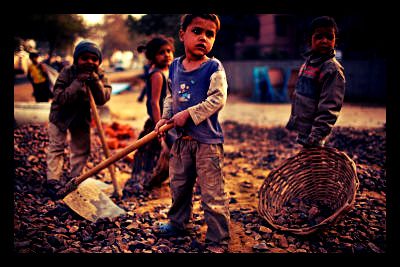
“Few human rights abuses are so widely condemned, yet so widely practiced. Let us make (child labor) a priority. Because a child in danger is a child that cannot wait,” stated Kofi Annan, Former UN Secretary-General. Around the world, more than 211 million children between the age of 5 and 14 are being forced to work. Among these children, 120 million children are working full time.

To eradicate child labor, people should first understand what leads to such situations. For example, poverty is the first and foremost reason of child labor.  Since many parents do not have the capability to support their household, children end up working to help support the family’s daily lives. Another reason for child labor is a poor education system.

When education is expensive or not readily available, impoverished parents do not see the benefit of learning and think that working is a better alternative. In the United States, there are many laws that prohibit child labor, however, in some countries, child labor laws exist, but are not enforced. Companies can thus take advantage of the cheap labor and further exploit it.

On the other hand, many organizations have been striving to put a stop to child labor by various programs. For example, the United Nations has been running campaigns to raise the awareness of child labor across various nations and airing them in global events such as the World Cup. Moreover, in order to raise the level of education in poverty stricken areas, the Red Cross and governments of third world countries have been recruiting teachers to volunteer in remote areas.

– Phong Pham

Sources: Child Labor Public Education Project, UN: Agencies Urge Greater Action, International Labor Rights Forum, UN: Child Labor
Photo: Addicting Info


Facts about Child Labor

December 26, 2013
https://borgenproject.org/wp-content/uploads/borgen-project-logo.svg 0 0 Borgen Project https://borgenproject.org/wp-content/uploads/borgen-project-logo.svg Borgen Project2013-12-26 04:00:472024-05-25 00:32:50Child Labor: An Overview
Advocacy, Charity

Jack Johnson: Beach Bum or Dedicated Advocate?

jack_johnson_ohana_foundation
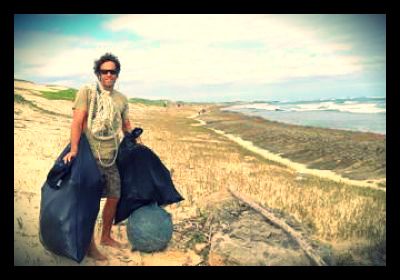
Sun-soaked beaches, surfboards, flip-flops, palm trees: these are all images that come to mind when listening to a Jack Johnson song.  The Hawaiian-born and bred musician has cultivated a wonderful laidback musical personality that reflects our fantasies about Hawaii and “taking it easy.” However, when it comes to charity, Johnson could not be more active.

Alongside his wife Kim, Jack has founded two charitable organizations: Kokua Hawaii Foundation and the Johnson Ohana Charitable Foundation.  The former organization works to promote environmental education and responsibility in local schools and communities in Hawaii.  Building upon the grassroots success of their first charity, Kim and Jack founded the Johnson Ohana Charitable Foundation in 2008 to promote environmental, art, and music education on a much larger scale.  The organization has raised $25 million to date for their causes and for smaller charities the organization partners with.  An example of this is a $50,000 donation given to the Tsunami Relief Fund in 2011.

While on tour, Johnson donates 100% of tour profits to his Charitable Foundation.  Johnson is also a major proponent of the “1% For the Planet” brand, which aims to get corporations and brands to donate at least one percent of its sales to nonprofits.  His 2005 album “In Between Dreams” became the first music album to feature the one percent ideal, and his subsequent albums have followed suit.

Johnson is completely invested in teaching and promoting environmental sustainability.  “Jack Johnson’s 2008 tour and CD, “Sleep Through the Static,” set a new precedent in the music industry by taking an eco-friendly approach to all aspects of producing and touring,” according to the Johnson Ohana Charitable Foundation’s website.

Getting young people involved in sustainable farming and local organizing is crucial to Johnson, and a way to build even greater change.  In a recent interview with Samaritan Mag, Johnson said, “We feel like if we can connect kids to their food when they’re young, they can tackle bigger problems as they get older.”

The next time you kick back to a Jack Johnson CD, maybe a sustainable vegetable garden will dance across your imagination as much as a day at the beach.

– Taylor Diamond

Sources: Johnson Ohana Charitable Foundation, Samaritan Mag

December 23, 2013
https://borgenproject.org/wp-content/uploads/borgen-project-logo.svg 0 0 Borgen Project https://borgenproject.org/wp-content/uploads/borgen-project-logo.svg Borgen Project2013-12-23 04:00:012024-05-25 00:38:52Jack Johnson: Beach Bum or Dedicated Advocate?
Education

Why the Gerald R. Ford School of Public Policy May be Right For You

gerald Ford
Picture yourself: you are walking among a beautiful collection of distinguished brick buildings.  Snow covers the ground as you gaze upon the seemingly endless trees that dot the walkway.  You breathe a sigh of satisfaction and say to yourself “this is the perfect place to fight poverty.”

Welcome to the University of Michigan and the Gerald R. Ford School of Public Policy.  Located in Ann Arbor, MI (known affectionately as Tree Town, USA), U of M is one of the nation’s premiere public universities.  Many are familiar with the Michigan Wolverines football team, and their stadium, the “Big House,” that holds over 109,000 screaming fans.  However, one of the universities true gems is the Ford School.

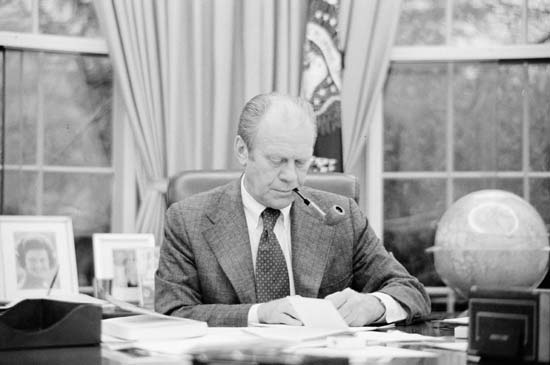
Named in honor of former U.S. President Gerald Ford, a Michigan alumnus, the Ford School offers a B.A. in Public Policy for undergraduates in addition to a Master of Public Policy and Master of Public Administration for graduate students.  The school also has over 16 joint M.A. and PhD programs with other graduate programs in the university, including Economics, Political Science, and Sociology.

A stated strength of the Ford School is in combating poverty.  The National Poverty Center is housed in the Ford School and is funded by a grant from the U.S. Department of Health and Human Services.  The National Poverty Center trains students in poverty research, publishes briefs and analyses to be used in government forums, and runs national seminars to discuss issues of poverty.

In addition to poverty research, the Ford School is devoted to global development.  Students pursuing an M.P.P. spend the summer between their first and second year pursuing an internship directly related to policy issues.  27% of students complete their internships abroad, while 30% work in Washington D.C. for an internationally related program.  Additionally, the School houses the International Policy Center, which promotes interdisciplinary research in various global issues.

If you are interested in honing your skills in fighting global poverty, the Ford School of Public Policy may be the place for you.

– Taylor Diamond

Sources: Ford School of Public Policy, National Poverty Center
Britannica

December 20, 2013
https://borgenproject.org/wp-content/uploads/borgen-project-logo.svg 0 0 Borgen Project https://borgenproject.org/wp-content/uploads/borgen-project-logo.svg Borgen Project2013-12-20 23:15:142017-03-20 13:13:03Why the Gerald R. Ford School of Public Policy May be Right For You
Activism, Children, Education, Global Poverty, Technology

How MP3s Promote Education in Africa

For many high school teachers, the explosion of the iPod represented another way for their students to become distracted in the classroom.  It turns out that instead of using those MP3 players to blast music, they are being used to promote literacy and education all across Africa.

Meet the Lifeplayer MP3.  A solar-powered radio, recorder and MP3 player, the Lifeplayer is manufactured by Lifeline Technologies to give rural African communities greater access to education.  The Lifeplayer comes with reading and writing lesson plans already pre-loaded.  Since it is solar-powered, rural communities without access to electricity can now enjoy this technological wonder without worrying about access to electrical outlets for recharging.

The company currently runs initiatives in Ethiopia, Kenya, Rwanda, South Sudan and Zambia.  In Ethiopia, Lifeline has partnered with the British Council to promote English language education to over 50,000 school children.  Kristine Pearson, the CEO of Lifeline, traveled to South Sudan to deliver 15,000 Lifeplayers to educators.

Pearson instructed trainers and teachers on how to use the technologically-advanced device in the hopes of reversing the discouraging education trends in the country.

“Nearly three-quarters of the population can neither read nor write,” states Pearson.  “According to the Overseas Development Index (ODI), less than 2% of the population have completed a primary education and even less completed secondary school.”

In addition to the Lifeplayer MP3, the company also produces two other solar-powered marvels: the Prime Radio, an analogue radio with an LCD display, and the Solarstor, a portable charging station for cell phones.

The Prime Radio has been especially beneficial in Rwanda, where the company spearheads an initiative called Project Muraho.  Partnering with organizations such as UNICEF, the initiative has provided 13,000 radios and power sources to families ravaged by the effects of the Rwandan genocide and the continued devastation of HIV/AIDS.

Although access to education has improved worldwide in the past decade, there are still great disparities in rural areas and communities without power and electricity.  The Lifeplayer MP3 is a wonderful invention to help push education in these struggling communities.

– Taylor Diamond 

Sources: World Economic Forum, Lifeline Energy: Technology, Lifeline Energy: Projects
Photo: Texarkana Gazette

December 15, 2013
https://borgenproject.org/wp-content/uploads/borgen-project-logo.svg 0 0 Borgen Project https://borgenproject.org/wp-content/uploads/borgen-project-logo.svg Borgen Project2013-12-15 04:00:352024-05-25 00:31:40How MP3s Promote Education in Africa
Global Poverty

15 Nelson Mandela Quotes

1. “If you want to make peace with your enemy, you have to work with your enemy. Then he becomes your partner.”

2. “Education is the most powerful weapon which you can use to change the world.”

3. “Like slavery and apartheid, poverty is not natural. It is people who have made poverty and tolerated poverty, and it is people who will overcome it. And overcoming poverty is not a gesture of charity. It is an act of justice. It is the protection of a fundamental human right, the right to dignity and a decent life.”

4. “I learned that courage was not the absence of fear, but the triumph over it. The brave man is not he who does not feel afraid, but he who conquers that fear.”

5. “Difficulties break some men, but make others. No axe is sharp enough to cut the soul of a sinner who keeps on trying, one armed with the hope that he will rise even in the end.”

6. “For to be free is not to merely to cast off one’s chains, but to live in a way that respects and enhances the freedom of others.”

7. “A fundamental concern for others in our individual and community lives would go a long way in making the world the better place we so passionately dreamt of.”

8. “Real leaders must be ready to sacrifice all for the freedom of their people.”

9. “I was called a terrorist yesterday, but when I came out of jail, many people embraced me, including my enemies, and that is what I normally tell other people who say those who are struggling for liberation in their country are terrorists. I tell them that I was also a terrorist yesterday, but, today, I am admired by the very people who said I was one.”

10. “To deny people their human rights is to challenge their very humanity.”

11. “I hate race discrimination most intensely and in all its manifestations. I have fought it all during my life; I fight it now, and will do so until the end of my days.”

12. “No one is born hating another person because of the color of his skin, or his background, or his religion. People must learn to hate, and if they can learn to hate, they can be taught to love, for love comes more naturally to the human heart than its opposite.”

13. “It always seems impossible until it’s done.”

14. “It is now in the hands of your generations to help rid the world of such suffering.”

15. “Man’s goodness is a flame that can be hidden but never extinguished”

– Stephanie Lamm

Sources: Dose.Ca, USA Today, Quartz
Photo: BBC UK

December 14, 2013
https://borgenproject.org/wp-content/uploads/borgen-project-logo.svg 0 0 Borgen Project https://borgenproject.org/wp-content/uploads/borgen-project-logo.svg Borgen Project2013-12-14 02:09:592024-05-25 00:54:3815 Nelson Mandela Quotes
Page 59 of 67«‹5758596061›»

Get Smarter

  • Global Poverty 101
  • Global Poverty… The Good News
  • Global Poverty & U.S. Jobs
  • Global Poverty and National Security
  • Innovative Solutions to Poverty
  • Global Poverty & Aid FAQ’s
Search Search

Take Action

  • Call Congress
  • Email Congress
  • Donate
  • 30 Ways to Help
  • Volunteer Ops
  • Internships
  • Courses & Certificates
  • The Podcast
Borgen Project

“The Borgen Project is an incredible nonprofit organization that is addressing poverty and hunger and working towards ending them.”

-The Huffington Post

Inside The Borgen Project

  • Contact
  • About
  • Financials
  • President
  • Board of Directors
  • Board of Advisors

International Links

  • UK Email Parliament
  • UK Donate
  • Canada Email Parliament

Get Smarter

  • Global Poverty 101
  • Global Poverty… The Good News
  • Global Poverty & U.S. Jobs
  • Global Poverty and National Security
  • Innovative Solutions to Poverty
  • Global Poverty & Aid FAQ’s

Ways to Help

  • Call Congress
  • Email Congress
  • Donate
  • 30 Ways to Help
  • Volunteer Ops
  • Internships
  • Courses & Certificates
  • The Podcast
Scroll to top Scroll to top Scroll to top