• Link to X
  • Link to Facebook
  • Link to Instagram
  • Link to TikTok
  • Link to Youtube
  • About
    • About Us
      • President
      • Board of Directors
      • Board of Advisors
      • Financials
      • Our Methodology
      • Success Tracker
      • Contact
  • Act Now
    • 30 Ways to Help
      • Email Congress
      • Call Congress
      • Volunteer
      • Courses & Certificates
      • Be a Donor
    • Internships
      • In-Office Internships
      • Remote Internships
    • Legislation
      • Politics 101
  • The Blog
  • The Podcast
  • Magazine
  • Donate
  • Click to open the search input field Click to open the search input field Search
  • Menu Menu

Tag Archive for: Education

Posts

Activism, Advocacy, Children, Education

7 Organizations Supporting Global Education

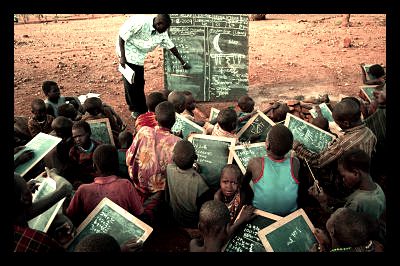
Each of the following organizations crosses borders and boundaries to bring quality education to every child. Many of them have lofty goals regarding global education, but many have earned a worldwide reputation for the work they have done to achieve these goals.

Association for Childhood Education International

The Association for Childhood Education International (ACEI) is a worldwide community of educators and advocates for education reform. Their mission is “to promote and support in the global community the optimal education, development and well-being of children.” To achieve this, they host the Global Summit on Childhood and the Institute for Global Education Diplomacy. The Summit invites professionals to gather and discuss issues facing children and the state of childhood, from education to health and well-being. Through the Institute, tentatively scheduled for 2015, ACEI brings together diplomats and professionals in education to find solutions to the problems preventing children from receiving a suitable education.

Education International

A coalition of 30 million professionals in education representing 400 organizations in 170 countries and territories comprises Education International. Their goal is to promote quality education, equity in society and the interests of other education employees. As part of their campaign, they combat racism and xenophobia that prevents children from receiving a quality education. They challenge various kinds of discrimination, including exclusion on the basis of gender, sexual orientation, socio-economic status, race and ethnic origin. They also reach out to other unions and global federations whose interests include furthering global education.

The Global Partnership for Education

The Global Partnership for Education (GPE) works in nearly 60 developing countries via a multilateral partnership that includes donor governments, international organizations and teachers. They hope to “galvanize and coordinate a global effort to deliver a good, quality education to all girls and boys, prioritizing the poorest and most vulnerable.” Along with their partners, they develop education strategies, promote collaboration in education, share solutions to challenges facing educators, finance the implementation of programs and monitor results and data to assess progress. Since its creation in 2002, the GPE states that they have aided in putting 22 million more children in school, increased literacy rates worldwide to 81 percent in 2010 and increased primary school completion to 75 percent in 2011. Since 2004 they have trained 300,000 teachers, built and equipped 53,000 classrooms and purchased and distributed 50 million textbooks.

Plan International

Founded more than 75 years ago, Plan International is one of the oldest and largest children’s development organizations in the world. Plan’s ideal world is one in which “all children realize their full potential in societies that respect people’s right and dignity.” They hope to gain lasting improvements in the quality of life of children in developing countries by uniting people across cultures. They aid deprived children, their families, and their communities by enabling them to meet their basic needs and building relationships to increase understanding amongst people of different cultures. In all of their endeavors, the rights of the world’s children take priority.

Save the Children

The goal of Save the Children is to promote global education and the rights of children around the world. To increase the quality of instruction and help ensure lasting education, Save the Children teaches effective teaching strategies to instructors and trains them to engage students. They coach parents and caregivers to help foster learning early on, and offer ways for parents to encourage schoolwork and continued learning outside of the classroom. They also hope to introduce children to artistic expression, encourage learning during and after crisis and invest in the health of children to ensure they don’t fall behind. In 2012, Save the Children reached 9 million children.

UNESCO

The United Nations Education, Scientific and Cultural Organization began in 1945 and is “committed to a holistic and humanistic vision of quality education worldwide, the realization of everyone’s right to education and the belief that education plays a fundamental role in human, social, and economic development.” Their mission is to aid in the building of peace, eradication of poverty and lasting development. They seek to achieve these goals and create an intercultural dialogue through global education. Their membership includes 204 countries, 9 of which are associate members.

UNICEF

Established in 1946, the United Nations International Children’s Emergency Fund imagines a world in which the rights of every child are recognized. Their goals include reducing inequities and discrimination, fulfilling global education goals such as the 2 Millennium Goals that focus on education, achieving gender equality and equity in education, ensuring that every child has the opportunity to learn and continuing education during and after a crisis.

– Kristen Bezner

Sources: Association for Childhood Education International, Education International, The Global Partnership for Education, Plan International, Save the Children, UNESCO, UNICEF
Photo: Global Partnership for Education
April 24, 2014
https://borgenproject.org/wp-content/uploads/borgen-project-logo.svg 0 0 Borgen Project https://borgenproject.org/wp-content/uploads/borgen-project-logo.svg Borgen Project2014-04-24 04:00:402024-12-13 17:50:097 Organizations Supporting Global Education
Education

Turquoise Mountain Arts

When a country is in turmoil, the arts can be the first thing to go. Fortunately for Afghanistan, Turquoise Mountain Arts is reviving traditional Afghan arts, architecture and crafts.

Turquoise Mountain Arts is an institute that seeks to bring back traditional Afghan art by training artisans in four schools: calligraphy and miniature painting, woodwork, jewelry and ceramics.

Historically, Afghanistan was an important cultural center for a variety of Islamic arts that have unfortunately fallen to the wayside under the various conflicts that have disrupted life in the country. Traditionally, the Afghan arts and crafts industry is a source of pride and a respectable way for a person to make a living.

Turquoise Mountain Arts helps the Afghan community in more ways than preserving traditional art forms. Since the institute was fully established in 2006, nearly 1.5 million dollars of traditional Afghan crafts have been sold, with that money going back to Afghan artisans.

When the institute turns a profit, it reinvests in itself, putting the money back toward artisans and students so that they can continue to learn and produce art. Additionally, the different arts practiced at Turquoise Mountain Arts help keep valuable natural resources, such as wood, precious stones and metals within the country. The institute also “provides education and employment for over 400 students, teachers, engineers, architects, and construction workers.”

The heads of each of the individual colleges are all Afghan citizens, and whenever there is an opening for new professors, representatives from the institute head straight to Kabul’s craft district.

Before Turquoise Mountain opened, there were no schools focused on preserving and teaching traditional art in Afghanistan. However, since its founding, smaller schools and programs have opened up throughout the country.

The apprenticeship style program is highly beneficial for artisans, who are taught for three years before going out on their own, and are given internationally recognized “City and Guilds” accreditation upon graduation.

Graduates also receive support as they go into the craft market to start their own businesses and further preserve cultural heritage by transferring their knowledge to new workers.

With growing national recognition in addition to international markets in Canada, Britain and Arab countries like Qatar, Turquoise Mountain Arts Institute is helping to preserve Afghan culture and art, and provide respectable employment for citizens.

– Cameron Barney

Sources: Turquoise Mountain Arts, Islamic Arts

April 22, 2014
https://borgenproject.org/wp-content/uploads/borgen-project-logo.svg 0 0 Borgen Project https://borgenproject.org/wp-content/uploads/borgen-project-logo.svg Borgen Project2014-04-22 04:00:452024-05-30 22:32:56Turquoise Mountain Arts
Activism, Aid Effectiveness & Reform, Developing Countries, Education, Foreign Aid, Global Poverty, United Nations

UNESCO Pushes for Millennial Education Goals

UNESCO_educational_goals_kids
Former UK Prime Minister Gordon Brown has been a major proponent for global education since his tenure ended. He has made a number of announcements and proclamations in favor of increasing global literacy, yet recently his proposals have gained more steam. The United Nations Educational Scientific and Cultural Organization (UNESCO) has agreed to follow through with Brown’s mission statement to put 57 million children in school worldwide by next year. This falls short of the Millennium Goals that were meant to be reached by 2015.

A report from January of 2014 brought on this concern towards the Millennial Education Goals. The UNESCO report said that the goals would not be met until 2086 under current projections. While striving towards these goals 70 years in advance may seem a little optimistic, the statistics used from 2011 showed a 50% drop in out-of-school children since the beginning of the new millennium. This gives hope for a renewed commitment to make an immediate impact.

The most recent statistics on the issue come from that 2011 study, but those numbers showed 123 million young adults (15-24) lacked basic reading and writing skills. The most progress for universal primary education has been in Southeast Asia, in South Korea, India and Vietnam. Afghanistan shows the most immediate promise for the future, even with troops potentially leaving the nation at the end of the year.

The nations struggling the most to achieve universal primary education are those of Western Africa. Senegal, Mauritania, Nigeria and a number of other sub-Saharan countries still lag behind most of the developed world. Particularly for women, there remain few options and little hope for advancement. West Africa will likely be where UNESCO efforts have to focus.

Gordon Brown, as the United Nation’s Special envoy for global education, called these struggles unacceptable. He said in a recent interview, “the inequality of opportunity that they face is unfair… we have seen the makings of a civil rights struggle amongst young people.” Brown hopes that drawing on grassroots campaigns for education around the world will help bring the world closer to universal primary education.

The fight to achieve universal primary education will take on multiple fronts and be supported by different leaders. Malala Yousafzai has become a global celebrity thanks to her courage in the face of opponents of this mission. Yousafzai and Brown have begun work in Lebanon to educate the thousands of school-age children living in Syrian refugee camps. Given the ongoing Syrian conflict it is unknown how long those kids will be living in the camps, and the need is there for education to prevent a “lost generation” of kids.

The Millennium education efforts may have missed their goals by a long shot. However, the emphasis that people like Brown and Yousafzai have placed on primary education brings hope for the near future. Organizations like The Borgen Project support this passion and hope it will be shared by more people around the world. The first step toward ending global poverty will be reaching children as early as possible, and universal primary education is a key method of doing so.

– Eric Gustafsson

Photo: Globalization101
Sources:
United Nations, PBS, BBC

April 15, 2014
https://borgenproject.org/wp-content/uploads/borgen-project-logo.svg 0 0 Borgen Project https://borgenproject.org/wp-content/uploads/borgen-project-logo.svg Borgen Project2014-04-15 01:15:522020-07-25 00:44:27UNESCO Pushes for Millennial Education Goals
Children, Education, Water

China’s Water School

Chinas_Water_School
Life as we know it owes a great debt to water. We ourselves are comprised of nearly 70 percent water and can’t live without a regular dose. However millions around the world still live without a reliable, clean water source.

As it turns out, our most precious resource is not nearly as abundant in potable form as human demand requires.

In fact, water is so scarce that 780 million people have no access to clean drinking water. In some cases, as with China’s Yangtze River, the poor quality of the water is in part caused by human activity and waste.

Fortunately China is investing in its water security by bringing school children out of the classroom and to the Yangtze in order to promote conservation and sustainable practices.

Since 2008 this experimental school program has focused on education for sustainable development (ESD). The so-called “Water School” is designed to get China’s children active in the protection and safe treatment of their water resources.

UNESCO and other international organizations are praising the program as a revolutionary and fundamental step for the protection of our vital resources. These organizations hope to sponsor similar programs across the globe by spreading awareness of the positive effects China’s water school has produced.

The program has already involved approximately 130,000 students and 200,000 community members, creating a new intellectual base that is deeply in touch with issues of conservation and water treatment.

Part of the program is to build children’s sense of responsibility to the Yangtze’s natural resources, and also to provide them with experiential learning. Tasks like monitoring PH levels and the health and biodiversity of local ecosystems aim to create a more secure future not just for the water, but also for the wildlife and vegetation that also rely on the river.

According to the project website, “The Water School for a Living Yangtze provides opportunities for young people living in different parts of the Yangtze River Basin to link their learning with the indigenous knowledge, traditional practice, and belief systems of local and more distant communities.”

The other major development for the water school is the way it uses the Yangtze, which cuts through the interior of the continent, as a unifying structure between the variety of cultures that live beside its waters. In that sense, the river acts as a vehicle for social development and promulgates shared responsibility for such a critical natural resource.

– Chase Colton

Sources: UNESCO, Water School, UN Water
Photo:

April 10, 2014
https://borgenproject.org/wp-content/uploads/borgen-project-logo.svg 0 0 Borgen Project https://borgenproject.org/wp-content/uploads/borgen-project-logo.svg Borgen Project2014-04-10 10:28:542024-06-04 03:01:17China’s Water School
Education, Global Poverty, Sanitation

Guatemala City’s ‘Basurero’

Basurero_Guatemala_garbage_dump
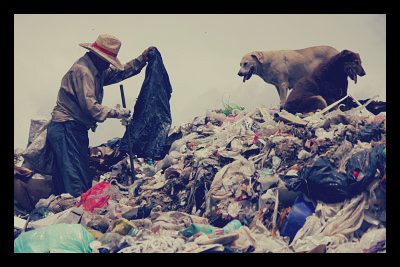
According to Vice, the “basurero”, Guatemala City’s garbage dump, is considered an official neighborhood within the city despite the humanitarian crisis it creates.

Benjamin Reeves, the author of the article, said roughly 7,000 people, including poor families, visit the site every day to look for sellable items that can potentially earn them a few extra bucks.

“Many families have been driven to the basurero by poverty brought on by the global economic crisis coupled with mismanagement on the part of the Guatemalan government,” said Reeves.

The people who live in or near the basurero are called “guajeros”. The work environment of the guajeros is often hazardous. Accidents occur frequently and the air quality makes it difficult for residents to breathe.

The most recent fire broke out in January 2014. Reeves said that the local fire department hardly put any effort in extinguishing “the inferno” that was “fueled by the chemical waste and toxic refuse” below the trash.

“Residents of the basurero complain of chronic congestion, constant headaches, and high rates of asthma and respiratory problems,” Reeves explained.

Although the basurero itself is problematic, the situation for the guajeros is not any better across the street from the mountain of trash.

The “maras”, Guatemala City’s most infamous street gangs, wield more power than NGOs within the neighborhood.

“On a good day, a guajero earns around 40 Quetzales ($5). However, the street gangs regularly extort the workers for about half of their daily earnings, often leaving them with as little as $2.50 for an entire day of back-breaking labor,” said Reeves.

Crimes such as rape, homicide, theft and child abuse are common in the basurero despite the police’s presence. Most of the time they would look the other way or hardly make any effort to maintain order and protect the residents.

While these crimes and fires continue to occur, Reeves argues that the Guatemalan media fails to report the issues related to the basurero.

Why do people live in impoverished conditions in or near Guatemala City in the first place?

According to Gretchen Kroth, a research associate at the Council on Hemispheric Affairs, the extreme poverty and economic inequality affecting the city are due to a civil war, which started in 1960 and ended in 1996.

The conflict fought between the Guatemalan National Revolutionary Unity (URNG) and Guatemalan government in rural locations “forced the migration of many families from the highlands of Guatemala to urban centers, including the neighborhoods adjacent to the landfill,” explained Kroth in a Counterpunch article regarding the education system of the basurero.

Kroth argues that the Guatemalan government today does little to support the poorly structured educational system around the country.

“As public schools are sparsely equipped due to limited government funding a corrupt management, private schools have been established to provide educational services in their place for those who can afford the fee”, she said. But the families of the children who live in the basurero cannot afford paying $20 to $60 a month for education expenses.

As Reeves explained, the guajeros can make up to $5 on a good day. Thus, how can people living in the basurero pay for an education when the money for it does not exist?

To alleviate poverty, more needs to be done in Guatemala apart from receiving the attention of the world, such as the government taking the goal of eliminating poverty seriously and learning how to manage the economy in an honest and transparent fashion.

Each day the government refuses to aid what Reeves calls “a humanitarian crisis”, the lives of the guajeros will continue to be threatened by the conditions in the basurero.

– Juan Campos

Sources: Counterpunch, Vice
Photo: Taringa

April 9, 2014
https://borgenproject.org/wp-content/uploads/borgen-project-logo.svg 0 0 Borgen Project https://borgenproject.org/wp-content/uploads/borgen-project-logo.svg Borgen Project2014-04-09 04:00:292024-12-13 17:50:12Guatemala City’s ‘Basurero’
Children, Global Poverty

How China Overcame Poverty

china
During the past three decades, more than 500 million people in China were lifted out of extreme poverty. And now, those people are buying the same goods that Americans have been purchasing for decades.

The Birth of Entrepreneurship in China

Peasants wanted ownership over the land they farmed and they did not achieve this under Mao Zedong’s rule. Deng Xiao Ping dismantled the farm communes set up by Mao and established a household responsibility system that led towards a more stable society, thus allowing for the establishment of a civil society with growth in the non-government sector. In about 40 years, the number of Chinese NGOs went from 6,100 to 354,000.

Emerging Market Consumer

The number of Chinese people earning $1,000 or more is equal to the number of people earning the same amount in Brazil, Russia, India, Indonesia, Mexico, Saudi Arabia, South Africa and Turkey combined. China has been catching up to western markets and it has been catching up faster than other markets.

Youth in China Earning More and Spending More

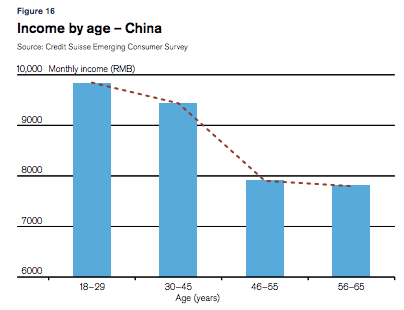
The new generation in China has more education and therefore, more opportunities to work outside of factories. The young Chinese people have the highest incomes and they are willing to spend it. Specifically, they are spending more to be connected; they are buying smartphones. As incomes rise, consumers spend money on food, personal care products and smartphones.

ChinaIncomeAge

China is the first developing country to half the number of people living in poverty. During the past 34 years, the number of people suffering from hunger was reduced from one-third to one-tenth. China is not only lifting its own people out of poverty, it is also lending aid to Asia and Africa. These efforts have made the China Development Bank the world’s largest lender.

– Haley Sklut

Sources: Skoll World Forum, The Atlantic, CNN
Photo: Flickr

March 24, 2014
https://borgenproject.org/wp-content/uploads/borgen-project-logo.svg 0 0 Borgen Project https://borgenproject.org/wp-content/uploads/borgen-project-logo.svg Borgen Project2014-03-24 15:47:222024-05-26 23:22:21How China Overcame Poverty
Education, Foreign Aid, Global Poverty

Education in Cambodia Grows with Foreign Aid

Education-in-cambodia
Cambodia is making strides to enhance the standard of its education system. In an attempt to do so, Cambodia’s Education, Youth and Sports Minister, Dr. Hang Chuon Naron, has reached out to Malaysia and the United States in an attempt to improve their ties and promote a relationship based on education in Cambodia.

Naron recently met with Deputy Prime Minister Tan Sri Muhyiddin Yassin to come to an understanding on the importance of education.

Many Cambodian students study in Malaysia, where education is a “number one” priority, according to Muhyiddin. Their mission is to raise the quality of life in both Cambodia and Malaysia by focusing on education; after the meeting, both Muhyiddin and Naron signed a memorandum of understanding (MoU) agreeing to work together.

Muhyiddin stated, “I hope that the MoU…would spell out more areas that Malaysia and Cambodia could work together in the education sector as well as increase the number of Cambodian students studying in our country.”

The MoU will further the growing ties between Malaysia and Cambodia and aims to raise the quality of education in Cambodia, starting at a pre-school level and extending to both private and public schools.

On February 15, Cambodia also hosted an education exhibition consisting of over 30 U.S. universities and colleges in Phnom Penh to encourage Cambodian students to further their education. Cambodian students were able to discuss degree opportunities, scholarships and what they needed to do to apply to U.S. colleges and universities, with college admissions representatives.

A U.S. embassy press statement stated, “The fair highlights U.S. government support for efforts to enhance the quality of education and expand educational and career opportunities for Cambodians.”

So far, Cambodia has approximately 100,000 high school graduates who are interested in applying to college.

– Rebecca Felcon

Sources: National News Agency of Malaysia, Shanghai Daily
Photo: Cambodia Mathematics Curriculum Development Project

March 7, 2014
https://borgenproject.org/wp-content/uploads/borgen-project-logo.svg 0 0 Borgen Project https://borgenproject.org/wp-content/uploads/borgen-project-logo.svg Borgen Project2014-03-07 14:36:002024-05-26 23:18:15Education in Cambodia Grows with Foreign Aid
Activism, Education, Global Poverty

Katharine McPhee and BuildOn Help Burkina Faso

buildon
When Burkina Faso gained independence from France in 1960, the school attendance rate was 6%. Now up to 66%, the country still has a long way to go if it plans to achieve the Millenium Development Goal of attaining universal access for children to primary education.

Why do Boys Have a Higher Literacy Rate?

A girl in Burkina Faso is more likely to be married and give birth before the age of 18 than she is to graduate secondary school. Before she received a scholarship, Burkinabe 15-year-old Lucie walked more than 10 miles to school each day. With her new bicycle, she has an easier time getting to school and fetching water for her family. Boys have a higher literacy rate than girls in Burkina Faso because they are given preference in schooling.

A project called Burkina Response to Increasing the Development of Girls’ Education sponsors school-aged children in Burkina Faso’s two regions with the highest dropout rates by building new secondary schools, adding more classrooms and girls’ dormitories to existing schools, providing scholarships for needy girls and working with community leaders, teachers and parents to build a supportive framework for girls’ education and development.

Primary Education: The First Step

Elementary education in Burkina Faso is required for children between the ages of 7 years old and 14 years old, but it is not strictly enforced. The elementary education system in Burkina Faso is based on the French model; thus, classes are taught in French. Only 29% of children finish primary school, according to UNICEF data. Burkina Faso has one of the world’s highest dropout rates, second to Niger.

Secondary Education Has a Price

Burkina Faso is the third-poorest country in the world as ranked by the United Nations. Some families hardly have enough money to buy necessities like food, much less pay for secondary education. While some countries in Africa are implementing a free secondary school system, Burkina Faso charges the equivalent of $166 per year for secondary school education, a mandatory fee that many Burkinabe families cannot afford.

Currently the free, public and compulsory education takes children through age 16. From age of 13 to 16 years old, children attend a “post-primary” school, which is intended to prepare the students for secondary school. When a fee is involved, as it is for secondary education, the government does not make schooling mandatory because many families do not have the means to pay for it.

A Pop-Star’s Dedication to Help

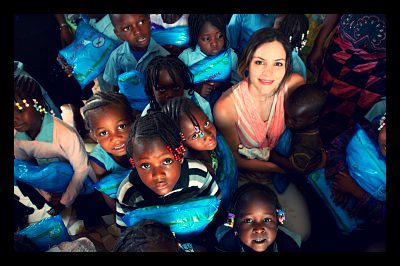
Burkina Faso is the seventh country to benefit from a BuildOn Project. Katharine McPhee, star of the NBC hit TV show SMASH and runner-up of the 2006 American Idol, and her husband, Nick Cokas, are partnering with BuildOn to expand access to schools in Burkina Faso. The couple provided mosquito nets to the country through Malaria No More and funded the construction of a school in the country’s capital, Oagadougou. Their dedication to Burkina Faso continues as they fund BuildOn’s first two schools in the country.

“Investing in education and opportunity for young people is a major priority in our lives, and we are thrilled that with the help of BuildOn, we can maintain our ongoing commitment to improving education for the children of Burkina Faso,” McPhee said.

– Haley Sklut

Sources: Looking to the Stars, UNICEF, Burkina Faso Embassy, Plan USA, Classbase, Intervida
Photo: Build On

March 5, 2014
https://borgenproject.org/wp-content/uploads/borgen-project-logo.svg 0 0 Borgen Project https://borgenproject.org/wp-content/uploads/borgen-project-logo.svg Borgen Project2014-03-05 12:19:312024-05-26 23:17:50Katharine McPhee and BuildOn Help Burkina Faso
Education

Chile-California Council Promotes Chilean Education

Chile-California Council
The Chile-California Council (CCC) is a non-profit organization that promotes education in Chile and the collaboration of developmental technology and protection of the environment. It was founded in 2011 and built upon the many years of teamwork and synergy between Chile and California; this includes programs such as the Chile-California Program from 1963 and the Chile-California Plan, signed in 2008.

Although the CCC is actively involved in many important fields, it specializes in the promotion of technology and educational internships to bridge international relationships.

Juan Ibañez, administrative director, describes the Chile-California Council by saying, “We center our efforts on bringing actors from both the public and private world together and supporting collaboration among scientists, researchers, and entrepreneurs from Chile and California.”

The Chile-California Council was recently the driving force behind a joint program with Chile’s educational Prácticas para Chile (PPC) initiative.  The joint program gives a small group of students from several American colleges a chance to intern with the government in Chile and a chance to intern at the CCC regional office, which is located in San Francisco.

The PPC internship, which is financially supported by the Chilean Government, grants graduate students a chance to work closely and hands on with forming new public policies in Chile.

There are many exchange programs that Chile-California Council encourages, including the Studying in California program, which allows Chilean students to study at top California universities such as Stanford, the University of California-Berkeley, the University of California-Davis, the University of California- Los Angeles and the University of California-San Diego.

One particularly exciting example of CCC’s success is a brief documentary that focuses on three Chilean students, José Causa, Luis Alberto, and Christóbal Mackenzie, who interned at Google’s Mountain View location. The goal of the documentary, which was sponsored by the Chile-California Council, Chile’s Ministry of Economy, Barefoot production and Google, was to reach out to more Chilean students and urge them to consider internships and careers at Google.

To appeal to younger students, the CCC promotes the Edible Schoolyard initiative.  First Lady Cecilia Morel of Chile created her own version, called “Vive tu Huerto,” in 2013, which seeks to supply 100 Chilean schools with gardens. The intention is to teach Chilean students more healthful eating and living habits and encourage them to be more in touch with the earth and nature.

Morel said “the idea of these gardens is that children learn to understand the land, how it is prepared for planting, how to care and make better use increasingly scarce resources such as water and how to recycle and produce fertilizer from organic waste products.”

A full list of the Chile-California Council’s endeavors and activities can be found on its website.

– Rebecca Felcon 

Sources: Nearshore Americas
Photo: Hope 87

March 2, 2014
https://borgenproject.org/wp-content/uploads/borgen-project-logo.svg 0 0 Borgen Project https://borgenproject.org/wp-content/uploads/borgen-project-logo.svg Borgen Project2014-03-02 04:00:542019-08-13 09:17:19Chile-California Council Promotes Chilean Education
Education, Global Poverty, Health, Women and Female Empowerment

Poverty and Underage Marriage in Iraq

underage marriage
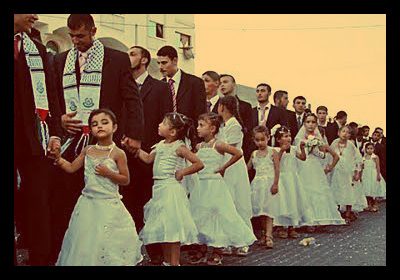
A pressing issue in Iraq without much resistance or counteraction is underage marriage. Out of the total number of marriages in 2013, 11% involved an underage girl, according to the Iraqi Ministry of Planning. Additionally, 25% of girls are married before the age of 18 and 6% are married before the age of 15. Also known as uneven marriages in Iraq, they are controversial because there are multiple motives behind them. While some girls are forced completely against their will, others enter an uneven marriage to lift themselves or their family out of poverty. For instance, there was a recent story of a 16-year-old girl married off to a man over the age of 60 at the request of her father, Abu Ali. His reasoning for this was to benefit his family, which lives in poverty. He had been supporting his five daughters on an income amounting to only $300 per month. Since the family had been suffering and struggling to make ends meet, Ali married off his daughter to help the situation. Ali said of the matter, “Poverty was an important reason that led me to agree to this marriage.” Besides the breach this has on women’s rights, it also contributes to negative health effects for young girls. Often these girls are expected to carry and raise children, but most are simply too young; pregnancy also poses high health threats. There is an increased possibility of miscarriage, internal bleeding and even maternal mortality. These adverse health risks are either ignored or unknown due to disregard for reproductive health for women. Damaging health effects are not the only consequence of underage marriage. Girls who have been married underage often drop out of school early. Girls lacking education have few options and opportunities and are forced to depend on marriage to sustain them. Since girls would be entering the workforce drastically less and would be unable to contribute to the economy, this also stifles human development. This epidemic exist in Iraq and many parts of the Arab region as well as sub-Saharan Africa. A study in June 2013 found that one in seven girls is married in the Arab region before she turns 18. Besides Iraq, underage marriage is most prevalent in Yemen, Somalia, Sudan and South Sudan, calculatedly the poorest countries in the area. In these countries, more than one third of girls are married before they turn 18, which is more than in Iraq. Not only is underage marriage detrimental to the lives involved, it also has consequences for societies on a larger scale. Even though some girls enter these marriages to alleviate poverty, in the long term it does more harm than good as underage marriage promulgates and reinforces a cycle of poverty. This is especially true since it causes girls to stop their schooling, leaving them unable to earn money of their own. Since this problem hinders society and human progress, it is a concern that should be reprioritized. – Danielle Warren Sources: Al-Monitor, Population Reference Bureau

February 28, 2014
https://borgenproject.org/wp-content/uploads/borgen-project-logo.svg 0 0 Borgen Project https://borgenproject.org/wp-content/uploads/borgen-project-logo.svg Borgen Project2014-02-28 11:53:442024-05-26 23:15:46Poverty and Underage Marriage in Iraq
Page 57 of 67«‹5556575859›»

Get Smarter

  • Global Poverty 101
  • Global Poverty… The Good News
  • Global Poverty & U.S. Jobs
  • Global Poverty and National Security
  • Innovative Solutions to Poverty
  • Global Poverty & Aid FAQ’s
Search Search

Take Action

  • Call Congress
  • Email Congress
  • Donate
  • 30 Ways to Help
  • Volunteer Ops
  • Internships
  • Courses & Certificates
  • The Podcast
Borgen Project

“The Borgen Project is an incredible nonprofit organization that is addressing poverty and hunger and working towards ending them.”

-The Huffington Post

Inside The Borgen Project

  • Contact
  • About
  • Financials
  • President
  • Board of Directors
  • Board of Advisors

International Links

  • UK Email Parliament
  • UK Donate
  • Canada Email Parliament

Get Smarter

  • Global Poverty 101
  • Global Poverty… The Good News
  • Global Poverty & U.S. Jobs
  • Global Poverty and National Security
  • Innovative Solutions to Poverty
  • Global Poverty & Aid FAQ’s

Ways to Help

  • Call Congress
  • Email Congress
  • Donate
  • 30 Ways to Help
  • Volunteer Ops
  • Internships
  • Courses & Certificates
  • The Podcast
Scroll to top Scroll to top Scroll to top