• Link to X
  • Link to Facebook
  • Link to Instagram
  • Link to TikTok
  • Link to Youtube
  • About
    • About Us
      • President
      • Board of Directors
      • Board of Advisors
      • Financials
      • Our Methodology
      • Success Tracker
      • Contact
  • Act Now
    • 30 Ways to Help
      • Email Congress
      • Call Congress
      • Volunteer
      • Courses & Certificates
      • Be a Donor
    • Internships
      • In-Office Internships
      • Remote Internships
    • Legislation
      • Politics 101
  • The Blog
  • The Podcast
  • Magazine
  • Donate
  • Click to open the search input field Click to open the search input field Search
  • Menu Menu

Archive for category: Women’s Rights

Global Poverty, Women and Female Empowerment, Women's Empowerment, Women's Rights

President Michelle Bachelet: A Champion for Women’s Rights in Chile

women’s rights in Chile
President Michelle Bachelet of Chile leaves office in March 2018. During her two terms as president, Bachelet worked tirelessly to advance women’s rights in Chile. She leaves a legacy of legislative victories in the fight for gender equality.

Bachelet entered government as an advisor in the Health Ministry. She served as Chile’s first female health minister in 2002 and its first female defense minister in 2002. She became Chile’s president in 2006. Her victory depended on the support of women — Bachelet’s victory was the first time a majority of women in Chile supported a left-of-center presidential candidate.


Time in Office

During her first term as president, Bachelet championed legislation to further women’s rights in Chile. She passed protections for victims of domestic violence, fought workplace discrimination, reformed the pension system to be fairer to women, gave low-income mothers better access to childcare and introduced universal access to emergency contraception. 

Chile’s conservative governing coalition strongly opposed Bachelet’s plan to expand availability of emergency contraception. Bachelet avoided Congress by issuing executive orders to mandate that public clinics offer free emergency contraception. Her conservative congressional challengers won an appeal in the Constitutional Court, causing Bachelet to instead pursue legislative approval. The bill was popular with the public and supported through mass demonstrations against the court’s ruling. Bolstered by public approval, Bachelet fast-tracked the bill and it was approved in 2010. 


Between Presidencies

Bachelet left office in 2010, unable to run for a second consecutive term due to constitutional limitations. She became the first Executive Director of the newly created U.N. Women. As the head of the organization, Bachelet worked to realize U.N. Women’s agenda — ending violence against women, economically empowering women, including women in global peace and security planning, increasing the number of women in leadership positions and influencing countries to focus national policies and budgets on increasing gender equity.


Return to Politics

Bachelet then returned to politics, winning a second term as president of Chile in 2013. In her second term, Bachelet created the Ministry of Women and Gender Equality. She also passed legislation requiring that women make up 40 percent of candidates running for an elected office.

In 2017, the Constitutional Court of Chile ruled in favor of a reproductive rights bill introduced by Bachelet. The bill legalizes abortions in extreme cases — abortions were previously illegal in all instances. Bachelet’s bill was bolstered by public support — 70 percent of Chileans approved of the legislation.


A Strong Legacy and Continued Impact

After exiting office in March 2018, Bachelet will start as Board Chair of the World Health Organization’s (WHO) Partnership for Maternal, Newborn and Child Health where she will continue to advocate for women’s rights in Chile.

“Promoting progress towards building a more equitable and just world, that guarantees the rights of women and girls, is more than a challenge,” says Bachelet. “It’s a necessity and an obligation.”

 – Katherine Parks

Photo: Flickr
February 8, 2018
https://borgenproject.org/wp-content/uploads/borgen-project-logo.svg 0 0 Borgen Project https://borgenproject.org/wp-content/uploads/borgen-project-logo.svg Borgen Project2018-02-08 01:30:592024-05-29 22:39:11President Michelle Bachelet: A Champion for Women’s Rights in Chile
Education, Global Poverty, Women's Empowerment, Women's Rights

The Link Between FGM and Education

FGM and educationAccording to the World Health Organization, female genital mutilation (FGM) refers to any procedure that involves “partial or total removal of the external female genitalia, or other injury to the female genital organs for non-medical reasons.”

There is no health benefit for girls or women and possible medical complications include severe bleeding, cysts, infections, difficulty urinating and issues with childbirth. The practice is especially dangerous because it is rarely performed in a medical setting.

More than 200 million girls and women from 30 different countries have been cut, and UNICEF estimates that 30 million more could be cut in the next 10 years if current trends do not change. The practice is concentrated in countries in Africa, the Middle East and Asia, with a 90 percent prevalence rate in Somalia, Guinea, Djibouti and Egypt.


Why is it difficult to stop?

Female genital mutilation is a deeply entrenched cultural practice that is often considered a coming-of-age rite of passage and is therefore performed near the start of puberty. It is believed to make girls cleaner, to improve marriage prospects, to preserve virginity and also has religious undertones. Due to the depth of its cultural significance, it is very difficult to convince practitioners – typically midwives or other locals – to cease the practice.

Those who perform the procedure also have another reason to continue – it is their livelihood. Unless NGOs and anti-FGM organizations can provide an alternative way for them to make a living, practitioners have little incentive to stop.


What is the link between FGM and education?

Regarding FGM and education, program advisor for USAID Somalia MaryBeth McKeever said that advocacy should be focused on community education communities. “These communities are composed of parents, students, teachers, school administrators and traditional/religious leaders and each school has one. The CECs have been instrumental in increasing girls’ education and can help girls and women make informed choices on decisions that will impact their health, education and lives,” McKeever said.

The connection between FGM and education is twofold: education and awareness about the practice and its risks and general educational attainment. Teaching young girls and women about the dangers of FGM is a powerful tool in changing public opinion and reversing the trend. However, the importance of overall education may seem less clear.

The International Center for Research on Women published a report on FGM and education that stated that, while more research needs to be done, “emerging evidence illustrates that basic education can be an effective instrument for abandoning the practice of FGM.”

This research shows that women are less likely to have their daughters cut as their level of education rises. In addition, a higher level of education also makes fathers less likely to support FGM.

Education exposes students, male and female, to a variety of competing ideas and concepts and a broader worldview. This allows them to make more informed decisions regarding their own reproductive health and agency.


What is being done?

UNICEF’s education initiatives with local governments – such as their support of mobile schools and boarding schools, improved sanitation facilities and better quality curriculums – all contribute to ending the practice of female genital mutilation.

Programs in Egypt aim to introduce information on FGM to medical and nursing schools because the practice is highly medicalized there. Healthcare personnel play a key role in continuing the practice and therefore could play a key role in ending it. School-based interventions across the world focus on integrating information on FGM into compulsory science curriculums.

The Global Women PEACE Foundation, a joint American and Liberian NGO, devised their own curriculum for teachers and administrators to teach them how to have conversations about FGM and reproductive rights with their students. The Tostan Education Program targets the students with a four-part plan that teaches human rights, reproductive health, hygiene and problem-solving. Safe Hands for Girls, an American and Gambian initiative, also implements outreach and advocacy training in schools.

The emphasis on school-based interventions highlights the link between FGM and education, and the important role that schools can play in ending this dangerous practice.

– Olivia Bradley

Photo: Flickr

February 7, 2018
https://borgenproject.org/wp-content/uploads/borgen-project-logo.svg 0 0 Borgen Project https://borgenproject.org/wp-content/uploads/borgen-project-logo.svg Borgen Project2018-02-07 07:30:142024-05-29 22:39:11The Link Between FGM and Education
Education, Global Poverty, Women's Empowerment, Women's Rights

Female Education in Lesotho Highest in the World

female education in lesotho
The gender gap favoring males in education is largest in low-income countries. But in Lesotho, a small, poor, landlocked country surrounded by South Africa, the gender gap in education favors females. The ratio of female-to-male enrollment rates in secondary education is the highest in the world, with 1.6 females enrolled for every male.

“This is really, really unusual in the developing world,” says Theresa Ulicki, a professor of Gender and Development Studies at Dalhousie University.

Female education in Lesotho is a result of male outmigration to South Africa, which was triggered by high unemployment and poverty. In the late 20th century, over half of the Basotho male population emigrated to South Africa for better wage-earning opportunities. Because cross-border migration to South Africa was almost exclusively male — with most Basotho males staying in South Africa from adolescence to retirement — women outnumbered men in the general population by a ratio of four-to-one.

Employment rates of Basotho men in South Africa have since declined, but the same norms govern gender differences in education and labor force participation. Most males of primary school age are involved in cattle-herding— a practice that requires young boys to withdraw from school and tend cattle for their families — and many male adolescents withdraw from school to find employment in South Africa.

Equal access to education and employment does not necessarily result in gender equality. In Lesotho, the gender gap in education is in some sense evidence of the lower perceived value of women. Women’s literacy rates and other levels of education are higher than those for men, yet most Basotho women work jobs that have lower status and pay.

Other indications of gender inequality in Lesotho include gender‐based violence and related developmental problems. Gender-based violence is a serious problem in Lesotho, where females are marginalized, making them susceptible to HIV/AIDS, abuse and rape. In 2011, the rate of sexual assault in Lesotho was among the highest in the world, with 88.6 rape cases per 100,000 female inhabitants. In 2016, Lesotho had one of the highest numbers of new HIV infections worldwide. Illegal marriages are also prevalent, with 19 percent of Basotho females under age 18 being forced into illegal marriages, often with older men.

Education is a central element in economic development and social progress. However, female education in Lesotho shows that ensuring equal access to education is an important but insufficient step toward social development.

– Gabrielle Doran

Photo: Flickr

January 20, 2018
https://borgenproject.org/wp-content/uploads/borgen-project-logo.svg 0 0 Borgen Project https://borgenproject.org/wp-content/uploads/borgen-project-logo.svg Borgen Project2018-01-20 01:30:242024-05-29 22:38:42Female Education in Lesotho Highest in the World
Global Poverty, Women and Female Empowerment, Women's Empowerment, Women's Rights

Women’s Empowerment in Algeria

Women's Empowerment in AlgeriaIn Algeria, women are typically viewed as insignificant and lesser than their male counterparts. Ironically, the honor of a family rests almost solely upon the shoulders of the women.

The literacy rate of women in Algeria is 73 percent, for men it is 87 percent. The unemployment rate for women rests at 41 percent, for men it is only 22 percent. There is clearly a disparity in how women are treated in Algeria. Fortunately, efforts are being made to encourage women’s empowerment in Algeria.

Algeria is a country with Islamist values where women are expected to wear conservative clothing. Even at the beach, women are expected to be almost completely covered up. Recently, however, women have begun to push back against these values by wearing what they like, including bikinis.

An Algerian woman, Sara, started a Facebook group to garner acceptance in favor of the bikini. “Swimming in beachwear at the beach shouldn’t be an exploit or shocking,” she said. Some 200 women have gone to the beach in bikinis in support of women’s freedom to wear what they want when they want to. It is a small step for women, but a crucial one for women’s empowerment in Algeria.

Even more significant to women’s empowerment is that more women are appearing in parliament in Algeria.  Despite a patriarchal system, women now occupy 31 percent of parliamentary seats, due to political reforms supported by the UNDP, ranking the country first in the Arab world. According to its website, UNDP “helped establish a legal framework that granted women 30 percent representation in elected assemblies.” Building upon this framework, UNDP founded a program to support elected women officials and ensure that they got the proper education for these roles.

Yasmina, a resident of Algeria who is a lawyer and has been in training to learn about the democratic process understands the importance of this work. “Through these exchanges with the trainers, I’ve come to understand the importance of having women participate in the decision-making process and the impact this has on the future status of women in Algeria,” she said.

Educating women leads to gender parity. Gender parity is a way in which poverty can be reduced. With women gaining more powerful roles in society, gender parity can more likely be achieved and, by extension, reduction of poverty.

While Algeria has made significant strides, there are still some roadblocks to overcome. A woman was set on fire after refusing a man’s advances and a pamphlet instructing men how to beat their wives has been circulated. Women’s rights need to be adopted and respected by everyone in Algeria for progress to be fully realized. Women’s empowerment in Algeria still has a long way to go.

– Dezanii Lewis
Photo: Flickr

December 10, 2017
https://borgenproject.org/wp-content/uploads/borgen-project-logo.svg 0 0 Borgen Project https://borgenproject.org/wp-content/uploads/borgen-project-logo.svg Borgen Project2017-12-10 07:30:372024-05-29 22:29:35Women’s Empowerment in Algeria
Global Poverty, Women and Female Empowerment, Women's Empowerment, Women's Rights

Women’s Empowerment in Cote d’Ivoire

Women’s Empowerment in Cote d'IvoireCote d’Ivoire is a country located on the western side of the African continent. The country is known for its economy which is fueled mostly by cocoa and coffee beans. Thus, Cote d’Ivoire’s economy greatly relies on international economic fluctuations as well as climate conditions.

A predominant problem in the African country is gender inequality. Cote d’Ivoire’s functioning society is based on traditional gender roles. Women are treated more poorly than men in all aspects of life, and in many cases, men use violence in order to control the women in the household.

Gender inequality is even more glaring when it comes to education within the country. Whilst up to 53 percent of males have had an education and are literate, only 33 percent of females have had that same opportunity. This is the result of an ancient point of view that persists within Cote d’Ivoire’s society and that places more value on boys than girls. Parents are more likely to educate their sons instead of their daughters. Lack of education causes an increase in adolescent pregnancies and the spread of STD’s such as HIV-AIDS.

More worrisome is that female genital mutilation (FGM) is still a practiced tradition. The practice consists of the removal of the female external genitalia and is usually practiced for cultural reasons closely related to gender inequality. FGM has been historically performed as a way to suppress women’s enjoyment and freedom. It is a major issue, and it is, in fact, a violation of human rights. Cote d’Ivoire has one of the highest prevalence rates of FGM in West Africa.

UNICEF has taken steps towards eradicating the practice. By creating awareness through local radio and television stations, starting campaigns in order to raise money and creating women’s committees to eliminate FGM, UNICEF is taking big steps towards women’s empowerment in Cote d’Ivoire.

That same inequality is also reflected in the workplace and in the economy. Women’s employment positions in Cote d’Ivoire seem to be limited to the agricultural sector. Men dominate civil and business-related positions, whilst women are limited to collecting vegetables and selling them at local markets. Employers are biased towards men, due to the fact that they consider women to be weak and want to avoid pregnancies in the workplace. In addition, women’s lack of education compared to men reduces their employment opportunities. In order for this to change increased awareness of women’s empowerment in Cote d’Ivoire is needed.

Women’s empowerment in Cote d’Ivoire is taking a step forward by creating job opportunities for women. Such opportunities include working for the government, within business-related workplaces and in administrative positions.

The U.N. office in Cote d’Ivoire has helped launch the National Council for Women. This council will help the government in making decisions on women related issues. Women’s empowerment in Cote d’Ivoire is a work in progress, but such initiatives have already changed the lives of many women and will continue to do so in the future.

– Paula Gibson

Photo: Flickr

December 10, 2017
https://borgenproject.org/wp-content/uploads/borgen-project-logo.svg 0 0 Borgen Project https://borgenproject.org/wp-content/uploads/borgen-project-logo.svg Borgen Project2017-12-10 07:30:042024-05-29 22:29:34Women’s Empowerment in Cote d’Ivoire
Global Poverty, Women and Female Empowerment, Women's Empowerment, Women's Rights

NGOs Encouraging Women’s Empowerment in Bolivia

women's empowerment in BoliviaBolivia, or the Republic of Bolivia, is a country located in South America. Europeans, Aymaras, Quechuas and other ethnicities form the group of habitants in the South American country. Half of the 10 million Bolivian citizens are indigenous.

Such a variety of cultures and ethnicities leads to different religions, sociopolitical points of view and traditions. But among these differences, there is something tragic that remains a part of modern Bolivian society: abuse of women and children.

The main problem that women face in Bolivia is trafficking and forced prostitution. Sexual exploitation in the Latin American country is a serious situation that requires immediate action from the government. Young girls and women are taken away from their households in rural areas and are sent overseas to urban areas to be sex workers. Spain, Russia, Brazil and Peru are the countries that most women end up in.

On a smaller scale, women suffer abuse in their own households from their own husbands. The United Nations is working hand in hand with the Bolivian government to improve the situation and encourage women’s empowerment in Bolivia.

Men are more empowered than women in Bolivia. Habitat Bolivia is one of the organizations that is fighting this inequality and is working to empower women within their homes and families. The abuse of women and children in Bolivia is the second highest priority after poverty.

More than 300 women and men have completed a program run by Habitat Bolivia. The program covers gender equality, how to tackle leadership roles, human rights and housing. The next step for the graduates is to apply this new knowledge in their communities and lives.

Women’s empowerment in Bolivia is also important in the workplace. Women participating in community associations or taking on leadership roles is almost unthinkable in Bolivian society. This lack of support makes women less empowered in the workplace and gives them fewer opportunities for advancement.

Seeds is an initiative promoted by the United Nations’ office in Bolivia. The program is based on the idea of creating employment opportunities in good conditions for Bolivian women. Seeds helps women by lending them money to start businesses and create awareness about the issue. Seeds has helped over 1,000 Bolivian women get loans, build financial assets and exercise their rights.

Yes, Bolivia still has gender inequality throughout its society, but everyday help from different NGOs as well as the Bolivian government itself is changing women’s empowerment in Bolivia for the better.

– Paula Gibson

Photo: Flickr

December 10, 2017
https://borgenproject.org/wp-content/uploads/borgen-project-logo.svg 0 0 Borgen Project https://borgenproject.org/wp-content/uploads/borgen-project-logo.svg Borgen Project2017-12-10 01:30:392024-05-29 22:29:33NGOs Encouraging Women’s Empowerment in Bolivia
Global Poverty, Women and Female Empowerment, Women's Empowerment, Women's Rights

Women’s Empowerment in Colombia

Women's Empowerment in ColombiaWomen’s empowerment in Colombia has been steadily rising in the past few years. When measuring women’s empowerment, one looks at things such as political voice, completion of secondary schools, entrance into the workplace and capacity to shape law and policy on gender equality.

In 2012, 43 percent of women had joined the workforce, as opposed to 30 percent in 1990. In 2011, 94 percent of girls completed lower secondary school, a number that has been increasing and surpassing the percentage of boys, for years. Additionally, fertility rates have been reducing, with the average woman having two children in 2012. Thirty-two percent of the government’s cabinet was female, whereas in 1998 only 12 percent was.

As part of the Peace Accords of 2016, Colombia returned land to female victims of its 50-year conflict, indicating progress for women’s empowerment in Colombia. Additionally, the government provided start-up incomes to many women and families to kick-start their agricultural pursuits. Many of these women were forcefully displaced during the conflict. The return of their land shows an indirect step towards progress and an acknowledgment of women’s importance in the national economy.

The Peace Accords were also important because of a new commitment to promoting gender equality and the empowerment of women. This commitment was pushed, in part, and will be implemented by the Gender sub-Commission of the Havana Peace Talks Table. The agreement indicates an understanding of the importance of women in areas like rural development, political participation and the eradication of illegal drugs.

The United Nations Verification Mission works to effectively implement Resolution 1325 in Colombia. This resolution focuses on the participation of women in the negotiation and prevention of conflicts. The Colombian chapter of the Verification Mission has been one of the most successful in the world, with around 48 percent of the team made up of women. While this is an independent mission, it does collaborate with the Colombian government.

Ultimately, Colombia has made a lot of progress in terms of women’s empowerment and gender equality, but there is still a long road ahead. Women’s empowerment in Colombia has been improving, but it has benefited mostly upper-class urban women; women in poor, rural areas still face a lot of gender inequity. If the government continues to prioritize these issues and collaborate with the United Nations and other organizations, it has the potential to become a very progressive nation in terms of women’s rights.

– Liyanga de Silva

Photo: Flickr

December 4, 2017
https://borgenproject.org/wp-content/uploads/borgen-project-logo.svg 0 0 Borgen Project https://borgenproject.org/wp-content/uploads/borgen-project-logo.svg Borgen Project2017-12-04 01:30:552024-06-11 02:48:35Women’s Empowerment in Colombia
Global Poverty, Women and Female Empowerment, Women's Empowerment, Women's Rights

Women’s Empowerment in Belize

Women's Empowerment in Belize

Recent advancements in women’s empowerment in Belize have been made due to the implementation of multiple women’s rights policies. In 1990, Belize signed the Convention on the Elimination of All Forms of Discrimination against Women (CEDAW). The National Women’s Commission (NWC) of Belize carries out programs in line with the CEDAW and the National Gender Policy, the primary policies shaping women’s rights in Belize. The current perspective of women’s empowerment in Belize has evolved immensely since 1990 due to the government’s efforts to address modern threats to women’s rights.

Gender roles for women in Belize are fairly stereotypical under the construction of the church-state system. In 1999, the U.N. recognized very strong “cultural traditions… (that) placed women in a subordinate position in Belize,” and continued by stating, “both men and women had to be involved in changing old cultural traditions.” Women’s empowerment in Belize is disrupted by the discrimination fostered by the influence of the church. Since the adoption of the CEDAW in 1990, Belize has made new legislation and amendments to combat discrimination against women.

In 2007, The Women’s Anti-Discrimination Committee monitoring the effects of CEDAW saw that women in Belize suffer from “discriminatory hiring practices, limited maternal protection, dismissal due to pregnancy, sexual harassment and persistent pay inequality between women and men.” To address the discriminatory labor practices the Belize Labor act was amended in 2011 to penalize unfair dismissals and establish the Labor Complaints Tribunal.

While women now receive greater higher education degrees than men (a large advancement from 1990) the U.S. 2016 Belize Human Rights Report verifies “that men traditionally earn more–on average BZ$90 ($45) more– per month than women because they hold higher managerial positions.” Since the labor laws were amended, women’s unemployment has declined – nearly five percent from 2014 to 2015 – and the amount of women receiving degrees has increased. Women’s equality in labor and education in Belize requires additional attention but, with traceable achievements thus far, the country is moving in the right direction.

Domestic violence in Belize is grossly under-reported and prosecutions are low because individuals are reluctant to press charges against their offenders. The 2016 U.S. Human Rights Report published that “There were 15 cases of gender-based murder against women” that year. This violence is aggregated by the church-state relationship that perpetuates an outdated perspective on women’s rights. Belize revised the Domestic Violence Protocol for Police Officers in 2010 and works with shelters like the Haven house and Mary Open Doors to support threatened women and hopefully reduce the gender-based murders against women.

As a part of the U.N., Belize is positioned to achieve the Sustainable Development Goals (SDG’s) by 2030 including SDG 5, to achieve gender equality. Perhaps one of the strongest symbols of the advancements Belize has made in women’s empowerment was the 2014 “20,000 STRONG” Women’s Empowerment Rally. The first of its kind, the rally had 12,000 men and women join together and march to show the influence and significance of women. The rally was held again in 2016, in collaboration with the NWC, where they announced the new 20-4-20 Women’s Economic Development Program.

As the U.N. established, women’s empowerment in Belize can only be accomplished with the combined efforts of men and women. The rallies in 2014 and 2016 have set the tone for a unified nation in support of gender equality. In partnership with governmental organizations and NGO’s and with the support of its citizens, Belize is on track to establishing gender equality by 2030.

– Eliza Gresh

Photo: Flickr

December 3, 2017
https://borgenproject.org/wp-content/uploads/borgen-project-logo.svg 0 0 Borgen Project https://borgenproject.org/wp-content/uploads/borgen-project-logo.svg Borgen Project2017-12-03 15:18:182024-05-29 22:29:36Women’s Empowerment in Belize
Global Poverty, Women and Female Empowerment, Women's Empowerment, Women's Rights

Women’s Empowerment in Chad

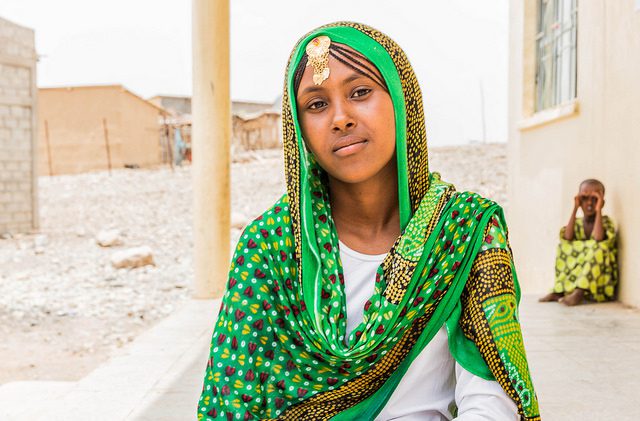
Women's Empowerment in ChadLike in a lot of the countries in Africa, women’s empowerment in Chad is lacking immensely. Lack of freedom, child marriage, violence and mutilation are a few of the issues women must face in Chad.

A tradition that resides in many countries in Africa, in different tribes and families, is female genital mutilation(FGM), an act that young girls must go through as a rite of passage into womanhood. One type of practice is confined to the eastern parts of the country nearing Sudan, but FGM crosses ethnic and religious lines and is performed by Christians and Muslims all over Chad.

There is an estimate that 60 percent of the women in Chad have undergone the procedure and that it is even more prevalent in rural parts of the country. There is no law that makes these practices a crime, but the act is prosecutable as an involuntary physical assault against a minor. A new law, drafted in 2001, would specifically criminalize the practice of FGM.

Child marriage is extremely common in Chad and is the main reason why young girls have to leave school early. Over two-thirds of young girls will have been married before the age of 18. To add, it is a norm in the country for many of the men to have more than one wife and large extended families of wives and children. There are organizations that are trying to raise awareness about the higher health risks for young girls when they become pregnant and are also trying to encourage them to stay in school.

In Chad, there is inequality between the genders in three different dimensions. The different dimensions being reproductive health, empowerment and labor market participation. Reproductive health refers to maternal ration and adolescent birthright. Empowerment refers to the share of parliamentary seats held by women and the share of the population, who are women, with at least some secondary education.

With inequality of genders comes violence. Around 18 percent of women in Chad who have been in a relationship, ranging from ages 15 to 49, have had a partner commit some type of physical or sexual violence act against them at least once in their lifetime. Women in Chad are citizens who have full voting rights but lack the knowledge about certain rights including their right to protection from gender-based violence. Many women are unaware that rape is a crime and see it as just an indecency. Without more knowledge on rights, women’s empowerment in Chad is stifled.

To bring back women’s empowerment in Chad, organizations like UNICEF are uplifting women by informing them about their rights. They are confronting violence and consolidating peace in Chad. The women of Chad are protesting against the violence against them but they still need support while they continue to deal with the gender-based violence and abuse in their country.

– Chavez Spicer

Photo: Flickr

December 2, 2017
https://borgenproject.org/wp-content/uploads/borgen-project-logo.svg 0 0 Borgen Project https://borgenproject.org/wp-content/uploads/borgen-project-logo.svg Borgen Project2017-12-02 01:30:292024-05-29 22:29:26Women’s Empowerment in Chad
Women's Empowerment, Women's Rights

Fishing and the Future of Women’s Empowerment in Nepal

In 2017, the Inspirational Women Series sat down with an empowered young woman named Kanchan Amatya for an interview to discuss her impressive achievements. She was born in Nepal, and through her belief that everyone should have an equal chance in life, she earned herself a scholarship to study abroad for an advanced education. By the age of 21, Amatya is now serving as a U.N. Women Global Champion for Women’s Economic Empowerment, is the founder of Sustainable Fish Farming Initiative (SSFI) and is an ambassador to Women Protection Center Nepal.

Sustainable Fish Farming Initiative 

SSFI is a female-owned social enterprise focused on fighting food security problems and poverty in the rural Nepal region. The organization offers tools and education on sustainable aquaculture and works to continue women’s empowerment in Nepal by providing women with access to all the necessary resources. These include training, micro-credit, distribution and market facilitation to allow farmers to harvest their own fish and manage production on their own farm.

Due to global climate change and the current imbalanced social and economic institutions in Nepal, there is a need to implement methods to diversify livelihoods; this holds particularly true for women. The most common form of employment for women in rural areas is in their own household — an unpaid position that cannot provide independent income. In regard to employment outside of the household, women’s jobs appear in planting, weeding and harvesting — all roles where profits are meager.

However, women have proven themselves in these areas. With programs like SSFI, they are able to continue on the journey to self-empowerment and autonomy.

Women and Aquaculture Farming

A 2007 research study by the WorldFish Center, the Institute of Agriculture and Animal Science and the Asian Institute of Technology analyzed the introduction of an aquaculture sub-system combined with mixed-crop livestock systems into the Nepalese population and their effects on food access and security, as well as women’s empowerment.

Women who were given the opportunity to own and control a portion of the aquaculture farming system increased their autonomy and ability to make self-decisions within their households and community. The aquaculture farming system is the manifestation of women’s empowerment in Nepal and so far, it is working rather well in improving female independence.

Overall, an introduction of programs such as the ones previously mentioned are powerful in limiting the social and economic burdens faced by women with access to such resources in Nepal. As an added bonus, the aquaculture industry ensures easier and more efficient access to healthy meals for women and their families. After all, the challenges of the day are always easier to manage on a full stomach.

Women like Amatya, who grow up in less economically developed countries such as Nepal, grow up with a dream. In her case, this was a dream made of grand economic and social proportions. She is working every day to break down barriers for rural women and offer empowerment at every step.

The participants of this program now enjoy education, resource access and empowerment through the increase of income and expansion of knowledge. Amatya was originally just one fish swimming in the sea, but now her school of fish and community are growing. It will continue to do so for years to come, and women’s empowerment in Nepal will surface just like the fish they harvest.

– Caysi Simpson

Photo: Flickr

November 29, 2017
https://borgenproject.org/wp-content/uploads/borgen-project-logo.svg 0 0 Borgen Project https://borgenproject.org/wp-content/uploads/borgen-project-logo.svg Borgen Project2017-11-29 01:30:542019-12-23 07:42:38Fishing and the Future of Women’s Empowerment in Nepal
Page 39 of 41«‹3738394041›»

Get Smarter

  • Global Poverty 101
  • Global Poverty… The Good News
  • Global Poverty & U.S. Jobs
  • Global Poverty and National Security
  • Innovative Solutions to Poverty
  • Global Poverty & Aid FAQ’s
Search Search

Take Action

  • Call Congress
  • Email Congress
  • Donate
  • 30 Ways to Help
  • Volunteer Ops
  • Internships
  • Courses & Certificates
  • The Podcast
Borgen Project

“The Borgen Project is an incredible nonprofit organization that is addressing poverty and hunger and working towards ending them.”

-The Huffington Post

Inside The Borgen Project

  • Contact
  • About
  • Financials
  • President
  • Board of Directors
  • Board of Advisors

International Links

  • UK Email Parliament
  • UK Donate
  • Canada Email Parliament

Get Smarter

  • Global Poverty 101
  • Global Poverty… The Good News
  • Global Poverty & U.S. Jobs
  • Global Poverty and National Security
  • Innovative Solutions to Poverty
  • Global Poverty & Aid FAQ’s

Ways to Help

  • Call Congress
  • Email Congress
  • Donate
  • 30 Ways to Help
  • Volunteer Ops
  • Internships
  • Courses & Certificates
  • The Podcast
Scroll to top Scroll to top Scroll to top