• Link to X
  • Link to Facebook
  • Link to Instagram
  • Link to TikTok
  • Link to Youtube
  • About
    • About Us
      • President
      • Board of Directors
      • Board of Advisors
      • Financials
      • Our Methodology
      • Success Tracker
      • Contact
  • Act Now
    • 30 Ways to Help
      • Email Congress
      • Call Congress
      • Volunteer
      • Courses & Certificates
      • Be a Donor
    • Internships
      • In-Office Internships
      • Remote Internships
    • Legislation
      • Politics 101
  • The Blog
  • The Podcast
  • Magazine
  • Donate
  • Click to open the search input field Click to open the search input field Search
  • Menu Menu

Archive for category: Women’s Rights

Gender Equality, Global Poverty, Women and Female Empowerment, Women's Rights

Conflict in Myanmar and Gender Equality

Conflict in MyanmarSince winning independence from colonial rule in 1948, ethnic conflict in Myanmar has plagued the country. Myanmar endured the world’s longest ongoing civil war, in which the ethnic Bamar Buddhist majority living in the central valley has tried to control other groups living in the mountainous outskirts of the country.

An impressively free election in 2015 gave power to Daw Aung San Suu Kyi of the National League for Democracy (NLD). The foremost goal of the administration is to end the decades of ethnic conflict, but the complexity of these issues does not allow for easy solutions.

The Alliance for Gender Inclusion in the Peace Process works to promote women’s rights and gender equality as a method to end Myanmar’s ethnic conflict.

Obstacles to women entering decision-making roles include the prevalence of gender violence and entrenched societal expectations that women must play supporting roles in society. Myanmar’s constitution condones discrimination, with section 352 stating “nothing…shall prevent the appointment of men to the positions that are suitable for men only.” Women are frequently characterized as “decorative.”

The conflict affects women, men and children differently since they occupy different roles in society. Men are susceptible to combat-related injuries, while women bear the burden of sexual violence, damage to property, and mental trauma. Despite these obstacles, women take an active role in mitigating the damage done by the conflict in Myanmar.

Women have convinced conflicting groups to fight in locations farther from villages. They have also protected men and children by sending them away or hiding them and stepped up to keep the village functioning as their men fled for safety. Excluding women from the peace process prevents the perspective and experiences of 52 percent of the population.

Women better understand the impact of conflict on women, children, the disabled and the elderly. The role of men in these conflicts effectively prevents them from being able to effectively represent large portions of society in negotiating solutions.

International research has shown that women tend to best represent marginalized groups. According to a study by the United Nations, women participating in the decision-making process is a crucial element for achieving sustainable peace.

Involving women in political processes is also an effective strategy for countering extremism. Extreme religions tend to restrict women’s rights, but funding and supporting women weakens the influence of extremists.

In Myanmar, women have crucial roles in dealing with and responding to conflict, and the efforts supported by the Alliance for Gender Inclusion in the Peace Process are a promising step in the right direction to ending decades of conflict in Myanmar.

– Kristen Nixon

Photo: Google

September 26, 2017
https://borgenproject.org/wp-content/uploads/borgen-project-logo.svg 0 0 Kim Thelwell https://borgenproject.org/wp-content/uploads/borgen-project-logo.svg Kim Thelwell2017-09-26 07:30:012024-05-29 22:26:50Conflict in Myanmar and Gender Equality
Women's Rights

Fighting for Women’s Rights in Cambodia

Fighting for Women's Rights in Cambodia
While Cambodia is classified as a democratic nation, the country still struggles to combat human rights violations and gender inequality. The UN has pressured the Cambodian government to eliminate corruption, especially regarding women’s rights and sex trafficking. Government officials have taken steps to move forward in this process, but human rights violations have been far from eradicated. The fight for women’s rights in Cambodia is particularly difficult and securing gender equality faces substantial barriers.

While women may have the same rights as men under the law, the implementation of those rights is entirely inadequate. Culturally, many Cambodians view women as secondary human beings, as shown by the famous saying, “men are gold; women are cloth.” This cultural norm discourages women from being public participants in economic and political processes.

Cambodian women face significant challenges in pursuing jobs outside the home. Most of the opportunities readily available to them are in dangerous or inconsistent conditions, and women are also paid significantly less than men. In high-profit markets, men comprise almost all leadership positions.

Education for women in Cambodia can also be tricky, as families are not legally required to send their children to school, and if they do not have much money the boys will typically receive an education first. Child marriage also creates problems for young girls getting an education, as they are incredibly unlikely to return to school after becoming a bride.

The imbalance of social power between men and women can quickly turn into something not only unfair, but dangerous. Violence against women is common in Cambodia, and 20 percent of women over 15 have encountered some form of physical abuse from a man. Acts of sexual violence, including rape, also plagues Cambodia. The government does a terrible job of holding perpetrators of these crimes accountable, making equal rights for women in Cambodia less tangible.

Sex trafficking, often a result of living in deep poverty, is a huge problem in Cambodia. Women and children are particularly vulnerable, and many are sold by members of their own family. Phnom Penh, the capital of Cambodia, is the home base of many sex trafficking rings.

While women’s rights in Cambodia are not ideal, many organizations are working towards gender equality. The government has adopted several policies that they hope will lead to a crackdown on sex trafficking. Action Aid – an organization that works to promote the lives of the oppressed – has a plan to increase female participation in politics and elevate the quality of women’s rights in Cambodia by 2018.

Women in Cambodia are living in harsh conditions and have yet to achieve gender equality in public or private spheres. While the struggle for equal rights is far from over, the spirit of change is working in the country. Through the efforts of the government and other organizations such as Action Aid, support for women’s rights in Cambodia should increase, and with it, gender equality should start to improve.

– Julia Mccartney

Photo: Google

August 27, 2017
https://borgenproject.org/wp-content/uploads/borgen-project-logo.svg 0 0 Borgen Project https://borgenproject.org/wp-content/uploads/borgen-project-logo.svg Borgen Project2017-08-27 01:30:042024-05-28 00:16:08Fighting for Women’s Rights in Cambodia
Health, Women and Female Empowerment, Women's Rights

Violence Against Women is Global Health Epidemic

Violence Against WomenPhysical or sexual violence against women is causing a global health problem of “epidemic proportions,” according to a new study released by the World Health Organization on June 20.
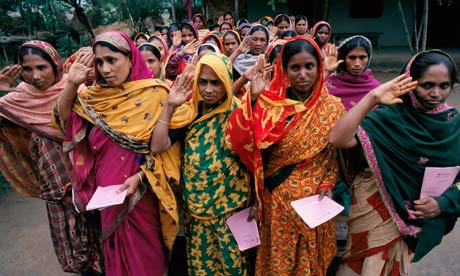
The report, “Global and regional estimates of violence against women: prevalence and health effects of intimate partner and non-partner sexual violence,” was released in partnership with the London School of Hygiene and Tropical Medicine and the South African Medical Research Council. According to the report, more than 1 in 3 women globally are impacted by physical or sexual violence. The perpetrator of such violence is usually an intimate partner: it affects an estimated 30 percent of women worldwide.

The new study compared this violence in high-income countries with that in other countries. The study found that 23.2 percent of women living in high-income countries experience intimate partner violence, as compared with 36.6 percent in Africa, 37 percent in the Eastern Mediterranean region, and 37.7 percent in South-East Asia.

“These findings send a powerful message,” said Margaret Chan, director-general of WHO. “We also see that the world’s health systems can and must do more for women who experience violence.”

The report looked at the impact of violence on both the physical and mental health of girls and women, including broken bones, pregnancy-related complications, impaired social functioning, and mental problems.

Other findings on the health impacts of intimate partner violence were staggering. The report found that 38 percent of all women who were murdered were killed by their intimate partners. Women who experienced this were twice as likely to have alcohol-use problems and were 1.5 times more likely to acquire syphilis, chlamydia or gonorrhea. In some regions such as sub-Saharan Africa, those women were also 1.5 times more likely to acquire HIV.

The report called for a major scaling up of violence-prevention efforts by addressing social and cultural factors that could be impacting the prevalence of violence. It also called for better health care for women experiencing it. Simply teaching health workers how to respond to violence could be helpful, the report noted.

The report pulled data from dozens of regional and national studies for the first time. By using regional data it was also able to highlight regional patterns. For example, women in Africa are almost twice as likely to experience violence as women living in lower and middle-income countries in Europe.

– Liza Casabona

Source: World Health Organization, The Guardian
Photo: The Guardian

July 2, 2013
https://borgenproject.org/wp-content/uploads/borgen-project-logo.svg 0 0 Borgen Project https://borgenproject.org/wp-content/uploads/borgen-project-logo.svg Borgen Project2013-07-02 04:00:362024-05-24 23:58:46Violence Against Women is Global Health Epidemic
Page 41 of 41«‹394041

Get Smarter

  • Global Poverty 101
  • Global Poverty… The Good News
  • Global Poverty & U.S. Jobs
  • Global Poverty and National Security
  • Innovative Solutions to Poverty
  • Global Poverty & Aid FAQ’s
Search Search

Take Action

  • Call Congress
  • Email Congress
  • Donate
  • 30 Ways to Help
  • Volunteer Ops
  • Internships
  • Courses & Certificates
  • The Podcast
Borgen Project

“The Borgen Project is an incredible nonprofit organization that is addressing poverty and hunger and working towards ending them.”

-The Huffington Post

Inside The Borgen Project

  • Contact
  • About
  • Financials
  • President
  • Board of Directors
  • Board of Advisors

International Links

  • UK Email Parliament
  • UK Donate
  • Canada Email Parliament

Get Smarter

  • Global Poverty 101
  • Global Poverty… The Good News
  • Global Poverty & U.S. Jobs
  • Global Poverty and National Security
  • Innovative Solutions to Poverty
  • Global Poverty & Aid FAQ’s

Ways to Help

  • Call Congress
  • Email Congress
  • Donate
  • 30 Ways to Help
  • Volunteer Ops
  • Internships
  • Courses & Certificates
  • The Podcast
Scroll to top Scroll to top Scroll to top