• Link to X
  • Link to Facebook
  • Link to Instagram
  • Link to TikTok
  • Link to Youtube
  • About
    • About Us
      • President
      • Board of Directors
      • Board of Advisors
      • Financials
      • Our Methodology
      • Success Tracker
      • Contact
  • Act Now
    • 30 Ways to Help
      • Email Congress
      • Call Congress
      • Volunteer
      • Courses & Certificates
      • Be a Donor
    • Internships
      • In-Office Internships
      • Remote Internships
    • Legislation
      • Politics 101
  • The Blog
  • The Podcast
  • Magazine
  • Donate
  • Click to open the search input field Click to open the search input field Search
  • Menu Menu
Blog - Latest News
Education, Global Poverty, Women's Empowerment, Women's Rights

Female Education in Lesotho Highest in the World
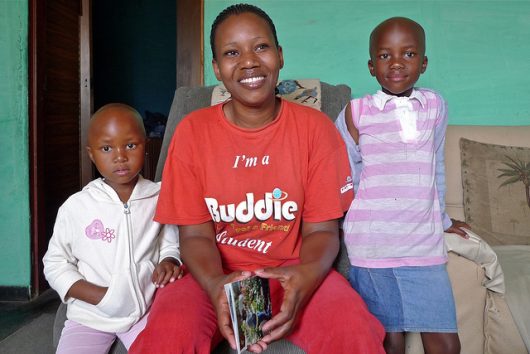
female education in lesotho
The gender gap favoring males in education is largest in low-income countries. But in Lesotho, a small, poor, landlocked country surrounded by South Africa, the gender gap in education favors females. The ratio of female-to-male enrollment rates in secondary education is the highest in the world, with 1.6 females enrolled for every male.

“This is really, really unusual in the developing world,” says Theresa Ulicki, a professor of Gender and Development Studies at Dalhousie University.

Female education in Lesotho is a result of male outmigration to South Africa, which was triggered by high unemployment and poverty. In the late 20th century, over half of the Basotho male population emigrated to South Africa for better wage-earning opportunities. Because cross-border migration to South Africa was almost exclusively male — with most Basotho males staying in South Africa from adolescence to retirement — women outnumbered men in the general population by a ratio of four-to-one.

Employment rates of Basotho men in South Africa have since declined, but the same norms govern gender differences in education and labor force participation. Most males of primary school age are involved in cattle-herding— a practice that requires young boys to withdraw from school and tend cattle for their families — and many male adolescents withdraw from school to find employment in South Africa.

Equal access to education and employment does not necessarily result in gender equality. In Lesotho, the gender gap in education is in some sense evidence of the lower perceived value of women. Women’s literacy rates and other levels of education are higher than those for men, yet most Basotho women work jobs that have lower status and pay.

Other indications of gender inequality in Lesotho include gender‐based violence and related developmental problems. Gender-based violence is a serious problem in Lesotho, where females are marginalized, making them susceptible to HIV/AIDS, abuse and rape. In 2011, the rate of sexual assault in Lesotho was among the highest in the world, with 88.6 rape cases per 100,000 female inhabitants. In 2016, Lesotho had one of the highest numbers of new HIV infections worldwide. Illegal marriages are also prevalent, with 19 percent of Basotho females under age 18 being forced into illegal marriages, often with older men.

Education is a central element in economic development and social progress. However, female education in Lesotho shows that ensuring equal access to education is an important but insufficient step toward social development.

– Gabrielle Doran

Photo: Flickr

January 20, 2018
Share this entry
  • Share on Facebook
  • Share on X
  • Share on WhatsApp
  • Share on Pinterest
  • Share on LinkedIn
  • Share on Tumblr
  • Share on Vk
  • Share on Reddit
  • Share by Mail
https://borgenproject.org/wp-content/uploads/borgen-project-logo.svg 0 0 Borgen Project https://borgenproject.org/wp-content/uploads/borgen-project-logo.svg Borgen Project2018-01-20 01:30:242024-05-29 22:38:42Female Education in Lesotho Highest in the World

Get Smarter

  • Global Poverty 101
  • Global Poverty… The Good News
  • Global Poverty & U.S. Jobs
  • Global Poverty and National Security
  • Innovative Solutions to Poverty
  • Global Poverty & Aid FAQ’s
Search Search

Take Action

  • Call Congress
  • Email Congress
  • Donate
  • 30 Ways to Help
  • Volunteer Ops
  • Internships
  • Courses & Certificates
  • The Podcast
Borgen Project

“The Borgen Project is an incredible nonprofit organization that is addressing poverty and hunger and working towards ending them.”

-The Huffington Post

Inside The Borgen Project

  • Contact
  • About
  • Financials
  • President
  • Board of Directors
  • Board of Advisors

International Links

  • UK Email Parliament
  • UK Donate
  • Canada Email Parliament

Get Smarter

  • Global Poverty 101
  • Global Poverty… The Good News
  • Global Poverty & U.S. Jobs
  • Global Poverty and National Security
  • Innovative Solutions to Poverty
  • Global Poverty & Aid FAQ’s

Ways to Help

  • Call Congress
  • Email Congress
  • Donate
  • 30 Ways to Help
  • Volunteer Ops
  • Internships
  • Courses & Certificates
  • The Podcast
Link to: Two Current Programs for Sustainable Agriculture in Nigeria Link to: Two Current Programs for Sustainable Agriculture in Nigeria Two Current Programs for Sustainable Agriculture in Nigeria Link to: Addressing the Success of Humanitarian Aid to Romania Link to: Addressing the Success of Humanitarian Aid to Romania Addressing the Success of Humanitarian Aid to Romania
Scroll to top Scroll to top Scroll to top