• Link to X
  • Link to Facebook
  • Link to Instagram
  • Link to TikTok
  • Link to Youtube
  • About
    • About Us
      • President
      • Board of Directors
      • Board of Advisors
      • Financials
      • Our Methodology
      • Success Tracker
      • Contact
  • Act Now
    • 30 Ways to Help
      • Email Congress
      • Call Congress
      • Volunteer
      • Courses & Certificates
      • Be a Donor
    • Internships
      • In-Office Internships
      • Remote Internships
    • Legislation
      • Politics 101
  • The Blog
  • The Podcast
  • Magazine
  • Donate
  • Click to open the search input field Click to open the search input field Search
  • Menu Menu

Archive for category: Water

Food & Hunger, Global Poverty, Politics and Political Attention, Water

5 Facts about Poverty in Yemen

Poverty in Yemen
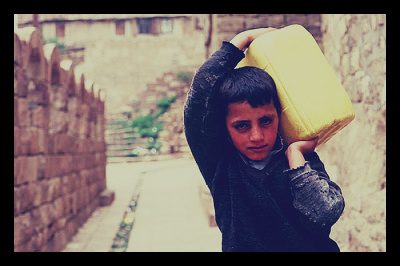
As one of the poorest countries in the Middle East, Yemen is currently faced with some of the most extreme poverty issues in the world. There are several issues that are unique to Yemen that contribute to this magnitude of poverty, issues that are on track to only get worse unless direct action is taken to mitigate these circumstances. If basic problems, such as lack of access to water, are not properly addressed, other matters, such as sub-par literacy rates, will continue to plague the region and exacerbate poverty in Yemen.


Top 5 Facts about Poverty in Yemen


1. Yemen’s population stands at 25.4 million and approximately 54% of those people live in poverty.  In other words, 54% of the population survives on fewer than 2 dollars per day.

2. Approximately 45% of the population is malnourished.

3. Life expectancy in Yemen is 64 years old, 14 years younger than the average life expectancy in the United States.

4. Major infectious diseases plaguing the country include Bacterial diarrhea, Typhoid fever, Dengue fever and Malaria, all of which are preventable, curable and in some cases largely unheard of anymore in the western world.

5. There is less than 1 physician for every 1,000 people in Yemen.


Major Causes Behind Poverty in Yemen Today


  • The dire water shortage: The use of the word ‘dire’ cannot be stressed enough. According to Maplecroft, a global risk analysis organization, Yemen is ranked as the seventh most water-stressed country on the planet. Even though there is a water shortage in Yemen, approximately 90% of the country’s water is put towards its largely ineffective agricultural practices. In Yemen’s capital city, Sana’a, tap water is only available once every four days for its 2 million people. Even worse, in Taiz, a major city in the south, tap water is only available every 20 days. It is estimated that in 10 years, Sana’a will literally run out of water for its citizens.
  • On the brink of famine: In mid-2012, several major humanitarian relief organizations issued a warning that 44% of the population’s food needs are not currently being adequately met. Five million of these malnourished Yemeni citizens require emergency aid and immediate action. The warning cited a surge in food and fuel prices and political instability as the cause behind the number of malnourished people doubling since 2009. Though there is food available in some cases, many Yemenis cannot afford to buy nourishment because they have been displaced from their homes due to conflict.
  • Lingering political instability: Like most of the Middle East, Yemen felt the effects of the Arab Spring in 2011. The initial uprising was centered on protesting high unemployment, economic conditions and government corruption, which included the then president’s plan to alter the constitution to allow the direct transfer of power to his son. Al-Qaeda also has a presence in the region, which further contributes to political instability. For these reasons and many others, the attempt to reach stability within the government and the region is an ongoing process. After significant fighting and the displacement of hundreds of thousands of citizens, a new president was placed in power after running uncontested in an election. The new president is responsible for overseeing the drafting and implementation of a new constitution and further presidential and parliamentary elections in 2014.

– Colleen Eckvahl


Sources: BBC: Yemen’s President cedes power, BBC: Yemen on brink of food crisis, Green Profit, Maplecroft, The World Bank

 

December 11, 2013
https://borgenproject.org/wp-content/uploads/borgen-project-logo.svg 0 0 Borgen Project https://borgenproject.org/wp-content/uploads/borgen-project-logo.svg Borgen Project2013-12-11 09:00:582018-01-11 14:34:255 Facts about Poverty in Yemen
Health, Sanitation, Water

Can This Straw Save the World?

Wil_Filteration_Straw_Save_the_World_Clean_Water
Water is Life founder Ken Surritte was on a well-drilling trip to Africa in 2007 when he realized the limitations of using this method of providing clean water alone. After building a well for an orphanage outside of Kisumu, Kenya, Surritte was surprised to find that kids were still getting sick. The culprit was a “drinking fountain” at the local school which was actually a stagnant pond. Surritte wondered what he could give kids to take to school with them, and the idea for a portable filtration straw was born.

884 million people around the world do not have access to clean water, resulting in 6,500 deaths from waterborne diseases like typhoid, cholera, dysentery, E-coli, guinea worms, and diarrhea every day.  Children under five are at the greatest risk. In fact, diarrhea is the second leading cause of death among this age group in the world, and a child dies every 21 seconds from this preventable disease.

Water is Life is a nonprofit that works to distribute its WiL filtration straws to communities in need across the world. The straws, which are made of a hard plastic and measure ten inches long and one inch in diameter, come on a lanyard for easy transport. The straws use a combination of membrane filters, iodine crystals, and charcoal filters to purify water, filtering out harmful waterborne illnesses and particles as small as 15 microns. The WiL straws work just like an ordinary straw: users place the straw in a water source and suck, drawing water through the filtration components until clean water reaches the mouth. They can clean a minimum of 800 liters of water, and on average, a straw will last one person a year. The straws clog internally when no longer effective. These life saving devices cost only ten dollars each.

The WiL straw is just the first part of a comprehensive plan to provide sustainable clean-water solutions to communities around the world, and is meant to provide immediate relief to communities while longer-term solutions are sought. After straws are distributed by Water is Life teams on the ground, the teams get to work evaluating and developing a plan to provide a sustainable, pure water source within one year, using technologies like wells and point-of-use filters. Teams also provide hygiene and sanitation education in community centers and village schools. This unique “crawl, walk, run” approach allows for immediate intervention and long-term prevention of waterborne illnesses, saving lives now and in the future.

Water is Life has been hugely successful in the four short years since it began distribution of straws and implementation of its sanitation programs. The non-profit has worked in North and South America, Asia, and the Middle East, distributing over 60,000 straws in 32 countries, and has plans to grow the program.

For those looking to get involved, Water is Life provides many volunteer opportunities for individuals and groups, ranging from speaking at schools to get students involved with campaigns, to repackaging filters at the organization’s Oklahoma office, to traveling to help distribute WiL straws and other life-saving materials on the ground. Have the money, but not the time? Just ten dollars provides someone in need with immediate and long-term access to clean drinking water. Check out waterislife.com for more ways to help.

– Sarah Morrison
Sources: Water is Life, Oklahoma City News
Photo: Seasons for Life

December 6, 2013
https://borgenproject.org/wp-content/uploads/borgen-project-logo.svg 0 0 Borgen Project https://borgenproject.org/wp-content/uploads/borgen-project-logo.svg Borgen Project2013-12-06 18:08:162024-06-07 04:44:45Can This Straw Save the World?
Global Poverty, Technology, Water

WADI: The New Portable Clean Water Method

Throughout the world, there have been several innovations to generate new portable clean water in developing nations. The latest of these innovations is WADI, a water purification system started by the Australian corporation Helioz.

According to Helioz’ research team, WADI is an easy to use, cost effective UV measurement device for solar water disinfection (SODIS). In short, WADI is a solar powered water disinfection system that operates “without the use of chemicals, batteries or filters”. Because of its pure use, WADI guarantees its users with safe, chemical-free drinking water.

The WADI device is simple and easy to use. A user simply fills in a PET bottle with water from any source, puts the WADI device on instead of the regular bottle cap, and exposes the bottle to sunlight and UV rays until the water in the bottle registers as clean on the device. If the water is still contaminated, the device will show a sad face to the user.

If the water has been purified, the device will register a smiley face on it’s small LCD screen. However, the device does face some challenges. Although the device shows serious advancement towards clean water around the world, it also has setbacks in areas where water sources and sunlight are scarce.

In areas where sunlight is scarce, the cleaning process might take up anywhere from 45 minutes to two days longer than normal. As a result people who are in desperate need for water resort to drinking contaminated, more accessible water, researchers say.

However, the self sufficient water purification system promises to take the world by storm. The project is expected to launch in developing nations in January 2014. Currently, Helioz is working on a funding campaign for the device.

The campaign will allow the company to create a further study on the effects the device has on remote villages such as Odisha, India. The study will also help the company customize their product depending on the area it is being used in.

Projects such as WADI show great promise towards completing worldwide water purification. However, only time, and user responses will tell if the project is a success.

– Stephanie Olaya

Sources: Tree Hugger, Helioz
Photo: INiTS

October 24, 2013
https://borgenproject.org/wp-content/uploads/borgen-project-logo.svg 0 0 Borgen Project https://borgenproject.org/wp-content/uploads/borgen-project-logo.svg Borgen Project2013-10-24 04:52:502024-05-25 00:29:20WADI: The New Portable Clean Water Method
Global Poverty, Water

China’s Environmental Crisis

china_environmental_problem
China is one of the fastest growing countries in the world. With that being said, it can be safe to say that it has one of the fastest growing industries in the world. These industries require a lot more labor and resources. Recently, it has been reported that in order to “meet its growing energy needs, China is planning to build hundreds of coal fired power plants in the next few years.” However, developing the coal industry could have a devastating effect on China’s freshwater resources. The development of these plants threatens other areas such as drinking water supplies, industry, farming, and the environment.

In 2011, the Associated Press reported that around 68.4 percent of China’s energy came from coal. China’s coal industry is the fastest and most dominant in the country. Other nations such as the United States and Germany reported that around 30-37 percent of their energy came from coal. Moreover, China is the world’s largest consumer of coal. Around 50 percent of the world’s coal is consumed by China. This number is expected to grow.

According to the Washington Times, the Chinese government recently announced its plans to build 363 new coal-fired plants. The new power plants would increase the country’s coal-powered generating capacity from 68.4 percent to 75 percent. As a result, China’s coal consumption would significantly increase.

Although China’s industries depend on cheap, easy-to-use resources to keep the economy going, the cheap energy sources are considered dangerous and detrimental to society. One example is coal. Coal is considered to be the less costly and more effective way to address China’s energy problem. However, coal is extremely labor and water intensive. This creates a problem for people and for areas where water is scarce. In these areas, water resources can diminish further. The problem is that China does have enough water resources, however, these resources are not evenly distributed between communities. According to the Washington Times, “demographics, population, geography and politics make water a complicated issue.”

– Stephanie Olaya

Sources: Washington Times, Reuters

October 22, 2013
https://borgenproject.org/wp-content/uploads/borgen-project-logo.svg 0 0 Borgen Project https://borgenproject.org/wp-content/uploads/borgen-project-logo.svg Borgen Project2013-10-22 15:24:122016-12-15 08:58:56China’s Environmental Crisis
Disease, Global Poverty, Health, Water

Surge: Pioneer of Clean Water Around the World

cambodia_surge_for_water
Surge is a Chicago-based nonprofit organization that focuses on providing people with clean and safe drinking water. According to Chicagonow.com, Surge has given around 67,000 people access to clean water in countries such as Haiti, the Dominican Republic, Ethiopia, Tanzania, Pakistan, Bangladesh, India, and Cambodia.

In addition, Surge focuses on improving people’s health in countries where fatal waterborne diseases such as cholera are common. In order to fund further projects, the organization has decided to host a nationwide event that focuses on collecting funds for the cause.

In addition, Surge provides other ways people can get involved with clean water initiatives. People as young as eight years old can get involved in Surge’s educational awareness program. According to surgeforwater.org, these educational programs reach up to thousands of people each year. Additionally, the “Just for Kids Initiative partners with local organizations in order to educate and empower youth” involved in the program.

In places such as Bangladesh, Surge has provided new water sanitation systems. In the district of Gazipur, more than half of the households were given access to clean water. Today, more than 56,000 households depend on Surge’s aid.

Additionally, the nonprofit has provided Cambodian people with a new water tank to people living in remote villages near the Mekong river. Due to Surge’s efforts more than 1,000 Cambodian children now have access to clean water.

This year, the Water Falls Gala will raise funds for clean water projects in places such as Haiti and the Dominican Republic. According to the official website, the event will be held at the National Hellenic Museum in Chicago’s West Loop.

All the proceeds will work towards building clean water systems in Haiti and the Dominican Republic. The projects in these countries will bring clean water to thousands of people.

– Stephanie Olaya

Sources: Surge of Water, Chicago Now

October 22, 2013
https://borgenproject.org/wp-content/uploads/borgen-project-logo.svg 0 0 Borgen Project https://borgenproject.org/wp-content/uploads/borgen-project-logo.svg Borgen Project2013-10-22 15:03:582024-06-05 02:58:04Surge: Pioneer of Clean Water Around the World
Activism, Global Poverty, Water

Bridging the Gap by Giving: Pedaling for Clean Water

There are many ways to raise awareness about clean water. Fundraisers, educational  programs, non-governmental organizations are all great ways to expose the issue on a global scale. However, 70-year old Chico, California native, Shirley Adams, created an innovative way to raise awareness. She decided to pedal cross-country for her organization, Bridging the Gap by Giving, which provides clean water to African countries.

Adams’s interest in water stemmed from her work as a swimming instructor. Today, she works year round to provide her organization with enough funds for new clean water projects in developing nations. Today, Shirley and her husband raise awareness and money through long distance cycling.

According to World Mag, her project began in 2005. Over the past seven years she has raised over $500,000 for her cause. As a result, around 14,000 have gained access to clean water in developing countries.

According to Adams, the project took off after she rode her bike cross-country wearing a shirt that read “everyone needs clean water.” The shirt included a link to the organization’s website. Amazingly, on that trip alone she raised more than $30,000. Her trip was so successful that even big corporations such as the Hilton foundation “matched it dollar for dollar.”

Most recently, Adams and her husband have set out on another cross-country venture. They rode on the 2,300 mile stretch that covers every state from Maine to Florida. In their time off, they focus on their family and church.

Adams has stated that they hope to beat their $30,000 mark, which was the highest amount the organization has ever raised via cross-country biking. The Adams family also hopes to publicize the cause by selling shirts, jackets, and caps along the way. They also plan to wear their shirts throughout the trip.

– Stephanie Olaya

Sources: World Mag, Bridging The Gap By Giving
Photo: NH Outdoors

October 18, 2013
https://borgenproject.org/wp-content/uploads/borgen-project-logo.svg 0 0 Borgen Project https://borgenproject.org/wp-content/uploads/borgen-project-logo.svg Borgen Project2013-10-18 14:47:592024-06-04 03:15:21Bridging the Gap by Giving: Pedaling for Clean Water
Developing Countries, Global Poverty, Sanitation, Water

Pack H2O: Bringing Water to Developing Nations

pack_h2o
Greif Inc., a well-known packaging company, has spearheaded the opportunity to develop a way for people in developing nations to obtain clean water. Greif has developed an innovative backpack that safely and easily transports water to homes in developing areas. The backpack is officially called the Pack H20. It even has been nominated on the National Design Museum’s list of “products that make a difference in everyday lives.”

According to Greif Inc., the H20 pack has been “replacing jerry cans and buckets as the mode of transport for drinking water in Haiti, Guatemala and Kenya and more than 20 other countries.” The backpacks are designed to carry 5.25 gallons of water and are made of extremely resistant fabric and plastic liner, which makes them puncture resistant. Each backpack is also sold at an affordable price of $10.

The backpacks have been so successful that over 100,000 have been distributed to women and children. According to Justin Moodley, Marketing Director for PackH2O LLC, these women and children don’t have to rely on these traditional and burdensome methods for water transportation. Moodley also mentioned that these people will not have to come in contact with heavy and contaminated containers any more.

Moreover, representative officials for Pack H20 have taken other initiatives to better developing communities’ access to clean drinking water. Some have taken notice of the distance between water sources and these communities. They plan to grant more instant access to water to these communities in the near future. As a result, Greif Inc. plans on spearheading other clean water access projects in developing nations.

– Stephanie Olaya

Sources: Biz Journal, Pack H2O
Photo: Pack H2O

October 16, 2013
https://borgenproject.org/wp-content/uploads/borgen-project-logo.svg 0 0 Borgen Project https://borgenproject.org/wp-content/uploads/borgen-project-logo.svg Borgen Project2013-10-16 10:30:392020-07-02 20:34:43Pack H2O: Bringing Water to Developing Nations
Food & Hunger, Food Aid, Foreign Aid, Global Poverty, USAID, Water

Foreign Aid, Where Does It Go? A Look at USAID

American Foreign Aid USAID
The United States Agency for International Development (USAID) is a successful program engineered to combat poverty. USAID has focused on diminishing poverty in several aspects. Improving nutrition, assisting in food aid, and advancing water supplies are all important USAID goals. These three issues are connected on a deeper scale, as improving nutrition levels is conjoined with clean water supply and food aid assistance.

Proper nutrition is a basic necessity for every human. Malnutrition leads to approximately 2.6 million deaths per year, deaths that could be prevented if steps were taken to counteract malnutrition. USAID has partnered with Scale Up Nutrition (SUN) to help achieve basic nutritional improvement in impoverished areas throughout the world.

USAID and SUN have laid out a strategic approach to achieve their goal. They plan to prevent malnutrition through a package of maternal, infant, and young children programs. USAID and SUN will also combat malnutrition by targeting supplementation to vulnerable groups, managing malnutrition through community based projects, providing nutritional care for those living with HIV/AIDS, and improving the quality of food in the food assistance programs.

USAID is not only well prepared to handle global malnutrition levels; they are also prepared on the food assistance front. USAID works with the UN World Food Programme (WFP) to effectively deliver lifesaving aid to food-barren areas. USAID and WFP have developed a working protocol that efficiently delivers food supplies to shortages worldwide.

USAID and WFP are constantly upgrading their food science programs, allowing them to deliver greater amounts of healthy food to needy areas. USAID is using a supply-chain management system that allows food to be sent out more efficiently. The programs have also combined to implement an emergency food service, which allows USAID and WFP to purchase emergency food in disaster-stricken areas. In addition, USAID also funded the Famine Early Warning System (FEWS), which is highly regarded as one of the best early-warning systems in the world.

Food and nutrition are two basic necessities in life. These epidemics are two of the most common problems known worldwide, yet a third is often overlooked. Lack of clean water supplies is just as important, and it receives a similar amount of attention from USAID. USAID has a specifically laid out plan to implement clean water supplies in needy areas. USAID focuses on increasing access to a sustainable water supply for all communities, finding a way to sanitize the water supplies, and teaching the community key hygiene behaviors to keep the water sanitized.

Through the actions of USAID, positive results can be seen in all of the targeted areas. In 2011, 3.8 million people had better access to clean water. USAID and affiliated programs provided over 1.5 metric tons of food to communities in 2012. The nutrition programs have been equally effective, with predictions that malnutrition will decrease by 20 percent in the next two years in targeted countries. The progress can be easily seen; all of which were made possible by the foreign aid budget that often falls under much criticism.

– Zachary Wright

Sources: USAID, USAID: Food Aid, USAID: Nutrition
Photo: Flickr

October 7, 2013
https://borgenproject.org/wp-content/uploads/borgen-project-logo.svg 0 0 Borgen Project https://borgenproject.org/wp-content/uploads/borgen-project-logo.svg Borgen Project2013-10-07 18:15:212024-05-25 00:23:47Foreign Aid, Where Does It Go? A Look at USAID
Global Poverty, Sanitation, Water

The Water Crisis in Sub-Saharan Africa

water_crisis_sub_saharan
Water is a necessary means for survival. Water covers two-thirds of planet Earth. The human body consists of 75 percent water. Water is involved in all bodily functions including digestion, respiration, maintaining body temperature, and adequate performance of all bodily functions. Early civilizations developed around easily accessible clean drinking water sources. Water is vital to life; that is a given. But what if accessing clean drinking water was not as easy as turning on the faucet, or opening a bottle of Dasani? The continuing water crisis in sub-Saharan Africa proves that this kind of access is not always so easy.

Water scarcity is a tragic reality for many regions of the world. Astoundingly, 85 percent of the world’s people live in the driest regions of the world. According to UN Water, 783 million world citizens do not have access to clean water. Among that demographic, 6 to 8 million die every year from water related disasters and diseases. Incredibly, in the year 2000, 2.4 billion people lacked access to water sanitation, and 1.1 billion lacked access to fresh water sources. The populations suffering the most are in rural, poor areas of the world.

The most common water related diseases occur due to lack of sanitation. According to Dr. Lee Jong-wook, Director General at World Health Organization (WHO), “Water and Sanitation is one of the primary drivers of public health,” and refers to water and sanitation as “Health 101.” Jong-Wook further explains that if communities secure access to water and sanitation, “a huge battle against all kinds of diseases will be won.” Two of the deadliest water and sanitation related diseases are diarrhea and malaria.

According to data by World Health Organization, the four driving factors in the water and sanitation crisis are: access to water supply and sanitation, sanitation gap, emergencies and disasters, and water resources.

The sanitation gap refers to an increase in population growth combined with low sanitation development growth. The number of people with access to hygienic sanitation facilities, such as toilets and hand washing tools, has declined slightly since the 1990s because construction cannot keep up with population growth.

Floods and drought are the most dangerous water-related disasters. Flooding causes contamination of drinking water, and destructed systems of hygiene and wastewater. Droughts cause the most death because they can initiate malnutrition and deny the community a water supply. 66 percent of people dwelling in sub-Saharan Africa live in areas of little to no rainfall which often results in failed vegetation and agricultural efforts. More than 300 to 800 sub-Saharan Africans live in a water-scarce location.

Water resource development is the key to helping world citizens fulfill the basic human right of accessing clean water. As former United Nations Secretary General Kofi Annan stated, “Access to safe water is a fundamental human need and therefore a basic human right.”

– Laura Reinacher

Sources: Rights to Water and Sanitation, UNICEF, UN Water
Photo: Because water

October 4, 2013
https://borgenproject.org/wp-content/uploads/borgen-project-logo.svg 0 0 Borgen Project https://borgenproject.org/wp-content/uploads/borgen-project-logo.svg Borgen Project2013-10-04 20:31:562024-05-25 00:23:17The Water Crisis in Sub-Saharan Africa
Global Poverty, Water

Using CDs to Clean Water

Optical_CDs_Clean_Sewage_Water
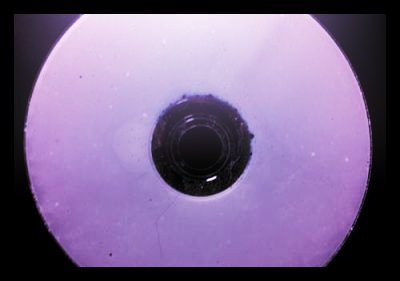
Can old compact discs, better known as CDs, really clean water? If so, how? Scientists at the National Taiwan University are now using old CDs to grow zinc oxide in order to break down the pollutants in water. Recently, Dr. Ping Tsai, a Taiwan University physicist, spearheaded this innovative project. He and his colleagues have now perfected a water treatment device that uses old CDs to clean water.

According to Taiwan University’s research team, the device uses the flat, smooth surface of the CD in order to complete this process. The surface of the CD serves as the “breeding ground” for zinc-oxide nanorods. These nanorods are what help de-pollute the water. The nanorods can break down the presence of organic molecules in the presence of UV light. The researchers have also explained that these nanorods are usually microscopic in size. The research team explained that the nanorods “are extremely small- just a thousandth the width of a human hair- and are an inexpensive conductor that can function as a photocatalyst.”

In short, the research team calls the cleaning method a type of “Photocatalytic Water Decontamination.” This method has been widely used over the years, but this is the first time CDs have been used in order to help the depollution process. Using CDs to clean water has become very popular. It’s believed that “optical discs are very cheap, readily available and commonly used. They are also durable and portable”. The CDs also rotate quickly, which allows them to absorb water faster than light. As a result, water will pass more quickly and easily through the first layer of the disk than light would. During this process, contaminated water drips onto the device, spreads out in a thin film that light can easily pass through, which breaks down pollutants. The CD is spun in the presence of UV light which further breaks down pollutants.

Using zinc oxide to clean water is not a new idea, but using CDs to absorb water has recently grown in popularity. Its accessibility, low price, and absorbency make it a profitable and efficient way to clean water in places where the vital resource is hard to come by.

– Stephanie Olay

Sources: iScience Times, Science Daily
Photo: Phys

October 2, 2013
https://borgenproject.org/wp-content/uploads/borgen-project-logo.svg 0 0 Borgen Project https://borgenproject.org/wp-content/uploads/borgen-project-logo.svg Borgen Project2013-10-02 21:23:352024-06-05 01:53:38Using CDs to Clean Water
Page 52 of 57«‹5051525354›»

Get Smarter

  • Global Poverty 101
  • Global Poverty… The Good News
  • Global Poverty & U.S. Jobs
  • Global Poverty and National Security
  • Innovative Solutions to Poverty
  • Global Poverty & Aid FAQ’s
Search Search

Take Action

  • Call Congress
  • Email Congress
  • Donate
  • 30 Ways to Help
  • Volunteer Ops
  • Internships
  • Courses & Certificates
  • The Podcast
Borgen Project

“The Borgen Project is an incredible nonprofit organization that is addressing poverty and hunger and working towards ending them.”

-The Huffington Post

Inside The Borgen Project

  • Contact
  • About
  • Financials
  • President
  • Board of Directors
  • Board of Advisors

International Links

  • UK Email Parliament
  • UK Donate
  • Canada Email Parliament

Get Smarter

  • Global Poverty 101
  • Global Poverty… The Good News
  • Global Poverty & U.S. Jobs
  • Global Poverty and National Security
  • Innovative Solutions to Poverty
  • Global Poverty & Aid FAQ’s

Ways to Help

  • Call Congress
  • Email Congress
  • Donate
  • 30 Ways to Help
  • Volunteer Ops
  • Internships
  • Courses & Certificates
  • The Podcast
Scroll to top Scroll to top Scroll to top