• Link to X
  • Link to Facebook
  • Link to Instagram
  • Link to TikTok
  • Link to Youtube
  • About
    • About Us
      • President
      • Board of Directors
      • Board of Advisors
      • Financials
      • Our Methodology
      • Success Tracker
      • Contact
  • Act Now
    • 30 Ways to Help
      • Email Congress
      • Call Congress
      • Volunteer
      • Courses & Certificates
      • Be a Donor
    • Internships
      • In-Office Internships
      • Remote Internships
    • Legislation
      • Politics 101
  • The Blog
  • The Podcast
  • Magazine
  • Donate
  • Click to open the search input field Click to open the search input field Search
  • Menu Menu

Archive for category: Water

Developing Countries, Water

How Fruits and Veggies Can Make Safe Drinking Water

tomato_peel
Access to clean drinking water is a worldwide problem. One billion people, or roughly 1 in 7 persons across the globe, lack access to safe water. Without potable water, these millions of people are exposed to waterborne pathogens that can cause sickness and death. Each year, waterborne pathogens make tens of millions of people sick and lead to 1.8 million deaths. And all of these are preventable.

Researchers are working on cheap and practical ways to provide safe drinking water across the globe. Ramakrishna Mallampati, an investigator at the National University of Singapore, has devised a new way to purify dirty water. By using the peels of fruits and vegetables, Mallampati believes that he can effectively and economically filter out impurities from water to make it safe to drink.

The fruits and vegetables are used to purify dirty water by drawing out toxic ions and organic pollutants from liquid. Tomato peels effectively remove “dissolved organic and inorganic chemicals, dyes and pesticides, and…can also be used in large scare applications.” Tomatoes are the second most consumed vegetable in the world. With the vegetable’s widespread availability, using tomato peels to purify water could prove to be a convenient, easy, and cheap way to purify drinking water.

Like tomato peels, apple peels are also able to draw out a number of pollutants from dirty water. The peels can extract anions such as “phosphate, arsenate, arsenite, and chromate ions from aqueous solutions.” While the apple peels must first be treated with a zirconium oxide before they can effectively remove impurities from water, the wide prevalence of the fruit throughout the world means that it could also be used to treat drinking water on a large scale.

The newly designed water purification methods could prove revolutionary in the developing world. Many large scale treatment processes used in developed nations are simply inaccessible to the impoverished across the globe due to a lack of the financial capital needed to implement them. The process of purifying water by using tomato and apple peels mitigates the financial obstacle that prevents many in the developed world from having clean drinking water. Ramakrishna Mallampati hopes that by using his new purification process, those living in developing areas will be able to live healthier and more productive lives.

– Jordan Kline

Sources: ScienceDaily, Care2, National Academy of Sciences
Photo: She Knows
August 6, 2013
https://borgenproject.org/wp-content/uploads/borgen-project-logo.svg 0 0 Borgen Project https://borgenproject.org/wp-content/uploads/borgen-project-logo.svg Borgen Project2013-08-06 04:01:122017-12-04 12:33:42How Fruits and Veggies Can Make Safe Drinking Water
Health, Water

Top 5 Water Crisis Solutions

Water_Sanitation
What an individual considers a “valuable resource” reveals a lot about the economic standing. In developing nations, water is considered a valuable resource. It is access to clean water that separates those who live from those who die in the developing world. The following list gives credence to efforts at alleviating the global water crisis.

1. LifeStraw

According to the joint monitoring efforts of the World Health Organization and UNICEF, 884 million people live without access to adequate drinking water. In response to this staggering statistic, the folks at Vestergaard Frandsen Disease Control Textiles have created the LifeStraw. This cheap, reusable tool allows the user to drink available water without worrying about if it is contaminated. Without any replaceable parts or batteries, the device filters out 99.9999% of waterborne bacteria and 99.9% of waterborne protozoan particles. At under $10 US, the LifeStraw has a one year lifetime worth of clean water consumption. While the LifeStraw is considered nothing more than a short-term solution, it is worthy of adamant praise.

2. Slingshot

While the LifeStraw does a great service for those in immediate need of clean drinking water, it does not serve the benefit for more than just the user. To meet this problem, Dean Kamen, the famed inventor of the Segway, has invented the Slingshot. Using less energy than the average hair dryer, the Slingshot uses a vapor compression filtration system to produce up to 30 liters of purified water in under an hour. Teaming up with the Clinton Global initiative and Coca-Cola, Kamen aims at bringing this technology to regions and communities still lacking clean drinking water.

3. Solvaten

Swedish for ‘sun water’, the Solvaten water purifying system is spearheading the sustainable water purification market. With a capacity of up to ten liters, the device simply sits in the sun until a blinking light indicates purified water. Although it takes three to four hours to completely purify the water, the sustainability factor outweighs any inconvenience. The device is currently undergoing testing in South America with very positive results.

4. P&G Water Purification Packet

With the water purification packet, Procter&Gamble has joined the fight to end the global water crisis. Remarkably, the team of scientists behind the project has managed to condense the proprietary municipal water sanitation system into a simple packet. By adding the packet to contaminated water, stirring and sitting, the solution has been proven to remove 99.99999% of common waterborne bacteria, 99.99% of common waterborne viruses, and 99.9% of protozoa. To date, P&G can tout that over 5 billion liters of clean drinking water have been made using these packets.

5. Desalination “Water Chip”

It seems ironic that, despite being 2/3 covered by water, our planet faces a global water crisis. The painful truth, however, is that the vast abundance of water we seemingly have at our disposal is not suitable for human consumption. Anyone who has had the misfortune of ingesting a gulp of seawater understands exactly why. To meet this challenge, chemists at the University of Texas, Austin and Marburg, Germany, are developing a 21st century solution to a very old problem. The “water chip” they have developed applies a small voltage to a chip filled with salt water. While this nascent technology is currently only producing nanoliters of clean water at a rate of only 25%, the innovation will be one to keep an eye on in the near future.

– Thomas van der List 

Sources: Life Straw, Slingshot, Solvaten, P&G Packet, Water Chip
Photo: PB Works

August 3, 2013
https://borgenproject.org/wp-content/uploads/borgen-project-logo.svg 0 0 Borgen Project https://borgenproject.org/wp-content/uploads/borgen-project-logo.svg Borgen Project2013-08-03 06:16:492024-05-25 00:13:26Top 5 Water Crisis Solutions
Water

5 Ways to Conserve Water

conserve_water

According to the UN’s Millennium Development Goals Report in 2012, 11 percent of the world’s population, 783 million people, do not have access to clean drinking water. The United Nations and many other humanitarian organizations have been working for decades to address this global water crisis. The conservation of water is important for many systems in poorer, rural countries, like septic systems and drinking wells. Insufficient water supplies stifle industry and agriculture in developing countries, and, most importantly, fail to meet basic human needs.

The United Nations General Assembly affirmed that access to clean water is not a privilege, but a right delegated to all human beings. Water should be affordable, accessible, and safe for consumption and use. With the world population growing and freshwater sources being threatened by pollution, it is more important than ever for the world to engage in water sustainability projects and for individuals to conserve water.

While water is considered a renewable resource, this does not matter if water is being consumed faster than it can replenish itself. If more people do not take to examining their water consumption, massive problems will arise as the world population grows and more people in the developing world crave clean, fresh, usable water.

Here are 5 ways that people can conserve water:

1.      Check for leaks.

A lot of water is lost per day due to leaks in things like faucets and toilets. One of the most effective ways to save, water – 10 gallons a day per person on average – is to repair leaky pipes and sinks.

2.      Upgrade to water-efficient fixtures.

Instead of just fixing fixtures for leaks, installing water-efficient fixtures like low-flow showerheads, faucets, and toilets is one of the best ways to conserve water. In fact, in 1994, the US government mandated these low-flow efficient fixtures. Front-loading washing machines are water-efficient as well, compared to their top-load counterparts.

3.      Do not leave the water on unnecessarily.

Water is going to be needed for many daily tasks such as shaving and hand washing, but try to minimize the time the faucet stays on. When shaving or washing the dishes by hand, do not leave the faucet running. Every minute of water conserved saves many gallons daily. By shortening a shower by a few minutes each month, hundreds of gallons can be saved.

4.      Use water-consuming machines to their maximum capacities.

Use the washing machine or dishwasher when loads are full. Operating these machines with smaller loads on full cycles wastes massive amounts of water. If smaller loads are necessary, optimize the settings of the wash so that the least amount of water possible is used.

5.      Recycle.

This may not seem like a way to conserve water, but nearly 5% of US water consumption is centered on powering industries that create consumables. Recycling a pound of paper saves around 3.5 gallons of water. So, buy only what is necessary and try to buy recycled goods.

– Rahul Shah

Sources: UN, National Geographic
Photo: What Gives

August 2, 2013
https://borgenproject.org/wp-content/uploads/borgen-project-logo.svg 0 0 Borgen Project https://borgenproject.org/wp-content/uploads/borgen-project-logo.svg Borgen Project2013-08-02 04:19:092017-03-20 13:03:395 Ways to Conserve Water
USAID, Water

USAID to Improve Water Systems in Karachi

Karachi_Water_USAID
As a part of the US Agency for International Development’s (USAID) Power Distribution Program, the agency is currently helping Karachi Water and Sewage Board to improve water supply for the 21 million inhabitants of Karachi, Pakistan’s biggest city. The Power Distribution Program is a 5 year, $60 million project to improve electric power utilities across Pakistan.

Karachi currently uses a 20-year old system of pumping stations that pump water from filtration plants into the city, but are extremely energy inefficient. The pumps use huge amounts of electricity from the grid, creating expensive electricity bills for the city, and providing less water to its citizens. Some areas of the city are unable to access water several times a month, simply because the pumps are unable to provide enough for the entire city.

The new pumps installed by USAID will be modern, and highly efficient. 41 out of 75 new pumps have already been installed, and the rest are expected to be completed by the end of September. The electric efficiency rate before the new pumps was at an average of 29 percent, but the new pumps will boost that to 55-65 percent, decreasing the city’s energy cost by $1.15 million per annum. All residents of Karachi will now be able to access water on a regular basis. In addition to saving energy and providing more water, the new pumps will save time and money spent on daily maintenance for the pumps.

In addition to improving the water systems in Karachi, the Power Distribution Program is also working directly with Pakistan’s government owned power distribution companies to increase their efficiency by introducing new technologies, training in human resources management and customer service, and creating legal and political space for the companies to operate.

– Emma McKay

Sources: PDIP, Daily Times

July 29, 2013
https://borgenproject.org/wp-content/uploads/borgen-project-logo.svg 0 0 Borgen Project https://borgenproject.org/wp-content/uploads/borgen-project-logo.svg Borgen Project2013-07-29 04:22:342024-06-05 01:53:35USAID to Improve Water Systems in Karachi
Sanitation, Water

5 Facts about Clean Water and Sanitation

Water_Sanitation_Facts

  1. The water and sanitation crisis claims more lives through disease than any war claims through guns. Unlike war, however, this global crisis does not make media headlines. Today, national security concerns rank high on the international agenda. Terrorist threats, violent conflict, the growth of illicit trade in arms and drugs, and the proliferation of nuclear weapons are of major concern. Against these challenges many lose sight of basic human security imperatives, including those linked to water. No act of terrorism, however, generates economic devastation on the level of the water and sanitation crisis.
  2. At the start of the 21st century unclean water is the world’s second biggest killer of children. Every 21 seconds a child dies from a water-related illness, a rate equivalent of a jumbo jet crashing every four hours. A total of 3.4 million (adults and children) people die each year from a water related disease. That is almost the entire city of Los Angeles. 99 percent, or nearly all deaths, occur in the developing world.
  3. In our increasingly prosperous world, more than 1 billion people are denied the right to clean water and 2.6 billion people lack access to adequate sanitation. These numbers are rooted in institutions and political choices, not in water’s availability. In high-income areas of cities of Asia, Latin America and Sub-Saharan Africa people enjoy access to several hundred liters of water a day delivered into their homes by public utilities. Meanwhile, poor households and slum dwellers in rural areas of the same countries have access to much less than the 20 liters of water required for one person to meet the most basic human needs.
  4. Women and young girls are especially disadvantaged by the water crisis as they are traditionally burdened with the responsibility of collecting water, sacrificing their time and education. Every person is entitled to an equal set of social, political, and civil rights. This equal citizenship includes the means to exercise these rights effectively. Water insecurity compromises these rights. A woman who suffers from recurring water-related illness, or spends long hours collecting water, has less capacity to participate in society, even if she can take part in electing her government. In total, women spend 200 million hours a day collecting water.
  5. Cutting the proportion of those without access to safe drinking water and adequate sanitation in half by 2015 is estimated to result in about 272 million more school attendance days a year. Also, the value of deaths avoided, based on discounted future earnings, would total about US$ 3.6 billion a year. Diarrhea is the second leading cause of death among children in the world under the age of five. Sanitation and proper hygiene are crucial to the prevention of diarrhea.

– Ali Warlich

Sources: Water.org, UNDP, WHO
Photo: Blogspot

July 27, 2013
https://borgenproject.org/wp-content/uploads/borgen-project-logo.svg 0 0 Borgen Project https://borgenproject.org/wp-content/uploads/borgen-project-logo.svg Borgen Project2013-07-27 14:00:292024-05-25 00:09:225 Facts about Clean Water and Sanitation
Water

Why Water Filters are a Game Changer


Approximately 3.575 million people die each year from water-related diseases, and about 5,000 children worldwide die everyday. 894 million people do not have access to clean water. The water crisis that plagues many developing nations is something that, while difficult to eradicate completely, can at least be managed with the help of foreign aid. There are many recent innovations to solve these water-related issues that are both cheap and cost-effective.

One of these innovations, the ceramic water filter, has already been implemented in nations such as Cambodia and Nigeria. However, the filter is also being used in poor areas of rural Texas near the Mexican border. B. Stephen Carpenter II, a professor at Pennsylvania State University, has recently become involved in producing ceramic water filters, which are made by a combination of claw and combustible material (e.g. sawdust) and then fired in a kiln. The ceramic filters are estimated to remove 95% of particulate matter (any types of bacteria or harmful substances that may carry diseases) from the water. The video above shows how Carpenter makes the filters.

Carpenter claims that the ceramic water filter is one of the most cost-effective types of water filtration. One filter, which costs about $15 US dollars, is enough for a family of four to have access to clean water for five years. It is no surprise that this effective filter has found success in developing countries as well. Since the introduction of the ceramic water filter in Cambodia in 2002, there has been a 50% drop in diarrheal illnesses. The program is already being expanded to become accessible to even more Cambodians who are in dire need of a simple way to make their water clean. UNICEF and the Water Sanitation Program (WSP) were given the Project Innovation Award Grand Prize in 2008 for their efforts in Cambodia.

– Sagar Desai

Sources: Inhabitat, Penn State News

July 26, 2013
https://borgenproject.org/wp-content/uploads/borgen-project-logo.svg 0 0 Borgen Project https://borgenproject.org/wp-content/uploads/borgen-project-logo.svg Borgen Project2013-07-26 09:09:062016-12-02 10:28:24Why Water Filters are a Game Changer
Health, Nonprofit Organizations and NGOs, Water

What is the Millennium Water Alliance?

Formed in 2003, the Millennium Water Alliance is a collaboration of U.S. based non-governmental organizations working in water and sanitation. The organization is designed to offer sustainable solutions to water access through knowledge, advocacy and collaborative programming. The work of the organization aims to reach the Millennium Development Goal (MDG) of halving the proportion of people without safe access to water and sanitation.

The MWA creates field programs that are a coordinated effort between member NGOs to strategically address water, sanitation and hygiene (WASH) in vulnerable countries. Major programs by the MWA include operations in Africa and Central America. These collaborative programs allow separate NGOs to provide their own distinct strengths and ideas into one mission that is designed for maximum efficiency and long-term effectiveness.

The MWA program in Kenya, for instance, improves WASH to reduce negative impacts that come from the severe droughts and floods in the target areas. It builds the water supply in vulnerable areas of the country using low-cost, resilient technologies like rainwater harvesting facilities and improved simple water storage tanks. The program also focuses on promoting better household water treatment and safe storage techniques.

Until 2009 the MWA was run by member organizations, but the expansion of the organization’s consortium programs led to the hiring of a full time program director. Since then, the MWA’s staff has increased to a total of four full-time employees, two part-time employees, and several consultants in the U.S. and abroad.

Thanks in part to the MWA, the world met the MDG target of halving the proportion of people without access to improved sources of water by 2010, five years ahead of schedule. According to the U.N. MDG website, “between 1990 and 2010 more than two billion people gained access to improved drinking water sources.”

But the global WASH crisis continues to be an issue. Based on UNICEF’s 2013 statistics, 2.5 billion people lack improved sanitation facilities, and 768 million people still use unsafe drinking water sources. Lack of access to WASH leads to decreased productivity due to illness and labor wasted with hours spent carrying water from place to place. The work of the MWA needs to continue for the furthering of global sustainable development.

– Kirsten Harris

Source: Millennium Water Alliance, United Nations, UNICEF

July 24, 2013
https://borgenproject.org/wp-content/uploads/borgen-project-logo.svg 0 0 Borgen Project https://borgenproject.org/wp-content/uploads/borgen-project-logo.svg Borgen Project2013-07-24 10:15:342024-12-13 17:49:30What is the Millennium Water Alliance?
Refugees and Displaced Persons, Water

Problem of Safe Drinking Water for Refugees

Problem of Safe Drinking Water for Refugees

Drinking water is a major problem for many parts of Africa, particularly in refugee camps, where minimal living conditions make it difficult to secure safe drinking water. The recommended minimum amount of water a person needs in an emergency situation is 15 liters a day. In Ab Gadam, a refugee camp in southeast Chad, UNHCR struggles to provide refugees with 10 liters per person per day. Currently, in Ab Gadam the drinking water is filtered from a nearby lake, however, when the rain comes, this source of water will be cut off. UNHCR is trying to find new solutions to be able to meet this challenge.

“It is really serious…we need to increase the supply – and that is what we are working on,” said Dominique Porteaud, UNHCR’s senior water and sanitation officer. He made it clear that if a solution was not found people would turn to alternative, unsafe ways of obtaining water that could lead to disease.

Zenab, a refugee living in Ad Gadam with five children, knows all too well the effect unsanitary water can have. After having to flee their village in the troubled West Darfur region, she and her family spent weeks in the border area. While there they dug small holes in the ground to find drinking water. This drinking water was not filtered and caused Zenab’s two-year-old son Ali to get sick. After entering the Ad Gadam camp, Ali is still sick but is now receiving treatment.

As the rain season quickly approaches UNHCR has been looking at several different approaches to supply safe drinking water to the refugees of Ad Gadam. Some of these measures include increasing the number and size of water storage tanks and continuing the search for productive boreholes.

UNHCR has already developed a water treatment plant, which chemically sanitizes water brought in from the nearby lake. The plant can produce enough clean water to supply refugees with 10.5 liters per day, which is still short of the minimum recommended. Refugees have also begun to find their own source of clean drinking water. Zenab and her family collect rainwater that they use to clean clothes, pots and pans, and bathe.

To inform people about the dangers of unsafe drinking water, UNHCR has begun to run awareness programs that stress the importance of clean water, sanitation and hygiene. “It is important that everybody, including the children, know about the best use of water and the dangers of drinking dirty water,” says Barka Mahamat Barka, a UNHCR water and sanitation expert.

– Catherine Ulrich

Sources: UNHCR, UN
Photo: Contribute

July 23, 2013
https://borgenproject.org/wp-content/uploads/borgen-project-logo.svg 0 0 Borgen Project https://borgenproject.org/wp-content/uploads/borgen-project-logo.svg Borgen Project2013-07-23 06:02:102024-05-25 00:03:26Problem of Safe Drinking Water for Refugees
Nonprofit Organizations and NGOs, Water

How a Teenage Soccer Player Provides Clean Water

How a Teenage Soccer Player Provides Clean Water
Over a year ago, Jake Yonally of Santa Barbara joined the youth movement for global water access, Hands4Others (H4O). He and his teammates in the Santa Barbara Soccer Club even went on to create their own chapter, Soccer4Water. Hands4Others is a group of young people who came together to look past their own lives and help those in need. It was started by 3 local teenagers after they witnessed the disparity between those with water and those without. Their goal is to provide sustainable access to clean water all across the world by helping more than two million people in 500 villages by 2015. They have already helped over 100,000 people in 10 countries and are quite capable of executing their goals.

Presidio Sports, Santa Barbara’s sports news site, interviewed Jake when he came back from his most recent trip to Honduras. There he and others from Hands4Others worked for a week to install safe water systems and latrines for the people of various villages across South America. Honduras is among the poorest countries in Latin America, with 60% of its population living below the poverty line. And where there is poverty, there is a lack of clean drinking water.

Jake was not just building while he was in Honduras, though. He and his teammates also spent time playing soccer with children in the village with balls donated by the soccer club. He stated, “I love to connect with people through soccer and help others at the same time.” His coach, family, and the board members of the soccer club all stand behind his dream of helping others.

Jake, his teammates, and other members of their soccer club raised money in support of his goal to get a total of $10,000 to provide an entire clean water system for a village during the Hands4Others Walk4Water last June in Santa Barbara. Jake has also raised money by scoring goals in soccer matches, sending out direct appeal letters, and working in his family’s olive grove in his free time. So far, he has raised 60% of his goal and hopes to reach the full amount by the end of the summer.

Without the assistance of people like Jake and his team, 9 million people will die from a lack of clean water to drink this year alone. But when someone stands up and decides they will no longer accept the idea that so many people live in poverty, we see real sustainable change take place.

– Chelsea Evans

Sources: Presidio Sports, Hands4Others, World Vision

July 21, 2013
https://borgenproject.org/wp-content/uploads/borgen-project-logo.svg 0 0 Borgen Project https://borgenproject.org/wp-content/uploads/borgen-project-logo.svg Borgen Project2013-07-21 04:58:112020-07-06 23:36:23How a Teenage Soccer Player Provides Clean Water
Sanitation, Water

Water in New Delhi

water-in-new-delhi_opt
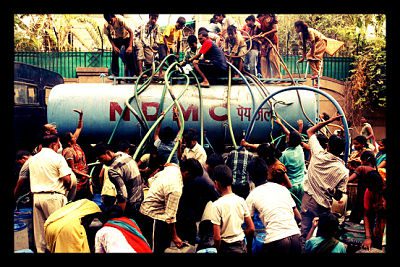
In the north Indian city of New Delhi, severe water shortages affect the entire city, a problem that will only be exacerbated as demand rises in the summer months. As the heat rises, demand for water can outstrip availability by 25% — and this number only refers to those areas of the city connected to the city infrastructure. Up to a quarter of the inhabitants of New Delhi have no access to piped water. In these areas people are forced to seek water from overused wells or polluted rivers, or the occasional tanker of water that is delivered.

As ever, the shortages are felt more strongly in lower economic circles. But even middle-class citizens are left scrounging for water to supplement what the city provides.

Many factors contribute to these continuing shortages. New Delhi’s population has swollen by nearly 50% over the past 20 years, and the city has been unable to keep up with infrastructural development. Across the city’s network, 25-40% of piped water is lost due to leaks, before arriving at its destination. Additionally, the majority of waste produced goes untreated, and is released into local bodies of water, polluting them and making them unusable as resources. For example, the Yamuna river, whose source lies in the Himalayas, enters the city still relatively clean, at which point some 200 million gallons are extracted from the river every day by the public water agency. However, as the river runs through the city, nearly a billion gallons of public sewage is dumped into it daily.

This problem of waste causes severe health concerns, especially in slums with no connection to the city’s sewage systems. In these areas sewage is left exposed,  contaminating water sources used for bathing and washing.

The irony of these water shortages is that New Delhi has access to enough water to feasibly provide for the demand. But due to these issues of infrastructure and treatment, the system is failing. And those most strongly affected are those underprivileged to begin with.

With water scarcity becoming increasingly a source of potential conflict, providing the infrastructure to alleviate the burden must be a primary concern of governments globally. Demand will only continue to increase exponentially, and while cities like New Delhi will be the first to feel the strain, they will not be the last.

– David Wilson

Source: New York Times, Wall Street Journal

July 17, 2013
https://borgenproject.org/wp-content/uploads/borgen-project-logo.svg 0 0 Borgen Project https://borgenproject.org/wp-content/uploads/borgen-project-logo.svg Borgen Project2013-07-17 06:00:582024-06-10 03:39:17Water in New Delhi
Page 54 of 57«‹5253545556›»

Get Smarter

  • Global Poverty 101
  • Global Poverty… The Good News
  • Global Poverty & U.S. Jobs
  • Global Poverty and National Security
  • Innovative Solutions to Poverty
  • Global Poverty & Aid FAQ’s
Search Search

Take Action

  • Call Congress
  • Email Congress
  • Donate
  • 30 Ways to Help
  • Volunteer Ops
  • Internships
  • Courses & Certificates
  • The Podcast
Borgen Project

“The Borgen Project is an incredible nonprofit organization that is addressing poverty and hunger and working towards ending them.”

-The Huffington Post

Inside The Borgen Project

  • Contact
  • About
  • Financials
  • President
  • Board of Directors
  • Board of Advisors

International Links

  • UK Email Parliament
  • UK Donate
  • Canada Email Parliament

Get Smarter

  • Global Poverty 101
  • Global Poverty… The Good News
  • Global Poverty & U.S. Jobs
  • Global Poverty and National Security
  • Innovative Solutions to Poverty
  • Global Poverty & Aid FAQ’s

Ways to Help

  • Call Congress
  • Email Congress
  • Donate
  • 30 Ways to Help
  • Volunteer Ops
  • Internships
  • Courses & Certificates
  • The Podcast
Scroll to top Scroll to top Scroll to top