• Link to X
  • Link to Facebook
  • Link to Instagram
  • Link to TikTok
  • Link to Youtube
  • About
    • About Us
      • President
      • Board of Directors
      • Board of Advisors
      • Financials
      • Our Methodology
      • Success Tracker
      • Contact
  • Act Now
    • 30 Ways to Help
      • Email Congress
      • Call Congress
      • Volunteer
      • Courses & Certificates
      • Be a Donor
    • Internships
      • In-Office Internships
      • Remote Internships
    • Legislation
      • Politics 101
  • The Blog
  • The Podcast
  • Magazine
  • Donate
  • Click to open the search input field Click to open the search input field Search
  • Menu Menu

Archive for category: Water

Water

African Infrastructure Projects Boom

adr_opt
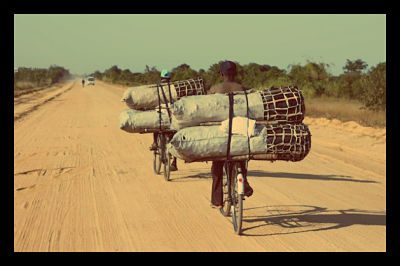
The 50 countries that make up the African Caucus recently released a statement requesting additional support for large-scale infrastructure projects on the continent. In their address to the World Bank and the International Monetary Fund (IMF), the officials requested funding for these projects, as well as assistance with debt relief.

Large-scale infrastructure projects in Africa have gained momentum in the past year, including U.S. President Barack Obama’s call for U.S. support for an energy grid for the continent. The meeting among World Bank and IMF governors resulted in a Single Infrastructure Project Preparation Facility that will help leverage support for these large-scale projects.

In addition to supporting these bi-lateral and multi-lateral projects, the African Caucus has asked the World Bank to assist with identifying private sources of capital that may help fund these projects. These large-scale infrastructure projects will include energy, water, transportation, and sanitation development efforts.

The World Bank recently approved financing for a USD $340 million hydroelectric project in Africa’s Great Lakes region. The Regional Rusumo Falls Hydroelectric Project will utilize the power from the Rusumo Falls and will eventually generate 80 megawatts of electricity.

The International Finance Corporation (IFC), a member of the World Bank Group, has also undertaken significant infrastructure projects on the continent. In 2012, IFC funding for these projects reached USD $1 billion. The IFC focuses its projects on renewable energy and sustainable infrastructure projects due to its increased concern for global climate change.

President Jacob Zuma of South Africa recently invited businesses from the BRIC (Brazil, Russia, India, and China) to invest in Africa’s infrastructure development. In his address at the BRIC Business Council, Zuma emphasized the commercial opportunities that would open, given improved infrastructure across the continent.

The China Development Bank (CDB) recently announced that their investment in African infrastructure projects has reached USD $2.4 billion. This funding has gone to support projects in mining development, energy, and agricultural and mechanical manufacturing.

During his June 2013 trip to Africa, Obama announced a USD $7 billion investment in energy infrastructure projects in the Sub-Saharan region of the continent. While there are critics of this energy plan, it seems to be one in a long line of infrastructure projects planned for the continent.

– Callie D. Coleman
Sources: Afrique, IFC, USA Today, South Africa Info, Ventures
Photo: IPS
August 31, 2013
https://borgenproject.org/wp-content/uploads/borgen-project-logo.svg 0 0 Borgen Project https://borgenproject.org/wp-content/uploads/borgen-project-logo.svg Borgen Project2013-08-31 07:44:382024-06-04 01:07:57African Infrastructure Projects Boom
Developing Countries, Malaria, Water

Irrigation Infrastructure and Malaria, An Interesting Correlation

Irrigation_infrastructure
Irrigation, known for improving crops and overall increasing capabilities of life for centuries, may have one major drawback. With an increase in water abundance through irrigation, infrastructure such as irrigation canals are proving to be havens for mosquito growth.

Recent research shows that newly constructed irrigation infrastructure in malaria prone areas can increase the risk of malaria in the local community.

Research was conducted in the northwest region of India known as Gujarat. The research project found that when irrigation infrastructure was already established in sub-districts, such as Banaskantha and Patan, the monsoon rain influx had less of a malarial increase than sub-districts with early and transitional irrigation systems.

These transitional irrigation systems, known as “low irrigated,” were found to be the most susceptible to malaria that comes after the rainy monsoon season. In comparison, “mature irrigated” areas that had established wells and canals for over thirty years, were less affected by the mosquitoes and the disease they carry.

Led by University of Michigan graduate student, Andres Baeza, the team of researchers monitored the methods and results of a large irrigation project that was set to irrigate 47 million acres of farmland.

“In these dry, fragile ecosystems, where increase in water availability from rainfall is the limiting factor for malaria transmission, irrigation infrastructure can drastically alter mosquito population abundance to levels above the threshold needed to maintain malaria transmission” according to Baeza.

Although it has been known that malaria increases and new irrigation improvements are correlated, this new research shows that the improvements to land that eventually reduce malaria may take longer than expected for farmers in malaria prevalent regions.

This is not to persuade readers that irrigation is not worth it. On the contrary, with irrigation improvements come improved farm yields, food security, better incomes and increased access to finance and healthcare. With improved farmland, malaria is deterred and over the course of a few decades will be much lower as long as farming improvements are made accordingly.

– Michael Carney

Sources: Humanosphere, Proceedings of the National Academy of the Scienes (PNAS)
Photo: The Gef

August 30, 2013
https://borgenproject.org/wp-content/uploads/borgen-project-logo.svg 0 0 Borgen Project https://borgenproject.org/wp-content/uploads/borgen-project-logo.svg Borgen Project2013-08-30 06:46:302020-07-09 21:04:48Irrigation Infrastructure and Malaria, An Interesting Correlation
Global Poverty, Health, Nonprofit Organizations and NGOs, Sanitation, War and Violence, Water

Sanitation and Clean Water is an Issue In Liberia

In 2003, Liberia finally came out of a thirteen-year long civil war that ravaged the country and left the inhabitants riddled with poverty. Right after the end of the war, the unemployment rate was listed at 85 percent of the population. The populations in the slums skyrocketed and the people living there were left with little choice of where to obtain water or where to use the bathroom. During the war, rebels destroyed much, if not all, of the water and sanitation infrastructure the country once had. A decade later, much of the population is still impoverished and lacking access to the basic needs of potable water and a sanitary living area. In 2010, there were almost 4 million people living in Liberia, over 1 million of which were rural poor. However, there is a stress for clean water in slums, from where a number of people from rural areas fled to Monrovia during the fighting and violence in an attempt to find refuge. For every four people, there is one living without access to clean water and sanitation in Liberia, and for every five deaths in the country, one is a result of contaminated water sources. In fact, in 2012, the World Health Organization discovered that E. coli was present in 58 percent of the city’s water due to public defecation. This spreads illness such as diarrhea and perpetuates the issue, creating a cycle of illness through dirty water. Liberian president, Ellen Johnson Sirleaf, has pledged to double the amount of access to safe water in four years, but has clearly fallen short of this claim. Phillip Marcelo of Rhode Island’s Providence Journal is spending two weeks in Liberia this month to investigate what progress has been made since the end of the war and the installation of democracy within the country. He notes that at the entry to the slums at West Point Beach, there is a massive pile of trash marking the place. The defecation of children is all over the beach and people are being forced to buy their water from “distributors.” While adults have been banned from using the beach as a bathroom and there are pay toilets in the slum, there is often still no other option. Because of this, the spread of cholera is common along with other water-borne diseases. The government is opening up nine new toilets for the area, but the inhabitants are not sure a real difference can be made considering there are more than 50,000 people living the area. Aid groups are investing time and money into providing Liberia with better access to clean water, with the hope that this will cease to be an issue in the coming years, if not in time to meet the Millennium Development Goals. Non-profit organization Waves for Water has raised $15,100 towards the goal of $25,000 to help provide clean water filters for over 60,000 people living in poverty in Liberia. WaterAid, another NGO, also works in Liberia and happens to be an organization for which President Sirleaf is an ambassador. Last year, they were able to reach 17,000 people and provided them with clean water or sanitation facilities. Help for Liberians is out there and there are solutions to the present issues, but it will take a while to recover completely from the devastation of the war. Simply put, it is going to take plenty of hard work and a revamp of the entire infrastructure of the country in order to change the conditions of those living in the slums of Liberia. – Chelsea Evans Sources: Providence Journal, Rural Poverty Portal, Waves for Water, PBS, WaterAid Photo: Sanitations Update [hr top]

  • $30 billion per year is needed to end world hunger.

  • $660 billion per year is the amount Congress spends on Defense.


August 24, 2013
https://borgenproject.org/wp-content/uploads/borgen-project-logo.svg 0 0 Borgen Project https://borgenproject.org/wp-content/uploads/borgen-project-logo.svg Borgen Project2013-08-24 05:32:242016-02-16 11:55:06Sanitation and Clean Water is an Issue In Liberia
Nonprofit Organizations and NGOs, Water

LifeStraw Providing Safe Drinking Water

lifestraw_development
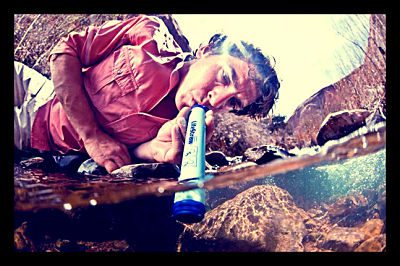
900 million people in the world are without access to safe drinking water. This a serious problem which the world is trying to address in the Millennium Development Goals (MDGs). A product developed by the Swiss-based company Vestergaard Frandsen is making great progress towards water sanitation. The product is called LifeStraw. It is a 25 cm straw that purifies water by simply sucking on the product, like a straw. LifeStraw uses no chemicals when it purifies water.

LifeStraw comes in two different sizes; the LifeStraw can provide 1000 liters of safe drinking water, and LifeStraw Family can provide 18,000 liters of drinking water. The LifeStraw removes 99.9999% of waterborne bacteria and 99.9% of parasites. However, the LifeStraw does not filter out heavy minerals or desalinate water.

LifeStraw could provide safe drinking water to many impoverished people who would otherwise suffer from the many diseases unsanitary drinking water causes. The most prevalent illness caused by unsanitary drinking water is diarrhea. Nearly one in five child deaths – about 1.5 million each year – are due to diarrhea. Diarrhea kills more young children than AIDS, malaria and measles combined.

LifeStraw uses the point-of-use (POU) approach to bring about effective, and affordable drinking water. The philosophy of POU is that purification of drinking water at the point of consumption is much more cost-effective and disease preventative. By purifying water in the household it reduces the risk of water being contaminated at other points during the purification process. POU empowers people to control the quality of their own drinking water. In the developed world, household water-quality interventions can reduce diarrhea morbidity by more than 40%.

The LifeStraw currently costs $20 in the US, but it is subsidized and made cheaper for those in need. LifeStraw was distributed to those in need during the 2010 Haiti earthquake, the 2010 Pakistan floods, and the 2011 Thailand floods. LifeStraw won the “Best Invention of 2005 Award” by Time Magazine and the 2008 Saatchi and Saatchi Award for “World Changing Ideas.”

LifeStraw is providing hundreds of thousands with affordable drinking water and is making a tremendous dent in the MDG to provide safe drinking water to all.

– Catherine Ulrich

Sources: PRINKA, The Daily Star
Photo: Cool Material

August 22, 2013
https://borgenproject.org/wp-content/uploads/borgen-project-logo.svg 0 0 Borgen Project https://borgenproject.org/wp-content/uploads/borgen-project-logo.svg Borgen Project2013-08-22 12:13:292024-05-25 00:18:17LifeStraw Providing Safe Drinking Water
Foreign Policy, Health, Sanitation, USAID, Water

Access to Clean Water and Sanitation, Water for the World

Congressmen Ted Poe (R-TX) and Earl Blumenauer (D-OR) recently introduced an important piece of legislation that may drastically improve the opportunity for every person in the developing world to access to clean water, toilets, and better hygiene practices.

The Water for the World Act of 2013, introduced by these two congressmen, is a bill that is trying to ensure that the world’s abject poor receive the attention they need from the United States in the attempt to seek improvements in clean water access and hygiene. It is important to note that this act does not seek to create new agencies or programs, but to improve the efficiency of existing programs. The emphasis is not on higher dollar amounts, but more strategic approaches in trying to improve the lives of the world’s poorest people.

Worldwide water sanitation holds important implications for those suffering in precarious conditions, as well as the global economy. The World Bank notes that water sanitation and hygiene programs are a great return on investment: For every $1 spent, $4 is returned in economic productivity, which contributes greatly to the world economy. If people do not have to worry about access to clean water, they can spend more time becoming educated, caring for their families, and contributing to both their economy and the worldwide economy. This would amount to over $220 billion being added to international trade each year.

Improvements in water sanitation, access, and hygiene that the Water for the World Act will try to effect will also significantly reduce transmissions of diseases such as pneumonia. Indirectly, rates of education will improve, as less people worldwide will suffer from malnutrition and diarrheal disease due to dirty water. As literacy rates increase, the rising middle class in developing countries will fight for more transparent and accountable governments. More responsible governance around the world is a key objective of U.S. foreign policy, but it cannot ever be realized if world populations are without access to clean water and sanitation.

Global water, sanitation, and hygiene programs currently constitute less than 1% of the budget of the United States Agency for International Development. Due to the bipartisan leadership of Poe and Blumenauer, their act will place a greater focus on enhancing the capacity of the U.S. government to provide for the world’s poorest, a much needed shift in policy which will stretch this 1% to help more people around the world.

– Rahul Shah

Sources: Huffington Post, WASH Advocates, USAid

August 20, 2013
https://borgenproject.org/wp-content/uploads/borgen-project-logo.svg 0 0 Borgen Project https://borgenproject.org/wp-content/uploads/borgen-project-logo.svg Borgen Project2013-08-20 05:53:292017-11-30 10:46:28Access to Clean Water and Sanitation, Water for the World
Education, Global Poverty, Health, Water

5 Global Poverty Solutions

Global poverty solutions
You’ve heard about the problems, but what are global poverty solutions? In fact, there are many:

1. Clean Water and Sanitation

A lot of people in the developed world take clean water and sanitation for granted. We do not realize at times how lucky we are that we don’t have to travel miles to get access to clean water, or drink seemingly safe water only to later find out it was contaminated. Improving water quality and overall sanitation are steps already being taken by non-profit and non-governmental organizations like UNICEF, etc. In fact, UNICEF’s Clean Water Campaign is attempting to do just this: help bring clean and safe tap water to people in developing and third world nations. The potential for a high impact is definitely present: just 5 U.S. dollars can provide clean tap water for one child for 200 days. Cleaner water and safer sanitation lead to healthy and fit children who are able to learn and go to school.

2. Healthcare and the Elimination and Prevention of Diseases

Similar to clean water and sanitation, proper healthcare can also help children and adults be vigorous enough to better take care of their families and work, or pursue education. Many potentially deadly diseases can be averted very simply: for example, one can greatly increase one’s chances of avoiding malaria simply by sleeping inside a mosquito net. Many charities are actively trying to save lives simply by sending nets to poverty stricken families in Africa. Vaccinations and inoculations prevent children from getting easily treatable diseases. Some very treatable diseases go unnoticed and/or untreated in families living in extreme poverty because they are often ignored, not recognized as illnesses, or treatments can’t be afforded. By eliminating and preventing easily treatable diseases, we give a chance to millions of children who otherwise might die of easily treatable maladies.

3. Education

Again, access to basic education is also perhaps something those in developed nations take for granted. Young children living in extreme poverty often have no choice but to seek employment when they reach a certain age in order to help the family financially. They often forgo an education for many reasons: for some, it’s a lack of nearby schools, for others, it’s simple economic necessity, and then there are some who cannot attend school because a lack of proper sanitation and clean water has left them with health problems; these children are unable to learn and perform well in school. Education is a positive feedback cycle in which children who receive an education are able to bring more money home for their families, thereby allowing other children to go to school rather than work. Education empowers people not only economically, but also spiritually and intellectually, potentially leading to a cyclical liberation of the poor.

4. Encouraging Local Innovation

Encouraging local innovation is a great solution to poverty because it stimulates the economy of poverty struck areas as well as supporting self-sufficiency. Some great inventions are currently coming out of Africa; some of them are simple solutions to problems only those living in extreme poverty face. Regardless, this is an eventual result of education, and if encouraged and fostered, it will result in a brighter future for those actively fighting poverty. Organizations like the African Innovation Foundation take it upon themselves to release the potential of individuals in poor African nations who would otherwise go unnoticed.

5. Eliminate Corruption

Eliminating corruption is an extremely significant move in the fight against global poverty. If it’s the higher up officials who hoard money, and prevent aid from going where it is most needed, it will hold back individual countries from eliminating diseases, educating the young, and making clean water accessible to the general population. Additionally, corruption can often result in lax law enforcement, which allows poor nations to become breeding grounds for extremist, sometimes terrorist groups. Eliminating corruption, therefore, would be taking a very big step towards eliminating poverty in general.

– Aalekhya Malladi

Sources: Clean Water Campaign, Netting Nations, Nets for Life Africa, Nothing But Nets, African Innovation Foundation
Photo: The Guardian

August 19, 2013
https://borgenproject.org/wp-content/uploads/borgen-project-logo.svg 0 0 Borgen Project https://borgenproject.org/wp-content/uploads/borgen-project-logo.svg Borgen Project2013-08-19 05:30:022024-06-05 01:53:365 Global Poverty Solutions
Global Poverty, Water

Irrigation Could End Poverty

Irrigation_Poverty
By now, it is a well known fact that clean water is necessary for drinking and hygiene. About 1.1 billion people go without clean water every day and must rely on polluted or infected supplies to survive. Even more than that go without basic sanitation. But, water is not just for human consumption and cleanliness. Access to good water can be the difference between eating and starving for rural farmers throughout Sub-Saharan Africa. In order to grow sufficient crops, farmers need water and frequently must rely on sparse rains and transporting water on their own to provide for the plants they are attempting to grow.

Only four percent of rural farmland is irrigated, even though up to 40 million hectares are proven to be appropriate for irrigation. Farming in Africa has proven to be a difficult endeavor at the best of times. Rainfall has become unpredictable and crop yield is often too low to feed a family, let alone to sell in a market. The frustrating part is that there is plenty of water available underground, but the farmers lack an affordable way to actually obtain it.

Large, centralized irrigation schemes are usually built around a major dam and were very successful, especially during the so-called Green Revolution. Millions of people were brought out of hunger as a result. But they often proved to be environmentally destructive and tend to be very expensive to build and use, especially for those living in Africa.

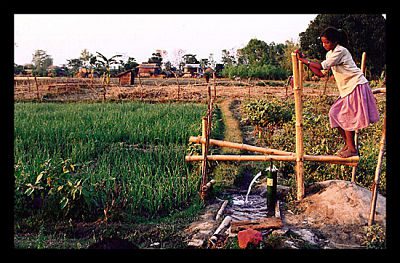
The answer to providing access to crop irrigation for poor rural farmers in Africa could be much smaller, like the treadle pump. The pump is used by stepping up and down with the long poles, or treadles, that activate the suction and pump water out of the ground. One family told Sandra Postel, who of the National Geographic Freshwater Initiative, that their $35 investment brought them $100 in revenue the first year they used it.

The downfall of a pump like this is that it requires a lot of physical work to use and ends up taking time away from other important activities like schooling and harvesting. Nonetheless, several companies such as KickStart have created variations of the treadle pump to help spread the use of irrigation. With their affordable irrigation pumps, KickStart has been able to help 750,000 Africans pull themselves out of poverty. Groups like FarmAfrica have gone in and taught the farmers how to use the pumps and what crops to grow to get the best yield. Until small motorized pumps are more universally available and affordable, the benefits of being able to grow enough food to eat and sell seriously outweigh the issue of having to operate to pump manually.

– Chelsea Evans

Sources: Global Issues, National Geographic, FarmAfrica, KickStart
Photo: Indiegogo

August 17, 2013
https://borgenproject.org/wp-content/uploads/borgen-project-logo.svg 0 0 Borgen Project https://borgenproject.org/wp-content/uploads/borgen-project-logo.svg Borgen Project2013-08-17 01:35:582024-05-25 00:16:22Irrigation Could End Poverty
Food Security, Water

Restored Canal in Cambodia Brings Hope

canal_opt
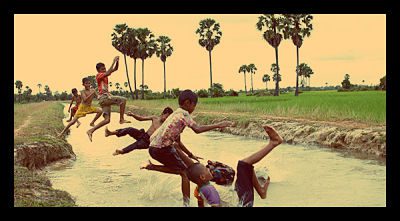
The restored canal in Cambodia has transformed lives for small rice-farming communities that depend heavily on rice for their livelihoods. Rice farming is the main source of income for 80% of Cambodia’s 14.5 million population, however, for years, farmers in the region have only been able to expect one rice cycle. Thanks to the restored canal, those in the area have enjoyed three harvests in just nine months, increasing total rice yield three times over.

Previously, the canal that zigzags across the rice paddy in the southern region of Cambodia was shallow, meaning that farmers had to depend on rainwater for a successful crop yield. Rainfall can be erratic and unpredictable. Two years before the restoration of the canal started, a bad drought destroyed rice crops, leaving scores of people hungry. The restoration involved dredging and enlarging 47 kilometers of canal in order to feed water to more than 41,100 hectares of rice in 12 provinces. Now at 6.5 kilometers wide, the canal is linked to a lake, and provides farmers with enough water to grow rice in three cycles of three months each. As a result of the project, approximately 11,240 families across the 12 provinces will have better irrigation for farming.

The restoration of the canal was funded by Sweden and Australia, and the work was carried out by an NGO in conjunction with local authorities. It was launched in an effort to help communities in vulnerable areas manage the risks of climate change. With the impacts of climate change expected to adversely affect the production of rice, it has been a goal of the UNDP to put mechanisms in place that will help to guarantee food production and food security in the future.

With rice yields already on the increase, farmers in the region are beginning to feel the financial benefits. Lim Savoeun, a rice-farmer, said the increased profits have made a big difference for her family. “In the past, we struggled to scrape by and sometimes had to loan money from others to fill the gap [in the income],” she said. “But we can avoid that since we are now able to grow rice for often that before. As long as there is water, we will keep working tirelessly on our land. We can’t complain.”

– Chloë Isacke

Sources: UNDP, United Nations
Photo: New York Times

August 12, 2013
https://borgenproject.org/wp-content/uploads/borgen-project-logo.svg 0 0 Borgen Project https://borgenproject.org/wp-content/uploads/borgen-project-logo.svg Borgen Project2013-08-12 05:51:072024-06-05 01:53:36Restored Canal in Cambodia Brings Hope
Developing Countries, Global Poverty, Water

WASH Advocates Bring a Clean Water Initiative

WASH advocates
For many people in the third world, getting access to clean drinking water  is an every day struggle. WASH Advocates is trying to change this reality. The organization works in Asia, Africa and Latin America to bring awareness and solutions to impoverished areas of the world.

Although one of the main goals of WASH Advocates is to spread awareness of the consequences of ingesting unsanitary water, the group does not stop there. The organization improves communication and connections between other groups, like corporations, religious associations, schools and nonprofits, to maximize each group’s efforts to help as many people as possible. Another aspect of WASH Advocates is collaborating with USAID and the State Department to engage the United States in providing clean water in developing countries.

Some of the methods WASH Advocates endorse are Rotary International clubs that install wells, curriculum programs that offer opportunities for students to learn about clean water and sanitation, Engineers Without Borders which creates water filtration systems, church programs that raise funds for clean water initiatives, and students and universities. According to WASH Advocates, over 1,500 students participated in a challenge to drink only water and then donate the money that would have gone towards other drinks to helping Rwanda develop systems for clean water.

Given that 780 million people are currently lacking sanitized drinking water and 2.5 billion do not have basic sanitation, the work WASH Advocates is carrying out is critical for a healthy and safe lifestyle for millions of people. The organization reiterates that investment in clean water technology and techniques offer huge payoffs in productivity levels in that community.

– Mary Penn

Sources: Wash Advocates, Bright Funds

August 6, 2013
https://borgenproject.org/wp-content/uploads/borgen-project-logo.svg 0 0 Borgen Project https://borgenproject.org/wp-content/uploads/borgen-project-logo.svg Borgen Project2013-08-06 06:18:242017-11-30 10:45:20WASH Advocates Bring a Clean Water Initiative
Water

New Developments in Water Purification

Clean_Water_Purification
Like great inventors before him, Timothy Whitehead identified a problem and then considered a creative solution. During a visit to Zambia, Whitehead noticed villagers sterilizing their water by dissolving iodine and chlorine pills. While technically successful, this method is not kind to the palate or time efficient—it takes up to half an hour to generate water grossly distorted in taste. But in Zambia’s predominantly tropical climate, time can be of the essence when it comes to water purification to treat dehydration.

Whitehead, who studied design and technology at Loughborough University in England, thought about ways to improve upon this process. Months of experimentation and research culminated in the unveiling of his Pure water bottle. Unfiltered water enters one of water bottle’s dual chambers. Then, the other chamber is pumped through the dirty water and serves as a physical filtration system. Lastly, the water that has now been separated from soil particles is sterilized by UV light activated by winding up a mechanical crank. Unlike its lengthy predecessor, the Pure water bottle creates tasty drinking water in under two minutes.

Drinking unsanitary water can cause a host of health problems. In developing nations, access to potable water can be difficult to come by and lack of access to healthcare can further exacerbate this issue. It is estimated that annually, 760 thousand children under 5 years of age die from diarrhea, which may be a result of drinking contaminated water. Expanding access to clean water has the potential to prevent millions of deaths.

Since its introduction, the Pure water bottle has received plenty of Internet buzz and accolades – even having the distinct honor of earning a 2010 James Dyson Award. The story behind Whitehead and his Pure water bottle is just one example of emerging technology that works to address pressing aspects of global poverty. When innovation and compassion for humanity unite, amazing results follow.

– Melrose Huang

Sources: BBC, Inhabitat, Timothy Whitehead, World Health Organization
Photo: WordPress

August 6, 2013
https://borgenproject.org/wp-content/uploads/borgen-project-logo.svg 0 0 Borgen Project https://borgenproject.org/wp-content/uploads/borgen-project-logo.svg Borgen Project2013-08-06 05:17:502015-01-14 11:13:39New Developments in Water Purification
Page 53 of 57«‹5152535455›»

Get Smarter

  • Global Poverty 101
  • Global Poverty… The Good News
  • Global Poverty & U.S. Jobs
  • Global Poverty and National Security
  • Innovative Solutions to Poverty
  • Global Poverty & Aid FAQ’s
Search Search

Take Action

  • Call Congress
  • Email Congress
  • Donate
  • 30 Ways to Help
  • Volunteer Ops
  • Internships
  • Courses & Certificates
  • The Podcast
Borgen Project

“The Borgen Project is an incredible nonprofit organization that is addressing poverty and hunger and working towards ending them.”

-The Huffington Post

Inside The Borgen Project

  • Contact
  • About
  • Financials
  • President
  • Board of Directors
  • Board of Advisors

International Links

  • UK Email Parliament
  • UK Donate
  • Canada Email Parliament

Get Smarter

  • Global Poverty 101
  • Global Poverty… The Good News
  • Global Poverty & U.S. Jobs
  • Global Poverty and National Security
  • Innovative Solutions to Poverty
  • Global Poverty & Aid FAQ’s

Ways to Help

  • Call Congress
  • Email Congress
  • Donate
  • 30 Ways to Help
  • Volunteer Ops
  • Internships
  • Courses & Certificates
  • The Podcast
Scroll to top Scroll to top Scroll to top