• Link to X
  • Link to Facebook
  • Link to Instagram
  • Link to TikTok
  • Link to Youtube
  • About
    • About Us
      • President
      • Board of Directors
      • Board of Advisors
      • Financials
      • Our Methodology
      • Success Tracker
      • Contact
  • Act Now
    • 30 Ways to Help
      • Email Congress
      • Call Congress
      • Volunteer
      • Courses & Certificates
      • Be a Donor
    • Internships
      • In-Office Internships
      • Remote Internships
    • Legislation
      • Politics 101
  • The Blog
  • The Podcast
  • Magazine
  • Donate
  • Click to open the search input field Click to open the search input field Search
  • Menu Menu

Archive for category: Water

Water

World Bank & India’s Most Impoverished State

World Bank & India's Most Impoverished StateAkhilesh Yadav is more than just a cool name; he’s the Chief Minister of India’s Uttar Pradesh and has recently sought monetary assistance of more than $3.5 billion from the World Bank Group over the next three to five years.

To illustrate India’s need more clearly, Minister Yadav took World Bank Group President Jim Yong Kim on a tour of Uttar Pradesh. Home of the Taj Mahal, Uttar Pradesh is also home to the largest number of impoverished people in all of India – a country that has an estimated 37% of people living below the country’s poverty line. With India’s urban population expected to grow by 10 million each year, states such as Uttar Pradesh are in dire need of assistance.

After seeing the poverty in India’s most impoverished state firsthand, Kim agreed that helping Uttar Pradesh and other Indian states are in line with the World Bank’s mission of eliminating global poverty. Among the goals the World Bank supports is the national mission to clean the Ganga River. The World Bank will be contributing $1 billion. The money is to be dispersed through five of the basin states. This contribution supports an existing Indian program: the National Ganga River Basin Project. The Ganga River’s basin community supports more than 400 million Indians, about one-third of the population, and is India’s most important river.

– Pete Grapentien

Source: The World Bank

March 13, 2013
https://borgenproject.org/wp-content/uploads/borgen-project-logo.svg 0 0 Borgen Project https://borgenproject.org/wp-content/uploads/borgen-project-logo.svg Borgen Project2013-03-13 18:47:502020-05-24 23:07:02World Bank & India’s Most Impoverished State
Water

How Desalination Can Prevent a World Water Crisis


A study from NASA and the University of California – Irvine shows that the Middle East is losing its fresh water reserves. From 2003 to 2009, around 144 cubic kilometers of water have been lost from the Middle East. The study utilized observations from the Gravity Recovery and Climate Experiment (GRACE) satellite mission to evaluate trends of freshwater storage in the Middle East. The “lost water” comes from water resources below the Earth’s surface that are drilled for and relied on in times of drought. This recent news reminds us that water, like oil, is a finite resource. However, Qatar seems to have found a way to manage through this water crisis.

In a TED talk earlier this year in Doha, Qatar, Fahad Al-Attiya, Chairman of Qatar’s National Food Security Programme, delivered a talk on his job, maintaining food security in a country that has no water and imports 90% of its food. Qatar is a country that is rich in oil, boasts strong economic growth, and has a rapidly expanding population. And with a rapidly expanding population comes rising levels of water consumption. The population of Qatar has grown to 1.7 million in less than 60 years. Water consumption levels are at 430 liters a day, the highest in the world. Qatar has gone from having no water to consuming water to the highest degree. Regardless, the country has maintained consistent growth of 15% every year for the past five years without water. This, Al-Attiya says, is “historic.”

The answer to the question of how this was possible is desalination. The process of desalination consists of removing salt from seawater, allowing for Qatar to compensate for depleting water levels in the aquifers. This is a revolutionary change, leaving Qatar in a state of “structurally-induced water abundance.” Utilizing reverse osmosis and solar desalination technologies, desalination presents a very sustainable solution to a country that receives less than 74 millimeters of rain a year. Through desalination, Qatar is able to produce 3.5 million cubic meters of water. This water will go to farmers that will be able to supply the country with food. Al-Attiya calls it “the best technology that this region could ever have.” For the next year, this will be Al-Attiya’s work. His goal is for Qatar to become a millennium city.

March 22 marks World Water Day and the International Year of Water Cooperation. Around the world, many will participate in World Walks for Water and Sanitation, a global event aimed at addressing the world’s water crisis. More than 780 million lack access to clean water. More than 3 million die every year due to the scarcity of this resource. Qatar, along with the UAW and Saudi Arabia, are working on large-scale desalination projects. In India, farmers are looking into System of Rice Intensification (SRI) to reap record breaking harvests of rice. Through investing in projects and innovations like desalination and SRI, we can more efficiently and more effectively manage the world’s most important resource.

– Rafael Panlilio

Sources: CNN, TED, Water.org

March 5, 2013
https://borgenproject.org/wp-content/uploads/borgen-project-logo.svg 0 0 Borgen Project https://borgenproject.org/wp-content/uploads/borgen-project-logo.svg Borgen Project2013-03-05 21:00:192024-05-24 23:43:09How Desalination Can Prevent a World Water Crisis
Aid Effectiveness & Reform, Water

Drought in India Brings Villagers Together

Drought in India Brings Villagers TogetherThe villages around Dungarpur in India’s northwestern state of Rajasthan have a natural beauty that is characteristic of many rural hillside towns. There are rolling wheat fields, eucalyptus trees and luscious neem trees that contrast the colors of the red-tiled houses. However, this area is not without its natural problems as well. The region suffers from a chronic lack of water and faces the common problem of drought in India. Between rainy seasons, the men of the village often have to leave their farms to pick up work in surrounding cities.
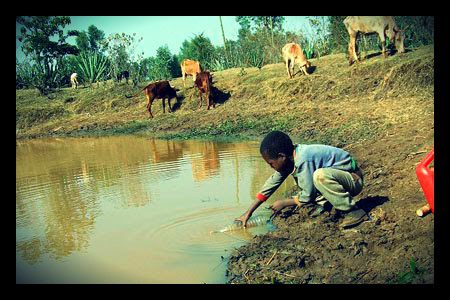

This year, half the men are staying closer to home. The village is structured around a pond that provides water to surrounding farms. Normally, the pond dries up by this time of the year, but thanks to the Evangelical Fellowship of India Commission on Relief (EFICOR), the lake has enough water to last until the next rains come months from now. The pond has suddenly turned into a lake after tractors deepened it by 15 feet last May to drastically increase the size of the reservoir. Now, the lake is not only filled in a time of year when it used to be dried up, but there is enough water to irrigate fields that are farther away, allowing the villagers to plant second crops. This drought in India is benefiting the villagers.

EFICOR’s work in the region has not come easily. The organization has been in this area of India since 2008 trying to gain the trust of the locals and figure out how best to serve them. The villagers in the area are marginalized Bhil people that are distrustful of and unconnected to state government. EFICOR worked with them to make use of the government aid programs that they are eligible for. One of the most important breakthroughs for the villagers was forming community committees. The formerly disconnected families came together under these new committees to decide which ponds to deepen and which families needed the most urgent attention. The committees even tested the power of the village chief that formerly based these types of decisions on favoritism.

In addition to their community committees, EFICOR has set up savings groups for women in the villages. One group saved enough money to consider buying a small grinding mill. The goal of the project is to build confidence among the marginalized communities and show them that they are entitled to just as many government services as any other citizens. The plan seems to be working, but it will be a long time before we can tell if the newfound solidarity among the villagers will last.

 – Sean Morales

Source: The Guardian

March 3, 2013
https://borgenproject.org/wp-content/uploads/borgen-project-logo.svg 0 0 Borgen Project https://borgenproject.org/wp-content/uploads/borgen-project-logo.svg Borgen Project2013-03-03 14:30:072020-05-17 21:44:28Drought in India Brings Villagers Together
Water

UN Delivers Sanitary Water Supplies to Syria

syria water
The conflict in Syria, which began in 2011, has left over four million people in need of humanitarian aid. The current shortage of sanitary water supplies is producing grave repercussions on children’s health. UNICEF, coordinating with other organizations including the Syrian Aran Red Crescent and the Ministry of Water Resources, is working to provide sanitary water supplies for over 10 million people.

Access to safe water supplies has grown increasingly difficult as chlorine supplies in Syria have significantly declined. Shortage of clean water greatly increases the risk of contracting water-borne diseases, including diarrhea. The effects are most detrimental to children, whose systems are not as able to bear the strain.

On February 3rd, 80 tons of sodium hypochlorite water chlorination supplies were been delivered to Syria through the Jordanian border. UNICEF will transport 1,000 tons of chlorine to regions across Syria over the coming weeks.

At the same time, the World Health Organization, co-signing an agreement with Saudi Arabia, will donate medicines and medical equipments worth $2.1 million, which will assist over 3 million people and last the period of a year.

Relieving the shortage of medicines, waste management, and the lack of clean water supplies are the three foremost steps to humanitarian aid in Syria; the international community has pledged more than $1.5 billion for this cause.

– Pimrapee Thungkasemvathana

Source: UN
Photo: Reuters

February 11, 2013
https://borgenproject.org/wp-content/uploads/borgen-project-logo.svg 0 0 Borgen Project https://borgenproject.org/wp-content/uploads/borgen-project-logo.svg Borgen Project2013-02-11 11:43:492024-06-10 02:50:04UN Delivers Sanitary Water Supplies to Syria
Sanitation, Technology, Water

“Survival Still” Offers Help in Disasters

"Survival Still" Offers Help in DisastersThe “Survival Still” System was announced a few months ago by inventor Glenn Meder. It is a new water distillation system that changes unsanitary, undrinkable water into water that is completely safe for human consumption. Contaminated water of any kind can be transformed into drinkable water, including muddied or ocean water. This product could be incredibly helpful to people in disaster situations, or even those who normally live with limited access to safe drinking water, as most of the world does.

The system relies heavily on distillation; it boils the water and collects the steam, which is the only pure part of the process. The Survival Still is made of stainless steel and does not need any filters. As seen in the photograph above, the Survival Still only needs the water and heat to provide fresh drinking water for the user. In any case, the process can be done in almost any location, provided there is an acceptable heating source.

Although the Survival Still was primarily created for victims of catastrophes such as Hurricane Sandy or other devastating natural disasters, it can be used by those who constantly struggle for access to clean drinking water, such as those in the developing world who face poverty on a daily basis. Many people do not have easy access to clean, safe drinking water that many U.S. citizens enjoy. They travel miles to reach clean water, and if they choose to drink water closer to their homes, they run a high risk of receiving potentially fatal waterborne diseases.

The design of this product was mastered over 20 years, and the current version is simple but functional. The reason Meder created the Survival Still was both to give one to every home in the United States (just in case) and also to help attempt to solve the water crisis that is occurring on a global scale. The lack of water in developing countries is one of the biggest issues of today, and the Survival Still, if distributed properly, could help move us towards a sustainable solution.

– Corina Balsamo

Source: Water World

February 5, 2013
https://borgenproject.org/wp-content/uploads/borgen-project-logo.svg 0 0 Borgen Project https://borgenproject.org/wp-content/uploads/borgen-project-logo.svg Borgen Project2013-02-05 13:36:312020-05-07 23:16:17“Survival Still” Offers Help in Disasters
Page 57 of 57«‹555657

Get Smarter

  • Global Poverty 101
  • Global Poverty… The Good News
  • Global Poverty & U.S. Jobs
  • Global Poverty and National Security
  • Innovative Solutions to Poverty
  • Global Poverty & Aid FAQ’s
Search Search

Take Action

  • Call Congress
  • Email Congress
  • Donate
  • 30 Ways to Help
  • Volunteer Ops
  • Internships
  • Courses & Certificates
  • The Podcast
Borgen Project

“The Borgen Project is an incredible nonprofit organization that is addressing poverty and hunger and working towards ending them.”

-The Huffington Post

Inside The Borgen Project

  • Contact
  • About
  • Financials
  • President
  • Board of Directors
  • Board of Advisors

International Links

  • UK Email Parliament
  • UK Donate
  • Canada Email Parliament

Get Smarter

  • Global Poverty 101
  • Global Poverty… The Good News
  • Global Poverty & U.S. Jobs
  • Global Poverty and National Security
  • Innovative Solutions to Poverty
  • Global Poverty & Aid FAQ’s

Ways to Help

  • Call Congress
  • Email Congress
  • Donate
  • 30 Ways to Help
  • Volunteer Ops
  • Internships
  • Courses & Certificates
  • The Podcast
Scroll to top Scroll to top Scroll to top