• Link to X
  • Link to Facebook
  • Link to Instagram
  • Link to TikTok
  • Link to Youtube
  • About
    • About Us
      • President
      • Board of Directors
      • Board of Advisors
      • Financials
      • Our Methodology
      • Success Tracker
      • Contact
  • Act Now
    • 30 Ways to Help
      • Email Congress
      • Call Congress
      • Volunteer
      • Courses & Certificates
      • Be a Donor
    • Internships
      • In-Office Internships
      • Remote Internships
    • Legislation
      • Politics 101
  • The Blog
  • The Podcast
  • Magazine
  • Donate
  • Click to open the search input field Click to open the search input field Search
  • Menu Menu

Archive for category: War and Violence

Information and news War and Violence

Global Poverty, War and Violence

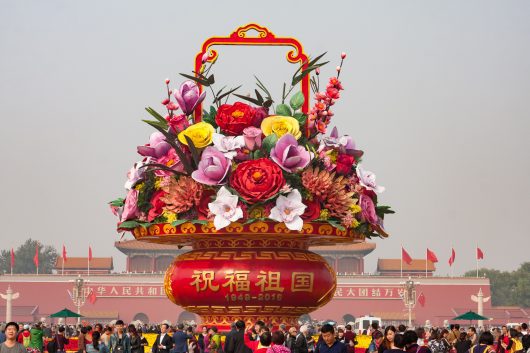
10 Facts About the Taiping Rebellion

Taiping Rebellion
The Taiping Rebellion was a civil war fought in China between the Taiping rebels and the Qing Dynasty, beginning in 1851 and lasting until 1864. It was the second-deadliest war in human history after World War II.

Top 10 Facts about the Taiping Rebellion


  1. The Taiping Rebellion was led by an educated and disaffected peasant.
    Hong Xiuquan, the leader of the Taiping forces, was an educated man who failed the civil service examinations, the tests required to enter government service. His failure led to emotional trauma and a bout of delirium in which he dreamt of being instructed on how to exterminate demonic spirits. Following his conversion to Christianity, he understood these dreams to be a vision from God declaring him to be a brother of Jesus Christ and proceeded to rail against the opium use prevalent during that time. These experiences became the basis for the Taiping Rebellion.
  2. Poverty was endemic throughout China.
    Conditions in the Chinese countryside opened the people to the idea of rebellion due to a lack of food, land and jobs. As Dr. Stephen R. Platt, a scholar of Chinese history writes, “[o]ut-of-work miners, poor farmers, criminal gangs and all manner of other malcontents folded into the larger army, which by 1853 numbered half a million recruits and conscripts.” The economically downtrodden peasants were further burdened by the loss of the First Opium War and the subsequent proliferation of opium dens throughout the land.
  3. The population was booming.
    One of the causes of the shortage in food was the rapidly growing population, which had grown to 430 million by 1850, a 300 percent increase from the population in 1500.
  4. The movement had a populist message.
    Some of the primary plans of the Taiping Revolution were the establishment of collective ownership of property, gender equality and an eternal reward based on Christian doctrine. The foundations of the collectivist governing structure came from The Rites of Zhou, an ancient text which prescribed rules for equitable distribution of resources to each family.
  5. The movement was divinely-inspired.
    The full name of the kingdom once it was established was Taiping Tianguo, or Heavenly Kingdom of Great Peace. Hong Xiuqiang learned Christian principles from an American missionary and the movement found a home at Thistle Mountain, where its worshippers gathered. The religion drew from Chinese Confucianism, ideas from ancient Chinese texts, and Christian beliefs to create a unique religion.
  6. The movement was far-reaching.
    The Taiping leaders’ populist message enabled them to raise a massive army of over one million soldiers. This force went forth to conquer Nanjing, which became the kingdom’s capital, in addition to about a third of the entire territory of China.
  7. The Qing used foreign power to crush the rebels.
    The Qing government could attain the support of foreign governments, Great Britain and France, to fight the rebels. Such support allowed the Qing forces to outmatch their opponents using foreign weaponry and warships. One of the reasons for foreign governments’ backing of the Qing Dynasty was to continue the open trade policies secured with China following the First Opium War.
  8. Casualties were astronomical.
    It is estimated that some 20 million people died during the war, around three million more deaths than during World War I, some 64 years later. The fighting was brutal, including “beheadings, flayings, rapes, suicides, disembowelments, mass killings, and acts of cannibalism,” according to Dwight Garner in a book review of Dr. Platt’s Autumn in the Heavenly Kingdom: China, the West, and the Epic Story of the Taiping Civil War. In many cases, the entire population of cities was massacred.
  9. The fatal battle was in Nanjing.
    Nanjing would be the site of the fatal battle of the war. Here, Hong Xiuquan would die of disease, according to his son, or suicide, according to one of his generals. The city was then breached by the Qing forces and the remaining forces either fled or were executed, with the last of the generals executed in 1868.
  10. The Taiping Rebellion laid the groundwork for future revolutionary movements in China.
    The Taiping Rebellion drained the already weakened Qing Dynasty, which would collapse less than 50 years later. The causes of the Taiping Rebellion were symptomatic of larger problems existent within China, problems such as lack of strong, central control over a large territory and poor economic prospects for a massive population. The endemic hardship of a massive population in the countryside, which enabled the rise of Hong Xiuquan, would later enable the rise of Mao Zedong and the government that evolved into the China we know today. Today, with the continued outlawing of Falun Gong practice as an insurrectionist movement, the State would appear to have learned from history to avoid letting such a movement reach levels to rival the Taiping movement.

– Lucas Woodling

Photo: Flickr
January 19, 2017
https://borgenproject.org/wp-content/uploads/borgen-project-logo.svg 0 0 Borgen Project https://borgenproject.org/wp-content/uploads/borgen-project-logo.svg Borgen Project2017-01-19 01:30:392024-12-13 17:56:2910 Facts About the Taiping Rebellion
Developing Countries, War and Violence

What is Ethnic Cleansing?

what is Ethnic Cleansing
What is ethnic cleansing? The term ethnic cleansing refers to the mass purge of members of an ethnic or religious group in an area by those of another. Throughout history, there have been many brutal examples of it. The aim is to rid of unwanted members of society and create an ethnically pure community.

The most famous examples of ethnic cleansing occurred throughout the 20th century. First, the Turkish massacre of Armenians during World War I, followed by the Holocaust during the Second World War. The Holocaust is possibly the most horrific example of ethnic cleansing, as the Nazis annihilated around 6 million European Jews. A final example is a forced displacement carried out in the former Yugoslavia and Rwanda during the 1990s.

A recent example of ethnic cleansing is the Iraq Civil War, that consequently led to the Iraqi insurgency, which began in 2011 and is still happening. Areas are being evacuated as a result of insecurity and fear. The United Nations estimates that 2.2 million Iraqis have been displaced and that nearly 100,000 Iraqis evacuated to neighboring countries each month.

It is common for ethnic cleansing and genocide to get confused, as both include mass expulsion. Genocide means the targeting of a large group and the deliberate killing of its members. The International Criminal Court has linked both ethnic cleansing and genocide very closely, labeling them both as crimes against humanity and war crimes.

Ethnic cleansing has many consequences. There have been many cases of depression and other forms of psychological anguish as a result of it. Communities built by refugees are plagued with sadness, and the numbers of those living beneath the poverty line continue to increase. Shortages of food, clean water and housing become more apparent as these numbers continue to rise.

Finding a solution to ethnic cleansing is too difficult due to the vast differences between various ethnic groups and members of society. The only help that can be given is to the victims of it. This can be done through the donation of resources, to help communities that are struggling as a result of brutal situations.

– Georgia Boyle

Photo: Flickr

January 16, 2017
https://borgenproject.org/wp-content/uploads/borgen-project-logo.svg 0 0 Borgen Project https://borgenproject.org/wp-content/uploads/borgen-project-logo.svg Borgen Project2017-01-16 01:30:002020-05-25 07:32:05What is Ethnic Cleansing?
Global Poverty, War and Violence

Ten Facts About World War II

 World War II
World War II was an expansive war fought between the Axis powers (Germany, Italy and Japan) and the Allied power (Great Britain, Russia and the U.S.) that lasted from 1939 until 1945. With such a complex narrative, here are only 10 facts about World War II.

  1. World War II was not only fought in Europe.
    In the North African Military Campaigns between 1940 and 1943, the Axis powers attempted to cut off Middle Eastern oil supply to the Allies. These campaigns took place in Western Egypt, Eastern Libya, Algeria, Morocco and Tunisia. Ultimately, the Axis powers did not achieve their goal and the Allied powers neutralized the German threat. World War II was also fought in the Pacific. On December 4th, 1941, Japan attacked Pearl Harbor damaging the American Pacific fleet. Japan went on to conquer the Philippines, the Dutch East Indies, Hong Kong, Malaya, Singapore and Burma. However, after 1943, American forces slowly removed the Japanese from power in the pacific front. Full Japanese surrender came after the U.S. dropped the atomic bombs, Hiroshima and Nagasaki in 1945.
  2. In total WWII claimed the lives of approximately 60 million people.
  3. The Holocaust claimed the lives of six million Jews.
  4. World War II was a continuation of World War I.
    At the end of WWI, the Treaty of Versailles was signed. The treaty placed most of the blame on Germany, requiring them to pay large amounts of reparations and forcing the country to disarm. This greatly angered and humiliated the German people. Hitler used the German discontent to run as German Chancellor in the 1930s in which he promised to restore Germany.
  5. The immediate cause of WWII was the German invasion of Poland.
    Although facts about World War II show a multitude of causes for the war, the invasion of Poland was a crucial event. On September 1, 1939, Germany invaded and within weeks successfully conquered Warsaw. Germany annexed West Prussia, Poznan, Upper Silesia, and the former Free City of Danzig. As a response to the invasion, Britain and France declared war on Germany.
  6. The U.S was involved in WWII before the Pearl Harbor attack.
    At the start of WWII, President Franklin D. Roosevelt declared the U.S. would practice neutrality. However, on March 11, 1941, the Lend-Lease Act passed which allowed the U.S. to provide military aid to allied nations during WWII.
  7. Stalingrad was a major turning point in the war.
    On July 9, 1942, Hitler ordered the capture of the Soviet Union city of Stalingrad. As a response, Stalin deployed the armed forces to defend Stalingrad and prohibited the civilians from leaving the city. Multiple counter-offensive attacks lead to Soviet victory.
  8. The Japanese used Kamikazes aircrafts.
    Kamikazes aircrafts were manned by Japanese soldiers who were instructed to crash into Allied ships. In total, kamikazes destroyed more than 300 U.S. ships which resulted in 15,000 casualties.
  9. Germany surrendered in May of 1945, while Japan did not surrender until September.
  10. The Marshall Plan gave aid to Europe to rebuild after World War II.
    The Marshall Plan gave $12 billion to Western European countries in economic turmoil caused by WWII.

World War II is still a popular topic today because it was one of the most violent and complex wars in history. These 10 facts about World War II only give a very brief overview.

– Karla Umanzor

Photo: Flickr

January 15, 2017
https://borgenproject.org/wp-content/uploads/borgen-project-logo.svg 0 0 Borgen Project https://borgenproject.org/wp-content/uploads/borgen-project-logo.svg Borgen Project2017-01-15 01:30:362024-12-13 17:56:29Ten Facts About World War II
Global Poverty, Refugees, War and Violence

Anderson Cooper and Kelly Ripa Honor “CNN Heroes”

Anderson Cooper and Kelly Ripa Honor "CNN Heroes"Last weekend, CNN continued its annual tradition of honoring ten brave and thankless role models throughout the world. Headlined by Anderson Cooper and Kelly Ripa, the “CNN Heroes” award gala took place at New York’s American Museum of Natural History. The two-hour live event featured clips detailing the work of each hero, and at the end, 2016’s Hero of the Year was revealed as chosen by the viewer audience.
From adventurous kayaker Brad Ludden’s First Descents to young father Sheldon Smith’s Dovetail Project, the organizations represented were truly diverse, with notables including those furthering progress in the developing world.

CNN Heroes kicked-off by celebrating Luma Mufleh and her organization, Fugees Family. Founded in 2004, Luma assists refugee children to the United States by offering free academic enrichment programs and coaching after-school soccer games. As a Jordanian refugee herself, she targets children displaced due to war, and tailors services to meet individual needs, whether overcoming language barriers, learning about American institutions or combating discrimination. To date, Fugees Family has assisted more than 850 kids from 28 countries.

Another highlight is Umra Omar’s Safari Doctors which began in 2014. Umra temporarily lived in the U.S. but returned to her home in Kenya to provide medical care to the remote Lamu archipelago near the Somali border. Faced with frequent threats and spillover attacks by Al-Shabaab terrorists, most professionals in health care and education fled the Lamu area. However, Umra looks past the danger and now delivers immunizations and other basic health services, arriving on her own by boat. She estimates that she has treated over 2,000 people so far and maintains that these dire communities would benefit most from the return of trained professionals.

Finally, the 2016 Hero of the Year? Jeison Aristizabal, a native of Cali, Colombia, began a project known as ASODISVALLE to assist disabled persons in one of the poorest areas of his home country. Jeison suffers from cerebral palsy and since 2000, has worked to triumph over prevailing stigmas for all. Part of his mission focuses on the identification of other disabled people in the region, but the more important part focuses on providing inclusive rehabilitation and educational services to integrate these citizens back into the community. He offers everything from job training to healthy meals, stimulating the opportunities and happiness of thousands in the area.

Hosts Cooper and Ripa were seen getting emotional more than once at the event, a testament to their support for such projects around the developing world. Cooper has been a part of the program since its inception 10 years ago, and Ripa joined just this year, though making appearances as a presenter during the last two ceremonies. Ripa is also a known supporter of UNICEF.

While the real stars of the event are undoubtedly the remarkable CNN Heroes honorees, it is likely that Cooper and Ripa will both continue to use their presence to draw attention to similar causes in upcoming years.

– Zachary Machuga

Photo: Flickr

December 21, 2016
https://borgenproject.org/wp-content/uploads/borgen-project-logo.svg 0 0 Borgen Project https://borgenproject.org/wp-content/uploads/borgen-project-logo.svg Borgen Project2016-12-21 01:30:042024-12-13 17:56:22Anderson Cooper and Kelly Ripa Honor “CNN Heroes”
Education, War and Violence

Six Things to Know About the Education in Yemen

Education in Yemen
On August 13, 2016, a Saudi-led airstrike killed 10 children at a school in the country’s northern region, and all were under the age of 15. Unfortunately, children in Yemen have become accustomed to this fallout from the civil war that has raged within their country since March of 2015. Currently, education in Yemen has become a crucial subject for the country’s youth, who struggle to continue learning despite the war surrounding them.

Here are some features of what education in Yemen looks like for millions of children today:

  1. On any given day, the number of children in Yemen who miss out on school exceeds 2 million. Reasons range from lack of textbooks and chairs to the destruction and militarization of school buildings.
  2. Children in Yemen often face grave danger both in and out of class. Students have been killed on their way to school as well as while attending classes, raising questions within families as to the safety of pursuing education.
  3. Staying home, however, raises further concerns. The fear of child recruitment is very real — children as young as eight have been counted by the U.N. as some of 1,200 enlisted to fight in the conflict. Education proves an effective tool for keeping children from the violent arms of war.
  4. According to the U.N., more than 3,600 schools have closed in Yemen since the beginning of the conflict in March 2015. Bombings destroyed many of these buildings, while many others are now used as training facilities for military forces. UNICEF currently estimates that it needs $34 million for its Back-to-School campaign to help rebuild Yemen’s education system, which includes building restoration, training, textbooks and provisions.
  5. In the 14 years leading up to the conflict, education in Yemen saw an incredible period of growth and improvement. Yemen’s enrollment rate rose from 71.3 percent to 97.5 percent during this time, an incredible stride, according to The World Bank.
  6. In July 2015, UNICEF and Yemen’s Ministry of Education trained 50 teachers and social workers to help children deal with the psychological fallout of living in the country torn apart by civil war. Specialized training in psychosocial approaches offers a healing hand to children growing up in war zones and helps equip them with the tools to deal with the violence.

In the midst of such difficult times, both teachers and students have proven that education in Yemen is a valuable thing. Although a large number of children currently struggle to find ways to learn, their path is becoming increasingly clear due to the hard work and resolution of educators in their country.

– Emily Marshall

Photo: Flickr

December 6, 2016
https://borgenproject.org/wp-content/uploads/borgen-project-logo.svg 0 0 Borgen Project https://borgenproject.org/wp-content/uploads/borgen-project-logo.svg Borgen Project2016-12-06 01:30:282024-12-13 17:56:16Six Things to Know About the Education in Yemen
Global Poverty, Human Rights, Hunger, War and Violence

Hunger in Yemen: Slowly Moving Imports

Hunger in Yemen
Last October, photos of an emaciated 18-year-old girl, Saida Ahmad Baghili, circulated the internet. A quick glance at this shocking photograph explains why the U.N. World Food Programme (WFP) is pleading for $258 million, which would fund food assistance for the hunger in Yemen problem until January 2017.

The WFP warns that Yemen is on the brink of famine. The 19-month civil war aggravated the inherent poverty in Yemen and worsened malnutrition for thousands of individuals including Baghili. Before the war, Yemen already had the Arab world’s lowest GDP per capita and 45 percent of its population were malnourished.

Slowly Moving Imports

Additionally, before the war, Yemen imported 90 percent of its food. Now, ships carrying food find it difficult to enter the country’s ports.

Online newspaper The Intercept explains that the Saudi-led coalition has enforced air and sea blockades on rebel-held parts of Yemen since March. The coalition allows only U.N. supervised flights and aid shipments to enter the country.

With conflict escalating and a shortage of food in local markets, prices of basic foods have increased. At one point in time, the WFP’s market analysis stated that the national average price of wheat flour was 55 percent higher compared to the pre-crisis period, which affects the hunger in Yemen problem a great deal.

The blockades also threaten  fuel needs for water pumps and generators in hospitals. Doctors Without Borders states that the restrictions on imports severely hinders medical workers’ ability to treat patients. Many Yemeni like Baghili are dying from basic diseases that are easily treatable.

The Saudi coalition denies the accusations and says it was implementing U.N. resolutions that aim to prevent weapons and ammunitions. They explained that the coalition gives aid ships immediate and regular permits to reach Yemeni ports, pointing to the opposition’s black market as the cause of their “humanitarian catastrophe.”

The Office for the Coordination of Humanitarian Affairs (OCHA) reported that in August 2016 significant delays were experienced. The report attributed the delays to reduced operational capacity. In Seleef’s port, two vessels waited for berth an average of 45 days. Since December 2015, average delays in ships entering ports have increased. This could be why the WFP estimates it takes four months from the time they receive funds for the food to reach families who need it.

A Community’s Response 

Alex Potter, a photojournalist based in Yemen, shares how the Yemeni community pours out support for each other: neighbors invite displaced people into their homes, wealthier Yemenis donate trucks of water and friends visit to help with daily tasks. She said, “In Yemen if you see your neighbor needs something, you always share.”

Yet the WFP issued an urgent statement that resources are running out. While they reached millions of people with emergency assistance in March and July, they were still forced to split rations between more families to meet the growing need throughout this problem of the hunger in Yemen.

Baghili’s photograph further highlights a shocking reality where a teenager’s parents lack the financial means to help their severely malnourished daughter. Baghili only received treatment when charitable people pooled their funds together so she could receive proper medical attention.

Many countries and people have answered WFP’s call.  Perhaps we too can become like the charitable people whose donations save the lives of those like Baghili.

– Andy Jung

Photo: Flickr

December 1, 2016
https://borgenproject.org/wp-content/uploads/borgen-project-logo.svg 0 0 Borgen Project https://borgenproject.org/wp-content/uploads/borgen-project-logo.svg Borgen Project2016-12-01 08:32:492024-12-13 17:56:11Hunger in Yemen: Slowly Moving Imports
Children, Education, War and Violence

UN Protects Education in the Central African Republic

Education in theEducation in the Central African Republic
In 2016, militiamen in the Central African Republic began setting up base at schools and preventing students from attending classes. In September, the U.N. responded by ordering the militia groups to vacate the schools, threatening to send in forces if they didn’t comply. The U.N.’s goal was to enable children to resume their education in the Central African Republic.

The Central African Republic, a land-locked nation of 5 million people, was thrown into a brutal civil war when its government was forced out in 2013 by Muslim Seleka rebels. According to the national post, the civil war has led to the country being ranked 187 out of 188 countries on the human development index.

According to the U.N., 10,000 children in the Central African Republic were kept from school due to the presence of militiamen. About a third of all schools in the country were either set on fire, shot by bullets, pillaged or occupied by armed groups. As a result, approximately 400 primary schools were shut down.

The U.N. took a firm stand against the militia and issued a statement known as “Minusca,” which mandated that no armed forces go within 1,650 feet of schools and warned against further interference in education in the Central African Republic.

UNICEF also denounced the militia groups’ behavior. UNICEF’s Chief of Communications in the Central African Republic, Donaig Le Du, issued a firm statement that despite the conflict and civil war occurring, education in the Central African Republic should be spared. School is not politically affiliated or party to the conflict, she said, and children should not be prevented from attending.

Despite disruption in areas near Bangui, the capital of the Central African Republic, children across the country returned back to school to resume their educations at the end of September as a result of the U.N.’s warning.

The U.N. recently reported that since the civil war broke out in the Central African Republic, “considerable progress” has been made. Ten thousand U.N. troops and 1,700 police are keeping peace as well between armed groups, and an additional 12,000 peacekeepers are stationed in the country. Although the state of the nation remains fragile, it is in a better place overall than it was in 2013.

– Alex Fidler

December 1, 2016
https://borgenproject.org/wp-content/uploads/borgen-project-logo.svg 0 0 Borgen Project https://borgenproject.org/wp-content/uploads/borgen-project-logo.svg Borgen Project2016-12-01 01:30:312024-12-13 17:55:59UN Protects Education in the Central African Republic
Human Rights, War and Violence

Islamic State’s Use of Mustard Gas: Human Rights Abuses

Mustard Gas
The Islamic State has been using chemical weapons including the poison known as mustard gas on Iraqi and coalition forces, as well as on civilian targets. Human Rights Watch has called on the Iraqi government to respond by warning civilians in conflict zones about the use of chemical agents, isolating contaminated areas and providing treatment for victims of chemical weapon attacks. If the Iraqi government cannot do this, it should seek assistance from other Chemical Weapons Convention member countries.

According to the Pentagon, mustard gas has been stockpiled and used by the Islamic State in the past, and as the battle for Mosul continues, U.S. forces say that they expect to see it used again. The head of the Islamic State’s chemical weapons program has confirmed that the Islamic State has been stockpiling these weapons with the intention of using them in the battle for Mosul. In recent weeks, there have been several reports of chemical attacks in the areas surrounding Mosul.

Mustard gas was first and most famously used as a chemical warfare agent during World War I, and it has been used as a method of psychological warfare as well. Although exposure to mustard gas is rarely fatal, the chemical remains infamous for its invisibility, odorlessness and lack of immediate symptoms.

According to the Center for Disease Control, the effects of mustard gas depend on how much people are exposed to, the length of their exposure and the method of exposure. Exposure can occur through contact with the skin or eyes or by drinking contaminated water or eating the gas in liquid form.

Once exposed, it can take up to 24 hours for symptoms to appear. These symptoms usually include redness and itching of the skin, irritation of the eyes, respiratory tract problems such as shortness of breath, sneezing, a bloody nose, abdominal pain, fever, anemia and bone weakness.

The long-term effects of mustard gas can include second- and third-degree burns, chronic respiratory disease, blindness and cancer. Due to the severity of these symptoms, the use of mustard gas by the Islamic State is extremely concerning.

The World Post reported the story of a 4-year-old girl who was killed by mustard gas deployed by the Islamic State in Taza, Iraq. Her mother was standing beside her when she was killed and suffered severe burns from the gas.

Human Rights Watch has documented several other chemical weapon attacks in late September and early October. These attacks constitute war crimes under the Rome Statute of the International Criminal Court. For the safety of civilians and soldiers in Iraq, it is imperative that the government follow the guidelines set by Human Rights Watch and prevent chemical attacks by the Islamic State.

– Eva Kennedy

Photo: Flickr

November 30, 2016
https://borgenproject.org/wp-content/uploads/borgen-project-logo.svg 0 0 Borgen Project https://borgenproject.org/wp-content/uploads/borgen-project-logo.svg Borgen Project2016-11-30 01:30:332024-12-13 17:56:11Islamic State’s Use of Mustard Gas: Human Rights Abuses
Health, War and Violence, Water

Water Quality in Syria

Water Quality in Syria
As the conflict in the country continues, water quality in Syria worsens, leaving the population more susceptible to diseases and forced to migrate in unsafe conditions.

Poor water quality in Syria is caused by damage and lack of maintenance to infrastructure as well as poor sanitation. Low power supply and lack of sewage sanitation also contribute to an insufficient clean water supply.

Water is also used as a weapon. For example, in Aleppo, pumps and electricity stations that fuel the water are controlled by different fighting parties. The water supply is often deliberately turned off for long periods of time as a tactic to wear the other side down.

As a result, civilians suffer and must resort to whatever supply of water they can find, such as wells, which are not guaranteed to be clean. Those who drink unsanitary water are at risk for developing diarrhea, typhoid, hepatitis and other health problems.

The Middle East has the lowest per capita water availability in the world as well as one of the highest rates of population growth, according to Ashok Swain, director of the International Center for Water Cooperation.

Syria and other nearby countries such as Iraq suffered a severe drought from 2007-2010, which severely lessened agricultural productivity and forced farmers and herders to migrate for water.

“The inability of Syria and Iraq to meet the demand for water — due to growing populations and/or decreasing supply and flawed water policies — has only exacerbated problems caused by drought conditions,” wrote Marcus King, associate professor of International Affairs at George Washington University, in his essay “The Weaponization of Water in Syria and Iraq.”

“Water scarcity played a meaningful but complicated role in creating conditions that led to political unrest and ultimately violent insurrection in Syria in spring 2011 and the spillover into Iraq,” said King.

According to the U.N. Refugee Agency, 6.5 million people have been displaced inside Syria, and 4.8 million have fled to nearby countries such as Jordan, Lebanon, Turkey, Iraq and Egypt since the conflict began in 2011. Neighboring countries are also experiencing clean water shortages as a result of the influx of refugees.

The U.N. Children’s Fund brings portable water to refugees in Syria and other affected nations as well as implements cost-effective, sustainable water systems for communities in need. UNICEF is also working to relieve nations hosting refugees by augmenting existing water, sewage and waste collection systems to accommodate the increased demand.

Other relief efforts headed by UNICEF include:

  •  Improving access to quality education;
  •  Children’s programming and protection services;
  •  Providing vaccinations and nutritional supplements;
  • Issuing emergency cash assistance to families in need;

You can help Syrian refugees by making a tax-deductible donation to UNICEF.

– Cassie Lipp

Photo: Flickr

November 26, 2016
https://borgenproject.org/wp-content/uploads/borgen-project-logo.svg 0 0 Borgen Project https://borgenproject.org/wp-content/uploads/borgen-project-logo.svg Borgen Project2016-11-26 01:30:112024-12-13 17:56:11Water Quality in Syria
Education, Global Poverty, War and Violence

How Conflict Affects Education in Cote D’Ivoire

Education in Cote D’Ivoire
Primary education in Cote D’Ivoire, from ages 6 to 11, has slowly improved over the past decade. In 2014, enrollment rates were at 96% for boys and 84% for girls, almost 20% higher than in 2006. This positive trend is good news, but secondary education enrollment is under 50% for both sexes. Schools suffer from a shortage of trained teachers, and, while primary education is free, students cannot always afford materials. Two civil conflicts in the twenty-first century introduced additional complications.

After measures to fragment and exclude northerners from politics, ethnic and religious tensions escalated. A civil war broke out from 2002 to 2004 between the government-controlled south and the north. In 2010, a second conflict exploded after the southern government blocked the northern winner from taking office. With international support, the winner Alassane Ouattara took office, but not before 3,000 deaths.

Ouattara was re-elected in 2015 without violence. While Cote D’Ivoire is more stabilized, tensions still lead to skirmishes. These conflicts caused the displacement of almost 400,000 people, a quarter of whom have left the country as refugees.

Educate a Child explains the vulnerable situation of these children, “They become increasingly at risk of forced labor, forced early marriage, domestic violence, sexual exploitation, and recruitment into armed groups.” Combined with areas unable to handle the influx of people, displaced children are often excluded from education. Non-displaced children can also fall victim to these factors. Education in Cote D’Ivoire has a significant gender gap: primary education enrollment is 10% lower and literacy rates are almost 20% lower for girls.

Thirty-five percent of girls marry before 18 and women having an average of five kids are factors blocking girls from continuing education. All children, especially from rural or poor families, can be recruited into labor or armed conflict. Lack of quality education and opportunities can make these appear to be the
only options.

Many of the education and periphery struggles are aggravated by a lack of compulsory education and quality schools. Literacy for 15 to 24-year-olds is shockingly low; last year, boys’ rates were at 60% while girls’ rates were only at 40%. Poor facilities and unqualified teachers do not provide adequate support for children, especially in extreme situations.

This problem has not gone unnoticed. UNICEF was extremely active during the conflicts to keep as many schools operational as possible. Educate a Child and their partners have created three projects to leap the hurdles. Bridging Tomorrow works to reintegrate out of school children, Building a Future targets areas most affected by conflict to rebuild infrastructure and Education First is training teachers and building schools in areas with high displacement and poverty.

There is much to be done for communities and education in Cote D’Ivoire. The recent stability is optimistic, but children must be protected and educated.

– Jeanette I. Burke

Photo: Flickr

October 26, 2016
https://borgenproject.org/wp-content/uploads/borgen-project-logo.svg 0 0 Borgen Project https://borgenproject.org/wp-content/uploads/borgen-project-logo.svg Borgen Project2016-10-26 01:30:252024-12-13 17:55:42How Conflict Affects Education in Cote D’Ivoire
Page 13 of 20«‹1112131415›»

Get Smarter

  • Global Poverty 101
  • Global Poverty… The Good News
  • Global Poverty & U.S. Jobs
  • Global Poverty and National Security
  • Innovative Solutions to Poverty
  • Global Poverty & Aid FAQ’s
Search Search

Take Action

  • Call Congress
  • Email Congress
  • Donate
  • 30 Ways to Help
  • Volunteer Ops
  • Internships
  • Courses & Certificates
  • The Podcast
Borgen Project

“The Borgen Project is an incredible nonprofit organization that is addressing poverty and hunger and working towards ending them.”

-The Huffington Post

Inside The Borgen Project

  • Contact
  • About
  • Financials
  • President
  • Board of Directors
  • Board of Advisors

International Links

  • UK Email Parliament
  • UK Donate
  • Canada Email Parliament

Get Smarter

  • Global Poverty 101
  • Global Poverty… The Good News
  • Global Poverty & U.S. Jobs
  • Global Poverty and National Security
  • Innovative Solutions to Poverty
  • Global Poverty & Aid FAQ’s

Ways to Help

  • Call Congress
  • Email Congress
  • Donate
  • 30 Ways to Help
  • Volunteer Ops
  • Internships
  • Courses & Certificates
  • The Podcast
Scroll to top Scroll to top Scroll to top