• Link to X
  • Link to Facebook
  • Link to Instagram
  • Link to TikTok
  • Link to Youtube
  • About
    • About Us
      • President
      • Board of Directors
      • Board of Advisors
      • Financials
      • Our Methodology
      • Success Tracker
      • Contact
  • Act Now
    • 30 Ways to Help
      • Email Congress
      • Call Congress
      • Volunteer
      • Courses & Certificates
      • Be a Donor
    • Internships
      • In-Office Internships
      • Remote Internships
    • Legislation
      • Politics 101
  • The Blog
  • The Podcast
  • Magazine
  • Donate
  • Click to open the search input field Click to open the search input field Search
  • Menu Menu

Archive for category: Refugees and Displaced Persons

Information and news on Energy and Electricity

Global Poverty, Refugees and Displaced Persons

Rozana Radio Gives a Voice to Syrian Civilians Facing War

Rozana_Radio

Propaganda is one tactic used to strengthen prejudice ideology and deliver false information. This unethical practice is emerging in Syria, where journalists are working at the cost of their lives report neutral and honest news. Giving the public accurate, unbiased, knowledgeable and hopeful information is one step in preparing for a peaceful resolution.

The Assad Regime and its opposition are suppressing freedom and sanctuary. President Bash al-Assad has formed a bias in the media by placing heavy regulations on anything that’s produced. In fact, death is optional for many journalists.

Lina Chawaf left Damascus after having been a journalist in Syria for 20 years. Her projects in those days was affiliated with fragile social problems. Her family moved to Canada, but she set up a radio station in Paris, France, called Rozana Radio. Her goal is to transmit independent, neutral reports and online information to Syria.

Though almost all foreign news channels have been blocked in the country, Rozana Radio uses different transmissions to bypass the interference. Each day she delivers two hours of news, comments and interviews through a satellite connection. It’s funded by French government agencies and nonprofit organizations across Europe.

Rozana’s website has had over 75,000 visitors in 2015. The information gathered for each report is researched and experienced by journalists who are using aliases to protect themselves. Over 70 journalists are working to produce findings to Rozana at the border of Turkey.

The training program for hidden journalists is called Reporters Sans Frontiers (RSF). Their goal is to keep track of facts, data and daily struggles in Syria. Rozana’s news coverage is administered by five other Syrian journalists from thirty news networks with information across Syria.

The Syrian crisis includes shortening lifespan and is responsible for a large number of refugees. Journalists for Rozana are reporting why it is that the United Nation depicts Syria’s development as lagging behind. The station gives Syrians advice such as how to cope without electricity. It also works to inform parents how to care for their children without resources to food or warmth.

In an article written by Youssef al-Ahmad on Rozana’s website, the author highlights how emergency responses are being enhanced. Consequences to the opposition against the Assad Regime are hindering civilian livelihood.

Ali Diab invited defense leaders to democratically assign governmental members in a Board of Directors for a Civil Defense of Syria. In 2012, the Free Civil Defense corps began. The Civil Defense is primarily made of volunteers who train in Turkey. They have successfully protected 12,000 Syrians from violent disputes.

One other main topic Youssef al-Almad addresses is the involvement of women in Civil Defense efforts. They work with men as relief operators and increase productivity in rescue attempts. This type of information educates Syria and encourages equality, community activism and a morally neutral reporting tactic.

Though Rozana has been expected to support an “overseas agenda,” Chawaf makes it clear that her station’s mission is to undermine Assad’s grip on the media and deliver fair analysis of internal struggle and success. Since 20 percent of Syrians have internet access, Chawaf has to expose her station to multiple countries so word can reach Syrians quickly.

Many of those who have online access do not have stable power or service. Chawaf hopes to encourage ways to utilize other platforms to penetrate borders. She humbly admits in an article by Amar Toor from The Verge, “It’s not easy to control emotion if you’re seeing your own people getting killed. You have to be neutral, which is how we have trained them in Turkey.”

– Katie Groe

Sources: SIDA, ROZANA, Reuters, The Verge
Photo: Rozana.fm

July 26, 2015
https://borgenproject.org/wp-content/uploads/borgen-project-logo.svg 0 0 Borgen Project https://borgenproject.org/wp-content/uploads/borgen-project-logo.svg Borgen Project2015-07-26 08:58:152024-12-13 17:52:00Rozana Radio Gives a Voice to Syrian Civilians Facing War
Global Poverty, Refugees and Displaced Persons

Water Access for Displaced Iraqis

foreign_aid_successes
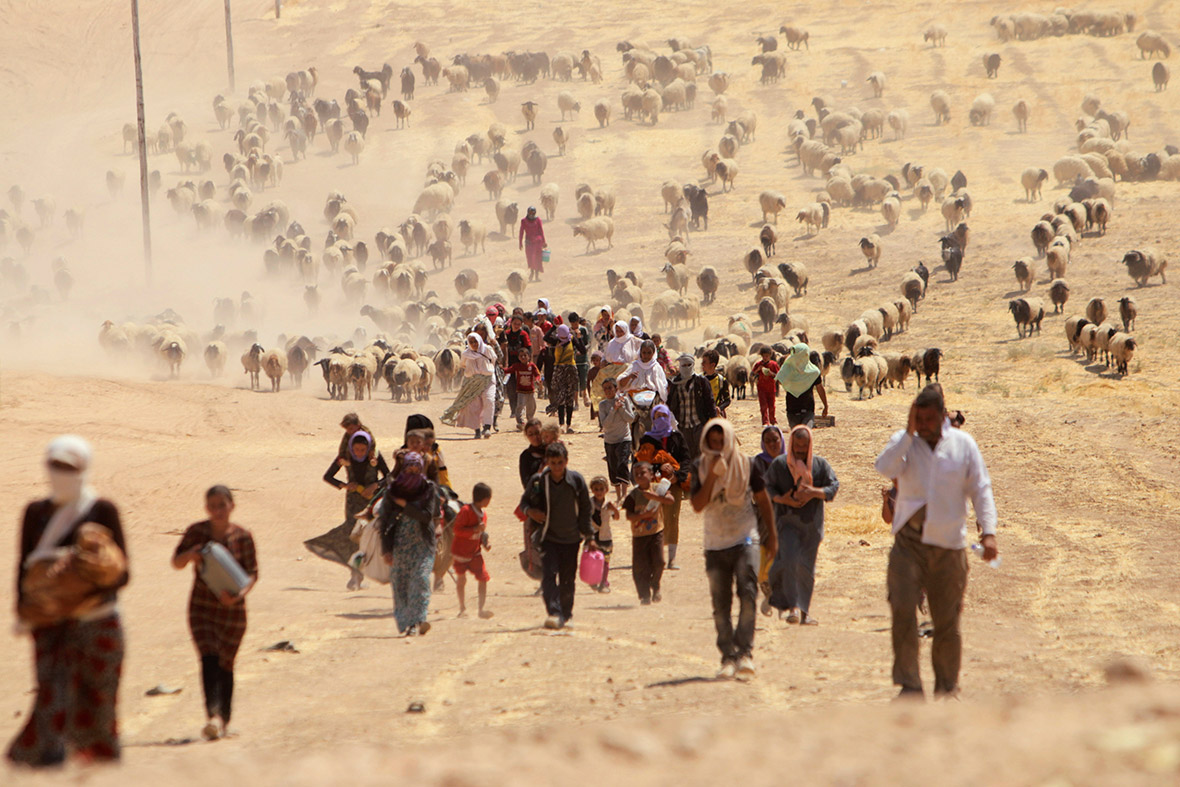
The International Organization for Migration has estimated that since January of 2014, over 3 million Iraqis have been displaced by ISIS militants and forced to relocate. In the past two months, over 276,000 have been forced to relocate out of fear or danger. Many of the refugees have chosen to abandon their homes and flee to the mountains in Northern Iraq to avoid the constant fear of attacks and violence from the Islamic State. Unfortunately, in addition to protection from violence, there is a desperate need for basic supplies such as food and water.

Amnesty International researcher, Donatella Rovera says, “The civilians trapped in the mountain area are not only at risk of being killed or abducted; they are also suffering from a lack of water access, food and medical care. We urge the international community to provide humanitarian assistance.”

In response to the conflict, UNICEF has worked to set up many transition camps in the Kurdistan region of Iraq. Baherka is one such camp that was formerly a concrete factory outside outside the town of Erbil. The makeshift facility currently accommodates approximately 3,000 refugees. In the camp, every family has access to a kitchen, shower, latrine and 150 liters of water per day.

Adding to the numerous fears and concerns, there is also a reluctance for some Iraqis to join the refugee camps. Many of the refugee camps are overcrowded and can present their own unique set of dangers such as violence, disease or abduction. Separation from family members is another serious concern. For these reasons, many of these families choose to take their chances in the remote mountains where their communities are smaller. Access to clean water is also scarce due to the rough, mountainous terrain.

“The plight of displaced people caught up in the fighting in Iraq is increasingly desperate and all parties to the conflict must do more to ensure their safety,” states Rovera.

Thankfully, there are nongovernmental organizations working towards providing aid to these displaced Iraqis. UNICEF’s Water, Sanitation & Hygiene (WASH) division has received funding from Germany’s KfW Development Bank and has been tasked with aiding 25 families living near the town of Dohuk in the mountains of Northern Iraq.

Fortunately, there are times when complex issues can be solved with ordinary and conventional methods. This has been the case thus far with the aforementioned Iraqi families. A tractor hitched to a 4,000 liter water tank has been providing water to over 62,000 people every day. Families fill up as many buckets and tin cans as they can carry and use the water for drinking in addition to bathing, washing and cooking.

However, funding needs are a constant reminder that this service is not permanent. Without access to clean water, Ghassan Madieh, the UNICEF WASH Specialist in Dohuk, states “There would be sewage in the streets… You will see people getting unchlorinated water. You will see less water quantity. It will have a negative impact on health, especially on children and the most vulnerable.”

– The Borgen Project

Sources: BBC, Telegraph, UNICEF 1, UNICEF 2
Photo: International Business Times

July 23, 2015
https://borgenproject.org/wp-content/uploads/borgen-project-logo.svg 0 0 Borgen Project https://borgenproject.org/wp-content/uploads/borgen-project-logo.svg Borgen Project2015-07-23 10:09:262024-12-13 17:51:59Water Access for Displaced Iraqis
Children, Education, Refugees and Displaced Persons

Malala Opens Girls School for Syrian Refugees

Malala-Yousafzai-All-Girls-School-Syrian-Refugees
The Malala Yousafzai All-Girls School opened on July 12 to Syrian refugees—for girls who have fallen victims to displacement. Malala Yousafzai opened the school on behalf of the 28 million children who are kept from classrooms because of armed conflict. The event also marked Malala Yousafzai’s 18th birthday, of which she was proud.

Malala Yousafzai is no stranger to armed conflict, as she was attacked in her native Pakistan in 2012 because of her support and efforts to campaign for girls’ rights and education. For this brave act, Malala was in fact awarded the Nobel Peace Prize in 2014.

Yousafzai currently believes that world leaders are failing Syria’s children. At the opening of the school she stated, “On this day, I have a message for the leaders of this country, this region and the world: you are failing the Syrian people, especially Syria’s children. This is a heart-breaking tragedy — the world’s worst refugee crisis in decades.”

That is why this school is one small step on Yousafzai’s part to help the children of the war-torn country. This effort is applauded by Antonio Guterres, the UN High Commissioner for Refugees. He stated, “We are really heartened by Malala’s ardent support for the education of refugee girls whose aspirations have already been so cruelly cut short by war. These children are the future of Syria; we must not jeopardize that by denying them the basic right to education while they are in exile”.

The newly opened school will serve around 200 Syrian girls living in refugee camps in the Bekaa Valley region along the Lebanese border, to which many Syrians have fled.

This school will stand as a testament to the perseverance and strength of the Syrian children and hopefully become inspiration to the similar creation of future schools.

– Alysha Biemolt

Sources: Look to the Stars, UNHCR, PBS, Voanews
Photo: Sampsonia Way

July 21, 2015
https://borgenproject.org/wp-content/uploads/borgen-project-logo.svg 0 0 Borgen Project https://borgenproject.org/wp-content/uploads/borgen-project-logo.svg Borgen Project2015-07-21 13:07:322024-12-13 17:52:06Malala Opens Girls School for Syrian Refugees
Global Poverty, Refugees and Displaced Persons

Jordan: A Refugee Haven

Jordan

The Middle East—in the north, Syria’s civil war between rebel forces trying to overthrow the dictator Bashar al-Assad rages. To the west, the perpetual conflict between Israel and Palestine continues. And with the rise of ISIS in Iraq to the east, there is no shortage of refugees.

Caught in the middle of this chaos is Jordan. The country has opened its borders for floods of refugees since the Syrian civil war broke out in 2011. An estimated 1.4 million Syrians have crossed into Jordan during the war, making it the highest concentration of refugees globally. In an interview with 60 Minutes last September, Jordan’s King Abdullah said that welcoming the refugees is the right thing to do: “Where else can the Syrians go? They are in dire straits.”

The situation in Jordan is a microcosm of a troubling trend. There are approximately 60 million refugees globally, averages that have not been seen since the end of World War II. Whether it is war, like in the Middle East, or a changing climate, people seek normalcy where there is food security and educational opportunity.

Unfortunately, assimilating refugees into a host country’s culture so that they may become working members of society is very costly. King Abdullah says that absorbing so many people has put a tremendous economic strain on his country. He does not know how long Jordan can continue.

The World Food Programme (WFP) has been an essential cog in the machine supplying Syrian refugees. Formed by the United Nations in the early 1960s, the program feeds 80 million people in 75 countries annually. The United States pays a third of its $4 billion annual budget.

Their largest operation ever has been at a United Nations refugee camp just inside Jordan. Housing an estimated 130,000 people, this city in the desert has become home to many.

The WFP has set up grocery stores in the camp. Instead of receiving three meals a day, each refugee gets a voucher of $29 dollars a month. This gives them the dignity of cooking for themselves, said WFP Executive Director Ertharin Cousin. In an interview with 60 Minutes last Thanksgiving, Cousin explained that this is a gesture of respect. “Many of these people had led normal, working lives,” she said. “The war took that from them.”

The organization has also been active in Syria. A portion of the 45,000 metric tons of food that is devoted to Jordanian refugee camps goes into Syria as well. Throughout the war, Assad’s forces have blockaded Syrian cities suspected of supporting the rebels. In Homs, the encirclement lasted more than 600 days before the WFP was able to negotiate a ceasefire with both sides to bring in vital food supplies.

The embattled civilians requested that the children, women and sick be evacuated before food was brought in. The WFP left Homs with 1,300 refugees and took them to the safety of Jordan. They left with a month’s worth of food supplies.

It is estimated that 6 million Syrians do not know where their next meal will come from. In the interview with 60 Minutes, an anonymous Syrian described how dire food shortages have become. His hometown just outside Damascus was sealed off. Despite the continued shelling and the exposure to nerve gas, he said hunger broke the town.

“No one thought we could starve to death in 21st century Syria,” he said. “The sad thing is that people are starving when food and aid is just minutes away, outside the blockades.” As the Syrian civil war continues and instability steadily dots every other corner of the region, Jordan has become the only option for refuge for many people.

Expanding humanitarian aid will allow Jordan and the WFP to help the millions who are still displaced today.

– Kevin Meyers

Sources: USAID, Business Insider, CBS 1, CBS 2
Photo: Flickr

July 20, 2015
https://borgenproject.org/wp-content/uploads/borgen-project-logo.svg 0 0 Borgen Project https://borgenproject.org/wp-content/uploads/borgen-project-logo.svg Borgen Project2015-07-20 09:39:412020-07-14 12:08:29Jordan: A Refugee Haven
Aid, Global Poverty, Humanitarian Aid, Refugees and Displaced Persons

In Transit: The World’s Fleeing Refugee Crisis

refugee_crisis
On July 1, 2015, the U.N. High Commissioner for Refugees, Antonio Guteress, addressed a congregation of international humanitarian organizations in Geneva about the escalating challenges his agency faced in what is widely being called the greatest refugee crisis the world has ever known.

“For an age of unprecedented mass displacement, we need an unprecedented humanitarian response and a renewed global commitment to tolerance and protection for people fleeing conflict and persecution,” the High Commissioner urged.

In his speech Guteress told listeners, “The moment of truth had arrived.” He was speaking in regards to the tremendous strain the world’s current refugee crisis has placed on the resources of Europe and other host countries. Across the globe, fleeing refugees are migrating at unprecedented rates.

The world’s current refugee crisis cannot be explained in simple terms. It is a complex issue with many factors involved. Political instability, devastating wars and lack of adequate economic opportunities are all reasons why people are leaving their countries in search of greener pastures.

In last month’s United Nations High Commissioner for Refugees (UNHCR) Global Trends Report: World at War, the estimated number of people displaced due to war, conflict and persecution was a staggering 59.5 million at the end of 2014. On average, 42,500 people are newly displaced per day.

A few countries are well known to all, such as Iraq, Afghanistan and Syria, but they do not represent the entire spectrum of refugees. The refugees come from Myanmar, Sudan, Ukraine, Pakistan, North Korea, Mexico and many other South American countries. Most are currently fleeing to Europe, but others are going to the United States, Indonesia and Australia.

It truly is a global refugee crisis.

In a newly published Human Rights Watch report, “The Mediterranean Migration Crisis,” senior analysis reported that in 2014, over 219,000 refugees attempted to navigate the Mediterranean Sea into Europe, which is considered the world’s deadliest crossing. This was up from 60,000 the previous year. So why are people enduring such dangerous undertakings for a better life?

The report interviewed over 150 refugees and asylum seekers from Somalia, Syria, Eritrea and Afghanistan. The migrants echoed similar reasons for leaving their countries—lack of security and basic necessities such as food, water and medicine. Not surprisingly, these are some of the poorest countries in the world with some of the direst need for humanitarian aid.

There is a direct correlation between humanitarian aid and fleeing refugees. The nations with the largest need for humanitarian aid are also responsible for some of the largest number of fleeing refugees.

Humanitarian aid is used to run programs that provide potential refugees with more than just food and water. Humanitarian efforts provide tools for farmers to grow crops that they can sell in market places, providing income to their families and strengthening their local markets.

The aid also provides educational facilities, training people with the skills that they need to be successful. People who are finding economic stability in their own nations are less likely to flee.

However, passing aid to the ailing countries is not the only way the world can help solve the refugee crisis. Host nations and coalitions such as the European Union (EU) need aid to support refugee and asylum seeking processing facilities. The burden of dealing with so many refugees must be equally distributed among developed nations. The blind eye approach many developed countries are practicing is not helping the situation.

Even though the United States is not the destination for the majority of refugees, it is tremendously affected by the issues of extreme poverty that are driving these migrations. An example is the situation in Greece, a country already preoccupied with economic collapse and in desperate need of a bailout. The U.N. reported more than 48,000 refugees entered the country in 2014. The economic pressure of all these issues reduces the buying power of Greece, in turn reducing U.S. exports to the country.

This year, the U.N. has declared that it needs no less than $18.1 billion to meet the needs of over 80 million people. Currently it has only received 26% of that amount.

The United States cannot continue to ignore the global refugee crisis and must work with the EU to provide more aid. The Borgen Project has demonstrated extensively how providing foreign aid in such situations reduces global threats to the United States and bolsters the U.S. economy.

If the United States does not help provide more aid and the refugees continue to flee, years of development and aid will all go to waste. Rebuilding developing nations will be a lot more expensive for future generations, considering there will be no one there left to help rebuild.

— Adnan Khalid

Sources: Human Rights Watch, International Organization for Migration, U.N. 1, U.N. 2, UNHCR
Photo: NGO News Africa

July 17, 2015
https://borgenproject.org/wp-content/uploads/borgen-project-logo.svg 0 0 Borgen Project https://borgenproject.org/wp-content/uploads/borgen-project-logo.svg Borgen Project2015-07-17 11:00:272024-12-13 17:51:48In Transit: The World’s Fleeing Refugee Crisis
Global Poverty, Refugees and Displaced Persons, United Nations

Angelina Jolie and Daughter Visit Turkey for World Refugee Day

Angelina-Jolie-and-Shiloh-World-Refugee-DayAccording to the UN Refugee Agency, Turkey is the top refugee-hosting country in the world with just under 2 million asylum seekers. A vast majority of the refugees are Syrians, Kurds and Iraqis fleeing the violence of the Syrian Civil War and ongoing crisis involving the Islamic State.

In an effort to bring awareness to one of the largest refugee crises in history, Angelina Jolie embarked on a UN tour of the affected region. The movie star and long-time humanitarian was joined by her daughter, Shiloh, and stopped at the Midyat Refugee Camp in Turkey on June 20th to commemorate World Refugee Day. Jolie was also accompanied by UN Special Envoy Antonio Guterres. The group met with Turkish officials, including President Recep Tayyip Erdoğan to discuss the challenges that Turkey faces given an unprecedented number of refugees.

Jolie issued a statement at the camp in which she calls on the world to act. She said, “We are here for a simple reason: This region is at the epicenter of a global crisis. Nearly 60 million people are displaced from their homes. That is one in every 122 people on our planet. Our world has never been richer or healthier or more advanced. Yet never before have so many people been dispossessed and stripped of their basic human rights.”

Later in her speech Jolie stressed the impact that refugee camps have on the people that house them. While providing more security than war torn cities and villages, the camps more often than not make the poor even worse off. Jolie stated, “Families like the six young people I met yesterday, living in Lebanon without parents, on half food rations and paying US$100 a month to live in a tent because UNHCR does not have the funds or capability to take full care of everyone.” Already with limited resources and away from home, refugees have the burden of coming up with funds to keep their temporary shelter even though, as refugees, they “cannot legally work in their host-countries.”

There is hope, however. Jolie made her speech on a key day, a day dedicated to bringing light to the very issues at the core of her delivery. Her celebrity status will ensure that more people listen to her message, and in turn act to help. Jolie and other media figures have even inspired governments to act. Jolie thanked the governments of Turkey and other refugee hosting nations for taking in millions. To finish, the actress wished all the families she spoke to, and by extension the refugee families across the globe, a good Ramadan with “Ramadan Kareem.”

– Joe Kitaj

Sources: UNHCR, US Magazine
Photo: Flickr

July 15, 2015
https://borgenproject.org/wp-content/uploads/borgen-project-logo.svg 0 0 Borgen Project https://borgenproject.org/wp-content/uploads/borgen-project-logo.svg Borgen Project2015-07-15 11:00:082024-12-13 17:51:55Angelina Jolie and Daughter Visit Turkey for World Refugee Day
Aid, Aid Effectiveness & Reform, Food & Hunger, Food Aid, Global Poverty, Refugees and Displaced Persons

UN Scales Back Food Aid for Syrian Refugees

UN-Scales-Back-on-Food-Aid-for-Syrian-Refugees
In the wake of large budget cuts and conflict with the Islamic State, or ISIS, the United Nations World Food Programme (WFP) is scaling back its food aid for more than 1.2 million Syrian refugees in Lebanon. These cuts will manifest themselves in the monthly food assistance vouchers that Syrian refugees receive. Normally valued at $19 per person, the vouchers will be reduced to $13.50 as of July.

Around 75% of Syrian refugee households in Lebanon are undergoing “some level of food insecurity,” according to a recent WFP survey. In addition, roughly 800,000 refugees in Lebanon qualify for food vouchers, and this scale-back is arriving right in the middle of Ramadan.

The WFP was banking on a ceasefire between ISIS and the Syrian government in order to let Syrian farmers harvest wheat stored in ISIS territory. No such ceasefire took place.

“That wheat that is harvested cannot be brought across lines of conflict into the area where it is needed most by people who are suffering now into a fifth year of this conflict,” WFP Executive Director Ertharin Cousin told the Associated Press.

A WFP press release issued earlier this month points out that the WFP’s refugee operations are currently 81% underfunded. The WFP is requesting $139 million in order to continue aiding refugees in Lebanon, Jordan, Egypt, Turkey and Iraq through the summer.

“We are extremely concerned about the impact these cuts will have on refugees and the countries that host them,” WFP Regional Director Muhammad Hadi told the U.N. News Centre. “Families are taking extreme measures to cope such as pulling their children out of school, skipping meals and getting into debt to survive. The long-term effects of this could be devastating.”

– Alexander Jones

Sources: McGuirk, UN, Wood
Photo: The Guardian

July 8, 2015
https://borgenproject.org/wp-content/uploads/borgen-project-logo.svg 0 0 Borgen Project https://borgenproject.org/wp-content/uploads/borgen-project-logo.svg Borgen Project2015-07-08 10:47:072024-06-11 02:48:08UN Scales Back Food Aid for Syrian Refugees
Global Poverty, Refugees and Displaced Persons

Acehnese Fishermen Save Stranded Refugees

stranded_refugees
In late May 2015, thousands of Rohingya and Bangladeshi refugees were stranded on the open ocean. The governments of nearby countries didn’t want them. Amidst this humanitarian crisis and fatal government hesitation, local Acehnese Indonesian fishermen saved thousands of refugees.

Hundreds of thousands of Rohingyas and Bangladeshi’s have fled their native homeland; the Rohingyas face political persecution that mirrors Apartheid South Africa, and Bangladeshis face seemingly inescapable poverty. Over 120,000 Rohingyas have left in the past three years, and just this year, 25,000 Rohingyas have fled.

In Buddhist-majority Myanmar, the Rohingyas are persecuted, and have been since the 1970s. They are not recognized as citizens and are “subjected to forced labour, have no land rights, and are heavily restricted,” says BBC. This March, the government took away the Rohingya’s right to vote.

The Rohingyas are an Islamic ethnic group. They are said to be descended from Muslim traders who settled in the region over 1,000 years ago, but the Myanmar government persists the Rohingyas are actually Bengali migrants— subjecting them to severe inequality.

It is due to this severe oppression that thousands of Rohingyas have fled Myanmar via boat. Rohingyas have paid smugglers in the past few years to transport them to safer countries, like Indonesia or Malaysia.

This year, Indonesia, Malaysia and other countries that Rohingyas flee to cracked down on the influx of refugees, refusing to admit them.

For this reason, many refugees were left stranded by smugglers in the middle of the ocean. Other smugglers turned out to be traffickers, who held the migrants hostage in the ocean, attempting to pressure impoverished family members into paying for their stranded loved ones.

None of the countries in the region were willing to help them, and governments told local fishermen not to help stranded refugees.

“The focus should be on saving lives, not further endangering them,” said UN High Commissioner for Human Rights spokesman Zeid Ra’ad Al Hussein.

Thailand and Indonesia turned away boats from their shores. Malaysia ordered its navy to keep the boats away. The United Nations has issued a statement that it is “appalled” by the foreign policy of these nations.

Chris Lewa, an advocate for the Rohingya activist group, described the attitude of neighboring countries as “extremely unwelcoming. Unlike European countries – who at least make an effort to stop North African migrants from drowning in the Mediterranean – Myanmar’s neighbours are reluctant to provide any assistance.”

Human Rights Watch accused Malaysia, Thailand and Indonesia of playing “human ping pong” with boats by refusing to let people in and by pushing boats back out to international waters.

Thousands of boat people were stranded at sea with little food and water and no place to land. “For more than two months we were in the boat, we were only given little food and we were beaten when we asked for more,” said Mohamad Ali, a Bangladeshi migrant to BBC.

Mohammad Idiris, a 25-year-old from Myanmar was held on a crowded ship for 6 months, said he was “beaten regularly by human traffickers who demanded a ransom from his parents that they couldn’t pay,” reported the IRIN. “I didn’t know it was going to be like this. If I had known, I would have stayed in Myanmar. We feel happy here, because the Acehnese people are treating us as brothers, but we are still worried about our families in Myanmar.”

Despite government wishes, Indonesians from the Aceh region rescued around 2,000 stranded boat people. “We helped them because they needed help. What is more human than that?” said Mansur, a Acehnese fisherman, in an interview with The Guardian.

The people of Aceh themselves have suffered intense violence and devastation in the past; they were caught in violence between the Indonesian government and separatist rebels, as well as the tsunami of 2004 in the early 2000s. For this reason, the Aceh people were very welcoming.

The fishermen worked together, pulling refugees from boat to boat, taking multiple trips and providing food and water on shore. Suryadi, an Aceh fisherman, told The Guardian, “We helped out of solidarity. If we find someone in the ocean we have to help them no matter who they are. The police did not like us helping but we could not avoid it. Our sense of humanity was higher. So we just helped with the limited resources that we had at the time.”

Aceh even put on a concert to raise money for the refugees. Rafly, a popular local singer, performed “Pemulia Jamee,” a traditional Acehnese ceremony, to honor guests. Rafly is also a senator, and plans to advocate for the refugees to stay in Aceh in the future.

“I really wish they will stay permanently in Aceh. I have lobbied the governor of Aceh on this matter and will raise it with the head of the senate,” he tells IRIN.

The future for the Bangladeshi and Rohingya refugees is uncertain. Bangladeshis may be returned to Bangladesh once they are identified, though they return to an unwelcome government. Bangladeshi Prime Minister Sheikh Hasina called the stranded boat people “mentally sick” for leaving, and claimed they are “tainting the image of the country.”

Myanmar recently created a program to give citizenship back to the Rohyingas; however, it forces the Rohingyas to list their ethnicity as Bengali, so it is heavily opposed. The Rohingyas are not welcome in Myanmar. Today around 140,000 Rohingyas in Myanmar live in camps; they cannot return to their villages, which were burned by Rakhine Buddhists in 2012 violence that killed over 200 people.

After a large amount of chaos, conflict and devastating waiting, Malaysia and Indonesia finally agreed to let refugees shelter on their shores, as long as they are relocated within a year. However, this was only after local Indonesian fishermen went directly against the wishes of their government to help save extremely vulnerable refugees.

– Margaret Mary Anderson

Sources: BBC, IRIN News , The Guardian
Photo: IRIN News

July 6, 2015
https://borgenproject.org/wp-content/uploads/borgen-project-logo.svg 0 0 Borgen Project https://borgenproject.org/wp-content/uploads/borgen-project-logo.svg Borgen Project2015-07-06 09:01:362024-05-27 09:25:26Acehnese Fishermen Save Stranded Refugees
Global Poverty, Refugees and Displaced Persons, Sanitation, Water

Cholera Outbreak Among Burundian Refugees Contained

cholera_outbreak
A cholera outbreak in Tanzania that claimed the lives of 30 Burundian refugees and local Tanzanians has been curbed.

The epidemic occurred in western Tanzania near Lake Tanganyika, in a remote village that is overcrowded with refugees. Authorities estimate refugees consumed contaminated lake water, which facilitated the spread of cholera. A total of 4,408 cases have been reported.

A UN Refugee Agency (UNHCR) spokesman, Adrian Edwards, said that no new deaths have been reported since last Thursday, and the number of new daily cases has fallen from around 915 per day at the height of the outbreak on May 18 to less than one hundred per day. According to Edwards, the situation is improving but it still could take several weeks to see cholera completely eradicated among this population.

The majority of the cholera victims are refugees of Burundi who are fleeing to avoid violence stemming from a failed political coup in Burundi’s capital, Bujumbura.

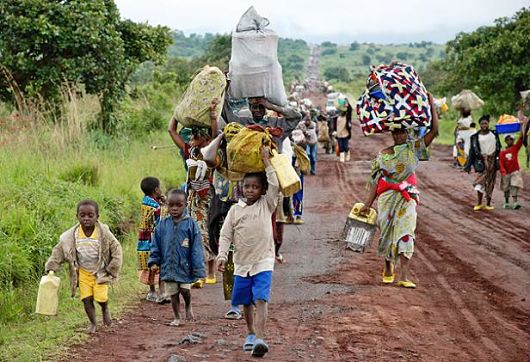
The influx of refugees from Burundi to surrounding countries has not stopped. The UNHCR estimates that over 100,000 Burundian refugees have escaped, leaving over 64,000 Burundians in Tanzania, and the remaining in Rwanda, Uganda and the Democratic Republic of the Congo. About 100 Burundians per day arrive to each of these surrounding countries.

The refugees that arrive in Tanzania must walk four hours through the mountains to reach the border. Some immediately are bussed to the camp called Nyarugusu, and some wait for boats that will take them to a camp called Kigoma. Tens of thousands wait by Lake Tanganyika, a tiny beach area that is only 800 meters by 500 meters. The overcrowding and high density of refugees on the move has facilitated the quick spread of cholera.

Many refugees are being moved from Lake Tanganyika because it is overcrowded and unsanitary. Kahindo Maina, a public health officer of the UNHCR, said, ”Our priority is to get all the refugees out of Kagunga because the situation is dire. We have built latrines and brought supplies to provide clean water but the terrain and the crowded situation does not allow for a good sanitary situation there.”

Refugees have been moved to the Tanganyika stadium in Kigoma where there are better facilities, and cleaner water and sanitation. Tanzanian health authorities, the UNHCR, the World Health Organization and other partners have helped stem the spread of cholera by the promotion of hygiene, treatment of patients, implementation of effective prevention measures and the creation of access to sanitation and safe water.

Other preventative measures provided by the Ministry of Health, the UN and NGO partners include airlifting medicine and providing medical supplies and protective gear. UNHCR spokesman Edwards explained that “together with the government and our UN and NGO partners, we are providing oral rehydration solutions, soap and water purification tablets, and increasing hand-washing facilities.”

Around 30,000 refugees have also been moved from the lake area to Nyarugusu. Here, they receive vaccinations for childhood illnesses, get dewormed and have nutritional assessments done. New latrine and sanitation facilities are being built.

– Margaret Anderson
Sources: AllAfrica, Humanosphere, UNHCR 1, UNHCR 2
Photo: UNHCR

June 15, 2015
https://borgenproject.org/wp-content/uploads/borgen-project-logo.svg 0 0 Borgen Project https://borgenproject.org/wp-content/uploads/borgen-project-logo.svg Borgen Project2015-06-15 14:46:242024-12-13 17:51:27Cholera Outbreak Among Burundian Refugees Contained
Disease, Global Health, Refugees and Displaced Persons

Cholera Outbreak in Burundi Refugee Camp

cholera outbreakThe Office of the United Nations High Commissioner for Refugees (UNHCR) confirmed that over 105,000 Burundian people have crossed the border to find sanctuary from politically-driven violence in Burundi’s capital city, Bujumbura.

The Burundian political sphere was rattled in late April when President Pierre Nkurunziza was nominated by the CNDD-FDD party to serve a third term, which his political opponents believe to be unconstitutional. As a result of the debate, Bujumbura was flooded with protests in the following weeks, culminating in a short-lived coup d’état on May 13.

Despite the coup d’état ceasing within 24 hours, violence continued into the rural regions, threatening a large majority of rural Burundian people. The Imbonerakure tribe ravaged towns by marking red paint on the houses of those who they intended to kill, causing thousands of families to flee the country.

UNHCR correspondent Adrian Edwards reported, “Many of these [people] have crossed into Rwanda (25,004), but over the last week we have also seen a sharp increase in people seeking asylum in Tanzania (17,696) after entry restrictions there were lifted. In addition, almost 8,000 people have crossed into South Kivu province in the Democratic Republic of the Congo. In all these cases, women and children, including a large number of unaccompanied children, are in the majority.”

The reported number of 17,000 seeking refuge in Tanzania has since increased to over 70,000. A large majority of those traveling to Tanzania have landed in Kagunga, a border village on the shore of Lake Tanganyika. This small village can only be reached by boat, due to a treacherous mountain range surrounding the village on the Tanzanian side.

This small village quickly reached its maximum capacity, and the Burundian people have been crammed into short-stocked refugee camps, without adequate sleeping space, food or sanitation. These refugee camps are overwhelmed by the rapid out-pour of people. As a result, a recent cholera outbreak has infiltrated the water supply, killing as many as 31 refugees in the past few weeks and causing acute diarrhea in 3,000 more.

Médecins Sans Frontières (MSF) is working to open re-hydration checkpoints and cholera treatment centers in both Kagunga and Kigoma. Refugees are currently being fast-tracked to Kigoma, where there have been no reported cases of cholera. The transfer of pregnant women, children, the elderly and the sick is a top priority.

In Kigoma, local aid has assembled a sort of “pit stop” location where refugees can stay a few days while being registered and receiving medical care before being transferred to another refugee camp called Nyarugusu. With the help of UNHCR and other contributors, more than 18,000 refugees have been safely moved to Nyarugusu so far.

Regarding the Cholera outbreak, MSF stated, “Epidemics tend to occur where living conditions are poor: where there is overcrowding, inadequate access to safe drinking water or proper latrines and insufficient rubbish collection. Improved hygiene practices and treatment are important components of the cholera response. The provision of safe water and effective sanitation remain essential during all outbreaks.”

– Hanna Darroll

Sources: MSF, UNHCRInternational Business Times
Sources: BBC, MSF
Photo: The Guardian

June 14, 2015
https://borgenproject.org/wp-content/uploads/borgen-project-logo.svg 0 0 Borgen Project https://borgenproject.org/wp-content/uploads/borgen-project-logo.svg Borgen Project2015-06-14 16:00:062024-12-13 17:51:25Cholera Outbreak in Burundi Refugee Camp
Page 21 of 29«‹1920212223›»

Get Smarter

  • Global Poverty 101
  • Global Poverty… The Good News
  • Global Poverty & U.S. Jobs
  • Global Poverty and National Security
  • Innovative Solutions to Poverty
  • Global Poverty & Aid FAQ’s
Search Search

Take Action

  • Call Congress
  • Email Congress
  • Donate
  • 30 Ways to Help
  • Volunteer Ops
  • Internships
  • Courses & Certificates
  • The Podcast
Borgen Project

“The Borgen Project is an incredible nonprofit organization that is addressing poverty and hunger and working towards ending them.”

-The Huffington Post

Inside The Borgen Project

  • Contact
  • About
  • Financials
  • President
  • Board of Directors
  • Board of Advisors

International Links

  • UK Email Parliament
  • UK Donate
  • Canada Email Parliament

Get Smarter

  • Global Poverty 101
  • Global Poverty… The Good News
  • Global Poverty & U.S. Jobs
  • Global Poverty and National Security
  • Innovative Solutions to Poverty
  • Global Poverty & Aid FAQ’s

Ways to Help

  • Call Congress
  • Email Congress
  • Donate
  • 30 Ways to Help
  • Volunteer Ops
  • Internships
  • Courses & Certificates
  • The Podcast
Scroll to top Scroll to top Scroll to top