• Link to X
  • Link to Facebook
  • Link to Instagram
  • Link to TikTok
  • Link to Youtube
  • About
    • About Us
      • President
      • Board of Directors
      • Board of Advisors
      • Financials
      • Our Methodology
      • Success Tracker
      • Contact
  • Act Now
    • 30 Ways to Help
      • Email Congress
      • Call Congress
      • Volunteer
      • Courses & Certificates
      • Be a Donor
    • Internships
      • In-Office Internships
      • Remote Internships
    • Legislation
      • Politics 101
  • The Blog
  • The Podcast
  • Magazine
  • Donate
  • Click to open the search input field Click to open the search input field Search
  • Menu Menu

Archive for category: Refugees and Displaced Persons

Information and news on Energy and Electricity

Global Poverty, Refugees and Displaced Persons

Refugees in Calais See Hope In Britain

refugees_in_calais
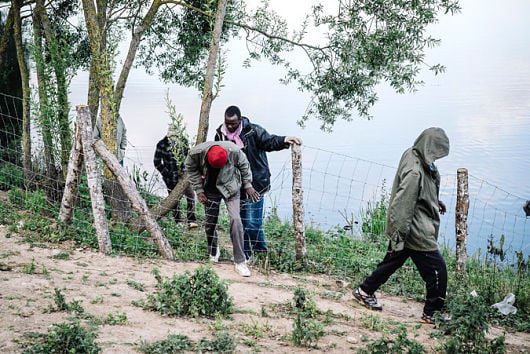
Many refugees in Calais, France are using any means possible — most of them using rather dangerous means — to make their way to Britain in hopes of a new life.

Hundreds of thousands of immigrants sit in refugee camps in Calais waiting to make their next attempt into the United Kingdom. Many of these individuals have traveled all the way from Africa, the Middle East and some from even further away. For most, sanctuary in Britain is the last stop on a very long journey that may have lasted for months, with hopes that a better life and more opportunities await them on the other side of the English Channel.

In France, where many migrants await the next move, which may potentially land them in Britain, lie refugee camps filled with hundreds of thousands of migrants from all around the world. Many have fled injustice and corruption within their native countries, such as that of Sudan, Eritrea and other crime-ridden and infamously violent nations.

Within the camps are volunteers and medical staff to help those who have been injured or have fallen ill throughout their long journeys. Nurses in the camps have recounted a number of cases where individuals have even been hit by trains and fallen off moving trains while trying to make their way across the Channel. This is a horrific image to imagine, but it is the reality of the extent people in these circumstances are willing to go to make it to their final destination. The legitimacy of their travels is backed by the success of others. An estimated 40 people actually make it across each day, though the numbers have varied greatly. Those who have been successful give those still struggling the hope they need to keep going.

With all these people from around the world flooding the entrance to the United Kingdom, both Britain and France have asked for more intervention, particularly from other members of the European Union. The French government has upped its security measures by increasing the number of police officers at the French side of the Channel as well as implementing other new security means. However, with the number of migrants in the hundreds of thousands at least, and a handful of migrants making their way to the UK each day, there obviously is a need for more assistance in order for the two countries to maintain border security.

This issue has been going on since the beginning of June, and a recorded 10 migrants have died in the journey specifically from Calais to the other end of the Channel. This is an issue of international security for which no clear solution has been found thus far, neither the migrants seeking refuge nor the European nations themselves.

– Alexandrea Jacinto

Sources: The New York Times, BBC
Photo: The New York Times

August 6, 2015
https://borgenproject.org/wp-content/uploads/borgen-project-logo.svg 0 0 Borgen Project https://borgenproject.org/wp-content/uploads/borgen-project-logo.svg Borgen Project2015-08-06 01:30:172020-07-10 08:35:07Refugees in Calais See Hope In Britain
Economy, Global Poverty, Refugees and Displaced Persons

Economics and Refugees

Economics and Refugees-TBPWhen there is an influx of people to a new area, in an effort to escape the horrors of war, disaster and other hardships, local economies can be significantly strained. A humanitarian effort to help those in need is beneficial, but oftentimes the number of people in need can create circumstances where it is extremely difficult to provide everyone with their basic needs.

Normally, local economies are structured to provide for a relatively stable amount of people. The equilibrium of local supply and demand is stable, however, when an influx of people grows the demand for all types of goods at once, it creates a supply vacuum. This increase in demand and lack of supply creates a whole host of problems.

Turkey has absorbed about 200,000 Syrians. Many have become beggars, wandering in traffic, looking for spare change and unable to find employment. Others take up trades on the street, taking customers from existing Turkish vendors and businesses. These two cases are examples of the lack of supply and the increase in demand. The beggars along with the increased competition for some small Turkish businesses have created a hostile atmosphere against the Syrian refugees.

Lebanon is a more extreme example of the strain that refugees can put on an economy. One in 10 of Lebanon’s residents is now a Syrian refugee, escaping the war and famine that has eviscerated their homeland. This has created a range of problems similar to those seen in Turkey, however, the magnitude of the number of refugees seen in Lebanon is much worse.

Lebanon is a much smaller country than Turkey, and it is also taking in many more refugees than Turkey. Food prices in Lebanon have skyrocketed due to the increased demand from more than a half-million refugees entering the country in the span of a few years. Electricity was already faulty and has now been hit with a 27 percent increase in demand due to the housing of many of the new refugees. Again, similar patterns are immerging within Lebanon as they did in Turkey.

Just as Turkey experienced similar economic disruptions, the social aspect of the new population has put social tensions on the list of concerns for government officials in Lebanon. Some economists argue that the new populace has actually been beneficial to the local economies of rural areas in Lebanon because of an increase in spending in the local area.

In places like Canada, the effects of refugees are somewhat different. Typically, when developed nations accept refugees from other countries they are not accepting hundreds of thousands at a time. This difference is important because it means that local economies are not strained to the same extent.

A study by the Institute for the Study of Labor found that employed refugees in Canada were no worse off than average. However, the study also showed that the unemployed did end up needing significant government assistance.

The study concluded that refugees were not damaging to the economy and identified discrimination and lack of credential recognition as potential factors in unemployment rates amongst refugees. Better job training programs could help refugees adjust to a new economic landscape and help them integrate into the economic system.

The case of the Syrian refugees is one of the best modern-day examples of how massive amounts of refugees can disrupt local economies. In the case of Canada and other developed nations, it exemplifies how a smaller amount of refugees entering the country does not affect the economic and social situation in ways that are comparable to Turkey and Lebanon.

Context is important to see how refugees can affect local economics, but it is clear is that events that create massive migrations can be harmful to neighboring economies. Perhaps programs that help disperse refugees across more countries could be improved or expanded to reduce the impact that refugees have when overwhelming local areas. Nonetheless, it is important to recognize that it is in everyone’s interest to take in those in need and help them adjust to their own new realities.

– Martin Yim

Sources: New York Times, Reuters, Institute for the Study of Labor
Photo: Flickr

August 5, 2015
https://borgenproject.org/wp-content/uploads/borgen-project-logo.svg 0 0 Borgen Project https://borgenproject.org/wp-content/uploads/borgen-project-logo.svg Borgen Project2015-08-05 01:30:532020-07-02 13:14:51Economics and Refugees
Development, Global Poverty, Refugees and Displaced Persons, Technology

Wi-Fi ‘Saves’ Residents in Jordan Refugee Camp

Wifi in Zataari Refugee Camp, Jordan, Said to 'Save' ResidentsIn Zaatari, a refugee camp located in a desolate area of the northern Jordan desert, Syrian refugees live in a grid of makeshift tents very similar to the other nearly 1 million Syrians who have set up camp throughout Jordan in the past year.
In stark contrast to surrounding refugee camps in the Jordan Valley, such as the neighboring Azraq camp, however, there is one thing which has served to set Zaatari apart: the Internet.

Zaatari, which is home to 100,000 Syrians, started out as a temporary residence in which residents lived in deplorable conditions and frequently complained about the high rate of crime. In the past year, however, the camp has developed into Jordan’s fourth-largest ‘city,’ which boasts an enviable main street by refugee camp standards and is nicknamed the Champs Elysees. The Champs Elysees, which, unlike the rest of Zaatari, has paved roads and functioning street lamps, is also home to a growing number of bootleg charging stations, where customers can pay to refuel their computers and phones with electricity stolen from the camp’s grid. An increasing number of Zaatari residents have begun to tap into the camp’s Internet, using the Wi-Fi in order to stay in touch with family members spread throughout the region, tap into social media, keep up with world news and news about the countries they fled (via trustworthy sources such as the BBC World Service), and even learn English.

The recent influx of Internet users in Zaatari comes despite the fact that the Wi-Fi connection is incredibly clogged, thanks to the influx of thousands of refugees in recent months, which has put a strain on the region’s already slow electricity grid. Refugees hoping to use the Internet for a variety of purposes have to wait hours while a site buffers, even if they upload it in the middle of the night, according to Talash, one of the camp’s electronics vendors.

The success of the Internet and its ability to brighten the lives of Zaatari residents have inspired the United Nations and internet and communications technology (ICT) experts to explore the idea of making Wi-Fi free, and thus widely accessible, to refugees who have been displaced since the crisis in Syria began: a number which currently stands at 4 million.

According to the U.N., free Wi-Fi could bring educational, personal, and career benefits. Syrian refugees in Jordan, for example, who are prohibited from working by Jordanian law, can use the internet in order to tap into a ‘global marketplace.’ Young Syrian children who have suffered from a lack of educational opportunities in the refugee camps are also able to use the Internet to access free classes, thereby helping to circumvent the possibility that the recent crisis has created a Syrian ‘lost generation.’ Free Wi-Fi also offers the added benefit of enabling humanitarian organizations to communicate directly with residents and dispel rumors in the camp, such as the rumor which circulated last year that refugees were all going to be relocated to the less desirable and incredibly remote Azraq refugee camp.

U.N. and ICT officials have acknowledged that installing free Wi-Fi in Zaatari would be a difficult task, especially given the fact that refugee camps hosting Syrian refugees already bear the burden of frequent funding cuts. However, there is precedent for the use of free Wi-Fi accessible to refugees. The U.N. refugee agency’s (UNHCR) innovation team, for instance, recently released a mobile app for Syrian refugees living in Turkey, designed to explain refugees’ legal rights and point them to the nearest U.N. office. Recently, a highly successful app was also created by two Syrian refugees in Turkey for other refugees in the region. The app, which posts jobs that refugees are eligible for, gives them advice about landlords, explains mystifying rules about various camps and has already accrued 11,000 followers.

While U.N. officials consider the idea of installing free Wi-Fi, Zaatari residents have told reporters that they would be ecstatic if it were to come to fruition. Talash, the electronics vendor, told Al Jazeera, “life is comfortable enough here.” But with Internet access, Talash said his time at the camp would be much more tolerable.

“Ya rait [if only],” Talash said, “We’d be so happy.”

– Ana Powell

Sources: Al Jazeera, New York Times

Photo: AljeerzaE

August 1, 2015
https://borgenproject.org/wp-content/uploads/borgen-project-logo.svg 0 0 Borgen Project https://borgenproject.org/wp-content/uploads/borgen-project-logo.svg Borgen Project2015-08-01 01:17:192020-07-06 12:29:52Wi-Fi ‘Saves’ Residents in Jordan Refugee Camp
Global Poverty, Refugees and Displaced Persons, United Nations

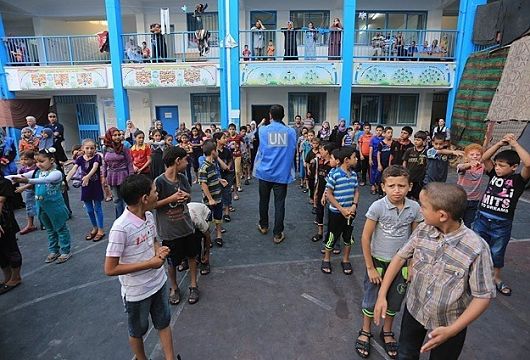
UN Funding Crisis Could Lead to Massive School Year Delay

funding_crisis
The United Nations is in the midst of its most severe funding crisis to date and the amount of people affected by it is continuing to rise.

The UN Relief and Works Agency for Palestine Refugees in the Near East (UNRWA) is one of the UN agencies most heavily affected by a lack of funding. After a recent emergency meeting conducted by its Advisory Commission, the UNRWA said that “drastic measures” would have to be taken if the current deficit of $101 million couldn’t be funded before the upcoming school year.

If the deficit is not met, the academic year could be delayed for over half a million students in the middle east across nearly 700 schools. The UN stresses, however, that there is still enough funding available to provide “immunizations for children, primary health care, relief and sanitation and some emergency programmes” through the end of 2015.

The UN has also stated that from September and on it can’t ensure the stability of those resources.

“Education lies at the very heart of the identity and dignity of Palestine refugees and of what UNRWA stands for,” says a UNRWA press release concerning the issue. “Our schools also provide a measure of stability in a very unstable region. Possible delays in opening the school year would also have grave implications for host governments.”

These budget cuts also have a serious effect on Palestinian refugees currently living in the Gaza Strip. Children who attend school in the region received $20 cash vouchers until very recently, when that service stopped entirely along with free meals provided at schools.

Coupled with additional UNRWA assistance is often what families depend on. Continuing to cut these services could have severely life-altering consequences.

“Our conditions worsen every day,” Bilal Mekdad, a Gaza Strip refugee, told the Anadolu Agency. “We fear the day we will find ourselves in the street.”

– Alexander Jones

Sources: Anadolu Agency, UN 1, UN 2
Photo: Anadolu Agency

July 31, 2015
https://borgenproject.org/wp-content/uploads/borgen-project-logo.svg 0 0 Borgen Project https://borgenproject.org/wp-content/uploads/borgen-project-logo.svg Borgen Project2015-07-31 01:30:482024-12-13 17:52:15UN Funding Crisis Could Lead to Massive School Year Delay
Refugees and Displaced Persons

Climate Change Refugees and the Man from Kiribati

climate_change_refugees
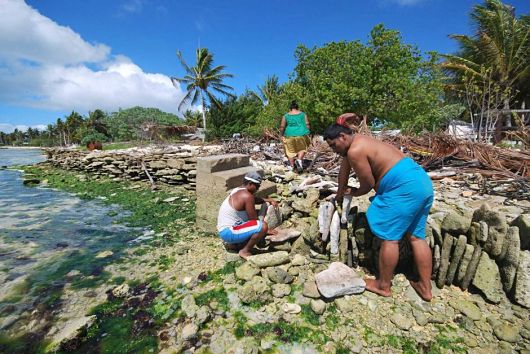
A man from Kiribati, a tiny Pacific island, has asked New Zealand to officially recognize him as a climate change refugee. New Zealand refused what was the world’s first appeal for climate change refugee status, and Ioane Teitiota now faces deportation. Teitiota had argued that rising sea levels had damaged his crops and contaminated the water supply, and that he feared a worsening situation in the future. Kiribati is expected to be three-fourths underwater in just 30 years. Its government has had to buy land from Fiji.

Climate change refugees might soon become a common place occurrence. Sea levels are predicted to rise by at least a couple of feet in the next few decades. Cities, or even countries, that lie below sea level are at high risk of being submerged. Bangladesh, for instance, would have already lost 17 percent of its land by 2050. An estimated 20 million people from this highly over-populated country are expected to become refugees. Rising sea levels could also sink all 1,200 of Maldives’ islands. Its government is attempting to work out an evacuation plan with nearby countries. Other coastal cities such as Manhattan, London, Shanghai, Bangkok, and Mumbai are at risk. Entire cultures and identities could be wiped away forever.

Droughts and desertification are increasingly destroying arable land, forcing many people to migrate further inland to already crowded cities. The Gobi Desert, for instance, expands 3,600 km square each year. Morocco, Tunisia and Libya are losing 1,000 km sq each annually. Poorer countries that depend on agriculture for both economic growth and basic subsistence are heavily impacted by the increasingly extreme weather patterns. Food security will become a serious issue for many countries when it was not before.

Although the need for one is clear, a universally accepted definition of climate refuge is lacking. The Global Governance House defines climate refugees as environmental migrants forced to move “due to sudden or gradual alterations in the natural environment related to at least one of three impacts of climate change: sea-level rise, extreme weather events, and drought and water scarcity.” Environmental migrants are defined as “persons or groups of persons who, for compelling reasons of sudden or progressive changes in the environment that adversely affect their lives or living conditions, are obliged to leave their habitual homes, or choose to do so, either temporarily or permanently, and who move either within their country or abroad” by the International Organization for Migration.

Last year, 36 million people were displaced by natural disasters. Of this number, an astounding 20 million were climate change refugees. António Guterres, UN High Commissioner for Refugees, predicts that the number will increase rapidly, and not just because of changes in weather in climate. The shortage of food and clean water will lead to “resource wars,” as they are called in popular culture. Increased competition for water, food and grazing lands will lead to conflict. A recent study predicts that the probability of civil war will increase in Africa by more than 50 percent by 2030 as compared to 1990.

– Radhika Singh

Sources: UNHCR, Telegraph, International organization for Migration, Global Governance House, National Geographic
Photo: ABC

July 31, 2015
https://borgenproject.org/wp-content/uploads/borgen-project-logo.svg 0 0 Borgen Project https://borgenproject.org/wp-content/uploads/borgen-project-logo.svg Borgen Project2015-07-31 01:30:322024-12-13 17:52:12Climate Change Refugees and the Man from Kiribati
Refugees and Displaced Persons

Walking Dead Actor Rescues Syrian Refugees

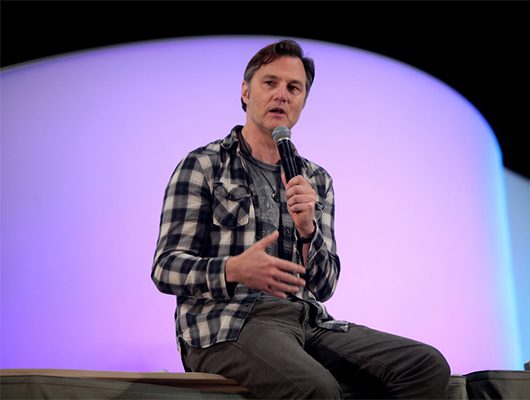
Syrian_RefugeesLast week, David Morrissey, actor on “The Walking Dead,” visited Lesvos, Greece with UNHCR and rescued Syrian refugees on a boat that was drifting in the Mediterranean for 10 hours.

According to UNHCR, there are more than 19.5 million people in extreme conditions from war that need help. Currently, with global dislocation at an all-time high, more than 4 million are Syrian refugees.

This year alone, 80,000 Syrian refugees have fled to Greece in hopes of finding safety. Morrissey took part in a rescue system with Greek coast guards who save up to 15 boats a day.

“There is a new Greek tragedy unfolding, and I am deeply shocked by what I have seen and the stories shared with me. The main protagonists of this human drama are Syrian refugees who make up over 60 percent of the arrivals to Greece and are facing incredibly high risk odds to cross the sea from Turkey,” Morrissey said.

Aside from visiting camps and tending to Syrian refugees, the British actor’s response to this crisis was to board coast guard boats and travel across the ocean to search for Syrian refugees to save their lives.

In a video posted by 5 News, Morrissey can be seen on a lifeboat helping crying children aboard. The actor patted their backs and reassured them several times of their safety.
“So, that was pretty intense,” Morrissey said after the rescue. “We got all of these people off the boat. They don’t know how long they’ve been in the water. The children, particularly, are very traumatized by the event.”

Many children, like some that Morrissey rescued, travel to safer countries without the security of their parents. Morrissey spoke to one of these children — a 13-year-old Syrian boy named Mohammed.

For two years, Mohammed has been traveling with a man he refers to as his uncle, Morrissey said. The boy has journeyed to Turkey, Iraq and Greece, where he met Morrissey.

According to Morrissey, Mohammed was very frightened of the future, yet still hopeful. Exiting the boats, many Syrian refugees, like Mohammed, are often welcomed by Greek locals.

Many Greeks offer help to the incoming Syrian refugees in the form of food, water and shelter. One of the volunteers, a woman named Melinda from Molyvos, Greece, said that she speaks to the coast guard daily, so that she can prepare a proper amount of sandwiches for the refugees entering the island. Despite her humanitarian efforts, she and the country are still struggling to cope with this massive influx of people.

“We have the same number of people who arrived here in one year arriving in just one day,” she said. “We are all doing our best, and people’s generosity and support is astounding. But, it is too much to cope with it all at this level.”

Greece’s tourism industry is taking a large hit. At its worst, 50,000 tourists a day were withdrawing vacation rentals to the Greek Isles. The industry is suffering so badly that Greek politicians are trying to spin the refugee crisis as a plus for tourists.

According to the European Union, this crisis will not end soon. As some refugees attempt to flee to wealthier areas, new resources put in place may keep them from leaving the country. Countries like Hungary and Macedonia have made plans to strengthen their borders, so that other countries like Greece are refugees’ only hope.

With fewer and fewer places to escape to safety, Greece’s notoriously beautiful beaches have become littered with life jackets and the remains of rubber dinghies, Morrissey said. The refugee camps, once a safe zone for its occupants, are now in danger of disease, and the toilets were unusable.

Morrissey said he was completely shocked by the conditions that the Syrian refugees must endure because their homeland is not safe anymore. The UNHCR, with the help of Morrissey and many others, offers protection, assistance, emergency response, shelter and durable solutions for this ongoing crisis.

The agency has helped millions of people and continues to create viable answers for people in need. With millions of displaced people, the organization’s aid is needed more than ever. For more information about the UNHCR and how to help, visit unhcr.org.

– Fallon Lineberger

Sources: Breitbart News, Daily Mail, Look to the Stars, The Guardian, UNHCR 1, UNHCR 2, UNHCR 3, YouTube
Photo: Flickr

July 30, 2015
https://borgenproject.org/wp-content/uploads/borgen-project-logo.svg 0 0 Borgen Project https://borgenproject.org/wp-content/uploads/borgen-project-logo.svg Borgen Project2015-07-30 01:30:362024-12-13 17:54:04Walking Dead Actor Rescues Syrian Refugees
Refugees and Displaced Persons

South Sudanese Refugees Warmly Welcomed by Uganda

South-Sudanese-Refugees-Warmly-Welcomed-by-UgandaSince the onset of ethnically-motivated conflict within South Sudan in December 2013, an estimated 150,000 South Sudanese civilians have fled the violence to neighboring Uganda. Government officials and civilians alike have cited the remarkably acceptant refugee policies exercised by Uganda as catalysts for these migrations.

Refugees who travel to Uganda for asylum are met with an abundance of economic and social opportunities upon their arrival. Unlike many other nations currently experiencing heightened influxes of refugees due to the persistence of several regional conflicts, Uganda does not place newly arrived migrants into refugee camps operated by the UN and other foreign aid organizations.

Instead, refugees who successfully escape their conflict-ravaged homelands for the peace and security of Uganda are presented with the opportunity to move into permanent settlements where they are provided with their own plot of land. Additionally, various UN agencies provide access to food, water, and home construction resources for newly arrived refugees. Localized primary schools and health clinics are commonly accessible in these areas of Uganda, and are responsible for providing valuable resources to newly settled migrant populations.

Titus Jogo, Refugee Desk Officer for the Adjumani District in Northern Uganda, stated in a recent interview regarding the legal statuses of South Sudanese refugees seeking asylum, “They have all the rights that are attributed to any human being, irrespective of their status as refugees.”

The conflict within South Sudan, the newest nation in the world after its founding in 2012, was initially caused by political disputes between President Salva Kiir and his former Deputy Minister Riek Machar. The conflict is largely consistent of multiple tribal factions which include the Neur Tribe, loyal to Machar, and the Dinka group, loyal to President Kiir; both of these tribal groups have been accused by international monitoring groups of committing war crimes and human rights violations, including ethnically targeted massacres and sexual assaults.

The most recent report provided by the UNHCR estimates that over 730,000 people have fled the conflict in South Sudan to neighboring nations such as Uganda, Sudan, Ethiopia, and Kenya. This report also estimates that an additional 1.5 million South Sudanese civilians are currently suffering from internal displacement due to the escalation in ethnic violence. Many of these displaced civilians experience frequent relocations to areas known as ‘protection-of-civilians’ sites, which are coordinated by the UN Mission in South Sudan and provide secure refugee camps for civilians who have fled their homes.

Secretary General of the UN Ban Ki-moon recently explained in a statement regarding conditions within South Sudan, “The violence that has ravaged South Sudan over the past 18 months proves that there can never be a military solution to this conflict. I therefore call on all leaders of South Sudan – particularly President Kiir and former Vice-President Riek Machar – to prove their leadership by investing in a political solution and immediately concluding a comprehensive peace agreement. At the same time, the international community must take decisive steps to help end the fighting.”

The UNHCR recently released an international appeal for increased foreign aid designated for the current mission within South Sudan, noting the mounting number of refugees traveling to neighboring countries has depleted financial resources. While the organization estimates that $99 million US is necessary to continue funding this operation, only 9% of this goal has been raised to date.

The report explained that “Current resources remain insufficient to provide vital life- saving assistance and services, particularly in the areas of health, education and livelihoods and environment. Many South Sudanese refugee children, their country’s hope for the future, face key barriers to education including overcrowding in classrooms, a lack of teachers, and a lack of recreational activities to support constructive social engagement.”

– James Miller Thornton

Sources: The Guardian, Shanghai Daily, UN
Photo: UNHCR

July 28, 2015
https://borgenproject.org/wp-content/uploads/borgen-project-logo.svg 0 0 Borgen Project https://borgenproject.org/wp-content/uploads/borgen-project-logo.svg Borgen Project2015-07-28 15:26:482024-12-13 17:52:07South Sudanese Refugees Warmly Welcomed by Uganda
Refugees and Displaced Persons, Women & Children

Protecting Displaced Mothers-to-Be

Displaced-Mothers-to-be

For mothers-to-be, few things are scarier than not knowing where they will have their baby. During wars and conflicts like those in Yemen, Sudan and Nigeria, people flee and become refugees. Some of those leaving are pregnant women. Despite being displaced persons, they still need the same care during their pregnancies and deliveries; however, many times refugee camps are unsanitary and have few medical staff with limited supplies. The United Nations Population Fund (UNFPA) and USAID work together to bring proper medical care to pregnant refugee women in Nigeria who have fled from Boko Haram.

The goal is to provide safe, clean, dignifying births to mothers. USAID sent UNFPA birth kits from Deluxe Childbirth Services to be handed out to mothers and potential mothers. This ensures that no matter where a woman ends up giving birth, she will have with her the items necessary for safe delivery. Included in the kit are a delivery mat, three infant diapers, antibacterial soap, methylated spirits, five pieces of gauze, cotton wool, an infant cord clamp, a scalpel and mucus extractor. USAID is also providing funding for training skilled delivery nurses in refugee camps and areas. Upon delivery, mothers receive baby packs with clothes and items that newborns need.

The goal of the packs is to provide the tools for doctors and nurses to deliver a baby in resource-limited areas as well as necessary sanitation items to prevent infection. Infections and lack of proper tools are the leading cause of maternal deaths in developing countries.

It is expected that there will be 60,000 births by displaced women in Nigeria alone this year. That means already limited resources will be taxed. The birth kits are a welcomed item in refugee camps because it means more women can have a safe and healthy delivery.

– Katherine Hewitt

Sources: Premium Times, news24
Photo: Premium Times

July 28, 2015
https://borgenproject.org/wp-content/uploads/borgen-project-logo.svg 0 0 Borgen Project https://borgenproject.org/wp-content/uploads/borgen-project-logo.svg Borgen Project2015-07-28 12:22:392024-05-27 09:26:15Protecting Displaced Mothers-to-Be
Children, Education, Global Poverty, Refugees and Displaced Persons

The Young Syrian Refugees

Young_Syrian_Refugees
Since the civil war in Syria broke out just three years ago, four million people have sought refuge in the neighboring countries of Lebanon, Turkey, Jordan, Iraq and Egypt. So far, 100,000 have been killed. 7,000 of them are children.

The Middle East’s biggest refugee camp, Zaatari, lies in Jordan. It shelters 120,000 Syrians in a community divided into 12 districts. It costs $500,000 to run the camp. Camp workers dole out 500,000 pieces of bread and 3.5 million liters of water a day. Three-fourths of residents are women and children.

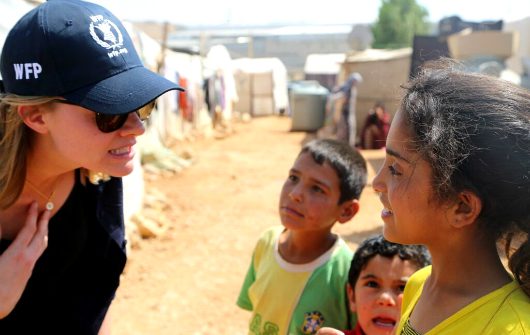
Of the 650,000 people that fled Syria to arrive in Turkey, one-third are allowed into refugee camps. There is no room for the res; they have to fend for themselves. Nizar Najjar is the assistant director of Camp Bab al-Salameh. He explains, “Sometimes we do not have the capacity to receive new refugees. Some people (are forced to) just put up their tents in fields.”

Those in camps do not have it much better. Dr. Al-Naser is a part of a group called “Medical Relief for Syria”. He says that the spread of disease is a big concern. “It’s a problem with sanitation, how to dispose of bathing water and used toilet water. There are lakes of waste in some areas.” Trucks bring in the camp’s only source of freshwater.

Young Syrian refugees are often traumatized. They have faced the horrors of being under siege, losing their homes and being separated from their families. Groups that flee travel by night and hide during the day. Some are shot at by fighter jets. Even once they reach the border, shelling still echoes in the distance.

Sara* is a 12-year old girl who fled Syria with her mother and brother along with her aunt, uncle and grandmother one year ago. She does not know the whereabouts of her father, who was kidnapped in 2013. The family was forced to leave once they lost touch with a brother-in-law that was providing them with money and resources.

Sara’s family arrived at a camp in Lebanon run by activists. They managed to find a simple apartment. It gives them a safe place to stay, but it is not insulated and floods as soon as it rains. Rent and electricity cost $230 each month. Back in Syria, they were a middle-class family, and now charities help them with essentials like food, rent and medical expenses. Sara’s grandmother has diabetes and high blood pressure.

It also costs money to renew visas, which is now mandated every six months. Many times, families are forced to return to Syria because they cannot afford it. It is difficult for refugees to find jobs and earn money. Sara’s 14 year-old brother makes $30 each week working for a nearby mechanic.

Affording school is nearly out of the question with high costs of transportation, books and other fees. Sara loved school back in peace-time Syria and completed grade five. She has not been in school for over three years now but is able to take French and English language classes that are offered by aid agencies in the area.

Antonio Guterres is the UN commissioner for refugees. He asks countries around the world do more to help these displaced people, including raising money to support them and their host countries. The president of the World Bank, Jim Yong Kim, makes a similar request. He also hopes to rebuild Syria and add more access to basic public services.

Sara dreams of becoming a doctor and for her country’s healing. “I want this war to end. I expect the world is so much bigger, with so many more people. With time, the world changes. I hope the war will be over one day.”

*Names has been changed to protect her identity

– Lillian Sickler

Sources: Care, Daily Mail, The Guardian, CBS News, World Vison, The Daily Beast, MIC, NPR
Photo: Flickr

July 28, 2015
https://borgenproject.org/wp-content/uploads/borgen-project-logo.svg 0 0 Borgen Project https://borgenproject.org/wp-content/uploads/borgen-project-logo.svg Borgen Project2015-07-28 06:23:442024-12-13 17:52:09The Young Syrian Refugees
Global Poverty, Refugees and Displaced Persons, War and Violence

South Sudanese Refugees Warmly Welcomed by Uganda

Sudanese_RefugeesSince the onset of ethnically-motivated conflict within South Sudan in December 2013, an estimated 150,000 South Sudanese civilians have fled the violence to neighboring Uganda. Government officials and civilians alike have cited the remarkably accepting refugee policies exercised by Uganda as catalysts for these migrations.

Refugees who travel to Uganda for asylum are met with an abundance of economic and social opportunities upon their arrival. Unlike many other nations currently experiencing heightened influxes of refugees due to the persistence of several regional conflicts, Uganda does not place newly arrived migrants into refugee camps operated by the United Nations and other foreign aid organizations.

Instead, refugees who successfully escape their conflict-ravaged homelands for the peace and security of Uganda are presented with the opportunity to move into permanent settlements where they are provided with their own plot of land. Additionally, various U.N. agencies provide access to food, water and home construction resources for newly arrived refugees. Localized primary schools and health clinics are commonly accessible in these areas of Uganda and are responsible for providing valuable resources to newly settled migrant populations.

Titus Jogo, refugee desk officer for the Adjumani District in Northern Uganda, stated in a recent interview regarding the legal statuses of South Sudanese refugees seeking asylum that “They have all the rights that are attributed to any human being, irrespective of their status as refugees.”

The conflict within South Sudan, the newest nation in the world after its founding in 2012, was initially caused by political disputes between President Salva Kiir and his former Deputy Minister, Riek Machar. The conflict has largely consisted of multiple tribal factions, including the Neur Tribe (loyal to Machar), and the Dinka group (loyal to President Kiir); both of these tribal groups have been accused by international monitoring groups of committing war crimes and human rights violations, including ethnically-targeted massacres and sexual assaults.

The most recent report provided by the UNHCR estimates that more than 730,000 people have fled the conflict in South Sudan to neighboring nations such as Uganda, Sudan, Ethiopia and Kenya. This report also estimates that an additional 1.5 million South Sudanese civilians are currently suffering from internal displacement due to the escalation in ethnic violence. Many of these displaced civilians experience frequent relocations to areas known as “protection-of-civilians” sites. These sites are coordinated by the U.N. Mission in South Sudan and provide secure refugee camps for civilians who have fled their homes.

Secretary General of the United Nations Ban Ki-moon recently explained in a statement regarding conditions within South Sudan, “The violence that has ravaged South Sudan over the past 18 months proves that there can never be a military solution to this conflict. I therefore call on all leaders of South Sudan – particularly President Kiir and former Vice-President Riek Machar–to prove their leadership by investing in a political solution and immediately concluding a comprehensive peace agreement. At the same time, the international community must take decisive steps to help end the fighting.”

The UNHCR recently released an international appeal for increased foreign aid designated for the current mission within South Sudan, noting the mounting number of refugees traveling to neighboring countries has depleted financial resources. While the organization estimates that $99 million is necessary to continue funding this operation, only nine percent of this goal has been raised to date.

The report explained that “Current resources remain insufficient to provide vital life-saving assistance and services, particularly in the areas of health, education and livelihoods and environment. Many South Sudanese refugee children, their country’s hope for the future, face key barriers to education including overcrowding in classrooms, a lack of teachers, and a lack of recreational activities to support constructive social engagement.”

– James Miller Thornton

Sources: The Guardian, Shanghai Daily, UN
Photo: Flickr

July 27, 2015
https://borgenproject.org/wp-content/uploads/borgen-project-logo.svg 0 0 Borgen Project https://borgenproject.org/wp-content/uploads/borgen-project-logo.svg Borgen Project2015-07-27 07:58:142024-06-11 02:48:09South Sudanese Refugees Warmly Welcomed by Uganda
Page 20 of 29«‹1819202122›»

Get Smarter

  • Global Poverty 101
  • Global Poverty… The Good News
  • Global Poverty & U.S. Jobs
  • Global Poverty and National Security
  • Innovative Solutions to Poverty
  • Global Poverty & Aid FAQ’s
Search Search

Take Action

  • Call Congress
  • Email Congress
  • Donate
  • 30 Ways to Help
  • Volunteer Ops
  • Internships
  • Courses & Certificates
  • The Podcast
Borgen Project

“The Borgen Project is an incredible nonprofit organization that is addressing poverty and hunger and working towards ending them.”

-The Huffington Post

Inside The Borgen Project

  • Contact
  • About
  • Financials
  • President
  • Board of Directors
  • Board of Advisors

International Links

  • UK Email Parliament
  • UK Donate
  • Canada Email Parliament

Get Smarter

  • Global Poverty 101
  • Global Poverty… The Good News
  • Global Poverty & U.S. Jobs
  • Global Poverty and National Security
  • Innovative Solutions to Poverty
  • Global Poverty & Aid FAQ’s

Ways to Help

  • Call Congress
  • Email Congress
  • Donate
  • 30 Ways to Help
  • Volunteer Ops
  • Internships
  • Courses & Certificates
  • The Podcast
Scroll to top Scroll to top Scroll to top