Jordan: A Refugee Haven
The Middle East—in the north, Syria’s civil war between rebel forces trying to overthrow the dictator Bashar al-Assad rages. To the west, the perpetual conflict between Israel and Palestine continues. And with the rise of ISIS in Iraq to the east, there is no shortage of refugees.
Caught in the middle of this chaos is Jordan. The country has opened its borders for floods of refugees since the Syrian civil war broke out in 2011. An estimated 1.4 million Syrians have crossed into Jordan during the war, making it the highest concentration of refugees globally. In an interview with 60 Minutes last September, Jordan’s King Abdullah said that welcoming the refugees is the right thing to do: “Where else can the Syrians go? They are in dire straits.”
The situation in Jordan is a microcosm of a troubling trend. There are approximately 60 million refugees globally, averages that have not been seen since the end of World War II. Whether it is war, like in the Middle East, or a changing climate, people seek normalcy where there is food security and educational opportunity.
Unfortunately, assimilating refugees into a host country’s culture so that they may become working members of society is very costly. King Abdullah says that absorbing so many people has put a tremendous economic strain on his country. He does not know how long Jordan can continue.
The World Food Programme (WFP) has been an essential cog in the machine supplying Syrian refugees. Formed by the United Nations in the early 1960s, the program feeds 80 million people in 75 countries annually. The United States pays a third of its $4 billion annual budget.
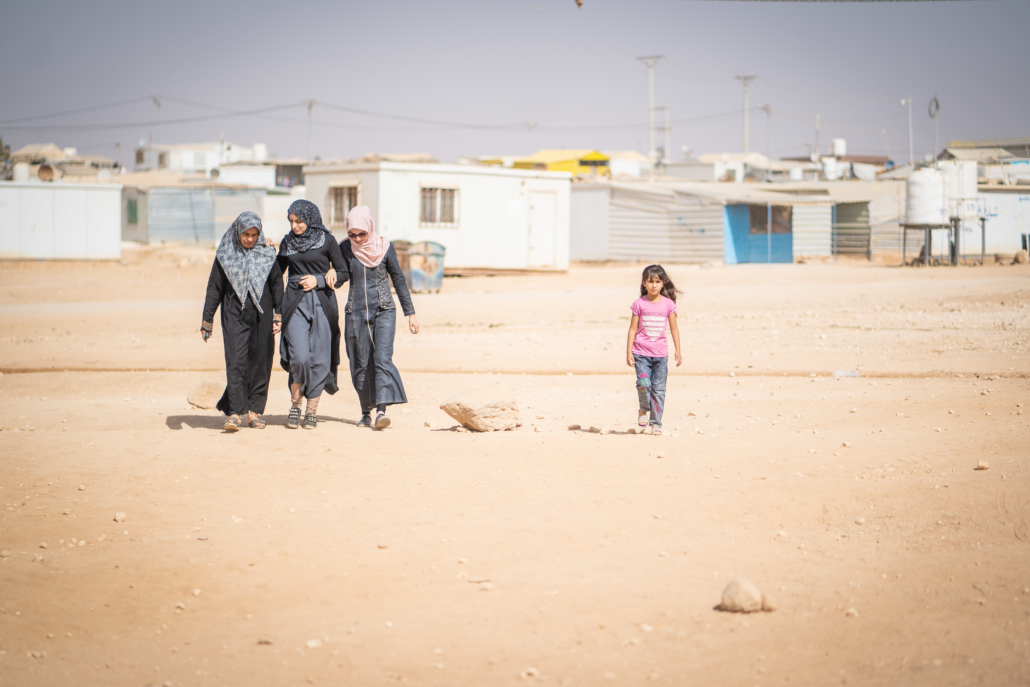
Their largest operation ever has been at a United Nations refugee camp just inside Jordan. Housing an estimated 130,000 people, this city in the desert has become home to many.
The WFP has set up grocery stores in the camp. Instead of receiving three meals a day, each refugee gets a voucher of $29 dollars a month. This gives them the dignity of cooking for themselves, said WFP Executive Director Ertharin Cousin. In an interview with 60 Minutes last Thanksgiving, Cousin explained that this is a gesture of respect. “Many of these people had led normal, working lives,” she said. “The war took that from them.”
The organization has also been active in Syria. A portion of the 45,000 metric tons of food that is devoted to Jordanian refugee camps goes into Syria as well. Throughout the war, Assad’s forces have blockaded Syrian cities suspected of supporting the rebels. In Homs, the encirclement lasted more than 600 days before the WFP was able to negotiate a ceasefire with both sides to bring in vital food supplies.
The embattled civilians requested that the children, women and sick be evacuated before food was brought in. The WFP left Homs with 1,300 refugees and took them to the safety of Jordan. They left with a month’s worth of food supplies.
It is estimated that 6 million Syrians do not know where their next meal will come from. In the interview with 60 Minutes, an anonymous Syrian described how dire food shortages have become. His hometown just outside Damascus was sealed off. Despite the continued shelling and the exposure to nerve gas, he said hunger broke the town.
“No one thought we could starve to death in 21st century Syria,” he said. “The sad thing is that people are starving when food and aid is just minutes away, outside the blockades.” As the Syrian civil war continues and instability steadily dots every other corner of the region, Jordan has become the only option for refuge for many people.
Expanding humanitarian aid will allow Jordan and the WFP to help the millions who are still displaced today.
– Kevin Meyers
Sources: USAID, Business Insider, CBS 1, CBS 2
Photo: Flickr
