• Link to X
  • Link to Facebook
  • Link to Instagram
  • Link to TikTok
  • Link to Youtube
  • About
    • About Us
      • President
      • Board of Directors
      • Board of Advisors
      • Financials
      • Our Methodology
      • Success Tracker
      • Contact
  • Act Now
    • 30 Ways to Help
      • Email Congress
      • Call Congress
      • Volunteer
      • Courses & Certificates
      • Be a Donor
    • Internships
      • In-Office Internships
      • Remote Internships
    • Legislation
      • Politics 101
  • The Blog
  • The Podcast
  • Magazine
  • Donate
  • Click to open the search input field Click to open the search input field Search
  • Menu Menu

Archive for category: Refugees and Displaced Persons

Information and news on Energy and Electricity

Global Poverty, Refugees and Displaced Persons, United Nations, War and Violence

Jobs for Refugees at a Socially-Minded Business

Jobs_for_Refugees_at_a_Socially-Minded_BusinessIn 2013, 69,926 people were admitted into the United States as refugees, according to the 2014 Fiscal Year Refugee Admissions Statistics published by the U.S. State Department.
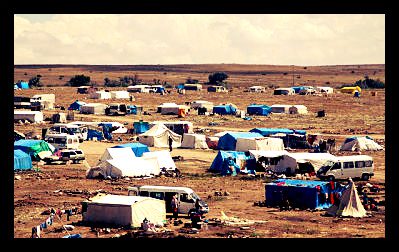
That number is increasing and will continue to grow in the coming year. In February 2015, the Office of Refugee Resettlement reported that 69,986 refugees came to the U.S. in 2014. The U.S., though, often does not have enough jobs for refugees that come into the country.

The reason for the rise in refugee amount is largely due to the crisis in Syria, which has displaced thousands. So far, about 647,000 people have been forced to flee the region.

The Syrian conflict has been called the largest migration by a single group of people since 1999 when war in Kosovo resulted in the displacement of more than 867,000 people.

The United Nations’ High Commission for Refugees releases an annual report on the total amount of people driven from their homeland. In June 2013, it was at 45.2 million people. This was the highest ever in recorded history.

The five countries most impacted by wars are Afghanistan, Somalia, Iraq, Syria and Sudan. In fact, these countries were the source of 55% of all refugees in 2013.

In the 2012 report, nearly half of the population of refugees were female, and about 46% were children aged 18 or younger.

In Lancaster, Pennsylvania, Srirupa Dasgupta owns a socially-minded restaurant. Beginning at first as a catering company in 2010, the restaurant opened in April 2014. Dasgupta wanted to create a place where refugees and other marginalized people could find jobs.

“I realized that Lancaster has a large refugee population,” says Dasgupta, “These women had the skills to get a job and had jobs in their country but they couldn’t get past the language barrier in this country.”

She saw that, hired as cooks, women did not have to read the recipes because they had curated them on their own. Currently, she has three regular employees that are each paid $14.50 per hour, which is twice the amount of minimum wage in Pennsylvania.

Dasgupta came to the U.S. from India to attend college in Massachusetts. Her grandparents fled Bangladesh in 1947 and their struggle, along with many others she has come across, inspired her to start her business.

“Upohar’s lead chef is Rachel Bunkete who grew up in the Democratic Republic of the Congo. She left her home in order to escape political, ethnic and religious conflicts in 2008, but was forced to do so without her husband and three children. Ever since she was allowed to come to the U.S., she has been working toward being reunited with her family.

Another chef, Tulsha Chauwan, fled Bhutan with her family and lived in refugee camps in Nepal for year before they were allowed to settle in the U.S.

Upohar, the name of the restaurant, is the Bengali word for ‘gift’.

So far, Dasgupta has yet to yield any profit from her restaurant, but she is thrilled just knowing that she has made a difference in the lives of those involved.

– Lillian Sickler

Sources: NPR, Upohar, Lancaster Online, International Rescue Committee, U.S. Department of State, The Guardian, Office of Refugee Settlement
Photo: Flickr

June 12, 2015
https://borgenproject.org/wp-content/uploads/borgen-project-logo.svg 0 0 Borgen Project https://borgenproject.org/wp-content/uploads/borgen-project-logo.svg Borgen Project2015-06-12 01:29:422024-12-13 17:51:27Jobs for Refugees at a Socially-Minded Business
Global Poverty, Refugees and Displaced Persons

Rohingya Refugee Crisis

Rohingya_Refugee_Crisis
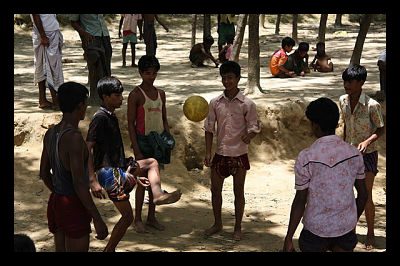
Thousands of migrants are currently stranded in boats off the coasts of Thailand, Malaysia and Indonesia. Several thousand have made it ashore, but the governments of these countries are refusing to allow those who remain at sea to land. Most of the boats are overcrowded and on the verge of sinking. Local fishermen and villagers have rescued hundreds from sinking boats off the coast of Sumatra. It is estimated that 6-8,000 remain stranded at sea.

The passengers are primarily migrants from Bangladesh looking for work and Muslim Rohingya fleeing persecution in Burma. There are approximately one million Rohingya living in Burma, but as a non-Buddhist minority they are denied citizenship and forced to live in segregated ghettos where poverty, disease and starvation are rife. The Burmese government refuses to recognize them and insists they are illegal migrants from Bangladesh despite the fact that many have roots in Burma that go back many centuries.

Over 100,000 Rohingya have fled Burma in recent years as sectarian tensions have increased. Hundreds have been killed in violent clashes. The Burmese military junta was notorious for persecuting minorities and despite a transitional government, this persecution continues. Many minorities flee and refugee camps on the Thai border house thousands of asylum seekers.

But no group has endured the level of persecution suffered by the Rohingya, whom the United Nations claims is one of the world’s most oppressed minorities. Since they live in the western part of the country and are forced into segregated camps, the Rohingya must flee by boat.

They flee alongside Bangladeshi migrants and pay large amounts of money to human traffickers, who frequently abuse them and cram them into unsafe and overloaded vessels, just like in the Mediterranean. As Thailand has recently begun cracking down on human trafficking, many are now fleeing for Malaysia and Indonesia.

But each time they have attempted to land, authorities have turned them away and sent them to another country, which Human Rights Watch has referred to as “human ping-pong.” Most of the ships have been abandoned by the smugglers and left to float offshore. There have been reports of fighting over food, people dying of disease and starvation and even stories of people throwing others overboard to lighten the load and keep the ship from sinking.

Migrants have been fleeing in record numbers this year. Indonesia and Malaysia say they already have too many Rohingya to accept any more. The governments of Thailand, Malaysia and Indonesia are all meeting to discuss the issue. The United Nations and several NGO’s are also involved and are pledging millions of dollars in aid to assist the countries in dealing with the refugee crisis.

Fifteen countries have been invited to a summit in Thailand at the end of the month to discuss the crisis and come up with a solution. Burma has also been invited but says it will not attend and refuses to accept any responsibility for the problem. The first obstacle is finding a place to set up camps to house the migrants. But perhaps the most difficult and lengthy part will be identifying and processing them and sorting out economic migrants from asylum seekers. The former will be sent home, while the latter will be sent abroad to third countries.

– Matt Lesso

Sources: The Guardian 1, Yahoo, BBC, The Guardian 2, The Guardian 3
Photo: Flickr

May 26, 2015
https://borgenproject.org/wp-content/uploads/borgen-project-logo.svg 0 0 Borgen Project https://borgenproject.org/wp-content/uploads/borgen-project-logo.svg Borgen Project2015-05-26 04:00:562020-07-18 02:10:51Rohingya Refugee Crisis
Global Poverty, Refugees and Displaced Persons

IKEA’s Better Shelters

better_shelter
Nearly four million refugees have fled Syria in the last four years. In 2013, almost 51 million people were displaced from their homes worldwide. This marks the highest global refugee population since World War II. In camps, the only shelter these displaced families have are flimsy tents. A new mobile shelter called the Better Shelter could offer a safer, more dignified solution to the challenge of housing refugee families.

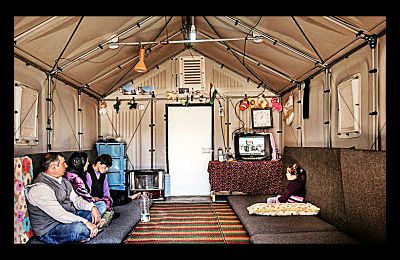
IKEA Foundation and the United Nations High Commissioner for Refugees have joined forces to improve the housing options for displaced families. The shelters come in two flat cardboard boxes, can be assembled without additional tools by as few as four people in less than a day. At 188 square feet, they can house up to five people and come with weather-proof panels, a solar powered lamp and cellphone charger and a door that locks.

Shaun Scales, Chief of Shelter and Settlement at UNHCR, has lauded the Better Shelters as, “…an exciting new development in humanitarian shelter and represents a much needed addition to the palette of sheltering options mobilized to assist those in need. Its deployment will ensure dramatic improvement to the lives of many people affected by crises.”

The houses were designed by a team in Sweden with the goal of making a temporary housing solution that was sustainable socially and environmentally. After UNHCR and IKEA became involved in the project, Better Shelter was tested by refugees in Ethiopia and Iraq. Their needs and critiques were central to the design process and helped shape the final product.

The Better Shelters cost about $1,150, about twice as much as the makeshift tarp tents that spring to mind when refugee camps are mentioned. This is mostly because the shelters are more akin to mobile homes. The locking doors add a layer of security and privacy that is currently all but forgotten in the overcrowded camps, and could help reduce the staggeringly high rate of sexual assault. With weatherproof walls, interior lighting and a solid foundation, the shelters are designed to last for about three years. That’s six times as long as the standard tents usually last.

“Even though the upfront price is double that of an emergency tent, the solution is still more cost effective considering its longevity,” explains Johan Karlsson, head of Business Development at Better Shelter. “We’re working hard to get it below $1,000, and we see good potential to achieve this within the next two years.”

UNHCR has purchased 10,000 of the Better shelters and plans to distribute them this summer, potentially housing 50,000 refugees. Although 50,000 of the 13 million people who rely on UNHCR may seem like a drop in the bucket, it is a promising start for a product that could ease the pain of displacement.

– Marina Middleton

Sources: World Mic, The Huffington Post, Better Shelter, Mashable, DIHAD
Photo: Mashable

May 16, 2015
https://borgenproject.org/wp-content/uploads/borgen-project-logo.svg 0 0 Borgen Project https://borgenproject.org/wp-content/uploads/borgen-project-logo.svg Borgen Project2015-05-16 08:00:212024-05-27 09:23:54IKEA’s Better Shelters
Global Poverty, Refugees and Displaced Persons

International Catholic Migration Commission

With allegations of sexual abuse by priests surfacing over the last 15 years, Catholicism has been portrayed negatively in the news. In turn, followers of the faith can have negative perceptions upon hearing that their beloved religious leaders have a darker, more tainted morality.

Despite the ignominy, moral Catholics continue to do volunteer work for the greater good. One of the least acknowledged organizations of the church is the International Catholic Migration Commission.

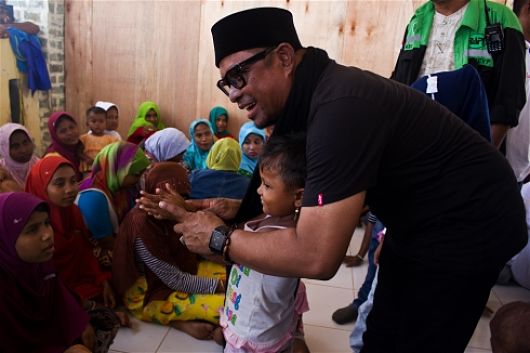
Founded in 1951, the ICMC is dedicated to the service and protection of geographically displaced people, namely refugees and migrants. It also serves people who have been internally displaced, or exiled from their homes while staying within the borders of their native countries.

Most importantly, the ICMC’s services are not restricted to members of the Christian faith. A photo on the organization’s website says it all. A smattering of huddled refugees take shelter under gold ponchos and blue blankets on the deck of a boat while it sails towards the sunrise, toward hope of a safe haven.

Its workers have proved their integrity time and time again. During the past 15 years alone, agents of the ICMC have been aiding and sheltering victims of the wars in Afghanistan and Syria.

Because the ICMC has reserved locations in many impoverished countries, its agents are often able to step in more quickly than governmental aid organizations. The work that they do in these crises is truly invaluable.

But the media will not cover it. Why? Because it is biased toward sensationalism. While members of other religious groups forge terrorist attacks upon developed countries whose people become a tad too liberal in their mockery, Christians are almost disturbingly accepting of attacks on their faith.

As a consequence of sensationalism and freedom of the press, the public views Muslims as the ultimate villains, Christians as ignorant bigots and Judaism as the only religious group that can do absolutely no wrong. All three biases are misplaced.

Furthermore, the media is talking out of two sides of its mouth. According to the Pew Forum 2007 survey, African Americans made up the most religious racial group, with 85% practicing some denomination of Christianity. Another huge swath of Christians is Hispanic. Yet the press likes to overlook these statistics, praising Obama as the first African American president and peddling the rights of illegal immigrants while mocking the religious practices and beliefs of Blacks and Latinos.

What lies at the root of these religious prejudices is the layman’s demand for ancient belief systems to conform and adapt to modern social issues. Religious leaders and followers of all faiths are then forced to reconcile what are sometimes conflicting imperatives.

Child molestation is unambiguously wrong. Subjugation of women by religious leaders is wrong. But giving the media of any nation as much moral authority as the American media effectively claims only works to throw decent people who happen to be religious in the middle of an incessant sociopolitical campaign.

Criticism of religious institutions, much like the racially slanted coverage of police shootings, only works to fuel conflicts in both the United States and developing nations. It inspires people to shoot police officers vigilante-style and rant about archaic beliefs while religious individuals in poorer countries continue to face discrimination and crimes against humanity.

Perhaps the solution ought not to be found among the hateful organizations that yell loudest, but rather among the unsung heroes like members of the ICMC. As the overlooked saviors of media-portrayed victims, they may be the most ironic and unexpected heroes of all.

– Leah Zazofsky

Sources: ICMC, International Catholic Migration Commission, Pew Forum, Pew Research, UNHCR, Voice of America
Photo: Flickr

April 22, 2015
https://borgenproject.org/wp-content/uploads/borgen-project-logo.svg 0 0 Borgen Project https://borgenproject.org/wp-content/uploads/borgen-project-logo.svg Borgen Project2015-04-22 04:00:162024-06-05 01:58:28International Catholic Migration Commission
Refugees and Displaced Persons

Conditions Poor in Syrian Refugee Camps

Syria Camps
What was supposed to be a safe haven for Palestinians has now become another war zone. A total of 18,000 refugees are being held hostage in the Yarmouk camp in Syria. The Syrian refugee camp located in southern Damascus has been taken over by ISIS and the group Al-Nursa Front, known for its affiliation with Al-Qaeda.

According to the United Nations, the camp was already low on essentials such as food, water, and medicine. According to Chris Gunness, a spokesman for the United Nations, attempts to deliver food have failed. “That means that there is no food, there is no water and there is very little medicine,” said Gunness.”The situation in the camp is beyond inhumane. People are holed up in their houses, there is fighting going on in the streets. There are reports of … bombardments. This has to stop and civilians must be evacuated.”

Adding to the devastation is the constant violence the people of the camp must face. Dr. Saeb Erekat, and Executive Committee Member of the Palestine Liberation Organization, has reported that there are “kidnappings, beheadings and mass killings” being carried out at the camp. Bombs have also been dropped on the camp.

Yarmouk, which was formed in 1957 for refugees in the Arab-Israeli conflict, are no strangers to dire situations—illness and starvation were already prevalent amongst the camp, which has been under government control since December of 2012. However, the damage being carried out now could be the worst the camp has seen yet.

“Never has the hour been more desperate in the Palestine refugee camp of Yarmouk,” said the United Nations Relief and Works Agency in statement.

The United Nations is vocalizing the need for liberation or at least humanitarian aid where those suffering can receive food, water and proper medical attention.

“The levels of humanity that we have seen have now descended into further levels of inhumanity,” insisted Gunness. Hopefully, the United Nations and other humanitarian groups will continue to fight for the lives of those who are victims to this horrible conflict.

– Melissa Binns

Sources: The World Post, CNN
Photo: Flickr

April 16, 2015
https://borgenproject.org/wp-content/uploads/borgen-project-logo.svg 0 0 Borgen Project https://borgenproject.org/wp-content/uploads/borgen-project-logo.svg Borgen Project2015-04-16 04:00:362020-06-25 16:24:19Conditions Poor in Syrian Refugee Camps
Health, Refugees and Displaced Persons

Winter Brings Health Risks for Syrian Refugees

syrian refugees
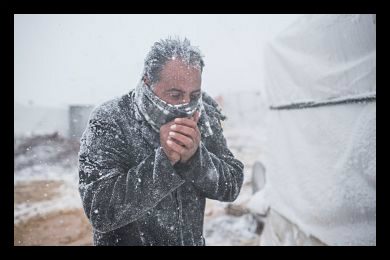
As winter storms move into the Middle East, the most vulnerable populations will be the millions of Syrian refugees fleeing from a violent and long civil war. Perhaps the most affected areas are in the Beqaa Valley in Lebanon, where some 400,000 Syrian refugees live in temporary, informal tent camps under harsh winter conditions.

Temperatures in the Beqaa Valley have dipped well below freezing for long periods of time, compounding the unforgiving effects of a wet, windy winter. Snow and ice in recent weeks has led to the closure of roads surrounding the camps, making access for aid workers even more difficult. The UN reports that over 100 tents have collapsed under the weight of ice and snow. The UNHCR has set up six emergency shelters to try to negate the risk of collapse, but resources are running low around the camps.

Lebanon has no formal camps, but is now the home of 1.12 million Syrian refugees. This means that one out of every four people in Lebanon is now a Syrian refugee. Because the official policy of the Lebanese government is non–intervention in Syrian internal affairs, civic organizations have had to take the lead on caring for the millions of Syrian refugees now living in the country.

The UN estimates that there are approximately 3.2 million Syrian and an additional 7.6 million people displaced by the conflict still living in Syria. Most refugees are living in Turkey, Jordan, Lebanon and Iraq. This will be the fourth winter since the beginning of the war.

Other refugees affected by winter weather live in Jordan, Turkey, Palestine, Israel and Iraq. In Jordan, only 100,000 of a total 620,000 refugees live in formal camps. In Iraq, violence in the past year has displaced hundreds of thousands of people who are now are facing similar winter risks as Syrian refugees.

The winter months bring a whole new set of health risks to refugees, especially those living in tent camps. Besides cold-weather exposure risks like hypothermia, frostbite and chilblains, wet conditions lead to a higher risk of disease and low levels of resources and closed roads increase the risk of malnutrition and dehydration. Children and the elderly are the most vulnerable populations.

Winter also brings higher risk of accidental deaths, from collapsed tents and fire-related deaths from indoor flames and heaters.

This past November, two Syrian babies died because of winter conditions. In Palestine this month, a fire killed a refugee child. And two Syrian refugees crossing into Lebanon earlier this month, a 30-year-old man and a seven-year-old child, were killed in the mountains because of exposure to extreme cold.

A shortfall of 50 percent of international funding for U.N. assistance to refugees means that Syrian refugees are getting even less help this winter than in the past. There are no additional ration cards or oil for heaters. Even though the percent of refugees living in harsh winter conditions is small compared to the overall number of people displaced by the conflict, a disproportionate amount of funding is going to them, removing funding options for other refugee settlements.

– Caitlin Huber

Sources: The Guardian, Washington Post, NPR, The Weather Channel, National Resource Council, Center for Disease Control, Relief Web, Syrian Refugees
Photo: YouTube

January 27, 2015
https://borgenproject.org/wp-content/uploads/borgen-project-logo.svg 0 0 Borgen Project https://borgenproject.org/wp-content/uploads/borgen-project-logo.svg Borgen Project2015-01-27 12:00:362024-12-13 17:51:18Winter Brings Health Risks for Syrian Refugees
Activism, Refugees and Displaced Persons, Women and Female Empowerment

Girl Scouts Arise in Refugee Camps

girl_scouts
The Girl Scouts of the U.S.A. is an organization known for building girls’ confidence, courage and character in order to make the world a better place. Girl Scouts is active in more than 92 countries across the globe and is a part of the World Association of Girl Guides and Girl Scouts (WAGGGS), which comprises of over 10 million girls and adults in 145 countries. The Association’s purpose is to connect member organizations and promote girls and young women to develop to their fullest potential.

Two U.S. college students have taken the initiative further and brought Girl Scouts to refugee camps in Jordan. U.S. college students Howlader Nashara and Ameera Naguib are the troop’s leaders. They started with helping the girls get to know each other, and they planned the different badges they wanted the girls to earn throughout the year. Because of the troop, the girls are now versed in skills that they would not have had the opportunity to learn otherwise, such as first-aid, self-defense, gardening, computer skills and financial literacy.

A grassroots effort, the Collateral Repair Project, has joined forces with the Girl Scouts and is sponsoring more than 20 Girl Scout troops, assisting girl refugees of the Syrian civil war three years ago. The mission of this grassroot effort is to bring assistance to refugees and other victims of war/conflict. The Collateral Repair Project seeks to repair this damage, offer guidance, assistance and even temporary homes to thousands of Iraqis and Syrian refugees.

Girl Scouts empowers girls and encourages them to discover that life can be filled with fun, friendship and the power of forming a community. Through field trips, sports clinics, community service projects, cultural exposure, environmental stewardship and basic life-skills training, girls are able to grow and reach their true full potential.

– Charisma Thapa

Sources: The Girl Scouts, Good News Network Collateral Repair Project
Photo: Flickr

November 15, 2014
https://borgenproject.org/wp-content/uploads/borgen-project-logo.svg 0 0 Borgen Project https://borgenproject.org/wp-content/uploads/borgen-project-logo.svg Borgen Project2014-11-15 08:00:422024-05-27 09:23:00Girl Scouts Arise in Refugee Camps
Global Poverty, Refugees and Displaced Persons

Healthcare of Syrian Refugees

Syrian childWith over nine million Syrians displaced by the ongoing conflict, it is no surprise that there is a dire need for medical services in refugee camps. The situation for Syrian refugees is worsening due to a lack of international funding in the healthcare sector. According to Amnesty International, some families are becoming so desperate that they have resorted to going back to Syria to receive proper treatment.

In 2013, the United Nations initiated a $4.4 billion humanitarian appeal, one of the largest aid requests made by the organization. However, it is estimated that just over one-third of the requested funding has been received.

As more people flee to neighboring countries, including Iraq, Jordan, Lebanon and Turkey, hospital care and specialized treatment is becoming more insufficient. The healthcare of Syrian refugee children is particularly concerning, with millions at risk of becoming malnourished, dehydrated and exploited.

In Lebanon, the health system is highly privatized and expensive, thus leaving the United Nations High Commissioner for Refugees to take care of the majority of the population. With limited funds, UNHCR has implemented strict eligibility criteria in order for Syrian refugees to receive medical treatment. Even if the criteria are met, many of the refugees have to pay a portion out of pocket.

In many cases, refugees often go untreated. Arif, a 12 year-old boy who suffered from severe burns to his legs, was denied hospital access after UNHCR decided he did not qualify for subsidized care. Consequently, his health started to deteriorate as his legs swelled and became infected. Volunteer doctors were eventually found to perform his operations, but they did not have the specialized equipment to continue.

Unfortunately, Arif’s story is not unique. The healthcare of Syrian refugees has not been improving and there needs to be a push to strengthen the capacity of health institutions where the Syrian refugee population is predicted to accelerate. Patients with chronic illnesses have strained the existing health services in the affected countries and UNHCR is struggling to find solutions without international assistance.

– Leeda Jewayni

Sources: Syrian Refugees, World Vision, Amnesty International, UNHCR
Photo: Beauty Programs

October 3, 2014
https://borgenproject.org/wp-content/uploads/borgen-project-logo.svg 0 0 Borgen Project https://borgenproject.org/wp-content/uploads/borgen-project-logo.svg Borgen Project2014-10-03 08:00:212024-06-05 01:58:13Healthcare of Syrian Refugees
Advocacy, Human Rights, Human Trafficking, Refugees and Displaced Persons

IRD Fights Suffering On Many Levels

IRD
Picture a world without suffering. Is it possible?

To some this may be but a far-fetched dream, but Dr. Arthur B. Keys, Jr. has set out to make this dream a reality.

Founded in 1998, Dr. Keys and his wife, Jasna, established International Relief and Development, a nonprofit organization that fights to relieve the suffering of the world’s most vulnerable and marginalized population through active engagement, empowerment and inclusion.

Over the years, IRD has provided $3.9 billion in humanitarian assistance to over 40 countries, including Afghanistan, Colombia, Ethiopia, Iraq and Ukraine. The organization heavily focuses on conflict zones and areas damaged by natural disasters. To improve the livelihoods of these people, the IRD believes it is best to provide the resources and training to become self-sufficient. Thus, rather than just providing clean water to a community suffering from drought, International Relief and Development aims to address the root causes of the problem, such as upgrading water pumps and management systems.

IRD has tackled issues ranging from a lack of schools in Haiti to impoverished women  in Mozambique to malnourishment among students in Laos. By organizing short-term and long-term interventions, they foster the path to a more developed and prosperous nation. But how does IRD get the funds to take on all these projects?

The nonprofit organization collaborates with many other agencies and donors, one of them being the U.S. Agency for International Development. As a contractor, 4,000 staff members all over the world carry out many of USAID’s programs in hopes to improve infrastructure, healthcare and governance in war-torn countries. The U.S. State Department as well as numerous UN agencies also fund IRD’s annual budget of $400-$500 million.

One of its most recent successes took place among refugees and internally displaced persons in Yemen, a country that hosts over 200,000 people from Eritrea Ethiopia, Iraq and Somalia.

Refugees and internally displaced persons all face similar struggles, but in a place where political instability and high unemployment wreak havoc on daily life, coping with the current circumstances becomes increasingly difficult.

Realizing the dire urgency, IRD has set out to assist the thousands of refugees and internally displaced persons. After assessing the deprivations and needs in the refugee camps, IRD along with the United Nations High Commissioner for Refugees worked to provide monthly allowances to the families. They also distributed thousands of dollars worth of school and medical supplies, hygiene kits and other goods to many school children and families. The United Methodist Committee on Relief donated most of the gifts. IRD also targeted many vulnerable groups, such as pregnant women and sexual abuse survivors, by establishing care centers and providing group therapy.

International Relief and Development continues to provide relief and assistance in the world’s hot spots. By going into desperate communities and initiating development, this organization guides countries to economic growth and stabilization. Success stories are seen all over Africa, Asia, Europe and the Middle East, but the range of IRD’s success does not stop there. Success like this is everlasting and enduring.

—Leeda Jewayni

Sources: International Relief and Development, Washington Post, Huffington Post

October 1, 2014
https://borgenproject.org/wp-content/uploads/borgen-project-logo.svg 0 0 Borgen Project https://borgenproject.org/wp-content/uploads/borgen-project-logo.svg Borgen Project2014-10-01 04:00:272024-12-13 17:51:13IRD Fights Suffering On Many Levels
Health, Refugees and Displaced Persons

Health Issues Grow for Afghan Refugees

afghan_refugees
The Soviet occupation of Afghanistan in 1979 resulted in millions of Afghans seeking refuge in neighboring countries, specifically Pakistan and Iran. Today, Afghans account for the greatest number of displaced persons in the world. With over 1.6 million registered Afghans located in the country, Pakistan is struggling to accommodate the unmet health needs of local women.

The World Health Organization describes war as “the most serious threat of all to health.” Unfortunately, this seems to be true in many refugee camps located in Pakistan, where reproductive health needs remain untreated. During the first wave of refugees, communicable diseases, such as malaria, were among the greatest concerns for the population. Nowadays, the focus has shifted to address the growing demands of Afghan women in regards to maternal health.

After conducting a needs assessment, the International Rescue Committee (IRC) concluded that there has been a lack in reproductive health services in refugee camps. The primary area of concern continues to be the surplus of high-risk pregnancies. Malnutrition, poverty and under-use of prenatal services all contribute to the endangerment of a mother and her baby.

However, these are not the only factors that cause Afghan refugees to remain a vulnerable population.

Due to many cultural constraints, women can only receive clinical care and health education from other women. This proves troublesome in many camps where female physicians are limited. The IRC also found that although 80 percent of pregnant women attend between one and three prenatal appointments, only half of them were accompanied by a trained health professional during labor.

Inadequate access to transportation tends to hinder women’s ability to seek health services in the case of an emergency, thus forcing many Afghan refugees to give birth at home without any medical supervision. In the few cases where an Afghan woman may be able to reach a local hospital, a male relative must accompany her–but that cannot always be guaranteed.

Fortunately, there have been recent solutions to this ongoing health crisis.

Government-run health care facilities, or Basic Health Units (BHUs), are growing in popularity in the outskirts of the country. Although some BHUs have already been established, they have rarely been seen in remote towns such as Chamkani, located in Peshawar. However, in 2012, the Chamkani project started operations, establishing seven BHUs in various parts of Peshawar.

The United Nations High Commissioner for Refugees (UNHCR) created the Refugee Affected and Hosting Area program to strengthen these government-run health centers, improve infrastructure and rehabilitate the environment of over 40 rural cities by various projects.

According to UNHCR, the Chamkani project has built a multitude of labor rooms, recovery rooms and waiting areas in the seven new BHUs. They have also provided more medical equipment and training to traditional midwives.

Local interviews suggest that Afghan refugees in Chamkani feel more comfortable because a health clinic is nearby, meaning they will not have to wait for a male to escort them. The Chamkani project also considers the financial situation of many refugees. The women only have to pay five rupees for an ultrasound examination, a procedure that would be exponentially more expensive at a hospital.

While Afghan refugee women still continue to endure hardships during pregnancies, the BHUs have greatly improved their lives and provided them better medical treatment in a timely manner. As Winston Churchill said, “Healthy citizens are the greatest asset any country can have.”

— Leeda Jewayni

Sources: UNHCR, Rescue.org, RHRC
Photo: Pakistan Today

September 27, 2014
https://borgenproject.org/wp-content/uploads/borgen-project-logo.svg 0 0 Borgen Project https://borgenproject.org/wp-content/uploads/borgen-project-logo.svg Borgen Project2014-09-27 08:00:392024-06-05 01:58:11Health Issues Grow for Afghan Refugees
Page 22 of 29«‹2021222324›»

Get Smarter

  • Global Poverty 101
  • Global Poverty… The Good News
  • Global Poverty & U.S. Jobs
  • Global Poverty and National Security
  • Innovative Solutions to Poverty
  • Global Poverty & Aid FAQ’s
Search Search

Take Action

  • Call Congress
  • Email Congress
  • Donate
  • 30 Ways to Help
  • Volunteer Ops
  • Internships
  • Courses & Certificates
  • The Podcast
Borgen Project

“The Borgen Project is an incredible nonprofit organization that is addressing poverty and hunger and working towards ending them.”

-The Huffington Post

Inside The Borgen Project

  • Contact
  • About
  • Financials
  • President
  • Board of Directors
  • Board of Advisors

International Links

  • UK Email Parliament
  • UK Donate
  • Canada Email Parliament

Get Smarter

  • Global Poverty 101
  • Global Poverty… The Good News
  • Global Poverty & U.S. Jobs
  • Global Poverty and National Security
  • Innovative Solutions to Poverty
  • Global Poverty & Aid FAQ’s

Ways to Help

  • Call Congress
  • Email Congress
  • Donate
  • 30 Ways to Help
  • Volunteer Ops
  • Internships
  • Courses & Certificates
  • The Podcast
Scroll to top Scroll to top Scroll to top