• Link to X
  • Link to Facebook
  • Link to Instagram
  • Link to TikTok
  • Link to Youtube
  • About
    • About Us
      • President
      • Board of Directors
      • Board of Advisors
      • Financials
      • Our Methodology
      • Success Tracker
      • Contact
  • Act Now
    • 30 Ways to Help
      • Email Congress
      • Call Congress
      • Volunteer
      • Courses & Certificates
      • Be a Donor
    • Internships
      • In-Office Internships
      • Remote Internships
    • Legislation
      • Politics 101
  • The Blog
  • The Podcast
  • Magazine
  • Donate
  • Click to open the search input field Click to open the search input field Search
  • Menu Menu

Archive for category: Refugees and Displaced Persons

Information and news on Energy and Electricity

Refugees and Displaced Persons

World’s Top 5 Largest Refugee Populations

refugee populations
An estimated 15.2 million people in the world are refugees, people forced to leave their home countries because of persecution, war, or other kinds of violence. That’s the equivalent of the populations of New York, Los Angeles, Chicago, and San Francisco combined.

Who are these people? Where do they come from? And where do they currently reside? Data from the United Nations High Commissioner for Refugees give us the following snapshot of these populations: of the 15.2 million refugees, 46% are under 18, and 48% are female. Most of these people have been forced to move to developing nations, which host an estimated 80% of the world’s refugee population.

The country with the largest refugee population in the world is Pakistan, which hosts an estimated 1.7 million refugees. Many of these refugees are from neighboring Afghanistan, the country that produces the greatest number of refugees, an estimated 2.7 million people. To place these numbers in a global context, below is a list of the world’s top 5 largest refugee populations by the nation of origin.

Largest Refugee Populations

1. Afghanistan –  2.7 million refugees worldwide

2. Iraq – 1.7 million

3. Somalia –  770,000

4. Democratic Republic of Congo – 477,000

5. Myanmar – 415,000


Refugees from these and other countries are forced to move across the globe, many of them ending up in Pakistan, Iran, Syria, Germany, and Jordan, the top 5 on the list of host countries. Jordan, Syria, Congo, Chad, and Montenegro are the countries with the highest proportion of refugees per 1,000 people. The United States currently hosts an estimated 265,000 refugees.

Although numbers like these are sometimes hard to grasp, compiling this kind of data is vital for refugee aid organizations like UNHCR, which rely on data to plan ways to help the people and countries involved. UNHCR publishes an annual Global Trends Report on refugee populations. The next such report is due in June 2013.

– Délice Williams

Sources: UNHCR, The Guardian, MSN Causes
Photo: Guardian
May 22, 2013
https://borgenproject.org/wp-content/uploads/borgen-project-logo.svg 0 0 Borgen Project https://borgenproject.org/wp-content/uploads/borgen-project-logo.svg Borgen Project2013-05-22 04:00:552024-06-10 03:22:52World’s Top 5 Largest Refugee Populations
Activism, Nonprofit Organizations and NGOs, Refugees and Displaced Persons

Dadaab Stories: By the People, For the People

Dadaab Stories: By the People, For the People
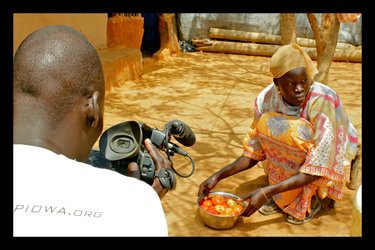
A story is best told by someone who was there. Whereas many documentaries as made by directors and producers passionate about the cause they are filming for, there is a difference between an outsider shooting their subjects, and the subjects shooting themselves.

The organization FilmAid had initially begun to screen videos and films at refugee camps. These films were mostly educational, providing those living in refugee camps with important safety and health information. They also showed films for purely entertainment purposes in order to help lighten the mood and spirit at the camps. In 2011, however, the organization’s branch in Dadaab, the world’s biggest refugee camp in Somalia, began a special project entitled “Dadaab Stories” where it began to train the refugees to work the cameras themselves and have the chance to tell their stories from their perspective.

Dadaab was built in the 1990s to house 90,000 refugees. Today, it is the home to over 500,000 refugees. Describing life in a refugee camp is difficult; insiders know more and have been around longer than an outside film crew.

Ryan Jones, an American videographer who joined FilmAid’s project in 2011, said that the part of the appeal of the program that it strays from the usual model of “an American film crew coming into a camp and spending a short period of time there and shooting some kind of 90-minute doc we hope to get into Sundance.”

Refugees have made various videos such as an emergency response video regarding a cholera outbreak, a safety video for rape awareness, the camp’s orientation film, a music video for the local group Dadaab All Stars, and documentation of actress Scarlett Johansson’s visit.

In October of 2011, however, a kidnapping incident involving Doctors Without Borders created intense restrictions and security issues which prevented the FilmAid team from coming back to Somalia. Since then, the refugees have been trying to manage posting videos and have begun to make their camp-wide newspaper The Refugee available online.

This project has not only taught the refugees a new and unique skill they would otherwise not have the chance to learn, but it gives them a creative outlet to truly show the world what life in a refugee camp is like. They may not be making feature length films or Sundance-worthy documentaries, but their progress and work are so valuable that it could never be put into a simple award category.

– Deena Dulgerian

Source: Co.EXIST

April 13, 2013
https://borgenproject.org/wp-content/uploads/borgen-project-logo.svg 0 0 Borgen Project https://borgenproject.org/wp-content/uploads/borgen-project-logo.svg Borgen Project2013-04-13 06:52:532024-12-13 17:53:44Dadaab Stories: By the People, For the People
Refugees and Displaced Persons

Top 5 Neglected Refugee Crises of 2012

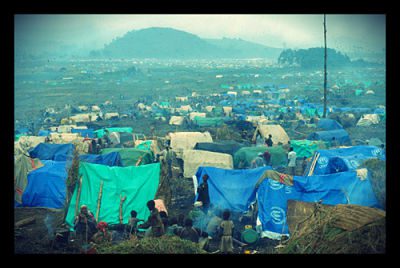
refugee-crises-camp-zaire
Most refugee crises continue long after public interest and media attention have dissipated. Many others never receive international attention in the first place. However, many displaced people remain in temporary camps for much longer than anticipated. Without international awareness or support, aid organizations and the UN’s Refugee Agency struggle to meet the basic needs of refugees, forced migrants, and internally displaced people (IDPs).

The United Nations identified some of the most neglected refugee crises around the world in 2012:

1. Sudanese refugees in Chad: Ongoing conflict in Sudan’s western Darfur region has displaced almost 2 million Sudanese. Over 250,000 of these refugees fled to Chad, one of the world’s poorest countries. Lack of infrastructure and resources in Chad have made it extremely difficult for residents to support themselves. Many rely exclusively on humanitarian aid for survival.

2. Eritrean refugees in eastern Sudan: The Eritrean refugee presence in eastern Sudan continues to grow each year. Due to political instability and military conscription, so far over 60,000 Eritreans have migrated to some of the poorest parts of Sudan. Human traffickers and smugglers target the refugees, who are unable to legally possess land or property in Sudan.

3. Sudanese refugees in South Sudan: The conflict between the Sudanese government and the Sudan People’s Liberation Movement has been receiving increased international attention. But in 2012, aid organizations were urgently requesting an additional $20 million to meet the needs of the 170,000 refugees flooding into South Sudan. Lack of infrastructure makes aid delivery difficult and expensive.

4. IDPs in Democratic Republic of Congo (DRC): Over 300,000 people were displaced from their homes in DRC in 2012 as a result of military violence. The majority remains within the Congo, while others have fled to Uganda and Rwanda. Insufficient funding and attacks on aid workers have hampered humanitarian efforts. Prior to the 2012 displacement, DRC was already home to 1.7 million internally displaced people.

5. Rohingya refugees in Bangladesh: Muslims from western Myanmar, mainly from the state of Rohingya, have faced systemic discrimination and widespread abuse for the last fifty years. Thousands have fled to Bangladesh, where the government has prohibited international agencies from providing aid to undocumented refugees: of an estimated 200,000 Rohingya refugees in Bangladesh, only 30,000 are documented.

Many more displacement and refugee crises across the globe continue to take place under the radar of mainstream media. The UN Office for the Coordination of Humanitarian Affairs has much more information and analysis on forced and unforced migration, displacement, and related human rights concerns.

– Kat Henrichs

Source: IRIN News
Photo: Wikipedia

April 6, 2013
https://borgenproject.org/wp-content/uploads/borgen-project-logo.svg 0 0 Borgen Project https://borgenproject.org/wp-content/uploads/borgen-project-logo.svg Borgen Project2013-04-06 10:03:422020-05-04 08:12:18Top 5 Neglected Refugee Crises of 2012
Refugees and Displaced Persons

The Most Important Thing: A Photo Project

The Most Important Thing: A Photo ProjectAs the violence in Syria and Sudan continues to escalate, photographer Brian Sokol gives us a brief look into the lives of displaced refugees. In his photo project titled “The Most Important Thing,” Sokol traveled to South Sudan and four other countries bordering Syria taking pictures of refugees holding the last object they grabbed before being forced to leave their homes. Sponsored by the UN Refugee Agency, the project profoundly reflects on what we would take if we had to leave everything behind.

Most of the refugees are carrying with them cooking or carpentry tools, clothing or baskets. Bottles, pans, axes, and other essentials are commonly being both easy to carry and vital to rebuilding their lives. Cell phones are treasured because they allow refugees to call loved ones in other camps and carry photos of them as well.

Abdul carries with him the keys to his home hoping that it will still be standing when he returns to Damascus. Twenty-year-old Tamara carries her diploma which she says will allow her to continue her education in Turkey. In eight-year-old May’s photo, she wears a set of bracelets saying that her most important thing was actually her doll Nancy which she had to leave behind in the rush to escape the violence. Omar carries with him a stringed instrument called a buzuq which he says “fills me with a sense of nostalgia and reminds me of my homeland.” Omar remembers that the night he left his home was the same night both his sons were killed.

The most important things for these refugees are items that either helps them survive and work towards a better future or reminisce better times. Twenty-four-year-old Alia of the Domiz refugee camp is confined to a wheelchair and blind in both eyes. She recalls when the fighting occurred right outside her house and being terrified and crying because she did not know what was happening. She says that the only important thing she brought “is my soul, nothing more – nothing material.”

– Rafael Panlilio
Source: Huffington Post

March 30, 2013
https://borgenproject.org/wp-content/uploads/borgen-project-logo.svg 0 0 Borgen Project https://borgenproject.org/wp-content/uploads/borgen-project-logo.svg Borgen Project2013-03-30 10:00:262020-06-01 00:55:07The Most Important Thing: A Photo Project
Refugees and Displaced Persons, United Nations

NGOs Make Emergency Appeal for Aid to Syria

Syria_NGO_Aid
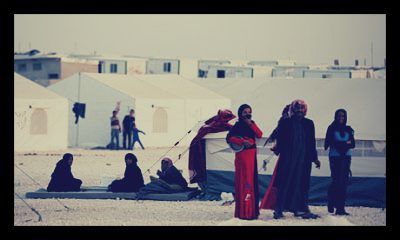
A group of 14 UK-based NGOs, The Disasters Emergency Committee (DEC), has made an “emergency appeal” to provide aid to Syria, which is struggling under the duress of a civil war. With recent news of chemical warfare being used against civilians and a death toll that has reached nearly 70,000, aid groups are struggling to keep up with the deteriorating humanitarian situation.

Recent estimates place at least 8,000 refugees fleeing the country per day, compared to 1,000 per day a few months ago.  Because of mass displacement and intense fighting, NGOs and other aid groups are finding it extremely difficult to reach civilians who are in need. Members of the DEC have been able to extend aid to refugees who have fled to other surrounding countries, and a number of other groups have had success reaching people throughout Aleppo, Damascus, Homs, and other areas throughout northern Syria.

The UN asserted that although they have requested $1.5 billion in emergency aid, only a small portion of that need has been met. The DEC’s Chief Executive, Saleh Saeed, said that even though a number of agencies are attempting to work together in the region, there remain a high number of civilians in urgent need, and that “the greatest challenge to meeting those needs remains the barriers to delivering aid which are faced by impartial humanitarian agencies such as our members,” as well as financial pressures.

The total number of people who are in need of aid directly stemming from the situation in Syria has reached 5 million, as the DEC plans to appeal to public and government officials for additional help.

– Christina Kindlon

Source: Guardian

March 25, 2013
https://borgenproject.org/wp-content/uploads/borgen-project-logo.svg 0 0 Borgen Project https://borgenproject.org/wp-content/uploads/borgen-project-logo.svg Borgen Project2013-03-25 11:03:342020-04-27 06:10:17NGOs Make Emergency Appeal for Aid to Syria
Page 29 of 29«‹272829

Get Smarter

  • Global Poverty 101
  • Global Poverty… The Good News
  • Global Poverty & U.S. Jobs
  • Global Poverty and National Security
  • Innovative Solutions to Poverty
  • Global Poverty & Aid FAQ’s
Search Search

Take Action

  • Call Congress
  • Email Congress
  • Donate
  • 30 Ways to Help
  • Volunteer Ops
  • Internships
  • Courses & Certificates
  • The Podcast
Borgen Project

“The Borgen Project is an incredible nonprofit organization that is addressing poverty and hunger and working towards ending them.”

-The Huffington Post

Inside The Borgen Project

  • Contact
  • About
  • Financials
  • President
  • Board of Directors
  • Board of Advisors

International Links

  • UK Email Parliament
  • UK Donate
  • Canada Email Parliament

Get Smarter

  • Global Poverty 101
  • Global Poverty… The Good News
  • Global Poverty & U.S. Jobs
  • Global Poverty and National Security
  • Innovative Solutions to Poverty
  • Global Poverty & Aid FAQ’s

Ways to Help

  • Call Congress
  • Email Congress
  • Donate
  • 30 Ways to Help
  • Volunteer Ops
  • Internships
  • Courses & Certificates
  • The Podcast
Scroll to top Scroll to top Scroll to top