The Young Syrian Refugees
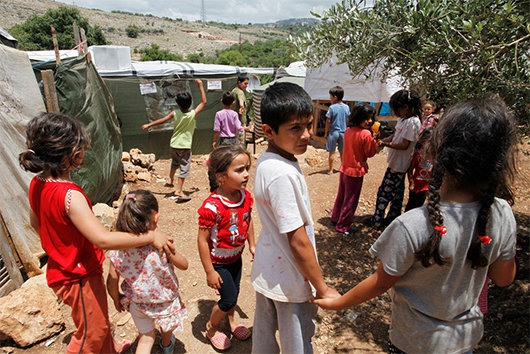
Since the civil war in Syria broke out just three years ago, four million people have sought refuge in the neighboring countries of Lebanon, Turkey, Jordan, Iraq and Egypt. So far, 100,000 have been killed. 7,000 of them are children.
The Middle East’s biggest refugee camp, Zaatari, lies in Jordan. It shelters 120,000 Syrians in a community divided into 12 districts. It costs $500,000 to run the camp. Camp workers dole out 500,000 pieces of bread and 3.5 million liters of water a day. Three-fourths of residents are women and children.
Of the 650,000 people that fled Syria to arrive in Turkey, one-third are allowed into refugee camps. There is no room for the res; they have to fend for themselves. Nizar Najjar is the assistant director of Camp Bab al-Salameh. He explains, “Sometimes we do not have the capacity to receive new refugees. Some people (are forced to) just put up their tents in fields.”
Those in camps do not have it much better. Dr. Al-Naser is a part of a group called “Medical Relief for Syria”. He says that the spread of disease is a big concern. “It’s a problem with sanitation, how to dispose of bathing water and used toilet water. There are lakes of waste in some areas.” Trucks bring in the camp’s only source of freshwater.
Young Syrian refugees are often traumatized. They have faced the horrors of being under siege, losing their homes and being separated from their families. Groups that flee travel by night and hide during the day. Some are shot at by fighter jets. Even once they reach the border, shelling still echoes in the distance.
Sara* is a 12-year old girl who fled Syria with her mother and brother along with her aunt, uncle and grandmother one year ago. She does not know the whereabouts of her father, who was kidnapped in 2013. The family was forced to leave once they lost touch with a brother-in-law that was providing them with money and resources.
Sara’s family arrived at a camp in Lebanon run by activists. They managed to find a simple apartment. It gives them a safe place to stay, but it is not insulated and floods as soon as it rains. Rent and electricity cost $230 each month. Back in Syria, they were a middle-class family, and now charities help them with essentials like food, rent and medical expenses. Sara’s grandmother has diabetes and high blood pressure.
It also costs money to renew visas, which is now mandated every six months. Many times, families are forced to return to Syria because they cannot afford it. It is difficult for refugees to find jobs and earn money. Sara’s 14 year-old brother makes $30 each week working for a nearby mechanic.
Affording school is nearly out of the question with high costs of transportation, books and other fees. Sara loved school back in peace-time Syria and completed grade five. She has not been in school for over three years now but is able to take French and English language classes that are offered by aid agencies in the area.
Antonio Guterres is the UN commissioner for refugees. He asks countries around the world do more to help these displaced people, including raising money to support them and their host countries. The president of the World Bank, Jim Yong Kim, makes a similar request. He also hopes to rebuild Syria and add more access to basic public services.
Sara dreams of becoming a doctor and for her country’s healing. “I want this war to end. I expect the world is so much bigger, with so many more people. With time, the world changes. I hope the war will be over one day.”
*Names has been changed to protect her identity
– Lillian Sickler
Sources: Care, Daily Mail, The Guardian, CBS News, World Vison, The Daily Beast, MIC, NPR
Photo: Flickr
