• Link to X
  • Link to Facebook
  • Link to Instagram
  • Link to TikTok
  • Link to Youtube
  • About
    • About Us
      • President
      • Board of Directors
      • Board of Advisors
      • Financials
      • Our Methodology
      • Success Tracker
      • Contact
  • Act Now
    • 30 Ways to Help
      • Email Congress
      • Call Congress
      • Volunteer
      • Courses & Certificates
      • Be a Donor
    • Internships
      • In-Office Internships
      • Remote Internships
    • Legislation
      • Politics 101
  • The Blog
  • The Podcast
  • Magazine
  • Donate
  • Click to open the search input field Click to open the search input field Search
  • Menu Menu

Archive for category: Human Trafficking

Child Soldiers, Children, Human Trafficking, War and Violence

Robbed Childhoods: The Worst Countries to Be a Kid

Worst Countries to be a Kid
Poverty, famine, violence and abuse have robbed many children of their childhoods. About 9.2 million children die every year, and that does not include the kids who manage to survive in harsh and dangerous conditions. Countless children must learn to survive in times of war, starvation and less than adequate health services. The following are a few of many worst countries to be a kid.

War-Torn Countries: Afghanistan and South Sudan

In Afghanistan, a country ridden by war, about 1.9 million children are in need of assistance. Not only do these children battle against the poverty of their country, but they are also caught in the crossfire of the war.

This is one of the worst countries to be a kid because of the dangers of war. In the first nine months of 2017, about 700 children were killed in Afghanistan; civilian-populated areas have seen a sharp increase in violence in the past years, and a majority of victims were children. In fact, there has been a 9 percent increase in child mortality.

If children survive these vicious attacks, the experiences then lead to severe distress and trauma. Studies have shown that children who survive attacks have a higher chance of suffering from psychological issues and experiencing a negative impact on long-term development. While children are innocent bystanders in Afghanistan, other countries include youth as children soldiers.

South Sudan is in the midst of a violent civil war, and the National Liberation Movement has taken it upon themselves to recruit children into its armies. South Sudan is one of the worst countries to be a kid because the majority of the time, children are forced to become soldiers against their will.

More than 700 children have been taken into the National Liberation Movement, and more than that were kidnapped or brought in by force.

Many of these child soldiers were taken at such a young age that their military existence has become their way of life. This can cause kids to feel trapped and less likely to seek escape. Earlier this year, about 300 children soldiers were released from the Liberation, but their ranks will unfortunately only be replaced.

Child Sex Trafficking: Thailand and China

As of 2004, 800,000 children under the age of 16 were trapped in the sex trade in Thailand alone. Thailand is the most prominent countries for sex tourism, and more than half its victims are kids.

Many of the children are foreigners because traffickers usually seek children who come from immigrant families. These children are a diverse group from Cambodia, Vietnam, Burma, India and Bangladesh, and it is not hard for recruiters to find children since parents or brokers will use kids as an avenue to earn money.

China is also known for its part in child sex trafficking. Similar to Thailand, children in China are subjected to prostitution and the sex trade. Traffickers target vulnerable children who are either disabled with mental disabilities or who are from migrating families.

Improvement in the Worst Countries to be a Kid

Though these facts are disheartening, international organizations such as UNICEF are working to prioritize children’s safety. The organizations have impacted numerous areas across Africa, East Asia, the Pacific and parts of Europe, and now continue to fight to decrease the number of worst countries to be a kid across the globe.

– Cassidy Dyce

Photo: Flickr

March 22, 2018
https://borgenproject.org/wp-content/uploads/borgen-project-logo.svg 0 0 Borgen Project https://borgenproject.org/wp-content/uploads/borgen-project-logo.svg Borgen Project2018-03-22 01:30:122024-05-29 22:39:51Robbed Childhoods: The Worst Countries to Be a Kid
Foreign Aid, Human Trafficking

How the US Benefits from Foreign Aid to Mali

How the U.S. Benefits from Foreign Aid to MaliA landlocked country in West Africa, Mali gained its independence from France in 1960. It is the eighth-largest country in Africa and its population currently consists of 18 million people. As one of the world’s younger nations, Mali still faces many challenges, from the effects of heavy rainfalls and floods to human rights violations such as terrorism and trafficking. In order to overcome these challenges, Mali needs foreign aid. However, there are many ways that the U.S. benefits from foreign aid to Mali.

Since its inception as an independent country, Mali has maintained diplomatic relations with the U.S. Over the years, the foreign aid Mali received from the U.S. has helped it to foster democracy and reduce poverty in the country. For instance, conflict in the country since 2012 has resulted in displacement, and food insecurity still remains an issue in Mali. Due to the foreign aid it received through USAID, Mali has been able to improve the availability of food and basic services, which led to the return of 60,200 displaced people to their areas of origin. Additionally, aid through USAID/OFDA helps improve access to emergency healthcare, protection services, safe drinking water and sanitation infrastructure in Mali.


Eradication of Extremism

Similarly, the U.S. benefits from foreign aid to Mali since it is committed to the eradication of extremism. Extremism negatively impacts every nation including the U.S., and the focus on Mali is crucial, as it has been called the deadliest country for U.N. peacekeepers. Extremist groups have carried out violent attacks in the country, and most of the recruits associated with such groups explained that their actions were not affected by their religious beliefs. In fact, they expressed the anger they felt due to the longstanding neglect of their communities, which led them to seek a sense of community in extremist groups. In order to eradicate extremism, the USAID has taken some key steps.

Utilizing locally-informed assessment and analysis, USAID has focused on “youth empowerment, social and economic inclusion, media and messaging, improving local governance, reconciliation and conflict mitigation.” The USAID tailors its activities to meet specific threat levels, the political environment and other material needs of each community, especially focusing on groups that need more assistance, such as at-risk young men. Armed bandits and extremists still occupy northern Mali, which accounts for nearly two-thirds of the country. Poor governance and extreme poverty contribute to the rise of extremist groups, which is why many of the USAID activities focus on improving these areas.

For instance, in order to stop the spread of extremism and foster development, USAID and Mali have jointly taken a different approach than previous ones that concentrated more on individual projects. USAID and Mali will target the country’s institutional weaknesses while contributing to ending extreme poverty, and the projected $600 million in investments for fiscal years 2016-2010 will focus on four key objectives:

  • Stabilization of Conflict-Affected Areas Reinforced (transition)
  • Public Trust in Government Improved (governance)
  • Adaptive Capacity of Vulnerable Communities and Households Improved (resilience)
  • Socio-Economic Well-Being Advanced (prosperity)

Combating Human Trafficking

Human trafficking is another serious issue in the country. The U.S. benefits from foreign aid to Mali because it is committed to fighting human trafficking globally, and Mali is a source, transit and destination country for women, men and children subjected to forced sex and labor trafficking. The government of Mali does not fully comply with the minimum standards for the elimination of human trafficking. Hence, the aid it receives from the U.S. makes a considerable difference. For example, foreign aid from the U.S. through the Office to Monitor and Combat Trafficking in Persons provides not only crucial training and technical assistance, but also child protection compact partnerships, emergency victim assistance and research projects that focus on innovative ways to combat human trafficking.

In short, the U.S. benefits from foreign aid to Mali because the latter is facing some dangerous challenges that the U.S. has committed to eradicating. By working together with Mali, the U.S. could help put an end to the violence that is caused by extremism and human trafficking.

– Mehruba Chowdhury

Photo: Flickr

March 1, 2018
https://borgenproject.org/wp-content/uploads/borgen-project-logo.svg 0 0 Borgen Project https://borgenproject.org/wp-content/uploads/borgen-project-logo.svg Borgen Project2018-03-01 01:30:512024-05-29 22:39:32How the US Benefits from Foreign Aid to Mali
Child Soldiers, Children, Global Poverty, Human Rights, Human Trafficking

10 Shocking Facts About Child Soldiers

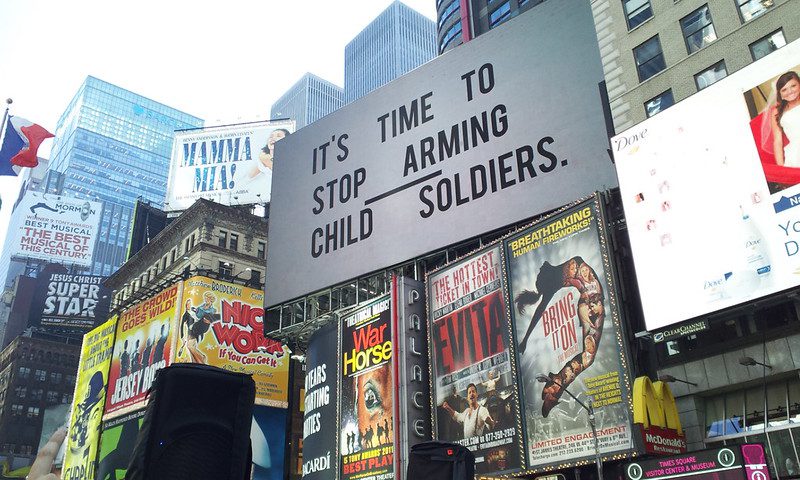
facts about child soldiersAlthough improvements have been made to end the use of child soldiers, it is believed that close to 300,000 child soldiers are still being recruited and forced into war across the world today. Child soldiers are children under the age of 18, some even as young as seven years of age, who are used for any purpose in a military or armed group. Child soldiers can act as cooks, messengers, informants, soldiers, suicide bombers or even sex slaves.

Why do people use child soldiers? Armed forces can manipulate children easily, they do not eat very much food, and they do not have to be paid. Soldiers take advantage of this and use children as pawns in their dangerous battles.

10 Child Soldier Facts

  1. Forty percent of the world’s armed forces use child soldiers.
  2. Though child soldiers are often associated with African conflicts, they have been used throughout history in armies all over the world.
  3. Children who are poor or have little access to education have a higher chance of being forcibly recruited.
  4. Some children choose to enter the military to escape poverty or because they believe they will be offered safety and security by doing so.
  5. Sometimes, as part of their recruitment, child soldiers are forced to kill family members or neighbors to desensitize them and make it so the children cannot go back to their homes and communities.
  6. Children are often used to man checkpoints when there is no active combat taking place. The soldiers will stand several meters back so if anyone starts to fire a weapon, the child soldiers will be the first ones to get hit.
  7. Girl soldiers are often used as “wives” and are sexually abused. Human Rights Watch has reported girl soldiers being impregnated by their commanders and having to fight with their child strapped to their backs.
  8. Child soldiers are known to be fighting in at least 14 countries, including Afghanistan, India, Iraq and Thailand.
  9. If child soldiers are released, they often lack basic survival skills because they were supplied food and shelter in battle. This makes it difficult for them to survive if and when they become free.
  10. When child soldiers are released, many are shunned and given little if any support to reintegrate into their communities. If there is a lack of rehabilitation support, children are frequently recruited back into the military.

These are only a few of the most disturbing facts about child soldiers. Children from all around the world are ripped from their youth and thrown into a merciless world of battle. In order to help these children return to a normal life, UNICEF has established rehabilitation centers in current and former conflict areas. The support these centers provide is crucial to healing former child soldiers and reintegrating them into their communities. This work combined with international pressure to end the practice can make these facts about child soldiers part of the past instead of the present.

– McCall Robison

Photo: Flickr

January 2, 2018
https://borgenproject.org/wp-content/uploads/borgen-project-logo.svg 0 0 Borgen Project https://borgenproject.org/wp-content/uploads/borgen-project-logo.svg Borgen Project2018-01-02 01:30:122024-05-27 09:25:1110 Shocking Facts About Child Soldiers
Global Poverty, Human Trafficking, Refugees

10 Facts About the Libyan Crisis

When the 2011 Arab Spring swept through the Middle East, it left behind a number of ongoing conflicts that still continue to rage. One of the most serious of these conflicts is the Libyan civil war, which began with the ousting and subsequent death of longtime ruler Muammar Gaddafi. The conflict has been a long and complicated one, with many different factions taking their turn in the spotlight. Below are 10 facts about the Libyan crisis:

  1. The current phase of the war is primarily being fought by the House of Representatives government, based out of Tripoli, and the rival General National Congress, elected in 2014, as they both vie to take control of the whole nation.
  2. The U.N. brought the two sides together in 2016 to sign the Libyan Political Agreement (LPA) and form a transitional government, led by Fayez al-Sarraj, that would help bring stability to the nation. It still remains unclear whether the new government will be able to enforce its U.N. mandate.
  3. Khalifa Haftar, general of the Libyan National Army, has aligned himself with the House of Representatives, who voted against the U.N. agreement, and has been aiding them in their struggle with al-Sarraj’s Government of National Accord (GNA).
  4. When the House of Representatives was voted into office in 2014, only 18 percent of eligible voters turned out and cast their ballots. This was largely due to a lack of confidence in the ability of an elected government to make meaningful change.
  5. Considering such low voter confidence and the fact that the original LPA expires in December of this year, the U.N. has begun taking steps to amend the LPA to ease the divisions between the House of Representatives and the GNA, as well as create free and fair elections.
  6. The Libyan crisis is commonly divided into two official civil wars. The first lasted for several months in 2011 and was marked primarily by the deposing and killing of Muammar Gaddafi. The currently ongoing civil war began in 2014 when the national government came into conflict with the General National Congress, a Muslim Brotherhood-backed Islamist government.
  7. The second civil war has already claimed nearly 7,000 lives, with over 20,000 people wounded in the conflict and many thousands more displaced from their homes. Fighting in Sabratha, a city near Tripoli, saw nearly 10,000 people fleeing their homes to seek aid from U.N. groups in Libya.
  8. Fleeing the same fighting in Sabratha, a group of immigrants, as over 100,000 others from all across North Africa have sought to do this year alone, tried to cross the Mediterranean to Italy in a dinghy that subsequently ran out of fuel and capsized. Of the 100 refugees in the boat, more than 50 are feared to have drowned. They join the over 2,400 of that 100,000 that have drowned crossing the Mediterranean while fleeing the fighting in their home countries.
  9. The BBC reports that refugees caught fleeing Libya are thrown into crowded and dirty detention centers where they are held to keep them from fleeing. There are also rumors that the falling numbers of Libyans fleeing to Italy is spurred by the GNA’s use of Libyan militias, who may be involved in human trafficking.
  10. Though representatives of the U.S. government have made statements in favor of the measures being taken to end the crisis, actions such as the United States’ past military involvement with the Libyan oil industry and the inclusion of Libya in President Trump’s travel ban have led many to questions as to what the U.S. is doing to help bring stability to the nation.

The wars in Libya are an increasingly complex, evolving and seemingly convoluted issue. These 10 facts about the Libyan crisis can serve as an overview of the conflict, but there is far more information to be delved into as the world seeks a resolution to the crisis.

– Erik Halberg

Photo: Flickr

November 2, 2017
https://borgenproject.org/wp-content/uploads/borgen-project-logo.svg 0 0 Kim Thelwell https://borgenproject.org/wp-content/uploads/borgen-project-logo.svg Kim Thelwell2017-11-02 07:30:182024-05-29 22:28:0210 Facts About the Libyan Crisis
Global Poverty, Human Trafficking

Yemen’s Human Trafficking Crisis

Human Trafficking Crisis in Yemen
Amid the continued civil unrest and armed conflicts, the Republic of Yemen’s human trafficking crisis is continuously getting worse. The weakening of Yemeni government control over a significant portion of territory, following the 2011 uprising, has allowed human trafficking to thrive. Now, NGOs are reporting that vulnerable populations are at an increased risk of falling victim to the human trafficking network.

Yemen’s human trafficking crisis has not been properly addressed since 2006. According to the U.S. State Department’s annual Trafficking in Persons report, released in 2014, Yemen was demoted from a Tier 2 to a Tier 3 rating. Tier 2 recognizes that a nation does not comply with the Trafficking Victim’s Protection Act’s (TVPA) standards but is making efforts to achieve compliance.

Yemen’s current Tier 3 rating (since 2011) means that Yemen is not complying with the TVPA and that it has ceased making significant efforts to improve. That same year, the United Nations Refugee Agency reported over 103,000 new arrivals in Yemen, having been smuggled or trafficked to the country.

As of 2017, Yemen’s human trafficking crisis has not changed for the better. Due to the tenuous political circumstances, the government faces serious obstacles in combatting trafficking. Yemen is dealing with substantial internal security threats, weak institutions, widespread corruption, economic dilapidation, limited territorial control and poor law enforcement capacities.

However, the greatest threat is the inherently increased risk for human trafficking due to the nation’s failure to implement and enforce any anti-trafficking laws. The lack of government control has also resulted in little oversight or activity in the courts. Without the government to prosecute, convictions and punishments are not being sought.

Allegedly, some officials willfully ignore the trafficking crimes in their regions. The most vulnerable to Yemen’s human trafficking crisis are migrant workers who attempt to flee poverty by finding work in the Gulf states and are unaware of the situation. As they travel to their destination, they are caught in large crowds, pushed overboard, and taken hostage by the smugglers.

Locals are also at risk. A common practice known as “sex tourism” (described as brief marriages between visitors and young Yemeni girls) has largely resulted due to raising poverty levels in rural areas.

The criminal networks do not stop at Yemen’s borders, but rather extend to Ethiopia, Djibouti and Saudi Arabia. As the smugglers continue to move victims internationally and Yemen further develops into a place of origin and transit, the chances that victims are recovered and returned to their families decreases.

By combatting poverty in Yemen, many of the workers who desperately search for opportunities and fall prey on fraudulent job offers would decline. However, until people can provide food and basic necessities for themselves, they may have no choice but to accept any work they can. Unfortunately, smugglers will exploit this. Thus, by combatting poverty, Yemen’s human trafficking crisis can be addressed, too.

– Taylor Elkins

Photo: Flickr

October 25, 2017
https://borgenproject.org/wp-content/uploads/borgen-project-logo.svg 0 0 Kim Thelwell https://borgenproject.org/wp-content/uploads/borgen-project-logo.svg Kim Thelwell2017-10-25 01:30:052024-05-29 22:27:46Yemen’s Human Trafficking Crisis
Human Trafficking

2017’s Worst Countries for Human Trafficking

2017's Worst Countries for Human Trafficking
In June 2017, the U.S. Department of State released its annual Trafficking in Persons (TIP) Report indicating the worst countries for human trafficking. The Department ranks countries on a three-tier scale.

Tier 1 governments are those which acknowledge the trafficking problem and are making efforts to curb it. Contrarily, Tier 3 countries rank among the worst countries for human trafficking; they make little or no effort of bringing trafficking issues to justice.


The 10 Worst Countries for Human Trafficking


1. Belarus
Belarusian trafficking victims mostly remain in Belarus or Russia. Criminals smuggle other victims to Poland, Turkey and various countries in Eurasia and the Middle East. Belarusian women seeking foreign employment in the adult entertainment and hotel industries often fall prey to sex traffickers.

A 2006 Belarusian presidential decree condemns mothers and fathers (who have had their parental rights revoked) to compulsory labor; the government retains 70 percent of their wages.

2. Central African Republic (CAR)
Most human trafficking victims in the Central African Republic (CAR) are citizens exploited within the country. Young women in urban centers are at great risk of being entered into the commercial sex trade. Traffickers coerce girls into marriages and force them into domestic servitude, sexual slavery and international sex trafficking.

The International Office of Migration has developed a community awareness campaign for at-risk communities and individuals to improve awareness of human trafficking. This program especially targets internally displaced people (IDPs), returnees and host populations in the Central African Republic (CAR).

3. China
China reemerges on this year’s worst countries for human trafficking list, slipping from Tier 2 to Tier 3 in the 2017 TIP Report. In China, traffickers subject men, women and children to forced labor and the sex trade. Traffickers target individuals with developmental disabilities as well as children whose parents have migrated to the cities and left them with relatives. There are also instances of the abduction of African and Asian men to work under state-sponsored forced labor conditions on fishing vessels.

4. Eritrea
Eritrea is no newcomer to the Tier 3 rating. Many Eritrean young women and girls travel to Gulf States, Israel, Sudan or South Sudan for domestic work but instead find themselves victims of sex trafficking rings. International criminal groups kidnap vulnerable Eritreans living in or near refugee camps, particularly in Sudan.

Members of these crime syndicates then transport their captives to Libya and detain them for ransom. Eritrean military and police officers often abet trafficking crimes along the Sudanese border, thus maintaining Eritrea’s status as one of the worst countries for human trafficking.

5. Iran
Iranian criminal organizations reportedly subject women and children to sex trafficking, not only inside Iran but also in the Iraqi Kurdistan Region (IKR), Afghanistan, Pakistan, United Arab Emirates (UAE) and Europe.

Traffickers target Iranian girls between the ages of 13 and 17 for trade abroad. Captors press the youngest girls into domestic service until their kidnappers deem them old enough for use in child sex trafficking.

6. North Korea
North Korea holds an estimated 80,000 to 120,000 prisoners in camps, many charged with no crime. Without medical care and food, the detainees often die, their bodies incinerated in furnaces and dumped in mass graves.

Government oppression prompts North Koreans to flee the country, making them vulnerable to human trafficking in destination countries. North Korea’s forced labor camps and the death penalty fuel trafficking in neighboring China. Ironically, captured refugees returned to North Korea to experience punitive action – labor camps or death.

7. Russia
Between 5 and 12 million migrants are working in Russia in conditions of slavery, in positions at garment factories, as public transport drivers, and in construction and agriculture. Russian officials facilitate the entry of migrants into the country for exploitation. Other officials receive bribes not to investigate human trafficking crimes. Overall, the government has not undertaken efforts to protect human trafficking victims.

8. Sudan
Sudanese law enforcement agents are often involved in, and profit from, child sex trafficking rings. Sudanese law prohibits the recruitment of children. However, youth remain vulnerable to recruitment and use as combatants by Sudanese non-governmental armed groups and militias.

Darfur is a favored route to Libya, as the porous border and lax security allow traffickers to operate with impunity across the region. Sudanese police and border patrol purportedly facilitate abductions of Eritrean nationals and permit the transport of potential victims across borders without intervention.

9. Syria
The circumstances in Syria have deteriorated throughout the ongoing civil war with sub-state armed groups of varying ideologies exerting control over vast geographic areas of the country’s territory.

In December 2014, the Islamic State of Iraq and Syria (ISIS) released public guidelines on how to seize, forcibly hold, and sexually abuse female slaves. ISIS soldiers routinely subject women and girls from minority groups to forced marriage, domestic servitude, systematic rape and sexual violence.

ISIS requires Syrian girls to submit to virginity tests before selling them in “slave bazaars” and transferring them to various Syrian provinces and other countries for sexual slavery. Throughout 2016, displaced Syrians continued to utilize smugglers to provide illegal passage to Europe via the Mediterranean Sea, putting the Syrians at risk of being trafficked.

10. Venezuela
Among those trafficked out of Venezuela, 55 percent are adults, 26 percent are young girls and 19 percent are young boys. Lured by promises of high paying jobs, they instead are sent to countries in the Caribbean, where traffickers force them into the sex trade or domestic servitude.

Venezuela continuously ranks as one of the worst countries for human trafficking as they do little to prevent or punish trafficking. They have strict laws surrounding it, but the prosecution of the crime is rare. Since 2013, Venezuela has convicted only three people under human trafficking laws.


The Good News


Overall, the 2017 TIP Report listed 23 Tier 3 nations as the worst countries for human trafficking. However, the governments of Haiti, Gambia, Grenadines, Djibouti, Cote d’Ivoire, Costa Rica, Burma, Algeria, Malaysia, Maldives, the Marshall Islands, Papua New Guinea and Qatar moved up in the rankings. St. Lucia, Saint Vincent, Seychelles, the Solomon Islands, Sri Lanka, Tanzania, Tonga, Trinidad and Tobago, Tunisia, Ukraine and Zambia also deserve recognition for demonstrated improvement.

Perhaps the most encouraging data is that the 2017 report assigned 36 countries, including the United States, to the Tier 1 category. Guyana deserves special praise, as its ranking rose from Tier 2 to Tier 1.

– Heather Hopkins

Photo: Flickr

October 23, 2017
https://borgenproject.org/wp-content/uploads/borgen-project-logo.svg 0 0 Borgen Project https://borgenproject.org/wp-content/uploads/borgen-project-logo.svg Borgen Project2017-10-23 01:30:012024-05-29 22:27:452017’s Worst Countries for Human Trafficking
Education, Global Poverty, Human Trafficking

Defeating Human Trafficking in Guatemala

Human Trafficking in GuatemalaEach day, 33 people become entrapped by human trafficking rings in Guatemala. Nearly 60 percent of the 50,000 victims of human trafficking in Guatemala are children, according to a report by UNICEF and the International Commission against Impunity in Guatemala (CICIG). The report estimates the industry to be worth $1.6 billion a year – this number represents 2.7 percent of Guatemala’s gross domestic product.
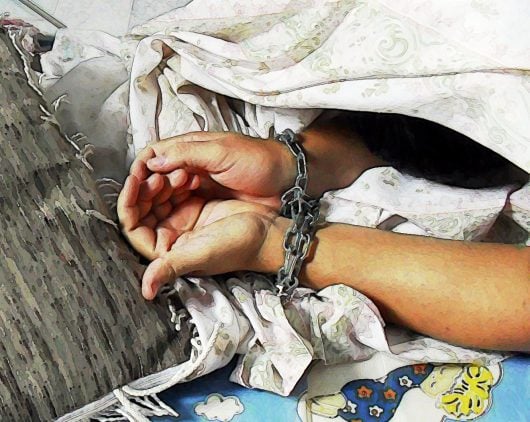
Guatemala’s pervasive culture of gender inequality – coupled with extensive sexual abuse in the home – promotes trafficking. Often, human trafficking affects families that have already experienced domestic and sexual violence by fathers and stepfathers. The violence they experience prompts boys and girls to run away from home, leaving them prey to sexual exploitation by traffickers. Mothers who sell their children into the sex trade are often victims of trafficking or domestic abuse themselves.

In Guatemala, very few sex trafficking cases are actually detected each year – about 3 percent. Although Guatemala has adopted numerous programs and laws to tackle human trafficking, only two prosecutors work on sex trafficking cases across the country. Therefore, the number of trafficking convictions in Guatemala remains low, according to the United Nations Office on Drugs and Crime (UNODC). In 2014, the Guatemalan authorities convicted only 20 human traffickers, according to the 2015 U.S. Department of State report on human trafficking.

Education is a key factor in eliminating human trafficking; in Guatemala it occurs largely due to the absence of family education. Illiterate or uneducated children and adults are more vulnerable to abuse. Traffickers target poor, uneducated and unemployed women and girls, luring them with promises of earning money as a waitress or model. Girls as young as 12 work in brothels and are forced to have sex with up to 30 customers a day.

Just as it plays a large role in preventing human trafficking, education also plays a critical role in helping survivors of human trafficking to escape the trauma they experience after victimization. Instruction and counseling are immense steps toward rehabilitating the survivors and reintegrating them into society. When survivors are provided with education, they gain an opportunity to “reprogram” their lives by increasing their knowledge.

All members of society in Guatemala being more educated and knowledgeable on human trafficking is essential for the defeat of traffickers. Every avenue must be explored on how to raise awareness about the nature of the crime, its causes and the damage human trafficking inflicts on its victims.

– Heather Hopkins

Photo: Flickr

September 12, 2017
https://borgenproject.org/wp-content/uploads/borgen-project-logo.svg 0 0 Borgen Project https://borgenproject.org/wp-content/uploads/borgen-project-logo.svg Borgen Project2017-09-12 01:30:262024-05-29 22:26:38Defeating Human Trafficking in Guatemala
Global Poverty, Human Trafficking, Slavery

Human Trafficking Facts and Info

Human TraffickingHuman trafficking is a disturbing crisis that affects individuals of all ages, sexes and races at a global level. It is a crime that is often regarded as one of the most pressing human rights issues of our time. According to data from the National Human Trafficking Hotline, human trafficking in the United States rose 35.7 percent from 2015 to 2016.
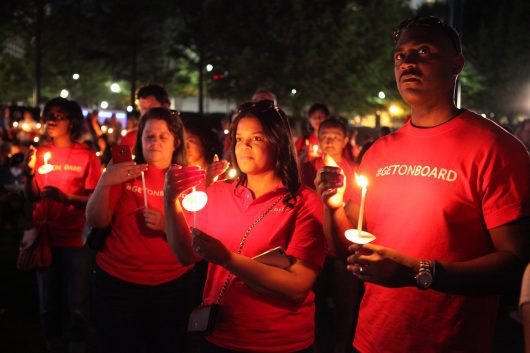
Human trafficking is essentially a form of modern-day slavery, where traffickers will use force, fraud or coercion to control victims. The two most common forms of human trafficking are sex trafficking and labor trafficking. Sex trafficking has been found in a multitude of venues within the sex industry, including residential brothels, escort services, fake massage businesses, strip clubs and street prostitution. Labor trafficking is found in a variety of labor settings such as domestic work, small businesses, large farms and factories.

Trafficking exists due to two major factors: low risk and high profits. Human traffickers tend to see little risk in these criminal operations. Although there have been increasing investigations, penalties and prosecutions throughout the years, the high profit potential from committing these crimes makes them worth the risk for many. There is often a lack of government and law enforcement training with these situations, as well as many in a community not being aware of the threat, ineffective laws, scarce resources to help victims recover and even social blaming of victims. Many of these high profits include when individuals are willing to buy commercial sex, whether it be from children or adults, and many consumers are willing to buy services from industries that rely on forced labor.


Top Facts on Human Trafficking:


  1. Globally, the average cost of a slave is $90.
  2. While 19 percent of trafficking involves labor exploitation, 80 percent of trafficking involves sexual exploitation.
  3. There are approximately 20 to 30 million slaves in the world today.
  4. About 600,000 to 800,000 people are trafficked across international borders every year, and 80 percent are female while half are children.
  5. Human trafficking is the third largest international crime industry—just behind illegal drugs and arms trafficking—and reportedly generates a profit of $32 billion every year. Of the $32 billion, $15.5 billion is made in industrialized nations.
  6. According to the International Labour Organization, it is estimated that women and girls represent the largest share of trafficking victims when it comes to forced labor with 11.4 million (55 percent), compared to men at 9.5 million (45 percent).
  7. According to the United Nations Office on Drugs and Crime, the greatest numbers of traffickers stem from Asia, Central Europe, Southeastern Europe and Western Europe.

The Department of Homeland Security has a page that can help one recognize the signs of human trafficking, as well as a page on further identifying a victim with hotlines to call to report suspicious criminal activity to the U.S. Immigration and Customs Enforcement (ICE). Being informed on human trafficking as well as the proper steps to take when potentially encountering a trafficking victim could save someone from an unfortunate and disturbing fate.

– Sara Venusti

Photo: Flickr

August 28, 2017
https://borgenproject.org/wp-content/uploads/borgen-project-logo.svg 0 0 Kim Thelwell https://borgenproject.org/wp-content/uploads/borgen-project-logo.svg Kim Thelwell2017-08-28 01:30:162020-06-24 11:12:04Human Trafficking Facts and Info
Global Poverty, Human Trafficking

Human Trafficking and the New Refugee Policy

Human TraffickingThe Trump administration has committed to ending human trafficking, making it a major policy initiative of the president’s first term. At a State Department ceremony in June, Ivanka Trump, President Trump’s daughter and senior advisor, called trafficking an “ugly stain on civilization.”

However, the Trump administration is missing out on a key component of ending human trafficking: helping refugees. Refugees are among the most vulnerable groups of individuals to human trafficking, according to the 2017 and 2016 annual Trafficking in Persons (TIP) reports. The 2016 report also notes that refugees who are denied asylum are especially at risk. Unaccompanied children and women are another target population.

Refugees constantly face threats of human trafficking, whether they are in their home countries; en route to their new countries; or even at temporary resettlement camps. One way traffickers exploit these asylum-seekers is by offering to smuggle them into countries where their entry is illegal.

Preying on refugees’ desperation to find better lives, they may then force their victims into sexual bondage or other forms of trafficking. Traffickers may also falsely promise incoming refugees jobs, or they take advantage of parentless refugee children.

Despite White House promises to reduce human trafficking, the newly instated travel ban makes it difficult for refugees to enter the U.S. For example, the travel ban places a 50,000-person cap on the U.S.’s refugee program. The cap is a stark contrast to former President Obama’s plans to resettle 110,000 individuals this year.

Thanks to a Supreme Court order passed in June, the ban will not apply to refugees who have children, parents or siblings in the U.S. However, it will still affect thousands of displaced persons around the globe.

President Trump’s attempts to dramatically limit U.S. refugee intake are at odds with his anti-trafficking goals. The 2016 TIP report clearly asserts that government-implemented strategies are key to the reduction of human trafficking of refugees.

“It is critical that governments and international organizations make every effort to identify and help trafficking victims among migrant populations,” the report says. It also recommends that officials provide migrants with safe, regulated immigration centers and work opportunities, as well as education on the dangers of human trafficking at entry points.

There must be plans to revise the U.S. refugee plans in order to protect the thousands around the world that are in modern-day slavery.

– Sabine Poux
Photo: Flickr

August 22, 2017
https://borgenproject.org/wp-content/uploads/borgen-project-logo.svg 0 0 Borgen Project https://borgenproject.org/wp-content/uploads/borgen-project-logo.svg Borgen Project2017-08-22 07:30:222024-05-28 00:15:50Human Trafficking and the New Refugee Policy
Human Rights, Human Trafficking

On the Limited Human Rights in Gambia

Human Rights in GambiaHuman rights in Gambia remain limited. The small West African country struggles to provide its citizens with freedom of expression. Meanwhile, politically driven police brutality and arbitrary arrests continue.

In April 2016, Gambian citizens were beaten with batons and exposed to tear gas while protesting the death of Solo Sandeng, who died at the hands of the National Intelligence Agency (NIA) while in custody. Nineteen of those protesters faced three years imprisonment. Forty more people were arrested while protesting the trial of the 19 sentenced, and 14 of those 40 went on trial near the end of 2016.

Gambians were reportedly beaten and tortured, and others died due to insufficient medical care while in custody. The president admitted that people die in custody regularly. Political and religious leaders are arrested and abducted, including leaders of the United Democratic Party (UDP), which opposes the Alliance for Patriotic Reorientation and Construction (APRC) and President Yahya Jammeh.

Anyone who speaks against the government runs the risk of retaliation, representing a huge denial of human rights in Gambia. In fact, many journalists avoid strong criticism of the government for fear of arrest or death, and many have left the country out of fear.

The government would not allow the U.N. or outside organizations to record prison conditions, but some NGOs report poor air flow and pest problems. Furthermore, many members of the UDP were held in solitary confinement.

A separate, but important issue for human rights in Gambia is human trafficking. Women and children continue to be sold into sex and domestic slavery, and yet the government has not taken adequate action to resolve this.
Although human rights in Gambia desperately need improvement, major gains in women’s rights were made recently. Gambia made child marriage illegal in July 2016. Previously, “according to the U.N., 40 percent of women aged 20 to 49 in Gambia were married before the age of 18, while 16 percent married before they turned 15.”

Gambian women also suffered significantly from female genital mutilation. However, in late 2015, legislation passed to make this illegal as well.

The victor of the 2016 presidential election, Adama Barrow, shows promise for progressing toward less corruption and stronger human rights in Gambia. Gambia must have fair and lawful leadership in order to leave behind its history of injustice.

– Emma Tennyson

Photo: Google

August 5, 2017
https://borgenproject.org/wp-content/uploads/borgen-project-logo.svg 0 0 Borgen Project https://borgenproject.org/wp-content/uploads/borgen-project-logo.svg Borgen Project2017-08-05 07:30:232024-05-28 00:01:57On the Limited Human Rights in Gambia
Page 25 of 31«‹2324252627›»

Get Smarter

  • Global Poverty 101
  • Global Poverty… The Good News
  • Global Poverty & U.S. Jobs
  • Global Poverty and National Security
  • Innovative Solutions to Poverty
  • Global Poverty & Aid FAQ’s
Search Search

Take Action

  • Call Congress
  • Email Congress
  • Donate
  • 30 Ways to Help
  • Volunteer Ops
  • Internships
  • Courses & Certificates
  • The Podcast
Borgen Project

“The Borgen Project is an incredible nonprofit organization that is addressing poverty and hunger and working towards ending them.”

-The Huffington Post

Inside The Borgen Project

  • Contact
  • About
  • Financials
  • President
  • Board of Directors
  • Board of Advisors

International Links

  • UK Email Parliament
  • UK Donate
  • Canada Email Parliament

Get Smarter

  • Global Poverty 101
  • Global Poverty… The Good News
  • Global Poverty & U.S. Jobs
  • Global Poverty and National Security
  • Innovative Solutions to Poverty
  • Global Poverty & Aid FAQ’s

Ways to Help

  • Call Congress
  • Email Congress
  • Donate
  • 30 Ways to Help
  • Volunteer Ops
  • Internships
  • Courses & Certificates
  • The Podcast
Scroll to top Scroll to top Scroll to top