• Link to X
  • Link to Facebook
  • Link to Instagram
  • Link to TikTok
  • Link to Youtube
  • About
    • About Us
      • President
      • Board of Directors
      • Board of Advisors
      • Financials
      • Our Methodology
      • Success Tracker
      • Contact
  • Act Now
    • 30 Ways to Help
      • Email Congress
      • Call Congress
      • Volunteer
      • Courses & Certificates
      • Be a Donor
    • Internships
      • In-Office Internships
      • Remote Internships
    • Legislation
      • Politics 101
  • The Blog
  • The Podcast
  • Magazine
  • Donate
  • Click to open the search input field Click to open the search input field Search
  • Menu Menu

Archive for category: Human Rights

Information and stories about human rights.

Human Rights

5 Ongoing Human Rights Battles

Human Rights
After all the progress we’ve made in terms of human rights over the years, you’d think we’d be living in a world without discrimination by now. Sadly this isn’t the case. Here are just 5 ongoing human rights battles that are still being fought today:

1. Rights of Women

This includes fair pay, participation in decision-making positions and positive portrayal in the media.  Issues such as rape, sex-based elimination, violence against women and access to education are also at the forefront of the campaign for women’s rights.  The Women’s International League for Peace and Freedom, the UN Commission on the Status of Women and other NGOs are actively working to make sure women are protected, empowered and represented.

2. Rights of Minorities

Minority groups include ethnic peoples, those who prefer alternative sexual identities and orientations, various religious groups, citizens from various nations, linguistic minorities and disabled peoples.  In International Law it is illegal for any group to be actively marginalized.  Other protections include the International Covenant on Civil and Political Rights, the UN Declaration on the Rights of Persons Belonging to National or Ethnic, Religious and Linguistic Minorities, the European Charter for Regional or Minority languages and the Yogyakarta Principles.

3. Rights of Indigenous Populations

The UN recognized the rights of indigenous people as the preservation of their land, language, religion and cultural heritage.  Colonialism and modern-day imperialism have overlooked the claims indigenous populations have to these rights.

4. Right to Education

The right to primary education is recognized by the International Covenant on Economic, Social, and Cultural Rights.  Research shows that education lifts people out of poverty by teaching them how to provide for themselves, increase their earning power and become economically stable.

5. Right to Housing

People in impoverished communities often lack adequate housing.  This is a health and safety hazard that can stop a family from rising out of poverty.  The Universal Declaration of Human rights recognizes that “everyone has the right to a standard of living adequate for the health and well-being of himself and of his family.”

– Stephanie Lamm

Sources: The Nation, FoR, UN

December 12, 2013
https://borgenproject.org/wp-content/uploads/borgen-project-logo.svg 0 0 Borgen Project https://borgenproject.org/wp-content/uploads/borgen-project-logo.svg Borgen Project2013-12-12 12:45:192024-05-25 00:54:395 Ongoing Human Rights Battles
Human Rights, United Nations

Human Rights Day 2013

human_rights_day
December 10th, 2013 is the 20th anniversary of the establishment of the World Conference on Human Rights.

The UN General Assembly first proclaimed Human Rights Day in 1948. However, the efforts were renewed in 1993 at the World Conference on Human Rights in Vienna through The Vienna Declaration and Program of Action.

The Universal Declaration of Human Rights was adopted in 1948. It consists of a preamble and 30 articles.

The Declaration has been translated into more than 380 languages and dialects: making it the most translated document.

This universal document defines fundamental human rights and freedoms that are to be applied to protect anyone, regardless of race, gender or ethnicity.

The human rights theme this year is Working For Your Rights, with an emphasis on looking forward to looming challenges.

At this time, let us reflect on and celebrate the achievements in human rights over the past 20 years. Broadly, there have been notable advancements in the areas of women’s rights, the development of law to achieve accountability for human rights abuses, the protection and promotion of the rights of marginalized groups and a much greater understanding of the universality and indivisibility of human rights.

The UN Office of High Commissioner for Human Rights (OHCHR) provides 20 specific accomplishments.

1.Economic, social, cultural, civil, and political rights and the right to development are recognized as universal, indivisible, and mutually reinforcing rights of all human beings, without distinction.

2. Human rights have become central to the global conversation regarding peace, security and development.

3. New human rights standards have built on the 1948 Universal Declaration of Human Rights and the implementation of international human rights treaties is significantly improved.

4. Additional explicit protections in international law now exist covering, among others, children, women, victims of torture, persons with disabilities, and regional institutions. Where there are allegations of breaches, individuals can bring complaints to the international human rights treaty bodies.

5. Women’s rights are now acknowledged as fundamental human rights. Discrimination and acts of violence against women are at the forefront of the human rights discourse.

6. There is global consensus that serious violations of human rights must not go unpunished. Victims have the right to claim justice, including within processes to restore the rule of law following conflicts. The International Criminal Court brings perpetrators of war crimes and crimes against humanity to justice.

7. There has been a paradigm shift in the recognition of the human rights of people with disabilities, especially and crucially, their right to effective participation in all spheres of life on an equal basis with others.

8. There is now an international framework that recognizes the challenges facing migrants and their families which guarantees their rights and those of undocumented migrants.

9. The rights of lesbians, gays, bisexuals and transgender individuals have been placed on the international agenda.

10. The challenges facing indigenous peoples and minorities are increasingly being identified and addressed by the international human rights mechanisms, especially with respect to their right to non-discrimination.

11. The Human Rights Council, set up in 2006, has addressed vital and sensitive issues and its Universal Periodic Review, established in the same year, has allowed countries to assess each other’s human rights records, make recommendations and provide assistance for improvement.

12. Independent human rights experts and bodies monitor and investigate from a thematic or country-specific perspective. They cover all rights in all regions, producing hard-hitting public reports that increase accountability and help fight impunity.

13. States and the United Nations recognize the pivotal role of civil society in the advancement of human rights. Civil society has been at the forefront of human rights promotion and protection, pinpointing problems and proposing innovative solutions, pushing for new standards, contributing to public policies, giving voice to the powerless, building worldwide awareness about rights and freedoms and helping to build sustainable change on the ground.

14. There is heightened awareness and growing demand by people worldwide for greater transparency and accountability from government and for the right to participate fully in public life.

15. National human rights institutions have become more independent and authoritative and have a powerful influence on governance. Over a third of all countries have established one or more such institutions.

16. The United Nations Fund for Victims of Torture has assisted hundreds of thousands of victims of torture to rebuild their lives. Likewise, the United Nations Voluntary Trust Fund on Contemporary Forms of Slavery, with its unique victim-oriented approach, has provided humanitarian, legal, and financial aid to individuals whose human rights have been violated through more than 500 projects.

17. Victims of trafficking are now regarded as entitled to the full range of human rights and are no longer perceived to be criminals.

18. A growing consensus is emerging that business enterprises have human rights responsibilities.

19. There are now guidelines for States which support freedom of expression while defining where speech constitutes a direct incitement to hatred or violence.

20. The body of international human rights law continues to evolve and expand, to address emerging human rights issues such as the rights of older persons, the right to the truth, a clean environment, water and sanitation, and food.

There is much to be celebrated. However, many people continue to not have a voice.

How can you participate?

-Support education through programs such as UNICEF’s Education First, as education is an empowering tool.

-Protect and use your freedom of speech. Journalists work to give a voice to oppressed people, and are often oppressed themselves while doing this valuable work. Find ways of supporting journalists and using your own voice to protect the human rights of oppressed communities.

-Use social media to raise awareness of Human Rights Day and human rights accomplishments or concerns that interest you.

-Contact your congressional leaders and ask them to support USAID or specific bills dealing with human rights issues, such as the Global Food Security Act of 2013 (H.R. 2822). For additional human rights related bills visit: https://borgenproject.org/legislation/

– Caressa Kruth

Sources: UNOHCHR, UN, Huffington Post, USAID

December 8, 2013
https://borgenproject.org/wp-content/uploads/borgen-project-logo.svg 0 0 Borgen Project https://borgenproject.org/wp-content/uploads/borgen-project-logo.svg Borgen Project2013-12-08 16:43:452024-06-11 02:13:40Human Rights Day 2013
Food & Hunger, Global Poverty, Human Rights, United Nations

Recognizing the Legal Right to Food

righttofood
Food is necessary to survival and proper nutrition. We all need it. It’s that simple. But despite its importance, access to food is still not universally viewed as a human right. The United Nations (UN) wants to change that.

According to Food Navigator, UN expert Oliver De Schutter believes that the right to food should be legally binding. Human rights currently recognized by the UN include the right to be free from slavery and servitude, the right to be free from cruel and inhuman punishment, the right to freedom of movement between countries, and the right to be recognized as a person. De Schutter wants the right to food added to that list.

De Schutter recently released a report in support of his position, entitled, “Assessing a decade of right to food progress.” In his report, De Schutter states, “Often, we labour under the misconception that the right to food is not like political rights, such as freedom of speech. But economic and social rights — to food, water, housing, social protection — are just as real, just as binding, and can be upheld just as legitimately in court.” South Africa, Kenya, Mexico, and Niger have already included the right to food in their constitutions.

By making the right to food a priority, countries can eventually begin to see long-lasting changes in the political, economic, and environmental sectors, De Schutter suggests. Eventually, these changes can help serve as permanent safeguards against widespread hunger. De Schutter believes countries should revise their laws, incorporating nutrition policies that attempt to take responsibility for the food supply.

India’s recent food policy is an example of how policy changes can help ensure the legal right to food. The north eastern Indian states of Assum, Arunachal Pradesh, Meghalaya, Manipur, Mizoram, Nagaland, and Tripura are expected to begin implementing the country’s National Food Security Act around the middle of 2014.

According to First Post India, state food ministers have taken the first steps toward the construction of an administration building for the state-run Food Corporation of India. The food law, passed by Parliament last year, will give 67% of the population the right to subsidized food grains. India will need 62 million tons of food grain annually in order to implement its food law.

– Cavarrio Carter

Sources: The Daily Meal, Food Navigator, First Post India, United Nations, Mail Online India
Photo: Web Governments

December 7, 2013
https://borgenproject.org/wp-content/uploads/borgen-project-logo.svg 0 0 Borgen Project https://borgenproject.org/wp-content/uploads/borgen-project-logo.svg Borgen Project2013-12-07 04:46:142024-05-25 00:30:44Recognizing the Legal Right to Food
Human Rights, Women, Women and Female Empowerment

Leading Women in Abu Dhabi

Abu Dhabi

1. Sheikha Fatima Bint Mubarak

Also given the honorable title of “Mother of the Nation,” Sheikha Fatima bint Mubarak is known as a “champion of women’s rights,” who has played a pioneering and leading role for women both locally and internationally.  She is the third wife of the late founder and first president of the United Arab Emirates, Sheikh Zayed bin Sultan al Nahyan.

Sheikha Fatima started her work in the 1970s by launching a nation-wide campaign against illiteracy, with a particular emphasis on the need to educate girls, and establishing the first women’s society in the country, the Abu Dhabi Women Development Association.  Since then, she has worked tirelessly by establishing over thirty associations, chairing tens of organizations, launching scores of initiatives and campaigns, and hosting and patronizing countless conferences and forums.  She is currently the Supreme Chairperson of the Family Development Foundation, Chairperson of the UAE Women’s General Union, and Chairwoman of the Supreme Council for Motherhood & Childhood.

In recognition of her work on women’s issues, she was granted the Marie Curie Medal by UNESCO.  She has also been awarded for her humanitarian and refugee work, for which she has been presented with a shield written in gold from the UN High Commission for Refugees, as well presented with the Global Humanitarian Personality Award, from the World Heart Group, for her efforts to help the sick.


 2. Sheikha Fatema Bint Mohammed Bin Zayed

Following in her grandmother’s footsteps, Sheikha Fatema put her compassion into practice as a young university student.  She is the daughter of Sheikh Mohammed bin Zayed, the Crown Prince of Abu Dhabi (and the granddaughter of Sheikha Fatima Bint Mubarak).

In June 2010, while studying in university, she found herself deeply moved by the poverty still afflicting Afghanistan.  She decided to take action and partnered with a local Afghan firm, Tanweer Investments, to create the Fatima bint Mohammed Initiative (FBMI).  The organization is dedicated to addressing the 42% poverty rate in the country “by providing resources, compassion and the opportunity for impoverished women to free themselves from economic hardship and take a leading role in Afghanistan’s future.”

FBMI is unique because it embraced skills Afghan women already possessed, carpet weaving and spinning, and provided them with further vocational training and the resources they needed to become key industry players.  Indigenous wool is used in order to enhance the value of the product and guarantee 100% Afghan origin.  In addition to employing 3,000 low income Afghans (70% of whom are women), FBMI also offers the families healthcare and education services.

Since its inception, over 10,000 carpets have been produced and sold worldwide, providing sustainable economic development for more than 18,000 individuals.  FBMI has received numerous awards in recognition of its achievements, including the DOMOTEX Middle East Special Recognition Award and Sustainable Interior Design Initiative of the Year in 2011.

 – Rifk Ebeid
Sources: FBMI, The National, Arab Youth Awards, Alowaisnet

December 4, 2013
https://borgenproject.org/wp-content/uploads/borgen-project-logo.svg 0 0 Borgen Project https://borgenproject.org/wp-content/uploads/borgen-project-logo.svg Borgen Project2013-12-04 08:07:402024-05-25 00:31:45Leading Women in Abu Dhabi
Global Poverty, Health, Human Rights, Women & Children

Imprisoned for Miscarrying?

Imprisoned for Miscarrying
Last month in El Salvador, a judge sentenced 19 year-old Glenda Xiomara Cruz to prison for 10 years. Her crime? Miscarrying.

In October of 2012, Xiomara, experiencing excruciating abdominal pain and bleeding, sought medical treatment at a public hospital. Unaware that she was even pregnant, as she’d experienced no weight gain and a pregnancy test had come back negative, doctors told her she’d lost a baby. Four days later, the teenager had been reported by the hospital to the police for suspected abortion and charged with aggravated murder. A year later, she’s been sentenced to ten years in prison by a judge who told her “she should have saved her baby’s life.”

Xiomara’s unfortunate fate is the result of El Salvador’s strict abortion law. The law is so strict, in fact, that since 1998 abortions have been completely banned without any exception, even in cases of rape, fetal deformity, or if the mother’s life is at risk.

Twenty-eight year-old Maria Teresa Rivera’s story parallels Xiomara’s and further illustrates the tragic consequences of such a harsh law. Last year, she too sought medical treatment for bleeding and abdominal pain and was reported to authorities by the hospital after suffering a miscarriage. Teresa was sentenced to 40 years in prison for aggravated murder. A textile worker and her family’s main provider, going to jail meant leaving her eight year-old son in extreme poverty.

A study done by the Citizens’ Group for the Decriminalization of Abortion supports the statement that this law overwhelmingly affects those living in poverty. The study found that, since 2000, more than 200 women have been reported to the police on abortion charges — the vast majority of these women were poor, unmarried and with little education. Comparatively, not a single woman has been reported from the richer private healthcare sector — where abortions are believed to be performed regularly.

More than unfairly imprisoning women and tearing apart families, the law also has devastating consequences for women’s health. Bessy Ramirez of San Salvador enunciates one of the numerous harmful effects of the law: “I would be terrified to go a public hospital as there is no benefit of doubt given to young women, we are presumed guilty and jailed.” For poor women, however, public hospitals represent their only medical treatment option.

In addition to deterring women from seeking medical treatment, the law likely also has a role in boosting the occurrences of suicide. Health Ministry figures from 2011 identify suicide as the most common cause of death for 10-19 year-old girls; half of these girls were pregnant. Further, because it is illegal for women to terminate pregnancies even in cases where the mother’s health is threatened, the inability to treat pregnancy complications is the third most common cause of maternal mortality.

Amnesty International’s El Salvador expert Esther Major calls the abortion law “cruel and discriminatory” saying that “women and girls end up in prison for being unwilling, or simply tragically unable, to carry the pregnancy to term. It makes seeking hospital treatment for complications during pregnancy, including a miscarriage, a dangerous lottery.” Unfortunately, as in innumerable other instances, it’s a lottery women in poverty are most likely to lose.

– Kelley Calkins

Sources: BCC, Slate

Photo: Vice

October 24, 2013
https://borgenproject.org/wp-content/uploads/borgen-project-logo.svg 0 0 Borgen Project https://borgenproject.org/wp-content/uploads/borgen-project-logo.svg Borgen Project2013-10-24 17:54:592024-12-13 17:49:45Imprisoned for Miscarrying?
Global Poverty, Human Rights

UNHCR Assists Young Congolese Albinos

Tanzanian_Albinos_in_danger
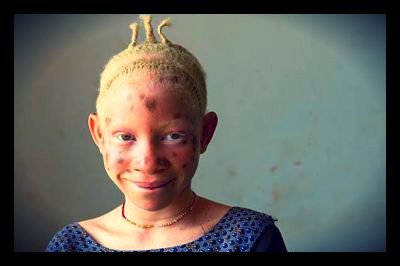
Albinism is a genetic medical condition diagnosed at birth, characterized by lack of pigment in the skin, eyes, and hair. The rare condition is found in 1 in 20,000 people worldwide. Albinism is more common in Africa than other parts of the world. Unfortunately, when it comes to the Democratic Republic of Congo and Tanzania, uneducated communities often react to Albinism in severely discriminatory ways.

Strangers and families alike reject the Albino populations in these regions. Oftentimes, mothers feel extreme humiliation when giving birth to an Albino child, and are mocked. Albino children oftentimes don’t feel loved by their own families. According to the United Nations Development Programme (UNDP), Albinos struggle to find work, access adequate health care, find marriage partners, and enroll in education programs.

Beyond discrimination toward Albinos, many uneducated Congolese and Tanzanian inhabitants believe strongly in several superstitions about the Albino population. To some of these inhabitants, people living with Albanism need to be hunted down by witch doctors, for their body parts are considered to bring luck and wealth on the battlefield. According to United Nations High Commissioner for Human Rights, Ms. Navi Pillay, many of the attacks lead to “dismembering (of) people, including children, while they are still alive.”
One child, in particular, has managed to flee with the help of his supportive family. According to a press release on October 14, 2013, Father and Mother, Anaclet and Solange, are deeply concerned for their son Jeff, a child with Albinism.

For the most part, the family lived a peaceful life. When Jeff was five years old, a member of the Mai Mai militia group broke into the family home, knocked him unconscious and stuffed him into a bag. His father awoke, and with the neighbors help, they were able to get Jeff back. After this attack, the Mai Mai demanded Jeff be given back, or pay 10,000 dollars. If  they failed to respond, they would all be killed.

After the initial attack, the family fled, staying with reletives, in North Kivu, but ultimately were forced back to South Kivu to escape fighting between Congalese government and members of the M23 rebel group. They decided to head to Burundi, where they were secure for a while. On August 6, 2013, a grenade was thrown at the family home. At this point, the family reached out for help from the UNHCR, as well as the local government’s National Commission for the Protection for refugee and Stateless People. The family is protected at this time, while officials are figuring out permanent solutions.

The UNHCR has teamed up with a local group called Albinos San Fronières and launched a campaign in Burundi to raise awareness about Albinism. Catherine Huck, UNHCR’s representative in Burundi, hopes, “the partnership will contribute to a greater respect of the rights of people living with Albinism.” Additionally, the aforementioned UNDP, and the Association for the Protection and Development of Albino People in Orientale Province are organizing workshops, which seek to promote the issue among international organizations, and appeal for funding.

– Laura Reinacher

Sources: UNHCR,  UN.org,  Womennewsnetwork
Photo: NY Daily News

October 24, 2013
https://borgenproject.org/wp-content/uploads/borgen-project-logo.svg 0 0 Borgen Project https://borgenproject.org/wp-content/uploads/borgen-project-logo.svg Borgen Project2013-10-24 15:23:312024-06-11 02:07:59UNHCR Assists Young Congolese Albinos
Global Poverty, Human Rights, United Nations

New Anti-Torture Law in Tunisia

UN_tunisia_torture_colville
On October 11, 2013, the United Nations (UN) Human Rights Office welcomed the unanimous adoption of a new anti-torture law in Tunisia which will go about creating a new formal advocacy body dedicated to preventing and eliminating torture. The Office hailed the anti-torture initiative as a step forward in Tunisia’s ongoing transition to democracy since the country’s revolution that sparked the Arab Spring in December 2010.

Officially created by the Tunisian government on October 9, the Anti-Torture Initiative, formerly known as the National Body to Prevent Torture, is the first of its kind in the Middle East and North Africa, according to UN High Commissioner for Human Rights (OHCHR) spokesman Rupert Colville. Tunisia has been taking steps to eradicate torture since June 2011, when the North African nation ratified the Optional Protocol to the Convention Against Torture.

The Body will be independent from the Tunisian government, but it will have broad jurisdiction, which includes the power to visit and hold accountable all sites of detention in the country. Additionally, the largest UN committee, the Subcommittee on Prevention of Torture, will also have permission to visit Tunisian detention sites as well as assist Tunisia’s new initiative in the implementation of such a national body.

The OHCHR bureau in Tunisia, which was established there about two years before the start of the Arab Spring, had an important role to play in the creation of the National Body to Prevent Torture in Tunisia through debates and consultation sessions. This collaboration with the international community also helped to bring together Tunisian governmental officials, such as the Ministry for Human Rights and Transitional Justice, as well as vital non-governmental officials such as national and international NGOs.

The president of Tunisia claims that this all-encompassing approach to the transition to democracy post-Arab Spring is necessary to see the “fruition of Arab revolutions.” In his statement to the General Assembly on September 26, President Marzouki advocated for a more stable Tunisia and other Arab Spring countries, as well as the international community’s support to make the transition, as was done with the creation of the National Body to Prevent Torture.

– Elisha-Kim Desmangles
Feature Writer

Sources: UN News Centre: Tunisian law, UN News Centre: General Debae

October 22, 2013
https://borgenproject.org/wp-content/uploads/borgen-project-logo.svg 0 0 Borgen Project https://borgenproject.org/wp-content/uploads/borgen-project-logo.svg Borgen Project2013-10-22 06:01:302024-06-11 02:05:27New Anti-Torture Law in Tunisia
Activism, Advocacy, Charity, Global Poverty, Human Rights, Nonprofit Organizations and NGOs

What is an NPO?

NPO
A nonprofit organization is an organization that, pursuant to Section 501(c) of the United States Internal Revenue Code, does not retain its surplus revenue as profit. Instead, any surplus money is used to sustain the organization in its execution of a specific goal or set of goals, as designated by its bylaws and charter. In contrast to for-profit organizations, NPOs are largely project-driven ventures as opposed to product-driven ventures.

Before applying to be a 501(c) organization, a board of trustees must be assembled. The board will be committed to governing the execution of the organization’s goals. Once assembled, the board is responsible for drafting a clear and precise set of bylaws outlining the organization’s goals and the ways in which those goals will be pursued.

The bylaws must be recorded and, along with some necessary accounting paperwork (which varies according to different concessions granted by Section 501(c)), submitted to the IRS and the department of the secretary of state where the organization plans to operate in.

Once this paperwork is filed with the state, it may take up to a year for an organization to get approved as a 501(c). Most NPOs use this interim to prepare for launch immediately upon receipt of approval. Much of this time is spent identifying and communicating with potential donors, writing grants and taking other measures to secure funds for when the organization is approved.

Following state approval, a 501(c) organization must adhere to the bylaws it established in order to maintain its tax-exempt status. Its operation is limited by the bylaws it imposed on itself, and its tax-exempt status is contingent upon adherence to those bylaws. If an organization is not working effectively to accomplish its outlined mission, its tax-exemption will be revoked.

Under 501(c) of the Internal Revenue Code, an NPO may receive one of 29 different designations according to its mission. These designations determine what kind of tax exemptions the NPO will receive, as well as the kind of economic activity it is permitted to engage in. These designations are determined by an organization’s goals, the parties it engages with economically, and the recipients of any aid the organization is providing.

Most NPOs involved in the fight against poverty are designated as 501(c)(3)s. By law, a 501(c)(3) falls under one of the following categories: religious, scientific, charitable, educational, literary, public safety, the fostering of international or national amateur sports or the prevention of cruelty to children and animals. Organizations that actively fight against poverty can fall under any number of these categories. As well as tax-exemption, 501(c)(3)s receive reduced postage rates, and are permitted to generate receipts to provide donors with tax write-offs. They are, however, prohibited from participating in any political campaigns.

For an  NPO engaged in the campaign against poverty, transparency is of utmost importance. Strict adherence to bylaws and charter are necessary. If the secretary of state perceives that an organization is straying from its mission, its tax-exempt status will be lost. This renders the organization far less effective in the abolition of poverty. Not only does this cost an organization financially, it costs the world’s poor.

– Matt Berg

Sources: 501c3, Cornell Law, IRS, IRS
Photo: GuideStar,

October 21, 2013
https://borgenproject.org/wp-content/uploads/borgen-project-logo.svg 0 0 Borgen Project https://borgenproject.org/wp-content/uploads/borgen-project-logo.svg Borgen Project2013-10-21 10:45:302024-05-25 00:29:44What is an NPO?
Global Poverty, Human Rights, United Nations

50 Years of Aid: Amnesty International

Amnesty International History Global Development
Since its inception in 1961, Amnesty International has transformed the developing world through the philanthropic efforts of its 2.2 million members. Its work has pervaded over 150 countries and territories, making it one of the largest non-profit organizations in the world.

Launched by the British lawyer Peter Benenson, Amnesty International completed its first mission in Ghana in 1962. For the next eight years, the organization focused on improving prison conditions in Portugal, South Africa and Romania.

By the end of the 1960s, Amnesty had secured the release of around 2,000 prisoners of conscience – individuals who, according to Amnesty, had “been jailed because of their political, religious or other conscientiously-held beliefs, ethnic origin, sex, color, language, national or social origin, economic status, birth, sexual orientation or other status.” Following this success, the United Nations Educational, Scientific and Cultural Organization (UNESCO) granted Amnesty International a consultative status.

In 1970s, Amnesty widened its concerns, launching its first international campaign to eradicate torture in 1972. In part due to Amnesty’s efforts, the United Nations adopted the Declaration Against Torture in 1977, and the organization was awarded the Nobel Peace Prize.

In the following decades, Amnesty continued to promote its human rights agenda. In 1985, it published its first educational packet, “Teaching and learning about Human Rights.” It also create several new initatives, aimed at protecting individuals against the violence of armed opposition groups and protecting those imprisoned due to sexual orientation. During this time, Amnesty’s membership grew, exceeding one million members by the 1990s.

Currently, Amnesty’s presence is larger than ever.  In 2002, the organization launched a campaign against the Russian Federation, working to call attention to the human rights violations perpetrated by the Russian government, and in 2004, it started its “Stop Violence Against Women” campaign. The organization celebrated its 50th anniversary two years ago, and continues to transform the world through aid and reform.

– Anna Purcell

Sources: Amnesty International, Learning to Give
Photo: The Guardian

October 20, 2013
https://borgenproject.org/wp-content/uploads/borgen-project-logo.svg 0 0 Borgen Project https://borgenproject.org/wp-content/uploads/borgen-project-logo.svg Borgen Project2013-10-20 17:18:552020-07-09 20:55:0650 Years of Aid: Amnesty International
Activism, Advocacy, Human Rights

Paper Art Company “People Too” Depicts Human Rights Abuses

Fan_the_Flame_People_Too
Russian artists Aleksey Lyapunov and Lena Erlikh are the talent behind the paper-craft agency, People Too, which has quickly become known for its intricate and miniaturized portrayals of lifelike scenes. The dynamic duo produce three-dimensional images entirely out of paper, depicting scenes of office spaces, factory work, holiday parties, rock concerts and, most recently, human rights violations.

In coordination with human rights organization Amnesty International, People Too has created an advertising campaign called Fan the Flame, which highlights several major, well-known abuses. These images show the harshness of human rights violations, by depicting police brutality, stoning, water-boarding and military executions, all in unsettling detail.

Each image in the campaign depicts a violent scene of aggressors attacking their victim. The sculptures and backgrounds are all white, with the exception of a small orange flame on the bottom of each image. The flames are lit by Amnesty’s iconic candle logo, metaphorically linking Amnesty’s burning of the paper oppressors to their work in combating real-life human rights violations.

Using a range of knives, scissors, tweezers and wire cutters, People Too spent a total of four weeks crafting their intricate sculptures for Amnesty’s Fan the Flame campaign. Well worth the effort, this campaign brings to life the cruelty that afflicts many around the world and the work that Amnesty does to end it.

– Tara Young

Sources: Digital Journal, Design Boom, Behance
Photo: Design You Trust

October 18, 2013
https://borgenproject.org/wp-content/uploads/borgen-project-logo.svg 0 0 Borgen Project https://borgenproject.org/wp-content/uploads/borgen-project-logo.svg Borgen Project2013-10-18 04:00:112024-05-25 00:25:28Paper Art Company “People Too” Depicts Human Rights Abuses
Page 41 of 45«‹3940414243›»

Get Smarter

  • Global Poverty 101
  • Global Poverty… The Good News
  • Global Poverty & U.S. Jobs
  • Global Poverty and National Security
  • Innovative Solutions to Poverty
  • Global Poverty & Aid FAQ’s
Search Search

Take Action

  • Call Congress
  • Email Congress
  • Donate
  • 30 Ways to Help
  • Volunteer Ops
  • Internships
  • Courses & Certificates
  • The Podcast
Borgen Project

“The Borgen Project is an incredible nonprofit organization that is addressing poverty and hunger and working towards ending them.”

-The Huffington Post

Inside The Borgen Project

  • Contact
  • About
  • Financials
  • President
  • Board of Directors
  • Board of Advisors

International Links

  • UK Email Parliament
  • UK Donate
  • Canada Email Parliament

Get Smarter

  • Global Poverty 101
  • Global Poverty… The Good News
  • Global Poverty & U.S. Jobs
  • Global Poverty and National Security
  • Innovative Solutions to Poverty
  • Global Poverty & Aid FAQ’s

Ways to Help

  • Call Congress
  • Email Congress
  • Donate
  • 30 Ways to Help
  • Volunteer Ops
  • Internships
  • Courses & Certificates
  • The Podcast
Scroll to top Scroll to top Scroll to top